Saturday of the 19th Week in Ordinary Time [I]

Saturday of the 19th Week in Ordinary Time [I]
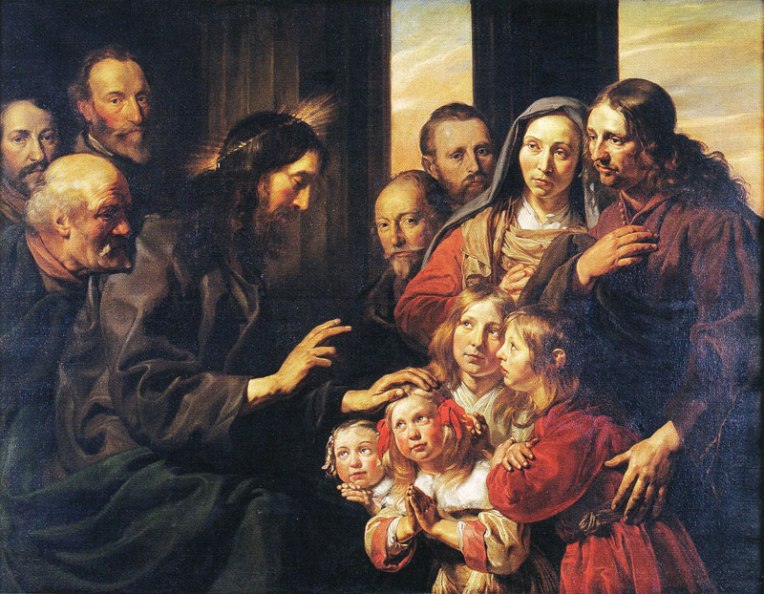
Joshua 24:14-29  +  Matthew 19:13-15
August 17, 2019

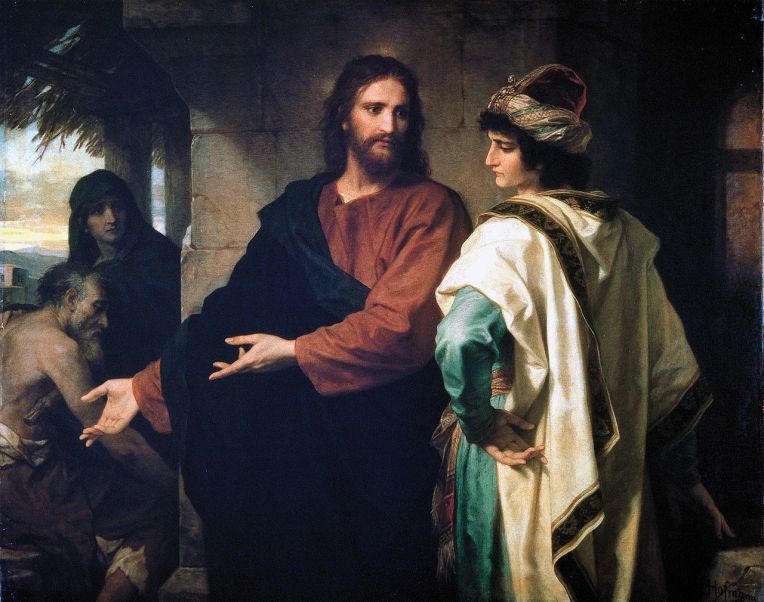
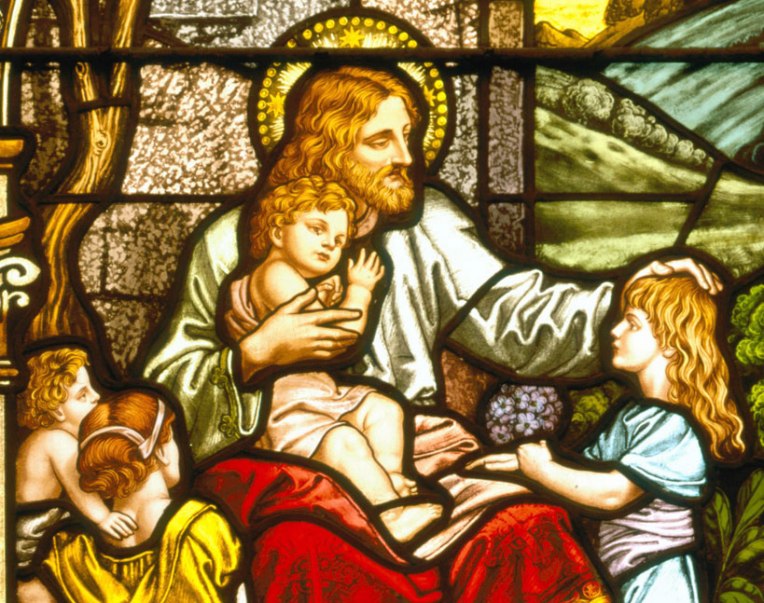
   “Let the children come to me, and do not prevent them….”   

Our spiritual need for humility is like our body’s need for water:  it is foundational, in an on-going manner, and in a manner that we constantly have to attend to.  Some people think that humility is only for children.  This sort of thinking says, “Of course you should be humble when you’re small.  You should be humble, for example, when you’re applying for a job, and when you’re going to confession, and when you’re at the bank applying for a loan.  But… once you’re older, and you’ve made something of your life, and have money in the bank, and people who work for you… well, then, the time for humility is past.  At this point, you should take pride in yourself.”

But Jesus says just the opposite.  Jesus, as divine and the only-begotten Son of God, declared from Heaven at the moment of the Annunciation:  “I am willing to become even less than a tiny baby.  I will become a single-celled human being inside the womb of this 14-year-old girl, in order to grow up and die to take away the sins of all mankind.”

We can reflect on the example of the Annunciation as a concrete example of Jesus’ counsel today.  Both Mary and Jesus in the scene of the Annunciation show us to whom “the Kingdom of Heaven belongs”.  Both Mary and Jesus demonstrate humility, but from opposite ends of a spectrum.  Mary—a poor, weak girl—submits her self to God the Father, accepting from Him a vocation that she cannot possibly understand.  Jesus—God’s own divine Son—submits His self to God the Father, accepting from Him a vocation that we cannot understand.  Our Blessed Mother and Our Lord show us that humility is needed at every step of our lives:  from the beginning of our life on this earth, to the end of our life in Heaven.  We never outgrow the need for humility.

OT 19-6


Friday of the 19th Week in Ordinary Time [I]

Friday of the 19th Week in Ordinary Time [I]
Joshua 24:1-13  +  Matthew 19:3-12
August 16, 2019

   “So they are no longer two, but one flesh.”   

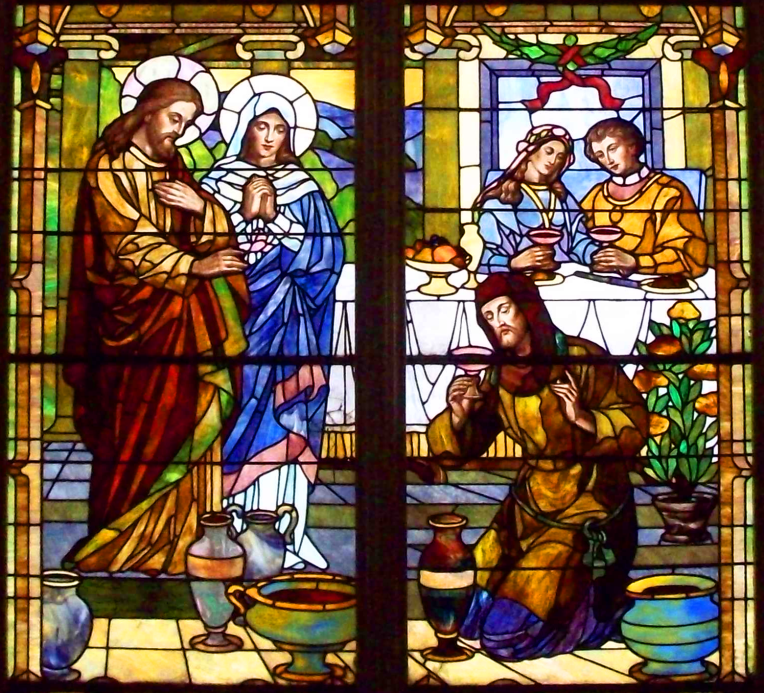
In raising the institution of marriage to the dignity of a sacrament, Christ transformed it into a covenant reflecting His own love for His Church.  This transformation was symbolized at the wedding at Cana by Jesus transforming water into wine.  In the Sacrament of Holy Matrimony, the natural is transformed by the supernatural into some third thing that is both.

Certainly there is a stark contrast between marriage during the Old Testament and the Sacrament of Holy Matrimony.  We might say something similar of the contrast between Christian marriage and what many today—including the federal government, and in collusion with them, state governments—are labeling “marriage”.  The former contrast can be easily seen through the example of Moses, who more than 1200 years before Christ  permitted the Israelites to divorce [Deuteronomy 24:1-4].  Moses’ concession to human sinfulness, however, is repudiated by Jesus in today’s Gospel passage, and the original will of the Creator is reaffirmed against that concession.

The indissolubility of marriage is due not only to the fact that it’s God Himself who is marriage’s origin, but also the One whose divine love marriage points to.  Thirdly, He is its mirror in the present, as spouses vow to help each other and their children each day to strive for Heaven.

OT 19-5.png

The Assumption of the Blessed Virgin Mary

The Assumption of the Blessed Virgin Mary
VIGIL MASS:  I Chr 15:3-4,15-16;16:1-2  +  1 Cor 15:54-57  +  Lk 11:27-28
MASS OF THE DAY:  Rev 11:19;12:1-6,10  +  1 Cor 15:20-27  +  Lk 1:39-56
August 15, 2019

   “…my spirit rejoices in God my Savior….”   

We Catholics believe that when a person dies, if he is in a state of perfect grace, his soul goes directly to Heaven.  To use another word, we believe that his soul is “assumed” into Heaven.  We may know people in our own families who, we’re sure, had their souls taken by God directly into Heaven.  This may happen with many people who had time to prepare for a holy death.  The main difference between the end of these persons’ lives and the end of Mary’s life is that both Mary’s soul and her body were assumed into Heaven.

Why was Mary’s body taken into Heaven along with her soul?  It’s because Mary is the type of person that all of us were originally supposed to be, but didn’t become because of Original Sin.  If Adam and Eve, and all of us in turn, had never sinned, then every one of us would rise body and soul into Heaven at the end of our lives.  Death as we know it (including the separation of body and soul) only exists because of human sin.

Yet Mary was given a special gift by God, since God knew from eternity that she would accept His calling to be the Mother of Christ.  This gift was the privilege given at the first moment of Mary’s existence:  the privilege of her Immaculate Conception.  The fact that she was conceived by her mother, St. Anne, without Original Sin meant that her whole life was uniquely holy among all God’s creatures.  Her life was still filled with struggles and pain, but at the end of her life on this earth, Mary became a sign of hope for us.

Because Mary was never touched by the effects of Original Sin, and because she never chose to sin, she didn’t suffer the corruption of her body.  Her soul and her body remained united at the end of her earthly life, and both were taken up into Heaven.

Mary is the perfect example of what it means to take the gifts given by God and use them completely for good.  Because Mary faithfully accepted the great gift of being the Mother of Jesus, the Mother of God, and because she always stood faithful to Christ, even as he was dying on the Cross, she was protected by God from one of the effects of Original Sin:  that body and soul should be separated at the time of death.

So when the end of Mary’s life came, she became the sign that shows all of us our own destiny as disciples of Christ.  When we die, our souls and bodies will be separated for quite some time:  until the end of time, in fact.  Nonetheless, if you and I follow Christ even when it means embracing the Cross—if we are always willing to use the gifts God has given us for good and not evil—then when Christ comes a second time, our bodies will be raised by Christ and rejoined to our souls.  With our Blessed Mother in Heaven we will all thank God for the gift of life.  We shouldn’t forget that we proclaim this hope in our Creed when we pray, “We believe in the resurrection of the body.”  Mary experienced this gift in a unique way immediately at the end of her earthly life.

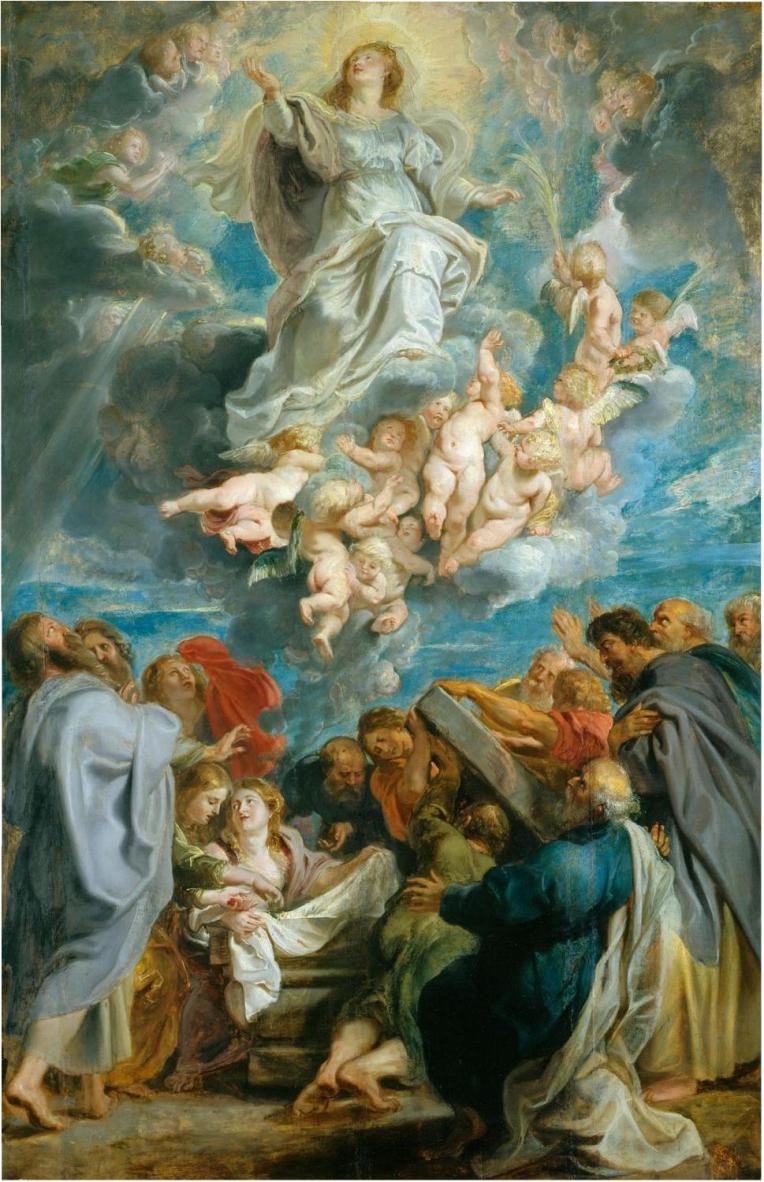
Assumption of the Virgin - Peter Paul Rubens

Assumption of the Virgin by Peter Paul Rubens [1577-1640]

St. Maximilian Mary Kolbe

St. Maximilian Mary Kolbe, Priest & Martyr
Deuteronomy 34:1-12  +  Matthew 18:15-20
August 14, 2019

   “…where two or three are gathered together in my name, there am I in the midst of them.”   

Jesus, in today’s Gospel Reading, explains how His followers can keep from having moral punishment fall upon them.  Jesus preaches that His followers must seek reconciliation with each other.  He also calls upon us to point out a wrong that may have been committed, especially one which destroys harmony and peace.

Correcting others in this way is a very hazardous duty.  Like almost no other responsibility that we have as Christians, it calls for the virtues of prudence, courage, and meekness.  Who can manage this without the help of the Holy Spirit?

Jesus also urges us to pray together.  Individual prayer is indispensable, and Jesus elsewhere in the Gospel commands us to go to our rooms and pray in private:  but that’s not the limit of our prayer.  Where two or three are gathered in Jesus’ Name, He is there in their midst.  But we also know that where two or three are gathered for the Mass, Jesus is not only there in their midst, but becomes present in a way that they can receive Him:  Body and Blood, soul and divinity.

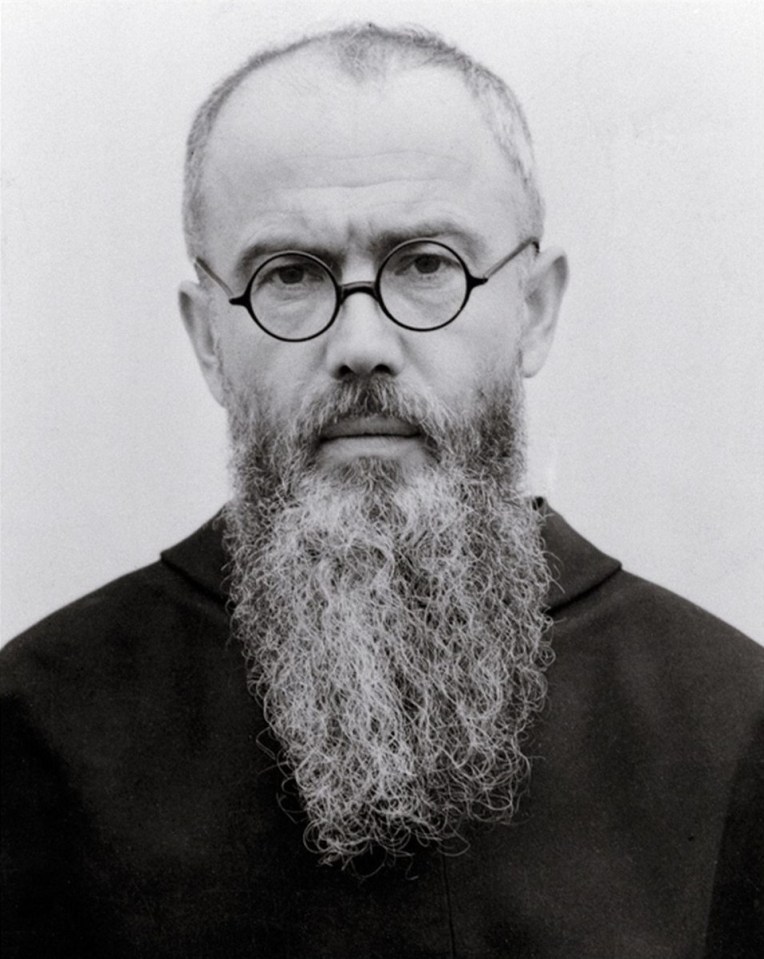
St. Maximilian Mary Kolbe

Today is the memorial of
St. Maximilian Mary Kolbe, Priest & Martyr [1894-1941]

Tuesday of the 19th Week in Ordinary Time [I]

Tuesday of the 19th Week in Ordinary Time [I]
Deuteronomy 31:1-8  +  Matthew 18:1-5,10,12-14
August 13, 2019

   “See that you do not despise one of these little ones….”    

For you to be one of God’s “little ones” means to live your life in Christ, and at the same time to allow Christ to live His life in you.  This simply means having the relationship between Jesus and His Father live in your own heart and mind.  This is something mystical, and so difficult to describe in language.  Nonetheless, it’s part and parcel of being a Christian.  It’s not just for cloistered monks and nuns.

By contrast, it’s not as if an ordinary Christian first reads from the Bible about Jesus and the Father, and then says, “Gee, I’d like to have that kind of relationship with God the Father.  I think I’ll try to imitate Jesus.”  You cannot enter a relationship by means of imitation.  To think that one can is to put the cart before the horse.

To think that one can is to ignore the truth that at your baptism, the two events of being adopted by God the Father and becoming a member of the Mystical Body of Christ are part and parcel of each other.  Both are accomplished at the same time by God the Father’s love.  In other words, it’s not so much that Jesus is our “older brother” spiritually, whose relationship with the Father we admire and then try to imitate.  Rather, it’s as members of Christ’s own Mystical Body that you and I share in the sonship of Jesus.

To ignore all this—to put that cart before the horse—is to forget that any relationship between a father and child is based on the primacy of the father’s love.  We don’t focus upon this enough in our time of meditation.  Especially in a culture like ours, children are at risk of believing that it’s their accomplishments that earn them their earthly fathers’ and God’s love.  But the Beloved Disciple in his first epistle reminds us of that key truth of the spiritual life, that “in this is love:  not that we have loved God, but that He has loved us, and offered His Son as an expiation for our sins” [1 John 4:10].

OT 19-2

Monday of the 19th Week in Ordinary Time [I]

Monday of the 19th Week in Ordinary Time [I]
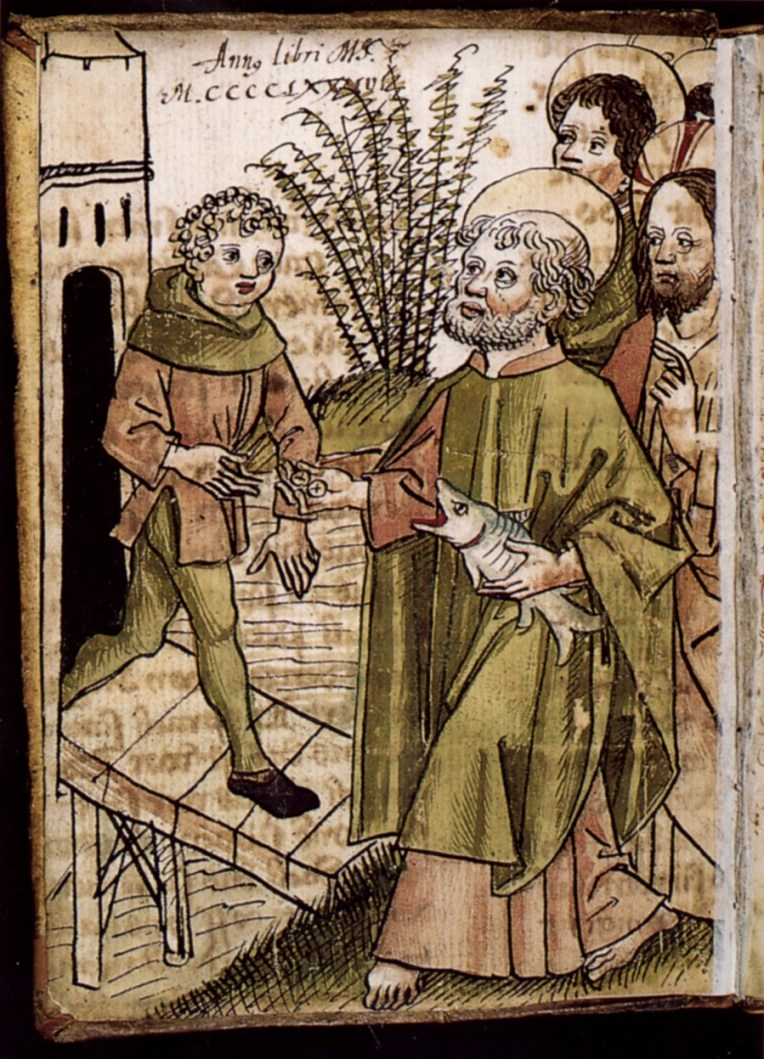
Deuteronomy 10:12-22  +  Matthew 17:22-27
August 12, 2019

   “Give that to them for me and for you.”   

Jesus sometimes worked grand spectacles through His miracles.  But as impressive as they are, spectacles were not the norm for Jesus.  More frequent is what, in the life of St. Thérèse the Little Flower, was called the “Little Way”.  Though the Little Flower coined the phrase, the Little Way is the Way of Jesus.

His way is one of simplicity and humility that often goes overlooked by those seeking spectacles.  It is a way that is ignored by those who are looking out for themselves, instead of others:  by those who justify their actions by claiming that they’re just doing what everyone else is doing, walking down the broad path, instead of trying to walk the narrow way that following Jesus demands.

The simplicity and humility of Jesus in today’s Gospel offers a very good meditation for today.  Jesus is not obligated to pay the tax that is demanded of Peter, but Jesus explains—“that we may not offend them”—that He will pay the tax anyhow.  The miracle by which Jesus accomplishes this almost goes unnoticed, because it’s not the point.  Jesus’ point is to teach by humility, to teach by doing what is not necessary, but which can lead others to see that Little Way that—after a long journey through a life of service in this world—does lead to the great vision of eternal life with God and His saints.

OT 19-1

The 19th Sunday in Ordinary Time [C]

The 19th Sunday in Ordinary Time [C]
Wis 18:6-9  +  Heb 11:1-2,8-19  +  Lk 12:32-48
August 11, 2019

   “Much will be required of the person entrusted with much….”   

When Jesus says these words about us, two questions immediately arise.  First, what has Jesus entrusted us with?  Second, what therefore will be required of us?

Each of us, naturally, has been given the gift of life.  You’ve probably seen the bumper sticker that says, “Smile:  your mom chose life!”  In our day and age, this is not a gift that we ought to take for granted.  Still, when we thank God each day for the gift of life, what exactly are we giving thanks for?

Human life has two parts to it:  body and soul.  Like the lower forms of animals, we have bodies that are subject on the one hand to hunger and physical pain, and on the other hand to the pleasures of good meals and the process of physical healing.

However, unlike the lower animals, we humans can find meaning even in bodily suffering and pain.  Yet we can discover this meaning only through our souls.  The human soul is the means through which we can, if we choose, rise above being merely an animal.  “Much will be required of the person entrusted with much….”  God has entrusted each of us with a human soul, and that’s not a gift to be underestimated.

“In the beginning”, “God said, ‘Let us make man in our image, after our likeness….’”  In those words, we hear how much God has entrusted us with, in giving each of us a human soul.  The human soul is given to a person at the moment of his or her conception:  that moment when the human body starts to exist from the gifts given by the father and the mother.  But while the human body comes from a child’s parents, the human soul comes directly from God at that moment of conception.  So what about that soul:  what kind of gift is it that God gave each of us at the moment of conception?

If there’s a single word that sums up the power, the meaning, and the aim of the human soul, it’s the word “transcendence”.  The human soul allows man to transcend himself.  There’s nothing more boring, numbing, and deadly than to live for oneself.  Unfortunately, the message of the world around us is to do just that:  to live for oneself.  But Christ calls us to live for others.  The powers of the human soul, when animated by God’s grace, allow us to live for others and to rejoice in doing so.

Here is what God requires of us:  to transcend ourselves in living for others, both the others who are our neighbors, and the Other who is God.  Living for others means loving those others.  This is a high bar, of course, that God has set for us.  Everything that’s sinful in us inclines us to live for ourselves, because living for ourselves is so much more comfortable.  But God did not make us for comfort.  If you doubt that, look at the crucifix.  As a saint once said, “The crucifix is the true answer to every heresy.”

The fathers of the Church at the Second Vatican Council declared that “it is only in the mystery of the Word made flesh that the mystery of man truly becomes clear.”  In other words, “Look at the crucifix.”  If you want to know what it means to be human; if you want to know what man is meant for; if you want to know the antidote to human misery, selfishness, and frustration with the meaningless of living the good life of comfort:  look at the crucifix.

The soul is a vessel of grace.  Grace is the power of God’s life that makes us strong enough to clear that very high bar that God has set for us:  the bar of living for others instead of for ourselves.  “Much will be required of the person entrusted with much….”  God has entrusted each of us with soul and body in order to offer those up each day for others.  The crucifix shows us how.  The Eucharist gives us the strength to do so.

click HERE to watch Jeff Cavins’ reflection for this liturgical Sunday (5:55)

click HERE to read the homily of Monsignor Charles Pope for this Sunday

click HERE to hear the homily of Archbishop Charles Chaput for this Sunday

+     +     +

click HERE to read Pope Francis’ 2016 Angelus address for this Sunday

click HERE to read Pope Emeritus Benedict’s 2010 Angelus address for this Sunday

click HERE to read a commentary of St. John Paul II on this Sunday’s Responsorial Psalm

OT 19-0C

Adoration of the Trinity by Vicente López Portaña [1772-1850]

St. Lawrence, Deacon & Martyr

St. Lawrence, Deacon & Martyr
2 Corinthians 9:6-10  +  John 12:24-26
August 10, 2019

   …whoever sows bountifully will also reap bountifully.   

In the year of Our Lord 258, Saint Lawrence offered the wealth of the Church to those who had nothing of their own.  Lawrence was the chief deacon—the arch-deacon—of the Diocese of Rome.  Part of the responsibility of a deacon is to proclaim the Word of God, to look after the material goods of the Church, and to care for the poor, and so as the chief deacon of a diocese as large as Rome, Lawrence held a great deal of responsibility.

He was called to act upon all these roles one day when Pope Sixtus II was put under civil arrest (Christianity still being an illegal religion).  Not long after, the pope was martyred, and Lawrence knew that he would be one of the next Christians the Empire would come after.  So Lawrence sought out the poor, widows, and orphans of Rome, and gave them all the money he held, selling even the sacred vessels of the Church.

The civil prefect of Rome called Lawrence before him and demanded that he produce the treasure of the Church.  Lawrence then gathered together the blind and the lame, the leprous, the widows and orphans, and lined them up before the prefect’s villa.  When the prefect arrived, Lawrence simply said, “Here is the treasure of the Church.”  The prefect not only did not understand Lawrence’s words.  He also did not understand Lawrence spending his life in the service of such people.  It’s unlikely, in fact, that the prefect cared, since four days after the death of the pope, Lawrence was martyred as well, on August Tenth.

Saint Lawrence understood that the true wealth of the Church lays in the manner in which our lives touch the lives of others.  In our own lives as Christians, one of the most important challenges we face is to realize to what extent—both for good and evil—our lives are connected to the lives of others.

St. Lawrence - Fra Angelico

St. Lawrence Distributing Alms by Fra Angelico [1395-1455]


Friday of the 18th Week in Ordinary Time [I]

Friday of the 18th Week in Ordinary Time [I]
Deuteronomy 4:32-40  +  Matthew 16:24-28
August 9, 2019

   “What profit would there be for one to gain the whole world and forfeit his life?”  

Our souls need nourishment and healing before we spend our selves trying to solve the problems of our own lives and those of the world.  We must be willing to admit, first of all, that we are sinners, and that our sins seriously wound our souls.  Our souls need not only the nourishment of prayer, but the healing that comes from the forgiveness of our sins.  After all, it is in this regard that Jesus is our Messiah, our Savior.  God the Son became human not to save us from the Caesar, or from the IRS, or from our neighbors:  Jesus died to save us from the snares of the Devil.  God the Son became human not to take away our worries, financial debts, or arguments with others:  Jesus died to take away our sins.

Once we regain this perspective in our lives, we realize how truly we need Christ’s help.  Yet at the same time, we hear Christ’s words to his disciples in today’s Gospel passage:  “Whoever wishes to come after me must deny himself, take up his cross, and follow me.”

Christ has died for us on the Cross, but we must join in His saving work.  We must do penance.  We must organize the time and energies of our lives so that they draw others closer to God.  In our speech, in the patience with which we do things and deal with others, through our charitable deeds, we can deny our sinful selves and become more like Christ.  In doing all this, we should never underestimate or believe that we can imagine what graces God will bestow upon us through our acting by means of His grace.

St. Teresa Benedicta of the Cross

Today is the optional memorial of
St. Teresa Benedicta of the Cross, O.C.D.