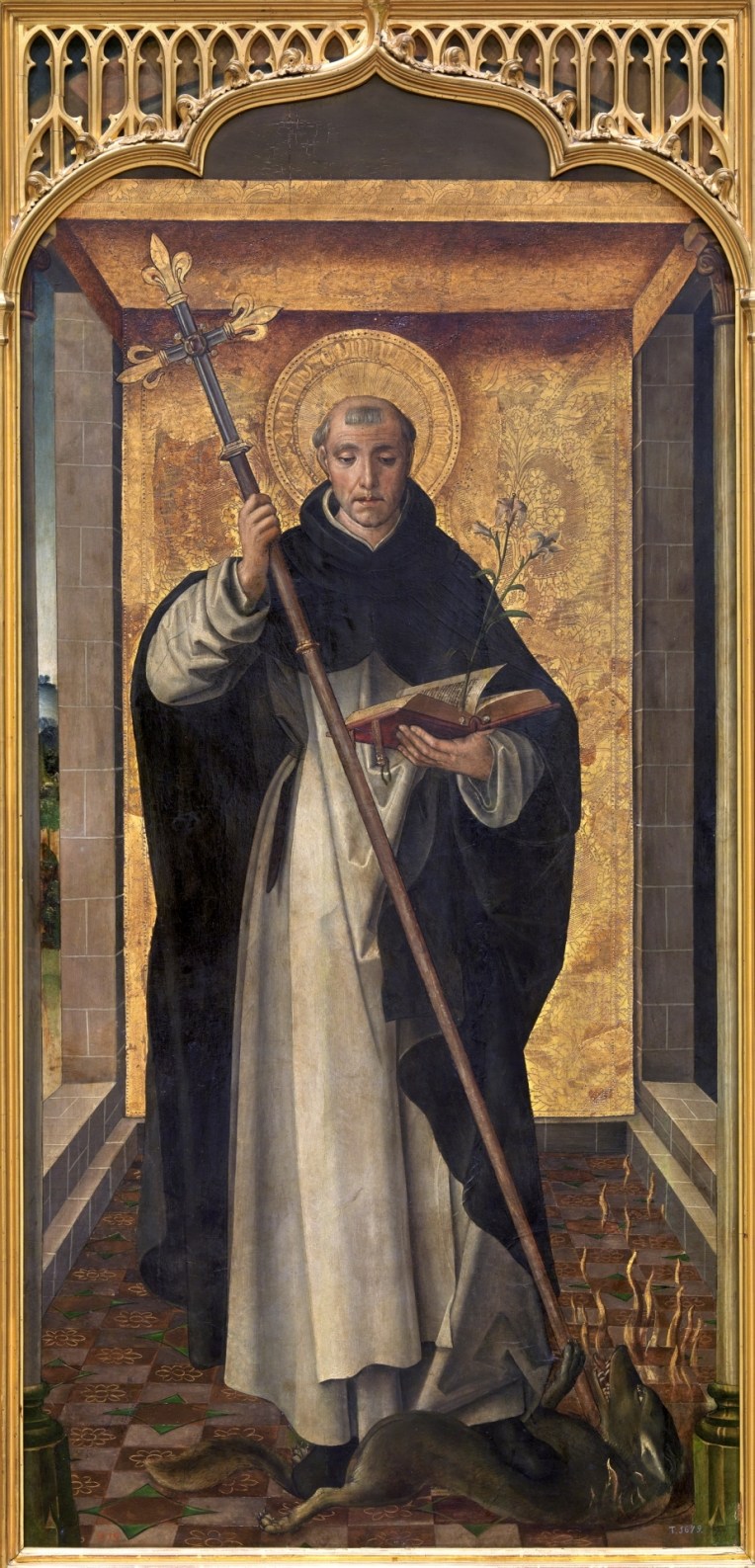
St. Dominic, Priest

St. Dominic, Priest
Numbers 20:1-13  +  Matthew 16:13-23
August 8, 2019

   “You are the Christ, the Son of the living God.”   

Today’s Gospel passage is well-known for revealing Jesus’ intention of founding His Church on the rock of faith, personified both in the individual Simon Peter, and in the office of the papacy.  What sometimes is overlooked is what immediately follows.  These latter verses also reveal something important about the Church, about the office of the papacy, and about the men who hold that office.

When Jesus “began to show His disciples that He must” suffer and be killed, the newly appointed Peter begins to “rebuke” Jesus!  The word “rebuke” is not a soft one.  But Jesus immediately and forcefully corrects Peter, revealing to us that Peter’s office does not pertain to the personal concerns, insights or doubts of him who holds the office.  Nor is the officeholder of the papacy unable to err.

Peter’s error here counters the profession of faith that he had made, after which Jesus named him “Peter”.  Jesus at that point praised Peter’s confession of faith, and pointed out to him something key by stating:  “flesh and blood has not revealed this to you, but my heavenly Father”.  Contrast these words with what Jesus says following Peter’s scandalous rebuke:  “You are thinking not as God does, but as human beings do”.

This contrast between the divine and the human is heard in the juxtaposition of Peter’s confession of Jesus and Jesus’ rebuke of Peter.  Peter’s confession is of Jesus’ divinity.  But Peter is rebuked because he refuses to accept Jesus’ humanity as the means of Jesus’ mission.  Each of us needs to accept Jesus’ mission of offering His Body and Blood on the Cross.  Through this mission, Jesus will fully offer divine life to those of us who place our faith in Him.

St. Dominic (2)

Saint Dominic de Guzmán
Priest & Founder of the Dominican Order

Wednesday of the 18th Week in Ordinary Time [I]

Wednesday of the 18th Week in Ordinary Time [I]
Numbers 13:1-2,25—14:1,26-29,34-35  +  Matthew 15:21-28
August 7, 2019

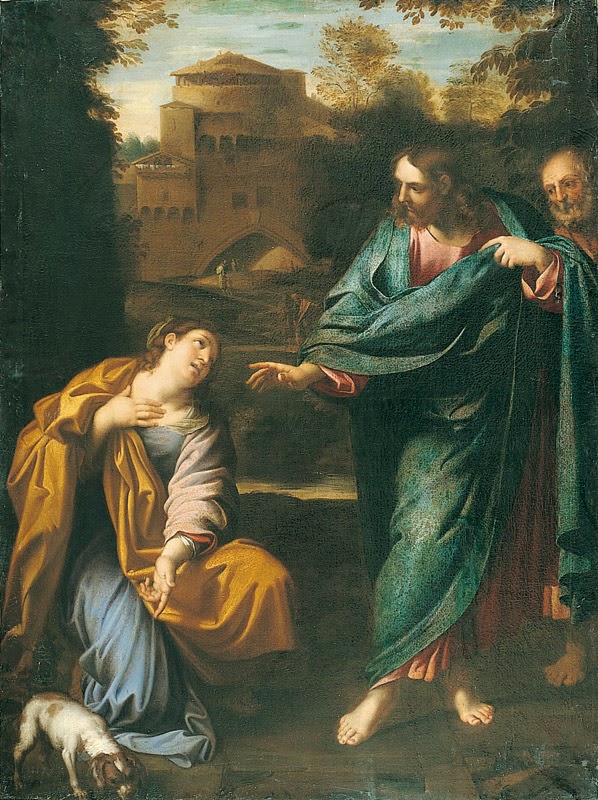
   “Please, Lord, for even the dogs eat the scraps that fall from the table of their masters.”   

When the Israelites entered the Promised Land after the Exodus, they met up with the Canaanites, whom they considered to be wicked and godless, a race of people that they should exterminate.  This outlook persisted until the time of Jesus.  In today’s Gospel passage, Jesus explains that this outlook cannot be held by His followers.

The woman in the Gospel passage is a Canaanite.  She had enough faith in Jesus to ask Him to release her daughter from a demon.  But then Jesus says a shocking thing to the woman:  “It is not right to take the food of the sons and daughters and throw it to the dogs.”  These words do not represent Jesus’ own thoughts, but we see—because of the response that Jesus draws out of the woman, and because of Jesus’ action in reply—the lesson that Jesus has for His followers.

In the midst of our culture today, Jesus says to us, “Love is not exclusively for those who are dear to us.”  Jesus teaches that we must love those we may consider enemies, and pray for those who persecute us.

OT 18-3

The Transfiguration of the Lord [C]

The Transfiguration of the Lord [C]
Daniel 7:9-10,13-14  +  +  2 Peter 1:16-19  +  Luke 9:28-36
August 6, 2019

   And behold, two men were conversing with Him… [speaking] of His exodus….   

Suffering is part and parcel of following Jesus.  He teaches us this lesson through His Transfiguration.

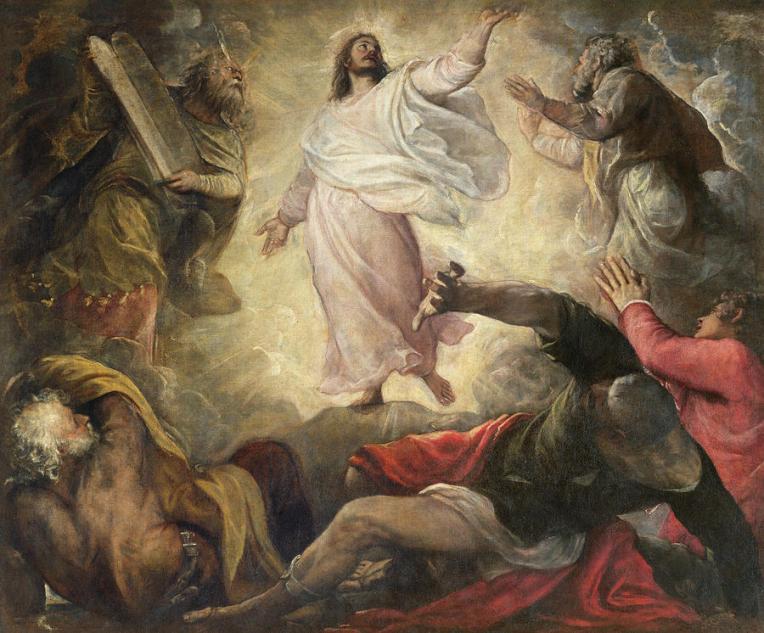
There’s a simple contrast in today’s Gospel passage.  Peter stands in contrast to Jesus.  Peter says, “Master, it is good that we are here”, while Jesus does not reply.  In fact, the evangelist does not quote Jesus at all in this passage.  Not that Jesus doesn’t speak in this passage:  we’re told that Jesus was conversing with Moses and Elijah, but we are not allowed to overhear their conversation.

Did Peter hear the conversation among Jesus, Moses and Elijah?  It doesn’t seem so.  Had Peter heard them, it’s not likely that he would have said what he did:  “Master, it is good that we are here”.  Peter certainly perceived the glory of Jesus, His changed face, and the brilliance of His white clothing.  But had Peter heard the conversation of Jesus and His prophets, it’s unlikely that Peter would have said what he did.

Jesus, Moses and Elijah “spoke of Jesus’ exodus that He was going to accomplish in Jerusalem.”  This exodus is not from the power of a pharaoh, or from the persecution of pagan prophets, but from the power of sin and death.  You and I know the rest of the story:  that Jesus accomplished this exodus on Calvary.  We know that through His sin and death, you and I might have life to the full.  Had Peter understood all this, he may have turned away from following Jesus.

Suffering is part and parcel of following Jesus.  If we shy away from suffering for the good, we remove ourselves from Jesus’ presence.  Only by remaining in the presence of Jesus can He lead us to the glory of the Father.

Transfiguration - Titian

Transfiguration by Titian [c. 1488 – 1576]

Monday of the 18th Week in Ordinary Time [I]

Monday of the 18th Week in Ordinary Time [I]
Numbers 11:4-15  +  Matthew 14:13-21
August 5, 2019

   …His heart was moved with pity for them….   

Being compassionate, Jesus was certainly concerned with the physical well-being of the people who had come to hear him preach.  Just how deep Christ’s compassion was is made obvious when we consider again something the first verse of this passage tells us.

Jesus is told about the hunger of the crowds right after He had heard of the death of John the Baptizer, and had withdrawn by boat to a deserted place by Himself.  If we were to take time to imagine this, we could very clearly see just how human Christ was, responding in grief and perhaps anger at the death of His own cousin.  He withdrew from others to be alone.  And yet, even at this point in His life, the needs of others pressed upon Him.  His response was that of God himself:  he turned away from Himself, and towards those in need.

Jesus was certainly concerned with the physical well-being of the people who had come to hear Him preach.  But He knew the people in the crowds better than they knew themselves.  Christ had a much deeper concern for their spiritual well-being.  He had reminded them that their ancestors, whom God had fed in the desert by sending bread in the form of manna, had died.  His divine Father, Jesus told them, had sent Him to be their spiritual bread:  a bread which would allow them to live forever.  If they would eat this bread by accepting him and following his commandments, they could enter into God’s eternal kingdom of love.

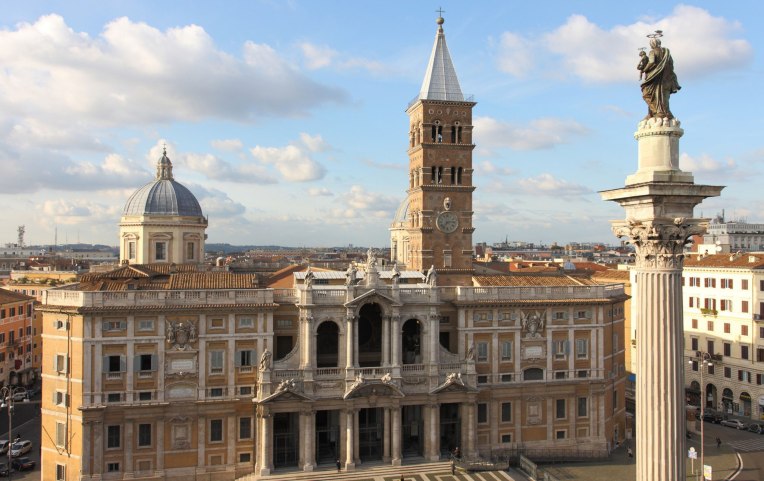
St. Mary Major Basilica

Today is the Optional Memorial of the
Dedication of the Basilica of Saint Mary Major

The 18th Sunday in Ordinary Time [C]

The 18th Sunday in Ordinary Time [C]
Eccl 1:2;2:21-23  +  Col 3:1-5,9-11  +  Lk 12:13-21
August 4, 2019

   “…rest, eat, drink, be merry!”   

I loved to read mystery stories as a boy.  The older I get, the less I think about mysteries that have solutions.  A different type of mystery is more compelling:  mysteries of our Faith.  They’re not absolutely mysterious:  that is, there are things we can know and say about them.  But they have no solutions as stories do.

As an example, consider one of the mysteries that Saint Paul describes in today’s Second Reading.  What is Saint Paul claiming when he tells the Colossians that they “have died”?  He says:  “Think of what is above, not of what is on earth.  For you have died, and your life is hidden with Christ in God.  When Christ your life appears, then you too will appear with Him in glory.”

Of course, St. Paul is not talking about a physical death.  He’s talking, rather, about the spiritual death that marks the life of every person who follows Jesus.  What does this sort of death look like?

Imagine a large stone being thrown mightily into a deep lake.  The stone starts to sink upon hitting the water, and the impact causes a large splash.  Then, while the stone continues to sink, smaller splashes rise and fall as the impact of stone against water ripples in wider and wider circles.  This image symbolizes your Christian life.

The moment of impact is the moment of your baptism:  an experience of dying into Christ.  The Sacrament of Baptism is the beginning of the Christian life, and of course we should never underestimate the magnitude of the gift of Baptism.  Nor should we forget that it remains a source of blessings throughout our earthly days.  Nonetheless, baptism is not the end of the Christian life.  Baptism makes waves by means of many smaller deaths in daily life.

One that’s neglected by many Christians in our day and age is asceticism.  Asceticism is a habit of the Christian life.  It’s a good habit, and so we call it a virtue of the Christian life.  Asceticism is the good habit of self-denial.

To the world, this sounds like foolishness:  how can denying one’s own self be good?  To the world, the supreme good is to promote oneself, to inflate oneself, to indulge oneself.  But the Christian looks at life differently:  through the lens of baptism into Christ’s Passion, Death and Resurrection.  Baptism is the pattern for the asceticism of our daily life as Christians.  Jesus’ parable in today’s Gospel Reading illustrates the contrast between someone who lives for the world and someone who lives in the world but for God.  In order to heed Jesus’ admonition “against all greed”, asceticism is necessary.

Every act of Christian asceticism is the freely chosen sacrifice of something good.  By contrast, not doing something that’s evil is a moral imperative.  We must not do what is evil.  But we may do what is good… or, we may not do what is good.  We are free to choose either course of action.  It’s from this freedom that asceticism derives its value.  To sacrifice what is good, when we have the moral freedom to enjoy it, turns something good into something better!

To repeat this in a different way:  not doing something that’s intrinsically evil is commanded by God, and must not be done by every Christian, in every circumstance.  But asceticism is different.  Asceticism is not doing something that’s good, something that we are in fact free to do, because we want to sacrifice to God our freedom to enjoy that good.

Here’s an example:  a person is always free to eat what his body expects in order to function in a healthy manner.  But a person may freely choose to sacrifice this same good—that is, a healthy meal that his body expects—as an act of asceticism.  Will his body perish because of his asceticism?  No:  Christian asceticism should never cause irreparable harm to the human person.  But even an athlete, when he wants to strengthen his muscles, has to break them down first.

An authentic act of Christian asceticism has two ends.  The first end regards oneself.  This end or goal is to discipline one’s body and soul.  One purpose is so that one becomes less attached to earthly goods.

The second and more important end, to which the first is oriented, regards God.  Authentic Christian asceticism makes one more free to seek and embrace spiritual goods, even and especially when those spiritual goods come at a demanding cost.

click HERE to watch Jeff Cavins’ reflection for this liturgical Sunday (5:55)

click HERE to read the sermon of St. Augustine of Hippo on Luke 12:15

click HERE to read the reflection of Monsignor Charles Pope for this Sunday

+     +     +

click HERE to read Pope Francis’ 2013 Angelus address for this Sunday

click HERE to read Pope Emeritus Benedict’s 2010 Angelus address for this Sunday

click HERE to read a General Audience address of St. John Paul II related to the Gospel Reading of this Sunday

OT 18-0C.jpg

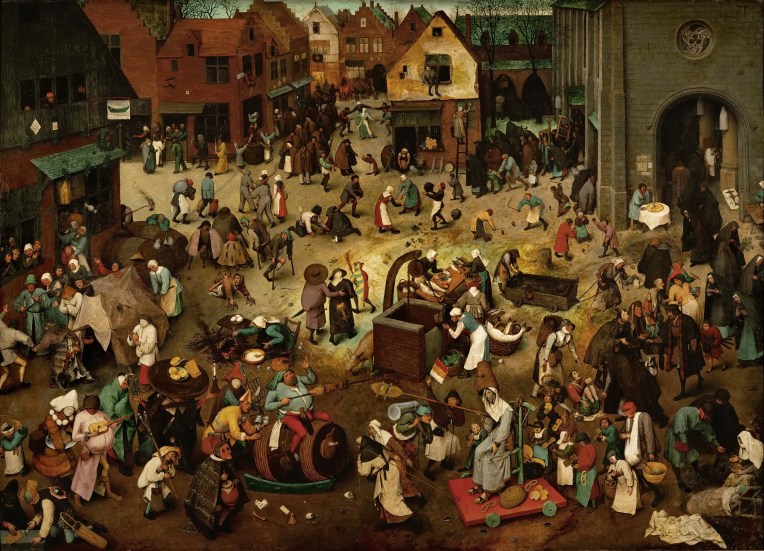
The Fight Between Carnival and Lent by Pieter Bruegel the Elder [ca. 1525-1569]

Saturday of the 17th Week in Ordinary Time [I]

Saturday of the 17th Week in Ordinary Time [I]
Leviticus 25:1,8-17  +  Matthew 14:1-12
August 3, 2019

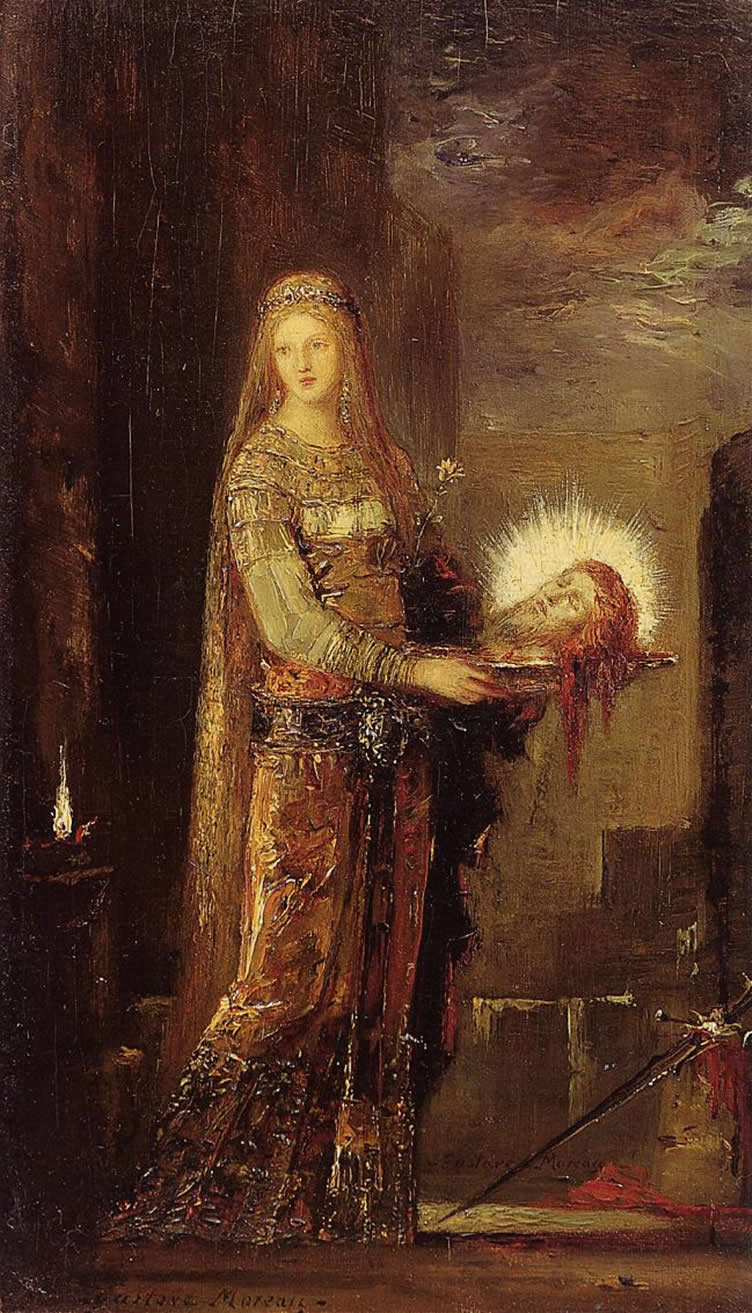
   His head was brought in on a platter and given to the girl, who took it to her mother.   

On August 29, the Church celebrates the Passion of St. John the Baptist, and on that memorial we hear his passion narrative according to Saint Mark.  Today’s Gospel Reading offers us this narrative according to St. Matthew the Evangelist.

Jesus does not appear in today’s Gospel passage.  His name is mentioned twice.  Focus on the latter instance, where His name is in fact the last word of the passage.  This is fitting.  In terms of the life and Passion of St. John the Baptist, Jesus is the last word.

John is often considered the last of the Old Testament prophets.  Like many prophets, he was killed because of his witness to God’s Word.  The uniqueness of John’s life and Passion lay in how they intertwined with those of the Word made Flesh.

You and I, as Christian disciples, have been baptized into the role of prophet.  It is part of our baptismal commitment to profess the truth of the Gospel no matter what the cost to us.  At times we profess this Truth through our actions; at other times, through our words.  How often do we count the cost first before deciding whether to speak the Truth?  It’s certainly necessary to exercise the virtue of prudence is proclaiming the Truth.  But we need to ask St. John’s the Baptist’s intercession if we’re ever tempted to refrain from the Truth because of fear.

OT 17-6

Friday of the 17th Week in Ordinary Time [I]

Friday of the 17th Week in Ordinary Time [I]
Leviticus 23:1,4-11,15-16,27,34-37  +  Matthew 13:54-58
August 2, 2019

   “A prophet is not without honor except in his native place….”   

The last sentence of today’s Gospel passage presents something of a conundrum.  No matter how we interpret the fact that Jesus “did not work many mighty deeds there because of their lack of faith”, we are challenged.

Some might interpret these words to mean that Jesus’ power to work miracles was constrained by the lack of faith of those in His hometown.  More sensible, however, is to see Jesus’ lack of miracles as a prudent choice on His part.  It doesn’t require faith on the part of people for God to work miracles.  It requires faith on the part of people for God’s miracles to bring about their primary goal.  God’s goal when He completely cures someone who had been diagnosed with terminal cancer is not to give that person immortal life on earth.  His goal is to bring the one cured and those around him to a greater practice of love for God and neighbor, so as to give them immortal life in Heaven.

We are challenged, then, to admit where we lack faith in our own lives.  We are challenged to allow the miracles that God works to bear fruit in our lives.  We are challenged not to live for ourselves, but for others, beginning with the Other who calls us to share in His life of love.

OT 17-5

St. Alphonsus Liguori

St. Alphonsus Liguori
Exodus 40:16-21,34-38  +  Matthew 13:47-53
August 1, 2019

   Moses did exactly as the Lord had commanded him.   

In our First Reading today we hear about Moses being obedient to the Lord.  Actually, as we read the Book of Exodus and hear about the Israelites wandering for forty years through the desert, Moses is the only person who is very obedient to God. Continue reading

St. Ignatius of Loyola

St. Ignatius of Loyola
Exodus 34:29-35  +  Matthew 13:44-46
July 31, 2019

   “Again, the Kingdom of Heaven is like a merchant searching for fine pearls.”   

Jesus offers us two brief parables today, both metaphors describing “the Kingdom of Heaven”.  Either parable and its imagery would suffice for a day’s meditation.  Perhaps we could meditate, though, upon common threads between the two. Continue reading