December 21 – Late Advent Weekday

December 21 – Late Advent Weekday
Song of Songs 2:8-14 [or Zeph 3:14-18]  +  Luke 1:39-45
December 21, 2019

   “Most blessed are you among women, and blessed is the fruit of your womb.”   

Today our Scriptures present two different responses to the coming of the Lord.  Both are worthy of our reflection and imitation, although they are very different from each other.

The First Reading is from the Old Testament book Song of Songs.  This book is highly poetic in nature, and as such, is open to many interpretations.  The Church sees in the words of today’s passage a loving longing for the Messiah.  It’s the loving nature of this expression of waiting that sets the book apart from most of the Old Testament’s descriptions of waiting for the Messiah.

This book’s insight into the nature of the Messiah and His reason for coming raise it above much of the Old Testament’s desire for earthly security.  This book foreshadows the truth of God being love, proclaimed by St. John in his New Testament epistles, from which we will hear during the Christmas Season.

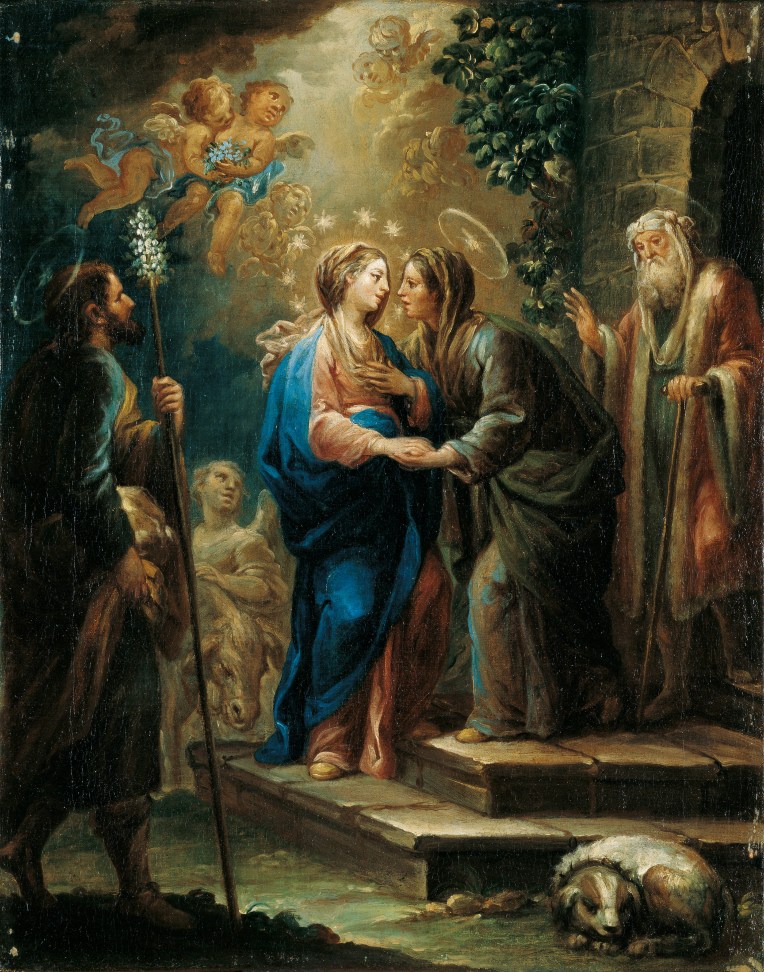
Today’s Gospel passage offers us Elizabeth’s response to the Messiah, borne as He is by His Mother.  The praise that Elizabeth bestows on her cousin is woven amidst her praise of her Lord.  Three times Elizabeth uses the word “blessed” in speaking to Mary:  “‘Most blessed are you among women’”; “‘blessed is the fruit of your womb’”; and “‘Blessed are you who believed’”.  We honor Our Blessed Mother during Advent and Christmas because it was through blessed love that her life became so closely bound up with that of Our Savior’s life and mission.

Advent December 21

December 20 – Late Advent Weekday

December 20 – Late Advent Weekday
Isaiah 7:10-14  +  Luke 1:26-38
December 20, 2019

“May it be done to me according to your word.”

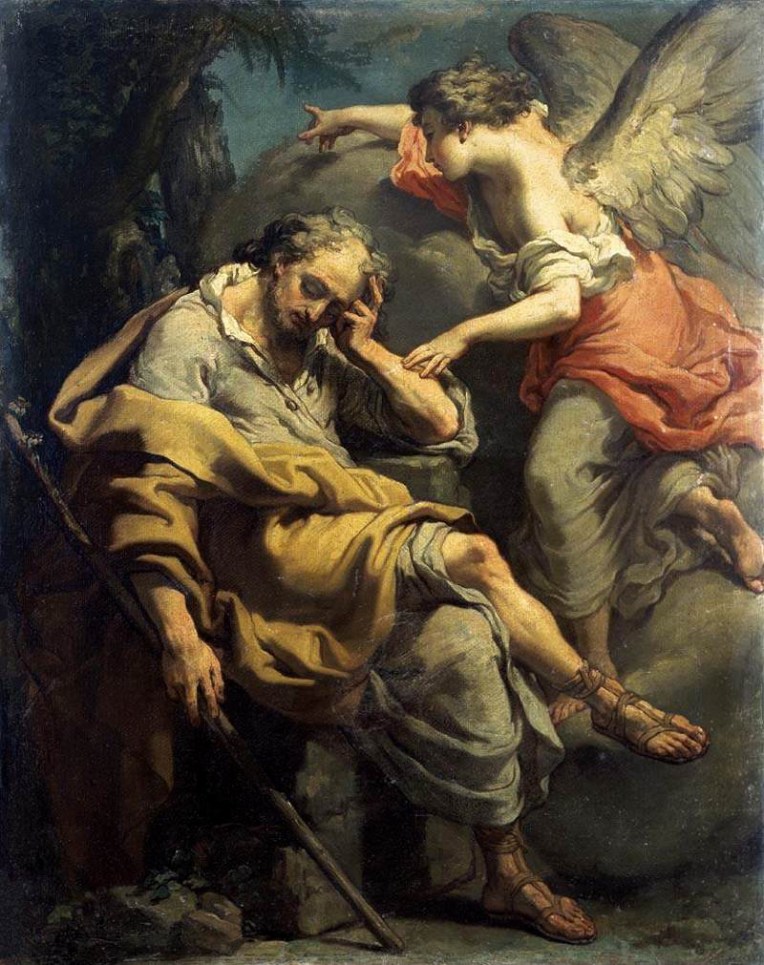
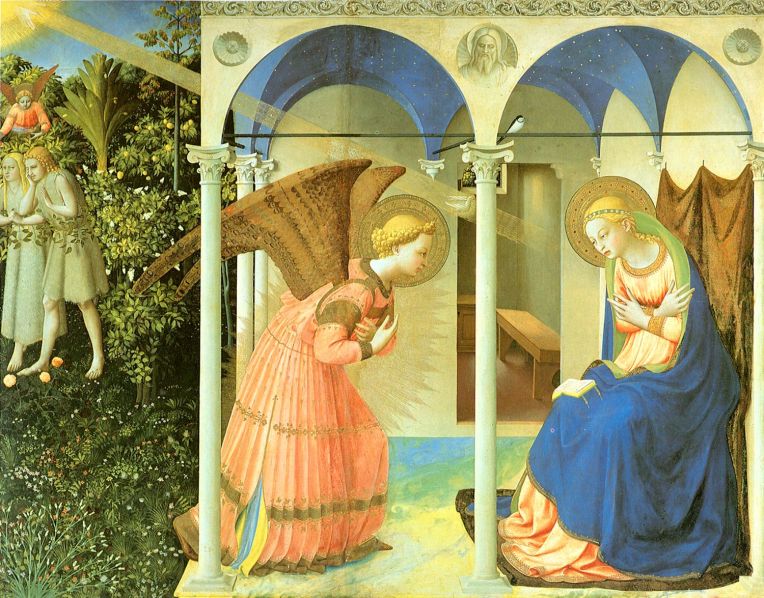
Of all the contrasts between Zechariah and Mary in St. Luke’s infancy narratives, the starkest is found in their responses to the good news announced to each.  What makes Mary’s response to St. Gabriel even more striking is that objectively, the message entrusted to her was much more difficult to understand from an earthly perspective.  After all, what Gabriel announced to Zechariah was news which he and his wife had been longing to hear for many years.  While the facts foretold by Gabriel were unlikely from a human standpoint, they were not impossible even by human standards, and had precedent in biblical history.

Mary, however, is unique.  Her response to the Good News is possible only through faith.  Zechariah did not even have faith in a human possibility.  Yet Mary has faith in a seeming human impossibility.  She trusts that God will accomplish what He wills, and speaks only of what He wills.  How different are you and I:  we speak not only of what we will, but also of what we desire and dream about, what piques our interest even momentarily, and even what would harm us.  Worse yet is what we so often do, which in facts harms us spiritually, bodily, emotionally and in other ways:  in fact, “personally”, in its fullest sense.

Mary is a human person as God created human persons to be.  Jesus is a divine person who has both human and divine natures.  But Mary is like you and me in that she’s a human person.  She shows us what it truly means to live as a human person:  that is, to relate fully to others through our humanity, and likewise to relate to the Other who created and redeemed us in His Son.  Mary accepts God as her Creator and Savior, and lives for Him rather than for herself.

Advent December 20

December 19 – Late Advent Weekday

December 19 – Late Advent Weekday
Judges 13:2-7,24-25  +  Luke 1:5-25
December 19, 2019

   He was gesturing to them but remained mute.   

During the last eight days of Advent, called the “Late Advent weekdays”, the Gospel heard at weekday Masses shifts to the infancy narratives.  It might surprise some that not all four Gospel accounts tell us about the infancy of Jesus.  Only Matthew and Luke do.  In his prologue (John 1:1-18), John one-ups those two evangelists by accounting for the life of God the Son from all eternity in brief and brilliant poetry.  Mark begins his Gospel account (the shortest of the four) with Jesus already an adult.

On the first two Late Advent weekdays, the Church proclaims passages from the infancy narratives of Matthew.  On the last six days of this “octave”, the Gospel comes from Luke.  Key to Luke’s infancy narratives is a parallelism between John the Baptist and Jesus.  Their “annunciations” and births are described similarly.  Yet even more significant are the differences between the two sets of narrative.

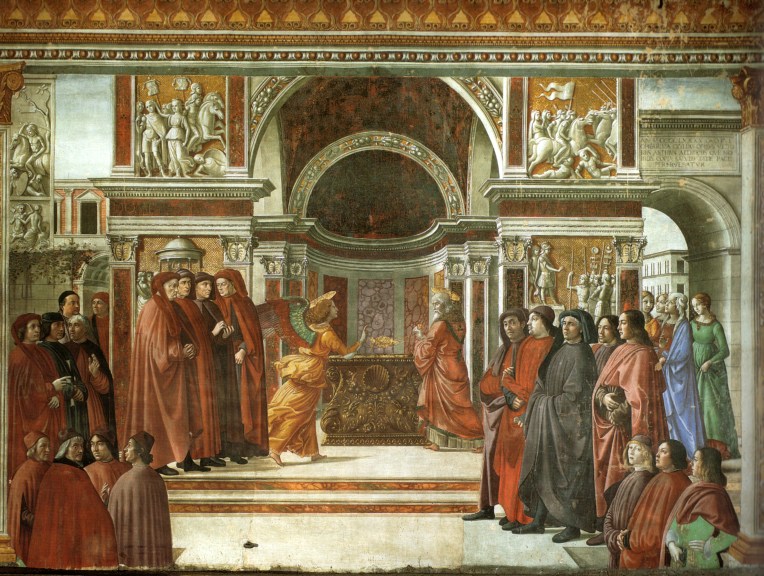
Today’s Gospel passage recounts St. Gabriel’s announcement to Zechariah of the immanent conception of John.  Two differences from the Annunciation of Jesus stand out.  The first concerns the circumstances of each.  John is conceived through natural means by an elderly, “barren” woman.  Jesus is conceived through “the power of the Holy Spirit” by a young virgin.

Perhaps even more significant are the differences between the persons to whom Gabriel appears, and their responses to heavenly messengers.  Focus today on the response of Zechariah to Gabriel.  Zechariah is struck mute because of his disbelief.  This is ironic given that his son is destined to be “the voice crying out” the advent of the Word made flesh.  Pray today asking God not only that your voice might be His instrument, but also that disbelief may never prevent you from listening to another who is pointing your attention towards God’s Good News.

Advent December 19

December 18 – Late Advent Weekday

December 18, 2019 – Late Advent Weekday
Jeremiah 23:5-8  +  Matthew 1:18-25
December 18, 2019

He shall govern your people with justice and your afflicted ones with judgment.

The Responsorial Psalm at Holy Mass both on December 17 and 18 is from Psalm 72.  The first strophe (that is, set of verses) proclaimed each of these days is the same.  Consider these verses of Psalm 72:1-2:  O God, with your judgment endow the king, / and with your justice, the king’s son; / He shall govern your people with justice / and your afflicted ones with judgment.

These opening verses of Psalm 72 clearly reflect the subject of the entire psalm.  The header of this psalm in the American translation of the breviary is “The Messiah’s royal power”, which closely reflects the Latin original:  “Regia Messiæ potestas”.  The more simple header of the New American translation of the Bible is “A Prayer for the King”.

Regardless of the differences, each header points to the royal quality of the psalm.  That the Responsorial on the first two “late Advent weekdays” comes from this regal psalm points to the mission for which God the Son was sent into our world.  He is to be a king.

Consider the four lines of Psalm 72:1-2 in reference to the Son of God.  The first two lines call for God to endow the king with His own “judgment” and “justice”, while the latter two foresee that the king will govern God’s people with “justice” and “judgment”.

Focus these four lines on the Son of God even more specifically by reading them in light of Jesus’ self-giving on Calvary.  As the Son of God, Jesus’ “judgment” and “justice” reflect His divine nature, that from eternity He always has shared in God’s own nature.  But through His mission on earth as Christ the King, He spends Himself in order to “govern [God’s] people” as the Good Shepherd, who came into this world to seek the lost and lead them into the bosom of His own Father.  This mission is why He was born at Bethlehem.

Advent December 18

December 17 – Late Advent Weekday

December 17 – Late Advent Weekday
Genesis 49:2,8-10  +  Matthew 1:1-17
December 17, 2019

… Jacob the father of Judah and his brothers.

“Late Advent Weekday” is the term that describes the last eight days of Advent, beginning on December 17.  The Sacred Liturgy—including the Divine Office and Holy Mass—shifts slightly in tone as the Church’s preparation for the Messiah intensifies.

Each year on December 17 (unless the date falls on a Sunday), the Church proclaims the beginning of Matthew’s Gospel account at Holy Mass.  Matthew begins his account of the Gospel with a genealogy from Abraham to David to Jesus.

At the beginning of Pope Emeritus Benedict XVI’s book Jesus of Nazareth: The Infancy Narratives, he comments on the significance of Matthew’s and Luke’s genealogies.  He observes that Matthew focuses on Abraham as a faithful wayfarer, whose life points forward.  As such, Pope Benedict quotes from the Letter to the Hebrews“He looked forward to the city which has foundations, whose builder and maker is God” [11:10].

This City of God can be understood as the Mystical Body of Christ, the Church.  This Church is universal in nature, and Abraham points towards this universality:  Pope Benedict points out these two truths about the Church by citing two Scripture verses:  “Make disciples of all nations” [Matthew 28:19]; and “all the nations of the earth shall bless themselves by him” [Genesis 18:18].

The universality to which Abraham points is complemented by the sense of eternity to which King David points.  Pope Benedict notes this verse from the Second Book of Samuel“Your throne shall be established for ever” [7:16].  The Holy Father observes how the entire genealogy presented by Matthew “is truly a Gospel of Christ the King:  the whole of history looks toward him whose throne is to endure for ever.”

Our own day, of course, is included in “the whole of history”.  We, in our own day, must look forward to Christ the King, not to ourselves.  The Christ Child whose birth we await with Mary and Joseph is destined to be our King, Emmanuel.  As our King wants nothing more than to be “God with us”, we ought in prayer today to dedicate ourselves always to remain with God, no matter where He leads.

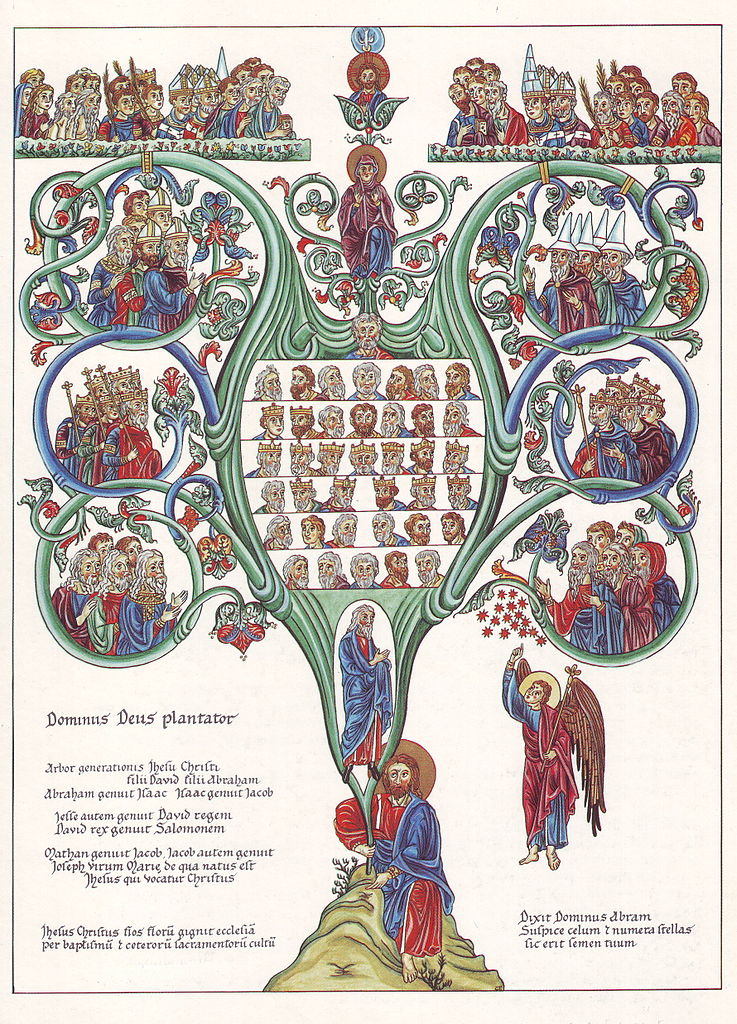
Advent December 17 - Hortus Deliciarum - Der Stammbaum Christi

Monday of the Third Week of Advent

Monday of the Third Week of Advent
Numbers 24:2-7,15-17  +  Matthew 21:23-27
December 16, 2019

“… they all regard John as a prophet.”

Saint John the Baptist is the central figure of the season of Advent.  Saint John the Baptist represents everything that Advent stands for.  Some might argue that the Blessed Virgin Mary is the central figure of Advent.  But she who bore and gave birth to the Messiah is also the one who traveled with Him during His three years of public ministry, who stood at the foot of the Cross, and who witnessed her Son’s Ascension and the Descent of the Holy Spirit upon the college of apostles.  Mary plays a constant and unfailing role in the life of Christ and the celebration of that life during the course of the liturgical year.  St. John the Baptist’s role is particular to Advent:  in this sense, he is the central figure of Advent.

Advent is a season of the desert, during which a straight path is made for the Lord.  Advent is a season during which we hear our divine Lord calling to task the chief priests and the elders.  For them, John the Baptist was a stumbling block.  John did not call them to lofty struggles.  He did not bring them into contact with the divine.

John’s message was very simple:  Repent.  Turn your lives around.  All John was asking people to do was to turn around and face the other direction on the path they were taking in life.  He didn’t ask them to travel long distances on a spiritual journey:  his prophetic message was merely to tell people to turn around, so that they could see the Lamb of God approaching.

4x5 original

The Third Sunday of Advent [A]

The Third Sunday of Advent [A]
Isa 35:1-6, 10  +  Jas 5:7-10  +  Mt 11:2-11
December 15, 2019

Take as an example of hardship and patience, brethren, the prophets who spoke….

+     +     +

click HERE to watch Jeff Cavins’ reflection for this liturgical Sunday (4:32)

click HERE to read the homily of Monsignor Charles Pope for this Sunday

click HERE to hear the homily of Archbishop Charles Chaput for this Sunday (14:37)

+     +     +

click HERE to read Pope Francis’ 2016 Angelus address for this Sunday

click HERE to read Pope Emeritus Benedict’s 2010 Angelus address for this Sunday

click HERE to read St. John Paul II’s 2001 homily for this Sunday

+     +     +

“Hardship and patience” don’t come easily to most of us.  St. James in this Sunday’s Second Reading, however, focuses our attention upon hardship and patience.

Out of these two, we can see the value of patience more easily.  We know from daily experience how much we need the virtue of patience in order to get along in this world.

In fact, though, we even need to have patience with God.  As disciples of the Lord Jesus, who leads us in all things to “Our Father”, you and I need patience with God.  Of course, the reason for needing patience with God is very different than why we need patience with our children, parents, boss, and so on.  For the most part, we need patience with our brothers and sisters because of their imperfections, faults, and sins.

But with God we need patience because His time is not our time.  God looks at us and our lives from the perspective of eternity, while we like children look only at the current “now”.  We need patience with God because He is a farmer, while we too often want to reap what we have not sowed.

In addition to patience, however, we also need penance.  We can think of penance in terms of the hardship that we hear of in the Second Reading.  Saint John the Baptist, by means of his example and his preaching, also points our attention to the importance of penance.

Yet the word “penance” is not always appreciated for all that it means.  For some, the word “penance” suggests only the Sacrament of Penance, which demands from the penitent examination of conscience, confession, and amendment of life.  Yet the Church also teaches her children to practice some penance every Friday in honor of that Good Friday when Jesus sacrificed His life for us.  During Lent, the Church imposes a particular form of penance upon her members—abstaining from meat—while on Fridays during the rest of the year Catholics are free to choose what form their penances will take.  But Catholics are not free not to do penance each Friday during the year [see the Code of Canon Law, c. 1250].

The Church goes still further in cultivating penance in the lives of her members.  The Church sets aside two seasons each year as seasons of penance.  Advent and Lent are seasons of preparation, and penance is one of the tools with which to prepare for the great celebrations of Christmastide and Eastertide.

Nonetheless, although Advent and Lent are similar in many ways, they focus our hearts and minds in somewhat different ways.  Both are about preparing for new life:  the birth of Jesus, and the Resurrection of Jesus.  However, Advent’s unique take on penance has its origin in the experience of new earthly life:  the birth of the Word made Flesh being the heart of the Christmas Season.

Those who are mothers can recall the many sacrifices involved in bearing new life in the womb, in giving birth, and in rearing the child.  New life and self-sacrifice go hand in hand.  You can’t have one without the other.

Yet it’s important here to make a distinction.  It’s certainly true that God’s grace is always freely given.  Grace is never earned.  But that doesn’t mean that God’s free gift of grace doesn’t call for penance on our parts.  St. James in the Second Reading urges us:  “Take as an example of hardship and patience, brothers and sisters, the prophets who spoke in the name of the Lord.”  St. John the Baptist is the chief example of such a prophet:  our chief model of how to prepare the way for the Lord by means of patience and penance.  Preparing to receive God’s gifts always demands self-preparation.

Along with poverty and silence, penance helps us prepare to celebrate Christmastide in a deeply spiritual manner.  As an image to reflect on during this third week of Advent, picture our Blessed Mother at the Annunciation, during the journey to Bethlehem, and in the stable after Jesus’ birth.  Reflect on the poverty, silence, and self-sacrifice of our Blessed Mother, and give thanks that through the grace of her Son, you and I can draw closer to God our Father.

Advent 3-0A


St. John of the Cross, Priest & Doctor of the Church

St. John of the Cross, Priest & Doctor of the Church
Sirach 48:1-4,9-11  +  Matthew 17:9,10-13
December 14, 2019

Then the disciples understood that He was speaking to them of John the Baptist.

In today’s Gospel passage, Jesus speaks of John the Baptist as Elijah.  Reflect on these two persons whom Jesus holds up to our attention.  What they have in common can help us prepare during Advent for Jesus to come to us.

We tend to think of a prophet as one who vocally proclaims the Word of the Lord.  One of the chief stories about Elijah concerns him carrying out this role in action.  That is, Elijah challenges the disciples of Baal to forsake their false god, and then when they refuse he puts them to shame by pitting their imaginary god’s power against that of the Lord of Hosts.  When Elijah then slays the priests of Baal, a price is put on his head by the pagan queen, forcing him to flee.  It’s precisely in the midst of his flight that he encounters the Lord:  not in an earthquake or mighty fire, but in a tiny whispering sound.

Neither the life of Elijah nor that of John the Baptist is easy.  Both are called to proclaim the goodness of the Lord in words and works, and to challenge weak humans to conform their wayward lives to the Lord’s will.  We, as disciples of the Risen Jesus, need to listen to these prophet’s challenges, and rise to them.  But beyond that, Jesus wants us to serve Him as prophets in our own day, preparing others for His coming in all that the Lord demands for His entry.

St. John of the Cross 001

St. Lucy, Virgin Martyr

St. Lucy, Virgin Martyr
Isaiah 48:17-19  +  Matthew 11:16-19
December 13, 2019

   “But wisdom is vindicated by her works.”   

Jesus criticizes the “crowds” for their lack of consistency.  The crowds criticize Jesus and John the Baptist for opposite reasons.  In other words, there is no pleasing the crowds.  If Calvary didn’t prove that Jesus is no populist, His words at the end of today’s Gospel passage do.

Jesus came into this world for these very crowds, of course.  But as St. John says in the prologue to his Gospel account, “His own people received Him not” [John 1:11].  His last sentence in today’s Gospel passage, though, puts His advent into a helpful perspective.

“But wisdom is vindicated by her works.”  Although Jesus uses a personal pronoun in reference to “wisdom”, and although the Wisdom Literature of the Old Testament does at times personify “wisdom” in feminine terms, we shouldn’t misunderstand what Jesus says here.  What we should read here is a contrast between the ways of the “crowds” and the world in which they live, and the ways of God in His heavens.

Jesus did not come into this world to be popular with the crowds, but to be faithful to His Father’s will.  Jesus’ Resurrection is the vindication of the Father’s divine wisdom in sending His only-begotten Son into the world to die for the very sinners who crucified Him.

St. Lucy - Francesco del Cossa