Pope St. Pius X

St. Pius X, Pope
Ezekiel 28:1-10  +  Matthew 19:23-30
August 21, 2018

“What will there be for us?”

Peter often comes across as a less than stellar candidate for the college of apostles, much less the leader of the apostles.  Consider that after Jesus has declared that salvation is impossible for man to accomplish, but that “for God all things are possible”, what does Peter reply?  He replies, “We have given up everything and followed you.  What will there be for us?”  Obviously Peter is not embarrassed by his self-interest.  We might admire his honesty in expressing himself, even if he himself isn’t so admirable on this occasion.  Can you imagine a brand new postulant arriving at the convent and asking where she can find the hot tub and the coffee bar?

But Jesus answers Peter’s question with a forbearance that might leave us scratching our heads.  Perhaps we need to reflect on whether, and how, Jesus is acting pedagogically here.  Jesus offers Peter an impressive response, assuring us that great gifts are in store in Heaven for those who are saved by God.

But this begs the question:  how does God save us?  For man it is impossible to save himself, but for God it is possible to save man.  But how does God save man?  This question seems to pass over Peter’s head, and perhaps at times over ours as well.  The answer, simply, is the Way of the Cross.  Peter in time will walk there.  God invites you to do so today.

St. Bernard, Abbot & Doctor of the Church

St. Bernard, Abbot & Doctor of the Church
Ezekiel 24:15-24  +  Matthew 19:16-22
August 20, 2018

“Teacher, what good must I do to gain eternal life?”

The young man in today’s Gospel passage knows that something more is needed.  He’s very confident that he has observed the commandments, but knows that he still lacks something for him to gain eternal life.  Jesus’ response aims for Heaven:  “to be perfect”, the young man must sell what he has in order to give to the poor, and then he must follow Jesus.

It would not be accurate to take today’s passage as a proof that every Christian must abandon all of his or her possessions.  Jesus was speaking on this occasion to an individual.  Individual members of the Body of Christ have different vocations, and are called in different ways.  Individual calls include individual ways of using or giving away material goods.

What every Christian vocation does have in common with every other is to seek “to be perfect”.  In fact, Jesus commands us elsewhere to be perfect as our heavenly Father is perfect.  That might seem an impossibly lofty goal, were we not to understand the meaning of the word “perfect”.  From the Latin, it could be loosely translated as “to become what one is”, or in other words, “to become what one is meant to be”.  God is perfectly God without any trouble.  We humans, on the other hand, have lots of trouble.  God “designed” each human person, and calls each human person, to spend himself in love for others, and above all, for God Himself as the ineffable Other.  However God may ask you to accomplish this, give thanks for His call.

The Twentieth Sunday in Ordinary Time [B]

The Twentieth Sunday in Ordinary Time [B]
Proverbs 9:1-6  +  Ephesians 5:15-20  +  John 6:51-58

“For my Flesh is true food, and my Blood is true drink.”

Jesus has told the Jewish crowd, “I am the bread of life.”  But they ignore his words.  For our own part, we need to ask ourselves what we are ignorant of.  If we’re willing to ask that question, and listen to the answer, we may grow in wisdom.  Here’s one of the differences between a computer and a human person created in the Image of God:  a computer doesn’t know what it doesn’t know.  A computer only knows what it’s programmed to know, and no more.  But a human person can desire to know more, and can search outside himself for the answers, or at least for someone to help him find the answers.

It’s a fairly common experience for us to be frustrated by a situation, and to have no idea what to do next.  For example, we may feel ignorant before a jigsaw puzzle, or before a report that’s due next week, or even before a person whom we do not understand.  So we ask ourselves, “what am I to do next?”  The missing piece to the puzzle is often right in front of our eyes, and we cannot see it.  We need someone else to stand before us and point out the missing piece to us with His finger.  We need a teacher.

Jesus, like any good teacher, responds to their ignorance with compassion.  He takes the initiative, because they don’t even know what they’re ignorant of.  The Jews quarreled among themselves, saying, “How can he give us his flesh to eat?”  Jesus replies, not by saying that “eating his flesh” is just a figure of speech.  Instead, Jesus replies by saying, “if you do not eat the Flesh of the Son of Man and drink His Blood, you have no life in you. …For my Flesh is Real Food and my Blood is Real Drink.”

Jesus is speaking about the flesh and blood that he is going to offer on the Cross on Good Friday.  Jesus, at this point in the gospel, cannot offer this real bread and drink just yet.  It’s not yet His Hour.  He’s trying to prepare them.  He does not say, “The bread I am giving you is my flesh.”  Instead, He says, “The bread I will give is my flesh, for the life of the world.”

Jesus gave His Flesh and Blood for us when He died on the Cross on Good Friday.  But He established the Sacrifice of the Mass on the night before He died, on Holy Thursday evening.  In that Upper Room, with His apostles, He prepared a banquet for those in the future who would be willing to admit that they are nothing without Him.  This banquet is for those of us who are without understanding, but who at least know what we don’t know.  We know we must be like Christ to truly live.  But we cannot imitate Christ through sheer will-power.  We must be nourished by God Himself.  Only when He dwells within you can you live your life as He led His.

This is why we need to prepare ourselves to receive the Holy Eucharist worthily.  This is why we need to be generous in spending time with Jesus in Eucharistic Adoration.  This is why we need to turn to Jesus for the answer to life’s most important question, and not to technology, or politics, or the entertainment industry.

In that Upper Room at His Last Supper, “on the night He was betrayed, he took bread and gave” [God the Father] thanks and praiseJesus broke the bread,” and offered it to His disciples just as He offers it to you and me every day in the Holy Sacrifice of the Mass.  Every day, He says standing plainly before us:  “Take this, all of you, and eat it.  This is my Body which will be given up for you.”  The question before us when we come to Jesus in the Holy Eucharist is, “do we know enough to know how hungry we are?”  Or do we think that we are in control of our lives?
The TWENTIEth Sunday in Ordinary Time [B]

The Twentieth Sunday in Ordinary Time [B]
Proverbs 9:1-6  +  Ephesians 5:15-20  +  John 6:51-58

“For my Flesh is true food, and my Blood is true drink.”

No would deny that being smart is a good thing.  But how far can it get you in life?  More importantly, how far can it get you in death?

King Solomon, in our First Reading from the Book of Proverbs, wants to focus our attention on wisdom.  King Solomon records divine Wisdom as calling out to mankind:  “Let whoever is simple turn in here”; to the one who lacks understanding, she says, “Come, eat of my food, and drink of the wine I have mixed!”  Unfortunately, as children of Adam and Eve, our tendency is to think that we’re in control of everything in our lives:  that we understand everything.  If God’s Wisdom were to take flesh, and appear in our homes, offering this same invitation to the simple, would we consider ourselves invited?  Or are we not among the simple?  Do we not need help from God’s divine Wisdom?

In the Second Reading, Saint Paul urges us not to continue in our ignorance.  He urges us to make “the most of the opportunity” of the present moment.  He urges us to be “filled with the Spirit”, to give “thanks to God the Father always and for everything in the name of our Lord Jesus Christ”.  We need to give thanks even for the opportunities in our lives not to be in control, and even for the opportunity to die.  We need to die, so that Christ can live in us.  Or to put today’s scriptures in another way, the question is:  are you wise enough to seize the opportunity to die?                                                            

That is the opportunity that the Wisdom of God made Flesh offers the crowds in today’s Gospel passage.  This Sunday is the fourth of five Sundays this summer when our Gospel Reading comes from John chapter 6.  This entire chapter is one long series of narratives in which St. John the Evangelist shows Jesus leading others deeper and deeper into the mystery of the Eucharist:  the mystery of His Real Presence as the “Bread of Life”.

Jesus has told the Jewish crowd, “I am the bread of life.”  But they ignore his words.  For our own part, we need to ask ourselves what we are ignorant of.  If we’re willing to ask that question, and listen to the answer, we may grow in wisdom.  Here’s one of the differences between a computer and a human person created in the Image of God:  a computer doesn’t know what it doesn’t know.  A computer only knows what it’s programmed to know, and no more.  But a human person can desire to know more, and can search outside himself for the answers, or at least for someone to help him find the answers.

It’s a fairly common experience for us to be frustrated by a situation, and to have no idea what to do next.  For example, we may feel ignorant before a jigsaw puzzle, or before a report that’s due next week, or even before a person whom we do not understand.  So we ask ourselves, “what am I to do next?”  The missing piece to the puzzle is often right in front of our eyes, and we cannot see it.  We need someone else to stand before us and point out the missing piece to us with His finger.  We need a teacher.

Jesus, like any good teacher, responds to their ignorance with compassion.  He takes the initiative, because they don’t even know what they’re ignorant of.  The Jews quarreled among themselves, saying, “How can he give us his flesh to eat?”  Jesus replies, not by saying that “eating his flesh” is just a figure of speech.  Instead, Jesus replies by saying, “if you do not eat the Flesh of the Son of Man and drink His Blood, you have no life in you. …For my Flesh is Real Food and my Blood is Real Drink.”

Jesus is speaking about the flesh and blood that he is going to offer on the Cross on Good Friday.  Jesus, at this point in the gospel, cannot offer this real bread and drink just yet.  It’s not yet His Hour.  He’s trying to prepare them.  He does not say, “The bread I am giving you is my flesh.”  Instead, He says, “The bread I will give is my flesh, for the life of the world.”

Jesus gave His Flesh and Blood for us when He died on the Cross on Good Friday.  But He established the Sacrifice of the Mass on the night before He died, on Holy Thursday evening.  In that Upper Room, with His apostles, He prepared a banquet for those in the future who would be willing to admit that they are nothing without Him.  This banquet is for those of us who are without understanding, but who at least know what we don’t know.  We know we must be like Christ to truly live.  But we cannot imitate Christ through sheer will-power.  We must be nourished by God Himself.  Only when He dwells within you can you live your life as He led His.

This is why we need to prepare ourselves to receive the Holy Eucharist worthily.  This is why we need to be generous in spending time with Jesus in Eucharistic Adoration.  This is why we need to turn to Jesus for the answer to life’s most important question, and not to technology, or politics, or the entertainment industry.

In that Upper Room at His Last Supper, “on the night He was betrayed, he took bread and gave” [God the Father] thanks and praiseJesus broke the bread,” and offered it to His disciples just as He offers it to you and me every day in the Holy Sacrifice of the Mass.  Every day, He says standing plainly before us:  “Take this, all of you, and eat it.  This is my Body which will be given up for you.”  The question before us when we come to Jesus in the Holy Eucharist is, “do we know enough to know how hungry we are?”  Or do we think that we are in control of our lives?
Saturday of the 19th Week in Ordinary Time [II]

Saturday of the Nineteenth Week in Ordinary Time [II]
Ezekiel 18:1-10,13,30-32  +  Matthew 19:13-15
August 18, 2018

“Let the children come to me, and do not prevent them….”

Our spiritual need for humility is like our body’s need for water:  it is foundational in an on-going manner; that is, in a manner that we constantly have to attend to.  It’s not like the foundation of a house that you pour once and then don’t (hopefully) have to attend to afterwards.

Some people think that humility is only for children.  This sort of thinking says, “Of course you should be humble when you’re small.  You should also be humble when you’re applying for a job, and when you’re going to confession, and when you’re at the bank applying for a loan.  But once you’re older, and you’ve made something of your life, and have money in the bank, and people who work for you… well, then, the time for humility is past.  At this point, you should take pride in yourself.”

But Jesus says just the opposite.  Jesus, who is divine, and the only-begotten Son of God, declared at the Annunciation:  “I am willing to become even less than a tiny baby.  I will become a single-celled human being inside the womb of this 14-year-old girl, in order to grow up and die to take away the sins of all mankind.”

We can reflect on the example of the Annunciation as a concrete example of Jesus’ counsel today.  Both Mary and Jesus in the scene of the Annunciation show us to whom “the Kingdom of Heaven belongs”.  Both Mary and Jesus demonstrate humility, but from opposite ends of a spectrum.  Mary—a poor, weak girl—submits her self to God the Father, accepting from Him a vocation that she cannot possibly at that point understand.

Jesus—God’s own divine Son—submits his self to God the Father, accepting from Him a vocation that we cannot understand.  Our Blessed Mother and Our Lord show us that humility is needed at every step of our lives:  from the beginning of our life on this earth, to the end of our life in Heaven.  We never outgrow the need for humility.

Friday of the 19th Week in Ordinary Time [II]

Friday of the Nineteenth Week in Ordinary Time [II]
Ezekiel 16:1-15,60,63  +  Matthew 19:3-12
August 17, 2018

“So they are no longer two, but one flesh.”

In raising the institution of marriage to the dignity of a sacrament, Christ transformed it into a covenant reflecting His own love for His Church.  This transformation was symbolized at the wedding at Cana by Jesus transforming water into wine.  The natural is transformed by the supernatural into some third thing that is both.

Certainly there is a stark contrast between marriage during the Old Testament and the Sacrament of Holy Matrimony.  We might say something similar of the contrast between Christian marriage and what many today—including the federal government, and in collusion with them, state governments—are labeling “marriage”.  The former contrast can be easily seen through the example of Moses, who more than 1200 years before Christ, permitted the Israelites to divorce [Deuteronomy 24:1-4].  Moses’ concession to human sinfulness, however, is repudiated by Jesus in today’s Gospel passage, and the original will of the Creator is reaffirmed against that concession.

The indissolubility of marriage is due not only to the fact that God Himself is marriage’s origin, but also that He is the One whose divine love marriage points to.  Thirdly, He is its mirror as it’s lived in the present, as spouses vow to help each other and their children each day to strive for Heaven.

Thursday of the 19th Week in Ordinary Time [II]

Thursday of the Nineteenth Week in Ordinary Time [II]
Ezekiel 12:1-12  +  Matthew 18:21—19:1
August 16, 2018

“So will my heavenly Father do to you, unless each of you forgives his brother from his heart.”

Our truest home is the home where we find the deepest sort of forgiveness.  In this home we find a selfless and generous forgiveness that seeks to build up the one who has committed a transgression.  The Church, through which we share in the Body of Christ, is our “home of homes”.

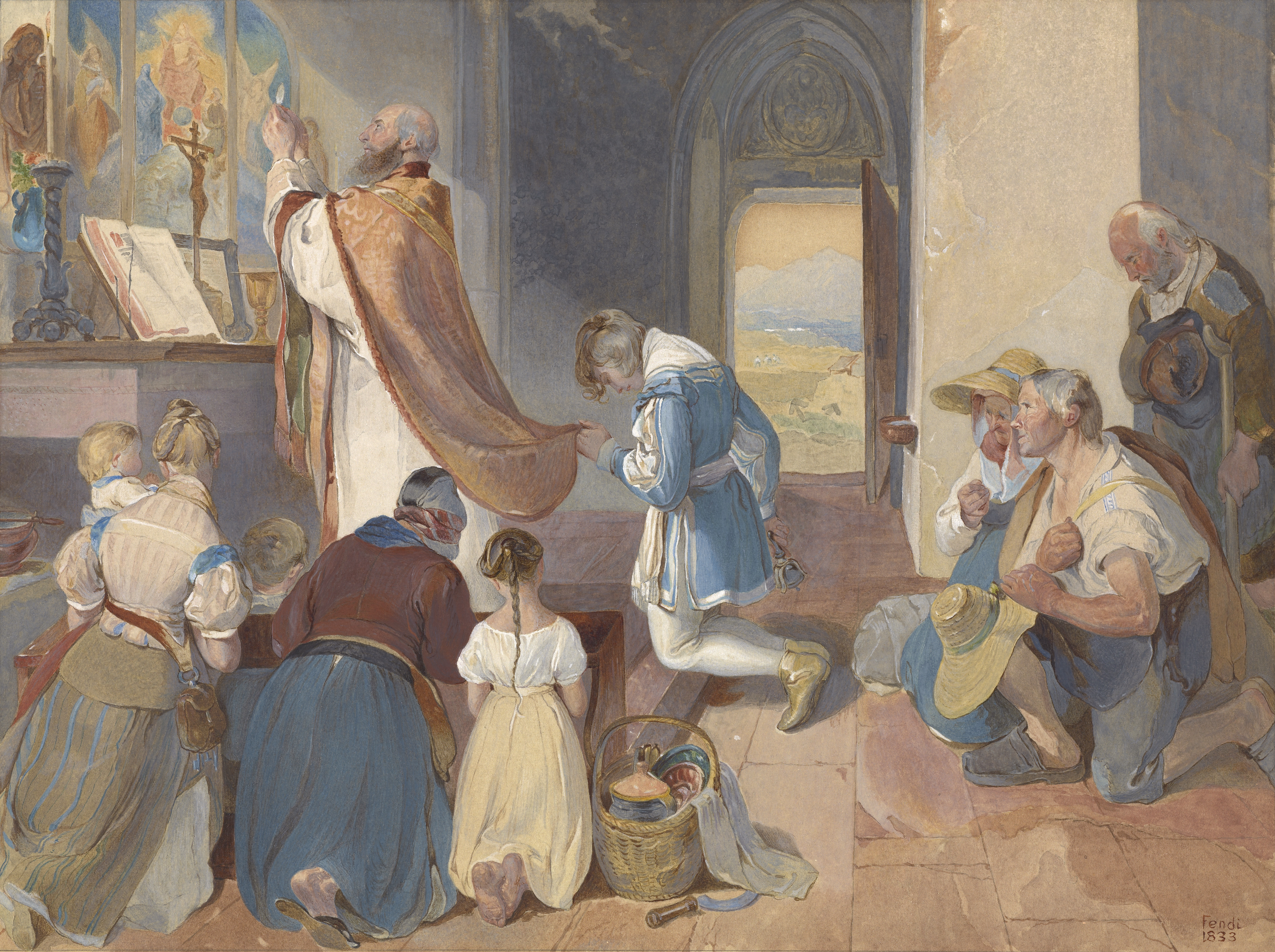
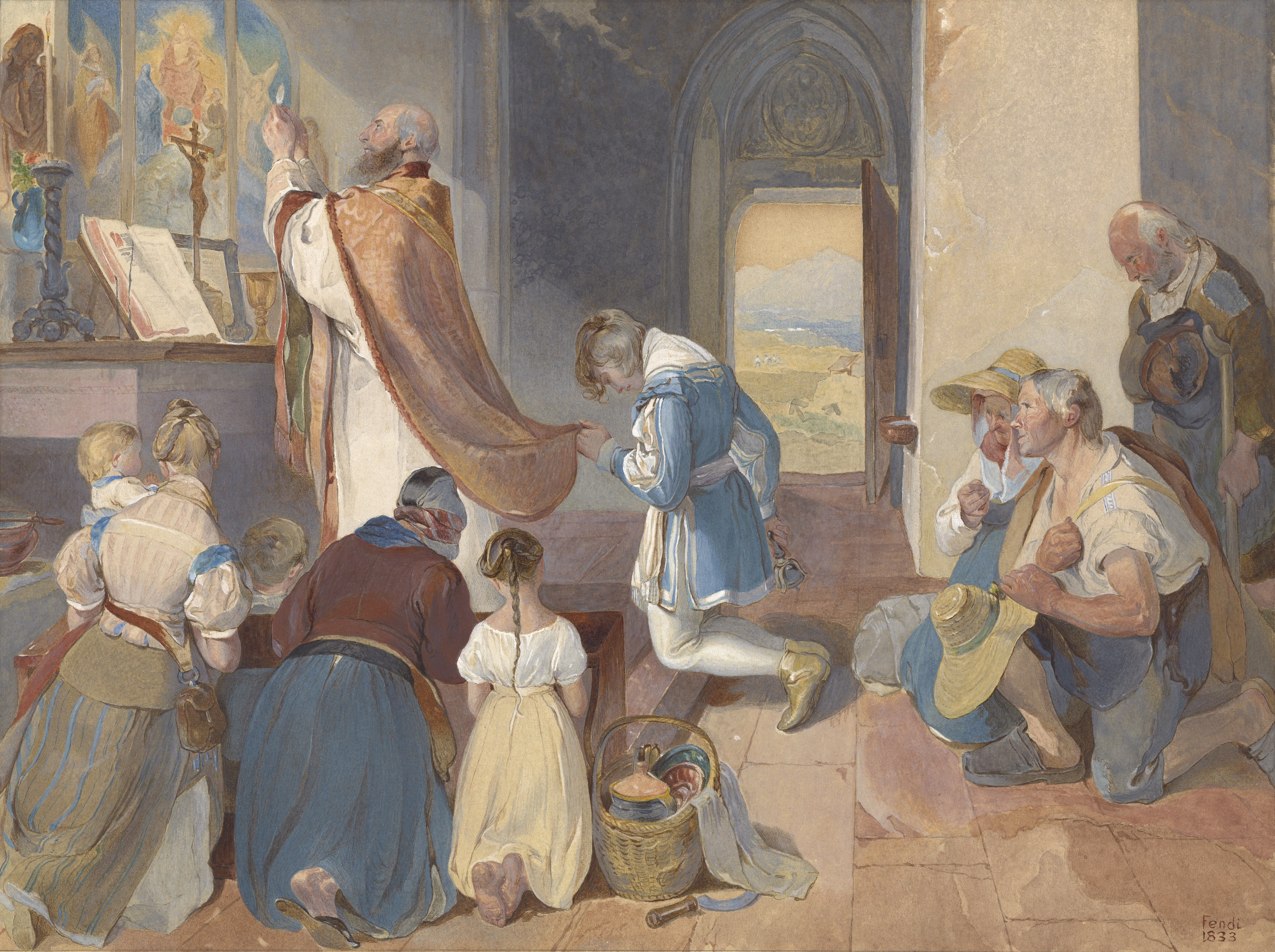
By right, we should feel most at home before the altar, because it is there that we rejoice in the source of all forgiveness.  But in the Church during the Eucharist, we give thanks not only for the forgiveness wrought by Christ’s Sacrifice on the Cross.  We also give thanks for the fact that when we share fully in the Eucharist, we receive not only a share in Christ’s forgiveness; we receive a share in the life of Christ himself.  We receive not only the Forgiver’s forgiveness.  We receive the Forgiver.

To receive forgiveness is to be restored to our former self.  But to receive the Forgiver means something greater.  It means not simply that we’re restored to our former self, but that we’re raised from our state of sinfulness even higher than our original state, to a share in the life of the Forgiver’s Self.  We share in the life of Christ, and so are given the power to forgive others as Christ offers forgiveness:  to all persons, in all circumstances, for ever and ever.

The Assumption of the Blessed Virgin Mary

The Assumption of the Blessed Virgin Mary
Rev 11:19;12:1-6,10  +  1 Cor 15:20-27  +  Lk 1:39-56
August 15, 2018

“…my spirit rejoices in God my Savior….”

NOTA BENE:  The Vigil Mass uses different Scripture readings than the Mass of the day.

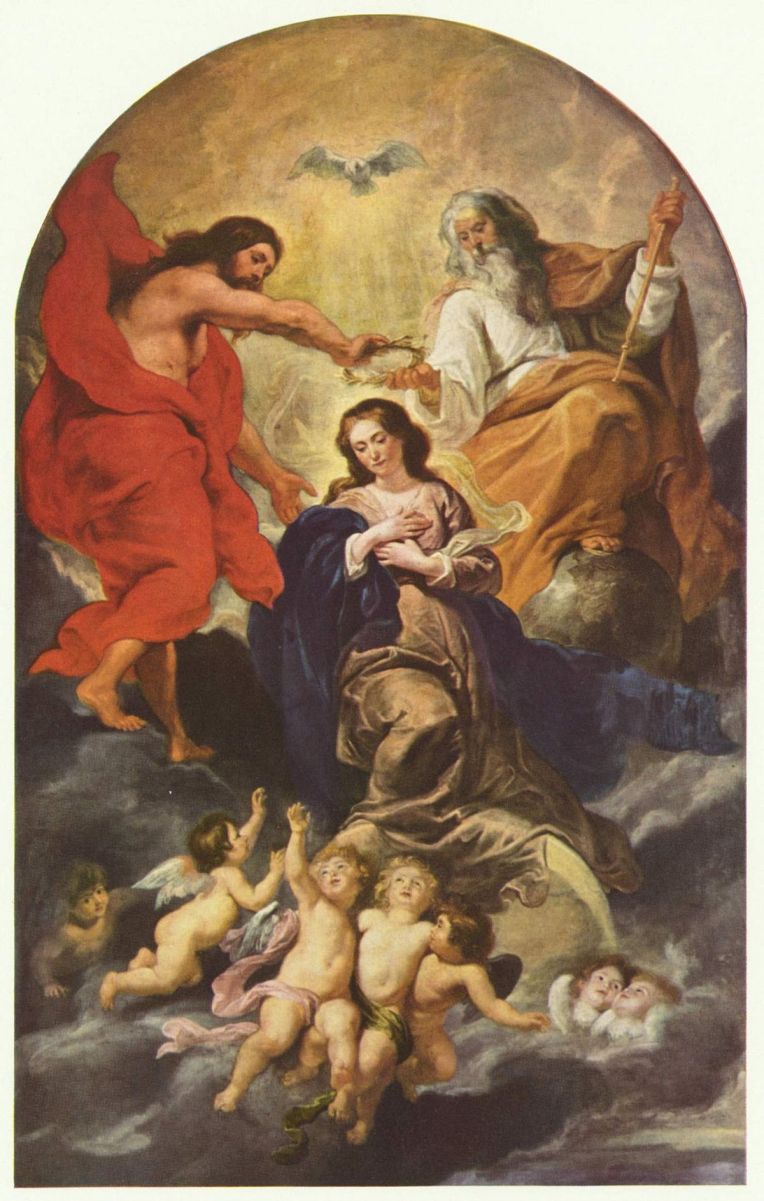
We Catholics believe that when a person dies, if he is in a state of perfect grace, his soul goes directly to Heaven.  To use another word, we believe that his soul is “assumed” into Heaven.  We may know people in our own families who, we’re sure, had their souls taken by God directly into Heaven.  This may happen with many people who had time to prepare for a holy death.  The main difference between the end of these persons’ lives and the end of Mary’s life is that both Mary’s soul and her body were assumed into Heaven.

Why was Mary’s body taken into Heaven along with her soul?  It’s because Mary is the type of person that all of us were originally supposed to be, but didn’t become because of Original Sin.  If Adam and Eve, and all of us in turn, had never sinned, then every one of us would rise body and soul into Heaven at the end of our lives.  Death as we know it (including the separation of body and soul) only exists because of human sin.

Yet Mary was given a special gift by God, since God knew from eternity that she would accept His calling to be the Mother of Christ.  This gift was the privilege given at the first moment of Mary’s existence:  the privilege of her Immaculate Conception.  The fact that she was conceived by her mother, St. Anne, without Original Sin meant that her whole life was uniquely holy among all God’s creatures.  Her life was still filled with struggles and pain, but at the end of her life on this earth, Mary became a sign of hope for us.

Because Mary was never touched by the effects of Original Sin, and because she never chose to sin, she didn’t suffer the corruption of her body.  Her soul and her body remained united at the end of her earthly life, and both were taken up into Heaven.

Mary is the perfect example of what it means to take the gifts given by God and use them completely for good.  Because Mary faithfully accepted the great gift of being the Mother of Jesus, the Mother of God, and because she always stood faithful to Christ, even as he was dying on the Cross, she was protected by God from one of the effects of Original Sin:  that body and soul should be separated at the time of death.

So when the end of Mary’s life came, she became the sign that shows all of us our own destiny as disciples of Christ.  When we die, our souls and bodies will be separated for quite some time:  until the end of time, in fact.  Nonetheless, if you and I follow Christ even when it means embracing the Cross—if we are always willing to use the gifts God has given us for good and not evil—then when Christ comes a second time, our bodies will be raised by Christ and rejoined to our souls.  With our Blessed Mother in Heaven we will all thank God for the gift of life.  We shouldn’t forget that we proclaim this hope in our Creed when we pray, “We believe in the resurrection of the body.”  Mary experienced this gift in a unique way immediately at the end of her earthly life.

Assumption - Murillo

St. Maximillian Mary Kolbe

St. Maximillian Mary Kolbe, Priest and Martyr
Ezekiel 2:8—3:4  +  Matthew 18:1-5,10,12-14
August 14, 2018

“See that you do not despise one of these little ones….”

For you to be a saint means to live your life in Christ, and at the same time to allow Christ to live His life in you.  This means nothing more or less than having the relationship between Jesus and His Father live in your own heart and mind.  This is something mystical, but nonetheless is part and parcel of being an ordinary Christian.  It’s not just for monks and nuns who spend each day in prayer.

By contrast, it’s not as if an ordinary Christian first reads stories from the Gospel about Jesus and the Father, and then says, “Gee, I’d like to have that kind of relationship with God the Father.  I think I’ll try to imitate Jesus.”  To think along that line is to put the cart before the horse.  To think that way is to ignore the truth that at your baptism, the two events of being adopted by God the Father and becoming a member of the Mystical Body of Christ are really part and parcel of each other.  Both are accomplished at the same time by God the Father’s love.  In other words, it’s not so much that Jesus is our “older brother” spiritually, whose relationship with the Father we admire.  Rather, it’s as members of Christ’s Mystical Body that you and I share in the sonship of Jesus.

To ignore all this—to put the cart before the horse—is to forget that any relationship between a father and child is based on the primacy of the father’s love.  Especially in a culture like ours, children are at risk of believing that it’s their accomplishments that earn them their fathers’ and God’s love.  As Christians we must combat this ethic, for our own spiritual lives as well as for those of our children.