Saturday after Ash Wednesday

narrow banner

Saturday after Ash Wednesday
Isaiah 58:9-14  +  Luke 5:27-32
February 29, 2020

Teach me your way, O Lord, that I may walk in your truth.

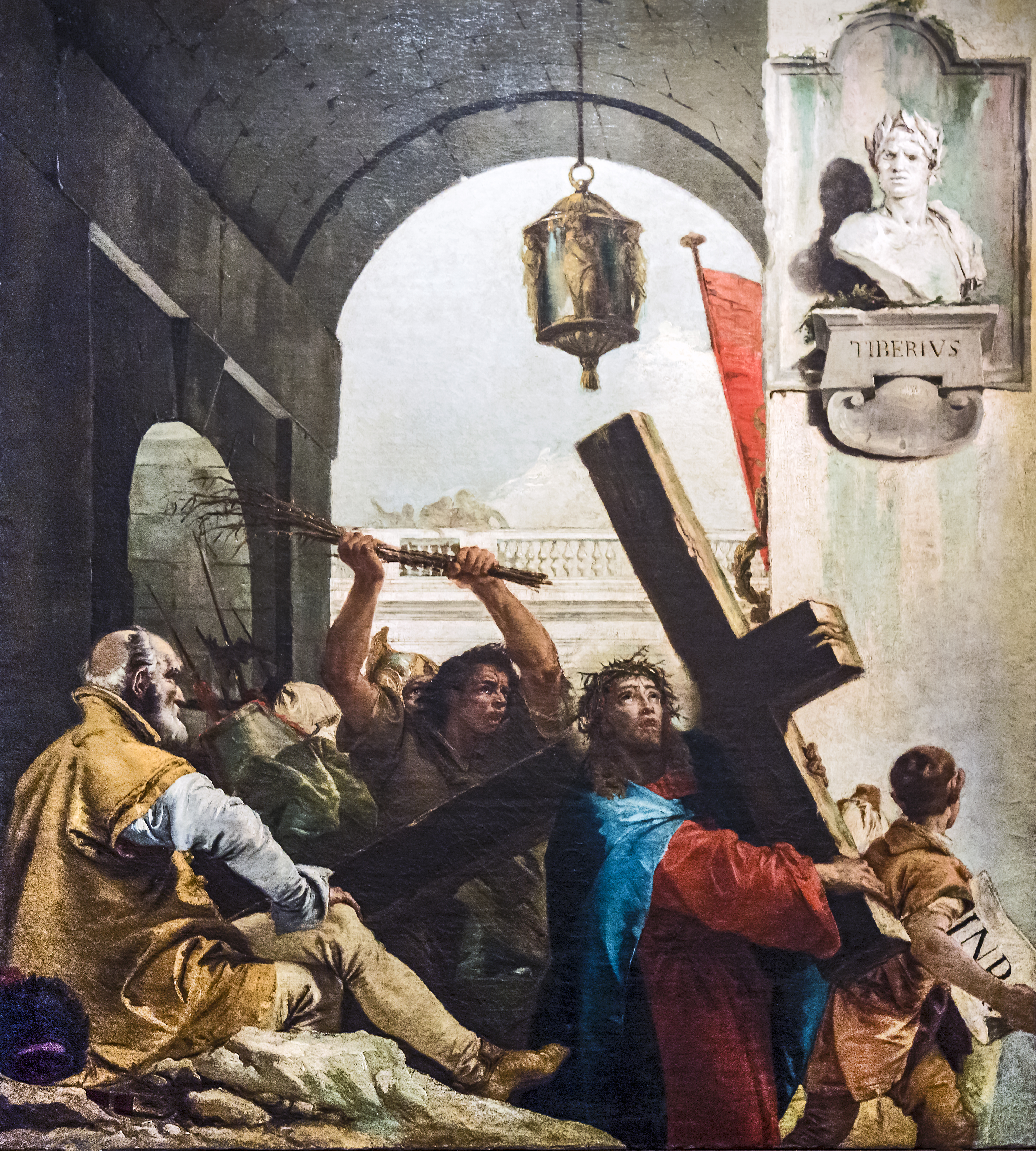
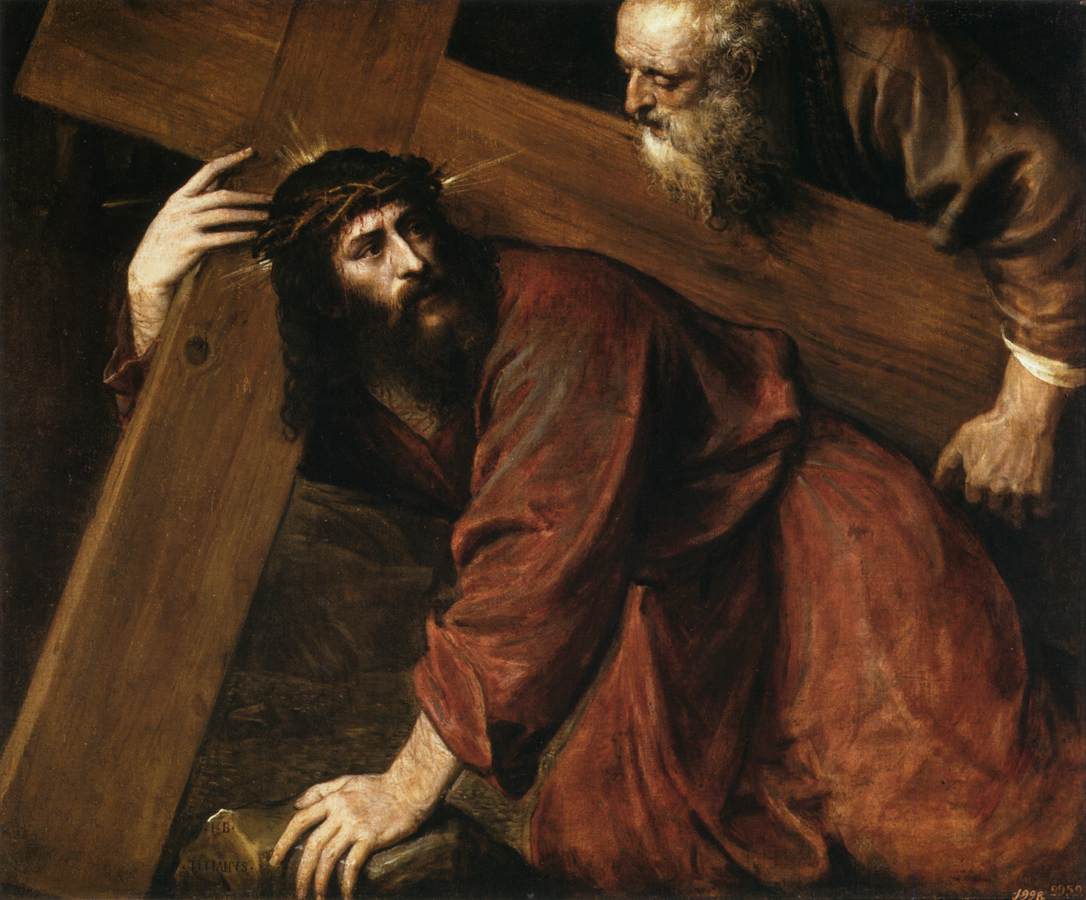
During Lent, any time that you hear the word “way” you ought to think of the Via Dolorosa:  the “Way of Sorrows”.  This is the way from the city of Jerusalem to the top of the hill of Calvary, where Jesus’ feet and wrists were nailed to a cross.  For the Jews in ancient days, Jerusalem was the greatest city on the face of the earth.  It was as close to Heaven as you could find on earth.  Little wonder, then, that the city of Jerusalem was often used in the Scriptures as a “type” or symbol for Heaven.  This is where the phrase “the heavenly Jerusalem” comes from.

Jerusalem was so great a place that anyone who resided there would rarely leave it.  If they did, it would only be for a serious reason.  But to go outside the walls of the city of Jerusalem, and travel up to the hill of Calvary in order to be crucified:  there was a particular shame in this.  Going outside of Jerusalem to be killed by the state was symbolic of being an outcast in death.

So you can see how this way—the Via Dolorosa—was not only a way of sorrow, but of shame as well.  No wonder that most of the apostles weren’t willing to walk the Way of the Cross behind their Master.

But this is the “way” that the Psalmist foreshadowed:  “Teach me your way, O Lord, that I may walk in your truth.”  It is a way of contradiction, because it leads from a city of life, power and strength, to a barren hilltop of death, weakness and impotence.  It is not a way that any right-thinking person would want to go, if he learned about what’s important from the teachers of this world.

But Our Lord has a unique way to teach us:  a way that we learn only in the process of following Him.  This way leads to mercy, forgiveness and—through mercy and forgiveness—divine love.  For all the times that we are tempted by our culture to cultivate bitterness, anger and resentment against those who have hurt and harmed us, Our Lord invites us to follow Him along a different way.

Lent 0-6

Friday after Ash Wednesday

narrow banner

Friday after Ash Wednesday
Isaiah 58:1-9  +  Matthew 9:14-15
February 28, 2020

My sacrifice, O God, is a contrite spirit….

Both John the Baptist’s disciples in the Gospel Reading and the house of Jacob in the First Reading are thoroughly focused upon themselves.  The people of the house of Jacob seem to be fasting as a way of gaining leverage in their negotiations with God.  John’s disciples want to know why Jesus’ disciples don’t have to fast in the same way they do.

In both readings God is trying to make clear what the purpose of fasting (or, in fact, any type of penance) is.  On the surface, when we fast we are imitating Christ, who fasted for forty days in the desert.  Whenever we carry out works of penance by denying something we want, we are imitating Christ who denied his own life for our sake.

But on a deeper level, through our penance we are clearing out our souls.  We are clearing out of our soul those desires which serve only ourselves.  The more and more we remove these desires, the more room there is in our soul for the desires of God, the fruit of which are the works that He wants to accomplish within us and through us.

Lent is about preparing our souls to accept the Cross of Christ in our own lives.  When we seek to follow in the footsteps of Christ, we ourselves are led to Calvary, where with Mary and the apostle John we gaze upon our God who died for us.  At the foot of the cross we learn humility and gratitude for the sacrifice Christ made on the Cross for us.

Lent 0-5

Thursday after Ash Wednesday

RSL banner

Thursday after Ash Wednesday
Deuteronomy 30:15-20  +  Luke 9:22-25
February 27, 2020

“If anyone wishes to come after me, he must deny himself and take up his cross daily and follow me.”

There are three steps to Jesus’ counsel in today’s Gospel passage.  Jesus explains to us:  “If anyone wishes to come after me, he must deny himself and take up his cross daily and follow me.”  Each of the three steps within this counsel is necessary to entering into the mysteries of Lent.  They are like three legs of a stool:  if you remove one leg, the stool will not stand.

Many Christians are willing to make sacrifices during Lent:  they are willing to deny themselves chocolate, or television, or even Facebook!  But Jesus says that to follow Him, we have to deny ourselves much more:  each of us has to deny his very self.  But what does this mean?

We can’t answer that question until we understand how we define the human self.  For many of us, our self is self-defined, because we believe in what the culture around us tells us about being a “self-made man”.  To experience deeper conversion in our lives, we have to allow God to define the terms of our lives.

But denying one’s very self is only the first step.  The second step is for the Christian to take up his cross “daily”:  not just during Lent; not just once you’ve got life figured out; but “daily”.  Crosses can come into our lives from many different places:  from our own foolish mistakes, from the evil choices of others, or from the loving and merciful will of a Father who knows what is best for us.  There are many situations in our lives as Christians that allow us to bring about goodness into this world, if only we are willing to bear our crosses daily.

The third step of the Lord’s command is to follow Him.  That is to say, we should recognize where the first two steps are leading us.  If we deny our very self, and take up our cross each day, then we are headed with Jesus to Calvary.  That’s where Jesus will lead us, if we follow Him.  We do not need to be frightened by this, because if—like Our Blessed Mother and the Beloved Disciple—we walk with Jesus to Calvary, He has promised that we will experience the joy of His Risen Life, a life which is deeper than any suffering, and everlasting.

Lent 0-4

Ash Wednesday

narrow banner

Ash Wednesday
Joel 2:12-18  +  2 Corinthians 5:20–6:2  +  Matthew 6:1-6,16-18
February 26, 2020

For our sake He made Him to be sin who did not know sin ….

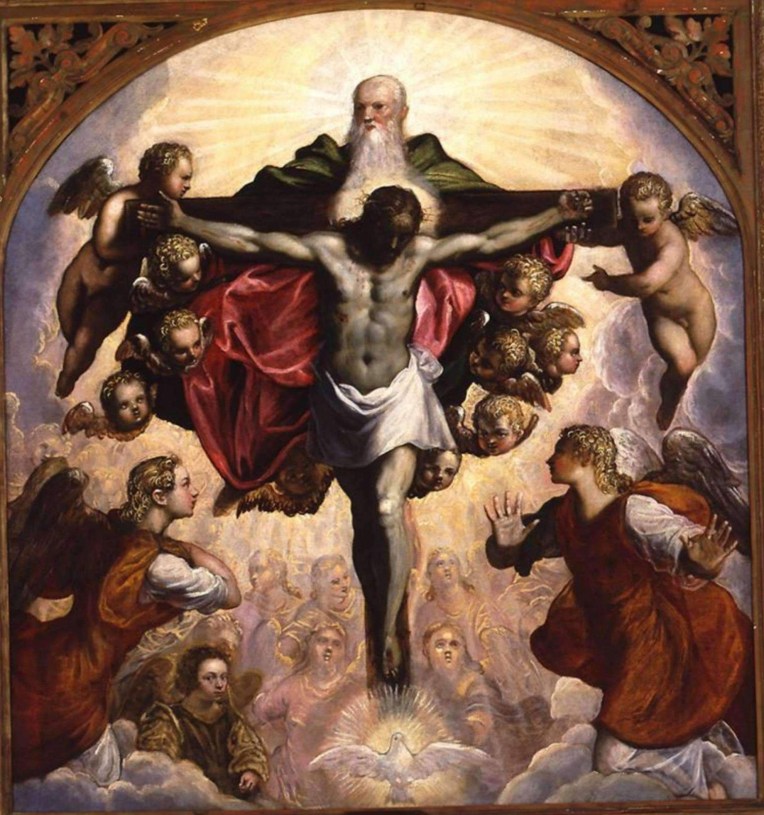
One way to meditate upon the whole of Lent is to allow our Lenten journey—including our prayer, fasting, and almsgiving—to be a means to enter into the priesthood of Jesus Christ.  Every baptized Christian shares in this priesthood, and the baptismal priesthood shapes every other call that God gives.

One phrase in particular from today’s Second Reading forces us to reckon with the depth of Jesus’ priesthood.  What does Saint Paul mean when, speaking about God the Father and the Son, he states that “For our sake He made Him to be sin who did not know sin”?  This saving truth reminds us about three distinct forms of humility that Jesus accepted for our salvation, through which He stands between sinful man and the divine Father.

First, we need to reflect upon God the Son humbling Himself to become human at the Annunciation.  Jesus stands between God and man as True God and true man.  For scriptural meditation on this saving mystery during Lent, we might use the prologue of St. John’s Gospel account, or the canticle of Christ’s humility found in the second chapter of Philippians.

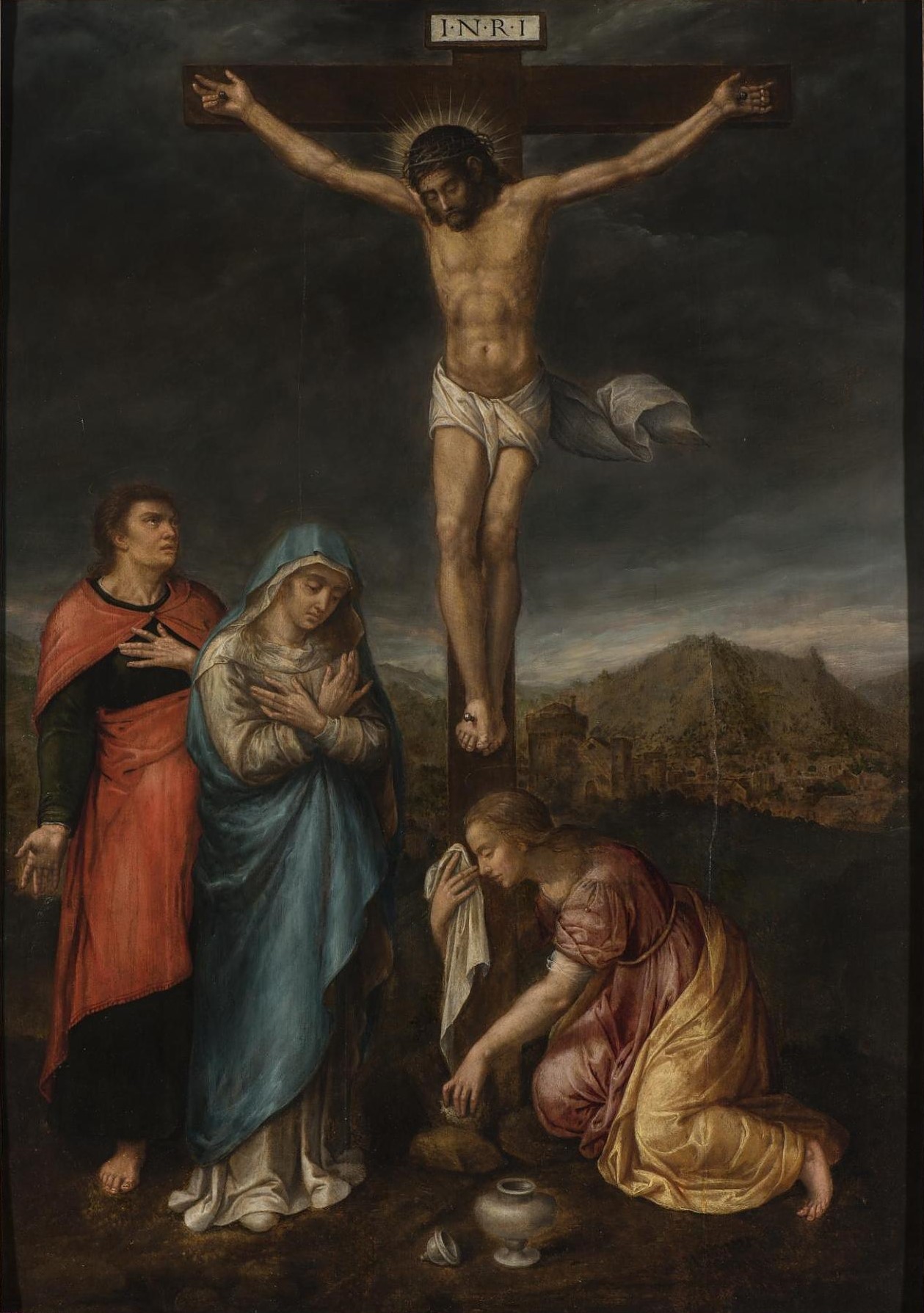
Then, more than thirty years after His conception, this divine Word made Flesh offered up His life on the Cross.  We need to reflect upon Jesus’ humility on Calvary.  Upon the Cross, Jesus is not an Old Testament priest, crying and weeping and offering a dumb animal in sacrifice.  In humility, the Word made Flesh sacrifices His own Body and Blood, soul and divinity.  To reflect on this saving mystery, we might use the Passion narrative from any of the four Gospel accounts.

But within this second form of Jesus’ humility dwells a third:  a mystery that we must not underestimate.  Again, in speaking about the Father sending His divine Son to save us, the Apostle declares:  “For our sake He made Him to be sin who did not know sin”.

Often when we meditate upon the Passion of the Christ—say, for example, during the Stations of the Cross—we are impressed by how awfully man’s sins affect Jesus.  We might imagine the Cross as “containing” our sins, so that the physical weight of Jesus’ heavy cross symbolizes the spiritual weight of all mankind’s sins.  Or we might imagine each lash from the Scourging at the Pillar as representing an individual sin.  But while those images may help us meditate upon the meaning of the Passion, St. Paul is saying something even more profound.

God the Father made His divine Son “to be sin”:  not only to carry sin, or be wounded by sin, but to be made sin.  Jesus, who from before time began was true God, stands not only in the place of sinners, but in the place of sin.  This is where He offers sacrifice as a new and everlasting priest.  His stance between merciful grace and man’s sins brings both together in Himself, where the former destroys the latter, for us men and for our salvation.

Crucifixion with 3 CROPPED

Tuesday of the 7th Week in Ordinary Time [II]

narrow banner

Tuesday of the 7th Week in Ordinary Time [II]
James 4:1-10 +  Mark 9:30-37
February 25, 2020

For they had been discussing among themselves on the way who was the greatest.

Today’s Gospel passage points our attention back to one of the first lessons of the liturgical year.  This lesson is expressed in the saying, “The wood of the crib is the wood of the cross.”  Another way of expressing the same truth is to say that “the only reason Jesus was born into this world was to die to this world”, or perhaps rather, “for this world”.  We might be tempted at Christmastime to think only of the innocence of the infant Christ, without connecting this innocence to the purity of the Lamb who was slain on Calvary.

It might seem strange for today’s Gospel passage to meander from Jesus’ prediction of His Passion and Death at the passage’s beginning to His holding up a child for emulation at its end.  But this beginning and end are connected by Jesus Himself.

Jesus, as a divine person, is completely innocent (indeed more so than any child) that He becomes a fitting sacrifice on Calvary.  We may think of innocence as a goal of our spiritual life because it prepares us to be fit for Heaven.  Perhaps greater spiritual growth might come from seeing innocence as preparing us for a share in Jesus’ Passion during our earthly life.

OT 07-2

Monday of the 7th Week in Ordinary Time [II]

narrow banner

Monday of the 7th Week in Ordinary Time [II]
James 3:13-18  +  Mark 9:14-29
February 24, 2020

…they saw a large crowd around them and scribes arguing with them.

Today’s Gospel scene takes place immediately after the Transfiguration.  There on Mount Tabor Peter had wanted to stay, saying, “Master, it is good for us to be here.  Let us make three booths….”  But Jesus teaches Peter that it was not for transfiguration that He came into this world.  In today’s Gospel passage Jesus descends the mountain and enters into conflict between His disciples and the scribes, resuming the ministry for which He became Flesh and dwelt among us.

To His disciples, who were unable to drive out the mute spirit, He expresses disappointment at their lack of faith and rhetorically asks, “How long will I be with you?  How long will I endure you?”  But Jesus’ criticism on this occasion is not limited to His own disciples.  When the father of the possessed son says to Jesus, “If you can do anything… help us.”  To this, the Lord cries out, “If you can!”

Then Jesus speaks to the heart of the matter:  the lack of faith.  He had moments before described His disciples as a “faithless generation”.  Now He says to the father, “Everything is possible to one who has faith.”  But to this, the father offers an intriguing rejoinder:  “I do believe, help my unbelief.”  Jesus must have thought him sincere since He did help him.  But perhaps today we could pray over this father’s words, make them our own in prayer, and root all of the petitions that we make today in these words.  This father recognizes that in this fallen world, faith is always needed.  One cannot outgrow the need for faith.

©Photo. R.M.N. / R.-G. OjŽda

The 7th Sunday in Ordinary Time [A]

narrow banner

The 7th Sunday in Ordinary Time [A]
Leviticus 19:1-2,17-18  +  1 Corinthians 3:16-23  +  Matthew 5:38-48
February 23, 2020

“So be perfect, just as your heavenly Father is perfect.”

+     +     +

click HERE to watch Jeff Cavins’ reflection for this Sunday (6:01)

click HERE to read the homily of Monsignor Charles Pope for this Sunday

click HERE to watch the homily of Archbishop Charles Chaput for this Sunday (15:18)

+     +     +

click HERE to read Pope Francis’ 2017 Angelus address for this Sunday

click HERE to read Pope Benedict’s 2011 Angelus address for this Sunday

click HERE to read St. John Paul II’s reflection upon the Call to Holiness

+     +     +

references to the Catechism of the Catholic Church cited for this Sunday by the Vatican’s Homiletic Directory:

CCC 1933, 2303: love of neighbor incompatible with hatred of enemies
CCC 2262-2267: prohibition to harm others apart from self-defense
CCC 2842-2845: prayer and pardon of enemies
CCC 2012-2016: the heavenly Father’s perfection calls all to holiness
CCC 1265: we become temples of the Holy Spirit in baptism
CCC 2684: saints are temples of the Holy Spirit

+     +     +

Today’s Gospel Reading has three parts.  The first two are examples that Jesus gives us.  We heard the first several examples last Sunday.  Jesus prefaced these examples by saying, “unless your righteousness surpasses that of the scribes and Pharisees, you will not enter the Kingdom of Heaven.”

All the examples follow the same pattern.  Jesus starts by saying, “You have heard that it was said ….”  Then he quotes the Old Testament to show how the scribes and Pharisees act.  But in the second part, Jesus explains how His disciples will act if they want to get to Heaven.  So Jesus continues each example by saying, “But I say to you ….”  Then Jesus gives us a new understanding of the Law of God.  In doing so, Jesus perfects the Law of God.

As Jesus gives these six examples of righteousness, they grow more and more difficult to follow.  They culminate in Jesus declaring:  “You have heard that it was said, ‘You shall love your neighbor and hate your enemy.’  But I say to you, love your enemies, and pray for those who persecute you ….”

Why would this example have shocked and confused Jesus’ crowd?  There are several reasons, the most obvious of which is that for ancient Israel, hating their enemies was thought to be a survival instinct.  From Egypt to the Red Sea to the Sinai desert to the Holy Land, they had taught themselves that it was “either kill or be killed”.  That’s how they dispossessed the enemies who lived in the Holy Land when they arrived there at the end of the Exodus.  That’s how they maintained possession of the Holy Land for centuries after the Exodus.

But after a while, this self-taught lesson sank so deeply into their hearts and minds, that a strange and terrible thing happened.  Their animosity turned inward against the People of God.

By Jesus’ day, Israel was divided into three regions:  Galilee in the north, Samaria in the middle, and Judah in the south.  The Gospel accounts paint a portrait of animosity between the Samaritans and the Jews in Judah.  This animosity is illustrated in Jesus’ parable about the good Samaritan, the point of which is seen in a Samaritan treating someone in Judah as a neighbor.

Yet even among the Jews in Jerusalem, the various parties of power were often at odds.  The Acts of the Apostles tells how St. Paul once pitted the Sadducees and Pharisees against each other by means of their religious differences [Acts 23:6-10].  By doing so, Paul escaped from the legal trial he unjustly faced.

A far more unjust trial, however, took place on Good Friday, when the innocent Son of God was declared guilty of blasphemy and nailed to a cross to die.  Meanwhile, “Barabbas”, the “Son of man” who had committed insurrection, was freed by the crowd.  The irony of Good Friday is the logical outcome of looking for an enemy where God has given you a friend.  On Good Friday, man puts God on trial, and declares God to be man’s enemy, while the whole point of the Incarnation was that man could call God his neighbor, his brother, and his Savior.

OT 07-0A

The Chair of St. Peter the Apostle

narrow banner

The Chair of St. Peter the Apostle
1 Peter 5:1-4  +  Matthew 16:13-19
February 22, 2020

“Whatever you bind on earth shall be bound in heaven….”

Peter is one of those saints so important to the life of the Church that he has more than one feast day during the year.  Today is the feast of “The Chair of St. Peter the Apostle”.

The chair is a symbol of authority.  Jesus refers to this in Matthew 23:2-3, when He commands and warns the crowd and His disciples:  “The scribes and the Pharisees have taken their seat on the chair of Moses.  Therefore, do and observe all things whatsoever they tell you, but do not follow their example.”  Of course, Moses must have had an awfully big chair for all the scribes and Pharisees to be able to fit into it… unless this “chair” is metaphorical, referring to the teaching and judging office that Moses held in the Name of God.

In today’s Gospel, Jesus declares to Simon:  “And so I say to you, you are Peter, and upon this rock I will build my church”.  The name that Jesus gives to “Peter” is a second metaphor for an office of teaching and judging, but to drive the point home, Jesus uses a third metaphor by speaking of the “keys of the kingdom of Heaven”.

The “power of the keys” is used in many ways:  some are specific to the Office of Peter (that is, the papacy), while others are shared with those ordained to priestly ministry (for example, the Sacrament of Confession).  Jesus mediates the grace of His Death and Resurrection to us through the ministry of mere human beings.  These human leaders of the Church have been chosen by God, and so we pray for them, that they might always be faithful ministers of God’s grace.

Perugino_Christ_handing_keyes_to_st_peter detail