Sometimes this verse is quoted against Catholics, who address their priests as “Father”. However, you don’t at the same time hear the New Testament Letter to Philemon quoted, where Saint Paul says, “I appeal to you for my child, Onesimus, whose father I have become in my imprisonment” (verse 10). Are these words of Saint Paul un-biblical, and un-Christian?
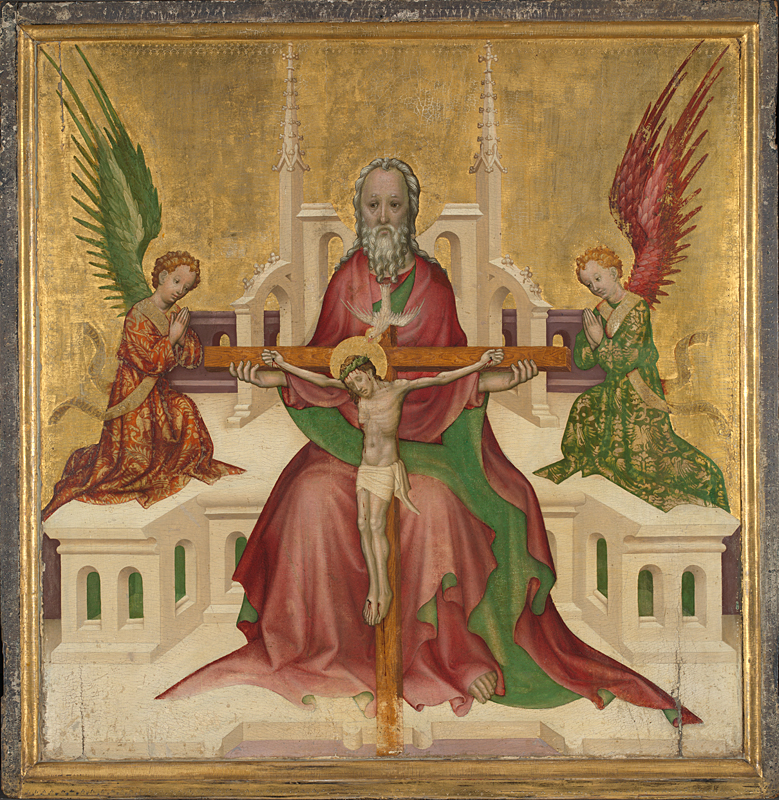
Or ought we, rather, look at today’s Gospel passage in its own scriptural context? Scripturally, the first and last verses of today’s Gospel passage help us see the meaning of Jesus’ words: “You have but one Father in heaven.”
Jesus begins by pointing out the contradiction of the scribes and Pharisees. They legitimately hold the “chair of Moses”, but the choices of their lives are illegitimate. They do not practice what they preach. These first words of the passage present the problem.
The passage’s last words present the answer: “Whoever humbles himself will be exalted.” Everything in between is a means to this end. Today, then, reflect on this question: “How often do I pray specifically to God the Father, and nurture my relationship with Him as if I were indeed a humble child of His?”
But yours, O Lord, our God, are compassion and forgiveness!
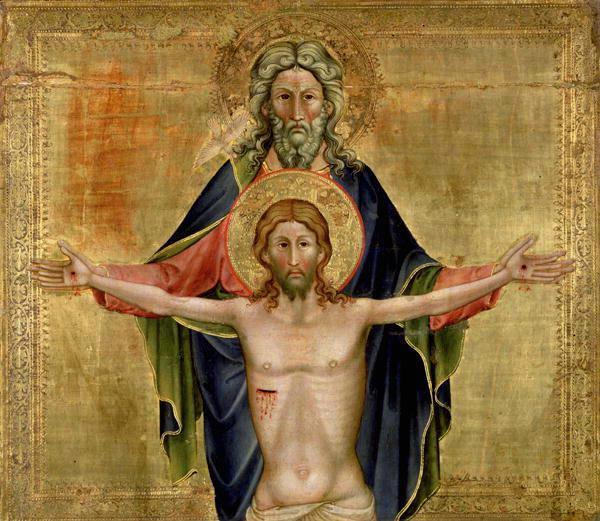
Lent is a season of perspective. Our “great and awesome God”, as Daniel describes him, is infinite in all His qualities: beauty, simplicity, and mercy, to name only a few. God’s mercy is our great focus during this season.
God’s love for us is infinite, and when we sin even in the smallest way, we offend this infinite love. God’s mercy is an expression of his love. Some people love, but only up to a point. Many of us, perhaps, are the sort of person who cannot love once we are offended. We insist that the one who has offended us does not deserve our love.
Yet who of us deserves love? What is love if not a gift? God the Father shows us what real love is in offering us His gift of mercy as a means of reconciliation, in the very light of our rejection of His gift of love. God’s mercy knows no bounds. What of ours? Can we put our need to have mercy on others in perspective with God’s mercy towards us?
Jesus also speaks in the Gospel passage about perspective. He points out to us that the measure we use will be measured back to us. This is what we pray every time we recite the Our Father: “forgive us our trespasses as we forgive those who trespass against us.” That word “as” is the fulcrum within this vital petition. Let us show mercy to the extent that we wish to receive mercy.
CCC 554-556, 568: the Transfiguration CCC 59, 145-146, 2570-2571: the obedience of Abraham CCC 706: God’s promise to Abraham fulfilled in Christ CCC 2012-2014, 2028, 2813: the call to holiness
+ + +
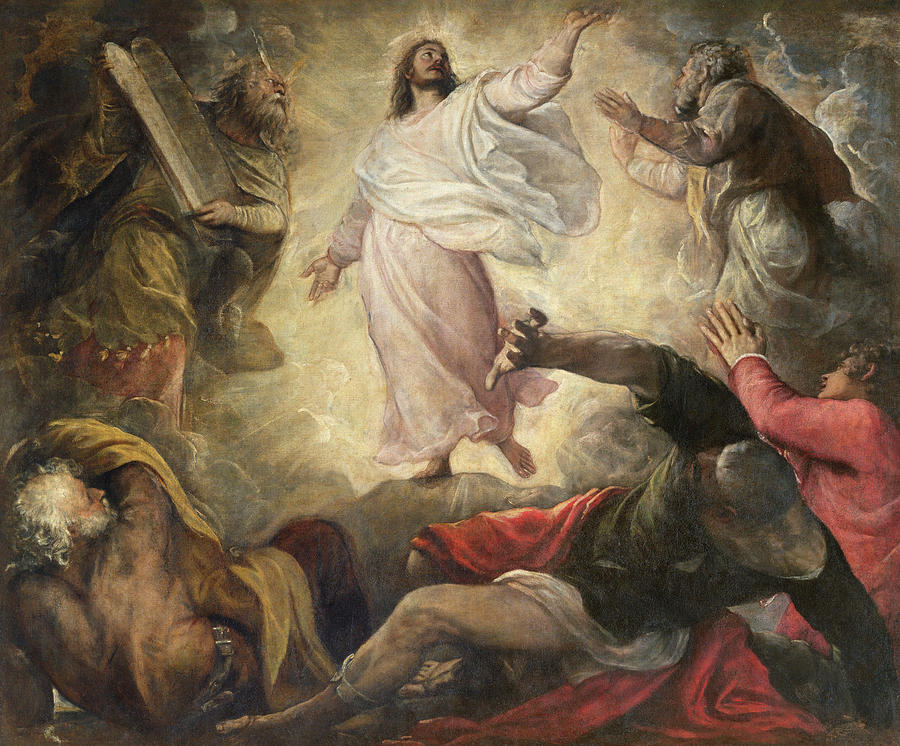
Every year on the Second Sunday of Lent, the Church proclaims one of the Gospel passages recounting the Transfiguration. This year we hear St. Matthew’s account. To appreciate it, it helps to understand its place within St. Matthew’s entire Gospel account. We should especially consider connections between the Transfiguration account and the passages before and after it. Here, consider just the preceding passage.
In the eight verses immediately preceding this Sunday’s Gospel passage, “Jesus began to show His disciples that He must go to Jerusalem and suffer many things from the elders and chief priests and scribes, and be killed”. Not surprisingly, the newly minted “Peter” rebuked Jesus: “‘God forbid, Lord! This shall never happen to you.’” But Jesus in turn rebukes Peter by referring to him with a very different name: “‘Get behind me, Satan! You are a hindrance to me.’”
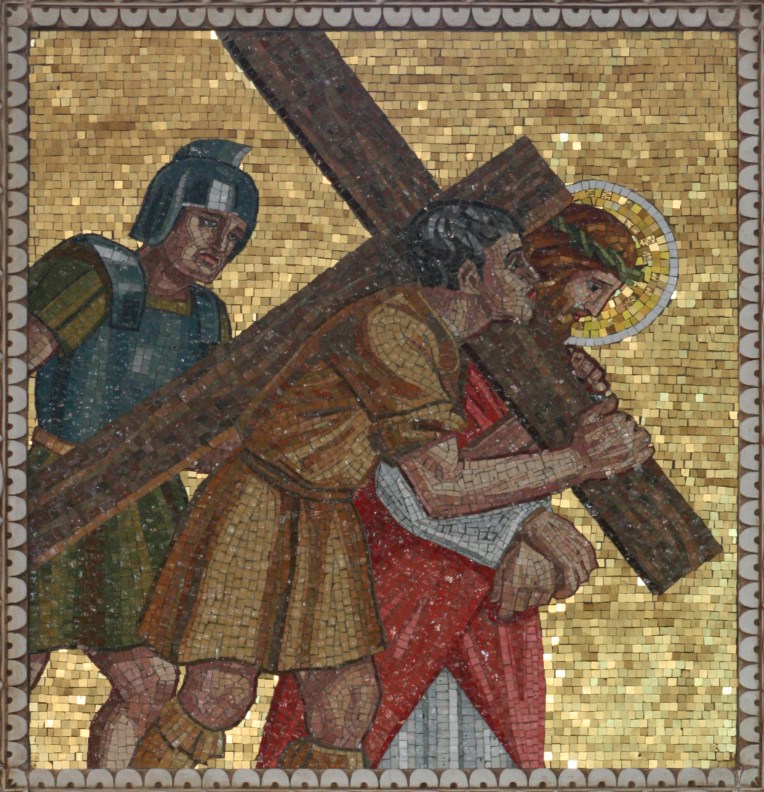
Yet Jesus didn’t stop there. To extend His point, He declared: “‘If any man would come after me, let him deny himself and take up his cross and follow me.’”
Those eight verses are key to understanding this Sunday’s Gospel Reading. Of course, those preceding verses sound very Lenten: a prediction of Jesus’ Passion and Death, and the admonition to follow Jesus by taking up one’s own cross. In fact, those prior eight verses might seem to be a better choice for the Gospel Reading on the Second Sunday of Lent. Why, then, does the Church focus upon the Transfiguration every year on this Sunday?
Lent—like one’s entire life on earth—is a pilgrimage. It’s long and difficult. The Christian shouldn’t expect or seek a bed of roses. However, in the midst of any pilgrimage there ought to be stations of rest and relaxation. In the spiritual life, there are bound to be moments of consolation. Spiritual consolations can be man-made or can originate from God.
The spiritual consolations that God sends occur in the spiritual life according to God’s Providential Will. When these consolations occur in connection with one of the sacraments, they are graces above and beyond those normally communicated by that sacrament. However, God gives some consolations independently of the sacraments and private prayer.
Spiritual consolations can buoy the Christian amidst the tempestuous waves of discipleship. However, there is a stark danger here.
The Christian may be tempted to seek or cling to spiritual consolations rather than accepting them as gifts given according to God’s Providential Will. Not surprisingly, Peter shows us in this Sunday’s Gospel Reading what not to do when this occurs. He responds to the vision of God’s glory by stating: “‘Lord, it is good that we are here. If you wish, I will make three tents here, one for you, one for Moses, and one for Elijah.’” Jesus does not even respond to Peter’s suggestion, perhaps hoping that His silence will be instructive.
One of the greatest teachers of Catholic spirituality is St. John of the Cross. His doctrine about the authentic purpose as well as the dangers of spiritual consolations directly relates to Sunday’s Gospel Reading. In his book Ascent of Mount Carmel, St. John describes those who misunderstand the place of spiritual consolations: “they prefer feeding and clothing their natural selves with spiritual feelings and consolations [than] to stripping themselves of all things, and denying themselves all things, for God’s sake. For they think that it suffices to deny themselves worldly things without annihilating and purifying themselves of spiritual attachment” [Ascent II,7,5].
More pointedly, in his book Dark Night of the Soul St. John of the Cross writes an entire chapter about imperfections that arise from what he terms “spiritual gluttony”. One example concerns the Most Blessed Sacrament and those who approach the Eucharist seeking consolations: “they have not realized that the least of the benefits which come from this Most Holy Sacrament is that which concerns the senses, and that the invisible part of the grace that it bestows is much greater. For in order that they may look at it with the eyes of faith, God often withholds from them these other consolations and sweetnesses of sense” [Dark Night I,6,5].
St. John of the Cross might be describing Peter in Sunday’s Gospel Reading, or us in our own spiritual lives, when he notes that “Christ is known very little by those who consider themselves His friends: we see them seeking in Him their own pleasures and consolations because of their great love for themselves, but not loving His bitter trials and His death because of their great love for Him” [Ascent II,7,12]. What Jesus wants to give as utter gift we should respect in its “giftedness” and neither seek or expect it; instead desiring and seeking a share in Jesus’ Cross.
“So be perfect, just as your heavenly Father is perfect.”
Jesus focuses our attention on how to love our neighbor. As a backdrop to His words today, we ought to keep in mind Jesus’ two great commands: to love God and to love our neighbor. We also need to remember His parable about the Good Samaritan, and its point concerning who exactly our neighbor is.
Jesus is teaching us not only not to hate our enemies, but to consider them our neighbors. To help us appreciate this, Jesus points to the impartiality of God’s treatment of human beings even on the natural level of life: “your Heavenly Father… makes His sun rise on the bad and the good”. So also His Son died and rose for the bad and the good on the supernatural level.
The last sentence of today’s Gospel passage sums up this section from the Sermon on the Mount: “So be perfect, just as your heavenly Father is perfect.” Here we see Jesus drawing His two great commands ever closer. We cannot love our God any more than we love our neighbors. If I am excluding others from the definition of “my neighbors”, than to that extent I am excluding God from my life. This is so because God extends His love to every person. No person can ever be “God-forsaken”, but only “me-forsaken”. But if I forsake another, it’s not only that other’s loss, but mine as well.
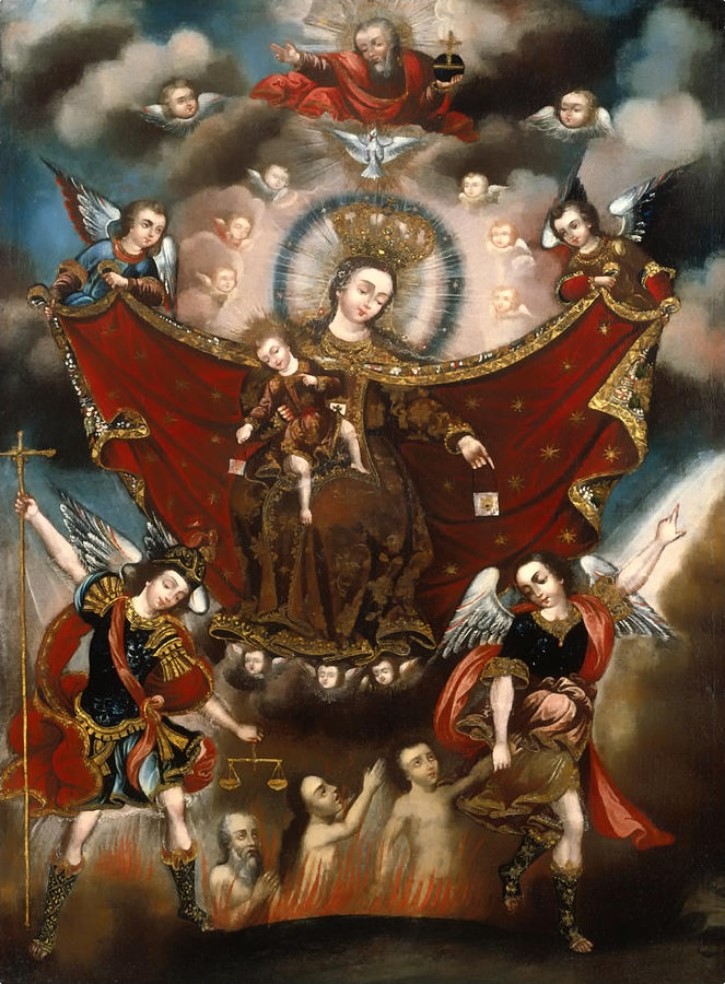
“Amen, I say to you, you will not be released until you have paid the last penny.”
When you take up a passage of Sacred Scripture, remember that the passage may have several different meanings. At a single sitting, you would likely only ponder one particular meaning, so as to keep your focus. But after you’ve spent many months and years in prayerful reflection upon the Bible, as you come upon a passage that you’ve reflected upon before, you ought to consider whether there’s an additional meaning that you haven’t previously considered.
The Church has an ancient practice of looking within any particular Scripture passage for four different types of meaning, or “senses”. Not every passage will bear all four, but we need to look for all four when we take up any given passage. These four senses are: the literal, the allegorical, the moral, and the anagogical. Without explaining what all four of these are, simply consider today’s Gospel passage in regard to the last of these four senses, the anagogical.
Simply put, the anagogical sense of Scripture takes the literal meaning of a passage and considers what it reveals about “the Last Things”. The Last Things are Heaven and hell, death and judgment. So while today’s parable might seem at first hearing only to relate to how a Christian ought to act in this world, the anagogical sense shows how the same parable also applies to life after death. Reflect, then, on how Jesus’ words following the parable—“Amen, I say to you, you will not be released until you have paid the last penny”—teach us about the nature of God’s justice in requiring Christians who have been saved by God’s grace to undergo purification in Purgatory before being capable of sharing in the fullness of divine love in Heaven.
CCC 554-556, 568: the Transfiguration CCC 59, 145-146, 2570-2571: the obedience of Abraham CCC 706: God’s promise to Abraham fulfilled in Christ CCC 2012-2014, 2028, 2813: the call to holiness
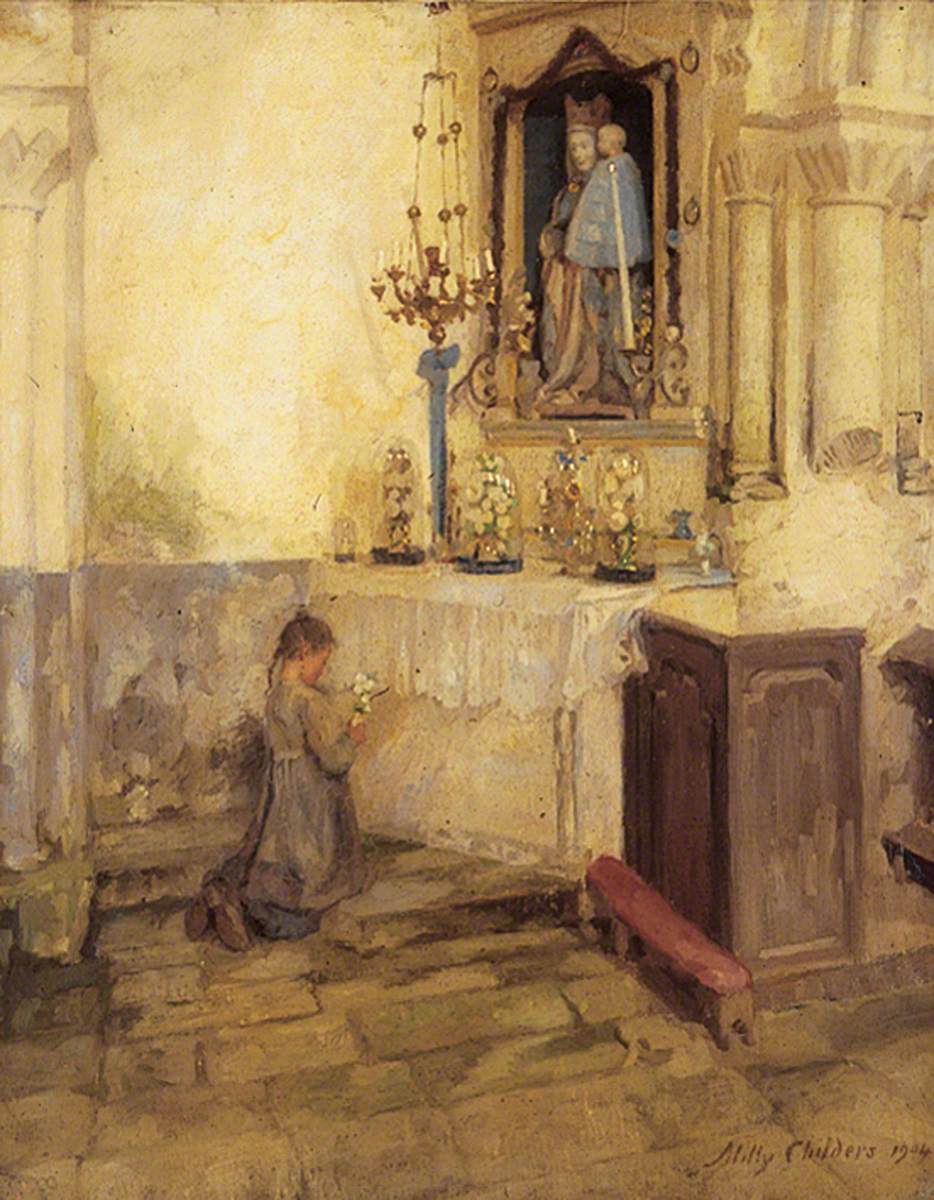
“…how much more will your heavenly Father give good things to those who ask him.”
When a Christian is a beginner in the spiritual life, most of his prayers are likely prayers of petition. As he grows in spiritual maturity, fewer of his prayers will be petitions. More of his prayers will be of the other three types of vocal prayer: contrition, thanksgiving and adoration.
However, is one of the goals of the spiritual life to no longer offer prayers of petition? Should you strive to reach the point where you no longer “need” to offer petitions? Would this even be possible?
In the secular culture that surrounds us, independence is prized. Standing on one’s own two feet is a hallmark of personal identity. But Christian growth is marked by becoming more like a little child. This occurs as one realizes one’s deep and abiding—indeed, everlasting—dependence upon God the Father. One doesn’t, strictly speaking, grow in dependence upon God, for one can never be anything but fully dependent upon Him. One grows, rather, in one’s awareness of this dependence, as well as one’s comfort in resting in His providential care.
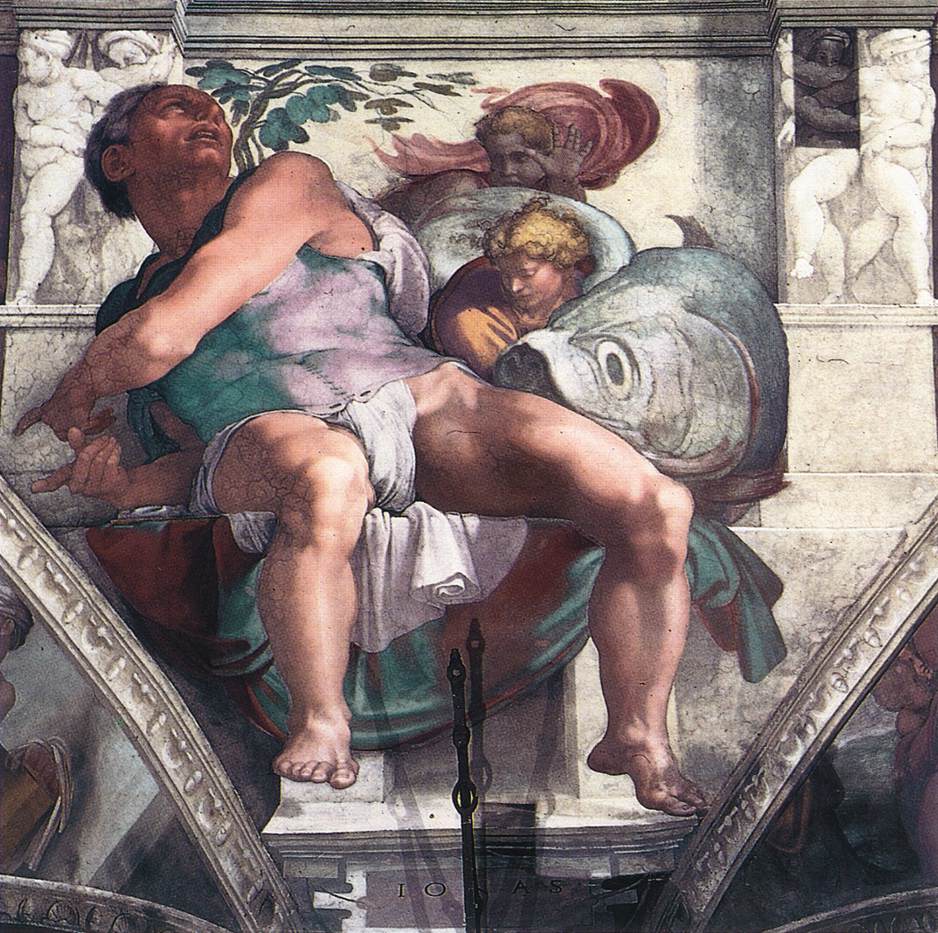
“Just as Jonah became a sign to the Ninevites, so will the Son of Man be to this generation.”
Signs are important in the Christian journey. Jesus speaks of two signs in today’s Gospel passage. He says that both Jonah and the Son of Man are signs for others. But Jesus says more. He explains that “as” Jonah was a sign to the Ninevites, “so will” the Son of Man be a sign to “this generation”.
So we need to ask first how it was that Jonah was a sign to the Ninevites. The Old Testament Book of Jonah presents Jonah in two ways. First, Jonah preaches the need for repentance throughout Nineveh. Second, he is thrown overboard into deep waters and is swallowed by a large fish where he spends three days, all because he is the scapegoat for the affliction facing his shipmates.
Given all this, how does Jonah foreshadow Jesus serving as a sign to Jesus’ own generation? First, Jesus proclaims the Kingdom of God. This proclamation always begins with preaching the need for repentance and conversion. His preaching, however, along with His saving works, inevitably lead to His condemnation. Jesus rhetorically asks His co-religionists, “I have shown you many good works from my Father. For which of these are you trying to stone me?” [John 10:32]. This reflects what the Beloved Disciple declares in the prologue of his Gospel account: “He came to what was his own, but his own people did not accept him” [John 1:11].
Jesus’ rejection reaches its climax on Good Friday. Yet we need to reflect upon the plain fact that Jesus’ rejection continues today. His rejection, which the story of Jonah foreshadows, is shared in today by each faithful member of Christ’s Body who lives and breathes in this fallen world. At His Last Supper Jesus declares to His disciples, “If the world hates you, realize that it hated me first” [John 15:18].
“If you forgive men their transgressions, your heavenly Father will forgive you.”
Our prayers of petition add nothing to God: neither to His knowledge of us, nor to His love for us. God cannot love us more than He already does. Likewise, He knows everything about us, better then we know ourselves. He knows our past lives, our current thoughts, motives and actions, and our destiny. So if we offer our petitions to God, since we do so not for God’s sake, we must do so for our sake. But in what sense is this true?
If our petitions are answered as we wish, then the act of petitioning God beforehand helps our little minds understand our dependence on God: that every good thing comes from him, not from ourselves.
If our petitions are not answered as we wish, because what we wish is contrary to what God wishes for us, then the act of petitioning God helps our little hearts turn towards Him and ask questions about our own desires, and how we might need to reform them. Hopefully this helps us enter more deeply into God’s Heart and His desires for us.
Yet if our petitions are not answered as we wish because what we wish is something we are not ready for, then the act of petitioning God helps our little souls to grow in their capacity and desire for God’s good gift. We hear St. Augustine speak to this holy need in the Office of Readings during the Sixth Week in Ordinary Time:
“The whole life of a good Christian is a holy desire. Now what you long for, you do not yet see: however, by longing, you are made capable, so that when that has come which you may see, you shall be filled. For just as, if you would fill a bag, and know how great the thing is that shall be given, you stretch the opening of the sack or the skin, or whatever else it be—you know how much you would put in, and see that the bag is narrow—by stretching you make it capable of holding more. So God, by deferring our hope, stretches our desire; by the desiring, stretches the mind; by stretching, increases its capacity. Let us desire therefore, my brethren, for we shall be filled.”