“Do not think that I have come to abolish the law or the prophets.”
Within today’s scriptures there is a tension between divine revelation and the human will. In the First Reading, Moses declares, on the one hand, that divine revelation is given to us by God and must be accepted as is. On the other hand, Moses advises the people to take care not to forget what they have seen with their own eyes and heard with their own ears. Neither the Revelation of God which comes from Him nor our human experience of God is unimportant.
But for us who aspire to serve faithfully as His disciples, Jesus, as a faith-filled Jew, declares in today’s Gospel passage that everything we need to know has already been revealed. At times if we feel bored, it is because we are tired and have stopped to rest, while the world has moved on. If we feel that every day we are staring into the same old face of existence—that the world has ground to a halt—then it is surely we who have stopped moving.
When we follow God’s commands, we are not only like little children who are obeying their Father’s Word. The commandments and other forms of God’s divine revelation are also a source of wisdom for us, offering insight into the mysteries of human life. Whether we understand God’s ways completely or not, when we follow God’s commands, we become more like Him who gave them to us, because what God is describing in giving us His commandments is a description of Himself. He is always faithful to those with whom He has made a covenant. He is always merciful to those who call upon His Holy Name.
“So will your heavenly father do to you, unless each of you forgives your brother from your heart.”
The Church, in which we share in the Body of Christ, is our truest home. By right, we should feel most at home in church, because it is there that we celebrate the source of all forgiveness. At the altar, the Church celebrates the sacrifice of Christ on the Cross. When the priest speaks in the name of Christ, speaking those words that Christ spoke at the Last Supper, we leave our normal home in time and space and are taken into that home where forgiveness was first given by the God-man. We are transported into the presence of Christ’s eternal sacrifice: the sacrifice of Christ on the Cross, the Sacrifice which is the reason we can be forgiven.
But in our home within the Church, we find not only forgiveness. In the Church, when we share in the Eucharist we are giving thanks not only for the forgiveness wrought by Christ’s Sacrifice on the Cross. We also give thanks for the fact that when we share fully in this sacrament, we receive not only a share in Christ’s forgiveness. We receive a share in the life of Christ himself. We receive not only the Forgiver’s forgiveness; we receive the Forgiver.
To receive forgiveness is to be restored to our former self. But to receive the Forgiver means not simply that we’re restored to our former self, but that we’re raised from our state of sinfulness to a share in the life of the Forgiver’s Self. We share in the life of Christ, and so are given the power to forgive others as Christ offers forgiveness: to all persons, in all circumstances, for ever.
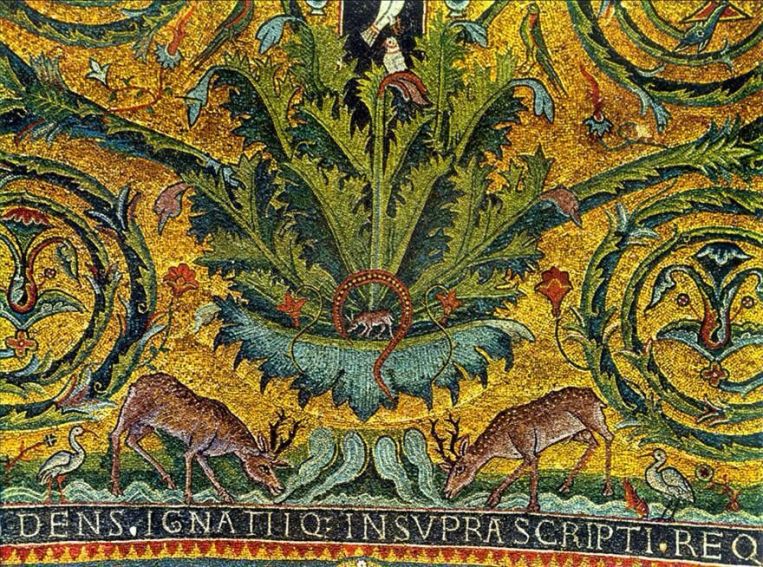
Today’s Responsorial Psalm joins together parts of two consecutive psalms. Both psalms are short: Psalm 42 is twelve verses long, while Psalm 43 is only five verses. Within these two psalms is a repeated sentence. At the midpoint and the end of Psalm 42 and at the end of Psalm 43 the psalmist cries for what he seeks: “Wait for God, for I shall again praise him, / my savior and my God.” That these psalms are next to each other in the psalter and that they share this sentence suggests that we ought to pray them together. That’s what today’s Responsorial does, although in a very abbreviated manner.
That thrice-repeated sentence—“Wait for God, for I shall again praise him, / my savior and my God”—gives this combined psalm (42-43) a hopeful character. However, when we pray the entirety of both psalms, it’s clear that they form a lament. While the psalmist is hopeful for what he seeks, he hopes amidst desolation. This combination of hope and desolation makes these psalms fitting for Lent.
In the first half of today’s Responsorial, the predominant image is the psalmist’s thirst. It is a thirst “for the living God”. This thirst becomes our focus since it’s repeated within the refrain of today’s Responsorial. The psalmist plaintively yet hopefully asks for what he seeks: “When shall I go and behold the face of God?”
The second half of today’s Responsorial focuses upon God and how He will bring to pass what the psalmist hopes for. The psalmist makes a hopeful plea to God: “Send forth your light and your fidelity”. God’s light and fidelity are the source of the psalmist’s hope, even amidst his desolation. God’s light and fidelity are what will lead the seeker to God’s “holy mountain”, God’s “dwelling place”.
That is the place where the seeker shall “behold the face of God”. There the seeker shall, in the last verse of the Responsorial, “go in to the altar of God, [and] give [Him] thanks upon the harp”. This end, this goal of praise in His presence would be carried out by the psalmist upon the harp. Christians, however, have a two-fold hope that differs from the psalmist. The Christian hopes finally to see God face-to-face in Heaven in what the Church calls “the Beatific Vision”. Yet even on earth the faithful Christian encounters God through the Holy Sacrifice of the Mass. The words of these psalms make a fitting and beautiful meditation before Holy Mass begins, helping the Christian pilgrim to see what He seeks in Christ’s self-oblation upon the altar of God.
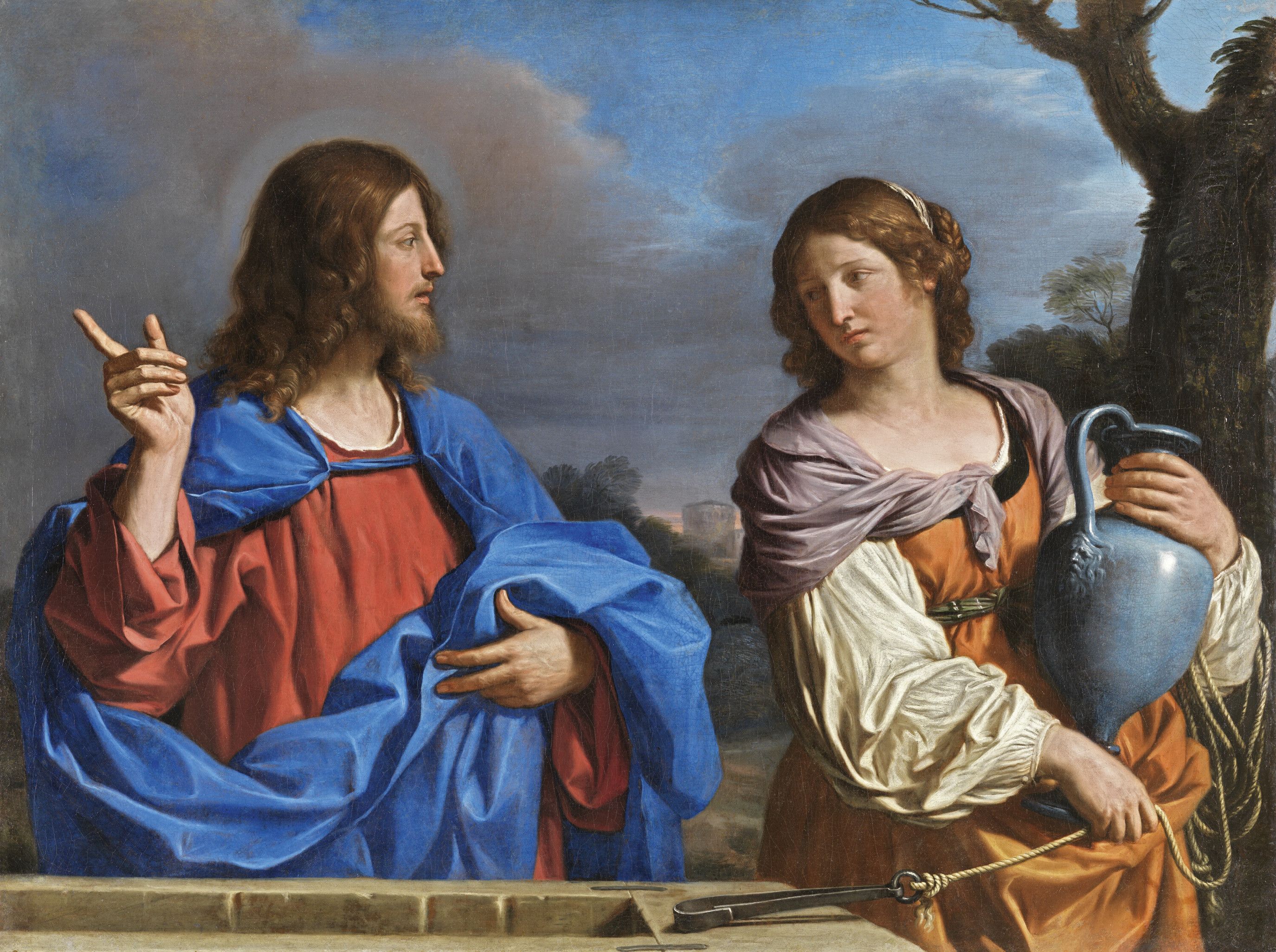
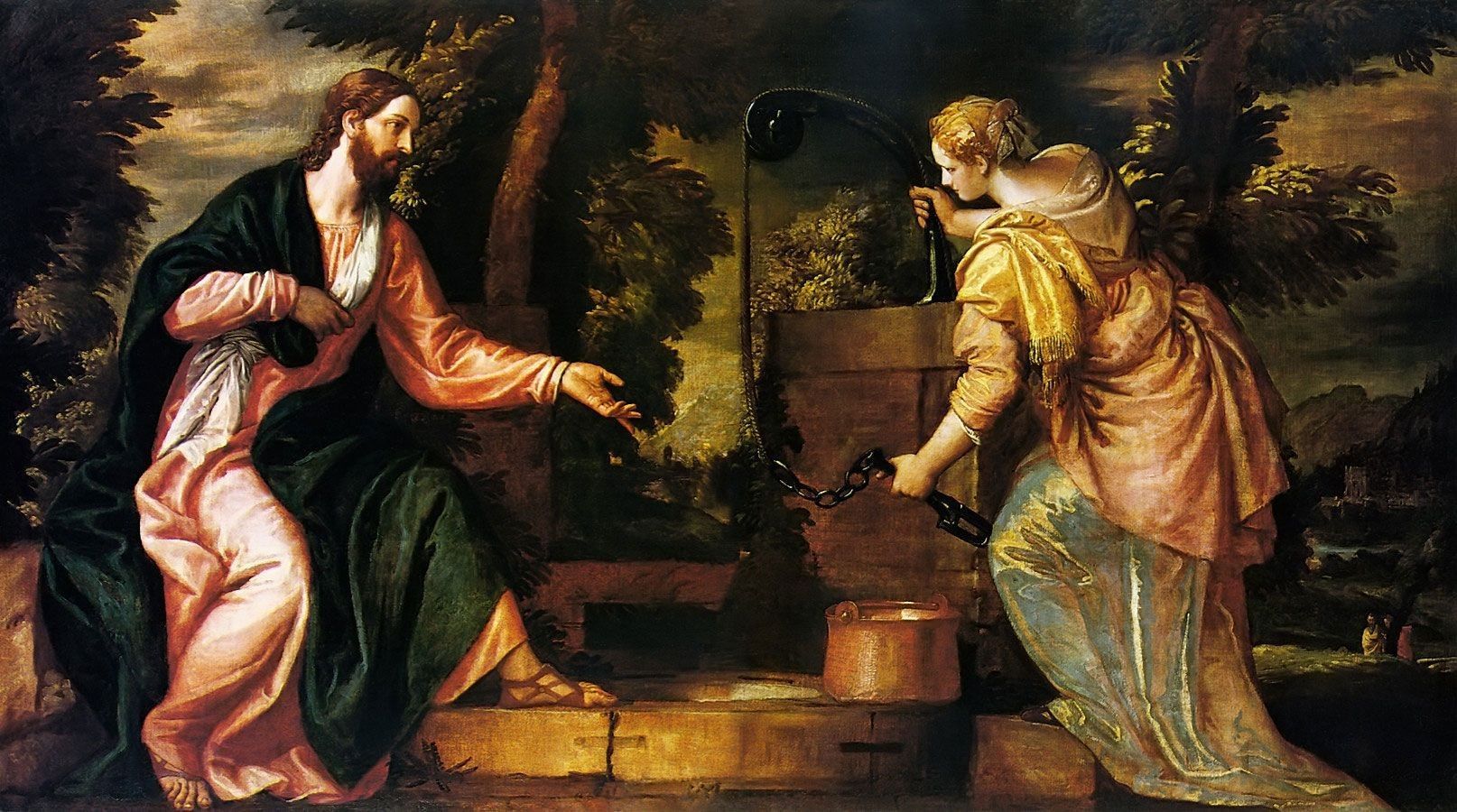
The love of the Sacred Heart of Jesus is what the Samaritan woman in today’s Gospel Reading is seeking. Jesus knows better than she does what kind of thirst is in her heart. She’s looked for love in many places, but has failed in her search. Jesus wants to offer her the love that can only come from God. He offers the same to us during Lent.
One of the guideposts that God has given to help us is the Ten Commandments. The Ten Commandments, of course, fall into two parts. In our whole life on earth, God really asks only two things: to love God and to love our neighbor.
Yet there’s a reason that God put the First through Third Commandments before the other seven. Just as prayer has to be the source of our good works, so following the first three commandments help us to follow the latter seven. Giving God His due is needed to have a heart open to the love of the Sacred Heart of Jesus, which in turn we are meant to share with our neighbor.
God’s First Commandment is: “I am the Lord, your God. You shall not have other gods before me.” This commandment forbids fashioning one’s own gods when God Himself does not meet our expectations. In our own day, there is no end to the suggestions that the world makes about possible substitutes for God: money, sexuality, power, etc.
One way to reflect on whether the things in our lives are challenging God for First Place is to imagine what our reaction would be if some thing was taken away from us or destroyed. What if your home, along with all your vehicles, burned completely to the ground? Would you be distraught? Or would your response be like that of Job in the Old Testament, who recognized that every thing in his life was a gift from God that he did not deserve. Would your response be like that of Jesus on the Cross, who in His complete poverty still chose to act out of divine love?
The Second Commandment calls us to respect our God in a unique way. “You shall not take the Name of the Lord, your God, in vain.” The name of a person represents that person. Throughout the scriptures we see God giving new names to individuals as signs of their identities and missions among the People of God.
The name of God is All-Holy, just as God Himself is All-Holy. To abuse the name of God is to abuse God Himself. For Christians, there are only two valid ways in which to speak the Name of God: first, for prayer; second, for leading another towards God in holy conversation, including teaching.
The Third Commandment concerns the fact that Christians are not only called to have a personal relationship with God, but are also to have a spiritual relationship with other Christians, and that together Christians are to worship God. “Keep holy the Lord’s Day.” Sunday is the day of the week on which Jesus rose from the dead, and because of this, Christians have always honored Sunday as the “eighth day” of the week, the day on which a new creation was established by God.
Every Sunday, Catholics are obliged by their baptismal promises to share in public worship at the Holy Sacrifice of the Mass. Missing Mass is an offense against God’s love because the Mass is the form of worship He gave us at the Last Supper. Jesus didn’t say at the Last Supper, “Play a round of golf in memory of me.” He didn’t say, “Catch up on your sleep in memory of me.” Jesus confirmed and specified the meaning of the Third Commandment at the Last Supper, telling us: “Do this in memory of me.”
“‘My son, you are here with me always; everything I have is yours.’”
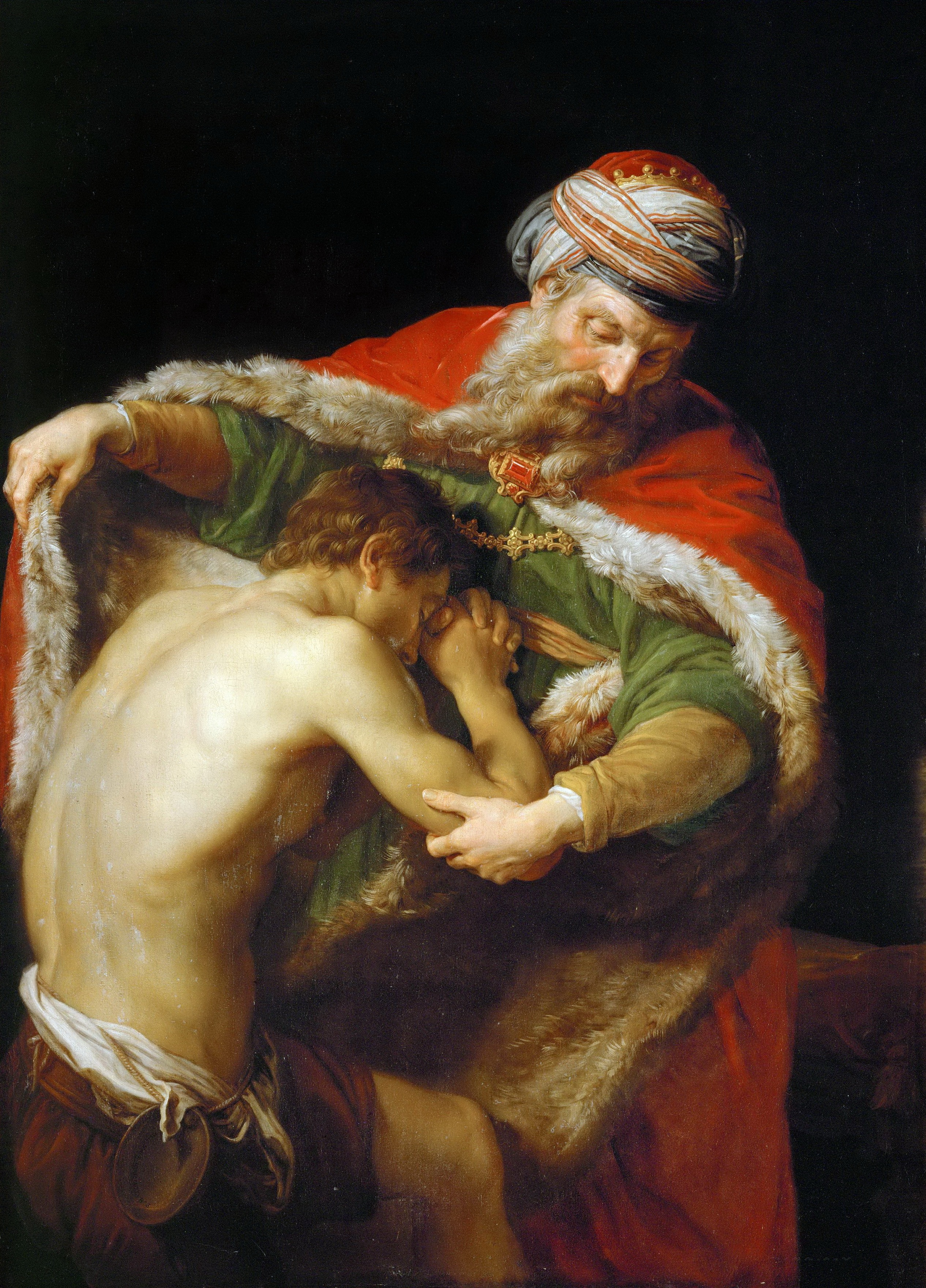
As we dig into the Parable of the Prodigal Son, we should be mindful that the title that modern editors have given this parable is distracting. When a child begins to hear Bible stories—when Grandma says to Jimmy, “This morning I want to tell you the Parable of the Prodigal Son”—Jimmy naturally thinks that the prodigal son is the focus of the story. While it’s certainly not false to call it the Parable of the Prodigal Son, it is distracting. To call it the Parable of the Prodigal Son distracts us from the joy of the father.
Although the father is more the focus of the parable than the son, the character of the son deepens our understanding of the father. But this prodigal son is—to put it mildly—an an unflattering and unattractive character. The younger son says, “‘Father, give me the share of your estate that should come to me.’” In other words, this son is saying, “All you’re good for, Dad, is your money. I don’t want to wait until you die to get your money. Give it to me now, so that I can move on with my life: without you.”
This attitude towards his father is itself far worse than the son’s following choices, by which he wastes all that his father gave him. Nonetheless, the insensitivity and baseness of this son highlight the sensitivity and depth of his father, which shine forth in the second half of the parable.
The second half of the parable shows us why we ought to call it the Parable of the Prodigal Father. If the younger son is prodigal, so is the father, though of course in a different way. The word “prodigal” means “lavish” or “extravagant”. The son is extravagant in giving away money that is not his own, but the father is extravagant in giving away mercy from the wellsprings of his heart.
The joy of this father is the focus of Jesus’ teaching. That’s why he tells this parable to His disciples, including you and me. Yes, of course the prodigal son is a key figure in the parable. The parable wouldn’t make sense without him. But the focus here is not the sins of the son, but rather on the joy of the father.
When you transpose this parable to your own life, then, you need to recognize that God the Father’s joy is infinitely greater than your sins. A lot of Christians get caught up on this. Many Christians stay away from God because they do not believe that He is even more loving as the prodigal father. This may be due to the example set by their earthly fathers. This may be due to having committed a mortal sin of such depth that they don’t believe it possible for God to forgive them. Whatever the reason, they and we need to turn to the Father whom Jesus describes through this master parable.
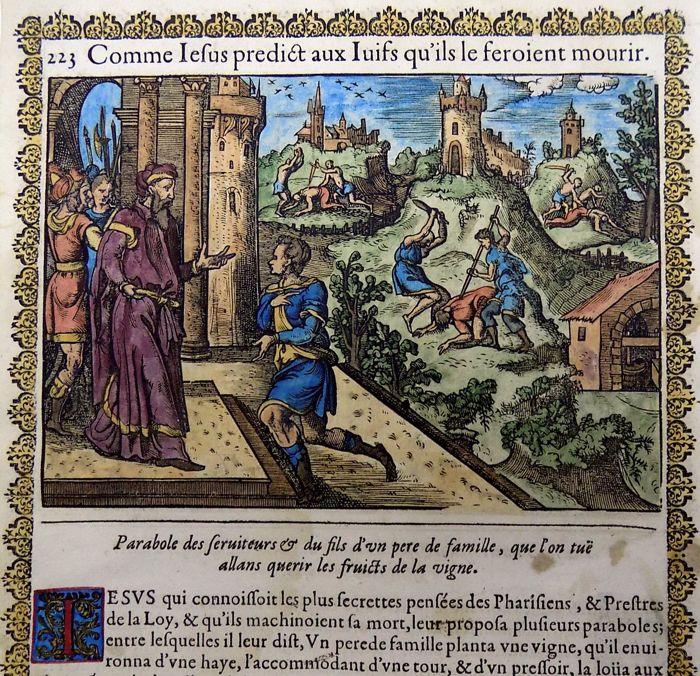
“… the Kingdom of God will be taken away from you and given to a people that will produce its fruit.”
The person who lives within his emotions acts only according to those emotions. When a person’s emotions are the only norm of human behavior, any action is justifiable, even selling one’s own brother for twenty pieces of silver. Or thirty.
The Church, on the other hand, teaches us that as human beings we are created in the image and likeness of God, and that even though this image has been distorted by Original Sin, it is supposed to be at the center of the human soul, which is at the center of the human person.
The norm for Christian behavior is the Will of God, which we discern in our lives more clearly—most especially during the holy season of Lent—when we give ourselves to God in prayer, when we abandon our own will in penance, and when we give ourselves to others in charity. If the Will of God is to have an abiding presence within our human soul—in order to animate all of our thoughts, words, and actions—we must cultivate a place in our souls for the Holy Spirit to take root and bear fruit. We cannot take credit for these fruits; we do not claim them as our own. When God asks us to make a return to Him for all the good He has done for us, we do so immediately and humbly, recognizing that He is the harvest master, and we are his servants.
The landowner’s son in today’s Gospel passage is obviously a symbol of Christ, the Son of God rejected by those to whom he came, those who were his own. At the heart of Christ’s life was the Will of God. We need today to meditate upon the truth that we see and receive in Christ: that we exist because of the sheer love that God has for us, and that this love is expressed most perfectly in the sacrifice Christ offers us from the Cross.
“‘… neither will they be persuaded if someone should rise from the dead.’”
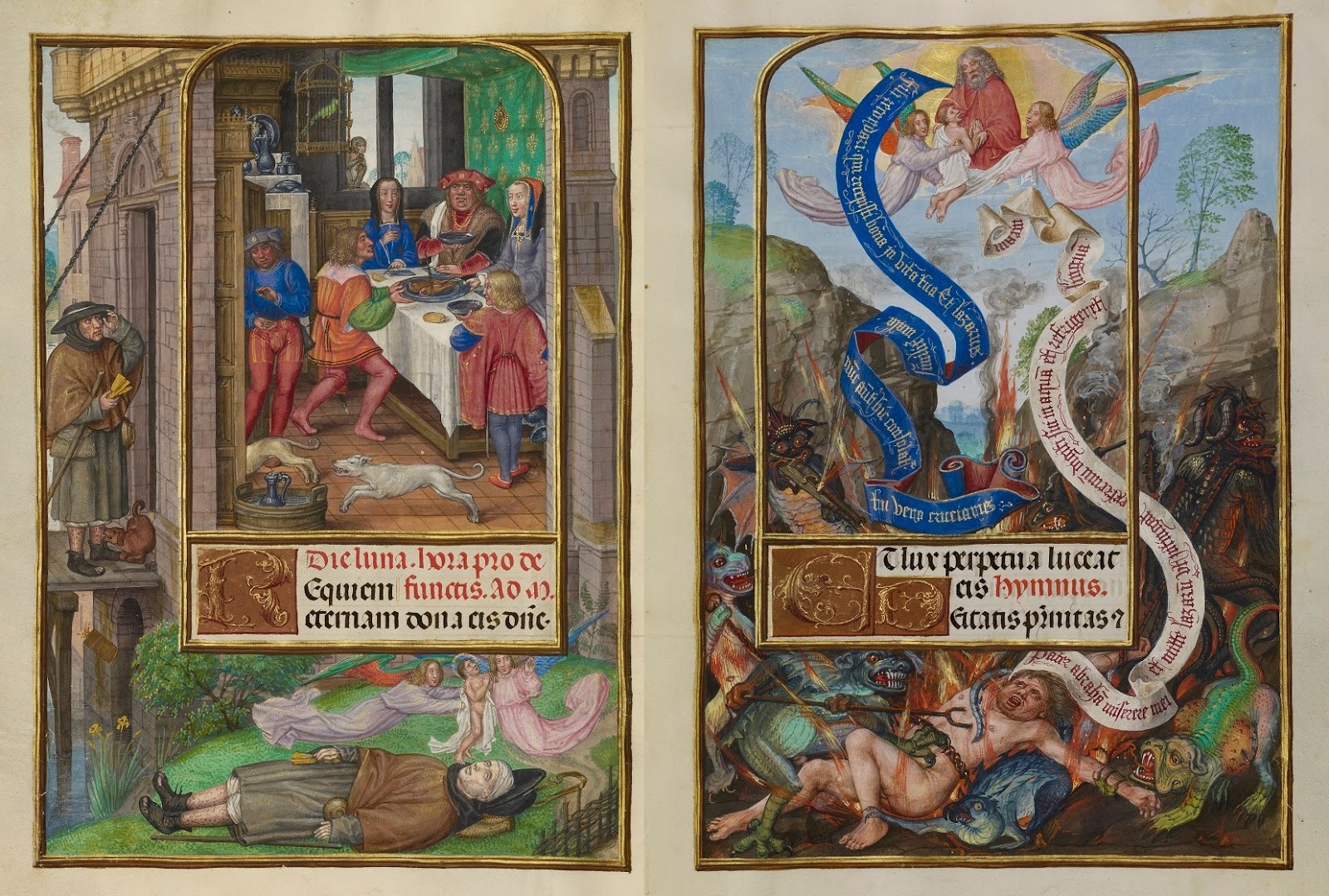
At first hearing, the Parable of the Rich Man and Lazarus might fool us, in just the same way that the Parable of the Prodigal Son can fool us. When St. Luke the Evangelist narrates his account of Jesus teaching the Parable of the Prodigal Son, the evangelist makes clear that Jesus is teaching this parable to the scribes and the Pharisees.
So who in the Parable of the Prodigal Son symbolizes the scribes and the Pharisees? It’s not the Prodigal Son. Nor is it the Prodigal Son’s father, who prodigally—that is to say, lavishly—bestows mercy on his prodigal son. No, it’s the older son who symbolizes the scribes and the Pharisees: the older son who refuses to enter the feast thrown by the father for the prodigal son. So then, if we were to name this parable after the audience to whom Jesus preached it, we might well call this the “Parable of the Miserly Son”: that is, the son who was miserly when it came to showing mercy.
With that in mind, consider today’s Gospel passage. Here Jesus teaches what’s commonly called the Parable of the Rich Man and Lazarus. But that name for the parable, like all the names of the parables, are modern inventions. Jesus never gave a name to any of His parables. But in the first line of today’s Gospel passage, the evangelist tells us that Jesus preached this parable to the Pharisees.
We need to remember that the same dynamic at work in the Parable of the Prodigal Son is at play here also. The Pharisees are not symbolized by either the rich man or Lazarus. Who in today’s parable symbolize the Pharisees? The five brothers of the rich man symbolize the Pharisees. When Abraham declares, “If they will not listen to Moses and the prophets, neither will they be persuaded if someone should rise from the dead”, the clear reference is to the Pharisees not being persuaded by Jesus’ future resurrection from the dead. Jesus wants the Pharisees to accept the graces that God offers, even if those graces come through simple and humble messengers.
Just as the rich man during his life on earth failed to lead his five brothers to God, so each of us has a choice about whether or not to be a messenger from God to others. Or in other words, each of us needs to be a human angel—metaphorically speaking—because the word “angel” literally means a “messenger”. Whether we intend to or not, we send messages to others all the time. But are the messages we send others of God’s kindness, mercy, compassion, and forbearing?
Remember that I stood before you to speak in their behalf, to turn away your wrath from them.
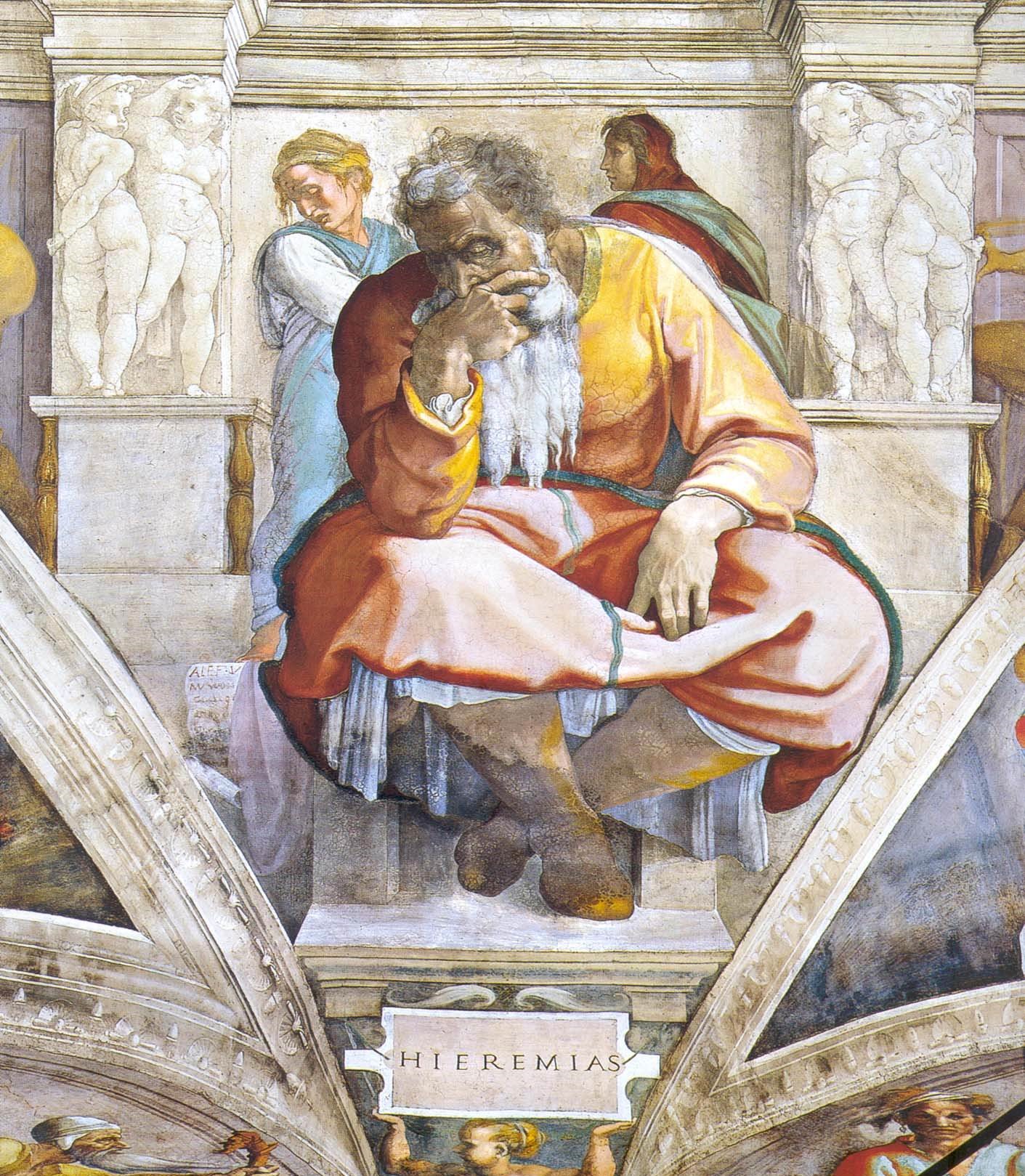
Today’s First Reading is taken from the Old Testament prophet Jeremiah, whose prophecy echoes throughout the season of Lent. One of the hallmarks of the Book of Jeremiah is his account of how he must suffer in order to be a faithful prophet. As such, this hallmark reveals two points for the attention of Christians, though the second grows out of the first.
First, Jeremiah’s suffering as a prophet foreshadows the vocation of Jesus Christ. Jesus was not only a prophet, of course, but during His three years of public ministry, His prophetic preaching and prophetic miracles were a prime motive for those who sought His death. So we ought to listen again to the First Reading and imagine it as describing the suffering of Jesus.
Second, each Christian is called by God to live fully in Christ. This means that each Christian is called by virtue of his or her baptism to share in the three roles that Jesus exercised during His earthly life: the roles of priest, prophet and king. Each Christian, in his or her own way, is meant to speak and act prophetically. In this, we ought to keep in mind that a biblical prophet is not someone who predicts the future, but someone who reminds others—by word and example—of the demands of God’s Word.