… and His mother kept all these things in her heart.
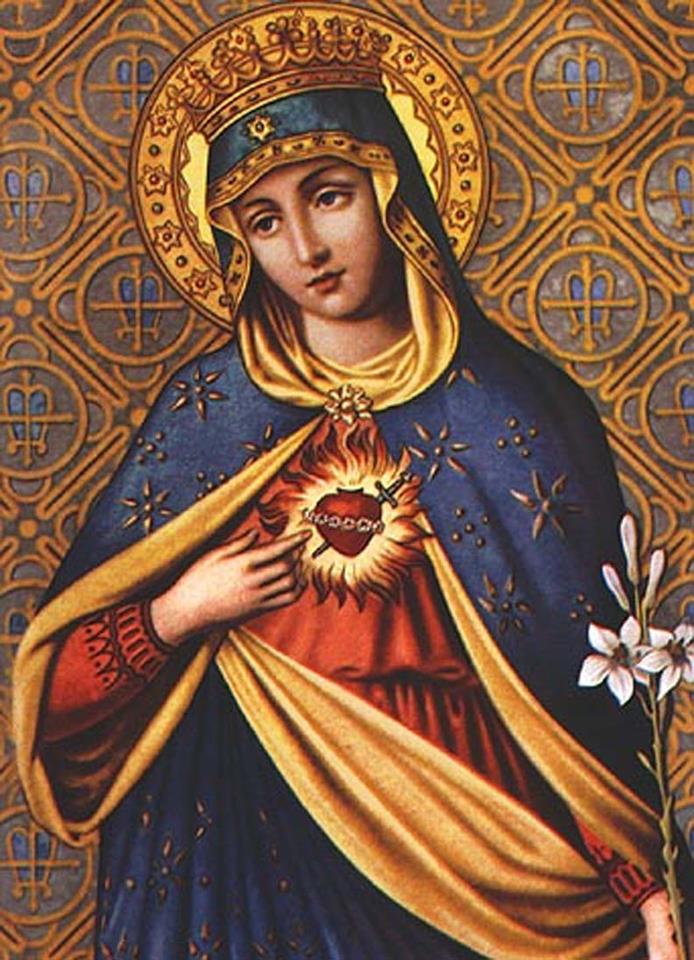
Today’s Gospel passage is proper to today’s feast of the Immaculate Heart of Mary. The setting is unique within the four Gospel accounts: Jesus is twelve years old, on the verge of entering into Jewish manhood (an entrance celebrated today with the ceremony of bar mitzvah). If those scholars are correct who suggest that Jesus was conceived at the time of Passover, than today’s Gospel occurs right on the threshold of His thirteenth year of human life. So this narrative, like that of Jesus’ Baptism, foreshadows His vocation as the one who by His death leads the sheepfold to the Father.
The specific link between this Gospel passage and today’s feast is the final phrase, in which St. Luke notes that Mary “kept all these things in her heart.” Yet the culmination of “all these things” that are related in the passage are Jesus’ two questions: “Why were you looking for me? Did you not know that I must be in my Father’s house?”
The setting makes Mary’s pondering all these things in her heart very poignant. As Jesus enters into manhood, He makes clear not just “Who” His Father is (which Mary and Joseph obviously knew), but also that His Father’s Will (symbolized by the Temple) is His reason for being in this world. With each new insight into her Son’s life, and with each of the seven swords that pierces her immaculate heart, Mary repeats time and again: “Fiat.”
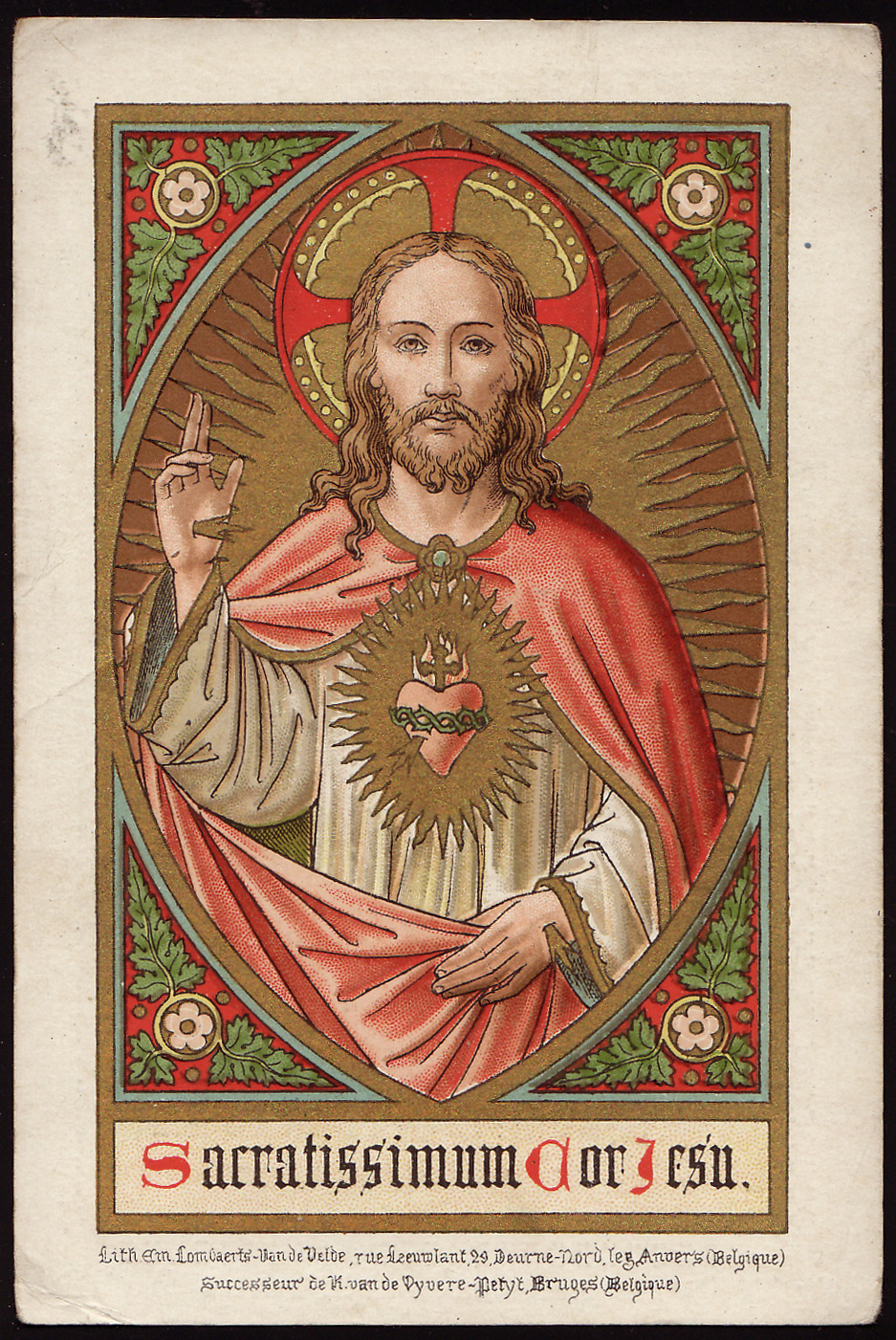
The Most Sacred Heart of Jesus [A] Deuteronomy 7:6-11 + 1 John 4:7-16 + Matthew 11:25-30
In this is love: not that we have loved God, but that he loved us and sent his Son as expiation for our sins.
Tomorrow the Church honors the Immaculate Heart of Mary, the heart of her who was never touched by any sin, but instead is “full of grace”. Of course, Jesus is sinless also, sharing in the divinity of His Father, so we could speak of the Immaculate Heart of Jesus. But today we are celebrating instead the “Sacred Heart” of Jesus.
To be “sacred” means “to be set aside for a special purpose.” What, then, is the purpose of Jesus’ heart? The heart is obviously a human aspect of who Jesus is. It certainly expresses the love of God the Son, for as Saint John the Beloved Disciple tells us, “God is love”. As God, in his divinity, the Son of course has no physical heart—we can say only that the Godhead possesses a heart in a metaphorical sense—but in His humanity Jesus possesses a physical heart, beating within His Body, pumping His life-blood to all its parts.
What does it mean then to say that Jesus, as human, has a heart? It means that He is capable of suffering. To have a heart means to be able to be broken, to be weak, to be vulnerable. This is “the breadth and length and height and depth of Christ’s love”: that He would carry a Cross and die upon it for us, in order to open the gates of Heaven for the redemption of our darkened, sinful hearts.
This is the special purpose of the Sacred Heart of Jesus, the reason for the Incarnation. This is what Jesus’ heart was set aside for: that it would be broken, that it would be pierced. But far be it from us only to give thanks before an image of the Sacred Heart. The Sacred Heart is a person to be imitated.
We do not celebrate the feast of “the Sacred Intellect of Jesus”. Nor do we celebrate the feast of “the Sacred Memory”. We celebrate the “Sacred Heart” because of the importance of the capacity of God and man to will: that is, to choose. God’s will always chooses love, because “God is love”, and because “love consists in this: not that we have loved God, but that He has loved us, and has sent His Son as an offering for our sins.”
The Sacred Heart is a person to be imitated. The heart pumps blood to the entire body, and as Jesus’ members we share in that life-blood: we share in the offering for our sins that Christ sacrificed on the Cross and memorialized sacramentally at His Last Supper. The sacred meal of Holy Mass is “set aside”: its purpose is our sanctification, that our hearts might become more capable of being broken for the salvation of others, and “attain to the fullness of God Himself.”
Click HERE for a PDF version of the Litany of the Sacred Heart.
CCC 852: the Spirit of Christ sustains the Christian mission CCC 905: evangelizing by the example of life CCC 1808, 1816: courageous witness of faith overcomes fear and death CCC 2471-2474: bear witness to the truth CCC 359, 402-411, 615: Adam, Original Sin, Christ the New Adam
+ + +
During the first three centuries of the Church, being a Christian was no easy thing. Christianity was illegal. The first thirty-three popes were all martyred. For over three hundred years, to lead the Church from the Chair of St. Peter meant to be killed. It’s no wonder that there arose in the Church such a reverence for the office of the Pope. In their earthly leader, Christians could plainly see the image of Jesus Christ, whose death opened the gates of Heaven.
Of course, it was not only the popes who became martyrs. Thousands of Christians from every walk of life—carpenters, farmers, mothers and fathers, tradesmen and fishermen, to name just a few—were martyred generation after generation until Christianity was made legal in the fourth century.
Once the Emperor Constantine joined the Church, Christianity became not just legal, but the religion of the Roman Emperor. Christian martyrs seemed a thing of the past. For hundreds of years thereafter, the Faith was wedded to the rule of empires, nations, and kingdoms throughout the world.
Unfortunately, this led to a different problem. Martyrdom often took another form. Instead of people being sacrificed, the Truth was at times sacrificed for the sake of worldly peace. The Faith was sacrificed at the altar of the secular.
Even in our own day, God asks us Christians to consider such a form of martyrdom. He asks faithful Catholics, the members of His Church, to stand on guard. We do not know when the truth is going to be attacked. Have you ever been surprised by something you’ve come across in the media which takes the truth and twists it? Have you ever heard the topic of the Church brought up in conversation, only to be met with laughs and sneers?
Throughout the Gospel accounts, you don’t hear Jesus talk much about the Devil. Even when He was tempted by Satan in the desert, Jesus did not pursue Satan. Jesus simply fought against the temptations that Satan placed before Him. When Satan was through trying to tempt Jesus and fled the desert, Jesus did not give chase. The devil fled to fight another day, and century, and millennium.
In Sunday’s Gospel Reading, Jesus says that what we receive within the walls of our parish churches we need to be willing to speak in public. We don’t have to go searching for arguments. When we hear someone putting down the Church’s beliefs, we ourselves are being put down. The Church is the Body of Christ, and we are all members of that Sacred Body. When the Body of Christ is attacked, her teachings ridiculed, or her rights suppressed, we must be willing to speak out and at times even act against what is false and unjust.
But how do we go about doing that? Sometimes, just speaking out and saying that a remark is offensive makes someone understand his wrong-doing. Yet sometimes we may be challenged by another to defend what the Church teaches, and that demands that we understand the Faith. This raises another important point about Jesus’ words in Sunday’s Gospel Reading.
There hasn’t been a saint in the history of the Church who has completely understood everything that there is to know about the Faith. Nonetheless, we must be willing to explain as much as we do know. Furthermore, we must be willing to learn more than what we currently know, whether we do this by reading, watching television shows that accurately teach about the Faith, or simply by holding a conversation with knowledgeable Catholics.
Of course, the greatest resource we have at our disposal is God the Holy Spirit. Through Baptism we have received the Holy Spirit, and those of us who have been confirmed have been strengthened by the Spirit’s seven gifts. Four of these seven gifts strengthen the human intellect to help us know the Faith: wisdom, understanding, counsel, and knowledge. The other three gifts of the Holy Spirit strengthen the human will to help us spread the Faith: fortitude, piety, and fear of the Lord. All seven of these help us to speak Jesus’ words in the light and to proclaim them on the housetops.
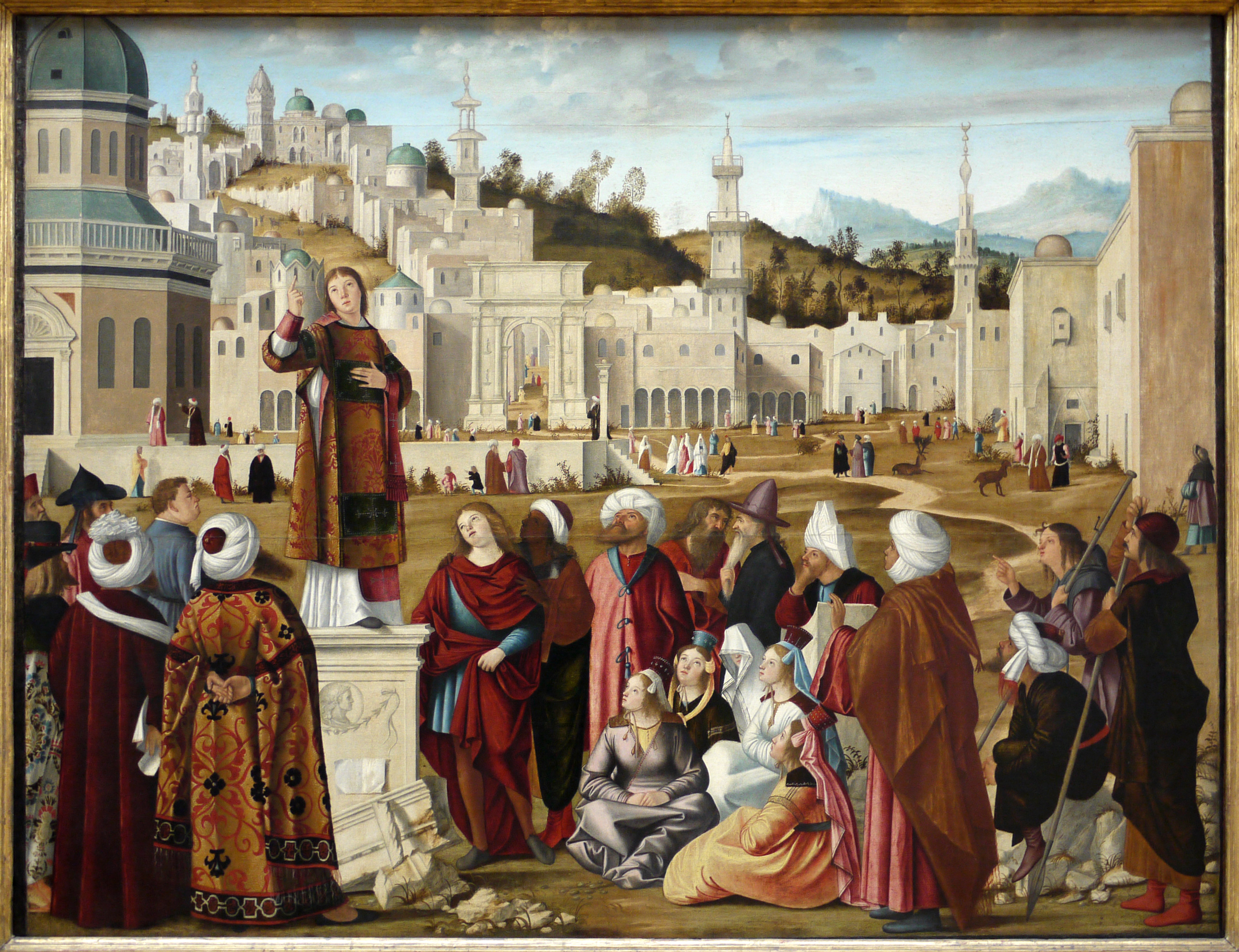
The Sermon of St. Stephen, by Vittore Carpaccio [1514]
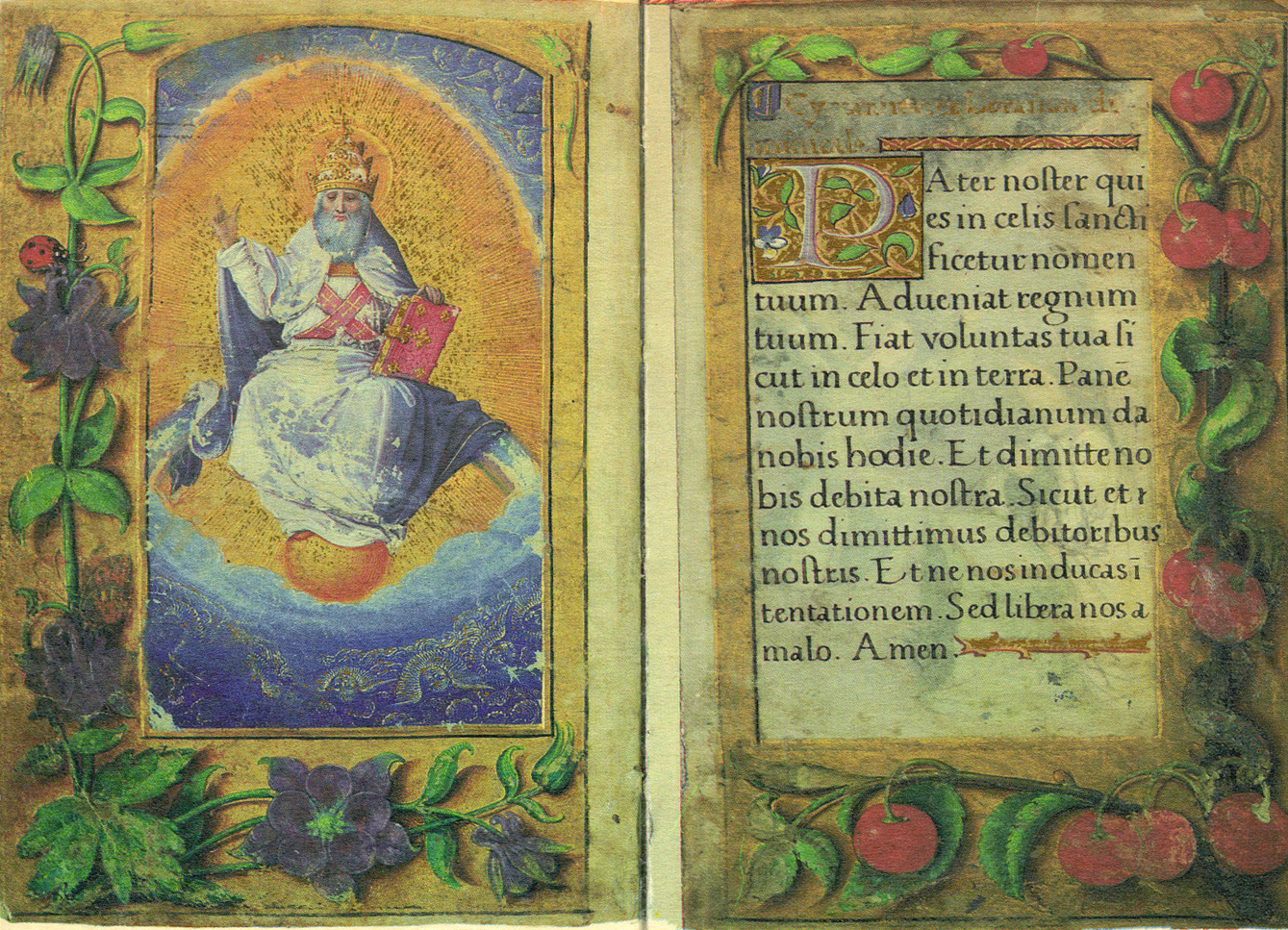
“Our Father who art in Heaven, hallowed be Thy name.”
Putting the Gospel passages from recent weekday Masses in context, we see the person of God the Father emerge. These passages come from the Sermon on the Mount. Two days ago the Church proclaimed the last section of Matthew 5, the last phrase of which is Jesus’ command to “be perfect, just as your heavenly Father is perfect.” Yesterday’s Gospel passage concerned the performance of “righteous deeds”, for which God the “Father who sees in secret will repay you.”
In today’s Gospel passage this theme comes to a head with Jesus teaching His Church to pray the “Our Father”. This is the only “recited prayer” (or as this type is sometimes called, “vocal prayer”) that Jesus gave to the Church.
Many saints have commented on the “Our Father” by pointing out that Jesus had no need to teach any other prayer, because this prayer contains all that one might need or want to say to the Father, at least in seminal form. Other prayers are commended to us by the Church because they draw out further the phrases of the “Our Father”. We who are slow and weak to believe benefit from other vocal prayers, but they must finally lead us back to the embrace of God the Father.
“And your Father who sees what is hidden will repay you.”
Today’s Gospel passage is—to the verse—the same passage that we hear every year on Ash Wednesday. The Church proclaims it today, in the middle of a week in Ordinary Time, because the cycle of Gospel passages for weekday Mass tends to go sequentially through a Gospel account.
We are currently hearing from St. Matthew’s Gospel account at weekday Mass. A week ago Monday we began hearing from the fifth chapter of Matthew, where the evangelist begins recording the Sermon on the Mount. Today we begin hearing from Chapter 6. The Sermon on the Mount continues through the end of Chapter 7. We will hear this sermon at weekday Mass through a week from tomorrow.
Because today’s Gospel passage contains a wealth of spiritual teaching, you might more easily benefit from reflecting on just one third. In each of these three sections Jesus teaches us the right way of carrying out spiritual works. But notice that each third ends the same way, with Jesus noting that when the act is performed from the heart—that is, with divine charity—“your Father who sees what is hidden will repay you”. These acts ultimately are about our relationship with God our Father.
“… pray for those who persecute you, that you may be children of your heavenly Father ….”
Today’s Gospel passage is from the first third of the “Sermon on the Mount”. This “inaugural address” is recorded in full only in Matthew, in Chapters 5-7. Today’s Gospel passage forms part of a series in Chapter 5 of five contrasts between the commands of the Law and Jesus’ commands to love. Each contrast uses a variation of the form, “You have heard it said… but I say to you.”
The contrast presented in today’s Gospel passage is the last of these five contrasts. You could argue that Jesus saved the hardest for last! How are we to love our enemies? The simple answer is: “As Jesus did on Calvary.”
We might begin by asking how our enemies got to be our enemies in the first place. We ought to be mindful that we sinners gain enemies because of our sins. So one way to shorten the list of our enemies is to sin less.
Jesus, of course, was sinless, but still had plenty of enemies. In fact, Jesus had enemies for just the opposite reason that sinners do: because of His unwillingness to compromise with evil. To whatever extent we may, through God’s grace, bear holiness in our own lives, we will win enemies for this reason also. Yet we must love all of our enemies unto the Cross.
“Give to the one who asks of you, and do not turn your back ….”
As we continue to hear Our Lord preach the Sermon on the Mount, it is striking how practical and down to earth His words are. He does not speak fluff: the sort of words that we hear from so many teachers of the spiritual life. He gives very practical advice about how to treat others. In doing so, Our Lord is drawing us into a deeper relationship with the Father.
Our Lord slowly tries to teach us how intimately related are the commands to love God and neighbor. It is in Christ Jesus that the divine Word of God is made flesh. It is in Christ’s Sacrifice on the Cross—the sacrifice of the altar—that we share sacramentally in Christ’s life, in order that we might share morally in His life by loving both God and neighbor fully.
However, we must be honest with ourselves, and be mindful that we are hardly advancing in the spiritual life if repentance is the largest part of our prayer. Our penance merely disposes us to be God’s servants rather than His rivals. When we consider the words of Christ in today’s Gospel passage, we see how completely we are to give of ourselves to others.
If our own spiritual houses are in order, how devoted are we to helping others build theirs? How willing are we to be patient with others, with those who cannot be patient in their own prayer? How will others learn the need for patience if not by seeing our example? How willing are we to accept insults in silence and pray for the one who insults? How will others learn the need for forbearance if not by seeing our example? As we share in the sacrifice of the altar, may Almighty God help us see in our daily lives who it is in most need of a Christian witness. Then, may Almighty God strengthen us through the Body and Blood of Christ to be the one to offer that witness.
Saturday of the Tenth Week in Ordinary Time Matthew 5:33-37
“Let your ‘Yes’ mean ‘Yes’, and your ‘No’ mean ‘No.’”
Saturday is the day of the week dedicated to Our Blessed Mother Mary. We ought, each Saturday morning or afternoon, spend time in devotion to her. One way to foster such devotion is to reflect on the Scriptures from that morning’s Mass in light of Mary’s life and vocation.
In today’s Gospel passage Jesus continues His Sermon on the Mount. We could listen to the entire sermon picturing Our Lady, reflecting upon how she fulfills in her life and vocation everything Jesus is saying.
By way of example, consider Jesus’ fulfillment of this command of the Law: “Do not take a false oath, but make good to the Lord all that you vow.” Immediately there comes to mind the scene of the Annunciation, and the words that Our Blessed Mother spoke: “I am the maidservant of the Lord. Let it be done unto me according to your Word.”
As Jesus offers His teaching in today’s Gospel passage about how disciples need to be faithful to their word, we can see in Our Lady the fulfillment of the Law. We see in Mary that being faithful to one’s word means being faithful to the Word who became Flesh for us, and who offers us that Gift in the Sacrifice of the Mass.
“It was also said, ‘Whoever divorces his wife must give her a bill of divorce.’”
Jesus continues in today’s Gospel passage to give examples of the Law being fulfilled. Today’s two examples are about adultery and divorce. While both examples concern human sexuality, Jesus’ teachings about these two grave sins take different approaches.
Regarding adultery, in order to show the fulfillment of God’s Law Jesus takes us within the human person. Jesus teaches us that not only outward actions can condemn. So also can inner actions of the mind and heart.
Regarding divorce, Jesus reverses Moses’ allowance of this practice. Not only does Jesus not permit divorce. He also clarifies that when a divorced person enters another relationship, adultery is the result.
Undoubtedly, both of Jesus’ examples in today’s Gospel passage seem to make following Jesus more difficult than following the letter of the Law. In our own day, there are some who find the Church’s consistent teaching that the divorced and remarried may not receive Holy Communion too difficult. Yet in the midst of all such perceived difficulties, Jesus sets us on the right road to healing from our sins and the many negative effects of our sins. For our part, we need to turn around and begin travelling in the right direction.