Both in the Old Testament and the New Testament, gardens, plants and trees of all sorts are used as symbols of growth—and decay—in the spiritual life. The very first story of the Bible takes place in a garden called Eden. And today in the Gospel, Jesus tells us a parable along the same lines.
Your spiritual life is the fig tree, and you are the gardener. Your spiritual life is planted in the Lord’s orchard. What we have to come to grips with is the fact that we are accountable to the Lord, just as in today’s parable the gardener is accountable to the owner of the orchard. We are accountable for bearing spiritual fruit in our lives on this earth.
That’s why we’re here on this earth. If we believed, as some of our fellow Christians do, that the entire point of our relationship with Christ is to be “saved”, then we would be better off dying as soon as we’re baptized. But the whole truth is that salvation comes to us only at the end of our life on this earth, if we have been faithful to tending our spiritual life, and bearing fruit through the many ways that our spiritual life nourishes our daily life.
… live in a manner worthy of the call you have received ….
Saint Paul’s Letter to the Ephesians preaches about the nature of the Church as Christ’s Mystical Body. Concretely, St. Paul describes the Church through examples of loving one’s neighbor: this second of the two great commands of Jesus is the form that gives shape to the inter-relation of the varied members of the Body of Christ.
In today’s First Reading (a single sentence!), St. Paul stresses some of the demands—the stresses—that stretch one striving to live in Christ. He refers to himself as “a prisoner of the Lord”. He was often physically jailed for his ministry as an apostle, but perhaps here he’s using the phrase in a more metaphorical sense.
Perhaps when he preaches about “the bond of peace” he’s using the word “bond” as referring to what holds him bound to others, as if the members of the Body of Christ are a chain gang. It’s this peace that makes possible the “bearing with one another through love”, and exhibiting the virtues of humility, gentleness, and patience.
CCC 2052-2074: the Ten Commandments interpreted through twofold love CCC 2061-2063: moral life a response to the Lord’s initiative of love
+ + +
We all know from catechism classes that God gave Moses ten commandments. But in the centuries after Moses, Israel became dissatisfied with just these ten. Like children who argue against their parents, the people of Israel nit-picked the Ten Commandments, in order to justify themselves and their actions. So the leaders of Israel added smaller and more particular commandments, to prop up the Ten. By the time of Jesus, the common teaching of the Law of Israel involved 613 commandments.
From those among the Commandments that deal with “loving our neighbor”, the Jewish scholars of the law produced 14 commandments about business practices, 19 about employees, servants and slaves, 36 about courts and judicial procedure, eleven about property rights, seven about criminal law, and 24 about punishment and restitution! And that doesn’t exhaust the commands to “love our neighbor”! When you turn to “loving God”, the lists of commandments are even longer, including 33 about the Temple and sacred objects, 46 about idolatry, and 102 about sacrifices and offerings!
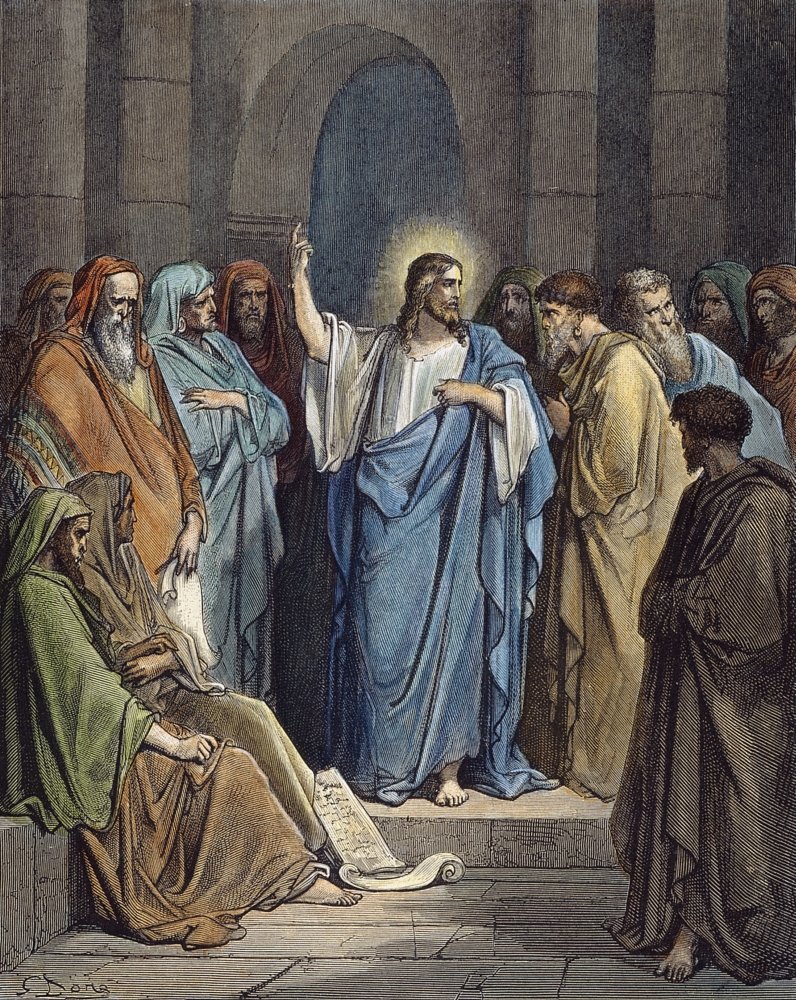
With 613 commandments, it was easy for the average Jew to lose focus. Jesus wanted to bring focus back, just as He wants for you and your family today. He wants to bring focus to the rhythm of your daily life, as it unfolds week after week. This focus will strengthen your life, in proportion to the time you give to living Jesus’ answer: “You shall love the Lord, your God, with all your heart, with all your soul, and with all your mind. This is the greatest and the first commandment.”
But it’s interesting what happens next. The scholar of the law didn’t ask Jesus which commandment in the law is the second greatest. But Jesus tells Him anyway. Maybe you know people who answer your questions like this: you ask them one question, but their answer is the answer to a different question. God is like this in our prayer, at times. God always answers our prayers, but He doesn’t always answer in the way we hope. Sometimes His answer doesn’t seem to correspond at all to what we were talking to Him (or maybe at Him) about. However, when God changes the subject of the conversation, maybe it’s better to turn the conversation over to Him, and spend more time listening.
In today’s Gospel passage, when Jesus gives the answer to a question that the scholar didn’t ask, He makes clear that the second-greatest commandment is very important. Reflect for a moment on the Ten Commandments: out of the ten, the first three are about “loving your God”, and the latter seven are about “loving your neighbor”. Why are there more than twice as many commands about “loving your neighbor” than there are about “loving your God”? It’s not because loving your neighbor is twice as important as loving your God. More likely, it because loving your neighbor is twice as difficult as loving your God. The English writer, G. K. Chesterton, once observed that “The Bible tells us to love our neighbours, and also to love our enemies; probably because they are generally the same people!”
Why is Chesterton right? Why, so often, are our neighbors also our enemies? In this second-greatest commandment, when Jesus commands you to love your neighbor as yourself, He’s not using the word “neighbor” as we might be tempted to do. We, in our fallen human nature, want to shrink the meaning of “neighbor” to as few people as possible. That’s why Jesus told the Parable of the Good Samaritan, so that His followers would see every human being as their neighbor.
So then, the second-greatest command is to love every human being as yourself. That’s very daunting. That’s impossible to carry out without divine grace. Vices in our fallen human nature make this command very hard to carry out.
To love is to follow the Spirit of the law. To love is to fulfill the letter of the law, instead of circumventing its intent. To love is even to go beyond the law, because the law is only a guide pointing in the direction that love will take us. The law isn’t meant to tell us where to stop.
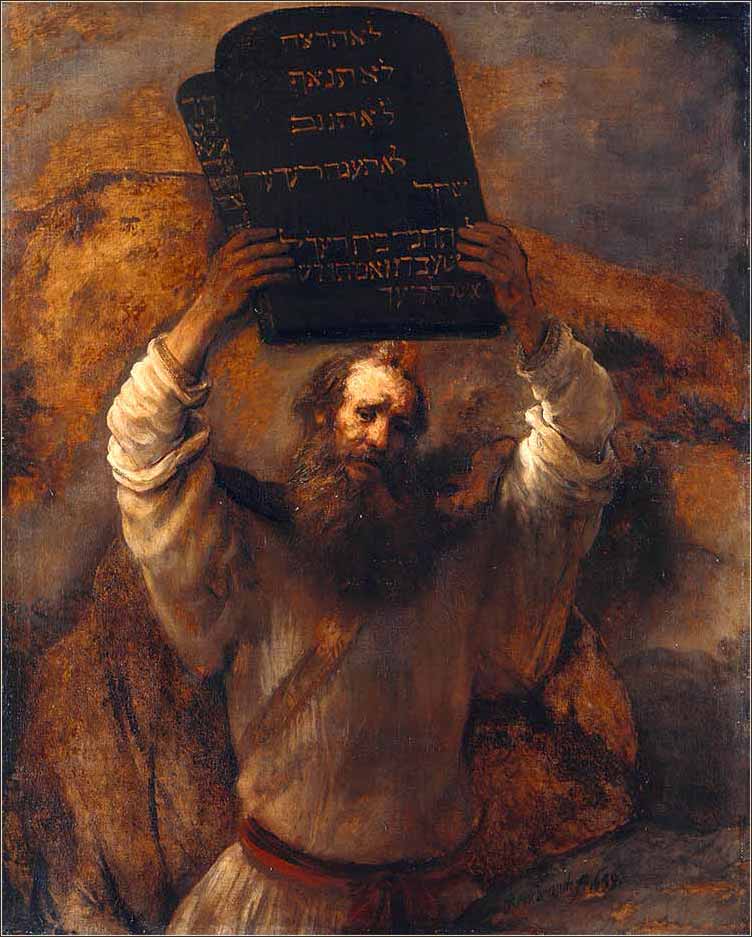
Moses Breaking the Tablets of the Law by Rembrandt (1606-1669)
Both the rhetoric and substance of Jesus’ proclamation in today’s Gospel passage are challenging. It’s challenging to know how rightly to interpret His words. The fire of His baptism is the source of the division that He has come to establish. How can we understand these words and images in our own daily lives as disciples?
The most obvious interpretation of the fire that Jesus mentions is in light of God the Holy Spirit. Through the graces that first were given at Pentecost in the Upper Room, the Holy Spirit inflames and hearts and minds of those called to be members of Jesus’ Mystical Body on earth. Formed by the Holy Spirit into one Body, these members live out the baptism of Jesus. Jesus’ baptism in the Jordan was a foreshadowing of His baptism on Calvary. This latter baptism is the one which the Body of Christ today lives out. As His members, you and I have to bear our share in this baptism if the Holy Spirit might use us as the Father’s instruments.
If we are faithful to the Father—allowing the baptism of Jesus’ suffering to be the vessel for the outpouring of the Holy Spirit through us—division will result, as Jesus describes in today’s Gospel passage. This is not division for the sake of division, but for the sake of unity. We pray in the midst of all division, that every person may recognize and accept his share in the life of the Trinity.
“Much will be required of the person entrusted with much, and still more will be demanded of the person entrusted with more.”
St. Luke the Evangelist presents many “stewardship parables”. Today’s Gospel passage offers two, one much longer than the other. The upshot of both is an explicit moral that lets no Christian off easily: “Much will be required of the person entrusted with much, and still more will be demanded of the person entrusted with more.” The layman in the pew might wonder how these words apply to an ordinary Christian.
But no Christian is ordinary. At the moment of a person’s baptism, God infuses grace into that person’s soul. The graces given include the divine virtues of faith, hope and charity. God entrusts this grace to his adopted child. Consider this truth in light of Jesus’ words at the end of today’s Gospel passage. God entrusts His own divine life to His adopted children. And of course, the graces received at Baptism are but—so to speak—the “first installment” of our inheritance. As we continue to grow as His children, God continues to bestow grace upon us through the sacraments and prayer in the process of divinization.
“Much will be required of the person entrusted with much”. What will be required of us, then, as sharers in the divine life? Are you, in this regard, a “faithful and prudent steward” of the grace God has given you as His child? Each Autumn in our diocese a renewal of Stewardship takes place. Yet while it’s important to assess one’s stewardship of time, talent, and treasure, even more important is one’s stewardship of grace.
Both of these virtues that Jesus speaks to today—fidelity and prudence—are required to be stewards of God’s grace. Both help keep our attention on our Master: the beginning and end of all the graces of our lives.
“Blessed are those servants whom the master finds vigilant on his arrival.”
In the Lord’s parable today He proclaims that “blessed are those servants”. He’s wanting us to identify ourselves with them, and imitate them so that we might share in their blessedness. How can we connect our lives to the lives of those servants?
Perhaps you’ve heard the old adage, “Always begin with your end in mind.” “End” in this case refers to one’s goal. Many people, of course, wander through life aimlessly, but Christians are meant to have Heaven as their goal, or end. In this case, repeating that adage to ourselves each day helps us to live each day for God, by recalling that we can only get to Heaven by living out our faith in God. This way of thinking approximates what Jesus is getting at in His parable.
However, there’s an immediacy to Jesus’ parable that’s missing in that adage. His parable reminds us of a sobering fact: that we know not the day nor the hour when our lives will end. The Master may come at an unexpected time. Therefore, we need not only always to be focused, but also to be vigilant, since the end we have in mind may confront us today.
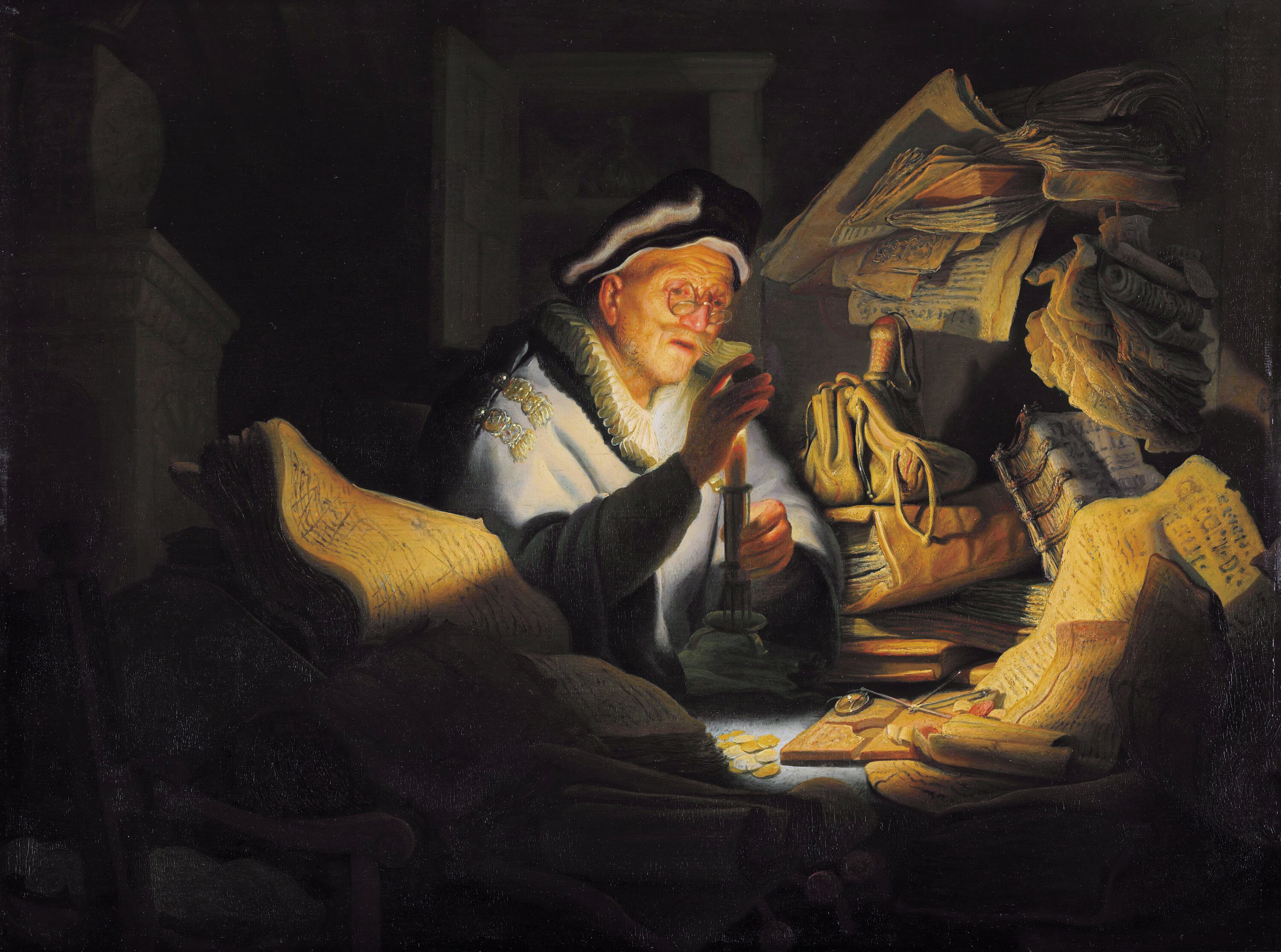
“‘You fool, this night your life will be demanded of you ….’”
Although in meditating upon today’s Gospel passage we might choose to reflect upon either Jesus’ interaction with the jealous brother, or His parable to the crowd, consider the parable.
It illustrates what He had previously explained about the connections among “one’s life”, “greed”, and “possessions”. Material possessions are not inherently bad. Even person with religious vows of poverty possess their “own” clothing, even if they do not “own” them. But possessions always tempt one—through the vice of greed—to more possessions, either in quantity or quality. One such quality that tempts is mere novelty, and this especially is a weakness of young persons.
The rich farmer in Jesus’ parable is the antithesis to Ecclesiastes’ Qoheleth. The rich farmer cries out to himself, “rest, eat, drink, be merry!” This is in contrast to the king of Israel who confesses that “I said in my heart, ‘Come, now, let me try you with pleasure and the enjoyment of good things.’ See, this too was vanity.” The rich farmer in the parable does not have the wisdom of Qoheleth, but of course, Qoheleth did not know Christ, the one who possesses all the riches of the Father’s love.
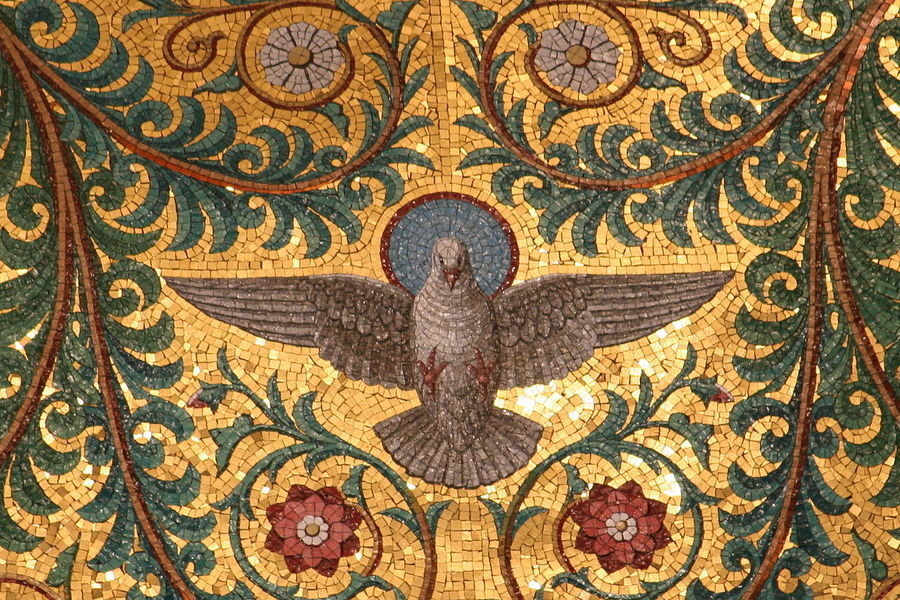
“For the Holy Spirit will teach you at that moment what you should say.”
Twice in today’s Gospel passage, God the Holy Spirit is referred to. The first mention is somewhat ambiguous in meaning: in its plainest sense, “blaspheming against the Holy Spirit” would refer to denying that the Holy Spirit is truly and fully God. The Church has had to combat such denial throughout her history.
The second mention of the Holy Spirit refers to a situation that many Christians face at some point in their lives. Whether at the point of death or with the fear of mere embarrassment, Christians at a loss as to how to defend their Faith must rely on the Holy Spirit. Even the most brilliant Christian orator or preacher (St. Augustine of Hippo being a prime example) knows that human brilliance in any measure is dwarfed by, and comes from, the Wisdom of the Holy Spirit.
However, the Holy Spirit teaching the Christian what to say does not mean that the Christian becomes a puppet or megaphone of the Holy Spirit. It is the Holy Spirit who teaches at that moment, but it’s still the Christian who must speak in his own name about the Holy Name of Jesus, making the Good News his own.
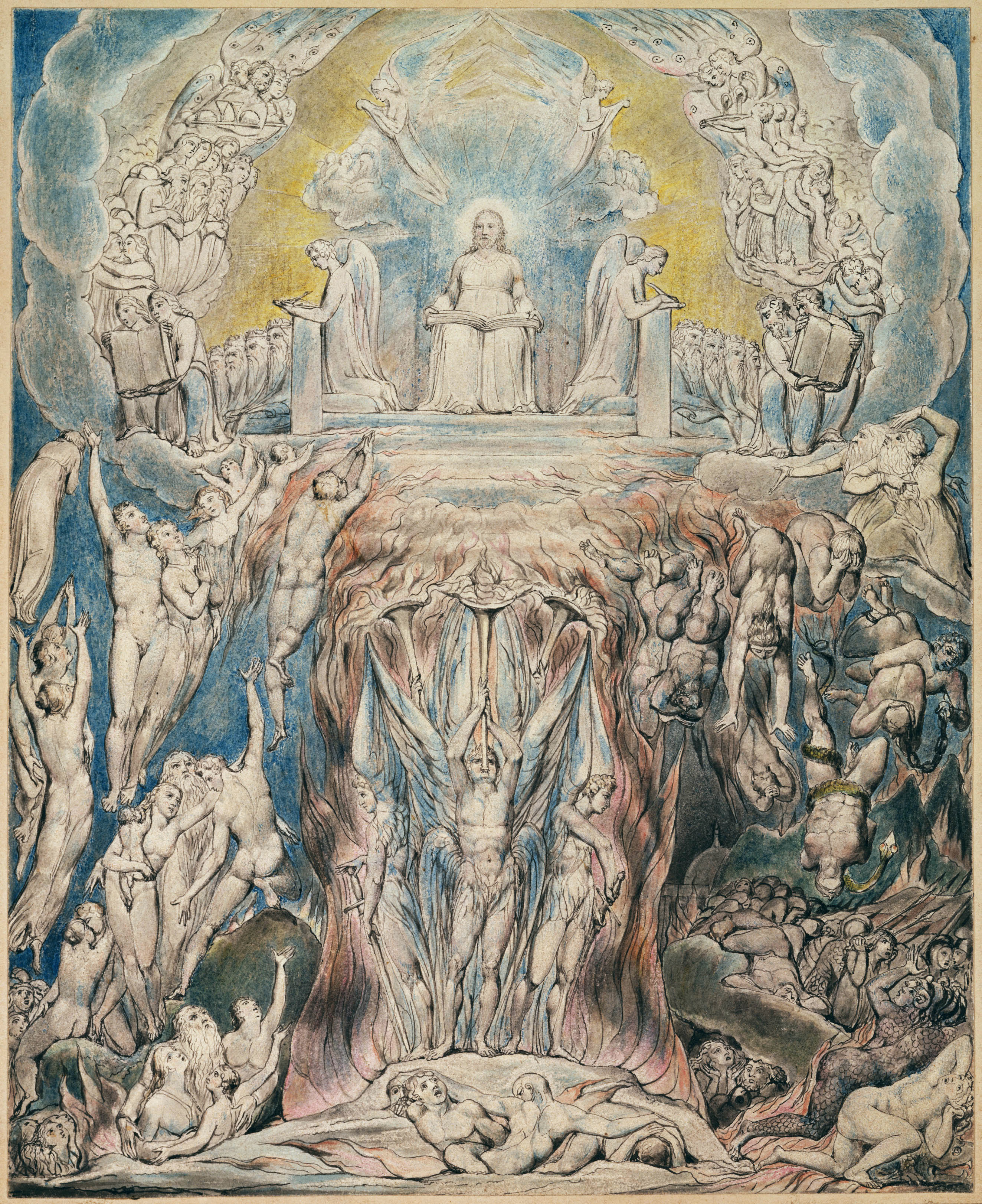
“Be afraid of the one who after killing has the power to cast into Gehenna ….”
In the secular culture that surrounds modern Western man, the idea that Jesus makes moral demands, or sets moral boundaries, is anathema. How, then, can today’s Gospel passage be understood? Jesus declares: “I shall show you whom to fear. Be afraid of the one who after killing has the power to cast into Gehenna; yes, I tell you, be afraid of that one.”
Still, just three sentences later Jesus demands: “Do not be afraid.” There seems to be a contradiction, inasmuch as Jesus tells us to be afraid, and then not to be afraid.
In fact, Jesus here insists that we have a fully-rounded, rather than two-dimensional, view of God. We may consider Jesus to be speaking of God the Father, or of Himself, when He describes whom one should fear. As God, the Father, Son and Holy Spirit condemn the one who persists in mortal sin. Fear of God, the Just Judge, however, is a fear that helps us shape our lives.
This is a “holy fear”, upon which we need especially to meditate on this day of the week when Jesus His Passion and Death. This holy fear gives direction to our days on this earth and to each day’s choices. But guided by this holy fear, we can trust in the God who guides us away from sin, and to Himself.