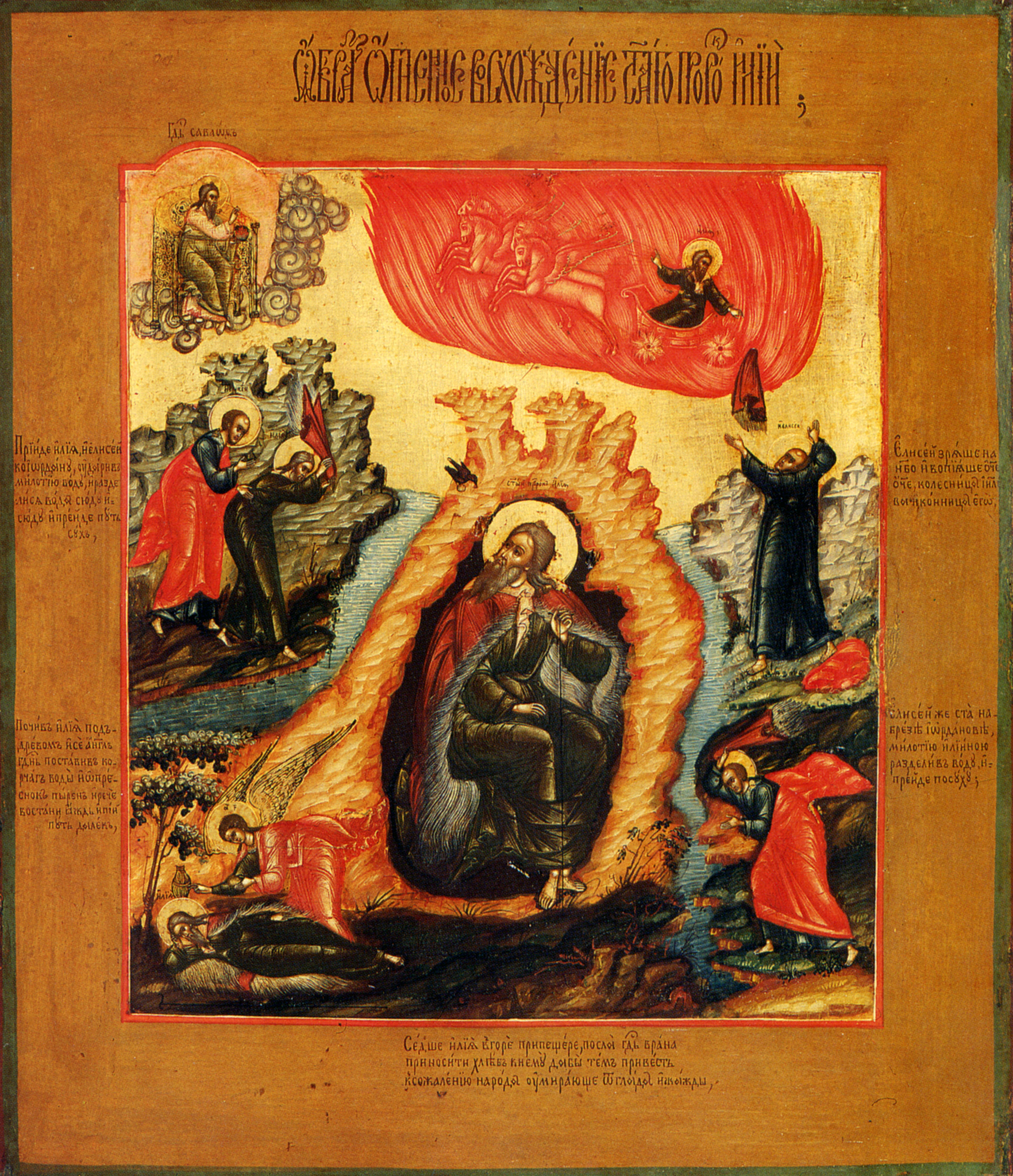

The Nineteenth Sunday in Ordinary Time [A]
I Kings 19:9,11-13 + Romans 9:1-5 + Matthew 14:22-33
August 9, 2026
After the fire there was a tiny whispering sound.
references to the Catechism of the Catholic Church cited for this Sunday by the Vatican’s Homiletic Directory:
CCC 164: faith experiences testing
CCC 272-274: only faith can follow mysterious ways of providence
CCC 671-672: in difficult times, cultivate trust that all is subject to Christ
CCC 56-64, 121-122, 218-219: history of covenants; God’s love for Israel
CCC 839-840: the Church’s relationship to the Jewish people
Every one of you has been lonely at some point in your life. Sometimes the feeling of loneliness is caused by distance. Many recent high school graduates will leave soon for college. They will look forward to new friends and experiences. But many of them will experience homesickness, which is one type of loneliness.
There are many types of loneliness, and they have many different causes. Once, a mother told me how lonely she felt on the morning she dropped off her youngest child on his first day of kindergarten. She had taken her older children to their first days of kindergarten, as well. But this was different. On that August day, without knowing exactly why, she felt that her loneliness was from crossing a threshold in her life. She felt that she’d never again be needed by others in the same way.
+ + +
These different examples of loneliness raise a question. What is the difference between loneliness and “aloneness”? They’re definitely not the same. It’s true that a person who is alone can also be lonely. But on the other hand, a person can feel lonely in the midst of a room full of friends.
One difference between the two is that loneliness is inside us, while aloneness is outside us. Aloneness is easy to spot: if we notice someone who has no one else around him, it’s obvious that he’s alone.
But loneliness, on the other hand, is not as easy to spot. Because loneliness is inside a person, you could only see loneliness in another if you could see into his or her soul. It’s true that sometimes the state of a person’s soul becomes visible. This might happen by an expression on a person’s face, or tears running down the person’s cheeks. But often, we do not see those signs, sometimes because the loneliness is hidden, or maybe we’re not being attentive to others.
So how does all this about loneliness and aloneness relate to today’s Scriptures? They’re shown by two persons in today’s Scriptures. There is Elijah in the First Reading, and Our Lord Jesus at the start of today’s Gospel passage.
+ + +
The First Reading’s portrait of Elijah is a detail of a much larger canvas. Reflect on the context that surrounds Elijah today. You would have to read the verses leading up to today’s First Reading to learn that Elijah is in flight, for fear of his life. Elijah was the enemy of King Ahab, the wicked king of Israel. Among his evil deeds, Ahab and his wife Jezebel had every prophet of Israel murdered by the sword, except Elijah.
At the start of the chapter from which today’s First Reading comes, Jezebel vows to end Elijah’s life within a day’s time. Although Israel’s prophets often faced death threats, Elijah acts very humanly and flees. He prays “that he might die, saying, ‘It is enough; now, O Lord, take away my life…’” [I Kings 19:4]. At the start of today’s First Reading, Elijah has fled for his life for forty days and forty nights. Elijah has hidden himself in a cave inside the mountain of Horeb.
So with Elijah in mind, consider a time in your own life that resembles Elijah’s darkness. Elijah is in a dark place, both in his physical surroundings, and within his soul. But what happens next foreshadows what God offers you at times of darkness. It’s within Elijah’s darkness that the Lord God chooses to speak to Elijah. In your own life, the Lord promises you that when you are in darkness, He will speak to you. But will you be able to hear Him?
Sacred Scripture reveals to us the obvious fact that God can speak however He wishes. He can speak through “a strong and heavy wind” [I Kings 19:11]: remember the day of Pentecost [Acts 2:2]. He can speak through an “earthquake” [I Kings 19:11]: remember the death of Jesus [Matthew 27:51]. He can speak through “fire” [I Kings 19:12]: recall the descent of the Holy Spirit [Acts 2:3]. God can choose to speak through signs that are loud and eye-catching. But He can also do the opposite, speaking through “a tiny, whispering sound.” This is how God the Father speaks to us in times of darkness.
+ + +
At the beginning of today’s Gospel Reading, Jesus “went up on the mountain by Himself to pray. When it was evening He was there alone.” We have to be alone in order to hear the whispering of God the Father. The aloneness that God the Father demands also includes the silencing of electronic devices. Jesus was willing to listen for, and listen to, the voice of His Father in Heaven. He was not afraid of doing what the Lord asked of Him, even if this meant carrying and dying on the Cross. He was not afraid because He knew that the love of His Father is stronger than death.
It’s easy to notice the fires, earthquakes, and driving winds that God the Father sends your way. But what about the whispers? What are you missing by not listening for—and not listening to—your Father whispering to you?