Tuesday of the Fourteenth Week in Ordinary Time [I]

Tuesday of the Fourteenth Week in Ordinary Time [I]
Genesis 32:23-33  +  Matthew 9:32-38
July 6, 2021

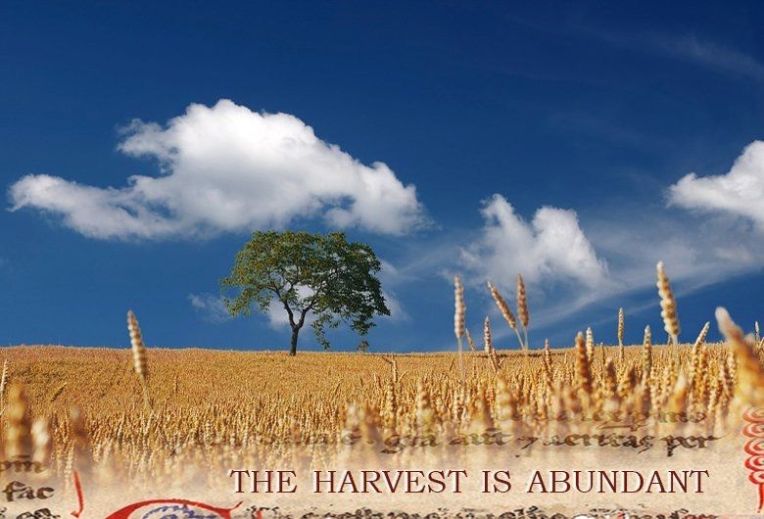
“… the harvest is abundant, but the laborers are few ….”

We usually associate the cry that Jesus utters in today’s Gospel passage with the need for vocations in the Church.  But Jesus also speaks through these words about the harvest of one’s own heart, and the fruits of one’s soul.  In each person is a soul created by God, and each soul is capable of being completely filled, as much as it is able:  to be “perfected” by God’s grace.

Unfortunately, this “harvest of the soul” is neglected by so many of us by our actions and our inaction.  We are not willing to believe what the Church teaches about every single human person being called by God to be a saint.  The Church at the Second Vatican Council spoke strongly about the “universal call to holiness”.

God gives each one of us many gifts, but only when we talk with God—and are strengthened by God—do we learn how to use them correctly, in accord with His plan.  Through our prayer, and God’s grace, our minds and wills can be shaped in His image, so that each of us can be more perfectly the saint God wants us to be.

Monday of the Fourteenth Week in Ordinary Time [I]

Monday of the Fourteenth Week in Ordinary Time [I]
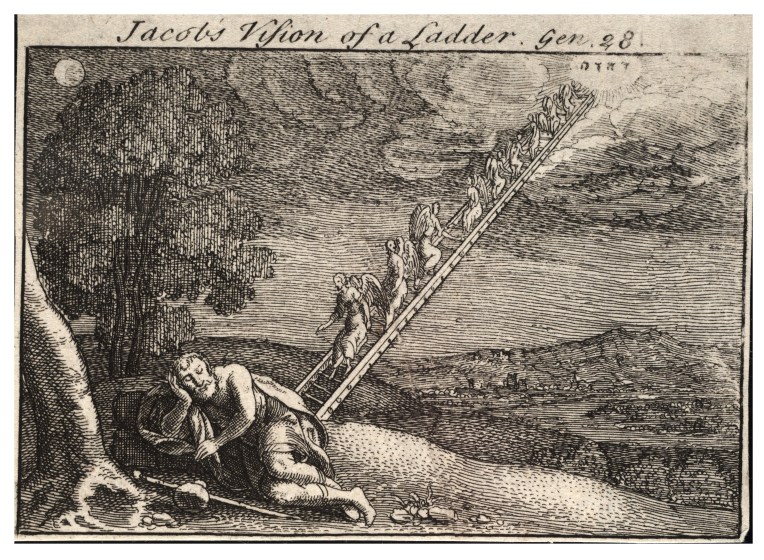
Genesis 28:10-22  +  Matthew 9:18-26
July 5, 2021

   “Courage, daughter!  Your faith has saved you.”   

In today’s Gospel passage are two people who see how God wants to be in their lives in time of need.  So many people turn to Christ in need.  When we are honest with ourselves, we know that we would like to ask Christ’s help for so many things in our lives.  It’s true that petitionary prayer—in which we ask for something from God—is not as selfless a form of prayer as adoration.  But God wants us to present our petitions to Him.

Consider the woman in the Gospel, who had suffered for so many years.  She interrupts Christ right in the middle of His trying to help someone else.  We should make that woman’s faith our own:  not simply her faith in Christ’s power, but also her faith in His patience and compassion.  There is no true need in our lives that we should not offer to God.

Is every petition answered as we wish, as are the petitions of this woman and the official?  Some Christians stop offering their petitions to God—or even stop believing in God—when He doesn’t provide the responses they want.  Growth in prayer includes the experience of accepting God’s “No”’s, and learning in them to trust more deeply His providential Will.

St. Thomas, Apostle

St. Thomas, Apostle
Ephesians 2:19-22  +  John 20:24-29

“… bring your hand and put it into my side, and do not be unbelieving, but believe.”

The First Reading for the Mass of St. Thomas’ feast actually focuses on him very little.  It’s not uncommon for the First Reading on the feast of an apostle to be either written by him or at least refer to him in passing.  However, today’s First Reading from St. Paul’s epistle to the Ephesians does not mention Thomas.  Its focus is the Church.

What is the Church, and what is her relation to Christ?  One might argue that today’s First Reading was chosen for this feast because it refers to the Church’s “foundation of the Apostles and prophets”.  But St. Paul links these apostles and prophets directly to Christ.  This foundation is related to Christ who is the Church’s “capstone”.

This capstone—Christ—is the Church’s source of unity.  The last sentence of today’s First Reading uses the word “together” twice.  It’s through Christ that the Church’s members are “held together” and grow “into a temple”.  In Him the Church’s members are “built together” as “a dwelling place of God in the Spirit.”  You yourself are a member of this great work of God!  Give thanks today for God’s gift of the Church, and for the spiritual growth that God offers you through this “dwelling place”.

Friday of the Thirteenth Week in Ordinary Time [I]

Friday of the Thirteenth Week in Ordinary Time [I]
Genesis 23:1-4,19;24:1-8,62-67  +  Matthew 9:9-13
July 2, 2021

“I did not come to call the righteous but sinners.”

Today’s Gospel passage presents to us the vocation of Saint Matthew.  The word “vocation” literally means a “calling”.  A vocation is something “vocal”, which comes from the Voice of God (or perhaps better, the Word of God).  That might not seem earth-shattering news.  But what we sometimes forget is that a Christian vocation is not announced by Christ to a Christian at a single initial moment.

Rather, a Christian vocation is “declared” to the Christian in an on-going, unfolding manner.  Of course it’s true that in the beginning, a specific form of vocation is articulated (whether marriage or life as a vowed religious, for example).  But that is only the beginning of Christ’s announcement of one’s vocation.  That is only the beginning of Christ’s guidance.

Throughout the course of living out one’s Christian vocation, the Christian must expect, listen for, and heed God’s Word.  Each of these is a different skill in the skill-set required to grow in one’s vocation.

The Fourteenth Sunday in Ordinary Time [B]

The Fourteenth Sunday in Ordinary Time [B]
Ezekiel 2:2-5  +  2 Corinthians 12:7-10  +  Mark 6:1-6

Hard of face and obstinate of heart are they to whom I am sending you.

Jesus’ rejection in today’s Gospel Reading was not a one-time occurrence.  Saint John the Evangelist states this same unfortunate truth, but in a different way.  About Jesus, St. John writes:  “He was in the world, and the world was made through Him, yet the world knew Him not.  He came to His own home, and His own people received Him not” [ John 1:10-11].

Throughout the three years of Jesus’ public ministry, He was frequently rejected as a prophet.  Each of those rejections foreshadows the ultimate rejection of Jesus on Mount Calvary:  the rejection of Jesus as the Messiah, the one who came to save us from our sins.

After Jesus is rejected “in His native place and among His own kin”, the evangelist concludes with these observations:  “He was not able to perform any mighty deed there, apart from curing a few sick people by laying His hands on them.  He was amazed at their lack of faith.”

There are some people who use these last two sentences to deny that Jesus is God.  They argue that if Jesus were truly God, He would have been able to perform miracles in today’s Gospel passage.  Or to put it another way:  if the crowd’s lack of faith is greater than Jesus’ power to work miracles, then Jesus cannot possibly be the omnipotent God of the Bible.

We need to reflect upon this tension between the crowd’s lack of faith and Jesus’ lack of miracles.  We need to reflect upon this tension not just for the sake of understanding this particular Scripture passage, but also for the sake of our own spiritual lives.  Many Christians struggle because in the course of their earthly lives, they don’t see God responding to their most dire needs.  Some of these Christians give up their search for an answer.  Either they give up on God and leave the Church, or they give up on themselves, leading to despair or even death.

We know by instinct that the crowd’s lack of faith is not greater than Jesus’ power to work miracles.  But God chooses not to work miracles where there is a lack of faith.  We might say that God the Father made a “gentleman’s agreement” with Himself when He decided to send His Son to earth to become human.  He made a rule that He committed Himself always to abide by:  that is, never to over-ride human free will.

In the face of what can seem like God’s silence or lack of care about the many shades of darkness within life on earth, there are three plain facts that each of us needs to accept.

First, each of us needs to trust more deeply in God’s Providential will.  To say that God’s divine will is providential means that while God never directly causes evil, He does permit it.  He allows the world we live in to be as dark as it is because that darkness is the price to be paid for human free will.  It might be simpler if God were to remove that freedom and make all things right in the world.  But without that freedom, no one would have the chance to become like God and enter Heaven.

Second, each of us needs to grow in faith in God’s love for oneself personally.  Each of us needs to have the faith that the crowds in today’s Gospel passage lacked.  Each of us needs to believe that God sends His love to us in humble forms, especially in humble opportunities to love Him.  Nevertheless, as much as He chooses to love you, He also chooses not to force you to love Him.

Third, God demands that your faith be purified.  This is not the same as growing in faith.  Growing in faith is what you do by choosing to believe.  But this third plain fact is what God does.  God wants actively to purify your faith:  to sift it so as to remove the chaff.  Part of this sifting is helping us separate our wants from our needs.  Another part removes consolations in prayer so that our faith grows deeper.  This sifting calls us to adore God more than we petition Him, and to love Him for Who He truly is, instead of who we want Him to be.

Thursday of the Thirteenth Week in Ordinary Time [I]

Thursday of the Thirteenth Week in Ordinary Time [I]
Genesis 22:1-19  +  Matthew 9:1-8 
July 1, 2021

   “… but where is the sheep for the burnt offering?”   

Today’s First Reading is one of the more famous and more moving passages of the Old Testament.  The Church Fathers comment upon this passage at length and to great depth.  Consider just one idea from among the many that this passage holds.

Reflect on the notion of liberty.  What does it mean to be free?  Usually in our western culture we think of freedom in external terms:  that is, as being “free from” persons or forces outside us.  Adolescence and early adulthood are largely—for good or ill—defined in terms of gaining freedom from one’s parents, and this is natural enough:  child have to leave the nest at some point.  Sometimes, unfortunately, children often exercise their liberty by also “freeing” themselves from the moral and religious norms according to which they were reared.  Unfortunately, many older adults live their lives in a state of perpetual adolescence, never maturing to full adulthood because they cling to a falsely absolutized form of freedom:  one which is a “freedom from” all other persons and all norms.

A deeper form of freedom can be termed the “freedom to”.  This form of freedom is internal:  an inner ability or capacity to achieve some goal that requires inner strength.  This freedom is, to use another word, potential.  We want our children to be free:  that is, able to tap into all the potential that our human nature, and our Faith, offers us.  Often a person knows that this strength is within oneself, but the strength is inaccessible because of inner conflicts, including moral vices.  These conflicts prevent one from tapping into one’s inner strength, and being “free to” do what one is capable of.

Each of us can make a nightly examination of conscience in light of both forms of freedom.  Use the patriarch Abraham as your guide.  On the one hand, are you in any way pursuing “freedom from” God, which can only lead to alienation?  Then, meditate on your inner need to pursue the “freedom to” of the spiritual life:  the “freedom to” give yourself—sacrifice yourself—for the good of others, and the glory of God.

Wednesday of the Thirteenth Week in Ordinary Time

Wednesday of the Thirteenth Week in Ordinary Time
Matthew 8:28-34

“… when they saw him they begged him to leave their district.”

Demonic possession is an extremely serious matter.  While some in our day dismiss it, suggesting that reported cases of possession are in fact only psychological disorders, the Church takes today’s Gospel passage at its word.

One striking point in this narrative is the reaction of people to the swineherds’ report:  “they begged him to leave their district.”  Why do the people react this way?  One might expect the people to express gratitude to Jesus, and invite Him to stay as their protector.

Perhaps the people were in shock, never before imagining that demons might dwell among them.  However, demonic possession in the Holy Land was not uncommon in Jesus’ day.  Perhaps the reaction of the people reflects what today is described by the acronym “NIMBY”:  “Not In My Back Yard”.  When terrible violence erupts in a metropolis, many people on hearing the news shake their heads, say a prayer for those affected, and then turn the channel to SportsCenter.

But if such violence erupts in their own hamlet, they express disbelief at how such violence could happen “here”.  Sin, violence and death are here, there and everywhere.  While each of us needs to practice prudence to deter them, we should have no illusions of escaping them.  In the midst of such illusions, Christ has no place.

OT 13-3

Saints Peter and Paul, Apostles

Saints Peter and Paul, Apostles
Readings for the Vigil:
Acts 3:1-10  +  Galatians 1:11-20  +  John 21:15-19
Readings for the Day:
Acts 12:1-11  +  2 Timothy 4:6-8,17-18  +  Matthew 16:13-19
June 29, 2020

“I will give you the keys to the Kingdom of heaven.”

Peter, whom Jesus in today’s Gospel passage entrusts with the care of His Church, was very different than Paul.  Peter’s personality was rough and impatient.  He was poor and uneducated.  Now if Jesus had thought as worldly people do, He never would have chosen Peter as the first pope.  Instead, he would have chosen someone like Paul, refined and educated.

Regardless of their differences, Peter and Paul came to the same end:  martyrdom for the Holy Name of Jesus.  In the year 67, Saint Peter was crucified upside-down in the circus of Nero, and buried nearby in an out-of-the-way cemetery on a hill called the Vatican.  Saint Paul, after being held a prisoner in Rome for many years, was beheaded just outside the walls of the city.

As with their Lord, these two men came to what seemed to be shameful deaths.  Unfortunately, unlike their Lord, there was no report of Peter or Paul rising from the dead.  They were simply failures.  That’s surely how they were sized up by many around them, both in the Roman Empire and perhaps even among some members of the Church.  What kind of foundation had they laid for the Church?

Rome wasn’t built in a day, and neither was the Roman Church, the church that spread from that city throughout the world.  Twenty centuries later, the Church certainly is universal, with more than one billion members across the globe.  But are we really any holier than those first members of the Church?  Are we willing to put our lives or even our names on the line for Christ?

Our spiritual lives are never a “done deal.”  They are always under construction.  The Mass we share in is a continual source of strength for us, as each week we struggle to be faithful disciples of Jesus.  Each day is a building block of faith, in which, by our daily sacrifices, we build up others as well as our own spiritual lives.

St. Irenaeus, Bishop & Martyr

St. Irenaeus, Bishop & Martyr
Genesis 18:16-33  +  Matthew 8:18-22
June 28, 2021

… He gave orders to cross to the other shore.

Several times during His public ministry, Jesus acts in a way that might be called “anti-social”.  This would be a mistaken perception, of course, but we still might wonder why Jesus acts as He does in these cases.

In today’s brief Gospel passage, when “Jesus saw a crowd around him, He gave orders to cross to the other shore.”  This prefaces the interaction between Jesus and two disciples.  We might be tempted to wonder whether this scene took place on a Monday morning.  The scribe sounds like an idealistic young person, while Jesus seems to splash cold water on his enthusiasm.  The other disciple expresses concern for a deceased loved one, a concern which Jesus seems to dismiss.

Have you ever felt that your enthusiasm for God has gone unmet?  To your desire for a deep spiritual life, have you perceived a sort of shrug on God’s part, if not a rebuke?  If so, you are in good company.  The story is told that Saint Teresa of Avila, suffering persecution because of her reform of the Carmelite order, complained to God about the hostility and gossip she faced.  Jesus told her, “Teresa, that’s how I treat my friends.”  She responded, “No wonder you have so few.”

It’s not a good idea to banter with God as Teresa did without possessing her degree of holiness.  Still, we might be tempted to agree with her.  More importantly, however, we need to agree with the Lord.

We can speculate that there are two reasons for the distance that Jesus creates between Himself and others during His public ministry.  One is that “distance makes the heart grow fonder”.  The other is more practical:  Jesus doesn’t want to give others more than they can chew.  In other words, we often aren’t ready for what God has to give us.  Even during Holy Week, after three years with Jesus, all but one of His apostles fled from the Cross.  When we agree with the Lord that His Will—even His Cross—is what’s best for us, the distance between ourselves and God will diminish.