Tuesday – 28th Week – Ord. Time

Tuesday – 28th Week – Ordinary Time [II]
Gal 5:1-16  +  Lk 11:37-41
October 11, 2016

“For freedom Christ set us free; so stand firm and do not submit again to the yoke of slavery.”

At weekday Masses, we tend to hear a continuous reading from day to day of whichever book of the Bible is being read for the First Reading, as well as for the Gospel passage.  There are jumps from time to time, but generally there is a continuity from day to day. Continue reading

Monday – 28th Week – Ord. Time

Monday – 28th Week – Ordinary Time [II]
Gal 4:22-24,26-27,31—5:1  +  Lk 11:29-32
October 10, 2016

“These women represent two covenants.”

In today’s First Reading from St. Paul’s Letter to the Galatians, the Apostle to the Gentiles uses a very direct allegory.  Abraham begat one son by a free woman, and another son by a slave woman.  St. Paul sees the slave son as an allegory for those held bound by the Law, while the free son is an allegory for those who share in the freedom of Christ. Continue reading

28th Sunday – Ord. Time [C]

The 28th Sunday in Ordinary Time [C]
II Kgs 5:14-17  +  2 Tim 2:8-13  +  Lk 17:11-19
October 9, 2016

“‘If we have died with Him / we shall also live with Him….’”

You might have heard of the boy who was watching his father, a Protestant minister, at his desk, writing his Sunday sermon.  Little Billy asked, “Daddy, how do you know what to say?”  Reverend Jones replied, “Why, son, God tells me.”  “Oh,” said the lad.  Then Billy scratched his head and asked, “Then why do you keep crossing things out?” Continue reading

The Twenty-Seventh Sunday in Ordinary Time [C]

The Twenty-Seventh Sunday in Ordinary Time [C]
Habakkuk 1:2-3;2:2-4  +  2 Timothy 1:6-8, 13-14  +  Luke 17:5-10

“Come, let us bow down in worship; let us kneel before the Lord who made us.”

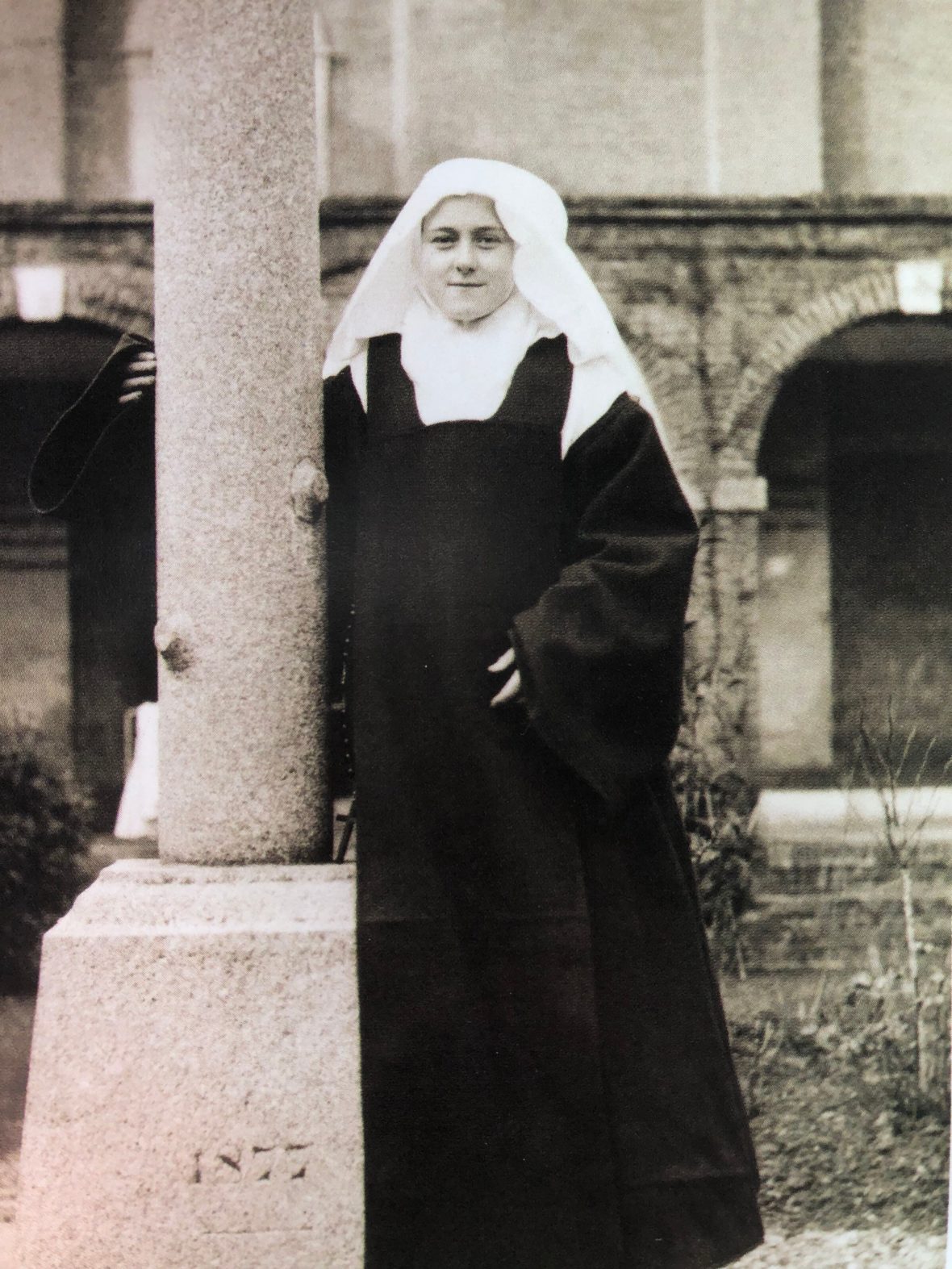
The Little Flower is sometimes known as St. Thérèse of Lisieux, after the town in France that she was from.  But the religious name that she took when she entered the cloistered Carmelite convent is more telling.  Her name in religious life was “Sister Thérèse of the Child Jesus”.

For the Little Flower, the significance of her name in religion was illustrated by a particular Gospel story.  It’s found in the eighteenth chapter of Matthew.  The “disciples came to Jesus, saying, ‘Who is the greatest in the kingdom of Heaven?’  And calling to Him a child, He put him in the midst of them, and said, ‘Truly, I say to you, unless you turn and become like children, you will never enter the kingdom of Heaven.’”[1]

Now when the Little Flower taught her doctrine called the “Little Way”, she explained that the word “little” unlocks the mystery of walking her “Little Way”.  One manner in which this key comes into play regards those words of Jesus about entering the kingdom of Heaven.  St. Thérèse explained that we must turn and become like little children to enter the kingdom of Heaven:  not Third Graders, or Kindergartners, but little children.

Reflect on the way that a little child looks upon her father.  When a little child looks upon her father, she neither knows nor cares “whether he is rich or poor, plain [looking] or handsome, stupid or clever, but [instead] sees only one thing—father”.[2]  Likewise, to the Little Flower, the truth that God is the Creator of the entire universe with its billions of galaxies; the truth that God is omnipotent, able to destroy all creation with a metaphorical snap of His fingers, and to re-create it once again with another snap;  the truth that God is Omniscient, knowing not only where every sub-atomic particle is at every moment, but also every secret thought of every human person:  all of these manifestations of God’s greatness mean nothing to the little child.

The little child cares only that God is her Father.  She cares that He loves her, in all her littleness.  Her focus is the relationship between two persons:  herself and her father.  Maybe each of us needs to consider how we think of God—whether in grand or little terms—in order to ask how better to turn and become His little children.

How strong this relationship was between the Little Flower and her heavenly Father is “expressed in a scene during her life in [the Carmelite cloister].  One of the Sisters, wishing to speak with her, knocked at the door of her cell and, on entering, found… Thérèse sewing, with a rapt expression on her face. ‘What are you thinking of?’ asked the Sister.  St. Thérèse replied:  ‘I was meditating on the Our Father.  It is so wonderful to be able to call God “Our Father”.’  As she said it, tears came into her eyes. … It takes the simplicity of a saint to realize the Fatherhood of God so intimately as to be unable to get beyond the first two words of the” Our Father.[3]

In walking the Little Way of St. Thérèse, and focusing on God as our Father, one of the truths about this Father that comes to the fore is the primacy of His love for us.  The primacy of God the Father’s love is especially important to focus on in a culture like ours.  Children are at risk of believing that it’s their accomplishments that earn them God’s love.  As Christians we must combat this way of thinking, for the sake of our own spiritual lives as well as for those of our children.  This primacy of God the Father’s love is taught in Scripture especially by Saint John, the Beloved Disciple.  In his first Letter, St. John proclaims the truth about the nature of love.  He proclaims, “In this is love:  not that we have loved God, but that He loved us, and sent His Son as expiation for our sins.”[4]

God’s love is primary.  His love precedes, not only our love for Him.  His love precedes our very selves.  Consider a different example.  What if God, one hundred years ago back in the year 1916, were to tell you that you had to earn the right to be conceived by your parents and born?  What could you possibly do in order to earn the right to be conceived and born?  Obviously, it’s a ridiculous question.  A hundred years you did not exist, so how could God say anything to you?  More importantly, if you didn’t exist, how could you possibly do anything so as to earn the right to be conceived and born?  You cannot do anything, until you are.  Only God could give you the immortal soul by which you came to exist, and you did nothing to earn that gift.  Even less, then, could you possibly do anything to earn God’s love, because His love is an even greater gift than human life.  Human life is human life, but God’s love is a share in divine life.

+     +     +

The Little Way of St. Thérèse is very simple, and it’s very beautiful because of its simplicity.  I’ve mentioned already three keys to her Little Way, in their order of importance:  (1) “little”:  we have to be little; (2) “Father”:  our focus is on God the Father; and (3) “primary”:  the Father’s love for you is primary, before even your existence, much less any effort of yours to love the Father in return.  But there’s a final key to the Little Way that we also need to consider.

Going back to that favorite Gospel story of the Little Flower, recall what Jesus said on that occasion, when He put that child in their midst.  His words are well known.  You’ve likely heard those words hundreds of times.  But there’s a kernel within Jesus’ words there that’s often overlooked, or even forgotten.  Jesus doesn’t simply say that you must become like children to enter the kingdom of Heaven.  What He actually says is that must turn and become like children [to] enter the kingdom of Heaven.”

Now, maybe that doesn’t seem like an important point.  What does Jesus mean when He insists that you must first turn, and then become like children?  In fact, the answer demands a lot from us.

If we have to first turn before becoming like children, what is it that we must turn away from?  The first possible answer that might occur to us is “sin”:  we must turn away from sin and become like little children.  But in fact, it’s more than that.

What we have to turn away from is the stance from which all sin grows.  This stance—this stand against God—runs contrary to all three of the keys that St. Thérèse teaches us.  This stance is not little:  it stands instead upon a belief of one’s own greatness.  Nor does this stance relate to the Father:  it stands instead upon a belief in self-reliance and independence.  Nor does this stance rest on the primacy of the Father’s love:  it stands instead upon a belief in justifying oneself.

Mercy is the gift we accept when we turn away from the stand of self-greatness, self-reliance, and self-justification.  Mercy is the heart of that turning that Jesus demands from us, if we are to become little children.  Mercy is the key that unlocks the human heart from within.

Once a person has opened his heart to the gift of mercy, God is free to pour His love into that person’s life.  But when someone stands fast, turned away from God, that person’s heart remains tight shut, and God respects that decision.  In this sense, mercy is God’s primary gift of love.  Mercy is not primary in importance, a fact which we can understand better when we reflect on the truth that in Heaven, God does not bestow mercy upon His beloved saints.  God has even greater gifts of love in store for us, but mercy is primary in order of fallen human nature.  “In the beginning”, when God created Adam and Eve, God had no intention ever of bestowing the gift of mercy upon anyone.  But in the face of human sin, God chose to make Himself little in becoming man, in showing the Father’s love through the self-sacrifice of the eternal Son.

A child who doesn’t know that he’s loved at his worst, will never accept the gifts that will make him his best.  God’s gift of mercy reveals to you God’s own heart, and the saving truth that God does not love you in spite of your sins, but right through your sins.


[1] Matthew 18:1-3.

[2] Vernon Johnson, Spiritual Childhood: The Spirituality of St. Therese of Lisieux (San Francisco: Ignatius Press, 2001), 11.

[3] Ibid., 12.

[4] 1 John 4:10.

The Twenty-Sixth Sunday in Ordinary Time [C]

The Twenty-Sixth Sunday in Ordinary Time [C]
Amos 6:1,4-7  +  1 Timothy 6:11-16  +  Luke 16:19-31

“When the poor man died, he was carried away by angels to the bosom of Abraham.”

Brothers and sisters spend a fair amount of their childhood trying to be different from one other:  to distinguish themselves.  Knowing this, my own parents gave the same middle initial to all five of their children.  In fact, they gave the same middle name to both their daughters:  Marie; and the same middle name to each of their three sonsMichael.

In religion class when I was a boy, whenever we were asked to study one of our patron saints, I always chose my first name.  Maybe I didn’t want to learn about the patron saint that I shared with my brothers.  Not until I was older did I become grateful to my parents for giving me St. Michael the Archangel as one of my patron saints.

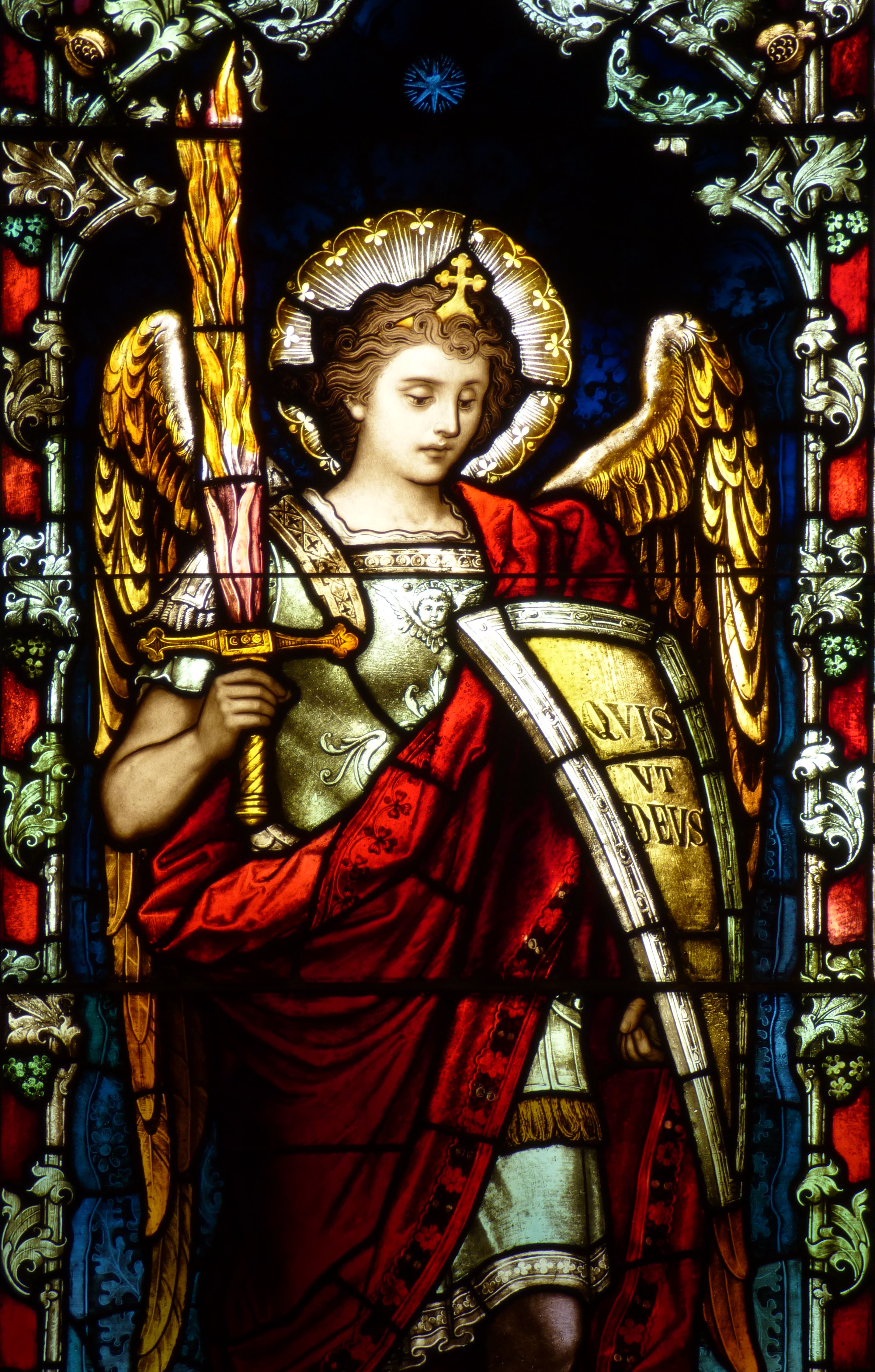
St. Michael’s feast day is September 29.  He’s a saint whom many of us do not turn to often enough.  He’s a saint that many of us might not know much about.  When I recently asked the members of the Altar Society to offer suggestions for homily topics, the saints of the Church was by far the most common request.  St. Michael is a great saint to begin with in reflecting on the saints.  At the end of today’s homily we’ll pray together the Prayer to St. Michael, asking his protection for ourselves and our loved ones.  But first, consider some of the Church’s teachings about this great saint.

+     +     +

Sacred Tradition identifies St. Michael as the one who led the good angels against the evil angels at the beginning of creation.  Sometimes those who don’t understand Jewish and Christian tradition, especially those influenced by New Age teachings, think of God and satan as opposing forces, similar to the Eastern notion of yin and yang.  Maybe these ignorant people have watched too many Star Wars movies, and think that God and the devil are equal in power, balancing each other as forces in the universe.

In truth, God transcends all of creation, including all of the evil angels and all of the good angels.  If the devil as the chief fallen angel has an opposite, it would be St. Michael the Archangel.  A few weeks ago I mentioned the literal meaning of the name “Michael”:  it literally is a rhetorical question, meaning “Who is like God?”  The answer, of course, is “No one”, yet all the fallen angels in their pride refuse to accept this truth.  Each of us does the same each time we choose sin over God.

Four times in the Bible St. Michael is mentioned:  twice in the Old Testament Book of Daniel, and twice in the New Testament, in the Letter of Jude and in the Book of Revelation.  The last of these occurs in the twelfth chapter of the Book of Revelation.  Just as St. Michael had contended with satan “in the beginning”, so this vision in Revelation 12 describes the two of them contending at the end of time.  Listen to three verses from this chapter:

“Now war arose in Heaven, Michael and his angels fighting against the dragon; and the dragon and his angels fought, but they were defeated and there was no longer any place for them in Heaven.  And the great dragon was thrown down, that ancient serpent, who is called the devil and satan, the deceiver of the whole world—he was thrown down to the earth, and his angels were thrown down with him. [Revelation 12:7-9]

This battle at the end of time reflects the battle before time began.  But we in the 21st century need to be mindful that evil never rests in this world:  neither human evil, nor the evil perpetrated by the fallen angels.  Evil is active today as it always has been, and will be until the end of time.

In the Middle East today, the persecution of Christians is routine:  so routine, unfortunately, that many of us Americans pay little attention even to reports about the murder of Christians there.

Several weeks ago a priest in France had his neck slit as he was offering the Holy Sacrifice of the Mass.  No doubt many Americans were shocked by this news, but other than perhaps offering a prayer for those affected, it didn’t change our lives directly.

When such actions become more common in the larger cities of our own country, very likely we’ll tell ourselves that New York and California are bound to experience those sorts of attacks.  Then, when it happens for the first time in Wichita, we’ll be happy that we live in the country or in a small town.  And that’s not to mention attacks on the Christian Faith that are coming now from within our nation, including from the government.  The point is that evil never rests in this world:  neither human evil, nor the evil perpetrated by the fallen angels.

This brings up two good reasons for offering up the Prayer to St. Michael the Archangel.  As you know, in 1886 Pope Leo XIII decreed that this prayer be offered after Holy Mass.  That’s one reason that you’ll find this prayer on the back cover of the missalette used in this parish:  you can pray it as the servers extinguish the altar candles.  It’s also good to offer the prayer to St. Michael at the end of each rosary that you pray, and also to include it with your night prayers.

But as far as the two good reasons for praying the Prayer to St. Michael, the first is to ask for his defense and protection.  Each of us individually, and our families and our parish family collectively, need the protection of the holy angels.  That’s one of the reasons why God created the angels in the first place (the other reason being to praise God in the Heavenly Liturgy).

For several decades now in the Church, the angels have largely ignored.  Some even consider a belief in angels to be a quaint custom from the Middle Ages that’s best ignored.  However, you likely noticed, in 2011 when the new translation of the Roman Missal started to be used, that the holy angels were more prominently mentioned once again.  For example, in several of the Prefaces to the Eucharistic Prayer, the priest in the new translation concludes his prayer to God the Father saying:  “And so, with Angels and Archangels, with Thrones and Dominions, and with all the Hosts and Powers of Heaven, we sing the hymn of your glory….”

Every Christian ought to know about the nine Choirs or Orders of angels.  Every Christian ought to pray to the holy angels, including St. Michael and each person’s Guardian Angel.  But in addition to praying to St. Michael for the sake of his protection, we also ought to pray to him to remember that each of us ought to imitate those holy angels who serve mankind.  As an illustration of this, consider today’s Gospel passage, and Jesus’ parable about the rich man and Lazarus.

+     +     +

At first hearing, the Parable of the Rich Man and Lazarus might fool us, in just the same way that the Parable of the Prodigal Son can fool us.  When St. Luke the Evangelist narrates his account of Jesus teaching the Parable of the Prodigal Son, the evangelist makes clear that Jesus is teaching this parable to the scribes and the Pharisees.  So who in the Parable of the Prodigal Son symbolizes the scribes and the Pharisees?  It’s not the Prodigal Son.  Nor is it the Prodigal Son’s father, who prodigally—that is to say, lavishly—bestows mercy on his prodigal son.  No, it’s the older son who symbolizes the scribes and the Pharisees:  the older son, who refuses to enter the feast thrown by the father for the prodigal son.  So then, if we were to name this parable after the audience to whom Jesus was preaching it, we might well call this the “Parable of the Miserly Son”:  that is, the son who was miserly when it came to showing mercy.

With that in mind, consider today’s Gospel passage.  Here Jesus teaches what’s commonly called the Parable of the Rich Man and Lazarus.  But that name for the parable, like all the names of the parables, are modern inventions.  Jesus never gave a name to any of His parables.  But in the first line of today’s Gospel passage, the evangelist tells us that Jesus preached this parable to the Pharisees.  We need to remember that the same dynamic at work in the Parable of the Prodigal Son is at play here, also.  The Pharisees are not symbolized by either the rich man or Lazarus.  Who in today’s parable symbolize the Pharisees?  The five brothers of the rich man symbolize the Pharisees.  When Abraham declares, “If they will not listen to Moses and the prophets, neither will they be persuaded if someone should rise from the dead”, the clear reference is to the Pharisees not being persuaded by Jesus’ future resurrection from the dead.

Jesus is wanting the Pharisees to accept now the graces that God is offering them, even if God’s graces come to them through simple and humble messengers sent by God.  Just as the rich man during his life on earth failed to lead his five brothers to God, so each of us has a choice about whether or not to be a messenger to others.  Or in other words, each of us needs to be a human angel—metaphorically speaking—because the word “angel” literally means a “messenger”.  Whether we intend to or not, we send messages to others all the time.  But are the messages we send others of God’s kindness, mercy, compassion, and forbearing?

Here is the secondary reason to pray to St. Michael:  as a reminder to us to be angels in our own place in life, messengers to others of God’s goodness, as the rich man in today’s parable failed to be.  Blessed John Henry Cardinal Newman penned a meditation stressing just this calling, and the faith needed to live out this calling.  Here are just two sections of it:

“God has created me to do Him some definite service; He has committed some work to me which He has not committed to another.  I have my mission—I may never know it in this life, but I shall be told it in the next.

“I am a link in a chain, a bond of connection between persons.  He has not created me for naught.  I shall do good.  I shall do His work.  I shall be an angel of peace, a preacher of truth in my own place while not intending it—if I do but keep His Commandments.”
The 25th Sunday in Ordinary Time [C]

The Twenty-fifth Sunday in Ordinary Time [C]
Amos 8:4-7  +  1 Timothy 2:1-8  +  Luke 16:1-13
September 18, 2016

“You cannot serve both God and mammon.”

Father Hasenpfeffer made it a practice to visit his parish school each week.  One day he walked into the Fourth Grade, where the children were studying the fifty states.  Father asked how many of the states they could name, and they were able to come up with about forty of them.  He told the students that when he was a schoolboy, he could name all of the states from memory.

A little boy in the second row raised his hand and said, “But Father, back then there were only thirteen.”

+     +     +

Of course, I myself am not nearly as advanced in age or wisdom as Father Hasenpfeffer.  But the older I get, the more I find myself wanting to simplify my life.  Or to use another image, the more I want to carry out some pruning. Continue reading

The 24th Sunday in Ordinary Time [C]

The Twenty-fourth Sunday in Ordinary Time [C]
Exodus 32:7-11,13-14  +  1 Timothy 1:12-17  +  Luke 15:1-32
September 11, 2016

“Christ Jesus came into the world to save sinners.”

Now that we’re past Labor Day, the school year is in full swing.  Instead of their fond memories of summer play, students once again are having to focus on homework and the dreaded test.  That reminds me of a story about an eight year-old girl who didn’t like school very much, and liked taking tests even less.  One evening her mother was kneeling with the girl at her bedside as she offered her night prayers, one of which went like this:  “Now I lay me down to rest. / I pray I pass tomorrow’s test. / If I should die before I wake, / That’s one less test I’ll have to take.”

We all have tests to take.  Children sometimes look forward to the day they graduate from school, knowing that they’ll never have to take another test.  But they don’t understand that adult life is full of tests:  they just come in different shapes and sizes than the ones we got in school. Continue reading

The 23rd Sunday in Ordinary Time [C]

The Twenty-third Sunday in Ordinary Time [C]
Wisdom 9:13-18  +  Philemon 9-10,12-17  +  Luke 14:25-33
September 4, 2016

“…when things are in Heaven, who can search them out?”

In the middle of a forest, two hunters were suddenly confronted by a huge, mean bear, followed by Mama Bear and Baby Bear.  In their fear, all of the hunters’ attempts to shoot the bears were unsuccessful.  Finally, the hunters turned and ran as fast as they could.  They reached the edge of a very steep cliff.  Seeing no way out, the first hunter got down on his knees, raised his arms, and exclaimed, “Dear God! Please make these bears ‘religious’!”

The sky darkened.  Lightning flashed across the sky.  Just a few feet short of the hunters, Papa Bear came to an abrupt stop, fell to its knees, looked up into the sky and folded its paws together.  Mama Bear and Baby Bear followed suit, and the three bears began praying in whispered voices. Continue reading

The 22nd Sunday in Ordinary Time [C]

The Twenty-second Sunday in Ordinary Time [C]
Sirach 3:17-18,20,28-29   +   Hebrews 12:18-19,22-24   +   Luke 14:1,7-14
August 28, 2016

“Humble yourself the more, the greater you are….”

In the Catechism’s discussion of the Tenth Commandment—forbidding the coveting of thy neighbor’s goods—humility is mentioned.  You might wonder what humility has to do with not coveting thy neighbor’s goods.  To illustrate the connection, the Catechism quotes the fourth-century saint Gregory of Nyssa.

In one of St. Gregory’s writings, titled “On Blessedness”, he states that Jesus:

“speaks of voluntary humility as ‘poverty in spirit’; the Apostle [Paul] gives an example of God’s poverty when he says:  ‘For your sakes He became poor.’”[1]

One of the most important points that St. Gregory makes here is that humility is a kind of poverty.  This is key to pondering today’s Scriptures:  humility is a kind of poverty. Continue reading