“… whoever comes to Me will never hunger, and whoever believes in Me will never thirst.”
One benefit of attending weekday Mass is how the experience of Sunday Mass is more enriching. During Easter this is even more true. The Scripture readings of weekday Masses especially tend to dovetail with those of Sunday Masses.
Starting last Friday and continuing through this Saturday, the Gospel passage at weekday Mass is from John Chapter Six. This chapter culminates in Jesus’ teaching about His Real Presence in the Eucharist. In this coming Sunday’s Gospel passage, Jesus describes Himself as the Good Shepherd. Through these Scripture passages, we can deepen our faith in Christ by understanding more deeply who He is for us.
In today’s Gospel passage, Jesus first states, “I am the bread of life”, emphasizing His Eucharistic doctrine. But about two-thirds of the way through the passage, He focuses upon the sort of action a shepherd carries out. He states: “this is the will of the one who sent me, that I should not lose anything of what he gave me”.
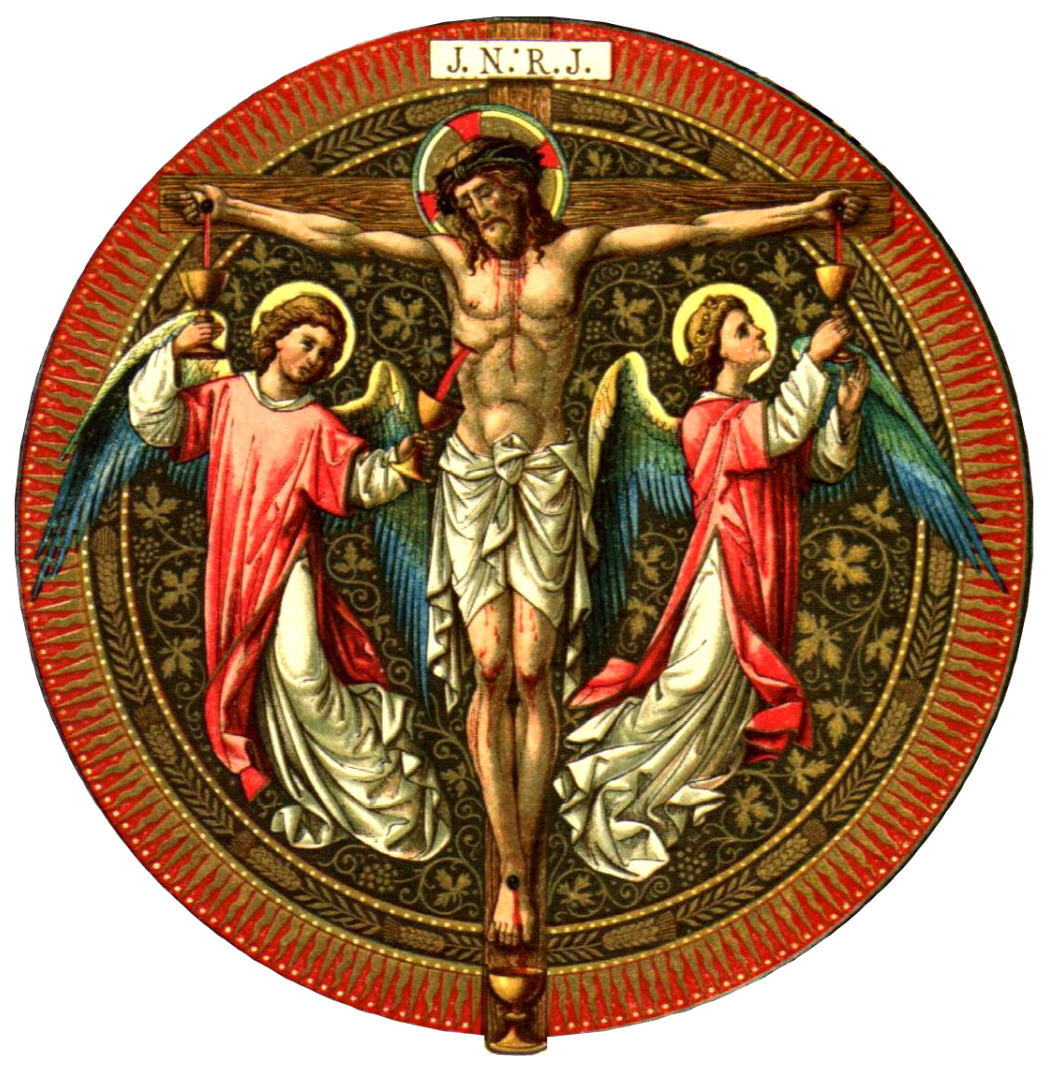
As we read, and re-read John Chapter Six, we become aware of how Our Lord is weaving together several different truths about Himself. He does this in order to deepen our love for Him, and faith in Him. In these two truths—Jesus as the Bread of Life, and Jesus as the Shepherd who sacrifices Himself for us—we see why Holy Mother Church calls us to see Jesus as “our All”. The Church, in one of the prefaces at Mass for Easter, likewise chants the following to God the Father: “By the oblation of His Body, / [Jesus] brought the sacrifices of old to fulfillment / in the reality of the Cross / and, by commending Himself to You for our salvation, / showed Himself the Priest, the Altar, and the Lamb of sacrifice.”
“… my Father gives you the true bread from heaven.”
When the crowd asks Jesus, “What sign can you do, that we may see and believe in you?”, they’re asking a loaded question. To appreciate both the crowd’s question, and Jesus’ reply, we have to back up to the end of yesterday’s passage.
The crowd had asked Jesus, “What can we do to accomplish the works of God?” Jesus’ reply might have seemed to some in the crowd a non sequitur: “This is the work of God, that you believe in the one He sent.”
This statement of Our Lord brings the whole of John Chapter Six into focus. The focus is not the satisfaction of physical hunger. Nor is the focus the performance of works. The focus is “the one He sent”: the one whom God the Father sent to become Flesh and dwell among us. The focus is the divine Person of Jesus.
Jesus calls the crowd to turn themselves away from their prior concerns. Instead, He draws them to belief in Himself. They must believe, and they must believe in Him. “This is the work of God, that you believe in the one He sent.”
In response to Jesus’ call to believe in Him in a profoundly personal way, the crowds respond, “What sign can you do, that we may see and believe in you?” It’s likely that Jesus shook His head in disgust at this reply. He had called them to personal belief in Him, and they ask for signs. They want Jesus to prove Himself by performing signs. But Jesus wants them to believe in Him Himself, not in any signs that He might work, no matter how powerful.
This distinction between belief in the divine Person of Jesus on the one hand, and the performance of signs on the other, continues to play out throughout the rest of John 6, and throughout the rest of John’s Gospel account. So for ourselves today, in our own examinations of conscience, we might ask the Lord to help us be honest about how often and in how many ways we prefer signs from God to personal belief in Him.
In today’s Gospel passage from John 6, we hear the crowd ask Jesus two questions. First they ask, “Rabbi [meaning, “Teacher”], when did you get here?” Jesus doesn’t answer their question, but He confronts them with the fact that they are only concerning themselves about their physical hunger. It was for this reason that they had wanted to make Him their king. But Jesus wants them to want something greater.
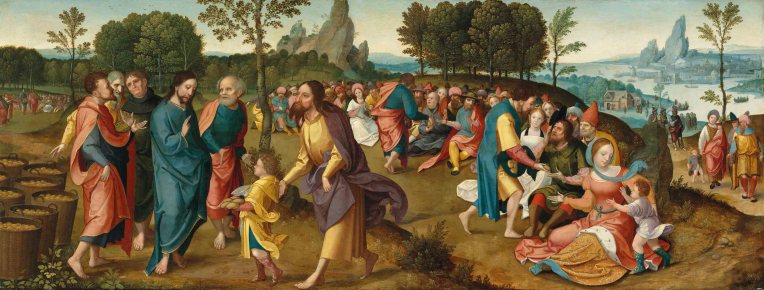
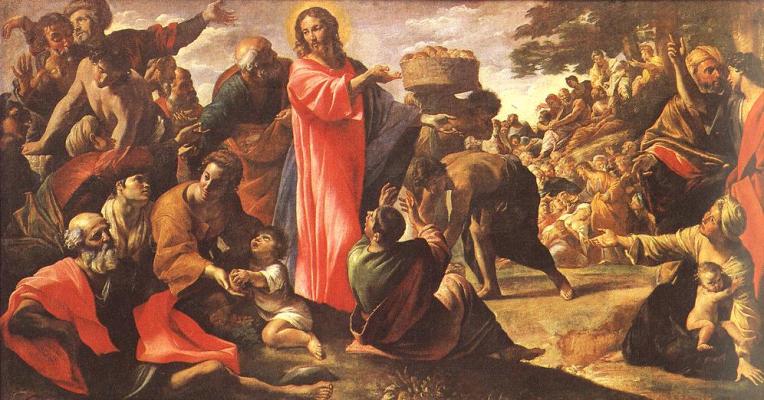
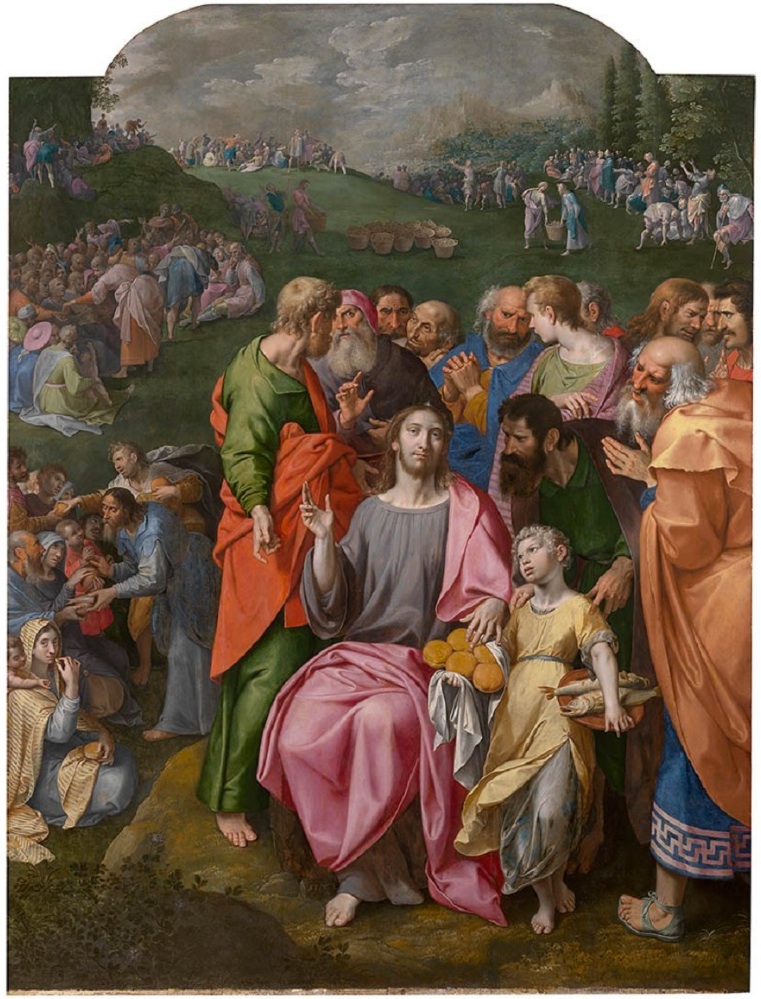
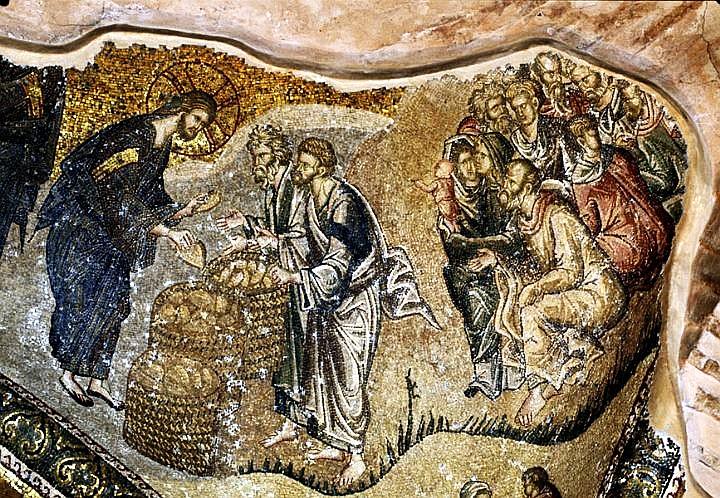
Towards this end, He shifts their attention from the physical hunger that He satisfied shortly before through the multiplication of loaves, to the spiritual hunger that He will satisfy later through the Institution of the Holy Sacrifice of the Mass. To the extent that they understand how Jesus is trying to shift the direction of their conversation, the crowd wants in.
So they ask Jesus their second question: “What can we do to accomplish the works of God?” Jesus’ response is brief. The work of God is to have faith in the One He sent. In other words, they do not themselves have the means to satisfy this hunger: there is no spiritual refrigerator, supermarket, or field for them to go to. Their spiritual hunger is not only for something to fill the emptiness inside their souls. That hunger is also for something to fill the emptiness around them. For there is nothing around them in the world that is capable of sustaining them eternally, but only dependence upon God through the divine virtue of faith.
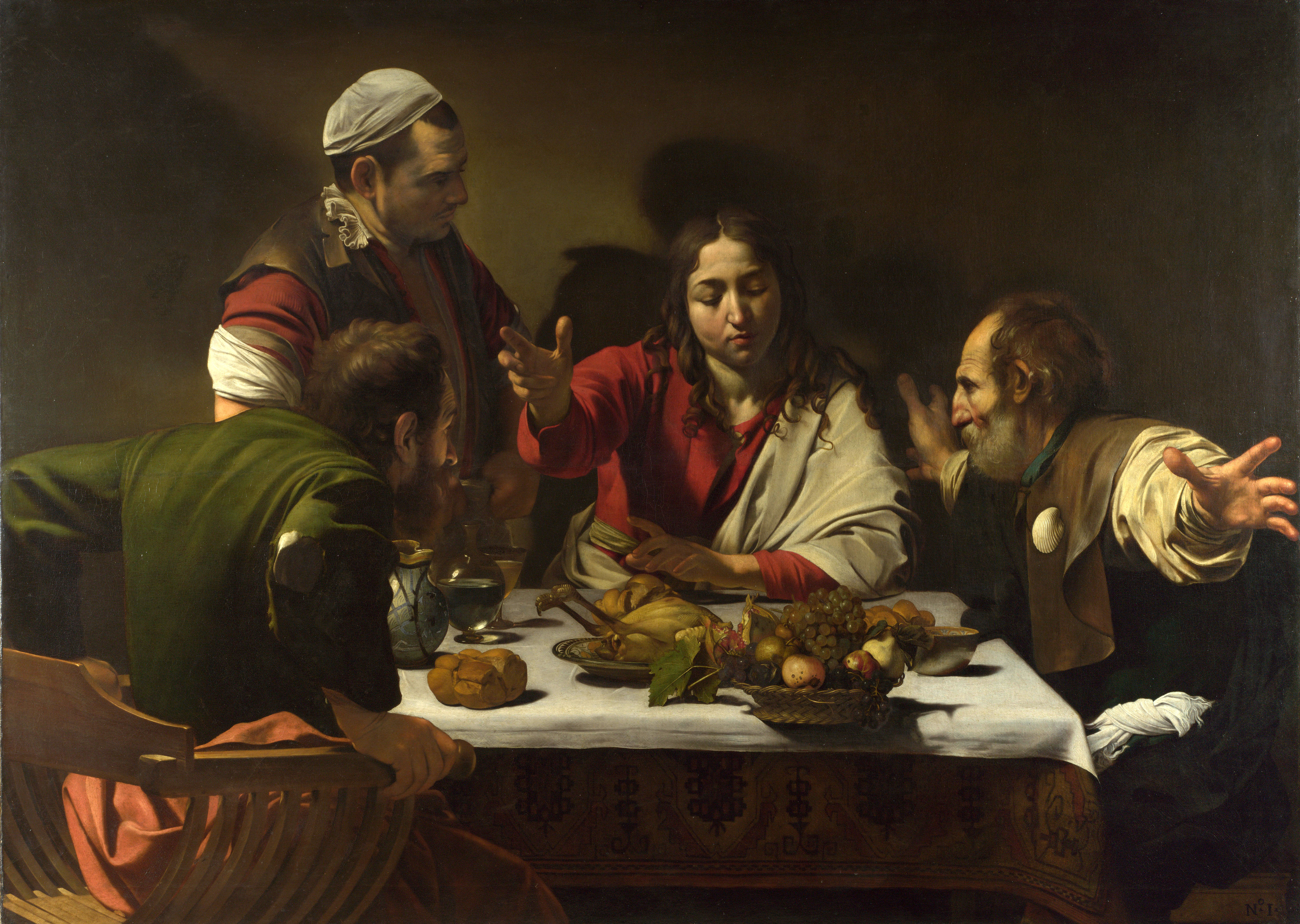
CCC 1346-1347: the Eucharist and the experience of the disciples at Emmaus CCC 642-644, 857, 995-996: the apostles and disciples as witnesses of the Resurrection CCC 102, 601, 426-429, 2763: Christ the key to interpreting all Scripture CCC 457, 604-605, 608, 615-616, 1476, 1992: Jesus, the Lamb offered for our sins
+ + +
The purpose of the Mass is to help us hear Jesus, see Jesus, receive Jesus, and serve Jesus. This description isn’t exhaustive, but we can use it to reflect on today’s Gospel Reading.
Following the Introductory Rites, the first chief part of Holy Mass is the Liturgy of the Word. As the Word of God speaks through His Scriptures, He teaches us about God, about us as sinners, and about how we might be reconciled and united with God.
On a given Sunday, through the course of the Scripture readings, we make an ascent. This ascent reaches its climax when the Gospel Reading is proclaimed. We stand for the proclamation of the Gospel because in it we hear about the words and works of the Word of God in the Flesh. We profess exactly who this divine Person is when we stand after the homily and proclaim in the Creed that “[f]or us men and for our salvation [this Word of God] came down from Heaven, and by the Holy Spirit was incarnate of the Virgin Mary, and became man.”
But then, in the second chief part of Holy Mass, something miraculous takes place. If the first part is the Liturgy of the Word, the second is the Liturgy of the Word Made Flesh. That is, God does the proclamation of the Gospel one better: the One whose words and works were proclaimed to our ears becomes incarnate before our eyes. The Word of God whom we hear in Scripture becomes the Word made Flesh in the Eucharist.
As the Word becomes Flesh at the altar and dwells among us, we certainly adore Him as He’s raised up at the Consecration. But that’s not enough for God. In addition to allowing us to adore Him from afar, He invites us to His Supper. We are not worthy to receive His Body and Blood, soul and divinity, but He wills it more than we deserve it. He makes it possible to approach Him in a state of grace.
This two-fold Mystery—of God’s Word, and God’s Word made Flesh—is what St. Luke proclaims to us in today’s Gospel Reading. The two disciples, who symbolize you and me, are on the way to Emmaus. They are caught unawares by this man with whom they converse. At first they don’t recognize him. But as they hear him, their hearts burn with passion for God through Sacred Scripture. After a long journey, they recognize Jesus in what St. Luke the Evangelist calls “the breaking of bread”: a phrase Luke uses throughout his other book of the Bible—Acts of the Apostles—to refer to the Holy Eucharist.
But what do these two disciples do after Jesus proclaims the Word to them, and shares with them the Word made Flesh? After hearing, seeing, and receiving Jesus, they serve Him by sharing with others their encounter with the Word in the Flesh.
That such service is called for from those who receive the Holy Eucharist is ritualized by the conclusion of Holy Mass. In fact, the word “Mass” comes from the Latin for the phrase spoken at the end of Holy Mass: “Ite, missa est”. This phrase, while officially translated as “Go forth, the Mass is ended”, literally means “Go, the dismissal is made.”
Then-Pope Benedict XVI in a 2007 document on the Sacrament of the Eucharist taught: “In antiquity, missa simply meant ‘dismissal’. However in Christian usage it gradually took on a deeper meaning. The word ‘dismissal’ has come to imply a ‘mission’. These few words [that is, “Ite, missa est”] succinctly express the missionary nature of the Church.” This teaching from our Pope Emeritus helps us see today’s Gospel passage, and the gift of Holy Mass itself, in light of the end—the goal—of the entire Easter Season: the solemn feast of Pentecost and the mission of Jesus’ Church.
But they went forth and preached everywhere, while the Lord worked with them ….
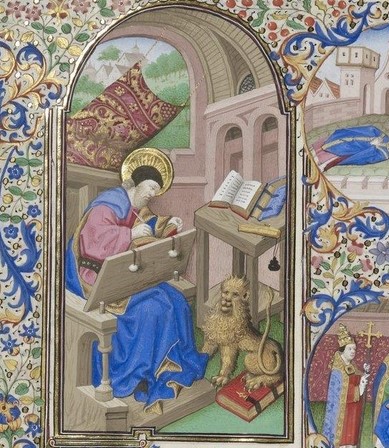
Saint Mark the Evangelist, like St. Luke, was not an apostle, as were the evangelists Matthew and John. Yet various prayers and Scriptures in the Sacred Liturgy are taken today from those set aside for the apostles. Why is this? Is the Church just too lazy to compose prayers specifically for the evangelists? Of course not.
The entire New Testament is apostolic in origin. Out of the 27 books of the New Testament, only two were not composed by apostles: the Gospel accounts of Mark and Luke. Yet even these two books are apostolic in origin, for St. Mark was a disciple of St. Peter, and St. Luke of St. Paul.
That St. Mark handed down the Gospel account that he had received from an apostle reminds us of two things. First, the Church is apostolic in origin, by the design of Jesus. It’s in unity with our bishops under the guidance of the Pope that we can hear the fullness of the Gospel. Second, each of us, like St. Mark, lives one’s own vocation to hand on to others the same Good News that’s been handed down through history by the apostles and their successors.
The Season of Easter sometimes is called “the season of the Church”. The reason for this is that Easter culminates in the feast of Pentecost, which is considered metaphorically to the “birthday” of the Church. The whole of the Easter Season, then, prepares us for Pentecost by focusing on several aspects of the Church’s life and mission.
For more than a week, beginning today, our Gospel passage at weekday Mass will come from the sixth chapter of John’s Gospel account. If you have time, you might, for meditation, read this chapter of John 6 in its entirety each day next week. This chapter can help us profoundly to understand the life and mission of that Church of which we are individual members. Each weekday passage from John 6 can help us appreciate in a unique way the beauty of Jesus, who is the Bread of Life.
In the first fifteen verses of John 6, Jesus shows His fellow Israelites that the Law of Moses is not enough. The Law cannot fulfill the human person and cannot offer eternal life. The people in the crowd who witness this new miracle of Jesus multiplying the loaves are attracted all the more to Jesus. They recognize Jesus as the Prophet, one even greater than Moses. They believe that He can be their king in this world.
But what does Jesus instantly do? Immediately, He does something counter-intuitive. He withdraws to the mountain alone. Why did He withdraw from God’s people? He withdrew from them for the same reason that He often withdraws His presence from the soul of a Christian: that is, to purify the disciple’s desires.
Consider that Moses in the desert responded to the grumbling of the Israelites by drawing manna from Heaven. But this did not stop their grumbling. Throughout the forty years of Israel’s wandering through the desert, Moses had constantly to meet the needs of the Israelites as they continued to grumble. It was as if Moses was the only one who could truly keep sight of their true goal, the Promised Land: a land overflowing with milk and honey, where there would be no more hunger, and where they would be truly filled.
Yet even after the Israelites reached this Promised Land, they grew over the centuries to believe that their life there was the best God had to offer. They did not realize that their covenant with God was about to be fulfilled by a new and everlasting covenant. They did not realize that the Word of God, present in the Scriptures, had become flesh and was standing in their midst, offering to lead them towards eternal life. What they did not realize, they could not desire.
Baptism is not a private experience. It is not simply about “me and Jesus”. Baptism washes away not only one’s own personal sins, but also the sin of Adam and Eve. All members of the human race have shared that original sin, with the exceptions of Mary and Jesus.
Likewise, as the baptismal bath washes away death in both personal and communal ways, so baptism also brings about new life in the soul of the baptized in two ways. The individual Christian, during the course of his earthly days, works out his salvation [see Philippians 2:12] through his membership in the Church: that is, by sharing in her saving mission.
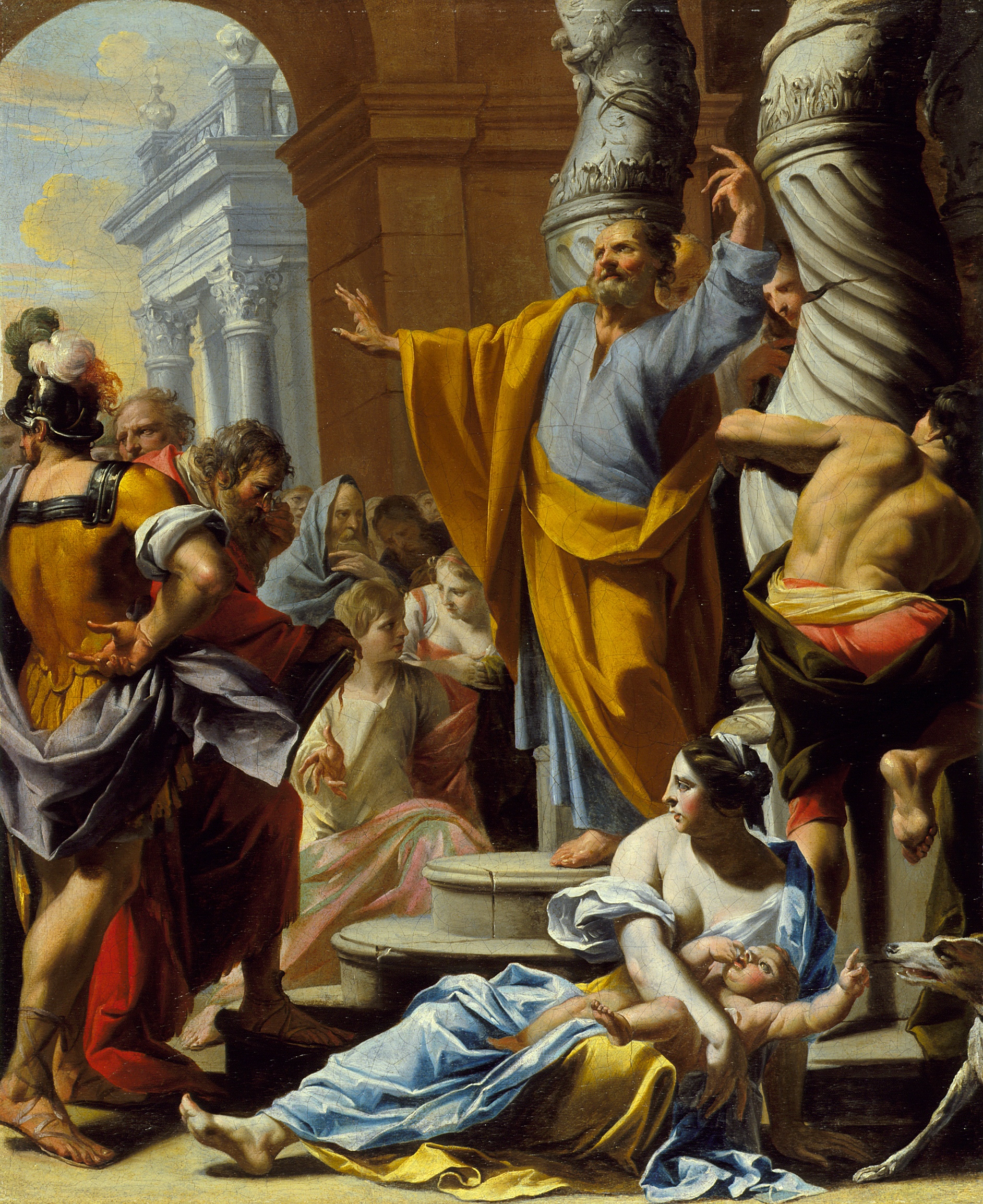
This Church, the Body of Christ, is the answer to the questions that today’s readings raise. The evangelist explains that there’s a difference between those who speak of earthly things, and those who speak of God. Peter himself, the first visible head of the Church, says ultimately the same thing in Acts. In front of Jewish officials, Peter offers an explanation for why the apostles disobey the officials, declaring: “We must obey God rather than men!” Yet, ironically, these Jewish officials were representatives of God!
Most Christians, in fact, represent God in some manner or another. Parents represent God to their children. Catechists represent God to their pupils. Clergy represent God to those entrusted to their care, and not only through the sacraments. This is as God designed the Church, although of course, this is where difficulties arise within the Church. Those called to represent God fail through sin or ignorance.
From the day of Pentecost, the Church has not been perfect. As we prepare ourselves for the celebration of Pentecost, we beg the Holy Spirit for those gifts that will allow each of us to be seen as pure icons of our Crucified and Risen Lord, and to represent God faithfully in thought, word and action.
But whoever lives the truth comes to the light, so that his works may be clearly seen as done in God.
Today’s Gospel passage tells us neither of Jesus preaching nor of Jesus acting. Instead, in this passage St. John the Evangelist offers spiritual commentary on the Christian life. More specifically, the evangelist describes what it means for the Christian’s works to be rooted in Christ, so deeply in fact that it is Christ who acts through the Christian. To do so, he uses the simple metaphor of light, but in two ways.
On the one hand, to offer a contrast, the evangelist speaks in terms of sinful actions. He notes that“everyone who does wicked things hates the light and does not come toward the light”. Clearly, the evangelist is using light as a metaphor for truth. In common English, when we say that someone fears his actions “coming to light”, we mean that someone fears the truth of his actions becoming known. Along this line, the evangelist explains that the sinner “does not come toward the light”so that his actions will not become known. Adam and Eve, after committing the Original Sin, exemplify what the evangelist means here.
On the other hand, the evangelist also refers to the good works done by a Christian: that is, works done in accord with the will of God the Father, whom St. James in his epistle calls“the Father of lights”[James 1:17]. In the last sentence of today’s Gospel passage, the evangelist notes that“whoever lives the truth comes to the light, so that his works may be clearly seen as done in God.”
So how does what the evangelist says about morality shed light on the whole of the spiritual life? Consider that, to the Romans, Jesus’ crucifixion was punishment for threatening their rule. To the Jews, Jesus’ crucifixion was ironic justice for a man who claimed to be their Messiah. But the Beloved Disciple—the only apostle and evangelist to stand at the foot of the Cross—saw infinitely more in the Crucifixion. He saw light in the darkness of Calvary. So in turn, each of us needs to see light in the darkness of our sins: each night when we make an examination of conscience, and in the pew at church before entering the confessional. That light is Jesus’ Divine Mercy, which poured forth from the side of Jesus on the Cross.