St. Gregory the Great, Pope and Doctor of the Church

St. Gregory the Great, Pope and Doctor of the Church
Colossians 1:15-20  +  Luke 5:33-39
September 3, 2021

“Rather, new wine must be poured into fresh wineskins.”

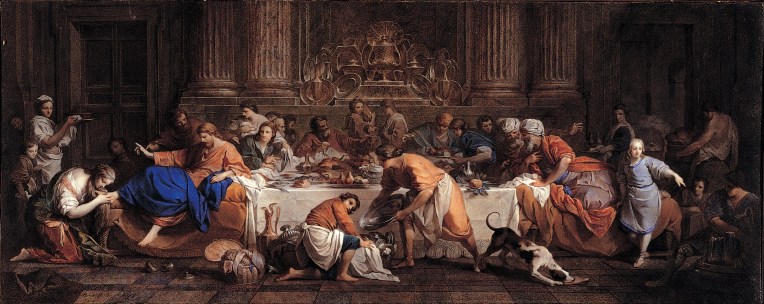
Depending on circumstances, two given cousins may resemble each other very closely, or not at all.  Today’s Gospel passage presents a contrast between Jesus and His cousin, John the Baptist.  Jesus confirms the differences between Him and John, although these differences lead in the same direction.

The context of this contrast is a complaint lodged against Jesus by the scribes and Pharisees.  They uphold the practice of fasting and prayer, but at the same time note that Jesus’ disciples don’t seem to engage in either.

Jesus responds with a metaphor and a parable.  Consider the former.  Jesus describes Himself as a bridegroom.  We as modern Christians understand that by this metaphor Jesus is referring to Himself as the bridegroom of the Church, though that part of the metaphor would have been lost on His original hearers.  But He continues by noting that when the bridegroom is taken away, then the wedding guests will fast.

The latter part of the metaphor can be applied in two ways.  The first we can reflect on in terms of Jesus’ earthly life, and the time of His Passion and death during Holy Week.  The second we can reflect on in terms of our own earthly lives as pilgrims on our way to Heaven:  that is to say, as members of the Church Militant.  We may only share fully in the wedding feast of the Lamb in Heaven, and so while still here below we fast and pray, hoping for complete union in Heaven with the Lord.

OT 22-5

The Twenty-third Sunday in Ordinary Time [B]

The Twenty-third Sunday in Ordinary Time [B]
Isaiah 35:4-7  +  James 2:1-5  +  Mark 7:31-37

“Then will the eyes of the blind be opened, the ears of the deaf uncleared ….”

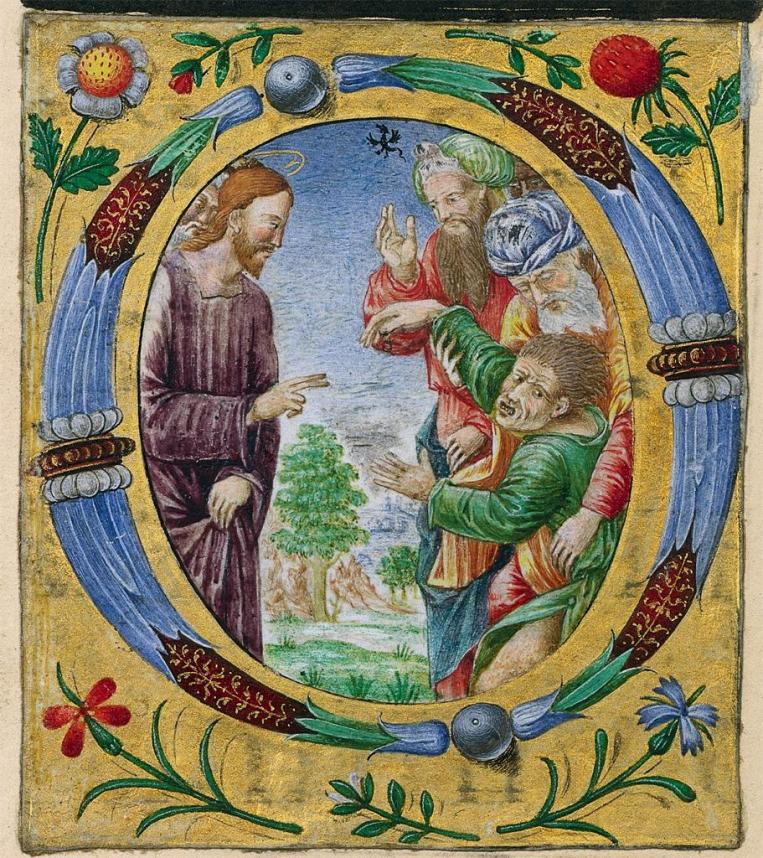
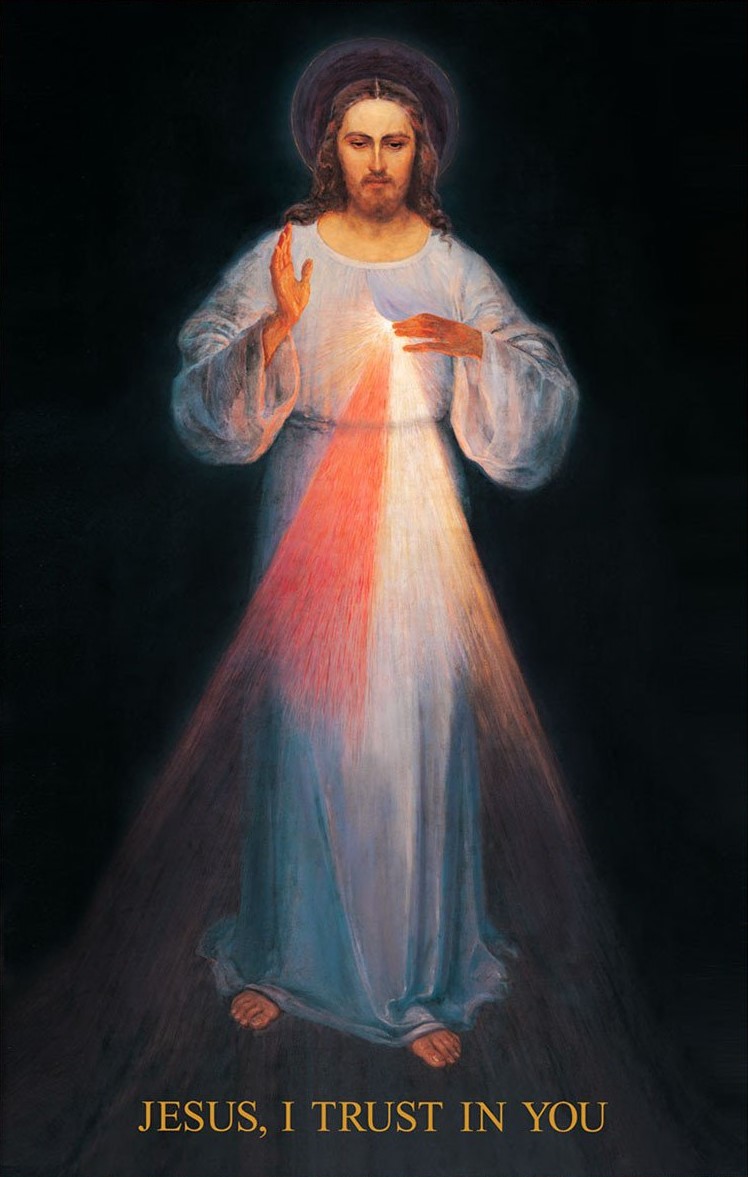
Mercy is the key that unlocks the human heart.  Mercy makes it possible for the human heart to become what God created the human heart to be.  Yet once a person has opened his heart to the gift of mercy, God is free to pour in all manner of gifts.  But if the sinner refuses to accept mercy, his heart remains tight shut, and God respects that decision.

It’s in this sense that mercy is God’s primary gift to fallen man.  Mercy is not primary in importance, in the sense that there is no mercy bestowed to those in Heaven.  Yet mercy is primary in the order of fallen man.  God always respects human free will, even though His divine Will is infinitely more powerful.  But if you don’t accept God’s gift of mercy, your heart is shut to all His other gifts.

The Church, as our mother, has for two thousand years preached that mercy is the primary need of mankind.  This is true not only within the Church, but outside the Church as well.  That is to say, each of us Christians needs to accept mercy so that we can be forgiven and hopefully one day enter Heaven.  However, we also need to accept God’s mercy because He calls us to bear the Good News of mercy to the fallen, divided, hateful world in which we live.  Yet we can’t be messengers of God’s mercy to those outside the Church if we haven’t first been on the receiving end of God’s mercy.  So consider the meaning of mercy.

By way of practical example, consider the way that a child does or does not experience mercy from those around him.  A child who doesn’t know that he’s loved at his worst will never accept the gifts that will make him his best.  Remember the Parable of the Prodigal Son.  If the prodigal son hadn’t turned to his father for mercy, then the father—who all along was deeply hoping and praying for his son to return—could not have rushed out to give him mercy and then also other gifts such as a ring and a feast.

It’s the same in your life as a sinner.  Because you are a sinner, God the Father’s merciful love is primary.  He has already accomplished the work of forgiving your sins by the offering of His Only-Begotten Son on the Cross two thousand years ago.  But you have to accept that gift of mercy.  Once you accept that gift into your heart, mind, and soul, the flood-gates are opened and God the Father can pour into your life many other gifts.

Imagine the life of a child in a wealthy family.  Imagine the child’s father is named Daddy Warbucks.  Daddy Warbucks is a man who constantly gives material gifts to his child.  But there’s one thing that Daddy Warbucks never gifts his child with, and that’s mercy.  Fortunately, this child’s conscience is smart enough to tell him that he needs mercy in order to have an authentic relationship with his father.  Unfortunately, this child’s conscience also knows that without mercy, no other gift has final meaning, no matter how expensive.

But keeping that first example in mind, imagine a second scenario.  It’s very similar, with the same child and the same generous Daddy Warbucks.  However, while Daddy Warbucks in this case does offer mercy to his child as a loving gift, the child—for whatever mysterious reason—refuses to accept his father’s gift of mercy.  Some might think it odd that a child would refuse the gift of mercy.  Unfortunately, for whatever mysterious reason, it’s far more common than people think.  There are many adults who have grown up without ever accepting the gift of mercy into their hearts.

It sounds simple, but we know from experience how divided we find ourselves in trying to put our Catholic Faith into practice.  We often blame God, claiming that God isn’t granting to us what we need to grow in holiness.  In this, we might remember a saying of the Little Flower’s namesake, St. Teresa of Avila:  “Christ does not force our will.  He takes only what we give Him.  But He does not give Himself entirely until He sees that we yield ourselves entirely to Him.”
Thursday of the Twenty-second Week in Ordinary Time [I]

Thursday of the Twenty-second Week in Ordinary Time [I]
Colossians 1:9-14  +  Luke 5:1-11
September 2, 2021

“But if you say so, I will ….”

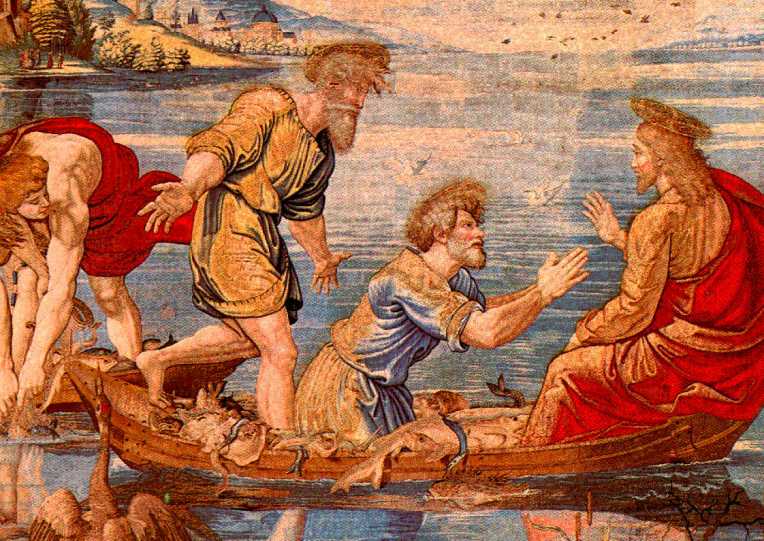
In spite of Peter’s knowledge and experience in fishing, and in spite of his having been up all night long, Peter and his fishing partners had caught absolutely nothing.  Sometimes in what we do, also, we try our best, even at things we’ve done before and know a lot about, but things don’t work out for us.  That’s a natural part of life in this fallen world.

But in today’s Gospel passage, we hear about Jesus coming along.  Jesus was a carpenter, not a fisherman.  Jesus tells Peter to put out the fishing boat into deep water (not the best place to catch fish), and after the sun had risen (not the best time).  Peter starts out with a protest against Jesus’ idea, but then has second thoughts, and replies to Jesus, “But if you say so, I will….  I will lower the nets.”

Remember that God’s ways are not our ways.  Sometimes, when we pray, we end up telling God what He should be doing.  And when we hear God talking to us, we think His ideas are bad ideas.  When Jesus asks us to do something for Him, we should listen.  And through the grace that we receive in Holy Communion, we should speak as Peter speaks, and say to Jesus, “But if you say so, I will….”

OT 22-4

Wednesday of the Twenty-second Week in Ordinary Time [I]

Wednesday of the Twenty-second Week in Ordinary Time [I]
Colossians 1:1-8  +  Luke 4:38-44
September 1, 2021

… we have heard of your faith in Christ Jesus ….

Today the Church at weekday Mass begins to proclaim Saint Paul’s Letter to the Colossians.  We will hear from this letter over the next eight days, and will hear from the first three of its four chapters.

Most of St. Paul’s letters have introductions similar to one another, following a format that was common in Paul’s day for letter-writing.  But with greater scrutiny we notice unique touches with which Paul foreshadows the kernel of each letter.  One of these touches that he paints in today’s reading evokes the three divine virtues.

Paul says to the Colossians:  “we have heard of your faith in Christ Jesus and the love that you have for all the holy ones because of the hope reserved for you in Heaven.”  Paul is writing in this letter to commend the Colossians, yet also to caution them in light of temptations to not focus their lives on Christ.  Here at the beginning of the letter Paul is praising the Colossians at the same time he illustrates the reason that they might be commended.

For each of us, also, there is a need to grow closer to Christ, and to leave aside false hopes, empty loves, and blinding faith.  Christ is the means by which to grow in authentic faith, hope and love.  Christ is the fulfillment of all three:  the love of the Father, into the depths of which the Father wants us to enter.

©Photo. R.M.N. / R.-G. OjŽda

Tuesday of the Twenty-second Week in Ordinary Time [I]

Tuesday of the Twenty-second Week in Ordinary Time [I]
1 Thessalonians 5:1-6,9-11  +  Luke 4:31-37
August 31, 2021

… they were astonished at His teaching because He spoke with authority.

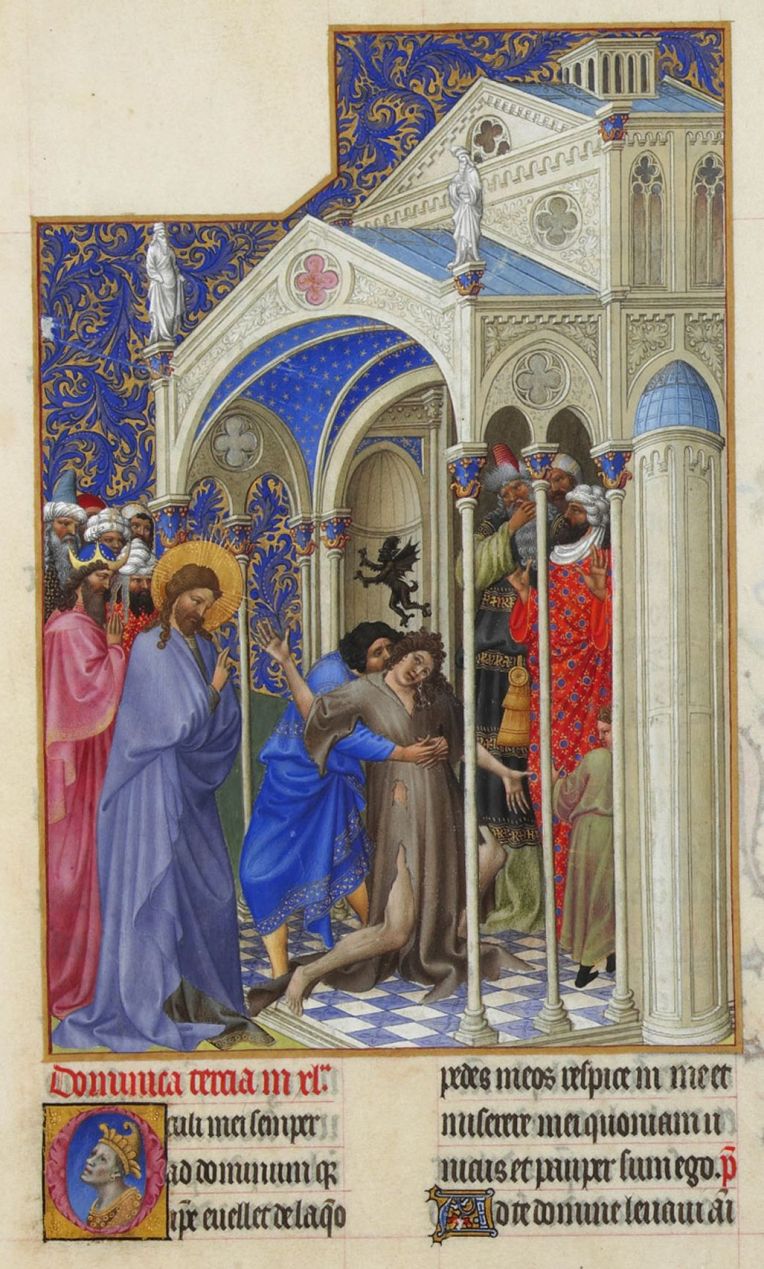
Astonishment is evoked by the fact that Jesus teaches with authority.  Why is there this astonishment, and what does it mean for Jesus to teach with authority?

In the culture that surrounds us, every person believes himself to be his own authority.  In effect, this wide-spread belief means that no real authority exists.  In our society there is a great need for clarity about the meaning and purpose of authority.

At its most literal level, the word “authority” is related to the word “author”.  The author of a novel can create worlds of his own design from his imagination.  Laws of physics need not apply.  Strange creatures can exist, and fantastic events are commonplace.  Tolkien, Baum and Rodenberry are all authors in this sense.  They have the authority to create worlds and races of creatures, and to confer life upon and take life from individuals.  However, this is merely a fictional form of authority.  In reality, there is only one Author of creation.

Jesus, as God from God and Light from Light, is this divine Author.  Through His divinity He has authority.  He exercises this authority throughout the three years of His public ministry for various persons, and for all mankind on Calvary.  However, in the face of His exercise of divine authority, astonishment arises for varied reasons.

Most cannot believe that a mere man could exercise divine authority.  Jesus, of course, was not merely a man, even though He was fully so.  In our own lives, we should not be astonished by the authority or power of Jesus.  We should root our daily lives in His desire to grant us His divine life.

Monday of the Twenty-second Week in Ordinary Time

Monday of the Twenty-second Week in Ordinary Time
Luke 4:16-30

… the dead in Christ will rise first.

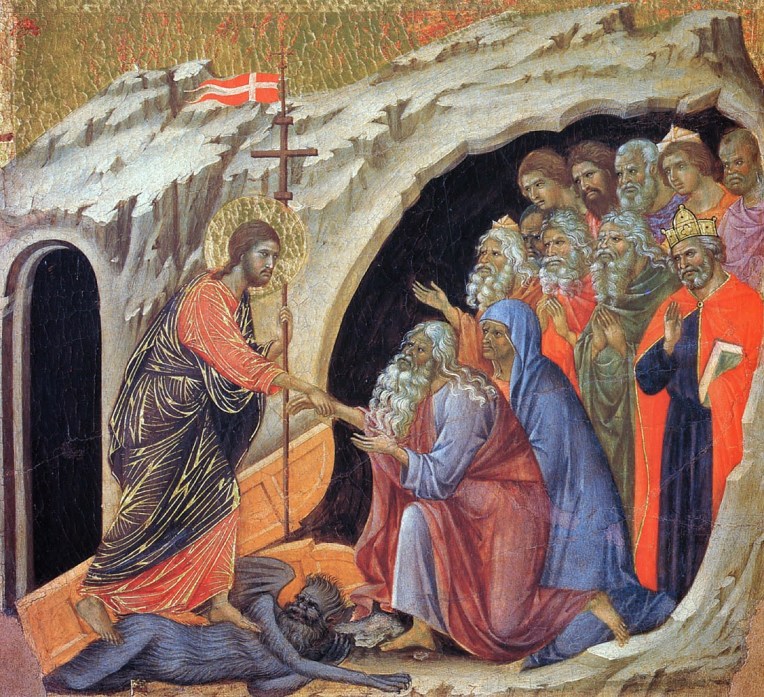
Today’s First Reading is often proclaimed at funerals.  It’s full of teaching from St. Paul about death and the afterlife, fitting for meditation as fall draws closer and our minds turn to the Last Things.  Unfortunately, some of the Church’s teachings about the Last Things have been distorted.  We can find clarity through the wisdom of holy doctors of the Faith, and the Tradition and Magisterium of the Church.

Consider one of the phrases that St. Paul uses in this passage.  He refers to the dead when he writes of “those who have fallen asleep”.  Are we to understand this phrase literalistically?  That interpretation has been adopted by some Christians to the exclusion of the Catholic belief in the saints being alive and active in Heaven.  The Catholic belief in the afterlife would interpret this phrase of St. Paul as referring to the physical appearance of the dead:  that is, once the soul has left the human body, it seems to our physical senses that the person has fallen asleep.

The various human authors of Sacred Scripture often use such metaphors, which appeal only to what seems to be the case to the outer senses.  This appeal has a pedagogic purpose in teaching those who have yet come to understand the Faith fully.  The context, of course, in which to understand this phrase is Christ.  All depend on Christ for their life.  Those who sleep in death await Christ’s Second Coming for the raising of their bodies.  We who work in life rejoice in Christ coming among us in the Eucharist, to strengthen us in the face of the death that we embrace through our sins.

OT 22-1 YrI

St. Augustine of Hippo, Bishop & Doctor of the Church

St. Augustine of Hippo, Bishop & Doctor of the Church
1 Thessalonians 4:9-11  +  Matthew 25:14-30
August 28, 2021

“A man going on a journey called in his servants and entrusted his possessions to them.”

It’s helpful to remember that the parables proclaimed at Holy Mass yesterday and today come from Chapter 25 of Matthew.  This is the final chapter before Matthew’s account of the Last Supper and the events that follow.  The section from which these parables come is sometimes called “the Olivet discourse”, in which Jesus’ attention is fixed on the judgment of Jerusalem.

We should not be aloof, though, in listening to Jesus’ words of judgment against Jerusalem.  The city of Jerusalem in the Old Testament is roughly analogous to the Body of Christ in the New Testament.  Jerusalem was meant to be the dwelling place of God on earth, where His holy people would dwell in unity.  In this light we ought to listen to this parable and consider how God will judge us.

The multiplicity of servants in today’s parable offers us hope, as well as room for cautious consideration.  We might ask, “Which of these servants do I most resemble?”  Perhaps, for example, we need to be jarred from self-complacency, and look hard at the last servant.

To avoid hearing the ultimate sentence of today’s parable, we ought to reflect on the penultimate sentence:  “For to everyone who has, more will be given… but from the one who has not, even what he has will be taken away.”  These words give focus to this parable, and can help us use it as an examination of conscience.

Friday of the Twenty-first Week in Ordinary Time

Friday of the Twenty-first Week in Ordinary Time
Matthew 25:1-13

“Therefore, stay awake, for you know neither the day nor the hour.”

The parable that Jesus teaches in today’s Gospel passage presents at the outset a question which can prevent us from reaching down into Jesus’ point.  We might well ask, “Why are there ten virgins but only one bridegroom?”  What is the setting or background to this story that Jesus is telling?  Scholars may debate such points, but for ordinary Christians like ourselves, it would be more fruitful to set aside such speculation, and dwell instead on applying the parable to our own spiritual lives today.

Christ is the divine Bridegroom, and each Christian is—in our fallen humanity—called to wed one’s self to Christ.  Our sacramental, spiritual life consists of our espousal to Christ, and in this each of us is one member of the Mystical Body of Christ.  Throughout her history the Church has (so far) had well over a billion members, each a spiritual bride to Christ.  Men may have difficulty applying this imagery to themselves, and of course this imagery has to be considered carefully.  Nonetheless, the writings (not to say the very lives) of both male and female saints show us how to grow authentically within these truths.

If we were to apply Jesus’ parable in a succinct way, we might consider the final sentence, where the divine Bridegroom exhorts us to “stay awake”.  We ought not rest comfortably in God’s grace, but rather realize our need each day to be alert to His coming more deeply into our lives.

OT 21-5

St. Monica

St. Monica
1 Thessalonians 4:1-8  +  Matthew 25:1-13
August 27, 2021

“Therefore, stay awake, for you know neither the day nor the hour.”

The parable that Jesus teaches in today’s Gospel passage presents at the outset a question which can prevent us from reaching down into Jesus’ point.  We might well ask, “Why are there ten virgins but only one bridegroom?”  What is the setting or background to this story that Jesus is telling?  Scholars may debate such points, but for ordinary Christians like ourselves, it would be more fruitful to set aside such speculation, and dwell instead on applying the parable to our own spiritual lives today.

Christ is the divine Bridegroom, and each Christian is—in our fallen humanity—called to wed one’s self to Christ.  Our sacramental, spiritual life consists of our espousal to Christ, and in this each of us is one member of the Mystical Body of Christ.  Throughout her history the Church has (so far) had well over a billion members, each a spiritual bride to Christ.  Men may have difficulty applying this imagery to themselves, and of course this imagery has to be considered carefully.  Nonetheless, the writings (not to say the very lives) of both male and female saints show us how to grow authentically within these truths.

If we were to apply Jesus’ parable in a succinct way, we might consider the final sentence, where the divine Bridegroom exhorts us to “stay awake”.  We ought not rest comfortably in God’s grace, but rather realize our need each day to be alert to His coming more deeply into our lives.

OT 21-5