Tuesday of the Thirty-second Week in Ordinary Time [Years I & II]

Please note:  two reflections are given below, each based on the First Reading or Responsorial Psalm of the day.  The Year I readings apply to years ending in an odd number (for example, 2023), while the Year II readings apply to years ending in an even number, such as 2024.  The Gospel Reading is the same in both years.


+     +     +

Tuesday of the Thirty-second Week in Ordinary Time [Year I]
Wisdom 2:23—3:9  +  Luke 17:7-10

   God formed man to be imperishable; the image of His own nature He made him.   

Today’s First Reading from the Book of Wisdom explicitly proclaims a belief central to Judaeo-Christian thought.  The first sentence of this passage instructs us that “God formed man to be imperishable; the image of His own nature He made him.”

Today’s First Reading is eleven verses long.  The last nine make up a passage often proclaimed at funerals, meditating as it does on human suffering.  But the first two verses offer a frame in which to situate those last nine.

The theme of suffering is a continual theme throughout the seven books of the Old Testament’s “Wisdom Literature”.  Suffering is, for many, what makes or breaks them spiritually.  Many turn away from God because of their experiences of suffering.  Others profoundly deepen their living in God through their experiences of human suffering.  None of the Bible’s “Wisdom Literature” gives an “answer” to human suffering.  Wisdom is not found in answers.  Wisdom is found in resting in the Image of God.

+     +     +

Tuesday of the Thirty-second Week in Ordinary Time [Year II]
Titus 2:1-8,11-14  +  Luke 17:7-10

The just shall possess the land / and dwell in it forever.

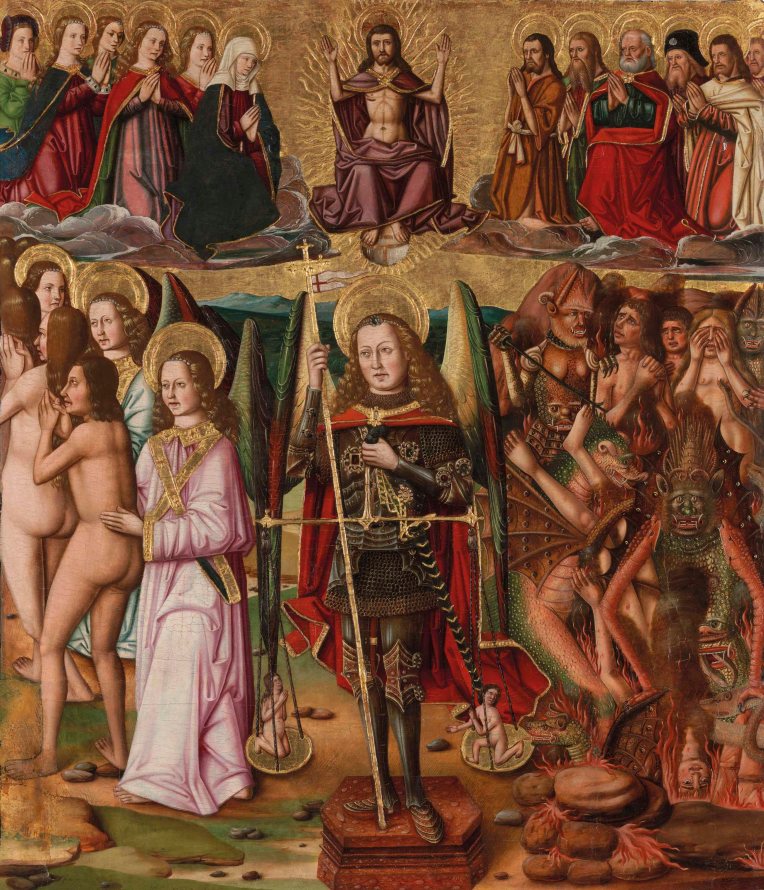
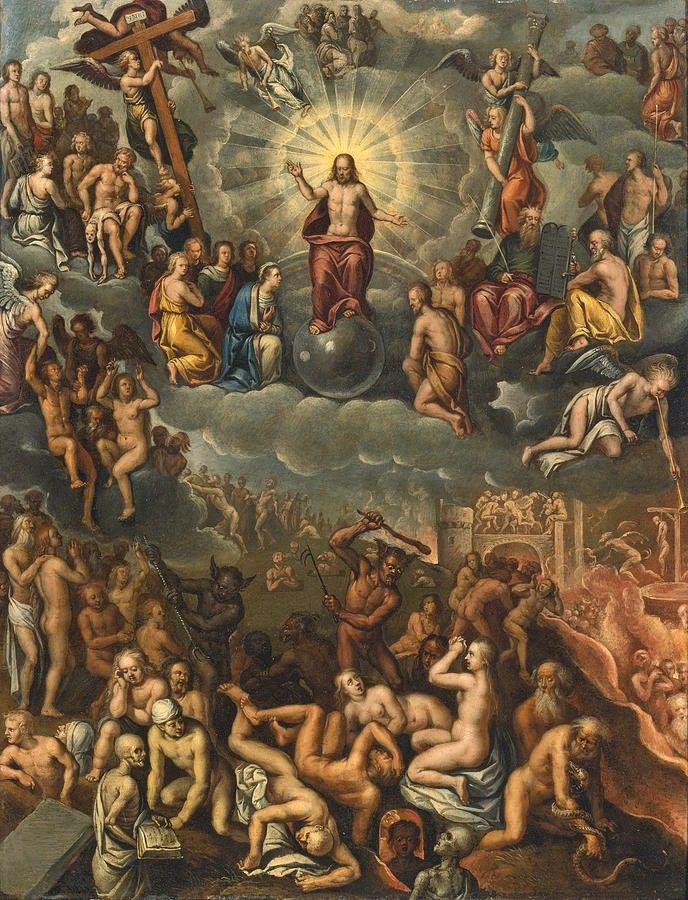
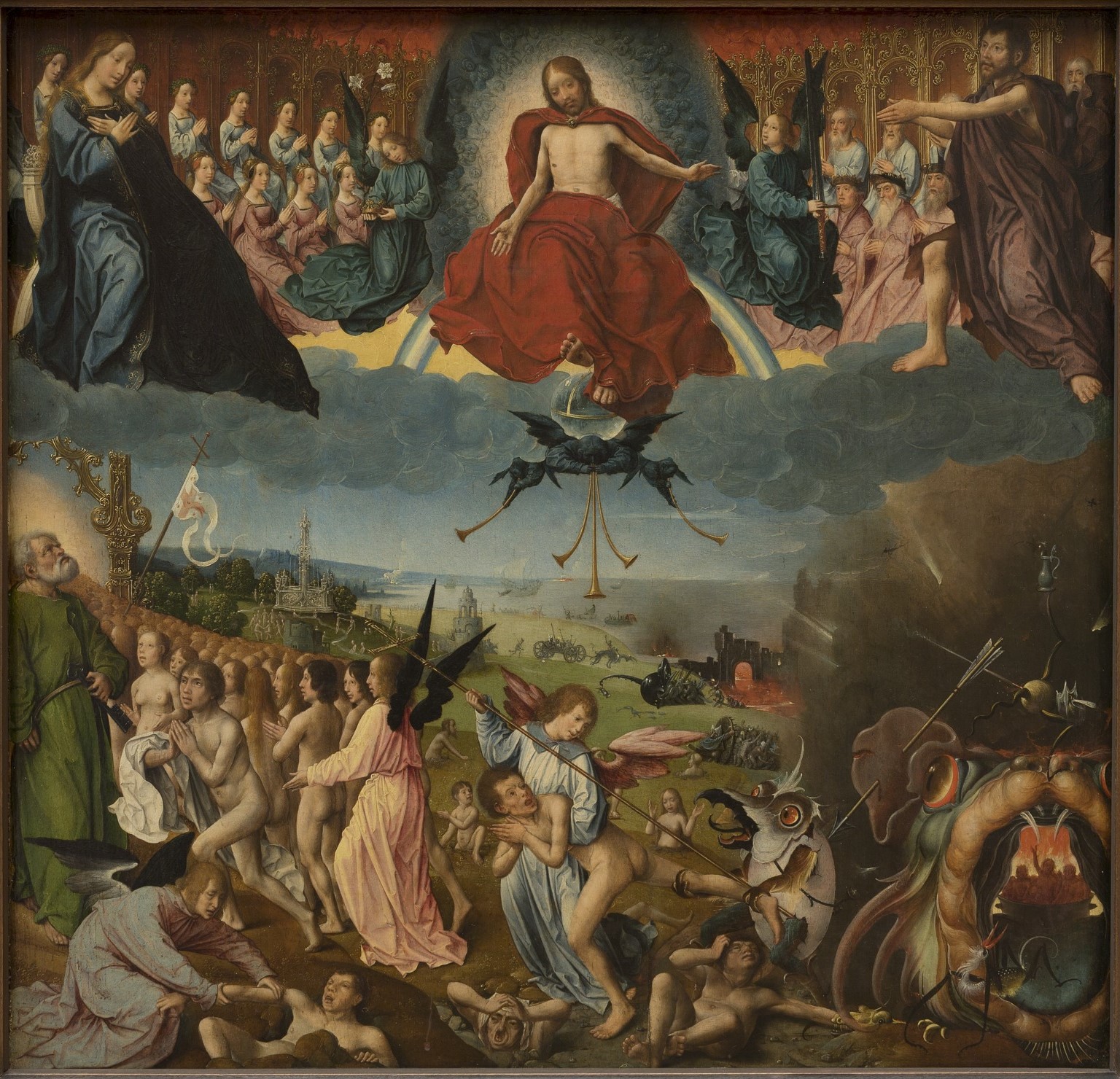
During the last weeks of the Church year—which more or less correspond with the month of November—the Church asks us to turn our attention to what she calls the “Last Things”.  Each Christian needs to focus his or her attention upon Heaven and Hell, death and judgment.

A lot of people like to think, and lead their lives, believing that only one of these four things even exists.  Of course there is a Heaven.  Heaven is the place where everyone goes when they die:  this is what some people believe.  This is what some people teach.  But this is not what Jesus taught.

Jesus taught that people, if they do not follow Him, will go—not to Heaven, but to that other place, called Hell.  King David, in composing today’s psalm, puts it this way:  “The salvation of the just comes from the Lord.”  Salvation—being saved, which is another way of saying, “getting to Heaven”—does not come from ourselves, but only from the Lord.  If we try to get to Heaven by ourselves, or if we try to make our own Heaven, we will fail, and end up forever without God.  We are responsible for doing many things, and at the end of our lives, we should be able to give an account of what we have done.  Still, none of those things are what get us into Heaven.

Monday of the Thirty-second Week in Ordinary Time [Years I & II]

Please note:  two reflections are given below, each based on the First Reading or Responsorial Psalm of the day.  The Year I readings apply to years ending in an odd number (for example, 2023), while the Year II readings apply to years ending in an even number, such as 2024.  The Gospel Reading is the same in both years.


+     +     +

Monday of the Thirty-second Week in Ordinary Time [Year I]
Wisdom 1:1-7  +  Luke 17:1-6

Love justice, you who judge the earth; think of the Lord in goodness, and seek him in integrity of heart ….

At weekday Mass during this second-to-last week in Ordinary Time, the Church’s First Reading is taken from the Old Testament Book of Wisdom.  Not surprisingly, the Book of Wisdom is part of the Old Testament group of books called the “Wisdom Literature” (the other three groups of Old Testament books being the Pentateuch, the Historical Literature, and the Prophetical Literature).  There are seven books that make up the “Wisdom Literature”.

This book is fitting for us to listen to as we draw near to the end of the Church year.  Towards the end of the Church year, the Sacred Liturgy draws our attention to the Last Things:  Heaven, hell, death and judgment.  You and I need wisdom to think rightly about these four last things.

Today’s First Reading consists of the first seven verses of Wisdom.  It might surprise some just how “earth-bound” this passage is.  It is not “pie in the sky”, meditating abstractly on ideas and theories about God’s wisdom.  The passage is very concrete.

The first two words of the book are “Love justice”.  A good retreat master could develop an entire week-long retreat exploring just these two words, so profound are they.  Love and justice are both virtues:  the former the greatest of the theological virtues, and the latter one of the moral (or “cardinal”) virtues.  To love justice is to devote one’s self to a right ordering of one’s thoughts, words and actions:  giving to God what is His due, and recognizing God in our neighbors, whom He created for us to love.  In attending to the simple matters of daily life with divine love, we cannot fail to grow in wisdom.

+     +     +

Monday of the Thirty-second Week in Ordinary Time [Year II]
Titus 1:1-9  +  Luke 17:1-6

Such is the race that seeks for Him, that seeks the Face of the God of Jacob.

The refrain for today’s Responsorial Psalm is a good one to memorize and use throughout the day for repeated recitation and reflection.  “Lord, this is the people that longs to see your Face.”  This refrain has many words that one might focus upon in meditation.  But consider just the final phrase:  “… that longs to see your Face.”  There are two verbs here, and one noun.

What type of seeing is the Psalmist referring to, and exactly what Face is he referring to?  He’s referring to the Face of the Lord, clearly, but how can one see His Face?  Since God is purely spiritual, how can He have a Face?  Throughout the Old Testament, especially in regard to Moses, we hear that man cannot bear a “face-to-face” encounter with God.  In some sense, the term “Face” must be metaphorical when speaking of God.  At least, this is so in regard to the Old Testament.

With the Incarnation, the holy Face of Jesus becomes our means of gazing upon the Face of God.  St. Thérèse the Little Flower helps us to do so.  Not only can man bear this gaze, but this gaze invites us into a relationship with Him that offers salvation.  We experience this salvation even upon earth, in the midst of living as members of the Church Militant.  This salvation comes to fulfillment in Heaven, with what theologians call the “beatific vision”.  Seeing the Lord on earth comes through faith in Jesus as the Son of God.  Living in relationship with Him unto death leads to an everlasting vision of the Lord’s glory, which is to say, His Face.

Saturday of the Thirty-first Week in Ordinary Time

Saturday of the Thirty-first Week in Ordinary Time
Luke 16:9-15

The Pharisees, who loved money, heard all these things and sneered at Him.

“You cannot serve God and mammon.”  This sentence of Jesus is sometimes falsely and simplistically interpreted to mean that you cannot have both God and money in your life.  In other words, this false interpretation says that there’s a sort of competition in your life between God and money which is a zero-sum game.  Or to use a picture metaphor:  this false interpretation says that there’s a see-saw in your life:  God and money are sitting at opposite ends of the see-saw.  If one goes up, the other must go down.  The holier you are, the less money you will have, and the more money you have, the less holy you must be.  This interpretation of Jesus’ words is false.

Our spiritual well-being and our financial well-being are not in competition with each other.  Rather, when Jesus plainly tells you that “You cannot serve both God and mammon”, the key is the word “serve”“You cannot serve both God and mammon.”  You can serve God, or you can serve mammon.  But you cannot serve both.

The beautiful thing about serving God is that through this form of love, we become more like Him.  After all, “God is love”, as St. John taught the first Christians.  So in the very act of loving God, we become like Him:  that is to say, we enter into His very way of life, His very way of being.  This is as God wants, and in fact this is as each of you wants, in the deepest center of your heart, because God planted that desire there when He created your heart:  the desire to serve Him through sacrificial love, and so become more like Him.

Friday of the Thirty-first Week in Ordinary Time [Years I & II]

Please note:  two reflections are given below, each based on the First Reading and/or Responsorial Psalm of the day.  The Year I readings apply to years ending in an odd number (for example, 2023), while the Year II readings apply to years ending in an even number, such as 2024.  The Gospel Reading is the same in both years.

+     +     +

Friday of the Thirty-first Week in Ordinary Time [I]
Romans 15:14-21  +  Luke 16:1-8

… because of the grace … in performing the priestly service of the Gospel of God ….

There are differences among Christians, and then there are disagreements.  Differences can be of various types, including those willed by God Himself for the sake of the Church.  For example, there are different religious orders, such as the Franciscans, Dominicans, and Carmelites.  These difference are willed by God, and make the Church richer.

So there are differences within the Church, but then there are disagreements.  Differences can come about through human sin, contrary to the will of God.  Some disagreements are rooted in beliefs that are contrary to the mind of God.

As an example, there are disagreements among Christians about Christians serving within the Church as priests.  A priest, of course, is a mediator:  in more common parlance, a “middle man”.  He stands between God and another human person in order to serve that person:  in order to bridge the gap between God and the other.  Is there such a thing as an authentic Christian priesthood?  Many Christians insist that the answer is “No”, and that any pretense of mere human beings acting as priests is an offense against God.

However, in today’s First Reading, speaking to the Romans about himself, St. Paul the Apostle speaks of his “priestly service of the Gospel… so that the offering up of the Gentiles may be acceptable”.

Among Christians who speak regularly against Catholic teaching and practice about the priesthood, you will often hear that there is only one mediator, Jesus Christ.  Therefore, there ought to be no human mediators between “me and Jesus”.  But St. Paul’s words today—inspired as they are by the Holy Spirit—clearly show such an idea to be contrary to the mind of God.  This is only the first point by which to understand God’s gift of Christian priesthood, but it’s good for us to reflect on it when we re-read today’s First Reading.

+     +     +

Friday of the Thirty-first Week in Ordinary Time [Year II]
Philippians 3:17—4:1  +  Luke 16:1-8

“And the master commended that dishonest steward for acting prudently.”

“Our citizenship is in Heaven”.  What would our lives look like if we believed these words sincerely?  Saint Paul is exhorting the Philippians neither to place their faith in this world, nor to use the things of this world for their own sake.

If our citizenship is in Heaven, then we are sojourners in this world.  To place our faith in this world is to sink our roots in this world, which can only tie us down when God chooses us to raise us to Himself:  either briefly in prayer, or into Heaven after our death.  How many persons spend a great deal of their time in Purgatory casting off their ties to the world?

If our citizenship is in Heaven, then the things of this world are means, rather than ends.  What do we seek in this life?  What we seek are our ends.  Do we seek things that are of this world?  Or is what we’re seeking of God?  God gives us good things in this world to use as stepping stones, to draw others, and to be drawn up into our true citizenship in Heaven.

OT 31-5

Thursday of the Thirty-first Week in Ordinary Time

Thursday of the Thirty-first Week in Ordinary Time
Luke 15:1-10

“This man welcomes sinners and eats with them.”

Jesus’ first parable in today’s Gospel is heartfelt, offering us hope of God’s compassion for the wayward.  Jesus offers a “moral” to the parable in explaining that “there will be more joy in Heaven over one sinner who repents than over ninety-nine righteous people who have no need of repentance.”

Although Jesus’ “moral” seems straightforward enough, there is something about it that seems paradoxical.  Wouldn’t it make sense for the “righteous” to rank higher in Heaven than the repentant?  Why isn’t there such rejoicing in Heaven over the righteous?  There are at least two responses that might be offered.

First, the “righteous” of whom Jesus is here speaking are defined by the righteous themselves.  Yet such self-righteousness is a false righteousness.  Only God can make a human person righteous.

Second, those who are righteous in the true sense of the word are so only through their repentance.  A saint is a sinner who knows he’s a sinner.  In this sense, all human beings in Heaven (excepting, of course, Our Lord and Our Blessed Mother) are righteous through their self-repentance.  You and I as sinners rejoice that the Lord has not left us in our sins, but has offered us His grace, which is the means to righteousness in God’s sight.

All Souls’ Day

All Souls’ Day
Wisdom 3:1-9  +  Romans 5:5-11  +  John 6:37-40
N.B.  There are many options for Scripture readings for today.

The souls of the just are in the hand of God.

The belief the Church celebrates today is part of the “communion of saints”.  That’s a familiar phrase—we recite it in the Apostles’ Creed—but the “communion of saints” isn’t just those who are canonized saints in Heaven, but also the members of the Church who are in Purgatory, as well as those on earth.  Today we who are members of that third group pray for those in the second, so that joined through prayer, we all may become members of the first.

Sometimes we feel torn like Saint Paul.  While it’s better to be in heaven, God wants us here on earth for His purposes.  Those purposes call each of us to help others in many ways.  One of the most important of these is prayer for others, which is formally called “intercession”.

Even in heaven, saints are given missions by God.  Saints are not simply fixed on God, without regard for others.  Saints in heaven pray for the rest of the “communion of saints”.

We on earth are like the saints in Heaven in this regard.  While we might want to fix our attention on God alone, God wants us to offer our lives for others, because this is often where we find God revealed in our lives.  So it is through our prayers of intercession, both for fellow pilgrims on earth, and for those in Purgatory.

Does this take away from God?  No.  God wants us to turn to each other.  Intercessory prayer is a form of Jesus’ command to “love your neighbor as yourself”.  If it’s valid in God’s eyes to pray for oneself, why wouldn’t it be to pray for others?  When a family suffers a tragedy, they draw closer together.  Part of this occurs through prayer, and they all are stronger afterwards, and more closely knit together.

Our prayer for others draws us closer to those we pray for.  Those in Heaven, in Purgatory, and on earth are drawn closer together through intercession.  When we intercede for another—or ask someone’s intercession—we don’t believe that that person is God.  We ask another to take our prayers to God.  When we call our mother and ask her to pray for us, we’re doing the same as when we kneel and pray a rosary:  we are asking our mother to pray to God for us.

Through all prayers of devout intercession, the Body of Christ grows stronger.  In the person of Christ, God and man are united.  Within Christ, we live as members of his Body.  Within Christ, we build others up, and so find God’s love for us.

The 32nd Sunday in Ordinary Time [C]

The 32nd Sunday in Ordinary Time [C]
2 Maccabees 7:1-2,9-14  +  2 Thessalonians 2:16—3:5  + Luke 20:27-38
Catechism Link: CCC 992
November 6, 2022

“Lord, when your glory appears, my joy will be full.”

Many Christians aren’t sure how to go about the practice of meditation.  One difficulty arises from the fact that meditation always requires something to meditate upon:  an idea or image of a person, event, or truth.  But how, then, can the individual Christian decide what to fix his attention upon during daily meditation?

The simplest answer is found among the Scripture verses proclaimed at the current day’s Mass.  The persons, events, and truths spoken about in a given Scripture verse can serve as the focus of Christian meditation.

Of course, even on a weekday there are three different passages of Scripture to choose from if you include the Responsorial Psalm.  There are also the Entrance Antiphon and Communion Antiphon for the day’s Mass, which almost always are taken from Sacred Scripture.  So in the midst of this wealth of Scripture passages at a simple weekday Mass, where does a Christian begin to meditate?

Tradition offers two suggestions.  The first and perhaps most obvious is the Gospel Reading from that day’s Mass.  In the four Gospel accounts, the Word made Flesh speaks directly to us through both words and works.

The other suggestion comes from the day’s Responsorial Psalm.  The reason that the day’s Psalm is often suggested is that the psalms are poetry.  They were originally composed to be sung.  But even if we only read them, they’re lyric and are often easier to “break open”, as it were, than a Gospel passage that requires more background knowledge to comprehend it.

So if you decide to use the Psalms from Holy Mass to nurture your daily meditation, the most obvious place to start is the refrain of the day’s Responsorial Psalm.  This refrain guides you through the course of the entire psalm, and presents a single theme that you can focus upon in meditation.  As an illustration, consider the Responsorial Psalm’s refrain from this Sunday’s Mass.

“Lord, when your glory appears, my joy will be full.”  Why does the Church put this verse from Psalm 17 on our lips today, so close to the end of the Church year?  This last month of the Church year means to alert you to what she calls the “last things”:  Heaven and hell, death and judgment.  For you who are a pilgrim on earth, all four of these lie in your future.  They’re not past events, like the creation of Adam and Eve, the birth of Jesus, or the Descent of the Holy Spirit at Pentecost.  Heaven and hell, death and judgment lie squarely before you in your future, although we have to make distinctions among them.  Death and judgment are inevitable for each human person.  But Heaven or hell are only possibilities, determined by whether one cooperates with God’s grace.

However, one of the difficulties in meditating on the “last things” is that they’re somewhat abstract.  It’s easier to meditate upon them by relating each of them to the Second Coming of Jesus at the end of time.

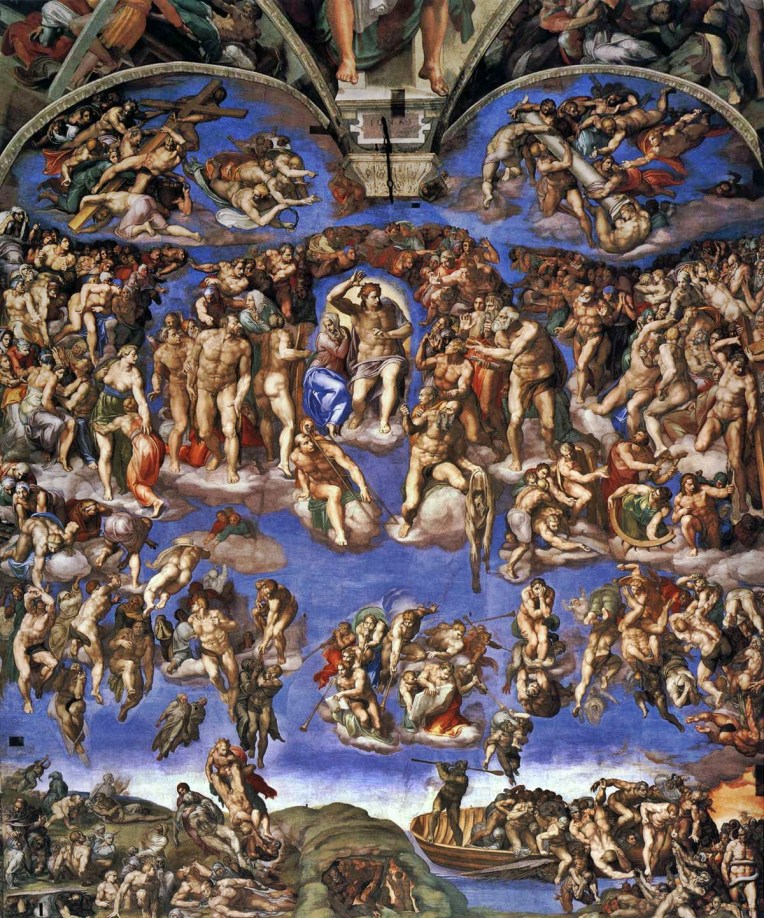
Likewise, the Second Coming of Jesus can help us focus concretely on the refrain of Sunday’s Responsorial Psalm:  “Lord, when your glory appears, my joy will be full.”  The Second Coming is often pictured in religious art as apocalyptic and frightening.  It’s certainly natural to fear the reality of death and the possibility of eternal damnation.

Today’s Psalm, however, presents a future full of hope.  With the Psalmist, we Christians eagerly hope for the Second Coming of our Savior, Jesus Christ.  Jesus isn’t just some ancient guru about whom we read in dusty books, and whose example and teachings we strive to follow.  Jesus is the eternal Son of God.

He is as alive now as He was two thousand years ago.  Further, through the virtue of hope, we know that the joy open to us here and now as Christians is destined to be surpassed.  The Psalmist speaks to the Lord of a future time:  “when your glory appears”.  Christians know that this verse refers to the glory of Jesus’ Second Coming.  We not only wait for this second coming, but long for it, since when He comes, our “joy will be full”.  That phrase—“my joy will be full”—speaks to man’s vocation in Christ:  that is, to the fulfillment of human life as an adopted child of God the Father, called into the fullness of joy that is His Heavenly Liturgy.

Monday of the Thirty-first Week in Ordinary Time

Monday of the Thirty-first Week in Ordinary Time
Luke 14:12-14

“For you will be repaid at the resurrection of the righteous.”

Although Jesus’ words today take the form of a command (“do not invite…”) to us as His disciples, we can reflect on His words through a process of inversion.  That is, we can consider ourselves as those invited to a banquet.  The one inviting us is the Lord Jesus.  The banquet is the sacramental celebration of the Last Supper:  the Holy Sacrifice of the Mass.

Shortly before the distribution of Holy Communion, the priest—holding aloft the Sacred Host—proclaims that “[b]lessed are those called to the supper of the Lamb.”  The response of the faithful is, “Lord, I am not worthy that you should enter under my roof… .”  In this, both priest and faithful gaze on the One who has called us to Him.  We are “the poor, the crippled, the lame, the blind” of whom Jesus speaks in today’s Gospel passage.

For God Himself, of course, it’s not that He will be blessed because of our inability to repay Him.  It is from the Lord’s own divine goodness—eternal and infinite—that He bestows on us the blessing of being called to the banquet of the Eucharist.  Although we are unable to repay the Lord “in kind” for this invitation, we can repay Him with our lives:  with the self-gift of our own body and blood, soul and humanity as His disciples.

Saturday of the Thirtieth Week in Ordinary Time

Saturday of the Thirtieth Week in Ordinary Time
Luke 14:1,7-11

“… do not recline at table in the place of honor.”

The virtue of humility is a thread that runs through today’s Scriptures.  Jesus weaves this thread through the parable that He tells after He notices that His fellow dinner guests were choosing the places of honor at the table.  They were not content to receive a sumptuous meal.  They wanted also to receive honor.

These dinner guests were looking only to receive gifts.  They were not thinking of giving.  This is natural, on the one hand, since when you accept a dinner invitation, you’re accepting a gift.  On the other hand, when you go to a dinner party, you might take a token gift such as a bottle of wine.  But your token gift would seem out of place if it were greater than the banquet itself.

But here is the metanoia—the change of heart and mind—which Jesus effects in His disciples through His saving words and deeds.  He wants His disciples—including us—to recognize every gift, every invitation to receive, as an opportunity to give:  to be as loving to our neighbor and to love God in His Providential Will as the Father, Son and Holy Spirit are fully loving in their communion of divine love in the Godhead.