The Holy Guardian Angels

The Holy Guardian Angels
Matthew 18:1-5,10

“… their angels in Heaven always look upon the face of my heavenly Father.”

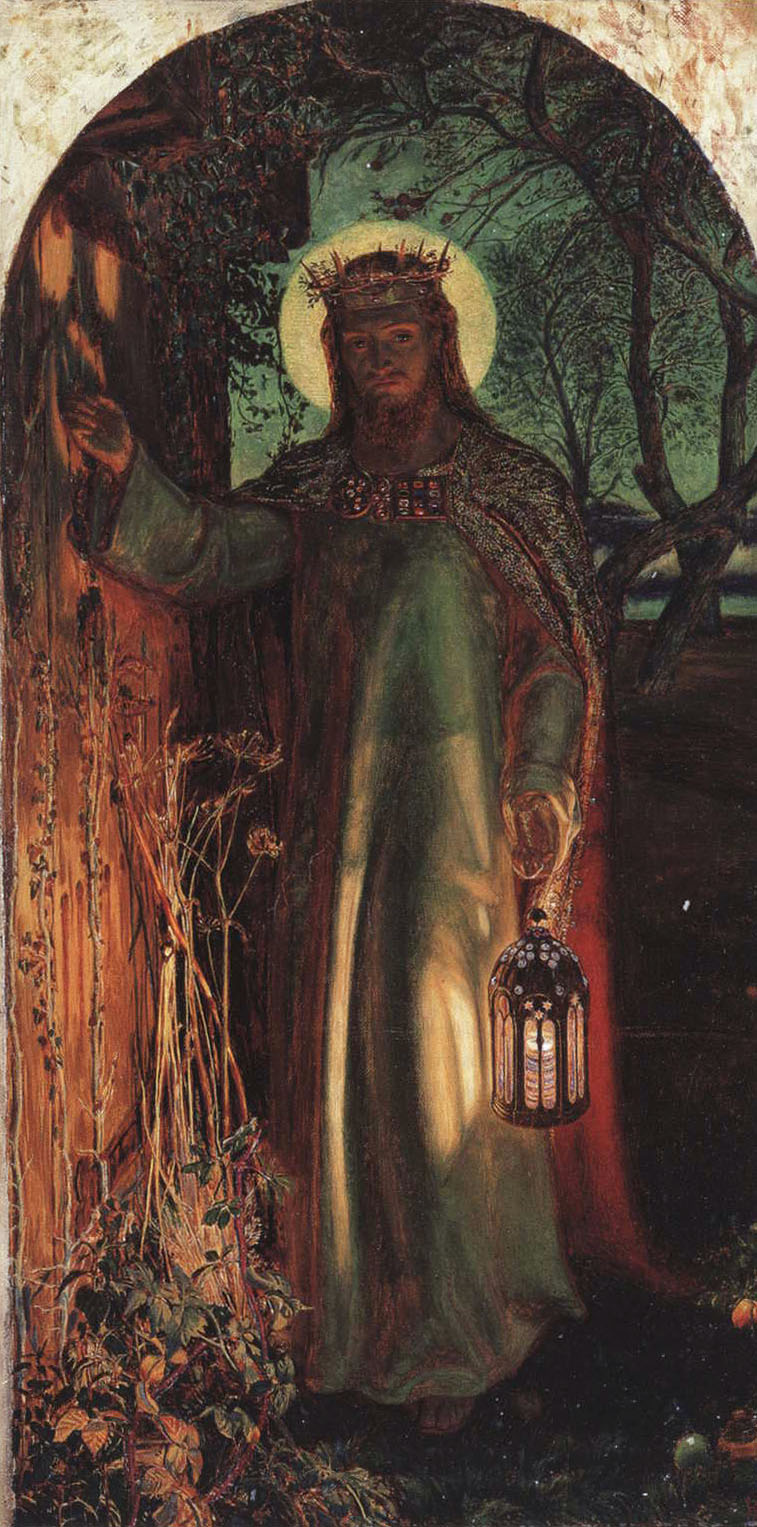
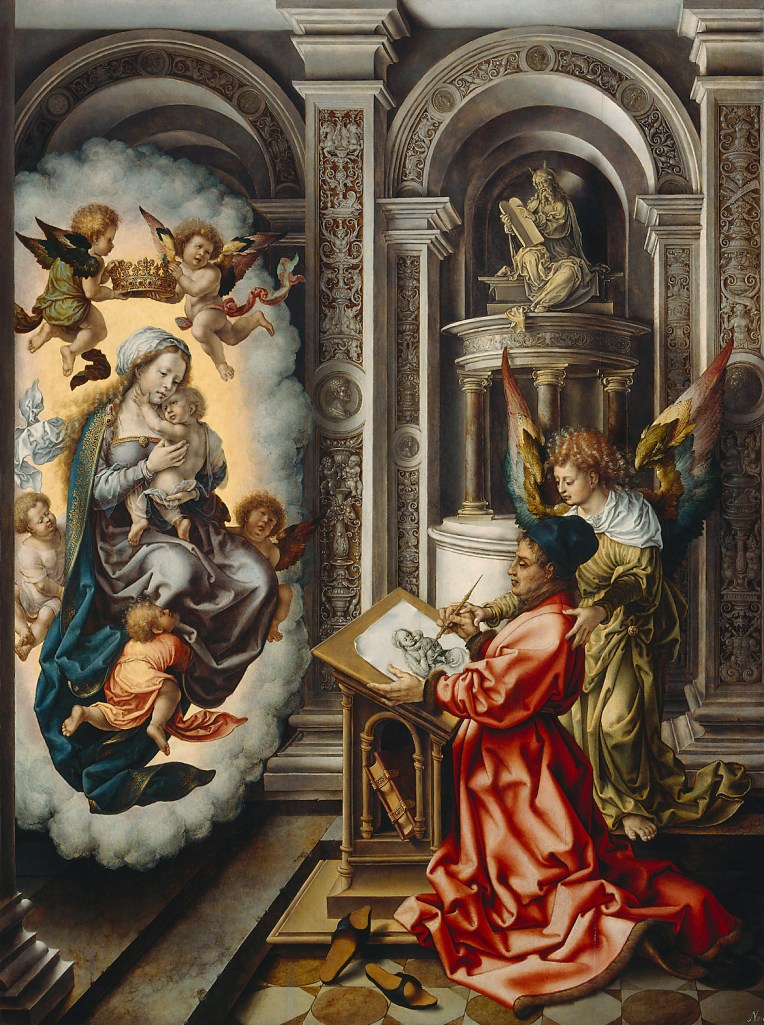
Our Guardian Angels shed light upon the path that we must walk.  When our struggles each day seem too great, they extend a ray of hope down upon us from God.  They allow us to see the face of Our Crucified and Risen Lord, who having shared in our suffering helps us share in His Resurrection, even in the midst of suffering.

Our Guardian Angels guard us from the snares of our enemies.  As the Devil tries time and again to convince us that his way—easier and broader than God’s—is the way that will bring us happiness, our guardians remind us that the Way of the Cross is the only path to the Father.

Our Guardian Angels rule us as we slip from the narrow path.  As we fall prey to the temptations of the Devil, our guardians do not abandon us.  Sharing in the boundless love of our Savior, they do not fail to stand by us even then.  They convince us, as they nurse our consciences back to health, that the Cross is the only true remedy for our constant falling away from God.

Our Guardian Angels guide us by bidding us to share in the sacraments of the Church.  For all their power, our guardians entrust us to the care of Holy Mother Church, since in her care we most truly belong.  For the Church is their Mother, too.  All the angels are fellow members of the Church, and as the Church’s children we imitate the words of Jesus when like little children we recognize and thank those who are our guardians.

St. Thérèse of the Child Jesus, Virgin & Doctor of the Church

St. Thérèse of the Child Jesus, Virgin & Doctor of the Church
Baruch 1:15-22  +  Luke 10:13-16
October 1, 2021

“Woe to you, Chorazin!  Woe to you, Bethsaida!”

Jesus never says, “Woe is me!”  Not once in the four accounts of the Gospel does Jesus ever say such a thing.  However, more than a few times Jesus expresses woe.  He expresses these woes regarding those who do not listen, and do not follow, the Word of God.

We might wonder what emotions Jesus experienced as He pronounced the woes in today’s Gospel passage.  He had just reasons to be angry, as well as frustrated.  Nonetheless, regardless of which emotions might have been running through His mind and heart, we know that Jesus had compassion for those He was preaching against.

In fact, to say that Jesus in pronouncing these woes was preaching against the people of these cities would call for a qualification.  In preaching woes against the people of Chorazin and Bethsaida, Jesus was preaching for them.  Does that sound like a contradiction?  It’s no more of a contradiction than is a father who disciplines his child.  Everything that Jesus did during His earthly life, including the overturning of the money changers’ tables, and the preaching of woes against the unfaithful, was for the sake of those in spiritual danger, to bring them back from a precipice into the arms of a loving Father.

The Twenty-seventh Sunday in Ordinary Time [B]

The Twenty-seventh Sunday in Ordinary Time [B]
Genesis 2:18-24  +  Hebrews 2:9-11  +  Mark 10:2-16

The Lord God said:  “It is not good for the man to be alone.”

The foundation of marriage is Christ’s marriage.  The foundation of married love is the love of Jesus’ Sacred Heart for His Bride, the Church.  The love of Christ is given to spouses when they receive the Sacrament of Holy Matrimony.  This is the only thing strong enough to save marriage:  not just marriage in general, but also each particular marriage.

The goal of any particular marriage is to mirror the love that Christ and His Church have for each other.  Of course, this goal is demanding even when a marriage is at its best.  At its worst, a marriage can only be saved by Christ’s love.

So when is a marriage at its worst?  A marriage is at its worst not when life throws poverty, or sickness, or any other serious blow against a couple, but when the blow comes from within:  when a marriage is torn by infidelity.  When the unity that God brings into being on the wedding day is violated, the husband and wife—each of them—become alone as was the man was “in the beginning”.

“Fidelity”—“faithfulness”—is one of the four essential qualities of a sacramental marriage.  A marriage which mirrors Christ’s love for His Church is a love that has those four qualities that we see in Jesus on the Cross:  a love that is free, full, faithful, and fruitful.  Of these four, living out faithfulness is the greatest struggle for many couples.

However, there are many different types of infidelity.  There are unfaithful thoughts, unfaithful words, and unfaithful actions.  Of course, some types of infidelity are worse than others.  But there is no marriage that is not affected by one form of infidelity or another.  Even when infidelity occurs only in a spouse’s thoughts, and even if those thoughts are kept to oneself, the married love of that couple is truly weakened, which makes daily self-sacrifice—the bread and butter of marriage—more difficult.

But at its worst, infidelity tears married love completely inside out.  It’s then that a spouse has to answer again the question that the priest asked at the beginning of the wedding ritual on the day the spouses got married:  “have you come here to enter into Marriage without coercion, freely and wholeheartedly?”  That word “wholeheartedly” reflects the Church’s clear statement—founded on Jesus’ words in today’s Gospel Reading—that a marriage in which love is not given “wholeheartedly” is not a Christian marriage at all.

When a priest prepares a couple for marriage, he asks each of them the question, “Do you intend to accept the obligation to be faithful to your spouse?”  How many young engaged persons understand that this “obligation to be faithful” entails the obligation to offer forgiveness to the spouse who has been unfaithful?

In other words, a spouse who says, “If you’re ever unfaithful to me, I’m out the door,” is saying that there are limits to his or her married love.  But Christ on the Cross says that that’s a lie, because that sort of “limited love” doesn’t mirror the wholehearted love of Christ that poured forth from His Sacred Heart on Calvary.  If Jesus said to you, “I’ll continue to love you as long as you’re faithful to me,” you would have no hope whatsoever of getting to Heaven.

Take this statement, and imagine one spouse saying it to the other:  “I will love you, as long as you do not … BLANK.”  Fill in the blank.  If there’s anything that a spouse can fill in that blank with to make that statement true, then that spouse needs to look at Jesus on the Cross.

Consider the moment at a wedding when the priest asks, “have you come here to enter into Marriage without coercion, freely and wholeheartedly?”  If the man or the woman says “Yes” out loud, but in his or her mind finishes that sentence by saying, “Yes… as long as my spouse is faithful to me first,” then no marriage comes into existence in God’s eyes.  Nonetheless, as difficult as it is to give one’s whole heart to another sinful human being, through God’s grace, the Sacrament of Holy Matrimony not only comes into existence, but can endure in the face of human infidelity.  Upon the Cross, Christ shows us that with God, all forgiveness is possible.

Thursday of the Twenty-sixth Week in Ordinary Time

Thursday of the Twenty-sixth Week in Ordinary Time
Luke 10:1-12

“I am sending you like lambs among wolves.”

The Church often quotes verses from today’s Gospel passage in her promotion of vocations.  However, these seventy-two to whom Jesus speaks are appointed and sent for a specific reason.  They are sent “ahead of” Jesus, not in His name or in His person.  They are sent “in pairs to every town and place He intended to visit.”  They are “advance teams”, if you will.  In the general sense in which they are sent ahead of Jesus, we can consider these 72 as symbolizing all baptized Christians.  What Jesus says to them speaks today to each of us Christians.

Jesus offers many brief sayings in today’s Gospel passage.  All are loosely joined together.  Many can be singled out and meditated upon for a long period of time.  Take this proclamation of the Lord:  “behold, I am sending you like lambs among wolves.”  It’s not difficult for a Christian disciple to use these words as a justification for self-righteousness in the face of any opposition, justified or not.  Nonetheless, that possibility doesn’t nullify the meaning of Jesus’ words.  At our best, we disciples are “lambs among wolves”.  We might wonder, if that’s our best, then what’s the worst?

While each Christian might be tempted to turn away from the “vocation” to be a lamb, perhaps we can take solace in two simple Gospel truths.  Our Lord and Savior is the Good Shepherd [John 10:11] as well as the Lamb of God who takes away the sins of the world [John 1:29].

OT 26-4

Sts. Michael, Gabriel & Raphael, Archangels

Sts. Michael, Gabriel & Raphael, Archangels
Daniel 7:9-10,13-14 [or Revelation 12:7-12]  +  John 1:47-51
September 29, 2021

“… you will see Heaven opened and the angels of God ascending and descending on the Son of Man.”

About a month from now, the Church will celebrate All Saints’ Day, when we spend time thinking about the “lives of the saints”.  But it’s difficult to read and learn about the lives of today’s saints since they haven’t led “lives” in our normal sense of the word.  Furthermore, their lives are still going on as always.  Still, these three saints—the archangels Michael, Gabriel and Raphael—are a very important part of our Catholic prayer and belief.

These archangels—among the most important of all the angels—are messengers who carry the most important messages from God to human beings like us.

St. Michael, in the beginning, was the one who had to fight against the devil, and force him out of Heaven as punishment for turning against God.  At the end of time, it will be St. Michael who will lead all the good angels in battle against the fallen angels in league with the devil.  But in between the beginning and end of time, Michael protects all those who call upon him, to defend them in the day of battle, which is any day when we face temptation, and are tempted not to love God completely, or tempted not to love our neighbor as our self.

St. Gabriel, by contrast , goes to the heart and center of history, with the most important message that God ever wanted delivered.  It was Gabriel whom God chose to deliver the message to Mary that she should be our Blessed Mother, because God’s own Son should be born from her, that Son destined to be the Savior of all mankind.

In these archangels, we honor three models for the vocation to which God has called all of us through the Sacrament of Baptism.  In word and action, we—like the angels—serve God, and bear His messages to others, all of which are about the sort of love with which God loves us.

Even when we have sinned, God continues to love us, and wants us to draw closer to Him through Jesus.  But when we pray and realize how great God’s mercy towards us is, we are called to take that same message to others, and let others know of God’s love for them.  Even more, we are called to offer forgiveness to others:  to be God’s messenger of love and mercy by forgiving others in the same way that God has forgiven us.

Tuesday of the Twenty-sixth Week in Ordinary Time [I]

Tuesday of the Twenty-sixth Week in Ordinary Time [I]
Zechariah 8:20-23  +  Luke 9:51-56
September 28, 2021

He resolutely determined to journey to Jerusalem ….

Jesus sets out for Jerusalem.  The name “Jerusalem” literally means “city of peace”.  It’s there that Jesus will be condemned to death for our sins, and from there led to Calvary, a hill just outside the city limits.  Calvary is the only way that leads to our destination:  the Father’s city of eternal peace, the heavenly Jerusalem.

As Jesus heads resolutely to Jerusalem, the City of Peace, He knows that His vocation is to bring peace to each human person.  Peace is often, unfortunately, not commonplace in our earthly lives.  You and I may not face the sort of persecution that the martyrs faced, but we never seem to have peace as we would wish.  Nonetheless, Jesus at the Last Supper said, “Peace I leave you, my peace I give you”.  So where is this peace in our lives?

Every day God calls us to follow Him.  If we worthily receive the Body and Blood, soul and divinity of Jesus in the Eucharist, He will strengthen us at every “now” of daily life.  He wants us to accept the spiritual strength we need to cultivate the virtues of human life.  These virtues allow the flourishing and flowering of authentic peace in our lives.

St. Vincent de Paul, Priest

St. Vincent de Paul, Priest
Zechariah 8:1-8  + Luke 9:46-50
September 27, 2021

“Whoever receives this child in My Name receives Me ….”

During Christmastide we are used to thinking of Jesus—the divine Word made Flesh—dwelling among us as an infant.  But today, near the start of Autumn, Jesus counsels us to receive Him as a child.  Clearly, then, spiritual childhood isn’t just for Christmas!

To receive Jesus as a child means that the one who receives Jesus becomes a child him- or herself.

Spiritual childhood is a common theme in the literature of the Catholic masters of spirituality.  Of course, pondering this theme first requires a distinction between the childhood of fallen human nature and the childhood of what we might call either the “original human nature” or the “redeemed human nature”.  What does this distinction mean concretely?  We can picture this distinction by comparing two different images:  on the one hand is a two-year-old who refuses to go to sleep; on the other is the child nursing peacefully with his mother.

In addition to what Jesus says in today’s Gospel passage, we can use a Scriptural image to help us picture the spiritual childhood to which the Christian is called.  We consider Calvary, and Jesus entrusting Mary and the Beloved Disciple to each other’s care.  This Beloved Disciple, child of Mary, is our icon for spiritual childhood.

Saturday of the Twenty-fifth Week in Ordinary Time

Saturday of the Twenty-fifth Week in Ordinary Time
Luke 9:43-45

“The Son of Man is to be handed over to men.”

Today’s Gospel passage, from fairly early in Luke’s Gospel account (in chapter 9 of 24 chapters), helps us to focus squarely on Jesus, even if His words here confuse the disciples.  You and I have the advantage of hindsight, of course, in knowing “the rest of the story” of the Gospel.  We know perfectly well what Jesus is referring to when He predicts that the “Son of Man is to be handed over to men.”

Still, we shouldn’t pat ourselves on the back for being unlike the disciples portrayed today.  Consider the setting of today’s Gospel passage.  We need to recognize Jesus’ deliberateness in choosing the moment that He did to speak the words that He did:  it was “[w]hile they were all amazed at His every deed” that Jesus foretold His Passion.

What is the relationship between these two:  Jesus’ amazing deeds and His Passion?  Did Jesus foretell His Passion when He did to bring the disciples back down to earth, similar to the occasion of His Transfiguration?  Was Jesus wanting to minimize the significance of His amazing deeds, or at least to help the disciples realize that they were not the ultimate reason for His presence in their midst?  Reflect on these questions in the light of your own desire for God to work amazing deeds in your life, and your reluctance to share in the “handing over” of Jesus that He foretells today.

OT 25-6

Friday of the Twenty-fifth Week in Ordinary Time

Friday of the Twenty-fifth Week in Ordinary Time
Luke 9:18-22

Jesus was praying in solitude, and the disciples were with him.

The first sentence of today’s Gospel passage shouldn’t be overlooked.  “Jesus was praying in solitude, and the disciples were with him.”  This might seem like an odd statement, perhaps even contradictory.  But from the larger canvas on which all four Gospel accounts are drawn, we see several times a portrait of Jesus as one who prays intensely, at length, in solitude, and often.  That His disciples were with Him doesn’t mean that they were all engaged in prayer together, but that they had the occasion to witness Jesus in this intense, solitary prayer with His Father.

The point of this first sentence within the context of today’s Gospel passage, however, is heard in what Jesus says next.  “Who do the crowds say that I am?”  After they offer the view of the crowds, Jesus asks, “But who do you say that I am?”  After they give their own view, Jesus offers His view of His own identity.  This portrait of Himself as the “Suffering Servant” who will be raised on the third day was most likely the content of His prayer moments earlier.  There is no doubt about Jesus accepting this call from the Father.  But the disciples’ reactions show that most of them could not accept Jesus in His suffering, or in their own suffering as His disciples.  We might make an examination of conscience, asking if we ourselves are like these disciples.