Tuesday of the 24th Week in Ordinary Time [I]

Tuesday of the 24th Week in Ordinary Time [I]
1 Timothy 3:1-13  +  Luke 7:11-17
September 17, 2019

   …a bishop must be irreproachable, married only once, temperate, self-controlled, decent, hospitable, able to teach….   

Today’s First Reading, from St. Paul’s first epistle to St. Timothy, speaks to the lived reality of Holy Orders in the apostolic church.  There are three “orders” (sometimes called “grades” or “degrees”) of the Sacrament of Holy Orders.  St. Paul speaks today of the first and the last.

The highest degree of Holy Orders is the episcopacy, which literally means the “office of over-seeing” (or synonymously, the “office of supervising”).  What does the bishop supervise?  He oversees a local church:  what today we call a “diocese”.

From St. Paul’s description of a bishop we must tease out those qualities which are essential to the office from those rooted in practical first-century circumstances, which may be different from circumstances in our own day.  One example of this is the call of married men to Holy Orders.  In the time of the apostles, Christ’s call to celibacy (see, for example, Matthew 19:3-12) had only been known for a few decades, and so the demand that all bishops be unmarried was not yet enforced by the Church.

In the last section of today’s First Reading, St. Paul comments on the office of deacon.  He describes several requisite qualities for deacons, and uses the word “serve” twice to describe their work.  Deacons serve in a two-fold capacity:  they serve the bishop or priest at the altar in the Sacred Liturgy, and the poor in the world bearing the divine charity that flows from the Sacred Liturgy.  In the office of the deacon is an example that each of us Christians ought to imitate.

OT 24-2

Sts. Cornelius, Pope & Cyprian, Bishop, Martyrs

Sts. Cornelius, Pope & Cyprian, Bishop, Martyrs
1 Timothy 2:1-8  +  Luke 7:1-10
September 16, 2019

“I tell you, not even in Israel have I found such faith.”

With few exceptions, the translation of the Mass introduced in 2011 has been hailed by bishops, scholars and folk in the pews for its advances over the hurried translation made soon after Vatican II.  One of the key improvements in the translation is its greater fidelity to Sacred Scripture.  Today’s Gospel passage offers an example.

The centurion sends the message:  “Lord… I am not worthy to have you enter under my roof.  … but say the word and let my servant be healed.”  This very clearly is the origin for the invocation that each Catholic makes to Jesus shortly before Holy Communion.  Such clarity impels us today to reflect deeply on the context of these words, so that our invocation before Holy Communion is more meaningful each time we offer it.

Here, consider just one point of context.  While we might focus on the humility of the centurion, reflect by contrast on the power of the Lord.  The Lord’s power is such that physical proximity to the sick person is not necessary.  The Lord needs only to “say the word”.  This power evokes awe in the communicant because while in today’s Gospel passage Jesus did choose to heal from a distance, at Holy Mass Jesus He deigns to enter into our very person, body and soul.  This intimate indwelling is a mystery for which we cannot possibly finish giving thanks.

Sts. Cornelius and Cyprian

St. Cornelius, Pope & Martyr and St. Cyprian, Bishop & Martyr

The TWENTY-FOURTH Sunday in Ordinary Time [C]

The Twenty-Fourth Sunday in Ordinary Time [C]
Exodus 32:7-11,13-14  +  1 Timothy 1:12-17  +  Luke 15:1-32

Christ Jesus came into the world to save sinners.   

Jesus’ vocation in this world was to die on the Cross.  Everything that Jesus taught was a means to that end.  So it is with the three parables we hear this Sunday.

Although the long version of today’s Gospel passage is very long, it includes one of the more profound examples of Jesus’ teaching ministry.  The Parable of the Prodigal Son is just that kind of parable that tempts us to believe that Jesus’ vocation was to be a teacher.  But we cannot finally unlock this parable until we recognize it as a means to the end of Calvary.  The first two “mini-parables” help us see this, as they whet our appetite, so to speak, for the “entrée” of the Parable of the Prodigal Son.

These two appetizers are served up to the Pharisees and scribes, not to the tax collectors and sinners.  This tells us something important about what Jesus is cooking up.  The Pharisees and scribes were complaining about Jesus, “saying, ‘This man welcomes sinners and eats with them.’”  So Jesus begins to serve the Pharisees and scribes by helping them see why He is where He is:  on the one hand, why He’s hanging around with tax collectors and sinners; but on the other hand, why He is in this world at all.

These two appetizers are very simple in their presentation.  Each has just two key elements:  the shepherd and his lost sheep; the woman and her lost coin.  Within the brief drama of each parable, the focus of joy emerges.  The focus in the first is the joy of the shepherd; in the second, the joy of the woman.

In other words, the focus really isn’t on the found sheep or the found coin, but on those who find them.  Jesus explains that the shepherd’s joy is like “the joy in Heaven over one sinner who repents”.  The woman’s joy over finding her lost coin points our attention to the “rejoicing among the angels of God over one sinner who repents”.

These opening parables, then, call us out of ourselves.  We are not the focus of these parables.  Although we’re clearly meant to identify our own selves with the lost sheep, and then with the lost coin, the focus of the parable is the “joy in Heaven”, “among the angels of God”, that results from your being found:  which is to say, rescued from sin and death.

So with those two brief parables as appetizers, Jesus presents a lengthy parable for our spiritual feasting.  As we dig in to the Parable of the Prodigal Son, we should be mindful that what was true of the mini-parables is true here also.  The focus is not upon the one who is lost, but the one who finds.

The parable’s second half shows why we ought to call it the Parable of the Prodigal Father.  If the younger son is prodigal, so is the father, though of course in a different way.  The word “prodigal” means “lavish” or “extravagant”.  The son is extravagant in giving away money that is not his own, but the father is extravagant in giving away mercy from the wellsprings of his heart.

The joy of this father is the focus of Jesus’ teaching.  When you transpose this parable to your own life, then, you need to recognize that God the Father’s joy is infinitely greater than your sins.  A lot of Christians get caught up on this.  Many Christians stay away from God because they do not believe that He is just as loving as the prodigal father.  This may be due to the example set by their earthly fathers.  This may be due to having committed a mortal sin of such depth that they don’t believe it possible for God to forgive them.  Whatever the reason, they and we need to turn to the Father whom Jesus describes through this master parable.

We need first to have the honesty of the prodigal son.  We need, both in our nightly examination of conscience, and before our monthly confession, to say from our hearts, “‘Father, I have sinned against Heaven and against you; I no longer deserve to be called your son.’”  But even more than needing to make the honest admission of our sins, we need to know who God the Father is.  We need to listen with faith in order to hear God our Father say from His heart, “‘let us celebrate with a feast, because this son of mine was dead, and has come to life again’”.

E11028.jpg

The Return of the Prodigal Son by Bartolomé Esteban Murillo [1617-1682]

The Exaltation of the Holy Cross

The Exaltation of the Holy Cross
Num 21:4-9  +  Phil 2:6-11  +  Jn 3:13-17
September 14, 2019

   …He humbled Himself, becoming obedient to death, even death on a cross.   

We know that silence can be deafening.  Sometimes silence is very embarrassing, as when a teacher asks a question about something that’s been studied for weeks, and no one knows the answer.

On the other hand, silence can be a very good thing.  It is in silence that the highest kind of prayer happens.  St. John of the Cross is supposed to have said that silence is God’s native language.  Regardless, there are many different ways to pray.  One of the first ways that we learn is prayers that others teach us, like the “Our Father”, the “Hail Mary” and the “Glory Be”.  Prayers like these let us pray together as a group, so that we’re praying the same thing at the same time.

Other times, though, we pray on our own, and so we make up our own words in prayer.  In this kind of prayer—which is like a conversation with God—we can say anything we want.  We don’t have to remember the right words to pray.  We just pray from our heart, and offer to God whatever is most on our mind.

But there’s another part of prayer that sometimes gets overlooked.  That is silence.  Actually, in our prayer, most of our time should be spent listening rather than speaking.  As the saying goes, this is why God gave each of us two ears, but only one mouth:  we are to listen twice as much as we talk.  This is as true of prayer as it of conversations with our fellow human beings.

It is in our silence—in listening to God—that our deepest prayer can take place.  This makes sense, if we think of it, because after all, isn’t what God wants to say to us probably more important than what we want to say to Him?

Humility is one of the virtues, and silence is one form of humility.  That’s why it’s often difficult to quiet ourselves down.  When we’re forced to be silent, we usually want to talk instead.

Even though we have lots of opportunity to grow in humility, as human beings our greatest call to be humble is when we face death:  the deaths of others whom we love, but eventually, our own death.  This is where Christ reveals to us God’s love.  This is what we celebrate today, on the Feast of the Triumph (or Exaltation) of the Holy Cross.

Picture in your mind the scene at Calvary.  Saint John was the only apostle who stood at the foot of the Cross in silence, and it was into his care that Christ, the only child of Mary, entrusted His Blessed Mother.  In turn, Christ entrusted John to the care of Mary.  In these words we hear the only teaching that is possible from the Cross:  that we must entrust ourselves to each other’s care, bound to each other by Our Father’s love.

Triumph of the Cross

St. John Chrysostom, Bishop & Doctor of the Church

St. John Chrysostom, Bishop & Doctor of the Church
1 Timothy 1:1-2,12-14  +  Luke 6:39-42
September 13, 2019

   “Remove the wooden beam from your eye first….”   

When you make your nightly examination of conscience, and prepare monthly for the Sacrament of Reconciliation, there’s a simple way to recollect yourself for the needed self-scrutiny.  After all, if it’s been a long day or month, we can feel overwhelmed and unsure how to assess our efforts to live (or our failures to live) in Christ.

This simple means is to recall that all the commandments of the spiritual life converge in Jesus Christ.  What does this mean?  Today’s Gospel passage offers a concrete example.  The imagery with which Jesus preaches today seems only to be about the challenge of loving our neighbor:  specifically, a sinful (“blind”) neighbor.  But the two great commands of Jesus—to love God fully, and to love our neighbor as our self—converge in Him.

We are not to look down on our sinful brother, but rather to look up to him.  This is possible because of our authentic need for humility.  Christian humility is in one sense nothing more than honesty.  Both my brother and I are sinners.  We are equal in this.  But Jesus calls me to serve as brother as if I were serving Jesus Himself.  For this reason, from my state of sinfulness, I look up to my sinful brother.  From this stance, I may help him remove the splinter from his eye.  Jesus, of course, never sinned, but He did “become sin”—in the phrase of St. Paul—so that in my sinful brother I can see the Jesus whom I am to serve.

St. John Chrysostom

St. John Chrysostom
Bishop & Doctor of the Church

Thursday of the 23rd Week in Ordinary Time [I]

Thursday of the 23rd Week in Ordinary Time [I]
Colossians 3:12-17  +  Luke 6:27-38
September 12, 2019

   “Do to others as you would have them do to you.”    

In today’s Gospel passage Jesus bids us to follow the Golden Rule.  “Do to others as you would have them do to you.”  The Golden Rule is heard within the setting of admonitions by which Jesus leads us to share in His Cross:  “Love your enemies.”  “Do good to those who hate you.”  “Pray for those who mistreat you.”  These admonitions are examples of living out on the moral and spiritual planes what Jesus accomplished on the Cross.

We all know that it’s very hard to live out these admonitions.  But it’s good to remember that Jesus is not only our teacher, who set us an example on the Cross.  He is also our Savior, who from the Cross on Good Friday bestows grace upon all who beseech Him as they strive to imitate Him.

In the final part of today’s Gospel passage Jesus offers us some rhetorical questions.  The first is representative:  “If you love those who love you, what credit is that to you?”  By the questions that follow Jesus leads us to see the Face of His heavenly Father.  When we live the Golden Rule, we will be “children of the Most High”.  Finally, to sum up everything He’s been exhorting us to live, He offers a simple principle that you and I might take and repeat throughout this day whenever there is a quiet moment:  “The measure with which you measure will in return by measured out to you.”

Most Holy Name of Mary

Today is the optional memorial of the
Most Holy Name of Mary

Wednesday of the 23rd Week in Ordinary Time [I]

Wednesday of the 23rd Week in Ordinary Time [I]
Colossians 3:1-11  +  Luke 6:20-26
September 11, 2019

   “Woe to you when all speak well of you.”   

“Woe to you when all speak well of you.”  These words of Jesus seem at first hard to reconcile with the honors we confer on the canonized saints of the Church.  If we took the words of Jesus literally, then the praise given the saints would be wrong.  And what of our speaking well of Christ Himself?

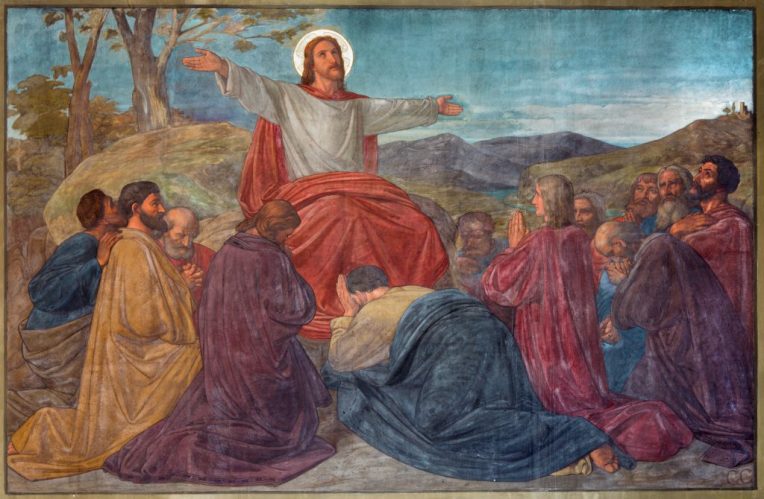
But what Jesus teaches in today’s Gospel Reading—and in all the Lucan Beatitudes—is that a Christian can only find consolation in one place:  within the Holy Spirit.  None of the things which Jesus preaches against is bad.  Money, food, laughter, and praise are all good things.  The evil which distorts and perverts these good things, however, is the temptation to rest in them—to believe that these things is to be a source of happiness, rather than a blessing that flows from happiness.

It is when we root good things such as money or praise within our earthly selves that they become that source of evil that Christ is preaching against.  May the Eucharist that the Church celebrates help us to offer all our pleasures in life to God, and admit that none of them can save us from being rooted in this world.

OT 23-3

Tuesday of the 23rd Week in Ordinary Time

Tuesday of the 23rd Week in Ordinary Time
Colossians 2:6-15  +  Luke 6:12-19
September 10, 2019

   Jesus departed to the mountain to pray, and He spent the night in prayer to God.   

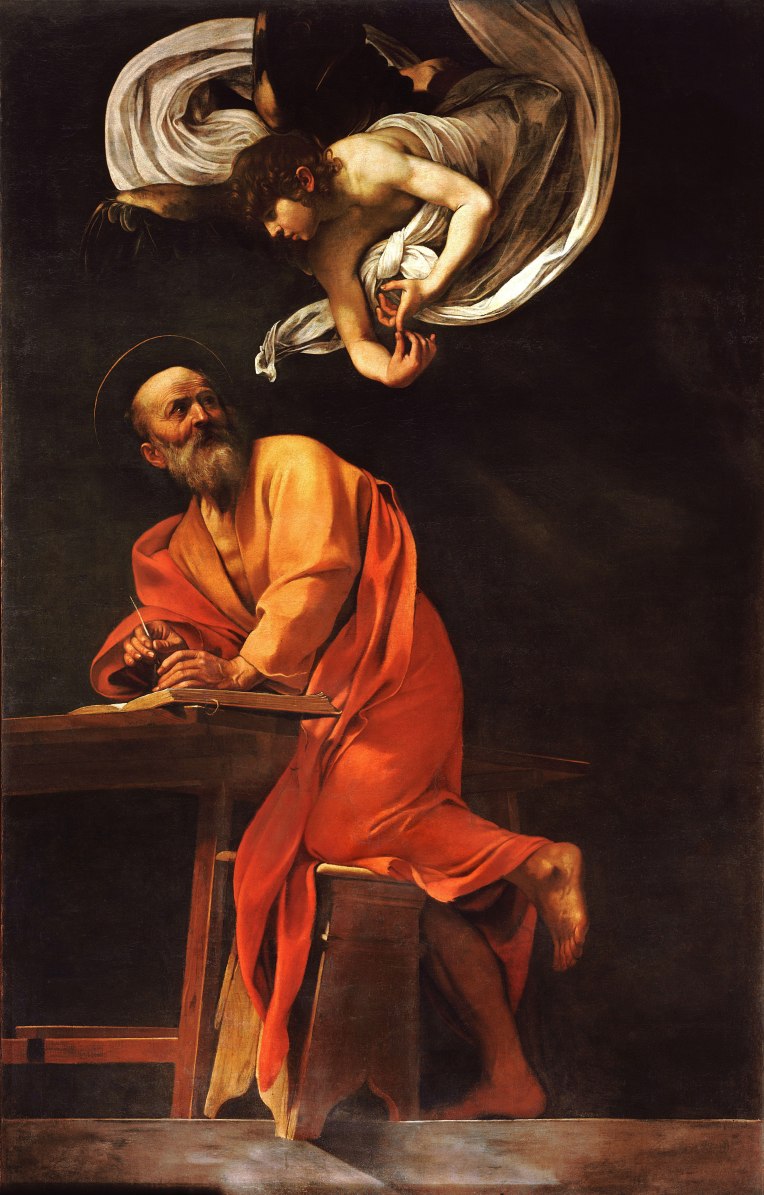
St. Luke the Evangelist seems to speak more about prayer than the other evangelists.  He does so both by giving us Jesus’ words about prayer, and by illustrating occasions on which Jesus prayed.  In today’s Gospel Reading we have an example of the latter.

In the example of Jesus’ prayer shown us today by the evangelist, two things stand out.  The first is that Jesus “spent the night in prayer”.  Most of us Catholics in the Western world live very spoiled lives.  We consider the making of a Holy Hour a great sacrifice on our part.  The Gospel accounts of Jesus’ life show how common it was for Jesus to spend an entire night “in vigil”.  The lives of the saints show men and women from various stations in life all taking up this practice of the Lord in order to be close to Him.

The second notable thing about Jesus’ prayer in today’s Gospel passage is that He is engaged in prayer before a significant choice.  This reveals that the choice that follows—here, the choosing of the Twelve—is a choice made together by the Father and the Son, in the unity of the Holy Spirit.  For ourselves, the choosing of the apostles shows that great sacrifices in prayer, such as vigils, ought to spent for the sake of God’s work, and not for our own personal interests.

OT 23-2

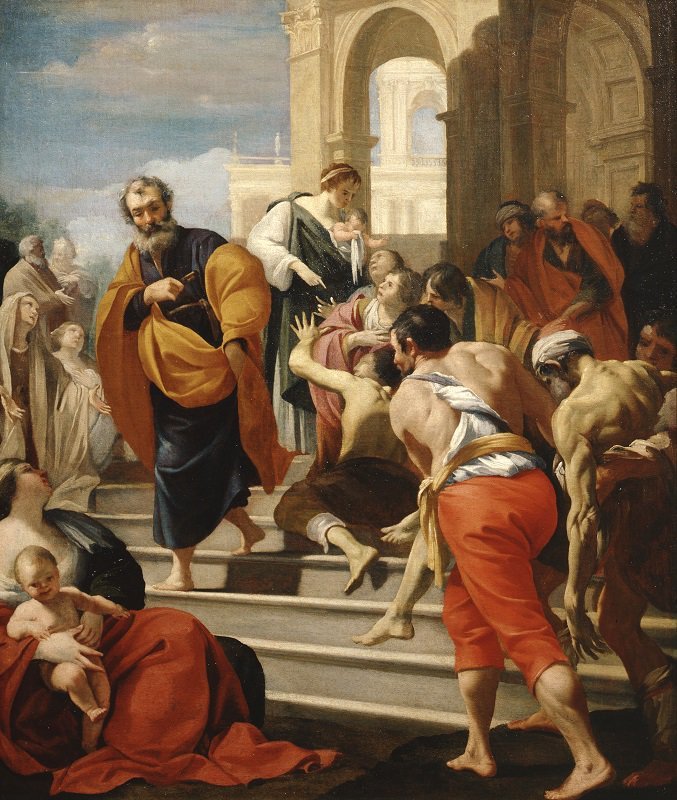
St. Peter Claver, Priest

St. Peter Claver
Colossians 1:24—2:3  +  Luke 6:6-11
September 9, 2019

   In God is my safety and my glory.   

Jesus in today’s Gospel passage (and on many other occasions during His earthly life, leading to the Cross) faced those who had turned the meaning of religion inside out.  Jesus in this passage heals the man with the withered hand, and the response of the scribes and Pharisees is to become enraged:  they discussed together what they might do to Jesus.

In this we see a similarity between Jesus’ day, and our day:  a similarity between the world of Jesus, and the world in which we live.  The world in which we live today may be much larger than Jesus’ world:  there may be more countries, and more peoples who have to speak with each other, and work to get along.  Likewise, the Church today extends throughout the world instead of consisting of a small band of disciples.

Yet there are today people, just as in Jesus’ day, who return evil for good:  whose actions make no sense.  Whether we reflect upon the example of the scribes and Pharisees in today’s Gospel passage, or Pontius Pilate, or Judas Iscariot, the question we have to ask is:  how did Jesus respond to those who hated Him, and nailed Him to the Cross?  Can we be like our Lord Jesus, even in a situation like this?

St. Peter Claver

St. Peter Claver, Priest