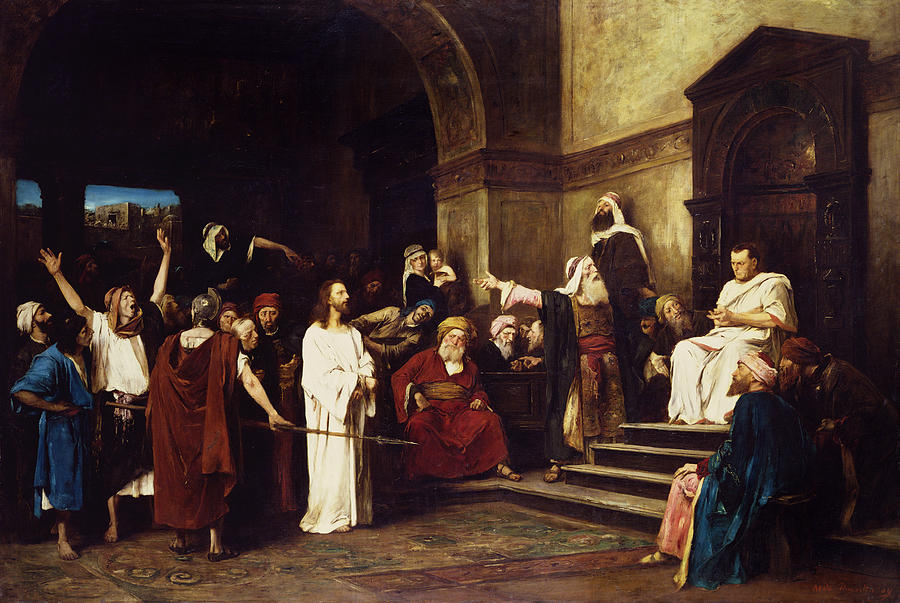
“Whoever will not receive you or listen to your words—go outside that house or town and shake the dust from your feet.”
The Scriptures and Tradition of the Church use many images to describe God. The reason for this wealth of images, of course, is the fact that God is infinite: no one image does justice to the depth and richness of God who is love. Likewise, there are many images used to describe the peoples whom, throughout salvation history, God has desired to draw to Himself. The tribes of Israel and the Mystical Body of Christ are described by varied metaphors.
However, we also have to confess that it takes many images to describe God’s People for a another, very different reason. There are so many ways in which God’s People sin, and fail to live up to the relationship to which He constantly calls us. It takes many different images and metaphors to describe the infidelity of the People of God. So it is in Hosea, as the prophet describes Israel with the image of a spouse, as well as the image of a child, capturing the ingratitude of one who fails to give thanks for the sacrifices that the father has made.
One of the metaphors that Hosea uses speaks to us especially as followers of Jesus. Offering the Lord’s prophecy to Israel, Hosea says, “Yet, though I stooped to feed my child, they did not know that I was their healer.” The “child”—in the singular—is the nation gathered together and nourished through the Law and the Prophets, yet the Lord recognizes that “they”—all of them—were unfaithful to Him.
Even more so did our Heavenly Father offer His own divine Son for the sake of His people, only to be met with rejection. The sacrifice of Christ Jesus is both healing and nourishment for the People of God. This is an important reason to prepare for Holy Mass with great devotion: spending time in private prayer and devotion, considering how many joys and sorrows we have to offer to God, that we might be both strengthened and healed.
“Go rather to the lost sheep of the house of Israel.”
Today’s Gospel passage speaks about reaching out to those who are hurt and sick. We hear Jesus sending his twelve apostles to go out and heal “every disease and every illness.” More than just a prophet, Jesus has authority not only to call back the repentant to Himself, but also to heal them.
When Jesus sends the apostles, His instructions are for them to go to “the lost sheep of the House of Israel”. In our own day, there are many fallen-away Catholics, and of course we pray for them. But we can do more for them than just pray. With the sort of love that Jesus held in His Sacred Heart when He looked at the crowds and said, “the harvest is abundant, but the laborers are few”, we can reach out to those who have fallen away from the Church.
We can offer gentle instructions to those who don’t know how to start again to live the Faith: to begin again to receive the sacraments, the gifts of grace which come to us through the apostles and their successors. It’s the bishops’ responsibility—and the responsibility of those priests who work under their bishops—to bring lost sheep back into the fold through the sacraments. But often, it will be ordinary Christians who point those lost sheep in the right direction.
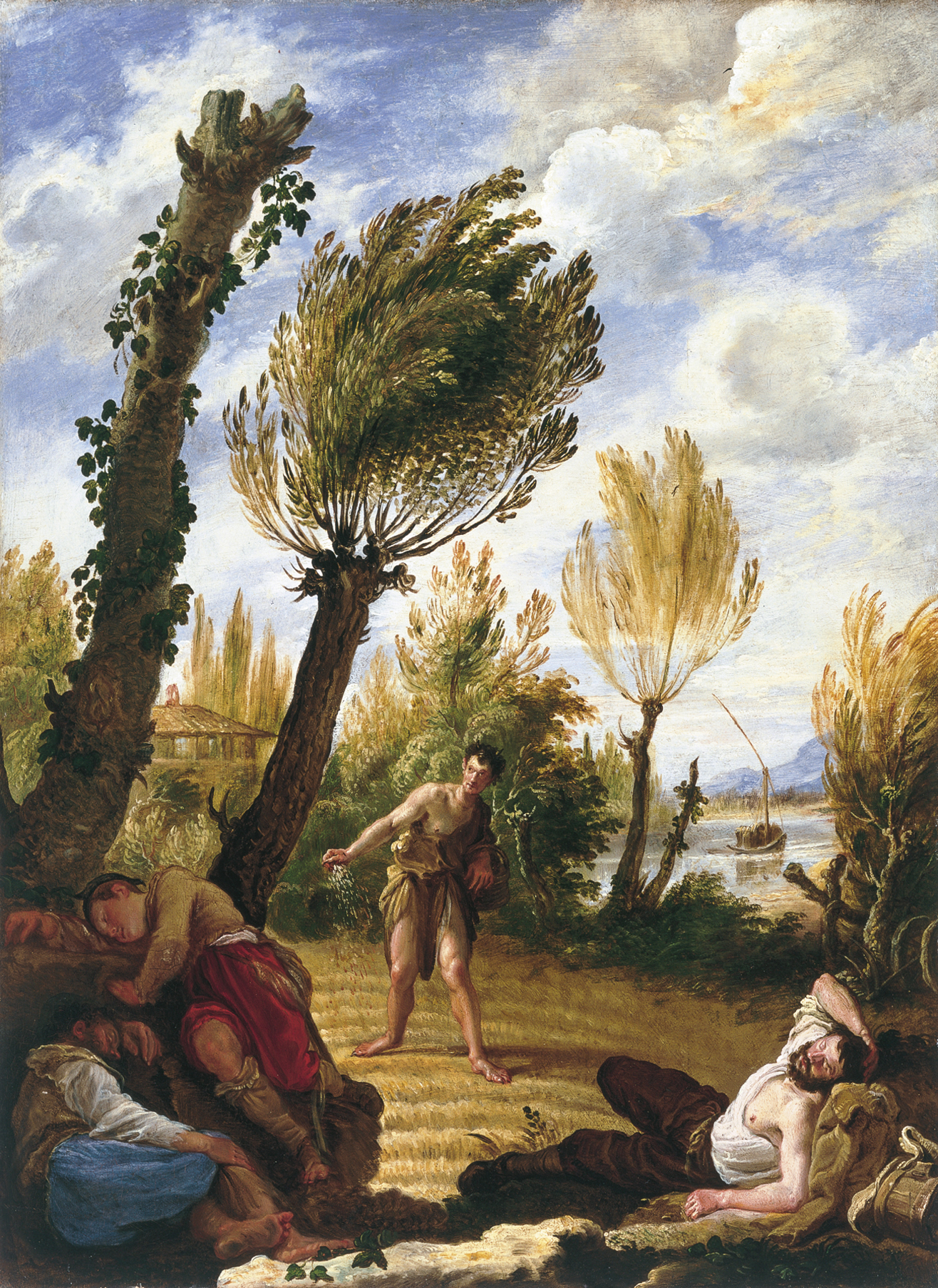
“The harvest is abundant but the laborers are few ….”
The cry that we hear Jesus utter in today’s Gospel passage—“the harvest is abundant, but the laborers are few”—is one that we usually associate with the need for vocations in the Church. But Jesus also speaks through these words about the harvest of one’s heart and the fruits of one’s soul. In each person is a soul created by God, and each soul is capable of being completely filled, as much as it is able: that is, to be “perfected” by God’s grace.
Unfortunately, this “harvest of the soul” is neglected by so many of us by our actions and our inaction. We are not willing to believe what the Church teaches about God calling every human person to be a saint. The Church at the Second Vatican Council spoke strongly about the “universal call to holiness”.
God gives each one of us many gifts, but only when we talk with God and are strengthened by Him do we learn how to use those gifts correctly, in accord with His plan. Through our prayer, and God’s grace, our minds and wills can be formed, so that we can be more perfectly the saints God wants us to be.
In today’s Gospel passage are two people who see how God wants to be in their lives in time of need. In our day and age, most prayers that are offered to God are prayers of petition. Perhaps that’s always been the case. In fact, our knowledge of that fact doesn’t mean that we ourselves don’t have lengthy lists of petitions that we’d like to offer to God.
It’s true that petitionary prayer—in which we ask for something from God—is not as selfless a form of prayer as adoration, or even as selfless as thanksgiving or contrition. But God does desire that we present our petitions to Him.
Consider the woman in today’s Gospel passage. She had suffered for many years. She interrupts Christ right in the middle of His trying to help someone else. We should make that woman’s faith our own: not simply her faith in Christ’s power, but also her faith in His patience and compassion. There is no true need in our lives that we should not offer to God.
Of course, not every petition is answered as we wish, as are the petitions of this woman and the official. Sadly, some Christians stop offering their petitions to God—or even stop believing in God—when He doesn’t provide the responses they want. But growth in prayer requires the acceptance of God’s “No”’s, and learning through them to trust more deeply His providential Will.
“Can the wedding guests mourn as long as the bridegroom is with them?”
It’s the disciples of St. John the Baptist—and not the saint himself—who appear and speak in today’s Gospel passage. Nonetheless, today’s passage offers us similarities and contrasts between these two cousins: one of them the voice of the Word, and the other the Word made Flesh.
One of the more obvious contrasts concerns fasting, and the fact that John’s disciples fast while Jesus’ do not. But John’s disciples misunderstand the reason for this difference. They misunderstand the relationship between John and Jesus. Perhaps they thought of them as two equally inspiring religious figures. Perhaps they thought of them as two equally valid paths leading to God’s righteousness.
In fact, John leads to Jesus. John himself preached this clearly, but his disciples did not hear John clearly.
The last four sentences of today’s Gospel passage offer two mini-parables as a way to see these differences between John and Jesus. Jesus is the new wine that must be poured into new wineskins. This parable echoes His first public miracle at Cana [John 2:1-12]. To follow Jesus, a new approach to God must be accepted. To be a disciple means to follow John in the constant need for penance and repentance.
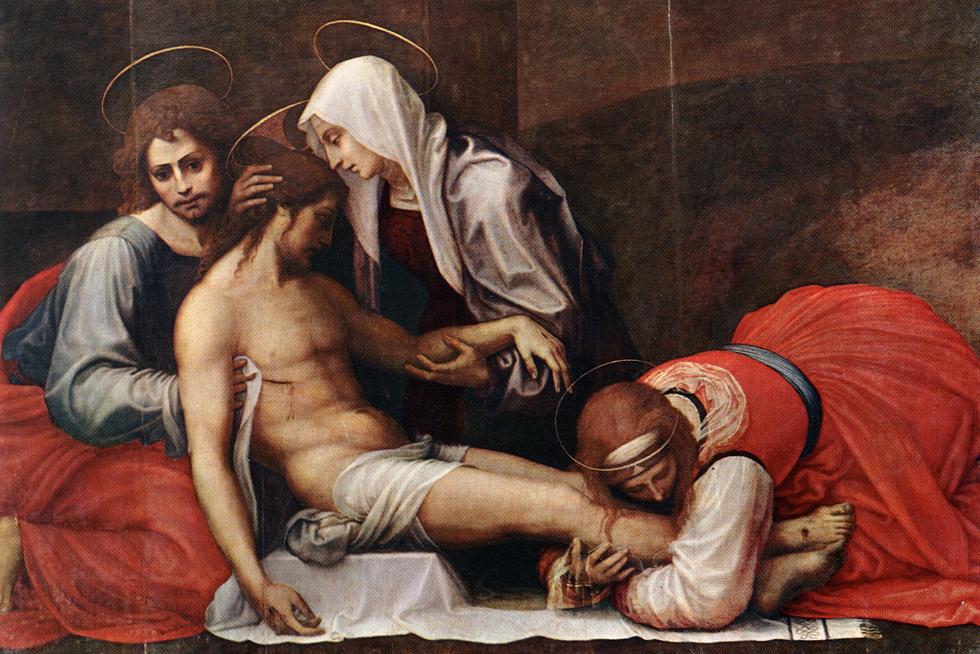
“… bring your hand and put it into my side, and do not be unbelieving, but believe.”
The Scriptures for the Mass of St. Thomas’ feast actually focus on him very little. It’s not uncommon for the First Reading on the feast of an apostle to be either written by him or at least refer to him in passing. However, today’s First Reading from St. Paul’s epistle to the Ephesians does not mention Thomas. Its focus is the Church.
What is the Church, and what is her relation to Christ? One might argue that today’s First Reading was chosen for this feast because it refers to the Church’s “foundation of the Apostles and prophets”. But St. Paul links these apostles and prophets directly to Christ. This foundation is related to Christ who is the Church’s “capstone”.
This capstone—Christ—is the Church’s source of unity. The last sentence of today’s First Reading uses the word “together” twice. It’s through Christ that the Church’s members are “held together” and grow “into a temple”. In Him the Church’s members are “built together” as “a dwelling place of God in the Spirit.” You yourself are a member of this great work of God! Give thanks today for God’s gift of the Church, and for the spiritual growth that God offers you through this “dwelling place”.
CCC 514-521: knowledge of mysteries of Christ, communion in his mysteries CCC 238-242: the Father is revealed by the Son CCC 989-990: the resurrection of the body
Humility is the foundation of the spiritual life. In Sunday’s Gospel Reading Jesus teaches us how to lay this foundation. Jesus shows us that humility is at the heart of all progress in the spiritual life. Note that this is more than just saying that humility is the first lesson learned by spiritual beginners. Jesus is going further, insisting that humility is at the heart of the progress made each day by the most spiritually advanced saints.
In the portraits of Jesus painted by the four evangelists, Jesus rarely speaks out loud to God the Father. Yet in today’s Gospel Reading, Jesus not only speaks to the Father, but exclaims: “I give praise to you, Father, Lord of heaven and earth, for although you have hidden these things from the wise and the learned you have revealed them to little ones.”
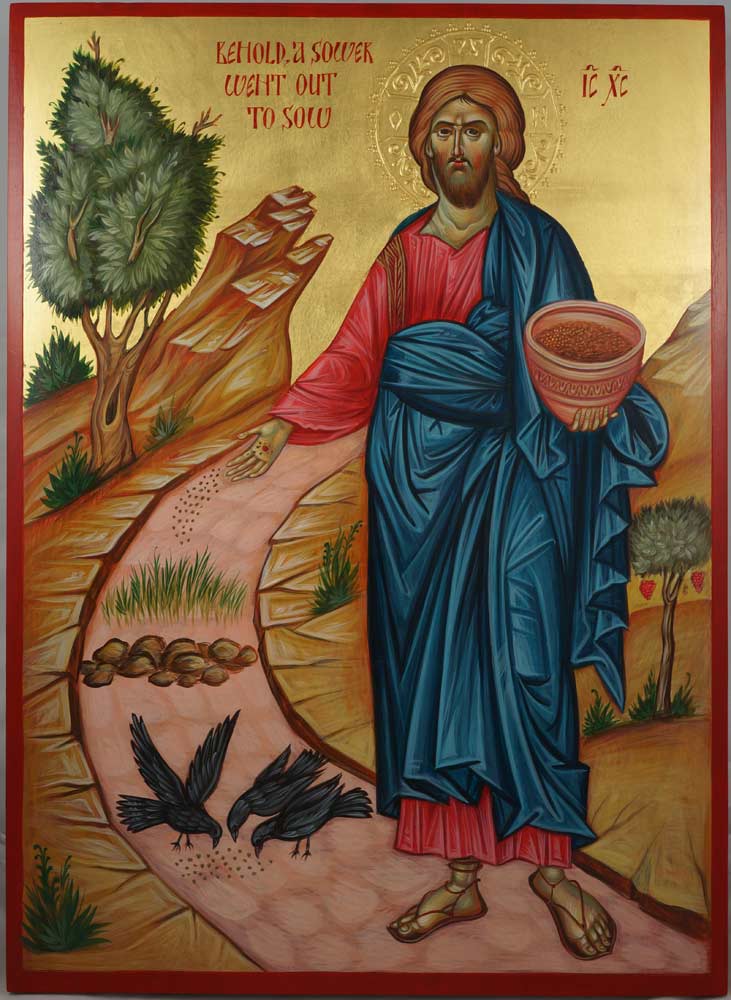
No matter how old you are, no matter how far you have already progressed in the spiritual life, humility is the soil needed for further growth. If you are a farmer, or even if you garden, you know that when it comes to growing things from the earth, there’s good soil and there’s bad soil. There’s soil that’s rich in nutrients and moisture, and then there’s soil that’s dry and depleted of nutrients.
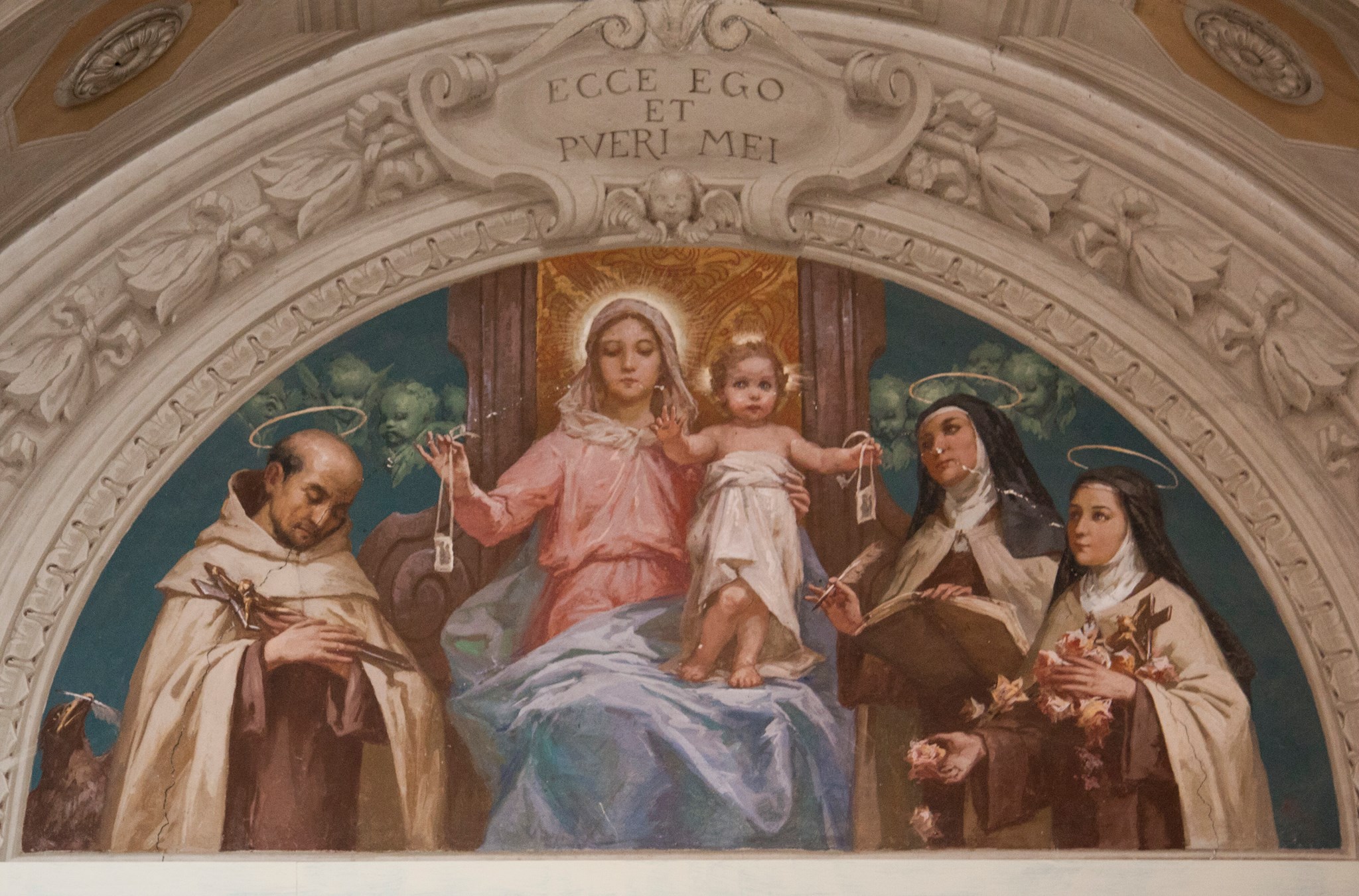
If we want to say, then, that the soil of humility is meant to be rich in spiritual nutrients and moisture, what are we saying? Why does humility make for rich spiritual soil? Saint Teresa of Avila, a Carmelite reformer who lived in the sixteenth century, wrote:
“While we are on this earth nothing is more important to us than humility. … In my opinion we shall never completely know ourselves if we don’t strive to know God. By gazing at His grandeur, we get in touch with our own lowliness… by pondering His humility, we shall see how far we are from being humble” [The Interior Castle I,2,9].
St. Teresa makes plain that focusing upon God rather than upon oneself is key to fostering humility. Yet St. Paul in Sunday’s Second Reading speaks about another key way of shifting one’s attention in the spiritual life from what is less important to what is greater. St. Paul explains the importance of focusing upon the human spirit rather than upon human flesh.
What does St. Paul mean in the Second Reading when he states to the Romans: “You are not in the flesh”? Obviously, no one would deny that each Christian making his way through life on this earth journeys within, or through, a human body. We all live with flesh and blood. The human body is an essential part of making one’s pilgrimage through life.
But when St. Paul insists that “You are not in the flesh”, he’s shifting attention to the principle by which the pilgrim can bring focus to his earthly life. That is to ask the following: is gratification of the flesh’s five senses the motivating principle for the pilgrim’s choices? Or does that pilgrim live “in the spirit”, meaning that his choices seek to allow the Holy Spirit to rule—to give order and aim—to the pilgrim’s journey?
Throughout the Church’s history, this contrast between the flesh and the spirit has led to many heresies. St. Augustine of Hippo, a fifth-century bishop in northern Africa, spent many years before his baptism as a member of a sect based upon one such heresy. This group believed that the difference between flesh and spirit was not only a contrast, but a sharp division between evil and good. To grow in holiness meant to them to reject not only the flesh, but everything material.
What that heresy ignores is that “in the beginning”, God created the heavens and the earth and everything within them, both visible and invisible. Within the first chapter of Genesis, we hear that God “looked at everything He had made, and found it very good” [Genesis 1:31]. Material things cannot be made evil. Only persons and their actions can be evil, by putting last things first. Material things are among the last that matter in life, because they will not last. Knowing this truth and ordering one’s choices according to it foster humility, disposing oneself to abiding “in the spirit”, which is to say, abiding more fully in God.
“The Lord took me from following the flock, and said to me, ‘Go, prophesy to my people Israel.’”
Amos, the Old Testament prophet from whose book we hear in today’s First Reading, was considered obnoxious because he preached the need of repentance on the part of everyone in Israel, including the king and the priests. Amaziah tried to get the king to get rid of Amos: not only because he took offense at Amos’ preaching, but also because he held Amos in contempt.
Amaziah considered Amos a “nobody”. Amos actually admitted that he was not a prophet in his own right. Nor did he belong to the official guild of prophets, which was a considerably large group. Amos was just a shepherd and a dresser of sycamores. On top of that, Amos was not even from Israel: he was from the southern land of Judah, which had not yet been combined with Israel into one kingdom. So he was a foreigner in Israel.
But in spite of all appearances, Amos had credentials of the highest order. It was the Lord Himself who had taken Amos from the south, to be a prophet in the north. Amos’ worth was not due to his own wisdom. It was due only to the fact that the Lord had called him. As the old saying goes, “God does not call those who are qualified. He qualifies those whom He calls.”
In other words, we trust that when the Lord gives us a job to do, He’s also going to give us the grace needed to complete that job. This is true of any small, daily job the Lord might hand one of His sons or daughters. God probably has such a job in mind for you this day. So expect that job, but also trust that God will grant you the grace to complete it.
… when they saw him they begged him to leave their district.
While some in our day and age dismiss the possibility of demonic possession, suggesting that reported cases of possession are only psychological disorders, the Church takes today’s Gospel passage at its word.
One striking point in this passage is the reaction of people to the swineherds’ report: “they begged [Jesus] to leave their district.” Why do the people react this way? One might expect the people instead to express gratitude to Jesus, and invite Him to stay as their protector.
Perhaps the people were in shock, never before imagining that demons might dwell among them. However, demonic possession in the Holy Land was not uncommon in Jesus’ day. The reaction of the people might reflect a belief that demonic possession only happens to “other” people, much as people in our own day think that tragedy only strikes others. Some people today, when tragedy strikes in their own lives, react by blaming God, regardless of who truly—if anyone—was to blame. Some people even stop practicing their religion after being struck by tragedy, so difficult is it for them to understand God’s providential Will.
While each of us needs to practice prudence in order to deter sin, violence and death in our lives, we should have no illusions of escaping them altogether. Instead of praying to avoid suffering, we need to stand fast with Our Savior on Calvary, knowing that suffering is an essential part of achieving freedom from evil.