“And how can they hear without someone to preach?”
There are many things about a man entering the seminary that are misunderstood. One important point that many people do not understand is that a man enters the seminary in order to continue to discern the calling that the Lord has made to him. He does not enter the seminary because he has already made a decision to be a priest.
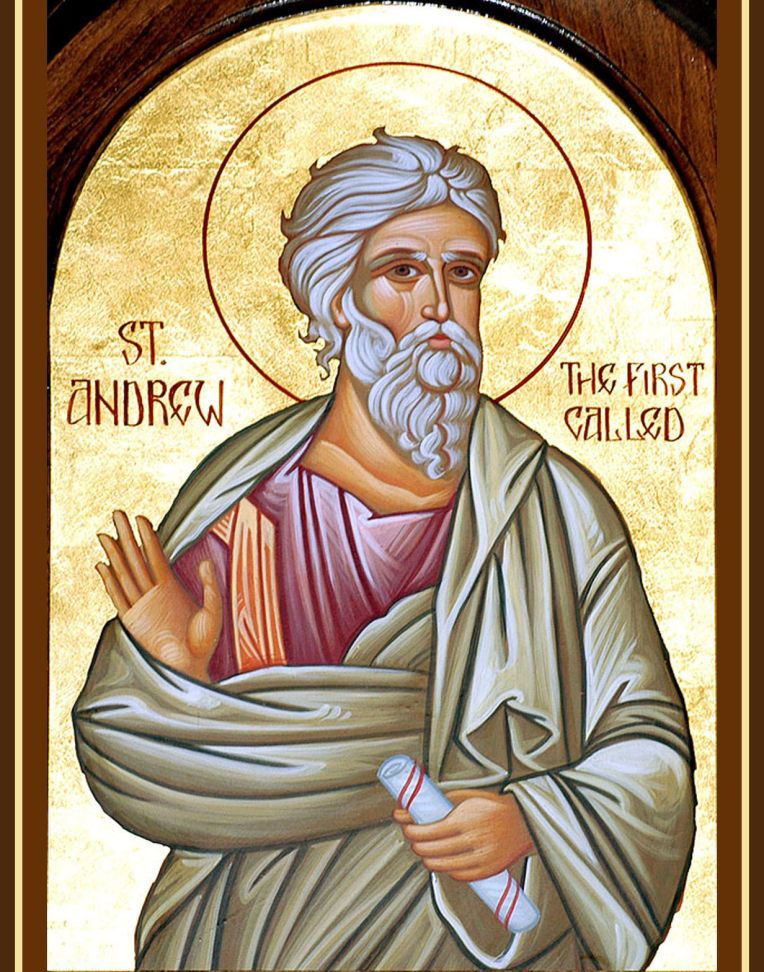
The Lord calls out to every young man, “Come after me….” What differs from one man to another is the phrase that follows “Come after me….” For some, the words that follow are “Be my faithful disciple, and serve me wherever you go in the world.” To others, Jesus says those words by which we hear him calling Simon and Andrew: “Come after me, and I will make you fishers of men.” The prayer that a man offers while in the seminary asks the Lord for help in clarifying just which call it is that the Lord has made to him.
“Fishers of men.” This is a metaphor, of course: one that speaks to Simon and Andrew, whose lives as adults had been given to the livelihood of being fishermen. Regardless of the livelihood which they had chosen for themselves, the Lord’s words mean “Come after me. I chose you to be the servants of my Church.” No matter the Christian, and no matter the vocation to which the Lord calls him or her, the root of each vocation is service.
“For that day will assault everyone who lives on the face of the earth.”
The Responsorial Psalm on this final day of the liturgical year shows us how the Church’s year is cyclical in nature. The psalm’s refrain is a link, tying together this final day of the year to the season of Advent with which the new year begins tomorrow.
“Marana tha! Come, Lord Jesus!” We cry for the coming of the Messiah, as it was in the beginning, is now, and ever shall be until the end of time. In the beginning, mankind fell from his state of grace. But God in loving solicitude for His fallen creatures promised to send a savior, and so man began his cry for the Messiah to come.
When He did come, His own people received Him not, as St. John the Evangelist proclaims in the prologue to his Gospel account. His own people in fact put Him to death. Yet it was for this that the Messiah had come.
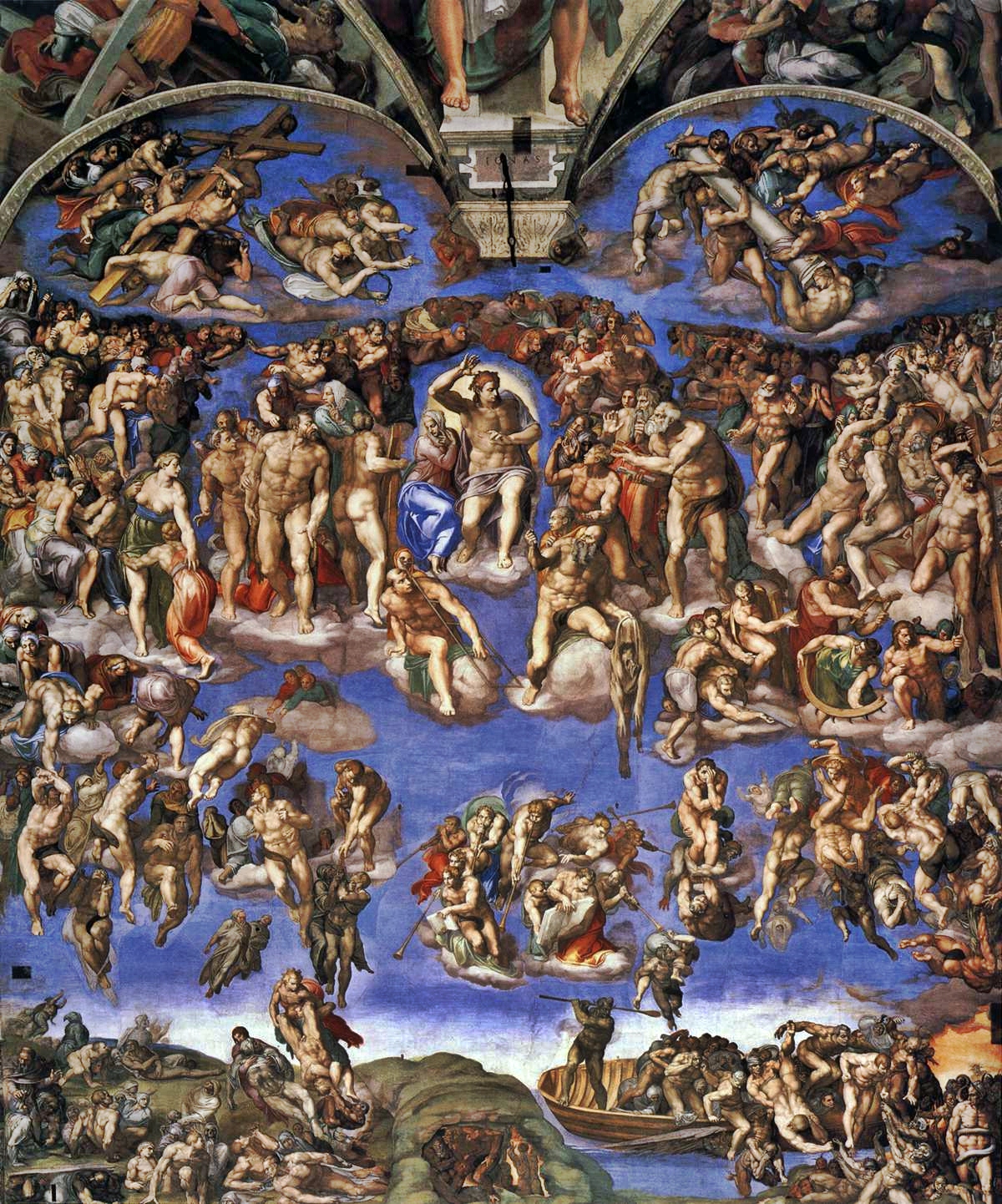
He will come again at the end of time. When He does, each member of the human family will be judged according to three points. Do you believe that Jesus first came to destroy your sins? Do you believe that Jesus will judge you in the end according to your choice to live for or against Him? Do you believe at this moment that your life is His to live, and that you must cede it to Him?
“Heaven and earth will pass away, but my words will not pass away.”
The last verse of today’s First Reading offers a key to understanding the entire Book of Revelation. Mysterious as most of its imagery is, the image of “a bride adorned for her husband” is one that we readily understand.
The entire sentence where he describes this wedded couple is: “I also saw the holy city, a new Jerusalem, coming down out of heaven from God, prepared as a bride….” This bride is the Church, and her husband is Christ. This might seem odd, since it’s a city that is the bride. But a city is a collection of persons joined together by several ties. Here St. John is insisting that the most important tie is that of its members being wedded to the bridegroom. St. John is describing the Church as a city, whereas St. Paul uses the metaphor of “the Body of Christ”. As members of this heavenly Jerusalem, how can we reflect on our own participation in the Church?
We must think of this city as having a divine center, and ask whether our participation in the life of this city is oriented to this center, or whether instead we live in a little back alley of the city, focused on our own interests, apart from the needs of others and the will of the city’s “mayor”, Christ.
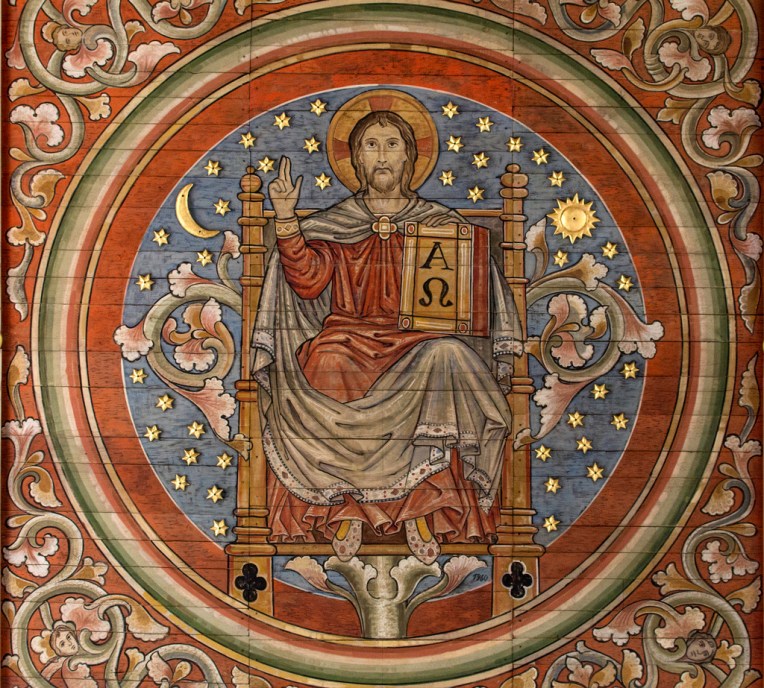
“The holy city” is the Church, the Bride of Christ. But on this next-to-last day of the Church’s year, as her reflection focuses intently on the Second Coming, two facts about this city of Jerusalem especially stand out. The first is the historical fact that the city’s savior and bridegroom was crucified outside the city. The second is the spiritual fact that in the vision of the Beloved Disciple, this “new Jerusalem, [comes] down out of heaven from God, prepared as a bride”. This city is “prepared as a bride” as it comes “down out of heaven”. That is to say, it’s God’s grace, and not man’s efforts, that make this bride what she is. We need to disavow the falsehood of those who exhort: “Let us build the city of God.” This is the cry of Babel. The cries of Heaven are cries of joy, that there, the last thing is the first thing, the Alpha and the Omega, the love which builds the city of God, washes away our sins, and makes us faithful citizens.
CCC 668-677, 769: the final tribulation and Christ’s return in glory CCC 451, 671, 1130, 1403, 2817: “Come, Lord Jesus!” CCC 35: God gives humanity grace to accept Revelation, welcome the Messiah CCC 827, 1431, 2677, 2839: acknowledging that we are sinners
+ + +
The entire Gospel is filled with paradox, but the Gospel narratives of Advent and Christmas seem especially so. These Gospel passages highlight two paradoxes: first, the all-powerful God becoming a weak human; and second, God becoming man in order to destroy death by His dying.
The English writer G. K. Chesterton wrote a book about human history in general, and specifically about Jesus’ place at the center of human history. It’s titled The Everlasting Man. Chesterton writes at length about Bethlehem, and describes the paradox that Mary held in her arms and gazed upon the face of her Creator and Savior. This is the paradox, Chesterton wrote, “that the hands that had made the sun and stars were too small to reach the huge heads of the cattle.” The infinite God, in other words, is right under our noses. Nonetheless, His Presence in our lives often remains a mystery.
As we enter the season of Advent, we need to recall that God’s ways are not our ways, and that God’s time is not our time. To prepare for the sacred mysteries of the Christmas Season, consider three questions: 1) What do you do to prepare for Christmas? 2) What is it you are preparing to celebrate? And 3) What should your life look like after you celebrate Christmas? We can answer these questions by looking at three different persons waiting to celebrate Christmas. These are certainly stereotypes, but they allow us to ask whether anything in their approaches to Advent is like our own.
The first person is a youngster waiting for Christmas morning. What does the youngster do to prepare for Christmas? Nothing, really. The waiting is simply a time of anticipation. All the youngster’s thoughts are consumed with the idea of Christmas morning. Christmas is a moment, a flurry of activity that’s over in the twinkle of an eye. Once the presents are open, Christmas is over. The gifts themselves hold the youngster’s attention for very little time, and the celebration of Christmas brings no real change in the youngster.
The second person is a college student waiting for Christmas Break. He’s working like mad to complete all the projects, papers and tests that are due before he can celebrate Christmas. Christmas, for this student, is a time of rest. Advent and Christmas are two opposites for this student: work, and rest. Christmas brings about a complete change in the student, but only for a few weeks, perhaps. After that, it’s back to the books and the same old grind.
The third person for us to consider is a woman waiting for the birth of her child. As she bears her child in the womb for nine months, her attention is not focused solely on the birth of the child, like the youngster who for a month can think of nothing but opening his presents on Christmas morning. She will make sacrifices of her self in order to ensure the health and safety of her unborn child, but meanwhile she has other obligations to attend to. She bears the child within herself as she tends to the needs of others.
She waits for the time of birth, although even the most experienced of doctors cannot assure her when exactly it will take place. And when the expected time does come, it is neither the youngster’s brief moment of pleasure at opening presents, nor the student’s days of rest from labor. For the expectant mother, the waited-for moment is itself a time of labor and of pain. Yet despite the pain, it is also somehow a time of joy.
Somehow the waiting itself is a time of longing for labor and joy. Is it any wonder that our Blessed Mother Mary plays such an important role in these seasons of Advent and Christmas? Who was ever a better disciple of Jesus than Mary? Who has ever been a better example of what it means to long for the coming of the Lord? There are many scenes which we picture in our minds and which we hear proclaimed during this Advent of the Lord’s coming. Joyful mysteries such as the Annunciation, the Visitation, and the Immaculate Conception help us prepare for the gift of Jesus.
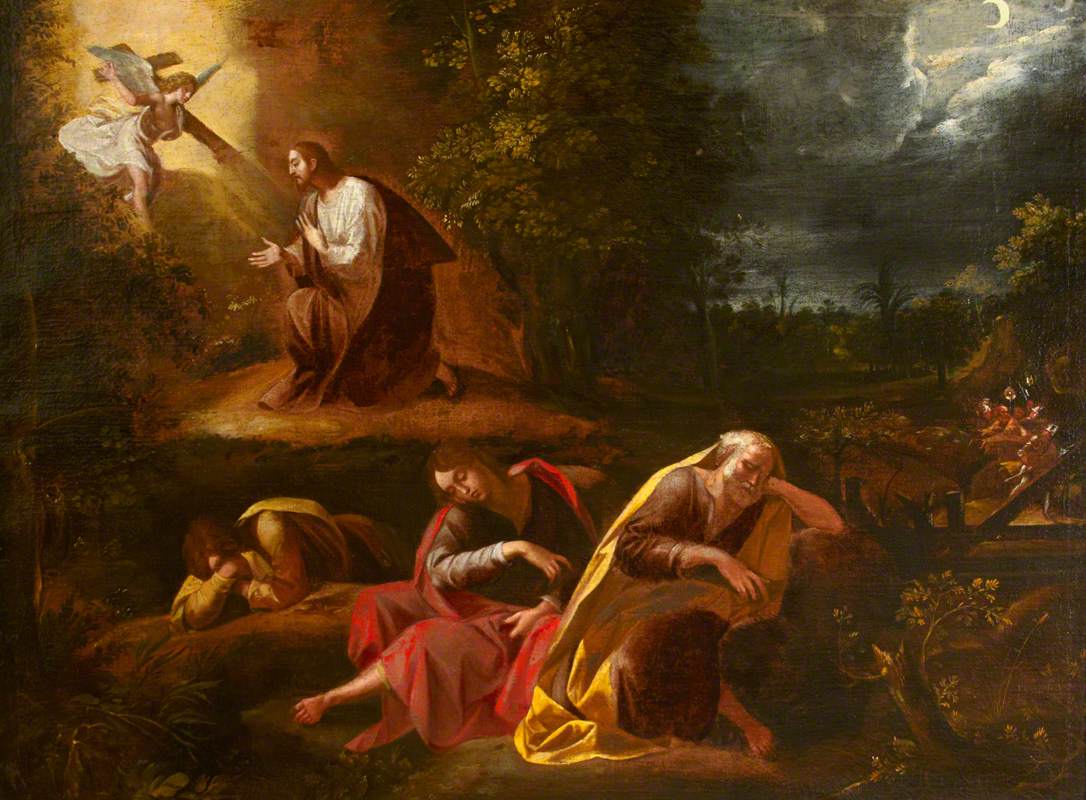
The Agony in the Garden by Giuseppe Cesari (1568–1640)
“Blessed are those who have been called to the wedding feast of the Lamb.”
Jesus issues a sharp challenge to you today. His words might even be described as frightening. Yet Jesus is not preaching fire and brimstone. He’s not preaching, at least directly, about sin and damnation. He is preaching, though, about the worldly desolation of Jerusalem, and signs above and upon earth that will cause people to “die in fright in anticipation of what is coming upon the world”.
Many people find the idea of the end of the world very frightening, especially when it’s dramatized in literature or film. The drama is enhanced by the physical destruction of worldly monuments and temples. But physical destruction, no matter how vast the scale, pales in comparison to the destruction of a single human soul.
That phrase is not quite accurate, of course, because a soul can never be destroyed. It would be more accurate to speak of “the destruction of a single human soul’s opportunity for eternal bliss”, or more simply, “the eternal damnation of a single human soul”. Thanks be to God for His sending the Son of Man to redeem man from his sins. This final truth is the reason for Jesus to speak hopefully at the end of today’s Gospel passage. In effect, Jesus preaches that we need not fear the end of the world, or the end of earthly life, because when we place our faith in the Son of Man, we can have full assurance that our redemption is at hand.
“By your perseverance you will secure your lives.”
So many people grow fearful thinking about a cataclysmic end of the planet, even though the vast majority will never face it. Perhaps you’ve seen one of those movies where there’s a dramatic end to life on the planet Earth as we know it. Movies like that can draw a great deal of attention, and sell a lot of tickets. Nonetheless, it doesn’t matter if you die from an ice age covering the whole continent, or from old age in your very own home. What comes next is the same.
This is what we reflect on at the end of each Church year, In November, we pray to the saints in Heaven, and for the faithful in Purgatory, and the Church reminds us of the “last things”: heaven, hell, death and judgment. All this give us perspective.
In today’s Gospel passage, Jesus declares to His disciples, “By perseverance you will secure your lives.” What does this mean? Every day, God calls us to offer Him our lives in faith, and to live for others. That’s how we can reach the hour of our death in God’s sight. In the end, C. S. Lewis once explained, there are two types of persons: those who say in the end: “Heavenly Father, thy will be done”, and those to whom the Father will have to say, “My child, thy will be done.”
Everything that’s built by human beings can be destroyed. That’s why something like the Great Pyramids of Egypt are so awesome: not simply because they are so colossal, but because they have—to an amazing extent—survived the ravages of time. You can think of one of the large cities on the West Coast of our own country (Los Angeles, for example): from the air, as you fly into the area, you can be filled with awe. Yet an earthquake could destroy everything in the area in a matter of minutes.
In this last week of the Church’s liturgical year, we hear Jesus contrasting “today” with “tomorrow”. The Jewish people took pride in the physical beauty of the Temple in Jerusalem, but Jesus is cautioning them to think also of that “tomorrow” when the Temple would be no more. Perhaps such talk was blasphemy to some of the Jews. Perhaps they simply thought Jesus was being irrelevant, since the people of Jesus’ day would have had good reason to think that the Temple would stand for thousands of years. In fact, Jesus was simply being a realist.
The reality is that this world is meant by God to be temporary. It is meant to pass away. Yet we are tempted to think of the passing away of the world, or of ourselves from this world, as something tragic. Instead, Jesus wants us to embrace it as the opportunity He offers us for everlasting life.
“… but she, from her poverty, has offered her whole livelihood.”
We live in a society in which values that are contrary to the Gospel are canonized. A person’s value is measured in economic terms. The poor are shunned as worthless.
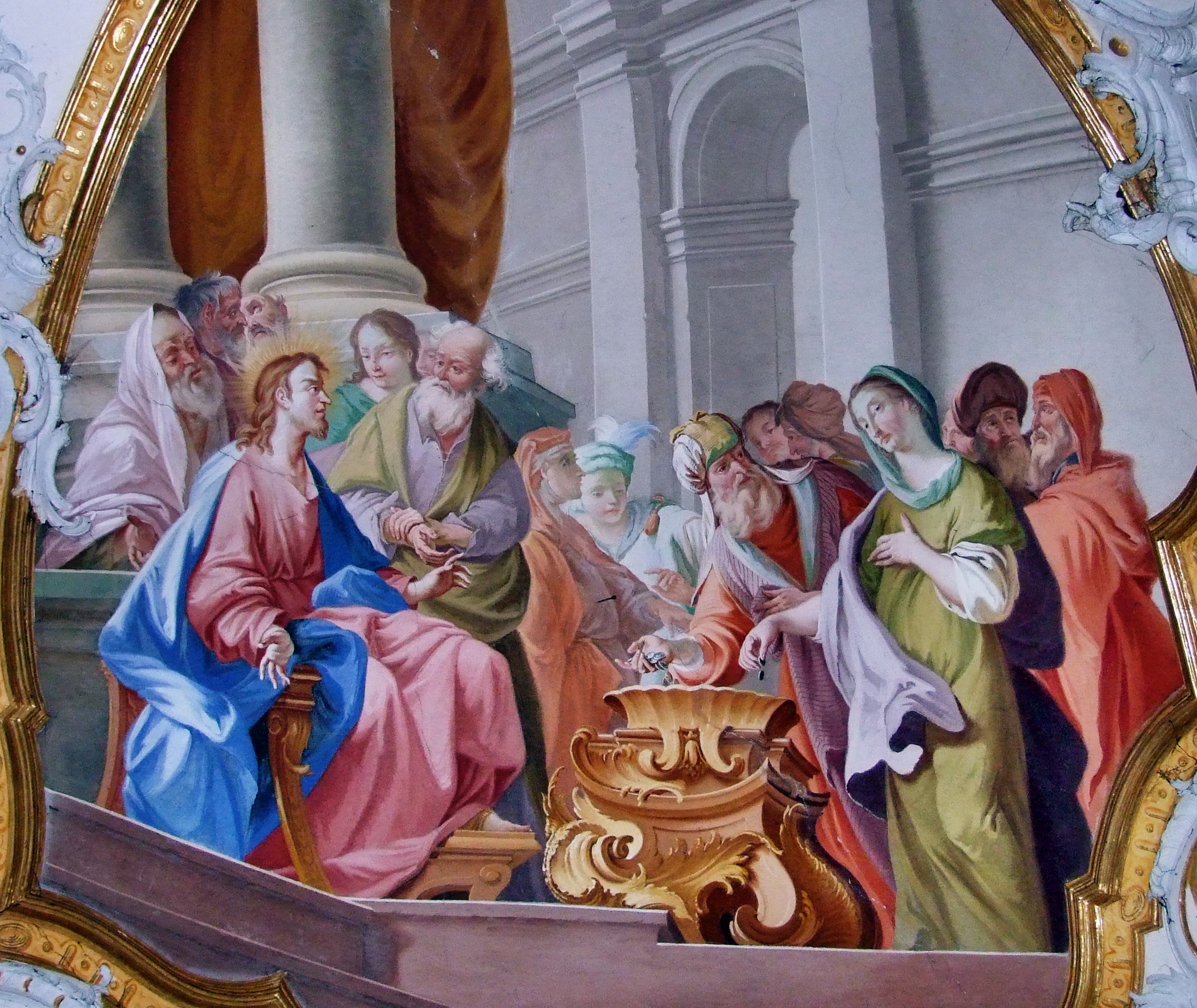
God has a different set of values from those of our society. When Jesus saw the wealthy putting large amounts of money into the collection box of the Temple, He was not impressed. It was not as if the wealthy should not have given large sums, but Jesus was looking for something further. He saw that something else in the poor widow who donated only two small coins. He explains to us what He saw:“[The wealthy] have all made offerings from their surplus wealth, but she, from her poverty, has offered her whole livelihood.”
It was the sacrifice of the widow that mattered, not the amount she gave. We are called to be generous people, sacrificial in all our relationships with others. God does not value us for giving our money; or, for that matter, for giving our time and talent. God values us for the sacrifice from which all of our giving flows. This ability to sacrifice oneself flows from the love that we receive in the celebration of the Holy Eucharist.
In today’s Gospel passage, Our Lord tries to make clear to the Sadducees the meaning of the Resurrection. We too, however, even if we understand and believe in both the Resurrection of Our Lord and the promise of resurrection that God offers to all who die, perhaps may need to realize what type of claim the Resurrection makes upon us as Christians.
To believe in the Resurrection is to believe in the future fulfillment of God’s grace. It is to understand that the suffering of the present is as nothing compared to the future glory to be revealed in Christ Jesus. It is to guard in God’s name what has been entrusted to me until that final Day, which for each of us is the day of our death.
We never find Our Lord going into great detail about the nature of the afterlife. There are two practical reasons for this. First, the glory which will be the reward of God’s elect is too far beyond our comprehension. Second, our only hope for sharing in that glory is to persevere in running the race which God has set before us, to stir into flame the gift of God each of us first received at our baptism, a flame in which we are purified like gold in the furnace.