This morning’s Mass is the last Mass of Advent, and as such, you might say that it presents to us the close of the Old Testament. At the center of today’s Gospel Reading is the figure of Zechariah, the father of John the Baptist. John having been born, the punishment of muteness is lifted from Zechariah. This morning’s Gospel Reading, then, presents his first words.
St. Luke the Evangelist notes in two separate scenes that Zechariah—in today’s Gospel Reading—and his wife Elizabeth in a previous passage—Luke 1:41—were “filled with the Holy Spirit” when they spoke. St. Luke also notes that Zechariah, “filled with the Holy Spirit, prophesied”. In these two scenes, the words of Elizabeth and Zechariah—both “filled with theHoly Spirit”—are akin to the words of the Old Testament prophets. In the Creed’s section about the Holy Spirit, we profess that He “has spoken through the prophets.”
There are two parts to Zechariah’s prophecy, which the Church refers to by the first word of the text in Latin: “Benedictus”. The second part is addressed to his infant son John. We can imagine that Zechariah was cradling John in his arms as he uttered this prophecy. The words he spoke to John can also be applied to us Christians inasmuch as each of us is called to prepare a way in the world for the power of the Most High. By our words, works, and prayers we allow others to know about the mercy promised to our fathers: the Divine Mercy who is Jesus Christ, born for us at Bethlehem.
The Holy Family of Jesus, Mary and Joseph [B] Sirach 3:2-6,12-14 [or Genesis 15:1-6;21:1-3] + Colossians 3:12-21 [or Colossians 3:12-17 or Hebrews 11:8,11-12,17-19] + Luke 2:22-40 [or Luke 2:22,39-40]
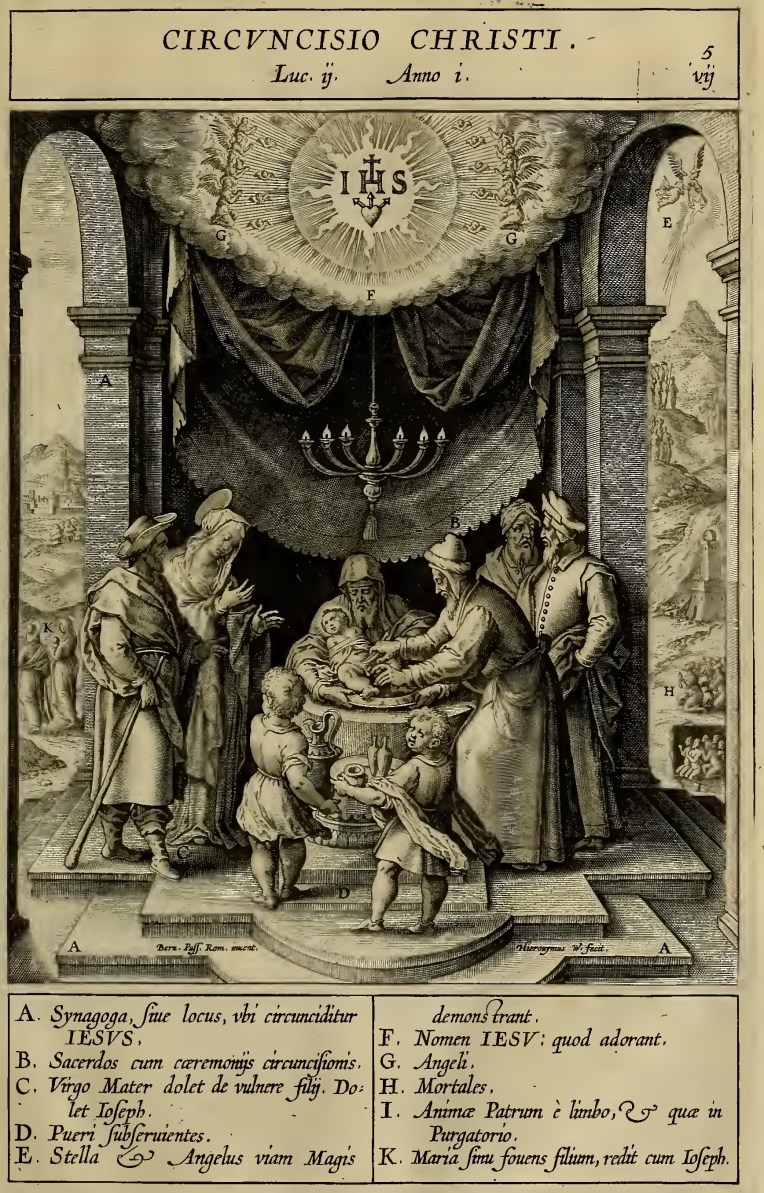
… they took him up to Jerusalem to present him to the Lord.
On Christmas Day, we heard in the Gospel Reading how God the Father gave His Son Jesus to Mary and Joseph. Because they accepted the present of Jesus, we too are offered this gift each day. We pray especially during Christmas for the humility to accept the gift of Christ into our lives.
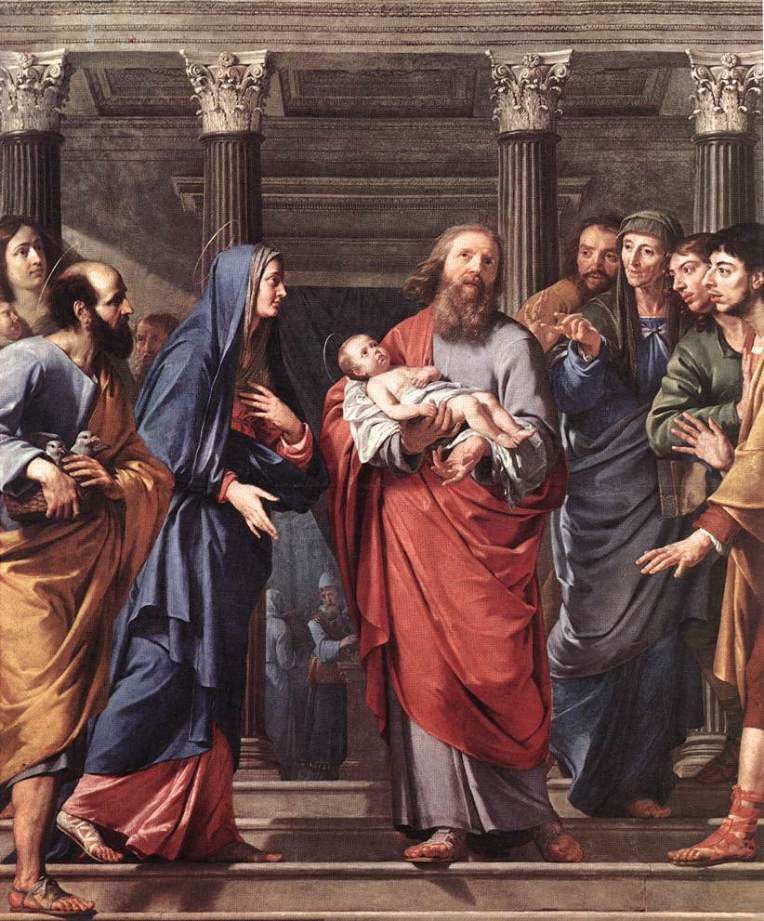
On today’s feast of the Holy Family, the Gospel Reading describes the Presentation of the infant Jesus in the Temple. We see how Mary and Joseph give their Son back to God, and to other people as well, and we pray today for the courage to give the gift of Christ to others.
Joseph and Mary are faithful Jews, fulfilling in today’s Gospel Reading one of the laws of Judaism: to take the first-born male and present Him to God in the Temple in Jerusalem. For many Jews, this law was merely something that had to be done. For Mary and Joseph however, fulfilling this law had much more meaning, demonstrating their fidelity to the angelic messages announced to each of them many months earlier.
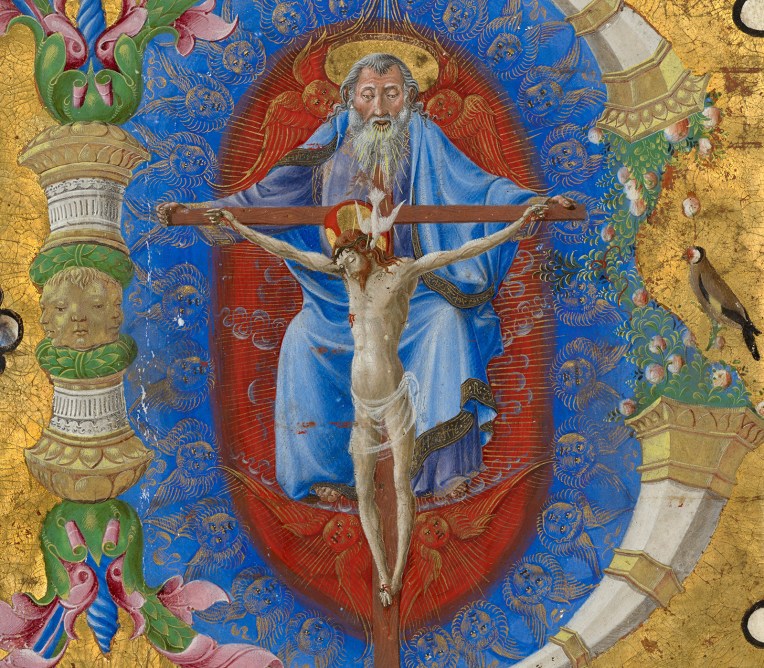
However, we have to wonder if even Joseph and Mary could at this point in time have understood what this Presentation foreshadowed. The Presentation of Jesus in the Temple foreshadows the self-presentation of Jesus on the Cross. This reminds us of an important truth about the Sacred Liturgy: as Advent prepares us for Christmas, so Christmas prepare us for Holy Week.
Some thirty years after the events of today’s Gospel Reading, Mary on Calvary witnessed her Son dying on the Cross because of the sins of others. Mary could very easily have rejected her Son’s sacrifice and pleaded for Him to come down from the Cross. But as deeply as her sorrow pierced her heart as if it were a sword, Mary—ever-faithful—joined the sacrifice of her own will with that of her Son, and consented to His Sacrifice. As Jesus presented his life to the Father on Calvary, Mary presented her son as well. The “fiat” that she offered at the Annunciation and at the Presentation in the Temple was the same “fiat” that she offered on Calvary.
It is the presentation of Christ on Calvary—of His Body and Blood, soul and divinity—that the priest offers at the Holy Sacrifice of the Mass. In turn, it is the presentation of Mary on Calvary—of her own will to God—that we as disciples are called to offer each time we assist at Holy Mass.
Hopefully no one who’s present at Mass thinks that he or she is a passive spectator. Sometimes, religious ceremonies can turn into spectacles, when decorations or music are thought of as more important than what’s being celebrated. If we come to Mass as a spectator, and expect to be entertained, then it’s very likely that we’re not going to get anything out of the Mass, since we haven’t put anything into it.
Kneeling during the Liturgy of the Eucharist, everyone is to be like Mary at Calvary: saying “Fiat” to Jesus’ sacrifice. In this offering we make at Mass, we include everything in our lives that is precious to us. God may not demand from us what we offer, but we must be willing to offer it. In this we need to realize that if God were to take anything of ours, He would simply be taking what He had given to us as a gift in the first place.
We might put all this a different way. When you come up for Holy Communion and say “Amen”, you are saying “Yes, this is truly the Body of Christ that is being presented to me.” But you are saying “Yes” to something more, as well.
Why is God strengthening you with the Body and Blood of His Son? You accept the strength of Jesus’ life because God has a mission for you to carry out. The strength you receive in Holy Communion is given to you, not so that you can use that strength any way you wish. The strength of Christ’s life is presented to you because God has a plan for your life, and He knows that you will fail without this spiritual nourishment to sustain you.
The Presentation of Jesus in the Temple by Ambrogio Lorenzetti (1290–1348)
And the Word became flesh / and made his dwelling among us ….
When a person gives someone a gift, if it’s a good gift, it reveals something about the person to whom it’s given. Christmas is about accepting a gift from God the Father.
One of the most beloved songs of the Christmas Season ponder what sort of gift this is. It asks: “What child is this, who laid to rest, on Mary’s lap is sleeping?” In the next verse we hear: “Why lies he in such mean estate, where ox and ass are feeding?” What does this gift of the Christ Child say about us who are on the receiving end of this gift?
What child is this? We ourselves speak the answer to that question at every Sunday Mass when we stand and profess the Creed. About our “Lord Jesus Christ” we profess that He is “God from God, Light from Light, true God from true God … consubstantial with the Father”. This tiny infant is God, and the fact that this tiny gift is God tells us something important about why the Father gave this gift to us.
On the other hand, just a few lines later in the Creed, we also say that Jesus “by the Holy Spirit was incarnate of the Virgin Mary, and became man.” These words describe what today’s feast is all about. That’s why every year, on the feast of Jesus’ birth, when we profess those words of the Creed, we don’t just bow as we do on Sundays: we genuflect as we say these words. But we also need to keep in mind that these lines of the Creed also tell us something important about why the Father gave this gift to us.
Jesus Christ is true God and true man. From the first moment of His conception, Jesus was fully divine and fully human. Still today as He sits in Heaven at the Father’s Right Hand, Jesus bears a divine nature and a human nature. These two truths together tell us what we need to know about the first and greatest Christmas gift: that is, the person of Jesus Christ.
These two natures which Jesus bears within Himself are the means and the end of what God the Father wants for us who are His adopted children. The gift of Jesus is the means and the end of our life. Jesus became human because we are sinners; and because Jesus is God we can become sharers in His divinity. Jesus became tiny at Bethlehem so that we could become great in Heaven.
At the Annunciation, Jesus became human—the eternal Son of God took on flesh and blood within Mary’s womb—to help us overcome the greatest stumbling block preventing God’s plan for our lives from coming true. Overcoming this stumbling block is our greatest need in this world.
Our greatest need is salvation: the forgiveness of our sins. That is why Jesus accepted the agony of His Passion and Death: to open the gates of Heaven for us, by offering up His Body and Blood, soul and divinity. In humility, Jesus was born into this world, so that some thirty years later he could die to open the Gates of Heaven. As the saying goes, “the wood of the crib is the Wood of the Cross.”
Jesus wants us to accept the gift of His Cross, to wash away our sins. But as great as the gift of His Death on Good Friday is, we must not confuse this means with the end. That is to say, on the Cross Jesus offers up His Body and Blood in sacrifice for us: to wash away our sins, to cleanse us, to prepare us. But what does the gift of His Cross prepare us for?
New life. Divine life. The life of God the Son. This is the end, the goal, the reason for Jesus being born for us today.
God the Father sent His divine Son down to earth so that the Father might adopt each of us as His children. Through grace, each us becomes one member of Christ’s Body, so that we might live on earth, and die, and live in Heaven, in Christ.
Today’s First Reading is taken from the last book of the Old Testament, the Book of the Prophet Malachi. There is a certain harshness or strictness to this passage that might seem out of place with the humble birth of the gentle Jesus. Yet Malachi’s message is needed if we are to celebrate Christmas fittingly.
Many passages in the Old Testament’s eighteen prophetic books are apocalyptic in nature. That is to say, they are prophecies not just about the distant future, but about the “end times” and what the Church calls the “Last Things”: Heaven and hell, death and judgment. Today’s First Reading is such a passage.
The Lord God speaks of the coming “day of the Lord” as “the great and terrible day”. He speaks also about a purgation that will take place akin to “the refiner’s fire” and “the fuller’s lye”. Yet what is the goal of this purification? The answer to that question helps us understand the meaning of Advent and Christmastide.
Malachi prophecies that the Lord’s coming is about more pure sacrifice being offered to God. He foretells that “the Lord whom you seek” “will purify the sons of Levi, refining them like gold or like silver that they may offer due sacrifice to the Lord.” This helps us as Christians to focus what we’re about during these holy seasons. The Lord comes in the person of the infant Jesus so that He might grow up and offer His very Self on Calvary, thereby becoming the source of all our worship as Christians. When we enter into this, Malachi’s prophecy can come to pass: “Then the sacrifice of Judah and Jerusalem will please the Lord, as in the days of old, as in years gone by.”
“From this day all generations will call me blessed ….”
Yesterday’s Gospel Reading introduced the narrative of the Visitation of the Blessed Virgin Mary to her cousin Elizabeth. In that passage the evangelist records only the words of Elizabeth speaking. But today’s Gospel Reading consists almost entirely of Mary proclaiming a hymn of praise to God. Every evening in the Divine Office the Church prays this hymn. This hymn’s title is “Magnificat”, which is simply the first word of the hymn in Latin.
One way to reflect upon this hymn is to compare it to today’s Responsorial Psalm. This comparison could be made verse-by-verse. Another means of comparison would be to consider the narrative setting of each. Consider the latter means.
Today’s Responsorial Psalm does not come from the Book of Psalms but from the second chapter of the First Book of Samuel. The childless Hannah had prayed to the Lord for a son, promising: “I will give him to the Lord all the days of his life” [I Samuel 1:11]. After Samuel is born, Hannah fulfills her promise by leaving the child at the house of the Lord in Shiloh. There Hannah offers a hymn of praise to God, from which today’s Responsorial Psalm is taken.
The narrative setting of today’s Responsorial Psalm gives us an example from the Old Testament of what the Blessed Virgin Mary lives out throughout Jesus’ life. In turn, God calls each Christian to imitate this example of Mary: not only praising God for His blessings, but more importantly, returning to the Lord His blessings, and in so doing, becoming instruments of His will so that His blessings might be multiplied for the glory of God and the good of others.
“Most blessed are you among women, and blessed is the fruit of your womb.”
Today and tomorrow’s Gospel Readings together form the narrative of the Visitation. Whenever we pray the Joyful Mysteries of the Rosary, this event is the object of meditation for the second decade. Today’s Gospel Reading is the more narrative of the two passages, focusing upon the interaction between Mary and Elizabeth.
Almost half of today’s Gospel Reading consists of Elizabeth’s words to Mary. About these words, the evangelist tells us that Elizabeth, “filled with the Holy Spirit, cried out in a loud voice.” This fact makes the scene more dramatic, drawing more attention not only to Elizabeth’s words, but also to what provoked her words.
In Elizabeth’s cry, we hear the word “blessed” three times. These three instances focus for us the entire scene of the Visitation. The first two occur in the same sentence, where Elizabeth cries to Mary: “Most blessed are you among women, and blessed is the fruit of your womb.” Mary and Jesus are united in being “blessed”, yet Mary receives this blessing from Jesus when He descends from Heaven. On the other hand, Mary and Jesus are united by their shared humanity, which Jesus receives from Mary in her womb.
The third instance of “blessed” in this passage describes Mary in a way that offers hope to each Christian. Each member of the Body of Christ receives from Him a unique place among the Body’s members. Not every Christian is “blessed” to be the Mother of God. Yet God calls every Christian to be “blessed” by imitating that fidelity of Mary of which Elizabeth cries: “Blessed are you who believed that what was spoken to you by the Lord would be fulfilled.”
“Your wife Elizabeth will bear you a son, and you shall name him John.”
St. Matthew and St. Luke are the only two evangelists to record any narratives about the events surrounding the birth of Jesus Christ. But St. Luke spends far more time than St. Matthew doing this. While it’s true that the first two chapters of both Matthew and Luke are dedicated to these narratives, it’s important to recall that the chapters of the Bible do not have an equal number of verses. The first two chapters of Matthew consist of forty-eight verses, while the first two chapter of Luke consist of one hundred thirty-two verses.
Each day from today—December 19th—through the morning of Christmas Eve, the Church proclaims Gospel passages from Luke. Many of these passages are actually about the conception and birth of St. John the Baptist. Yet St. Luke very artistically parallels these narratives with those about the advent and birth of Jesus Christ.
When people think of the word “annunciation” in relation to the Gospel, they likely think first—and perhaps solely—of the Annunciation made to the Blessed Virgin Mary. But in the first two chapters of Matthew and Luke, three annunciations are narrated: of the birth of Jesus to Joseph in Matthew 1, of the birth of John to his father Zechariah in Luke 1, and of the birth of Jesus to Mary in Luke 1.
Today’s Gospel Reading focuses upon the annunciation to Zechariah about John the Baptist. We should be alert here to comparisons and contrasts both between Zechariah and Mary and between John and Jesus. An obvious contrast is between the advanced age of Zechariah and the youth of Mary.
More significant, however, and more important for the Christian who hears these passages proclaimed during Advent, are the contrasting responses of Zechariah and Mary to their respective annunciations. While both of them respond by questioning how what was announced could come true, Mary goes a step further by accepting God’s will faithfully with a reply of “Fiat.”
Toward the end of today’s Gospel Reading, the angel explains how Zechariah will be punished for not accepting God’s will faithfully. Nonetheless, God’s will in not deterred by Zechariah. God’s will may be detoured, but never deterred. God’s providential will always is accomplished.
Only the Gospel accounts of St. Matthew and St. Luke relate any of the events surrounding the birth of Jesus Christ. During the last eight days of Advent, the Gospel Readings come from the first chapter of Matthew and the first chapter of Luke. In fact, only on December 17 and 18 do the Gospel Readings come from Matthew.
In St. Matthew’s account of the Gospel, the Annunciation to the Blessed Virgin Mary is not recorded. Today’s Gospel Reading is St. Matthew’s only narrative about the events occurring before Jesus’ birth. This single narrative records the Annunciation to St. Joseph.
Saint Joseph is one of four key figures in the landscape of Advent, the others being St. John the Baptist, the Blessed Virgin Mary, and the Lord Jesus. Among these four, St. Joseph is the easiest to overlook. None of the four evangelists records even a single word that Joseph spoke. Yet in today’s Gospel Reading, the evangelist focuses upon Joseph’s faith and action. St. Joseph puts his faith in what God declares to him. Then Joseph works to carry out God’s will. In both of these, Joseph is model for each of us Christians.
Everywhere you look, Christmas already seems here. Whether we see it in the decorations around us, the parties we have celebrated, or the gifts we have exchanged, the word “Advent” seems somewhat empty. But as we draw closer to beginning the Church’s celebrations of the Christmas season, there is one more message that comes to us on this last Sunday of Advent—our time of preparation.
This message comes from an angel, and its words are not only for Mary, but for each of us to whom the angel speaks today through the Gospel. St. Gabriel’s message tells us about a plan: a plan God has for Mary’s life, and a plan that God has for the life of each one of us. The purpose of this gospel passage is to show us how to accept in our lives this plan that God has for us. The way that the gospel shows us to accept this plan is to imitate the Blessed Virgin Mary. Let’s look more closely at what happens in this gospel passage, because what happens in this event of the Annunciation is what ought to be happening in the lives of each of us, and what must happen if Christmas is to have any meaning for us.
+ + +
The first important thing for us to notice in the Annunciation is that it is a dialogue: the angel speaks, and Mary speaks. The angel bring the message of God’s plan for Mary’s life: “You shall conceive and bear a son, and give him the name Jesus.” But this is not a matter of Gabriel offering dictation from God to Mary, for God is not a dictator. God’s respect for Mary’s free will is absolute. The message of Gabriel demands a response from Mary, and the second part of the dialogue is Mary’s response.
Mary responds in two ways: she asks a question, and gives a reply. First, the question of Mary is very important for us to consider, since it shows us that Mary is a woman of purpose. She does not arbitrarily accept God’s will any more than God arbitrarily imposed it. Mary’s question: “How can this be?” does not show us a woman who doubts God’s Will, but who ponders it in her heart. The angel’s answer to her question does not change her mind, because she was always of one mind. What her question shows is that her mind always searched for God as much as her will.
Throughout the life of each of us, there is some situation that has presented itself, which very possibly is from God, which challenges you to respond in a Christian manner. The first thing that this scene of the Annunciation shows us is that we should not worry about pondering it over, about asking questions. God does not dictate our actions to us; He demands that we ponder them in faith, asking the questions that need to be asked.
The second part of Mary’s response to Gabriel makes us realize that there was never any doubt about what Mary’s reply to God would be. She proclaims, “Let it be done unto me according to your word.” The angelic word of message gives rise to the human word of consent: “Fiat”, meaning “your will is my response.” Certainly Mary’s question had not prejudiced her reply. After all, Gabriel’s answer to her question was to point out that her cousin Elizabeth, an elderly woman, was in her sixth month of pregnancy. Gabriel was simply heaping one miracle upon another. He may have made it clear that God was at work, but he certainly didn’t make it clear how or why all this was going on. And yet, Mary’s response was the same: “Fiat”, “your will is my will.”
If we turn our minds back to those situations that challenge our Christian faith, we realize that God does often respond to our questions– just not always in the way we would wish. He can show us different signs that might convince us what His will is, but those aren’t necessarily going to explain to us why His will is what it is (and we should not expect them to do so). We can ask questions of God to help us circle around or probe the questions in our minds, but once we are assured of what that will is, any hesitation becomes doubt.
Acting as Mary does in this scene, with complete faith, is an example for our own spiritual lives. In many ways, through many messengers, in our prayer and through our interaction with others in daily life, we perceive God at work, making His plan for our life clear. Is our reply to God just as clear, however?
This last message of the Gospel before the birth of Jesus is helping us to realize something very important: as we search for God’s will, humility is the attitude we must have. We can not come to savor the joy of Christmas without living out the humility of Advent. Advent is a season of humble expectation.
We could use two examples to help us visualize this relationship between Advent and Christmas, humility and joy. One is very secular: the relationship between an employee and employer. Someone who applies for a job is very respectful, humble before an interviewer. He strives to put forward his best side. Another example is much more sacred: the relationship between a man and woman who are attracted to each other. As a man and a woman court each other, they ask questions of each other, but in humility and respect. They do not seek an explanation for the attraction that exists between them, for they know that the love between them is first and foremost a mystery.
So is the relationship between you and God. Husband and wife rejoice in each other without fully understanding the mystery of love that exists between them. The Church looks forward to celebrating the mystery of God made man which we will begin celebrating in just a few days. As members of the Church, we hope to serve God as faithfully as the Virgin Mary did, as faithfully as man and wife seek to serve each other.
Our prayer then, in these last days of the Advent season should be a prayer of petition, asking God to help us grow in humility. For if we have prepared a straight path into our hearts for the Lord to travel, we still must meet Him there with humility, for fear of offending Him. After His journey from heaven to earth, where He seeks to dwell at the very center of our hearts, what sort of response would it be to meet Him there closed to the plan He has for our lives?
As we approach this altar now, to offer with Christ the Sacrifice of His Body and Blood, let us offer up together to the Father anything that would keep us from meeting the new-born Lord with humbleness of heart. May Mary be our model of simple and gentle acceptance, hearing and heeding the plan He has for our lives.