
Monday of the Second Week of Easter

Monday of the Second Week of Easter
Acts 4:23-31  +  John 3:1-8

“Do not be amazed that I told you, ‘You must be born from above.’”

Today through Thursday, we will hear at weekday Mass from the third chapter of St. John’s Gospel account.  Today and tomorrow we hear the dialogue between Jesus and Nicodemus.  Wednesday and Thursday we will hear directly from St. John the Evangelist, giving us deep spiritual insight into the mystery of Christ’s life.  Those four days hearing from John 3 will prepare us for the sixth chapter of John, which we’ll start hearing from this Friday.  Over many weekdays of Easter, we’ll continue to hear from John 6, in which Jesus preaches to us about the Most Blessed Sacrament of the Eucharist.

So with that as a backdrop, reflect upon how in today’s Gospel passage, Jesus teaches Nicodemus about the Holy Spirit.  Today’s First Reading shows the members of the early Church living this lesson.

The Holy Spirit animates the soul of the Christian, who lives her or his life within the Mystical Body of Christ, which is the Church.  Sometimes the Holy Spirit is metaphorically called the soul of the Body of Christ.  This image helps us recognize how completely we are to live within the Church.  This image also helps us see how the Holy Spirit must be the source of our every thought, word, and action.

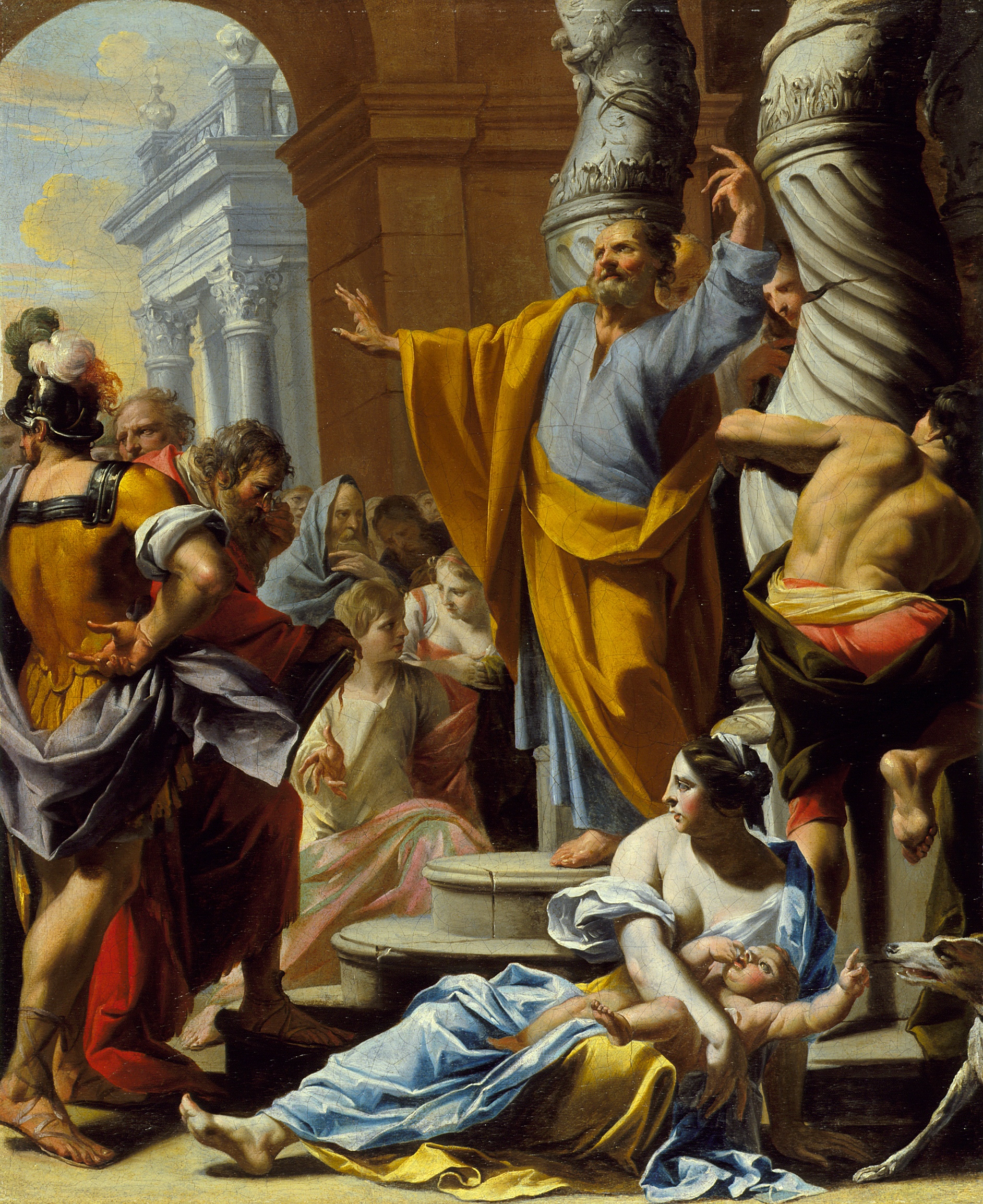
When the first Christians received the Holy Spirit on the day of Pentecost, they surely never imagined themselves experiencing the conflicts that we read about in the Acts of the Apostles.  The Holy Spirit led them where they may not previously have been willing to go, provoking conflict because of their unwillingness to deny Christ in any way.  In our own lives, we need to allow the Holy Spirit to animate our lives.  When we do, the Holy Spirit will make the virtue of humility easier to live, since both the conflicts and victories in our lives are His.

Easter 2-1

Saturday in the Octave of Easter

Saturday in the Octave of Easter
Acts 4:13-21  +  Mark 16:9-15
April 10, 2021

I will give thanks to you, for you have answered me.

Throughout the Blessed Virgin Mary’s life, humility marked her approach to her Lord.  Humility is not a virtue that one can ever spiritually outgrow.  Whatever graces God gives us, they are given for the unfolding of His plan, which often remains to us a mystery.  Even as we apply these graces in our lives, we must do so with humility, as day by day, another aspect of the mystery of our vocation is shown to us.

Even at the foot of the Cross, Mary prayed in humility.  It was with humility that she rejoiced at the sight of her Son risen from the dead.  Seeing Jesus on that first Easter Sunday, she would not have known exactly how He was preparing His disciples—through the power of the Holy Spirit—to form a Church.  Nor would she have known exactly how Jesus’ words to her from the Cross—“Woman, behold your son”—were about to flower with new meaning, when she became the Mother of the Church on the day of Pentecost.

If you do not already know it by heart, take the opportunity to learn the prayer Regina Caeli, the traditional Marian prayer of Easter:

V.  Queen of Heaven, rejoice, alleluia. / R. For He whom you did merit to bear, alleluia.

V.  Has risen, as he said, alleluia. / R. Pray for us to God, alleluia.

V.  Rejoice and be glad, O Virgin Mary, alleluia. / R. For the Lord has truly risen, alleluia.

Let us pray. O God, who gave joy to the world through the resurrection of Thy Son, our Lord Jesus Christ, grant we beseech Thee, that through the intercession of the Virgin Mary, His Mother, we may obtain the joys of everlasting life. Through the same Christ our Lord. Amen.

Easter 1-6

Friday in the Octave of Easter

Friday in the Octave of Easter
Acts 4:1-12  +  John 21:1-14
April 9, 2021

He revealed Himself in this way.

What does St. John the Evangelist mean when he reports to us that the disciples “dared” not ask Jesus “Who are you?”  After all, the Beloved Disciple had told Peter that this was the Lord.  Today’s Gospel passage suggests some unresolved ambiguity.  While the miracle of catching 153 fish convinced the disciples who He was, there was still some reason for them to ask His identity.  His miracle convinced them, but His appearance did not.

So the Risen Jesus, in His glorified Body, was the same person, yet somehow different.  He had the same two natures—human and divine—yet He was somehow different.  The Resurrection narratives demonstrate some of the ways in which Jesus was different after His rising from the dead:  most famously—as we will hear this coming Sunday—the Risen Lord had a physical body that could pass through solid matter.

The point here is that in His Risen Body, Jesus looks different to His disciples.  He looks different enough to cause some confusion in their minds:  at least enough confusion for them to be tempted to “dare” ask Him “Who are you?”  For ourselves, regarding both our meditation and our speaking to the Lord in prayer, we should ask:  do we expect the Lord to appear to us in some certain way?  How might God want to surprise us in making Himself known to us, and in showing us His love?

Easter 1-5

Divine Mercy Sunday [B]

Divine Mercy Sunday [B]
Acts 4:32-35  +  1 John 5:1-6  +  John 20:19-31

“As the Father has sent me, so I send you.”

+     +     +

references to the Catechism of the Catholic Church cited for this Sunday by the Vatican’s Homiletic Directory:

CCC 448, 641-646: appearances of the risen Christ
CCC 1084-1089: sanctifying presence of the risen Christ in the liturgy
CCC 2177-2178, 1342: the Sunday Eucharist
CCC 654-655, 1988: our new birth in the Resurrection of Christ
CCC 976-983, 1441-1442: “I believe in the forgiveness of sins”
CCC 949-953, 1329, 1342, 2624, 2790: communion in spiritual goods

+     +     +

As today’s Gospel Reading begins, three things have taken place.  Both Peter and John have seen the empty tomb, John has believed in the Resurrection, and Mary Magdalene, to whom Jesus had appeared, has told the apostles of His appearance.  Yet despite all this, “the disciples had locked the doors of the place where they were for fear of the Jews.”

But why were the disciples afraid of the Jews?  Why weren’t they out on the streets, preaching boldly the Good News of the Resurrection, shouting “Alleluia!”?

The story of St. Thomas’ unbelief in today’s Gospel Reading seems to condemn him.  But this passage in fact condemns all of the apostles:  either for not believing in, or not proclaiming their belief in the Risen Jesus.

The Season of Easter—which began last Sunday and lasts for seven weeks—lets us reflect on the Resurrection.  At the same time, we need to ask ourselves what our lives should look like because we believe in the Risen Jesus.

A simple description of the Church in her infancy is given in the First Reading from the Acts of the Apostles“The community of believers were of one heart and one mind”:  that is, they possessed the heart and mind of Christ.  “With power the apostles bore witness to the resurrection of the Lord Jesus, and great respect was paid to them all.”

Of course, today’s First Reading is set after the day of Pentecost:  that is, after the Holy Spirit had descended upon the Apostles, gifting them with the graces needed for their work.  The power and the presence of the Holy Spirit is the difference between the First Reading and the disciples at the start of the Gospel Reading.

A simple description of the life of the Christian is given in today’s Second Reading:  “The love of God consists in this:  that we keep his commandments. … It is the Spirit who testifies to this and the Spirit is truth.”  This Holy Spirit is the One who makes it possible to keep the Commandments.  All of the Commandments are commands to love.  God commands us to love our God and our neighbor.  But the events of today’s Gospel Reading give these two great commands focus by considering how God and man forgive.

The great English author G. K. Chesterton once wrote about the false forgiveness that man often offers:  “it seems to me that you only pardon the sins that you don’t really think sinful.  You only forgive criminals when they commit what you don’t regard as crimes, but rather as conventions.  So you tolerate a conventional duel, just as you tolerate a conventional divorce.  You forgive because there isn’t anything to be forgiven.”  By contrast, Chesterton in another work described Christian forgiveness:  “Charity means pardoning the unpardonable, or it is no virtue at all.”

The world has problems, and each of us who lives in the world has problems.  There is a lot in our lives to distract us, to tempt us to think that the sin and evil around us and within us is nothing of importance.  But the Holy Spirit whom we wait for during these fifty days of Easter leads us to face our own difficulties and the difficulties of the world squarely, looking them in the eye through the light of Christ.

When Christ appeared to the apostles, what did He say to convince them who He was?  Did He work a miracle?  No.  He showed them the wounds in His side, hands, and feet:  the battle scars from His fight with death.

Christ, the victor over death, shows us the evidence of His Divine Mercy.  He invites us to share in the strength of His Body and Blood, and invites us to share fully in the life of His Holy Spirit.  Yet these invitations serve a larger purpose.  God wills that each of us might courageously proclaim the Good News about the Risen Jesus.  But our proclamation must begin with our extending Jesus’ Divine Mercy to our debtors as willingly as we have accepted Divine Mercy for our own debts.

Thursday in the Octave of Easter

Thursday in the Octave of Easter
Acts 3:11-26  +  Luke 24:35-48
April 8, 2021

Then he opened their minds to understand the Scriptures.

It is only in “the breaking of the bread” that the disciples come to know Jesus, and it is only in this that they become more than disciples.  Only in the Eucharist do we share in the Sacrifice of Jesus on the Cross, and become members of Christ’s Body.  This is the goal of our lives as Christians:  not merely to learn about Jesus, but to enter into His life and saving mission.

On the day of the Resurrection, Jesus is preparing the apostles for the day of His Ascension.  After He leaves the earth, it will be up to them to act in His name.  First, they must preach penance for the remission of sins, and then suffer inevitably for standing up for what is true.

In all of this, the waves of impact from the news of the Resurrection continue to spread throughout the world that God created, bringing peace to His people on earth and glory to God in the highest.  Throughout history and throughout our own lives, it is our calling to continue to be faithful witness to the news of the Resurrection.  Yet only Christ’s Holy Spirit can sustain us in offering ourselves for such witness.  So for this calling we pray during the Easter season for the outpouring of the Holy Spirit in abundance.

Easter 1-4

Wednesday in the Octave of Easter

Wednesday in the Octave of Easter
Acts 3:1-10  +  Luke 24:13-35
April 7, 2021

But they urged him, “Stay with us, for it is nearly evening and the day is almost over.”

Easter Monday we heard the chief priests and the elders respond to the news of the Resurrection by covering their tracks with lies.  Yesterday, we heard Mary Magdalen respond to Our Risen Lord when He called her by her name.  She cried out, “Teacher!”  Yet we are called to recognize in Christ much more than simply a teacher.

Today we hear of more events which took place on the day of the Resurrection.  The word “disciple” means “one who learns”, and the two disciples of today’s Gospel passage are obviously devoted to learning.  Undoubtedly they asked themselves what all these amazing events could mean.

We are told that Jesus joins them in their journey, though the disciples, like Mary Magdalen, do not recognize who He is.  Jesus preaches to them the meaning of the Scriptures, which help them learn.  These Scriptures help them learn the meaning of what had happened over the previous few days.  But still, they do not recognize Jesus.

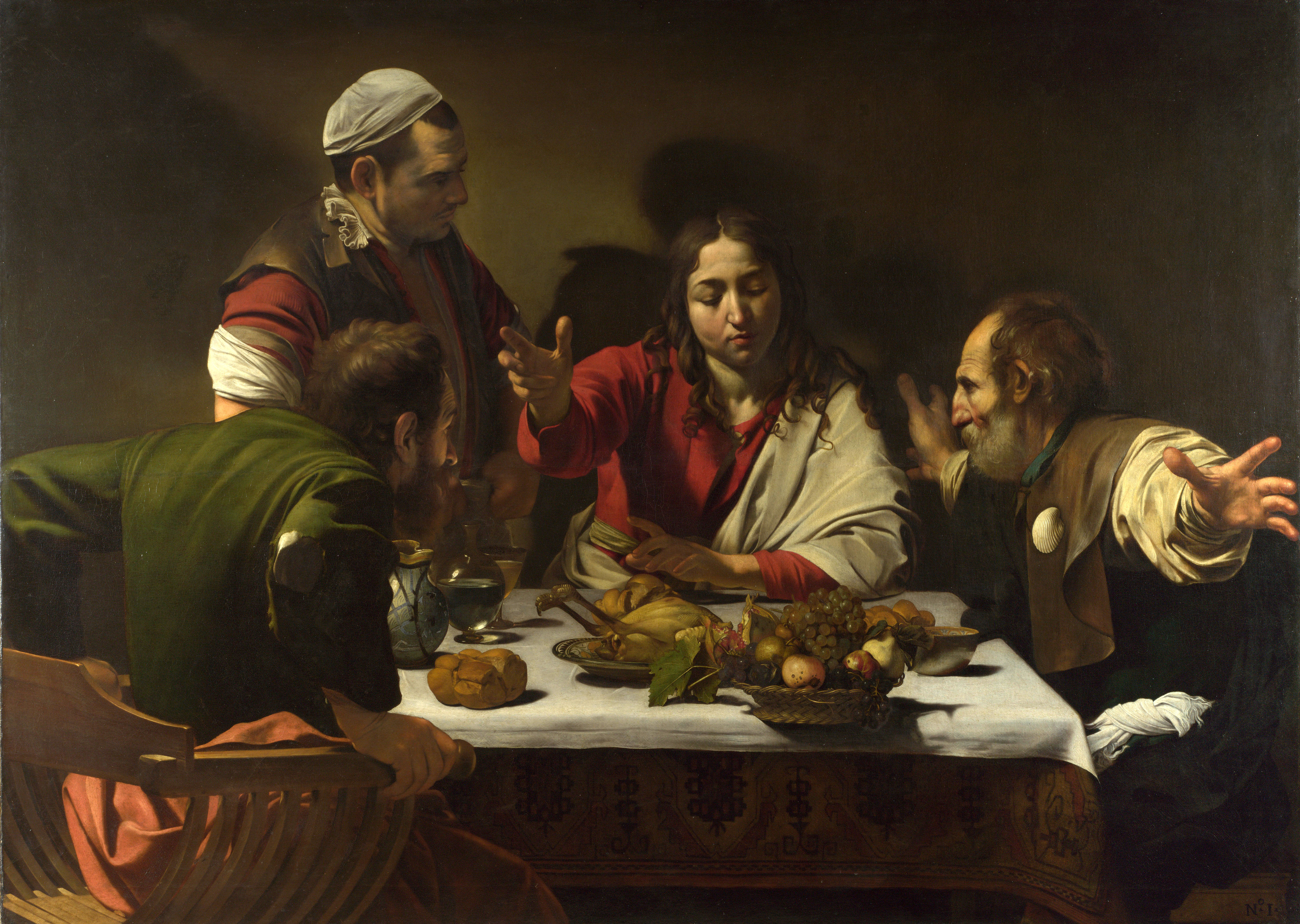
Only in “the breaking of the bread” do they come to know Jesus, and only in the Eucharist do we Christians become more than disciples.  Only by sharing in the Sacrifice of Christ’s Body and Blood can we begin to imitate Him in our lives as He wills.

Tuesday in the Octave of Easter

Tuesday in the Octave of Easter
Acts 2:36-41  +  John 20:11-18
April 6, 2021

Those who accepted his message were baptized, and about three thousand persons were added that day.

On the day of Pentecost, Peter boldly proclaims to the Jewish people:  “Let the whole house of Israel know for certain that God has made Him both Lord and Christ, this Jesus whom you crucified.”  The response of these Jews is pretty easy to guess.  Acts tells us that “when they heard this, they were cut to the heart, and they asked Peter and the other Apostles, ‘What are we to do…?’”  You can almost imagine what they, in their fear, expect Peter to reply.

But Peter delivers to them Good News:  “Repent and be baptized, every one of you, in the Name of Jesus Christ, for the forgiveness of your sins; and you will receive the Gift of the Holy Spirit.”

Acts then tells us that there were two groups in that crowd:  there were those who accepted this Good News—some 3,000 persons—and there were those who did not accept this Good News.

Here is the first lesson of the Church’s life and saving mission.  Unfortunately, it’s a difficult lesson to put into practice.  We need to choose to be in that first crowd, the crowd of 3,000.  We need to accept the Good News about the love that God wants to give us.  This is the love that Jesus, from the Cross and in the Holy Eucharist, is dying to give us.

Easter 1-2

Monday in the Octave of Easter

Monday in the Octave of Easter
Acts 2:14,22-33  +  Matthew 28:8-15
April 5, 2021

Mary Magdalene and the other Mary went away quickly from the tomb, fearful yet overjoyed ….

During most of the liturgical year, the First Reading at Holy Mass comes from the Old Testament.  But Easter is different.  During Easter, we hear first from Acts of the Apostles.  Why is this?  There are plenty of apostolic letters that could be proclaimed:  Romans, Galatians, Ephesians, 1 John, Jude, and so on.  These New Testament epistles preach about the Resurrection.  So why do we hear, each and every day of the Easter Season, from Acts of the Apostles?

The answer is that what the apostles were about throughout Acts is what God is calling us to throughout Easter.  In a phrase, this answer is:  forming the Church and living out her mission.

The Church was conceived, so to speak, from the water and blood that poured forth from the side of Jesus crucified.  But the Church was born some fifty days later, on the feast of Pentecost.  The story of Acts is the first history of the Church:  going forth, out into the world, to proclaim in word and action the saving mystery of Jesus, crucified and Risen.  This Church has lived on earth for some 2000 years, and each of us is called to share in her life and saving mission.

Easter 1-1

Easter Sunday of the Resurrection of the Lord

Easter Sunday of the Resurrection of the Lord
Acts 10:34,37-43  +  Colossians 3:1-4  +  John 20:1-9
April 4, 2021

So Peter and the other disciple went out and came to the tomb.

+     +     +

click HERE to read Monsignor Charles Pope’s Easter homily

click HERE to watch Bishop Michael Burbidge’s homily for Easter (6:47)

click HERE to watch Archbishop Alexander Sample’s homily for Easter (12:36)

click HERE to watch Archbishop Charles Chaput’s homily for Easter (17:05)

+     +     +

click HERE to read the 2019 homily of Pope Francis for Easter

click HERE to read the 2012 homily of Pope Benedict XVI for Easter

click HERE to read the 2000 homily of Pope St. John Paul II for Easter

+     +     +

references to the Catechism of the Catholic Church cited for this Sunday by the Vatican’s Homiletic Directory:

CCC 638-655, 989, 1001-1002: the Resurrection of Christ and our resurrection
CCC 647, 1167-1170, 1243, 1287: Easter, the Lord’s Day
CCC 1212: the Sacraments of Initiation
CCC 1214-1222, 1226-1228, 1234-1245, 1254: Baptism
CCC 1286-1289: Confirmation
CCC 1322-1323: Eucharist

+     +     +

Easter is not just the single day of Easter Sunday, but a season of seven weeks plus one more day.  The Church celebrates Easter for fifty days so as to be able to ponder thoroughly the mysteries of this holiest season of the Church’s year.  There are three mysteries of our Faith that the Church celebrates throughout the Easter Season.  They are the first three Glorious Mysteries of the Rosary.  We need to see how all three of these are part of a single plan.

The First Glorious Mystery is the proper focus of today:  the Resurrection of Jesus Christ from the dead.  This mystery is presented by today’s Gospel Reading, where the young apostle John serves as a model of how to ponder.

St. John, who served God as both apostle and evangelist, accomplished all he did because he was the Beloved Disciple.  As an apostle and an evangelist, he was like a zealous Martha.  But before he acted zealously, he was a faithful Mary.  The Beloved Disciple at the Last Supper took the stance that Mary did at the meal in her home, sitting and listening at the feet of the Word made Flesh.

In many churches, we see above the high altar the youngest of the apostles—St. John—at one side of the Cross, and our Blessed Mother on the other.  This is the scene of the Crucifixion that the Church celebrated just days ago.

But on the third day, John ran with Peter to the tomb.  Along with Saint Peter and the beloved disciple, Saint John, we also see the wrappings lying on the ground.  John saw and believed.  With no sign of Jesus and without a word from Jesus, John saw and believed simply because the tomb was empty.  It is ironic that on the greatest feast of the Christian year, Christ doesn’t even appear in the Gospel passage, nor speak a word.  We see only His empty tomb, and hear only silence.

Following His Resurrection on Easter Sunday, Jesus appears several times in His glorified body.  Yet He remained on this earth only for forty days proclaiming the Resurrection in this glorified body.  He remained only forty days because He had in store a different means of proclaiming the Resurrection, by means of a different body:  the Mystical Body of Christ.  What Jesus did in a glorified body for forty days, He would do until the end of time in His Mystical Body.

The Second Glorious Mystery is the Ascension.  The Ascension is the bittersweet transition between two means of Jesus revealing His love for fallen man.  The first means was the physical body that He received from the Blessed Virgin Mary—through the power of the Holy Spirit—at the Annunciation.  The second means was, is, and will be “unto the end of the age” the Church as the Mystical Body of Christ.  All of the Joyful, Luminous, and Sorrowful Mysteries of the Rosary, as well as the first two Glorious Mysteries, make possible the event of Pentecost:  the “birth” of the Church as the Mystical Body of Christ.  All of those earlier mysteries are preludes or prologues to the event of Pentecost.  Even the Resurrection that took place on Easter Sunday morning.

The Third Glorious Mystery is the “birth” of the Church at Pentecost.  This is what Jesus died for.  This is what Jesus rose for.  Jesus’ resurrection in a glorified body foreshadows what the Church becomes on the day of Pentecost.

Jesus bears new life when He rises from the dead.  Yet He wants His new life to ours.  The Church—the Mystical Body of Christ—is the means by which we share in the life of the Risen Jesus.  The Church makes it possible for Easter to be not a mere historical event, but an ever-present reality:  in fact, the source of strength and grace each day that we live on this earth.

St. John teaches us to pray during these fifty days of Easter for a great gift.  God has a gift ready for us, the Gift of the Holy Spirit.  That is why we hear every day of Easter from the Acts of the Apostles:  the book that describes the Church at work through the Power of the Holy Spirit.  The descent of the Holy Spirit at Pentecost is the culminating mystery of Easter.  We don’t simply celebrate it on the last day of Easter as an afterthought:  it is the mystery that Jesus leads us towards through His Resurrection.

Resurrection appearances multiple