The Transfiguration of the Lord [B]

The Transfiguration of the Lord [B]
Daniel 7:9-10,13-14  +  2 Peter 1:16-19  +  Mark 9:2-10

We ourselves heard this voice come from heaven while we were with him on the holy mountain.

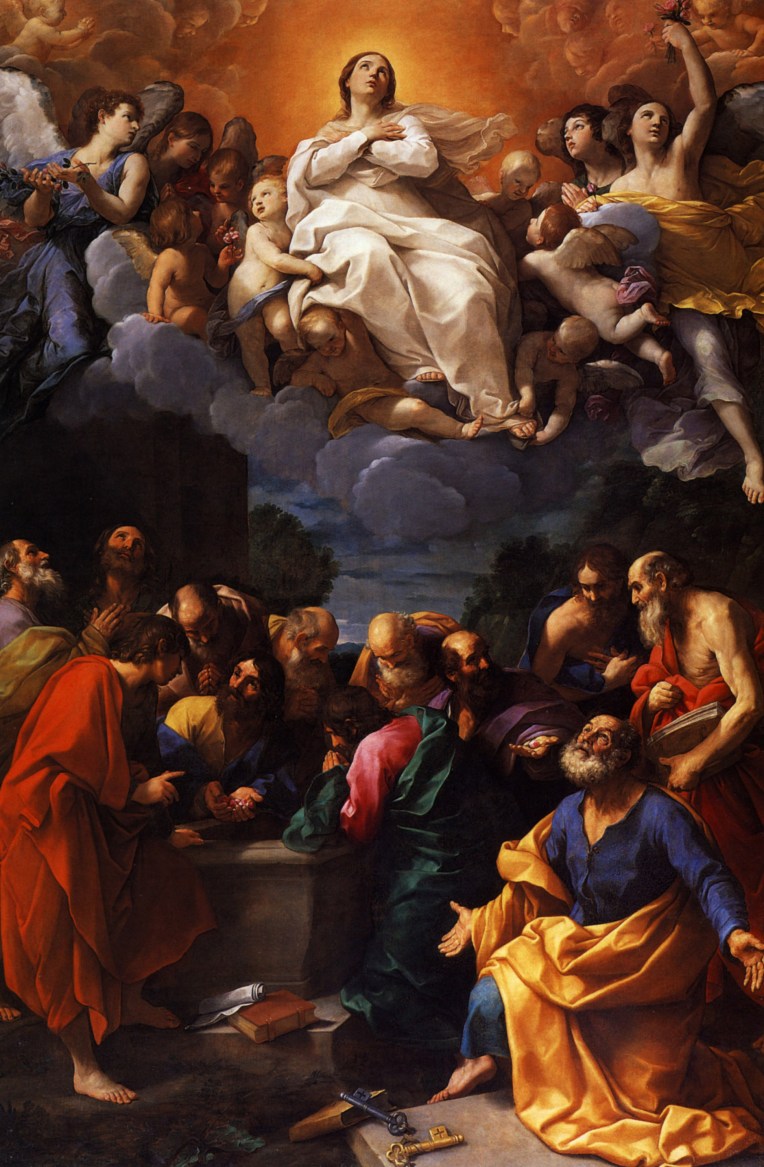
In today’s account of the Transfiguration, we have a miniature of the entire Gospel and a miniature of the way that God has always made His Divine Revelation known.  God, like any loving parent, wants us to share in His love.  But at the same time He wants us to enter into that love as freely as possible.  In other words, God wants us to come to Him of our own accord, because the more freely we come to Him, the more we grow in His love.

But as a loving parent, God knows we are often weak and need His help.  God gave us an intellect by which we could of our own power reason that God exists, that He loves us, and that He wants us to imitate that love.  God also gave us a free will by which to imitate Him.  Our human intellect and will are often very weak, however, and so God constantly gives us signs of His presence, in order to remind us of Who God is and how much He loves us.

God did not have to inspire the human authors of Scriptures, but He did so in order to give us a record of His love.  God did not have to choose twelve men to be his apostles, in order to share the Sacraments of His love, but He did so to strengthen us in this earthly life of ours, because we face so many setbacks, failures, and disappointments.  God the Son was transfigured before the eyes of these three apostles not simply so that they could say, “How good it is for us to be here.”

The Transfiguration occurred so that the apostles would hear the voice of God the Father:  “This is my beloved Son.  Listen to Him.”  They do listen to Him.  What is it that He chooses to state next?  Coming down the mountain, Jesus points the apostles’ attention ahead to the Cross, to His death.

As we share in the Eucharist—the offering of Christ’s self-sacrifice on the Cross—God our loving Father nourishes us with the life of His Son.  Here is a further transfiguration:  the death of Jesus on the Cross into the Resurrected Lord, so that the giving of our lives might mean the receiving of God’s life.

Transfiguration_Christ_Louvre_ML145

The Nineteenth Sunday in Ordinary Time [B]

The Nineteenth Sunday in Ordinary Time [B]
I Kings 19:4-8  +  Ephesians 4:30-5:2  +  John 6:41-51

“… the bread that I will give is my flesh for the life of the world.”

At the start of John 6, as we heard two Sundays ago, “the people … were going to come and carry [Jesus] off to make Him king” because of the miraculous signs that He worked.  By contrast, today’s Gospel Reading is where John 6 turns south.  This is where the crowds begin their murmuring against Jesus.  They begin raising objections to His claims.  This is the murmuring and objecting that will lead to most of the crowd abandoning Jesus by the chapter’s end, as we will hear two Sundays from now.

At the very beginning of today’s Gospel Reading, “The Jews murmured against Jesus because He said, ‘I am the bread that came down from Heaven’”.  Their reason for murmuring is not so much that Jesus is simply claiming to be some sort of “bread”.  They seem to accept that claim of Jesus as an innocent sort of metaphor:  someone who is bread offers nourishment, somewhat like a parent in our own day being called a “breadwinner”.  Jesus calling Himself bread seems just a metaphor, so that’s not what bothers the Jews.

Instead, when Jesus declares “I am the bread that came down from Heaven”, what really bothers the Jews is that Jesus is claiming to come down from Heaven.  They murmur:  How can this be when we know his father and mother?  He’s one of them, not someone sent down from Heaven.  But Jesus does not bother long responding to this concern.

Jesus moves forward by doubling down on His real claim, which has at this point passed right over the crowd’s heads.  More important than the fact that He’s come down from Heaven is the question of who He is.  Towards the end of today’s Gospel passage, Jesus gives us three answers to the question of who He is.

Jesus first declares, “I am the Bread of Life.”  Then He describes Himself as “the bread that comes down from Heaven so that one may eat it and not die.”  Third, Jesus calls Himself “the living bread”.  In all three answers, Jesus explains that He is not just nourishment.  He hasn’t just come down from Heaven in order to fill stomachs.  It’s not bread for the stomach, but bread for the soul.  Jesus is a bread that offers a life that’s stronger than death.

Then Jesus reveals the awesome Mystery of His identity further.  In the very last phrase of today’s Gospel passage, Jesus stakes the claim that makes or breaks His disciples.  He claims not just that He is bread, and not just that as bread He gives a life stronger than death.

Jesus declares:  “the bread that I will give is my Flesh for the life of the world.”  Jesus is not just “bread”.  He is not just “food for the hungry”.  Jesus is not just bread that offers life.  Jesus is not just bread that strengthens you to survive death.  Jesus is the divine Word made Flesh, and His Flesh is the bread that He “will give for the life of the world.”  This is the heart of John 6.

His Flesh is bread.  Jesus’ sermon on the Bread of Life makes clear just how radical the Holy Eucharist is.  The Sacrament of the Eucharist is not just a symbol or sign.  The Sacrament of the Eucharist is the Body and Blood, soul and divinity of Jesus Christ, the divine Word made Flesh.

Those who murmured when Jesus said that He had come down from Heaven are going to murmur even worse against this claim of Jesus:  that the bread that He will give is His Flesh.  Of course, you can read the rest of the story by taking your Bible and reading the whole of John 6.  This would be especially helpful this year, because next Sunday the passage from John 6 that we would usually hear will be displaced by the August 15th celebration of the Blessed Virgin Mary’s Assumption.

Jesus gives us His flesh in order to give us life in this fallen world.  This is the life that is divine, which is to say that it’s self-sacrificial.  Jesus offers us this life in the Holy Eucharist.  Jesus asks us to live in daily life with the depth of self-sacrifice that He offered on the Cross.  The strength to live such a life of self-sacrifice comes from this very Bread of Life.

Thursday of the Eighteenth Week in Ordinary Time [I]

Thursday of the Eighteenth Week in Ordinary Time [I]
Numbers 20:1-13  +  Matthew 16:13-23
August 5, 2021

“You are the Christ, the Son of the living God.”

Today’s Gospel passage is well-known for revealing Jesus’ intention of founding His Church on the rock of faith, personified both in the individual Simon Peter, and in the office of the papacy.  What sometimes is overlooked is what immediately follows.  These latter verses also reveal something important about the Church, about the office of the papacy, and about the men who hold that office.

When Jesus “began to show His disciples that He must” suffer and be killed, the newly appointed Peter begins to “rebuke” Jesus!  The word “rebuke” is not a soft one.  But Jesus immediately and forcefully corrects Peter, revealing to us that Peter’s office does not pertain to the personal concerns, insights or doubts of him who holds the office.  Nor is the officeholder of the papacy unable to err.

Peter’s error here counters the profession of faith that he had made, after which Jesus named him “Peter”.  Jesus at that point praised Peter’s confession of faith, and pointed out to him something key by stating:  “flesh and blood has not revealed this to you, but my heavenly Father”.  Contrast these words with what Jesus says following Peter’s scandalous rebuke:  “You are thinking not as God does, but as human beings do”.

This contrast between the divine and the human is heard in the juxtaposition of Peter’s confession of Jesus and Jesus’ rebuke of Peter.  Peter’s confession is of Jesus’ divinity.  But Peter is rebuked because he refuses to accept Jesus’ humanity as the means of Jesus’ mission.  Each of us needs to accept Jesus’ mission of offering His Body and Blood on the Cross.  Through this mission, Jesus will fully offer divine life to those of us who place our faith in Him.

St. John Vianney, Priest

St. John Vianney, Priest
Numbers 13:1-2,25—14:1,26-29,34-35  +  Matthew 15:21-28
August 4, 2021

“Please, Lord, for even the dogs eat the scraps that fall from the table of their masters.”

When the Israelites entered the Promised Land after the Exodus, they met up with the Canaanites, whom they considered to be wicked and godless, a race of people that they should exterminate.  This outlook persisted until the time of Jesus.  In today’s Gospel passage, Jesus explains that this outlook cannot be held by His followers.

The woman in the Gospel passage is a Canaanite.  She had enough faith in Jesus to ask Him to release her daughter from a demon.  But then Jesus says a shocking thing to the woman:  “It is not right to take the food of the sons and daughters and throw it to the dogs.”  These words do not represent Jesus’ own thoughts, but we see—because of the response that Jesus draws out of the woman, and because of Jesus’ action in reply—the lesson that Jesus has for His followers.

In the midst of our culture today, Jesus says to us, “Love is not exclusively for those who are dear to us.”  Jesus teaches that we must love those we may consider enemies, and pray for those who persecute us.

OT 18-3

Tuesday of the Eighteenth Week in Ordinary Time [I]

Tuesday of the Eighteenth Week in Ordinary Time [I]
Numbers 12:1-13  +  Matthew 14:22-36 [or Matthew 15:1-2,10-14]
August 3, 2021

“Those who were in the boat did Him homage, saying, ‘Truly, you are the Son of God.’”

Very unusually, on this weekday in Ordinary Time the Church provides two options for the day’s Gospel passage.  The following reflection is based upon the former option.

The Church bears a rich treasury of interpretation of Sacred Scripture.  By that I don’t simply mean that the Church has accumulated many different, though equally insightful, interpretations of Scripture from the writings of her many members (although that’s true).  The Church’s treasury of Scripture interpretation is based upon a four-fold view of the Holy Bible.

The first view of the Bible looks at the literal meaning of a Scripture passage.  In the case of today’s Gospel passage, for example, the literal meaning of the passage is an historical event involving Jesus interacting with His disciples, and miraculously walking on water.  One could write a long and spiritually fruitful essay solely about the literal meaning of this passage.

However, the other three views of Scripture consider different “spiritual senses” of a given passage.  That doesn’t mean, of course, that the literal meaning doesn’t deal with spiritual matters.  But the three spiritual senses of Scripture relate the literal meaning to a broader meaning that the passage doesn’t directly touch upon.

For example, at the end of today’s Gospel passage, those who were in the boat did Jesus homage, saying, “Truly, you are the Son of God.”  Above and beyond the literal meaning of this event, one can “see” the boatful of disciples confessing the divinity of Jesus as symbolizing the Church Militant (that is, the Church on earth).  Around this basic symbol are several complementary symbols:  for example, the water on which the boat rests, and the weather surrounding the boat, as the turbulent world in which the Church Militant lives; and the confession of faith as a symbol of the Sacred Liturgy of the Church which receives Jesus into the Church’s “boat”.

It is easier to ponder the literal sense of Scripture than the three spiritual senses.  But with the guidance of the Holy Spirit and the examples of the Church’s saints, the three spiritual senses of Sacred Scripture invite us into rich theological waters.

Monday of the Eighteenth Week in Ordinary Time [Years B & C]

Monday of the Eighteenth Week in Ordinary Time [Years B & C]
Matthew 14:13-21

… His heart was moved with pity for them ….

Being compassionate, Jesus was certainly concerned with the physical well-being of the people who had come to hear him preach.  Just how deep Christ’s compassion was is made obvious when we consider again something the first verse of this passage tells us.

Jesus is told about the hunger of the crowds right after He had heard of the death of John the Baptizer, and had withdrawn by boat to a deserted place by Himself.  If we were to take time to imagine this, we could very clearly see just how human Christ was, responding in grief and perhaps anger at the death of His own cousin.  He withdrew from others to be alone.  And yet, even at this point in His life, the needs of others pressed upon Him.  His response was that of God himself:  he turned away from Himself, and towards those in need.

Jesus was certainly concerned with the physical well-being of the people who had come to hear Him preach.  But He knew the people in the crowds better than they knew themselves.  Christ had a much deeper concern for their spiritual well-being.  He had reminded them that their ancestors, whom God had fed in the desert by sending bread in the form of manna, had died.  His divine Father, Jesus told them, had sent Him to be their spiritual bread:  a bread which would allow them to live forever.  If they would eat this bread by accepting him and following his commandments, they could enter into God’s eternal kingdom of love.

St. Ignatius of Loyola, Priest

St. Ignatius of Loyola, Priest
Leviticus 25:1,8-17  +  Matthew 14:1-12
July 31, 2021

His head was brought in on a platter and given to the girl, who took it to her mother.

On August 29, the Church celebrates the Passion of St. John the Baptist, and on that memorial we hear his passion narrative according to Saint Mark.  Today’s Gospel Reading offers us this narrative according to St. Matthew the Evangelist.

Jesus does not appear in today’s Gospel passage.  His name is mentioned twice.  Focus on the latter instance, where His name is in fact the last word of the passage.  This is fitting.  In terms of the life and Passion of St. John the Baptist, Jesus is the last word.

John is often considered the last of the Old Testament prophets.  Like many prophets, he was killed because of his witness to God’s Word.  The uniqueness of John’s life and Passion lay in how they intertwined with those of the Word made Flesh.

You and I, as Christian disciples, have been baptized into the role of prophet.  It is part of our baptismal commitment to profess the truth of the Gospel no matter what the cost to us.  At times we profess this Truth through our actions; at other times, through our words.  How often do we count the cost first before deciding whether to speak the Truth?  It’s certainly necessary to exercise the virtue of prudence is proclaiming the Truth.  But we need to ask St. John’s the Baptist’s intercession if we’re ever tempted to refrain from the Truth because of fear.

OT 17-6

Friday of the Seventeenth Week in Ordinary Time

Friday of the Seventeenth Week in Ordinary Time
Matthew 13:54-58

“A prophet is not without honor except in his native place ….”

The last sentence of today’s Gospel passage presents something of a conundrum.  No matter how we interpret the fact that Jesus “did not work many mighty deeds there because of their lack of faith”, we are challenged.

Some might interpret these words to mean that Jesus’ power to work miracles was constrained by the lack of faith of those in His hometown.  More sensible, however, is to see Jesus’ lack of miracles as a prudent choice on His part.  It doesn’t require faith on the part of people for God to work miracles.  It requires faith on the part of people for God’s miracles to bring about their primary goal.  God’s goal when He completely cures someone who had been diagnosed with terminal cancer is not to give that person immortal life on earth.  His goal is to bring the one cured and those around him to a greater practice of love for God and neighbor, so as to give them immortal life in Heaven.

We are challenged, then, to admit where we lack faith in our own lives.  We are challenged to allow the miracles that God works to bear fruit in our lives.  We are challenged not to live for ourselves, but for others, beginning with the Other who calls us to share in His life of love.

OT 17-5

The Eighteenth Sunday in Ordinary Time [B]

The Eighteenth Sunday in Ordinary Time [B]
Exodus 16:2-4,12-15  +  Ephesians 4:17,20-24  +  John 6:24-35

“I am the Bread of Life; whoever comes to me will never hunger, and whoever believes in me will never thirst.”

Any Scripture passage that you pray over will echo many others in Sacred Scripture.  Take Jesus’ statement in today’s Gospel passage:  “I am the Bread of Life”.  Open your mind to the whole of Sacred Scripture.

Every passage in Scripture where “bread” is spoken about, or “life” is spoken about, relates to these words of Jesus.  There are hundreds of such examples in the Bible.  But start simply within the same book and chapter of the Bible from which this sentence comes, and then move outwards, like the ripples in a pond after a stone falls down into its center.

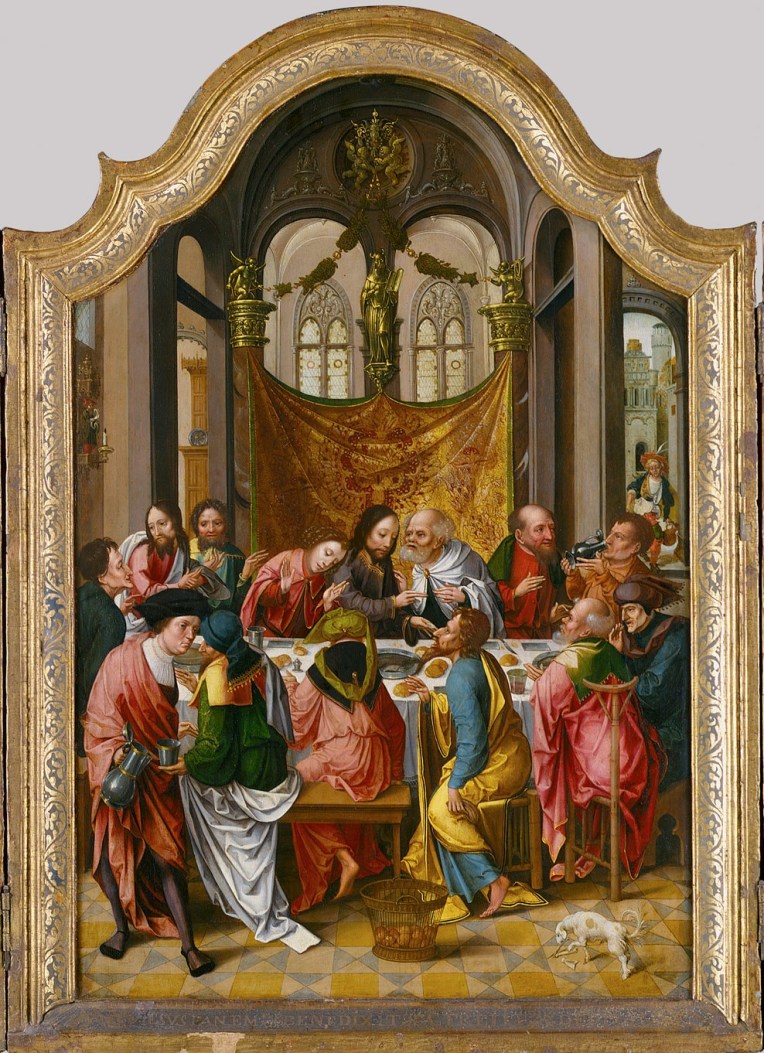
Saint John the Evangelist refers to “bread” not only in John 6.  Like the other three evangelists, he precedes his account of Jesus’ Death with an account of the Last Supper.  It’s not a coincidence that at the beginning of John 6—which we heard last Sunday—the evangelist notes that “The Jewish feast of Passover was near” [John 6:4].  Jesus chose this sacred time of the year to teach His disciples that He is “the Bread of Life”.  In a later year of Jesus’ life, He chose this sacred time again in order to institute the Sacrament of the Eucharist.  St. John wants those listening to his Gospel account to reflect on how everything Jesus says in Chapter Six strikes a chord with Jesus’ teaching at the Last Supper.

What Jesus prays to the Father in John 17 flows from what Jesus had taught in John 6.  Praying to the Father at the Last Supper about you and all His other disciples, Jesus says, “I have given them the glory you gave me, so that they may be one, as we are one, I in them and you in me, that they may be brought to perfection as one, that the world may know that you sent me, and that you loved them even as you loved me” [John 17:22-23].  This is the end goal.

But then, remember the ripples in the pond.  Move outwards.  Consider the other three Gospel accounts, the other books in the New Testament, and then the books of the Old Testament.  Many Old Testament events relate to Jesus proclaiming, “I am the Bread of Life.”  The most powerful come from the Book of Exodus, and relate to Israel’s Passover from slavery in Egypt to freedom in the promised land.

Today’s First Reading is from Chapter 16 of Exodus.  The Israelites are only one month past their escape from slavery in Egypt.  But to them, there seems to be no end to their wandering.  They begin to tell themselves that they were better off as slaves in Egypt, complaining to Moses and Aaron:  “Would that we had died… in the land of Egypt, as we… ate our fill of bread!”

However, in response to their ingratitude, the Lord not only does not punish them.  The Lord mercifully says, “I will now rain down bread from heaven for you.  Each day the people are to go out and gather their daily portion”:  that is, their “daily bread”.  What the Lord begins that day to give them is a bread to satisfy physical hunger.  But He is clearly working something deeper at the same time.

This “daily bread” is meant to give the Israelites hope.  Yet though the Lord gives this bread to the Israelites daily for almost forty years, He does not do so perpetually.  This “daily bread” continues only until they arrive at the Promised Land.  Then it ceases, because the Lord has something greater yet in store for them.

Through this we understand better Jesus’ words in today’s Gospel passage.  Jesus says to you today, “Do not work for food that perishes but for food that endures for eternal life, which the Son of Man will give you.”  The Son of Man gave you this food—“the Bread of Life”; that is, Himself—at the Last Supper.  He gave you “the Bread of Life” on the day of your First Holy Communion, and He offers Himself up for you at each celebration of Holy Mass, to strengthen you for the long earthly pilgrimage to the end goal of Heaven.