Thursday of the Fourth Week of Easter Acts 13:13-25 + John 13:16-20
“… whoever receives me receives the one who sent me.”
Why are there days during Eastertide when the Gospel Reading narrates events occurring before the Resurrection of Jesus? One reason is practical. Within the four Gospel accounts, the narratives taking place following the Resurrection are relatively few. Also, they are somewhat repetitive from one Gospel account to another.
There’s also a theological reason for the Church proclaiming “pre-Resurrection” narratives during the Season of Easter. This reason is clear in the narrative of the disciples on the way to Emmaus. On that way, Christ runs through all the Scriptures that refer to Him and His suffering, death and Resurrection. The meaning of the Old Testament, and of Jesus’ life before His Resurrection, are seen in a new light once Christ has risen from the dead.
So it is with today’s Gospel passage. It takes place before the Last Supper, immediately after Jesus’ washing of the apostles’ feet. In the light of Jesus’ crucifixion and death, this simple act of foot washing takes on greater meaning. So do Jesus’ words here: “no slave is greater than his master”. What do we learn about our own place as Jesus’ disciples—servants of His Father—if the Master took up for us, and died upon, the cross that we deserved?
Wednesday of the Fourth Week of Easter Acts 12:24—13:5+ John 12:44-50
“I came into the world as light ….”
When we recite the Creed on Sundays and solemnities, we profess that God the Son is “eternally begotten of the Father.” This statement is a profession of the divinity of Jesus Christ, which relates to Jesus’ assertion in yesterday’s Gospel passage that “The Father and I are one.”
Meditate on this truth that the Father and the Son are one in light of another phrase from the Creed: that is, that the Son is “Light from Light” . How is God light? This is a metaphor, of course, but a very pregnant one. Jesus proclaims in today’s Gospel passage, “I came into the world as light….” He is talking, of course, about His mission in this world having the same effect as light.
Jesus’ earthly mission is continued through time by His Mystical Body, the Church. Within the Church, your vocation bears—in some way—a share in the meaning of this metaphor: “that everyone who believes in me might not remain in darkness.” We might reflect on today’s Gospel in conjunction with Jesus’ words during the Sermon on the Mount: “You are the light of the world.” Our mission as the light of the world leads others, and ourselves, into the light of the Beatific Vision.
Tuesday of the Fourth Week of Easter Acts 11:19-26 + John 10:22-30
“The Father and I are one.”
Today’s Gospel passage ends with an odd turn “off course”. As a whole, the passage seems to be about Jesus dispelling the Jews’ suspense by identifying Himself as the Good Shepherd. He then describes His relationship with His sheep, and the fact that by following His voice, His sheep have eternal life. So far, we’re in familiar territory, with Jesus’ metaphors echoing imagery from the Old Testament.
But then an important shift occurs. Jesus speaks about the relationships between Himself, His Father, and His sheep. The last two sentences of today’s Gospel passage present a challenge.
From speaking about Himself and His Sheep, Jesus moves to speak about Himself and His Father. “The Father and I are one.” This is not distraction on Jesus’ part. This assertion relates to what He has just said about His sheep, and about Himself as the Good Shepherd.
How is unity one of the most important themes of the Easter Season? How is the mark of unity—one of the four marks of Christ’s Bride, the Church—a call from Jesus to the love that the Father and the Son have for each other? How is the Mystical Body of Christ the means by which our human love for our neighbor raises us into the love of the Triune God?
Monday of the Fourth Week of Easter Acts 11:1-18 + John 10:1-10
“I came so that they might have life and have it more abundantly.”
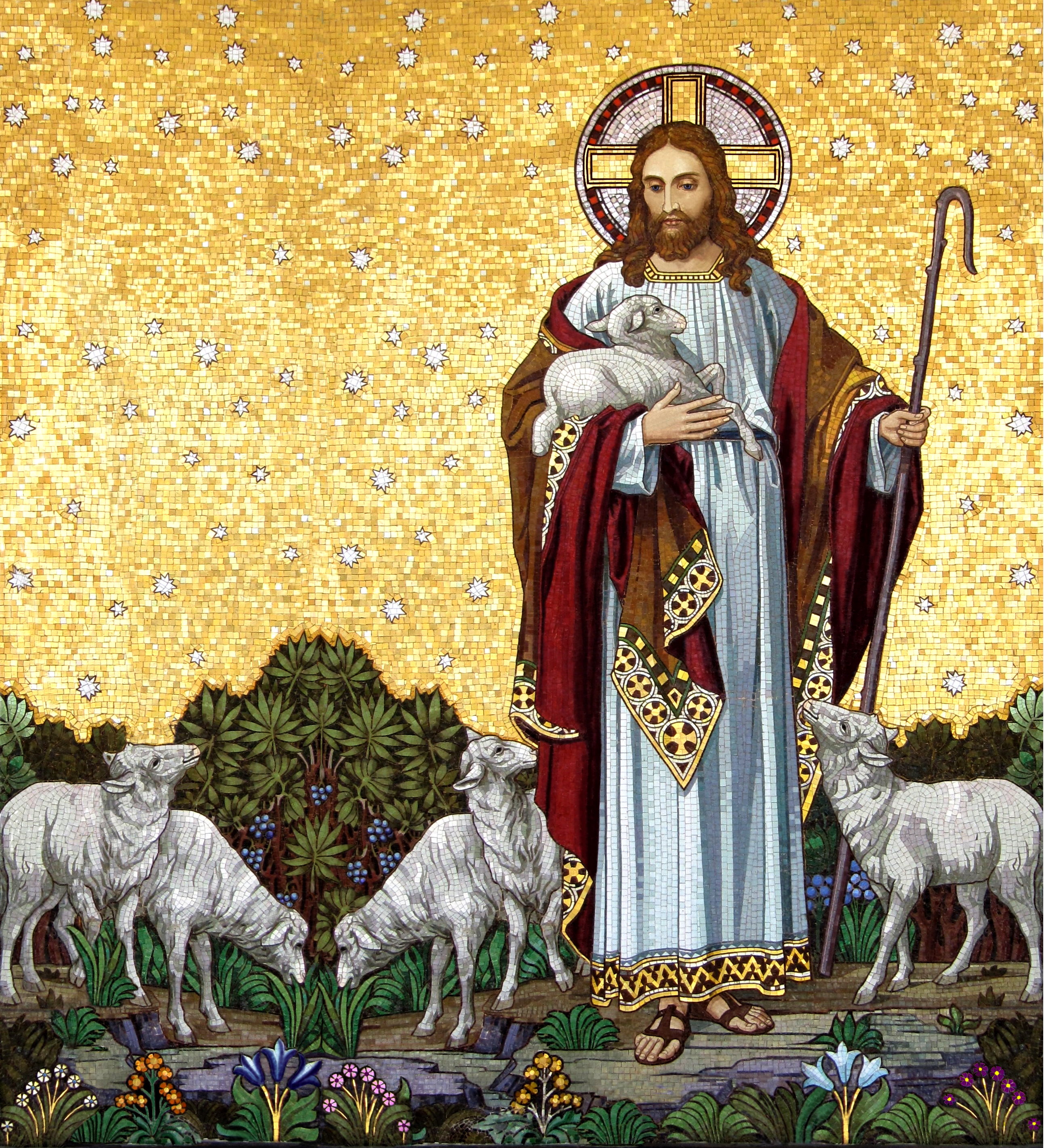
Often when we picture the Good Shepherd, we imagine him carrying a single stray sheep on His shoulders. That’s consoling when we’re preparing for Confession, or praying at night during our examination of conscience. But when Jesus the Good Shepherd takes us upon His shoulders, where does He carry us back to? When Jesus returns us “home” through the gate that He Himself is, what exactly is this “home”?
In fact, the Good Shepherd carries us back into the midst of the flock. Jesus returns the stray to its flock so that all one hundred can graze and dwell together. Here we have an image of the Church. Being a Christian is never just about “me and Jesus”. As soon as we try to separate love of God from love of neighbor, we will love neither God nor neighbor as He wants, or as He does. Within the flock of the Church is where God teaches us to mingle love of Him with love of neighbor.
Here we start to see the importance of the gate. The gate is an entrance into the life of God’s flock, not just into divine life. The Church as God’s flock is a chief theme of the Easter Season, and our preparation for Pentecost. That’s why our First Reading throughout Easter is from the Acts of the Apostles: the book of Acts is all about the life of the early Church. That is to say, Acts teaches us how the first Christians lived a common life as God’s flock, with the Apostles as their earthly shepherds. God’s flock on earth is His Church, whose life we experience both within our parish family and at home within the domestic church.
Saturday of the Third Week of Easter Acts 9:31-42 + John 6:60-69
“Do you also want to leave?”
The difference between the divine food of the Bread of Life and any ordinary human food is that human food strengthens the human body only according to the nature of the food: which is to say, according to whatever vitamins and minerals and so on are within it. If you eat an apple, it doesn’t matter if you’re a sinner or a saint: your body will be nourished in just the same way. Likewise, if you eat a steak, it doesn’t matter if you’re a scoundrel or a nobleman: your body will be nourished in just the same way. When you then leave the dinner table, regardless of your moral and spiritual character, you can use the physical strength from that ordinary human food to commit good deeds or bad deeds: virtuous actions or vicious actions, as you will.
But divine food is different. Divine food cannot strengthen you to accomplish whatever you wish. It can only strengthen you to accomplish what God wills, as God designs. The divine food of the Most Holy Eucharist strengthens Christians for their vocations, so that the grace of the other sacraments might flowers as those sacraments are designed by God. Baptismal grace strengthens you to conform your life according to the pattern of Jesus’ Death and Resurrection. The Sacrament of Holy Matrimony conforms spouse’s lives that they might, according to God’s particular will, beget and rear children in the Faith, in additional to themselves—husband and wife—grow in unity as persons. Likewise, the Sacrament of Holy Orders conforms a man’s life to preach, to offer sacrifice, and to offer the charity of God through the other sacraments.
The divine food of the Most Holy Eucharist, then, only gives you the strength to accomplish what God wants to accomplish through you. Divine food is for divine purposes. In a similar way, prayer teaches us what God wants us to do with our lives, not how to get what we’re wanting from God.
Too often in our modern day, we Christians approach God from the perspective of a consumer culture, where God offers us bargains and deals. We can be tempted to consider His grace to be a cash-back program for participating in the sacraments. By contrast, John 6 is about Jesus sub-ordinating His whole Self—Flesh and Blood, soul and divinity—to His Spouse, the Church. That Church includes you as one of her members. These passages from the Word of God in John 6 become Flesh in the Holy Eucharist. The strength of that Word made Flesh can helps each of us to nurture the spousal, nuptial bond with Christ. This bond is unbreakable because the one Who has called us to that union with Him is Himself divine. Yet we have to share wholeheartedly in it according to our own will. That’s why each of us has to sacrifice her own will to the Will of God.
Friday of the Third Week of Easter Acts 9:1-20 + John 6:52-59
“For my Flesh is true food, and my Blood is true drink.”
Jesus, like any good teacher, responds to the ignorance of those to whom he’s speaking. The Jews quarreled among themselves, saying, “How can he give us his flesh to eat?” Jesus replies not by saying that “eating his flesh” is just a figure of speech.
Instead, Jesus replies by saying, “if you do not eat the Flesh of the Son of Man and drink His Blood, you have no life in you. … For my Flesh is true food and my Blood is true drink.”
Jesus, at this point in the Gospel, does not offer this real bread and drink just yet. He does not speak in the present tense, saying, “The bread I am giving you is my flesh.” Instead, He speaks of the future: “The bread I will give is my flesh, for the life of the world.”
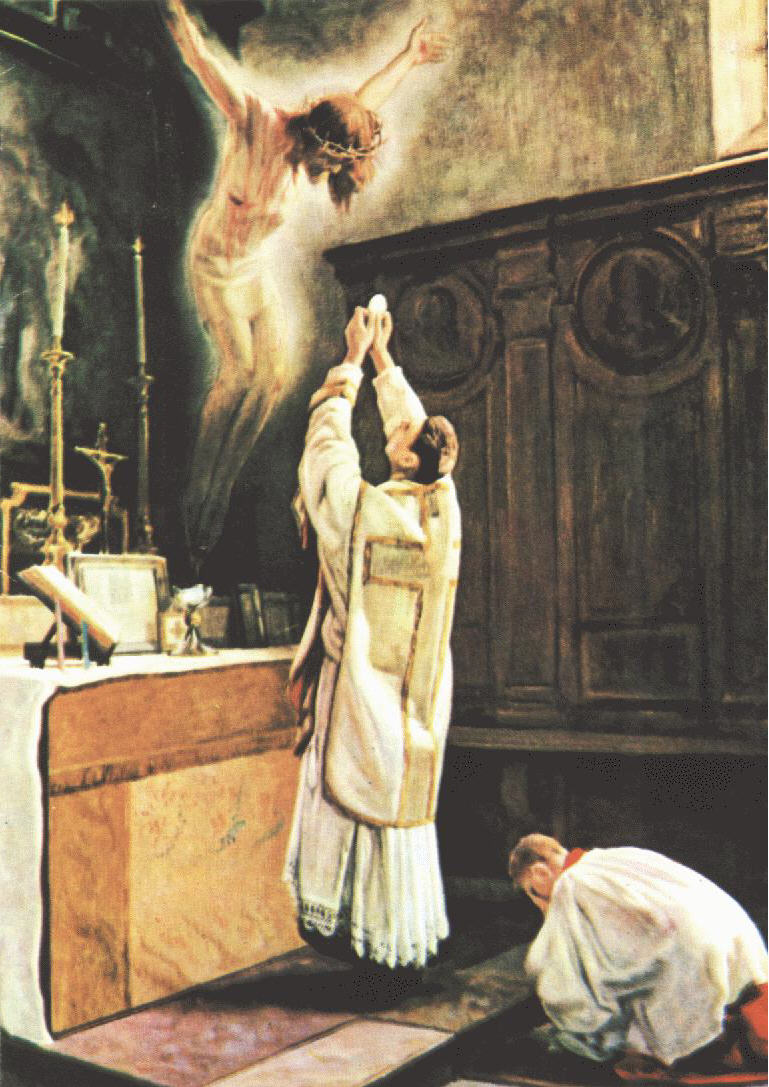
Jesus gave His Flesh and Blood for us on the Cross on Good Friday. But He established the Sacrifice of the Mass on the night before He died. We know the truth that we must be like Christ to truly live. But we cannot imitate Christ through sheer will-power. We must be nourished by God Himself. Only when He dwells within you can you live your life as He led His: or more accurately, can He live His life in you.
At the Last Supper, with His apostles, He prepared a banquet for those who would follow Him to the Cross. We cannot separate the Eucharist and the Cross. The Eucharist is not for us and our plans. The Eucharist is to strengthen us for accomplishing God’s holy and providential Will.
The Fourth Sunday of Easter [C] Acts 13:14,43-52 + Revelation 7:9,14-17 + John 10:27-30
“My sheep hear my voice; I know them, and they follow me.”
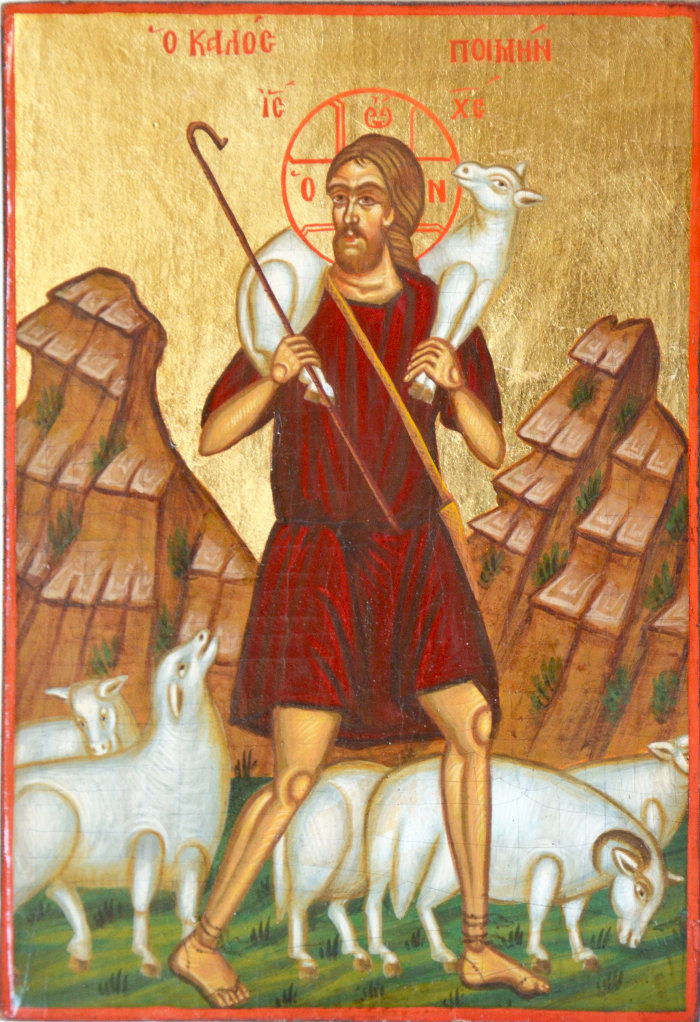
Jesus is our Good Shepherd. He left the paradise of Heaven to seek out and save us who are lost sheep, who have mired ourselves in our sins. The entire Season of Easter is about celebrating Christ’s victory over sin and death. But on this Fourth Sunday of Easter, we reflect on the meaning of this truth for daily life.
The Fourth Sunday of Easter is traditionally called “Good Shepherd Sunday”. This name stems from today’s Gospel passage, taken from the tenth chapter of John. We Christians, although justified through the Sacrament of Baptism, continue throughout our lives to stray from God. We need the Good Shepherd each day.
For the sake of our need, the Good Shepherd reveals Himself not only through the Gospel Reading. He also proclaims who He is in the Responsorial: “Know that the Lord is God; / He made us, His we are; / His people, the flock He tends.”
Ponder the words of this psalm. After all, we don’t usually think of a shepherd as having “made” “the flock He tends.” A shepherd might be involved in bringing together the ram and ewe that actually “make” sheep, but how could you say that a shepherd “makes” his flock? But that’s what the Bible says in today’s Responsorial Psalm.
The unusual fact that this Shepherd “made us” reveals our destiny, which is a loftier destiny than most sheep. For your average sheep, its destiny is to provide wool, mutton, and milk. The sheep is a means towards protection from the elements and nourishment.
But it’s foolish to think of us as sheep along these lines, because God needs neither protection nor nourishment. So that begs the question: why are the images of the Shepherd and His flock fitting to describe God and us? What are we for? For what end did this Shepherd make us? In the venerable King James translation of Psalm 23, we hear:
“He maketh me to lie down in green pastures: he leadeth me beside the still waters. He restoreth my soul: he leadeth me in the paths of righteousness for his name’s sake.”
Here is why this Good Shepherd made us. “For His Name’s sake” He made us: for His sake, not for our own sake. He made us for His life in Heaven, not for earth. Unfortunately, too often, you and I not only live in this world. We live for this world, and for ourselves as well. The imagery of the 23rd Psalm evokes the reality of God’s life in Heaven: “green pastures”, “still waters”, a table prepared by the Lord, and a cup that “runneth over”.
There’s a stark contrast here. On the one hand are the natural differences between God and us fallen sinners. On the other hand are the tender intimacy that the Shepherd has for, and wants for, His flock. This is a closeness that we don’t deserve, but which the Shepherd desires for us. The Good Shepherd will go to great extremes for His flock. He will give up His life for His sheep. In the same chapter that today’s Gospel passage comes from, Jesus says, “I am the good shepherd… just as the Father knows me and I know the Father; and I will lay down my life for the sheep” [John 10:14-15]. But Jesus will do even more.
In today’s Second Reading from the Book of Revelation, we hear St. John the Evangelist describe a vision that he had. He points out that “‘the Lamb who is in the center of the throne will shepherd them and lead them to springs of life-giving water’”.In fact, three times in today’s Second Reading—and forty times in the entire Book of Revelation—the word “lamb” is used by St. John. But in this sentence from today’s Second Reading, he uses this word in an unusual way. This “lamb” is also a “shepherd”: “‘the Lamb who is in the center of the throne will shepherd them and lead them to springs of life-giving water’”.
This “lamb”, of course, is the Risen Jesus. This lamb is our Good Shepherd, the God who chose not only to become man, but also to offer His Body and Blood along with His soul and divinity on the Cross for you. This crucified and risen God-man is a sheep like you, but also your divine shepherd.
Thursday of the Third Week of Easter Acts 8:26-40 + John 6:44-51
“… the bread that I will give is my flesh for the life of the world.”
We continue to hear today from John 6, one of the most important chapters in the entire Bible. In this chapter, Jesus teaches us about the Sacrament of the Eucharist, a gift that He will give to His disciples at the Last Supper.
In today’s passage from John 6, Jesus begins by presenting three connected points.
Jesus first declares, “I am the Bread of Life.” Then He describes Himself as “the bread that comes down from Heaven so that one may eat it and not die.” Third, Jesus calls Himself “the living bread”. In all three of these statements, Jesus explains that He is not just nourishment. Jesus is a bread that offers a life stronger than death.
“Life” is what Jesus is as God, in His divine nature. “Bread” is what Jesus is for us, in His human nature. So it’s through Jesus’ human nature that He reveals His love for us, and allows us to share in His love.
This Bread, in other words, is for you, but not about you. Through the Bread of Life you grow in the likeness of the divine person of Jesus Christ. Through the Bread of Life you participate in divine life.
Then Jesus reveals this awesome Mystery even further by making a fourth point. In the very last phrase of today’s Gospel passage, Jesus stakes the claim that makes or breaks His disciples.
Jesus declares: “the bread that I will give is my Flesh for the life of the world.” Jesus is not just “bread”. He is not just “food for the hungry”. Jesus is not just bread that offers life. He is not just bread that strengthens you to survive death. Jesus is the divine Word made Flesh, and His Flesh is the bread that He “will give for the life of the world.”
Wednesday of the Third Week of Easter Acts 8:1-8 + John 6:35-40
“… whoever comes to Me will never hunger, and whoever believes in Me will never thirst.”
One benefit of attending weekday Mass is how the experience of Sunday Mass is more enriching. During Easter this is even more true. The Scripture readings of weekday Masses especially tend to dovetail with those of Sunday Masses.
Starting last Friday and continuing through this Saturday, the Gospel passage at weekday Mass is from John Chapter Six. This chapter culminates in Jesus’ teaching about His Real Presence in the Eucharist. In this coming Sunday’s Gospel passage, Jesus describes Himself as the Good Shepherd. Through these Scripture passages, we can deepen our faith in Christ by understanding more deeply who He is for us.
In today’s Gospel passage, Jesus first states, “I am the bread of life”, emphasizing His Eucharistic doctrine. But about two-thirds of the way through the passage, He focuses upon the sort of action a shepherd carries out. He states: “this is the will of the one who sent me, that I should not lose anything of what he gave me”.
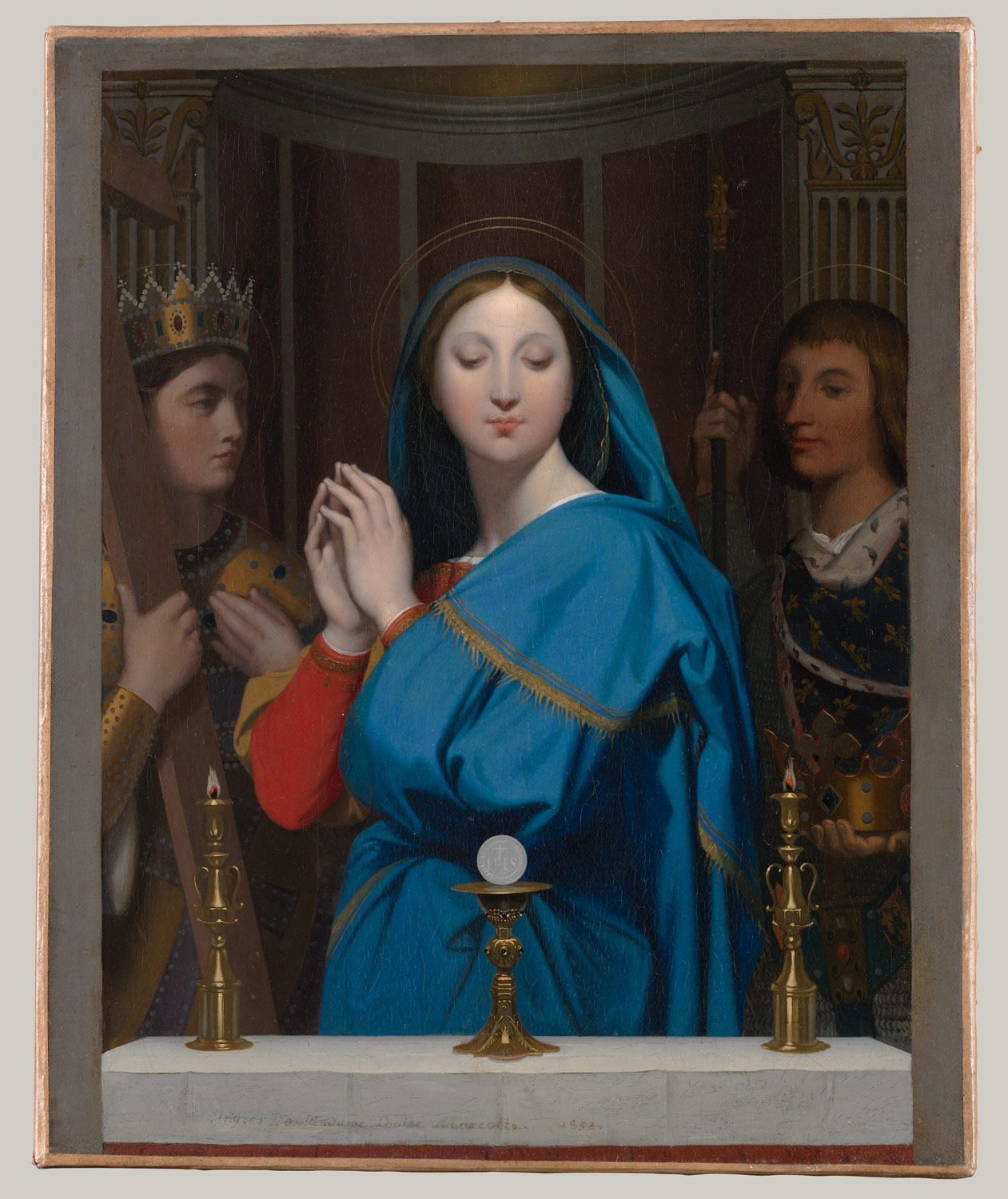
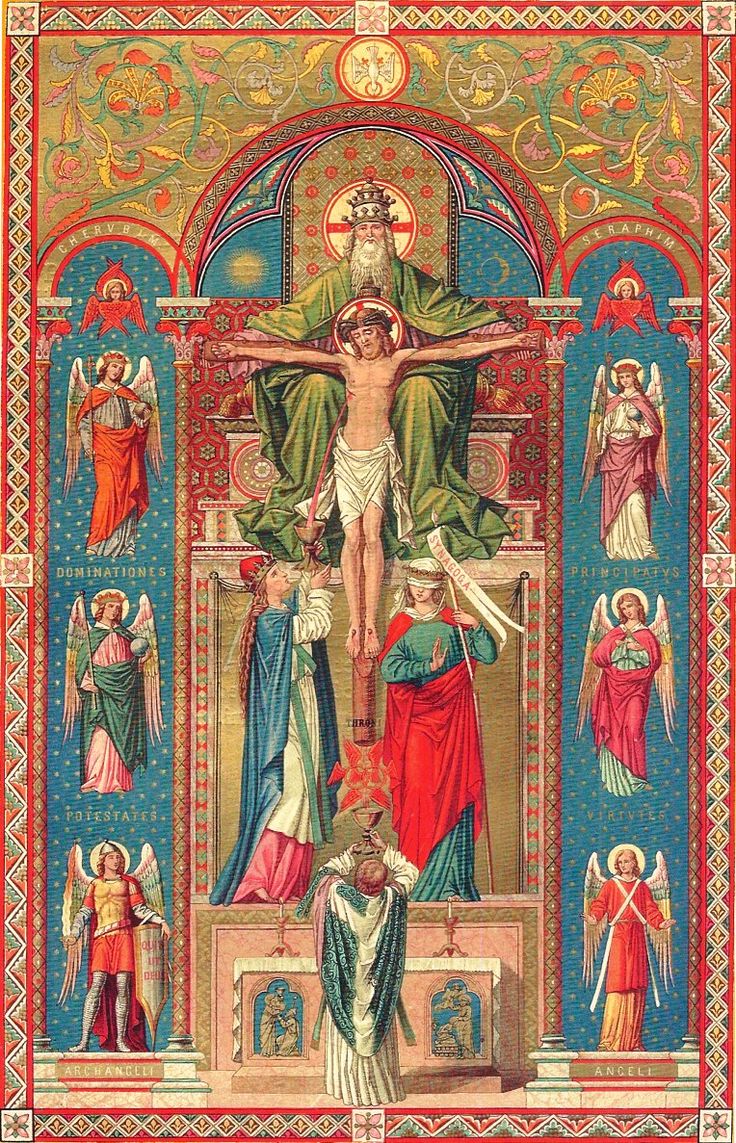
As we read, and re-read John Chapter Six, we become aware of how Our Lord is weaving together several different truths about Himself. He does this in order to deepen our love for Him, and faith in Him. In these two truths—Jesus as the Bread of Life, and Jesus as the Shepherd who sacrifices Himself for us—we see why Holy Mother Church calls us to see Jesus as “our All”. The Church, in one of the prefaces at Mass for Easter, likewise chants the following to God the Father: “By the oblation of His Body, / [Jesus] brought the sacrifices of old to fulfillment / in the reality of the Cross / and, by commending Himself to You for our salvation, / showed Himself the Priest, the Altar, and the Lamb of sacrifice.”