“In the world you will have trouble, but take courage, I have conquered the world.”
This coming Sunday’s celebration of Pentecost is the backdrop for all our weekday readings this week. Wherever we Christians are, we are united in the Mystical Body of Christ, and together we are praying this week for a greater openness to the Gift who is God the Holy Spirit.
However, we receive God the Holy Spirit not for our own plans and purposes. He comes to us in order to ‘equip’ us for the vocations that God the Father gives us. The providential plan of the Father, and the grace of the Spirit, cannot be separated: both meet in the life of Christ’s Mystical Body, within which we live.
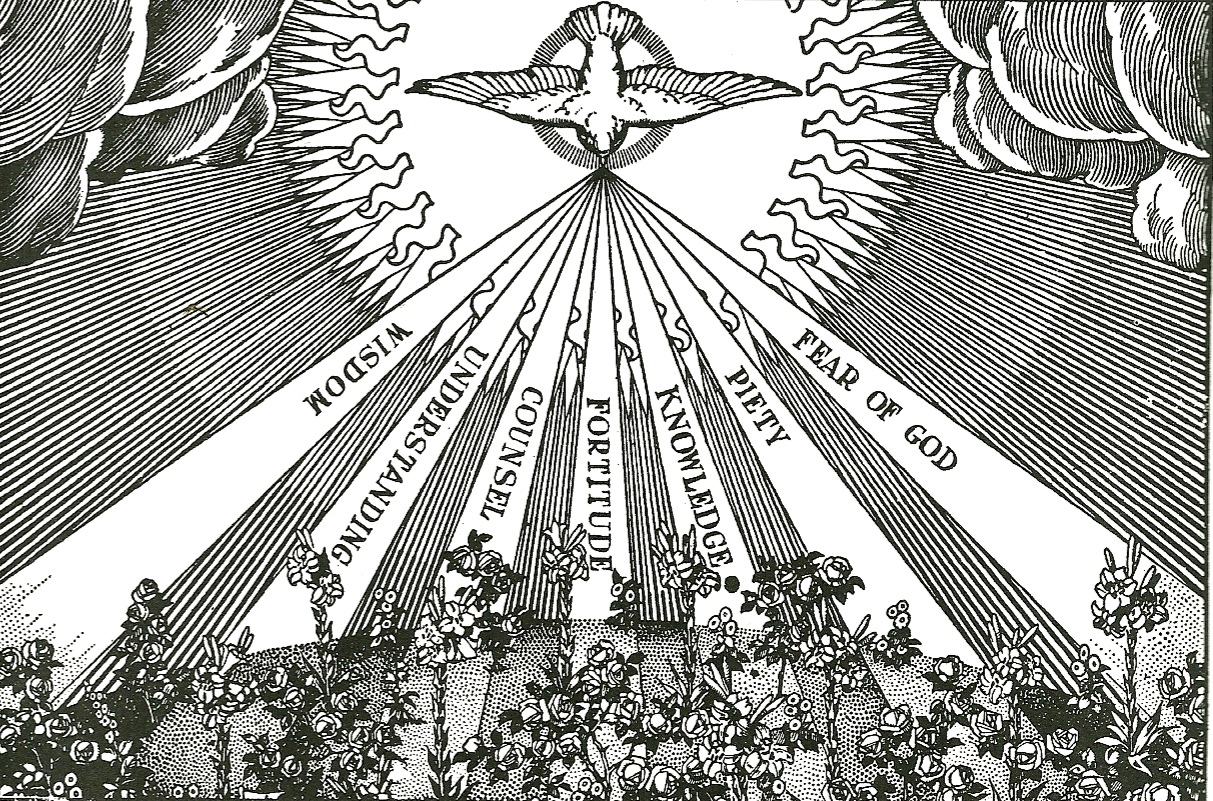
Each of us is called first through Baptism to holiness. For most Christians, this baptismal vocation—the vocation to live as members of the “priesthood of all believers”—is deepened by a further call from the Father. The vocation to Holy Matrimony, or to Holy Orders, or to consecrated religious life, gives specific form to one’s baptismal vocation. Even more specifically, each Christian daily discerns the call of the Father to make small sacrifices with great love, as St. Thérèse of Lisieux teaches us. So we beg the outpouring of God the Holy Spirit.
PLEASE NOTE: In some dioceses, on the Seventh Sunday of Easter the Ascension of the Lord is celebrated. For the reflection for the Ascension, click HERE.
The Seventh Sunday of Easter [A] Acts 1:12-14 + 1 Peter 4:13-16 + John 17:1-11
Jesus raised his eyes to heaven and said, “Father, the hour has come.”
To see life from the Christian point of view, you must view events from multiple perspectives simultaneously. This is a general truth that rules the whole of the Christian life. More specifically, sometimes the Church within her Sacred Liturgy asks us to view events from multiple perspectives.
During Advent, for example, there are three distinct perspectives that the Christian must reflect upon: the historical coming of Jesus into the world at Bethlehem; the present coming of Jesus through the sacraments into the Christian’s soul; and the future coming of Jesus at the end of time to judge mankind. Each of these three sheds light upon the other two. All three together reveal the depth of the Advent Season.
Likewise, in the latter weeks of Eastertide, there are three distinct perspectives that the Christian must keep in mind at the same time. This Sunday we hear one perspective from the Gospel Reading. The second emerges from the liturgical day within Eastertide that the Church celebrates today, which is illustrated by today’s First Reading.
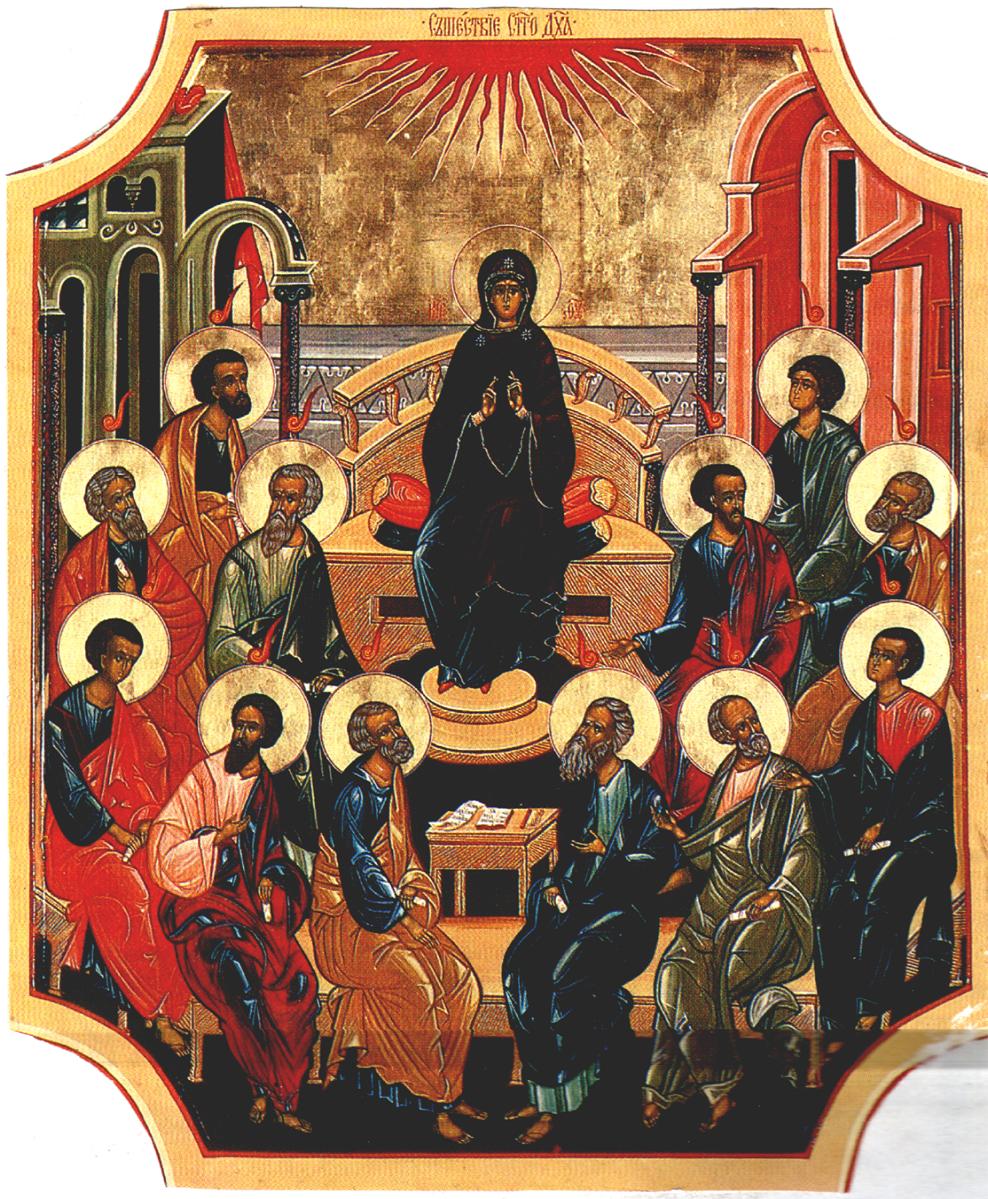
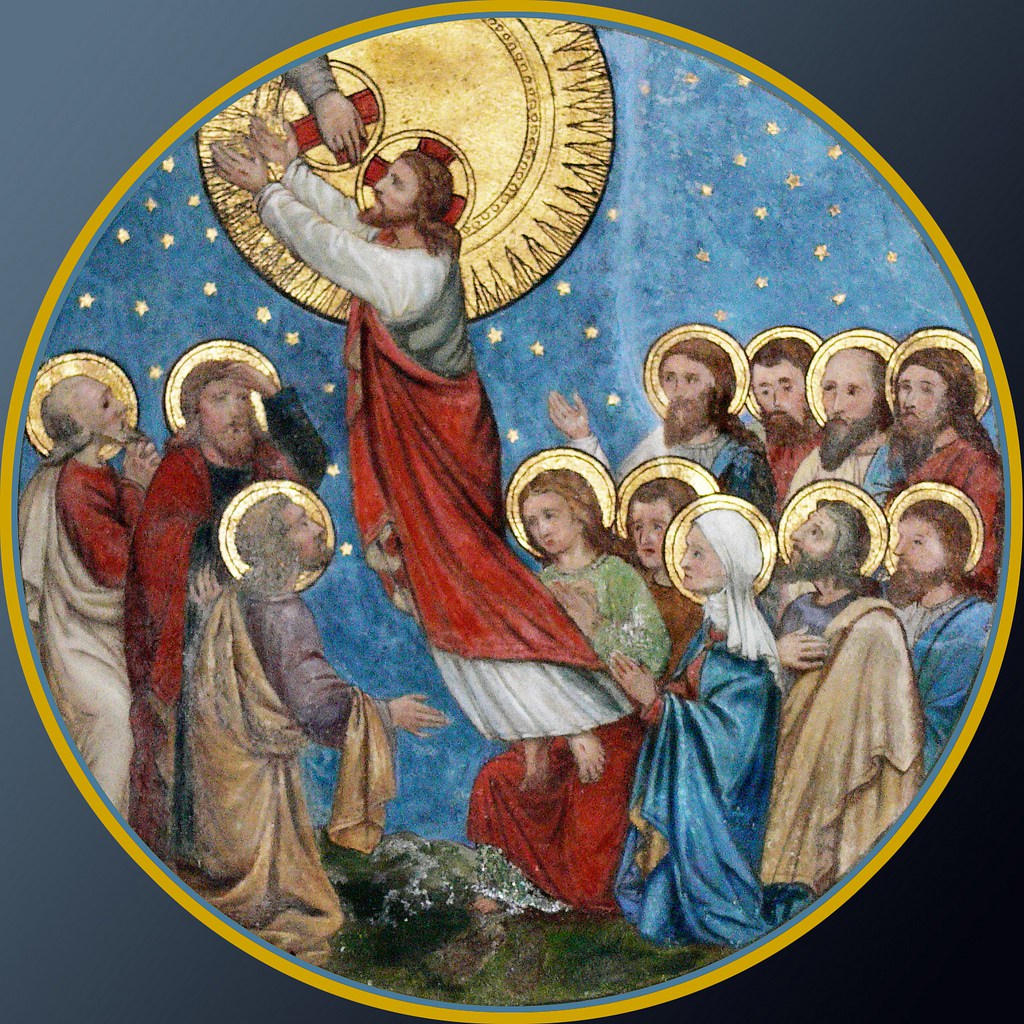
In the First Reading, we hear how the Apostles and certain other disciples—“Mary the mother of Jesus” chief among them—spent the days between the Ascension of Jesus and the Descent of the Holy Spirit. The nine days that all these disciples—both the Apostles and the other disciples—spent in prayer in “the upper room” as described in the First Reading are the “spiritual space” we are meant to inhabit during these latter days of Eastertide. We need to ask, then: what was going through the minds and hearts of all these disciples during those nine days?
As Christians, during these latter days of Eastertide, we look back to the Ascension as much as we look forward to Pentecost.
However, some two thousand years ago, all these disciples did not have our advantage of hindsight. Their experience was that Jesus had ascended and left them. What would happen next? We might be tempted to imagine that those first Christians had plenty of advantages of their own, having been with Jesus during His public ministry, gaining from Him insights into the prophecies of the Old Testament, as well as His own declarations about the future. We might imagine that they knew about the coming Pentecost and how it would change their lives.
Yet this is where today’s Gospel passage gives us a helpful perspective. The passage is from John 17. The setting is the Last Supper, which might prompt us to ask why six weeks after Easter Sunday we’re hearing a passage set on the eve of Jesus’ Crucifixion. The answer returns to the initial point of this reflection. The answer is that the Church wants us to view the nine days of prayer following the Ascension from multiple perspectives.
We need to view those nine days of prayer from the perspective of all these disciples during the time stretching from Christ’s Passion to His Resurrection. At the end of today’s Gospel passage, what does Jesus mean when He declares to God the Father, “now I will no longer be in the world, but they are in the world, while I am coming to you”? Is Jesus referring to His Death, or to His Ascension?
The answer is: He’s referring to both. Jesus’ Death and Ascension have more in common than we might first imagine. Likewise, Jesus’ Resurrection from the dead and the Holy Spirit’s Descent from Heaven have more in common than we might first imagine.
Remember how many of the Apostles and the other disciples remained with Jesus at the foot of His Cross. Only John and a handful of the other disciples remained steadfast. The infidelity of most of Jesus’ followers during those dark hours helps us understand the spiritual space in which all these disciples stood during the nine days of prayer following Jesus’ Ascension. They were at a loss to appreciate the fulfillment of the Old Testament in the radical new life of the Gospel.
Given these perspectives, we can look at our own spiritual lives. This third perspective forces us to admit how much our own spiritual lives are like the lives of all those disciples during both the days between the Passion and Resurrection of Jesus, and also the days between the Ascension and Pentecost. As was true of the disciples during those days, we have advantages at our disposal: what God has revealed to us, and the grace that might enlighten us with wisdom and spiritual insight.
However, in spite of God’s gifts to us, we often lack faith in what God has in store for us. If we were to make the words of Jesus in today’s Gospel passage our own, we would understand that every loss in the spiritual life can be filled by God with an even greater good. “Father, the hour has come.” Ask God to help you give thanks even for suffering and losses, and to make room within your heart and mind for God’s superabundant life.
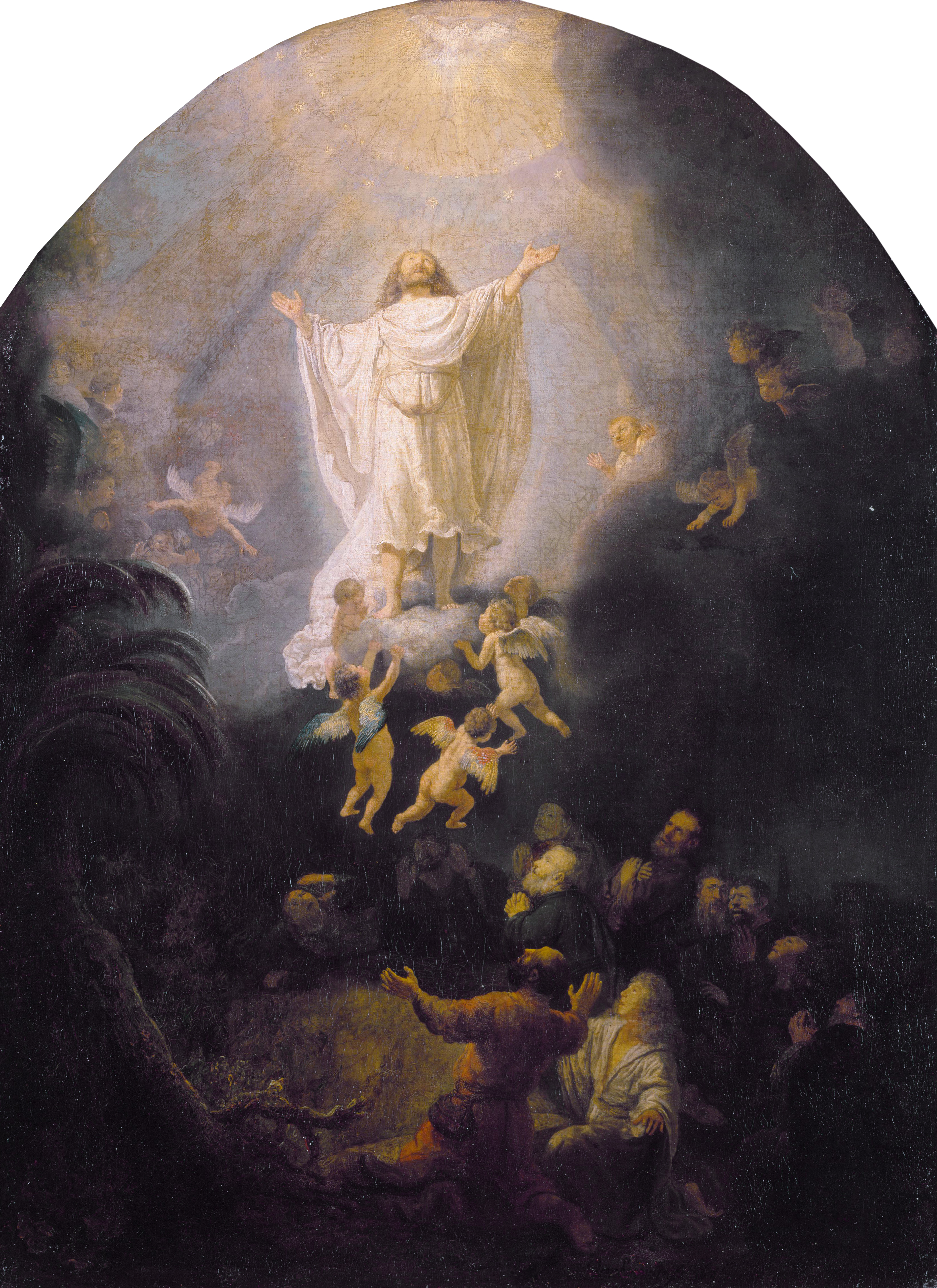
The Ascension by Rembrandt Harmenszoon van Rijn (1606-1669)
“But I will see you again, and your hearts will rejoice, and no one will take your joy away from you.”
Jesus uses the imagery of pregnancy to describe suffering in relation to joy, inasmuch as both pertain to Jesus’ Resurrection and the sending—by Him and His Father—of the Gift of the Holy Spirit. While it’s a truism of our culture that any goal worth achieving demands hardship, the image of pregnancy is yet more pregnant with meaning. The image of pregnancy connotes new life: a life independent of—yet owing its existence to—the one who begot it.
How do we relate this to the Resurrection and Pentecost? What is the new life that is begotten? It is the life of the Church. If you ask most people in the world—Christians and non-Christians alike—what the greatest Christian feast day is, they would likely reply “Christmas”. That’s the correct answer if one asks the question in terms of money and energy spent preparing for and celebrating the day. But liturgically, Easter Sunday is far more important than Christmas Day, a truth we can sum up with the saying that “The reason Jesus was born into this world was to die to this world.”
However, just as the meaning of Christmas points forward to Easter Sunday, so Easter Sunday points forward to Pentecost. Pentecost is not more significant liturgically than Easter Sunday, but nonetheless Easter prepares us for Pentecost: for the ‘birth’ of the Church, the Bride of Christ and the Mystical Body of Christ.
“… you will grieve, but your grief will become joy.”
Just as the earth has two poles, so the Season of Easter has two poles: the Resurrection and Pentecost. Both are solemnities of great joy for Christians. Yet each is preceded by an event of loss, of “grieving” even. The Resurrection is preceded by the Death of the Lord, and Pentecost is preceded by the Ascension of the same Lord. But to use the word “preceded” here is a bit lacking. The Death and Ascension of the Lord are the “events”—the sacred “mysteries”—that make the Resurrection and Pentecost possible.
Jesus refers to both sets of mysteries—the Death and Resurrection, and the Ascension and Pentecost—by His words in today’s Gospel passage: “you will grieve, but your grief will become joy.” Today’s Gospel passage is from the sixteenth chapter of John: part of Jesus’ Last Supper discourse. In the short-term, then, He is speaking about His Death and Resurrection. Yet in His divinity, Jesus also knew of His impending Ascension as well as the Descent of the Holy Spirit, so He is also speaking here about His Ascension and Pentecost.
Much of the world today celebrates the Ascension of the Lord. Some dioceses will transfer the Ascension to this coming Sunday, and celebrate today as a weekday of Easter. In either case, begin a novena today: nine days of prayer, longing for the Holy Spirit to come into your life more powerfully, and to help you live more fully your vocation within the Mystical Body of Christ.
PLEASE NOTE: In some dioceses, the Ascension is celebrated on the Thursday that is the fortieth day of Eastertide instead of being celebrated on the Seventh Sunday of Easter. This year’s reflection for the Seventh Sunday of Easter is found HERE.
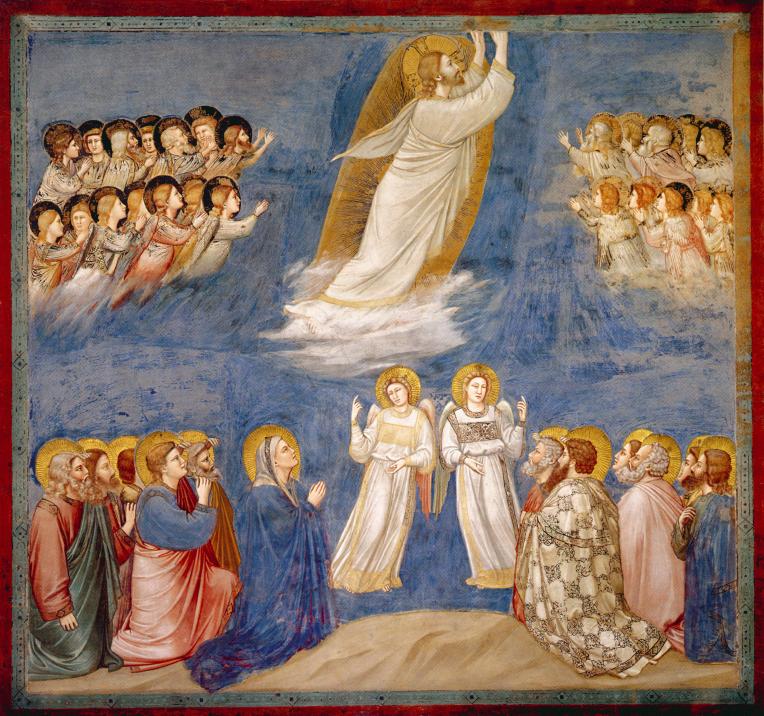
The Ascension of the Lord [A] Acts 1:1-11 + Ephesians 1:17-23 + Matthew 28:16-20
“And behold, I am with you always, until the end of the age.”
Eager Christians sometimes ask for spiritual direction. But a common stumbling block to such direction going anywhere is the directee not being willing to practice authentic detachment.
Detachment is one of the chief truths to which the Lord’s Ascension points our attention: detaching ourselves from everything except God. Of course, this detachment is not an end in itself, but a means to something greater. In terms of the detachment that Jesus demanded at His Ascension, that detachment was a means to the goal of Jesus preparing a place for them in Heaven with God the Father.
For the Christian who wants to practice detachment more seriously, the first step is to detach oneself from all things which one puts in place of God. Secondly, one has to “cling” to God alone.
Being detached from all created things does not necessarily mean that we remove them from our lives. Rather, being detached from created things means recognizing that the happiness that any created thing can bring us is less than we imagine.
We can detach ourselves from created things in several ways. We might in fact need to remove certain created things from our lives altogether, especially if they prey on individual faults that we have. We can also detach ourselves from created things through simple penance, or what the Church calls mortification.
We also have to detach ourselves from other human beings. This, of course, is much more difficult. Sooner or later we are, irrevocably, detached from others by death. Often, the most difficult such detachment comes when two spouses who have been married for many years are separated by death. At such a time, a spouse can feel as if the world has come to an end. The mixture of faith and doubt in the lives of the apostles that we hear about in today’s Gospel Reading is similar to the faith and doubt that one faces upon separation from a loved one.
Perhaps the apostles asked after the Ascension of Our Lord: “Whom are we to cling to now?” This question would be answered in two ways. First, the apostles had to wait for another divine Person to enter their lives. God the Son was leaving them, but He promised that He and God the Father would send them God the Holy Spirit. It is the Holy Spirit to whom the apostles would have to cling.
The difficulty with this, of course, is that the Holy Spirit is “no more” than a Spirit: He is the “Holy Ghost”, without flesh and blood like God the Son made man. How can anyone cling, then, to a Spirit? Grace is something that we can only cling to “in spirit”. This means that only by our souls can we cling to the Holy Spirit. If we live according to the flesh—according to material pleasure—then only what we can see and taste, touch and purchase can bring us joy. But if we regularly practice penance—not only the Sacrament of Penance, but also giving up and denying ourselves things on a weekly basis, especially Fridays—we can continually detach ourselves from material things and thereby have a soul that seeks nothing other than God’s sheer grace.
As we prepare ourselves to celebrate the great feast of Pentecost, we hear of the apostles gathered together in that Upper Room, waiting in faith and in doubt. When God the Father and God the Son sent the Holy Spirit at Pentecost, the apostles received the Spirit of Jesus not so that they could remember Jesus more fondly, but so that they might put that Spirit to work, to begin building the Church here on earth. In whatever way God calls us, may we be ready and willing to serve our God by putting ourselves at the service of our brothers and sisters here on earth, and so for God’s glory.
“… when He comes, the Spirit of truth, He will guide you to all truth.”
St. John Henry Newman, the nineteenth century convert to the Church from Anglicanism, is renowned for many theological works. One of the more famous is about the process of the “development of doctrine”. Newman had from boyhood been a keen student of history, and later in life he said that “to be deep in history is to cease to be Protestant”.
To make an analogy: as fundamentalist Christians say that God created the universe, Earth, and mankind immediately (that is, within six days), so the same fundamentalists often say that God created the doctrines of the Church immediately. If a phrase is not found in the Bible—they insist—it cannot be admitted into mind of a Christian. Therefore, dogmas such as the “Immaculate Conception” and “papal infallibility” are clearly not Christian—they insist—because the apostles who composed the Bible never used these phrases, or spoke about these topics.
However, if beliefs cannot be accepted by Christians if they are not mentioned in the Bible, then these same people cannot profess a belief in the “Trinity”, since this word never appears in the Bible. “But,” these fundamentalists might argue, “the belief in the Trinity is in the Bible. It’s the word “Trinity” that came later, in order to dispel false interpretations of the Bible….” Yet such a defense supports Cardinal Newman’s teaching, which itself is simply an unpacking of Jesus’ words today: “when He comes, the Spirit of truth, He will guide you to all truth.”
In addition to their divinity, the divine Persons of God the Son and God the Holy Spirit were both sent by God the Father into this world, filled as it is by sin and death. Their missions differ, yet their missions converge as God’s Providential Will unfolds within salvation history.
Of course, before considering the Son’s and the Holy Spirit’s missions within salvation history, we ought to reflect on their work “in the beginning”. God the Father created everything in the universe, visible and invisible, through His divine Word, and through the Power of the Holy Spirit. The creation narratives in Genesis are more suggestive than telling. Nonetheless, they point us towards contrasts that we ought to reflect upon as we approach Pentecost: contrasts, that is, between God’s work of creation “in the beginning”, and God’s work of redemption in the fullness of time.
Perhaps the most significant contrast between the missions of the Son and Spirit in creation, and then again their missions in the work of redemption, is that in the latter they manifest themselves incarnately. Their missions converge within the Mystical Body of Christ. “In the beginning”, the Word remained the Word. But in the fullness of time, “the Word became Flesh and dwelt among us”. “In the beginning”, the Spirit hovered silently over the face of the deep. But in the fullness of time, He is the soul of the Mystical Body of Christ, animating that Body’s members, so that the Christ’s saving work is carried out “unto the end of the age.”
“When the Advocate comes whom I will send you from the Father, the Spirit of truth who proceeds from the Father, He will testify to me.”
Today Jesus—still addressing us from the Cenacle, at the Last Supper—proclaims the coming of the Holy Spirit. We note from Jesus’ words that—as we profess in the Church’s Creed—the Holy Spirit proceeds from both the God the Father and God the Son. Jesus Himself describes God the Holy Spirit as the One “whom I will send you from the Father, the Spirit of truth who proceeds from the Father”.
In the Creed of the First Council of Constantinople (in A.D. 431), the first ecumenical council to describe at any length the nature of God the Holy Spirit, the council Fathers stated that the Holy Spirit is “the Lord, the Giver of Life [and] proceeds from the Father….” This council did not state that the Holy Spirit proceeds from the Father and the Son. The phrase “and the Son” (in Latin, filioque) was added by the Church to the Creed later. Controversy continues to this day as to the propriety of this addition.
Christians of the West accept the dogma of the Holy Spirit’s procession from both the Father and the Son. We see in the doctrine an expression of the closeness of the Father and the Son, while maintaining their distinction as divine Persons. God the Holy Spirit proceeds from both the Father and the Son because the Holy Spirit is the Love of the Father and the Son both for each other (not merely the love of one for the other). Saint Augustine explores the meaning of this great teaching in his very long, profound, and difficult work “On the Trinity” (De Trinitate). Pray for the Holy Spirit to enter your life more fully, and towards this end, plan to begin a novena to God the Holy Spirit this Thursday.
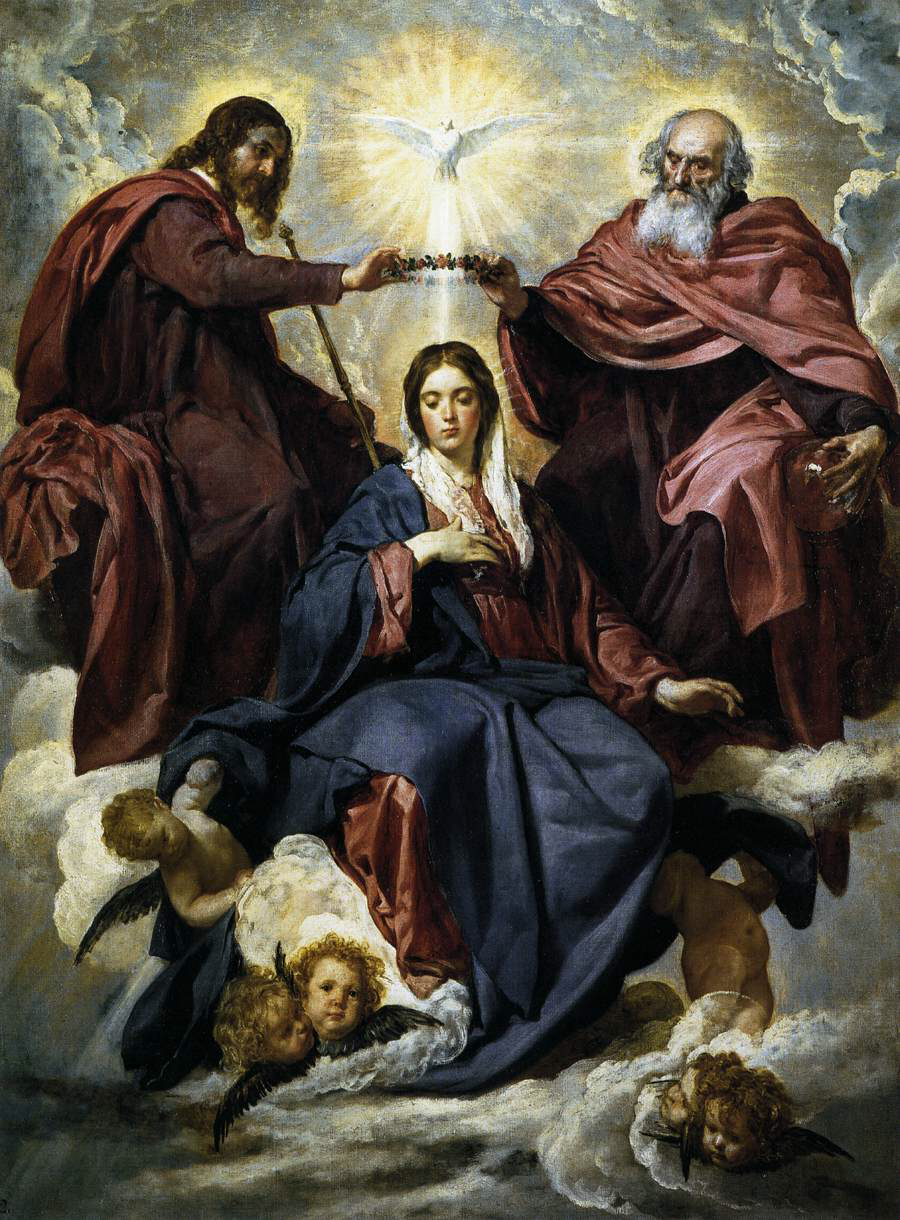
In this Easter season, we continue to hear in the First Reading about the flurry of apostolic activity that spread through the world following the first Christian Pentecost. But what of Mary, the lowly Virgin, mother of the child who grew in this world in order to offer His life in sacrifice for our sins? What about the mother of Him who is the Good News that the apostles spread throughout the world? Where is Mary at Pentecost?
We might forget that she is the Mother of God, the Mother of Him through whom all things were made. We might forget that she, too, was present in that upper room. Why is she there? She surely had no need to receive that fullness of the Holy Spirit who descended at Pentecost. Her Pentecost—her Confirmation, so to speak—took place at the Annunciation. At that moment, the power of the Holy Spirit overshadowed her who had been sinless from the moment of her conception in the womb of Saint Anne.
At the Annunciation of the Good News, God became man: Christ’s Body began forming within Mary’s womb. Here in the upper room at Pentecost, that same Holy Spirit descends again, to overshadow the apostles. Here in the upper room, Christ had offered the first celebration of the Sacrifice of the Eucharist. There the Church—the Body of Christ—was born, that the apostles might go forth into the world to preach the Gospel and offer their lives in sacrifice for Christ.