The Second Sunday of Easter — Divine Mercy Sunday [A]
Acts 2:42-47 + 1 Peter 1:3-9 + John 20:19-31
April 12, 2026
Why is the Second Sunday of Easter celebrated as Divine Mercy Sunday? Why not celebrate Divine Mercy Sunday on the fifth Sunday of Easter? Or, for that matter, the second Sunday of Lent? Or the twenty-fourth Sunday in Ordinary Time? This Sunday’s Scriptures answer the question. Consider first today’s Responsorial Psalm, and then today’s Gospel passage.
“Give thanks to the Lord for He is good, His love is everlasting.” This is the refrain for today’s Psalm: it is Psalm 118, verse 1. This is one of the verses of Scripture that you can end up scratching your head over, if you consult different Catholic translations of this verse into English. If you look up this verse in one Catholic translation, the last phrase of this verse is: “His steadfast love endures for ever.” But if you turn then to another Catholic translation of Psalm 118:1, in the last phrase you hear this: “His mercy endures forever.”
These different translations reflect an important truth of our Catholic Faith. God’s mercy is His love. We might even go so far to say that that’s the message of Divine Mercy Sunday: God’s mercy is His love.
Of course, we need to make a distinction. God’s love does sometimes take other forms. Mercy is only one of the forms that God’s love takes.
After all, “in the beginning”, before Adam and Eve and their Original Sin, there never had been any mercy because there never had been sin. Mercy exists only in the face of sin. From all eternity, before God created anything, there was not mercy, because there was only God Himself, and God is love. But when sin entered the world, God responded by bestowing His love in the form of mercy.
+ + +
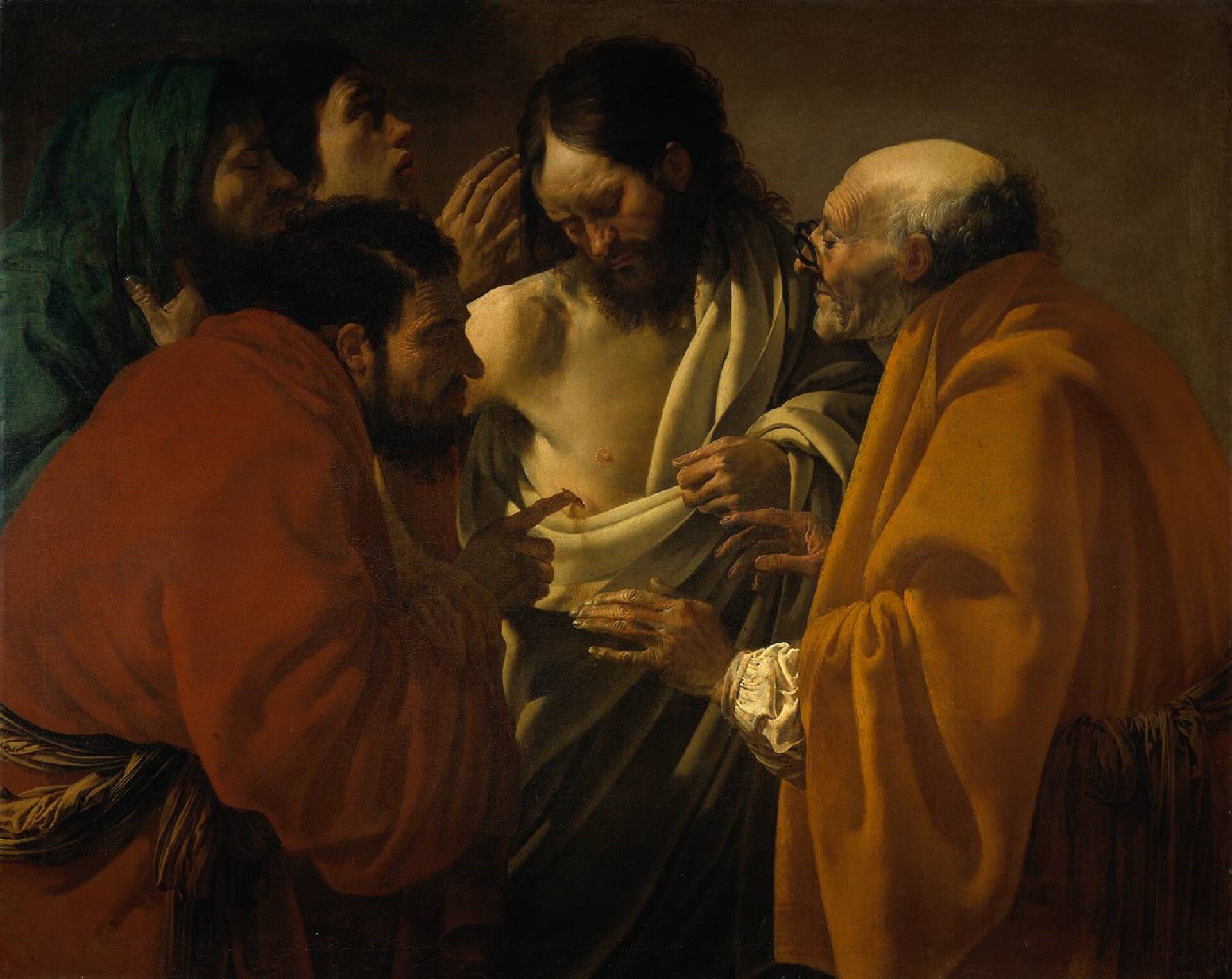
So with that in mind, consider today’s Gospel passage. This beautiful passage from the 20th chapter of the Gospel according to St. John gives us the origin of the Sacrament of Confession. One of the most important truths that this passage reveals is that it was on the very night following His Resurrection that Jesus gave the Sacrament of Confession to His Church.
This timing is definitely not a coincidence. This is a providential part of God’s plan of salvation history. The Sacrament of Confession is the Christian’s key to unlocking his or her potential for holiness, and so also his or her potential for sharing his faith in Jesus’ Divine Mercy.
To understand this better, keep in mind that Jesus gave His disciples a simple message about His Gospel. He explained that what God wants from His followers can be summed up in two commands: love God, and love your neighbor.
So, if God’s mercy is His love, what does that tell us about God’s two commands to us? Today’s Scriptures reveal to us that to love God is to accept His divine mercy, and to love our neighbor is to bestow His divine mercy. Think of an image from your student days in science class: the simple electrical circuit. No matter how much juice is in storage, ready and able to give power, if the circuit is open, you break the flow of electricity. That open circuit reflects what happens when we’re willing to accept God’s divine mercy, but not to bestow it on others.
You can think of this in terms of the prayer that Jesus taught us: the Our Father. The Our Father ends with several petitions that we make to the Father. Most of us don’t realize how dangerous one of these petitions is. We beg God the Father in these words: “forgive us our trespasses as we forgive those who trespass against us”. That tiny word “as” is like the switch in the electrical circuit: with it we either open or close the circuit of mercy. If we do not forgive those who trespass against us—if we harbor grudges and are unwilling to reconcile with our sibling, spouse, parent, or any other neighbor—then every time we pray the Our Father, we are petitioning God not to forgive us. Why would we ask God not to forgive us? It does not make sense? Neither does asking God to show mercy towards us, when we are unwilling to show mercy to others.
At the end of the Sacrament of Confession, in one of the optional conclusions the priest says, “Give thanks to the Lord, for He is good”: those words are the start of today’s Psalm refrain. It’s up to the person going to Confession to conclude that verse in both his words and actions: “for His mercy endures forever.”