Saturday of the Fifteenth Week in Ordinary Time [I]

Saturday of the Fifteenth Week in Ordinary Time [I]
Exodus 12:37-42  +  Matthew 12:14-21
July 17, 2021

“… my beloved in whom I delight ….”

The latter half of today’s Gospel passage is a quotation from the Old Testament.  St. Matthew the Evangelist cites Isaiah 42:1-4, a passage which echoes God the Father’s declaration at the Baptism of Jesus.  One way to reflect on these words—“my beloved in whom I delight….”—is to imagine God the Father addressing them to you.  Of course, that is only possible if your life is lived in Christ.  Understanding why God the Father might say these words to you demands reflecting on why the Father naturally says them to God the Son.

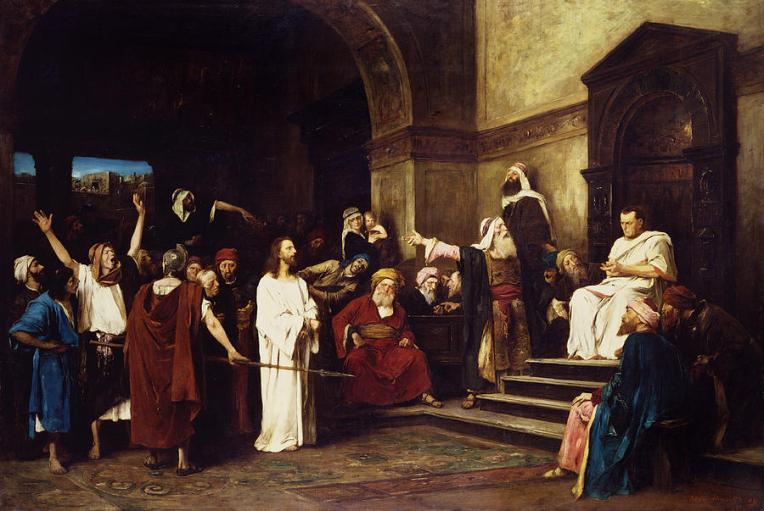
This quotation highlights a contrast between the Pharisees’ harsh opposition to Jesus and the delight God the Father takes in His servant and Son.  One of the causes of the Pharisees’ opposition is Jesus serving both the Gentiles and the Jews.  The first sentence of the quoted passage has God the Father speaking of Jesus (as the quote is applied by the evangelist) as His chosen servant.  However, the last sentence points to the relevance of Jesus’ service to the Gentiles.  It is the Father’s will that Jesus serve the Gentiles.

Of course, Jesus came not primarily to cure the sick, but to destroy the power of sin and death.  Part of the power of sin is the division between the Jews and Gentiles.  It is the power of the Spirit whom the Father “places upon” Jesus that can reconcile the races and nations of the earth.


Our Lady of Mount Carmel

Our Lady of Mount Carmel
Exodus 11:10—12:14  +  Matthew 12:1-8
July 16, 2021

“This day shall be a memorial feast for you ….”

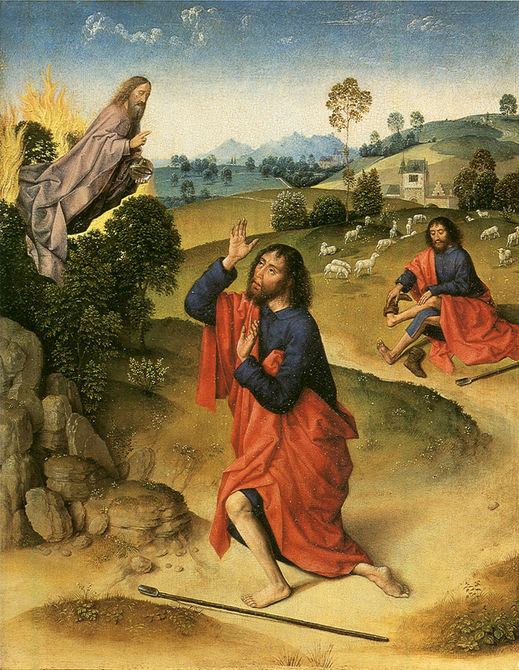
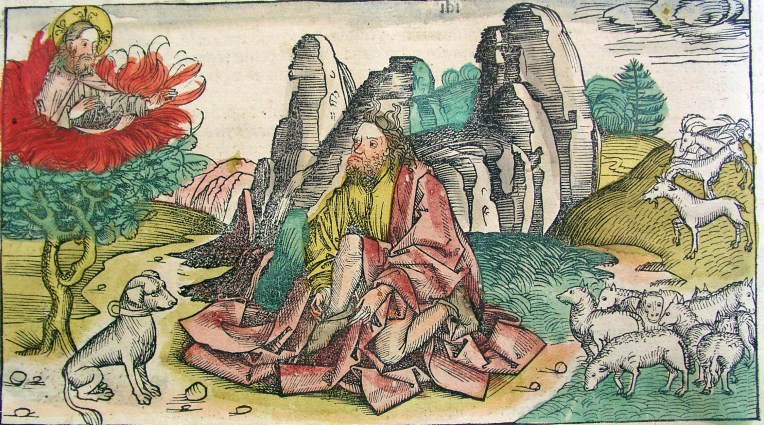
During Lent we hear many passages in the Sacred Liturgy about the Exodus of ancient Israel.  During these days of Ordinary Time in which we are hearing of Moses’ vocation, there is more hop-scotching through these narratives.  From yesterday’s to today’s weekday Mass, we jump from Moses in front of the burning bush to the final of the ten plagues by which God forced the hand of Pharaoh.

The majority of today’s First Reading is the Lord speaking, instituting the sacred Passover.  Much of what the Lord says seems “merely” instructive, giving details about how to celebrate the Passover.  Saints of the Church have looked deeply into these details and made many insightful observations about how these instructions for celebrating the Passover relate to theological truths of our Judaeo-Christian tradition.  But here, focus on the last sentence that the Lord speaks in today’s First Reading.

“This day shall be a memorial feast for you, which all your generations shall celebrate with pilgrimage to the Lord, as a perpetual institution.”  From this single sentence packed with religious meaning, consider only the last phrase.  The Passover is “a perpetual institution.”  How do we as Christians understand this?  The Passover was transformed by the Messiah, on the evening before He was crucified, into the Sacrament of the Eucharist.  Read today’s passage from Exodus, and all the Lord’s particular instructions, with this in mind.


The Sixteenth Sunday in Ordinary Time [B]

The Sixteenth Sunday in Ordinary Time [B]
Jeremiah 23:1-6  +  Ephesians 2:13-18  +  Mark 6:30-34

“… that He might create in Himself one new person in place of the two, thus establishing peace ….”

Saint Paul, in his love for the Christians living in Ephesus, wrote to them about what it means to be one people.  In today’s Second Reading from Ephesians, St. Paul teaches us about the mark of unity.  Unity, as you know, is one of the four marks of the Church that Jesus established.  In the Nicene Creed we profess our belief that the Church is “one, holy, catholic, and apostolic”.

Saint Paul, in his love for the Ephesians, wanted them to grow in their unity with each other.  Some of the Ephesians were Gentiles, while others were Jews.  St. Paul explains to the Gentiles:  “You who once were far off have become near ….”  The Jews had been God’s Chosen People for millennia, but now the Gentiles were being included among God’s People.  The Jews and Gentiles were becoming united as God’s People, wedding their lives together through the Body of Christ, the Church.

Saint Paul, in his love for these Ephesians, wanted them to recognize the source of their unity.  This was the point of his preaching here:  to focus on the source of their unity.  What was this source?  The Jews and Gentiles in Ephesus lived among each other, within the same culture, and had livelihoods and social standing similar to each other.  But none of those things, according to St. Paul, was the source of their unity.

Step back for a moment, and consider these questions about unity in light of the entire Letter to the Ephesians.  In one word, what’s the theme of this letter that St. Paul wrote?  One possible answer is that the word “wedding” summarizes the Letter to the Ephesians.

It’s not a coincidence that when you attend a Catholic wedding, the Second Reading often comes from Ephesians, because this whole letter focuses on the wedding of Christ and His Church.  Yet while literally Sunday’s Second Reading concerns the unity of these Jews and Gentiles in Ephesus 2000 years ago, spiritually this same passage points your attention towards the unity of Jesus and the Church through the imagery of a wedding.

The unity of Jesus and the Church is the source of all unity for each and every Christian:  not just for the Ephesians, but for you, also.  Jesus created this unity when He gave up His Spirit on the Cross, sacrificing His life so that His bride might have life:  in effect, saying through His sacrifice, “This is my Body, which is given up for you” [Luke 22:19].  Recognizing what Jesus gave for you, then, consider your own life.

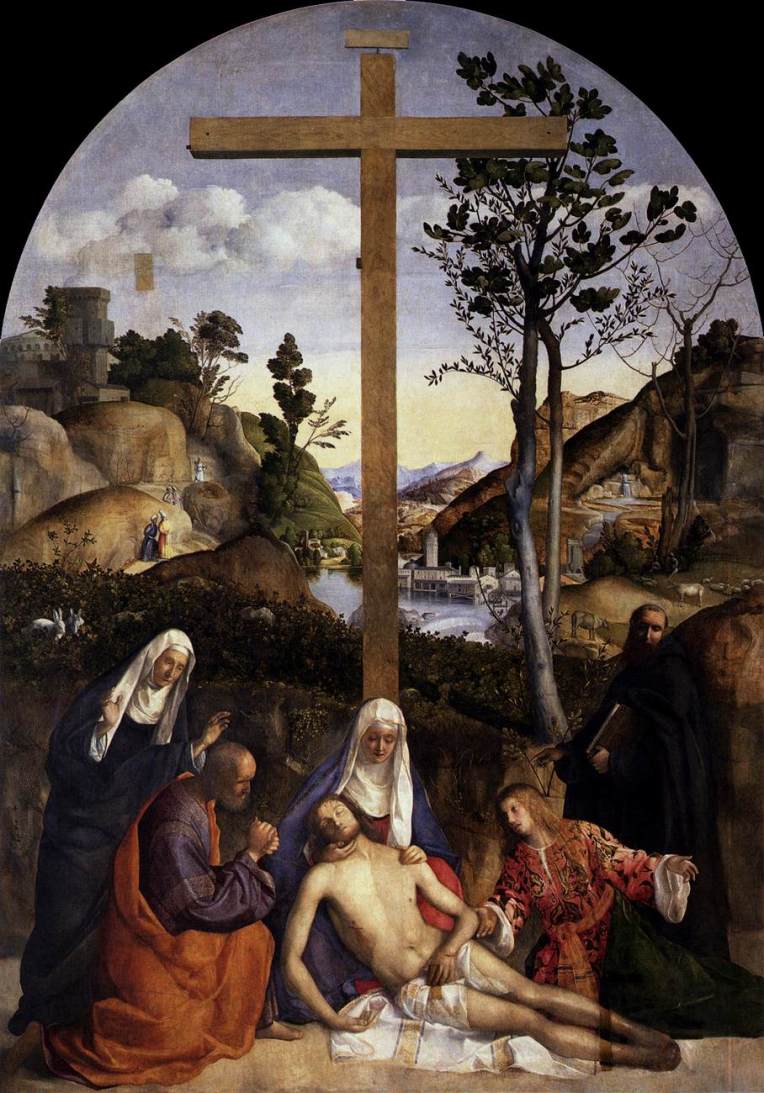
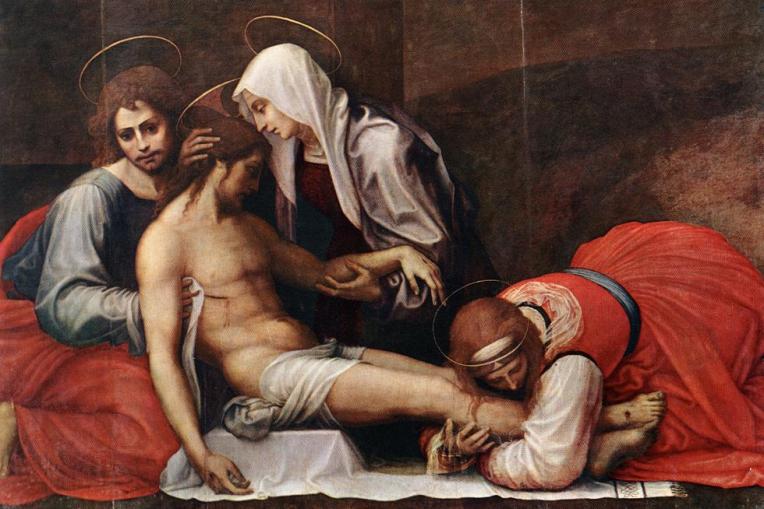
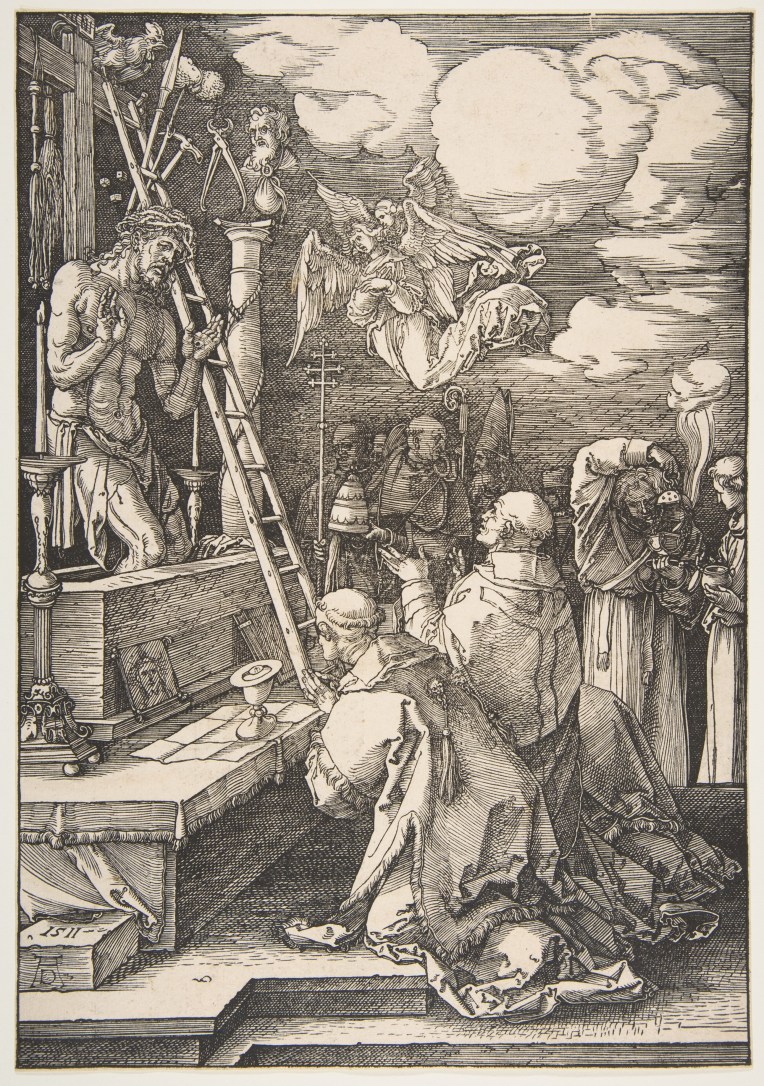
If your daily life seems at all frazzled, disjointed, fragmented or uncentered, the unity of Jesus and His Church—that is to say, the wedding of Jesus to His Church—is where you need to turn.  If you’re a visual learner, look at a crucifix.  If you’re not a visual learner, look at a crucifix anyway.  Take a crucifix and make some sort of stand for it.  Place it in front of you, and then spend time in silent prayer, gazing at the crucifix.  In the crucifix, you see the source of the unity you need in your life.

Unfortunately, one of the most common and dangerous temptations of the Christian spiritual life emerges here.  The symbol of the crucifix is commonplace in our lives as Catholics.  This symbol reminds you of your need to model your thoughts, words and actions according to what you see in the crucifix.  But this is the temptation:  to turn Jesus merely into a model to be imitated.

It’s certainly true that you are commanded by God to model your choices according to what you see on the crucifix.  But the temptation is to limit your moral life to this.  Jesus is not just a teacher who lived 2000 years ago.  He also, and more importantly, is your eternal Savior.  It’s as your divine Savior that Jesus Christ is the source of grace in your life.  Through this grace, your spiritual life buoys your moral life.  Through this grace, you become capable of imitating Jesus Christ.  Without God’s grace, the model of self-sacrifice that you see in the crucifix is impossible to attain.  Impossible.  “But with God, all things are possible” [Matthew 19:26].
St. Bonaventure, Bishop and Doctor of the Church

St. Bonaventure, Bishop and Doctor of the Church
Exodus 3:13-20  +  Matthew 11:28-30
July 15, 2021

God replied, “I am who am.”

We often take for granted the power of names.  Two examples can illustrate this simple truth.  Many of us had the experience when little of our parents calling us by our full name:  first, middle, and last.  This was generally not a good thing.  Secondly, when someone is angry with you, it’s a very powerful expression of anger when that person calls out your name in anger.  Hearing your name called out in anger can easily rattle you.

At the same time, the use of names can also be a strong force for good.  Reflect on the use of one’s full name (or at least, one’s first and middle names) at one’s baptism, and the taking of an additional name at Confirmation, and the holy custom of a bride taking her husband’s surname to express the unity created by God through Holy Matrimony.

As important as human names are, the divine Name is infinitely more important.  It’s not much of a stretch to say that of all the Commandments, the Second is the least understood, and the one most often broken by Christians.  In today’s First Reading, God gives the gift of His Holy Name to Moses.  He entrusts it to them to use rightly.

There are only two valid reasons to speak the name of God (including the Holy Name of Jesus):  for prayer, and for teaching.  Any other use is sinful, because any other use is “in vain”.  It’s obvious to us that speaking the Name of “God” or “Jesus” in anger is sinful.  But so is speaking these names casually:  that is, to express boredom, impatience, and/or frustration.  Christians have the obligation to teach this to their children and grandchildren, in part by turning off media that violate this commandment.

OT 15-4 YEAR I

St. Kateri Tekakwitha, Virgin

St. Kateri Tekakwitha, Virgin
Exodus 3:1-6, 9-12  +  Matthew 11:25-27
July 14, 2021

“Come no nearer!  Remove the sandals from your feet ….”

Both the First Reading and the Gospel Reading today proclaim the power of divine revelation.  Jesus in today’s Gospel Reading makes an exclamation to His Father, something rare in the four Gospel accounts.  During this exclamation, Jesus says, “no one knows the Father except the Son and anyone to whom the Son wishes to reveal him.”

Reflect on Jesus’ exclamation in light of today’s First Reading.  This week we’re hearing some of the most profound readings of the Old Testament.  The origin of Moses’ vocation has been a treasure-trove for saints who’ve wanted to explore the riches of the Christian Faith.  Today’s passage from Moses’ “vocation story” proclaims the “what and how” of God revealing Moses’ vocation.  What do Jesus’ words today have to do with Moses’ “vocation story”?

In today’s passage from Exodus, God the Son wishes to reveal His Father.  That might seem an odd claim.  Nowhere does the God who speaks in the third chapter of Exodus say that He is either God the Father or God the Son.  There is, of course, no notion of “God the Son” in the Old Testament.

Nonetheless, we can begin today to consider how God the Son wishes to reveal the Father to Moses by considering that God is calling Moses—through Moses’ vocation to liberate Israel—to be His son.  In this, Moses’ fidelity or infidelity to his vocation can be measured by the degree to which Moses’ thoughts, words and actions correspond to those of Jesus Christ in His vocation.  Reflect on this in the coming days as we continue to hear from Exodus at weekday Mass.

OLYMPUS DIGITAL CAMERA

Tuesday of the Fifteenth Week in Ordinary Time [I]

Tuesday of the Fifteenth Week in Ordinary Time [I]
Exodus 2:1-15  +  Matthew 11:20-24
July 13, 2021

   … she said, “I drew him out of the water.”   

Today’s First Reading gives us the “origin story” of Moses.  The Bible does not tell us the names of Moses’ parents, but the first sentence of today’s passage reveals that both of them were of the house of Levi.  The Levites were the priestly tribe of Israel.  Right off the bat, this foreshadows something important about the role that Moses will play in salvation history.

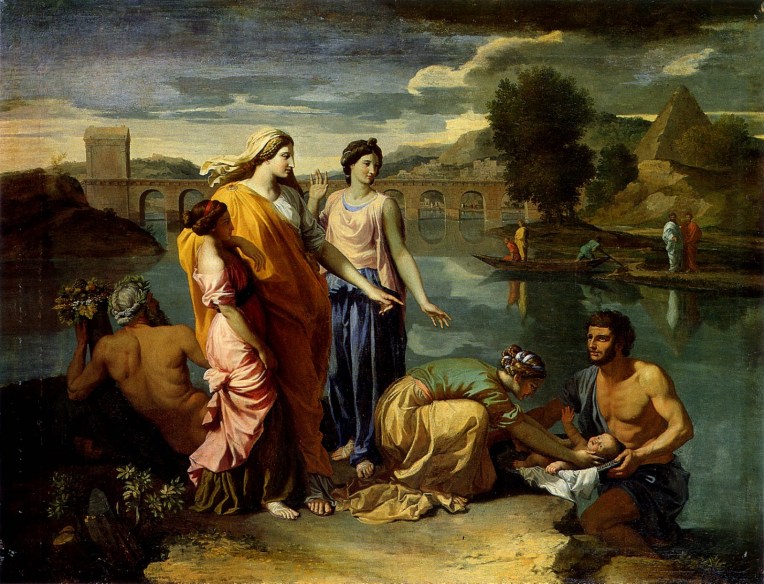
Likewise, Moses is put by his mother into the river.  In a sense, his mother has observed the Pharaoh’s evil command to throw every boy into the river, but his mother uses papyrus, bitumen and pitch to prevent her son from drowning.  The Pharaoh’s daughter adopts the son and makes him her own, naming him Moses, which literally means, “I drew him out of the water.”

Although it might first seem odd, here the Pharaoh’s daughter’s actions reflect God’s saving action, especially as He begets and names Christians through the waters of baptism.  These waters represent both the destructive power of sin and the cleansing power of grace.

The last section of today’s First Reading leaps forward to Moses’ youth.  The actions and interactions here foreshadow Moses’ role in salvation history.  In the conflict between Egypt and Israel, Moses defends his native people.  Yet Moses is forced to flee as a consequence of his defense.  Nonetheless, this flight is part of God’s Providence, as Moses’ flight leads God’s People to the land for which they were born.

Monday of the Fifteenth Week in Ordinary Time [I]

Monday of the Fifteenth Week in Ordinary Time [I]
Exodus 1:8-14,22  +  Matthew 10:34—11:1
July 12, 2021

The Egyptians, then, dreaded the children of Israel and reduced them to cruel slavery ….

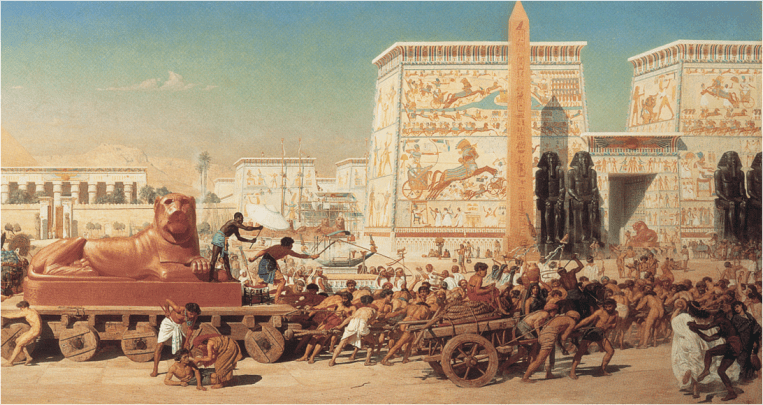
Today we begin at weekday Mass to hear from the Book of Exodus.  We’ll continue to hear from this book for about three weeks.  Today’s passage from Exodus is from its first chapter.  Moses does not appear.  What we hear today forms the backdrop for his entrance.

The “whole cruel fate of slaves” is described at length.  While we in our modern day might consider the description of the Israelites’ slavery very sad, it seems at a remove from our culture of affluence and independence.  At least, this might seem so until we take this historical description and apply it to the Christian spiritual life.  By doing this, we can see what Exodus tells us here as an illumination of the slavery to which sin subjects the sinner.

In order to ensure the success of his regime of slavery, the Pharaoh at the end of today’s passage issues a command.  Every boy born to the Hebrews is to be thrown into the river.  This river historically foreshadows the Red Sea, in which the Egyptian power over the Israelites is destroyed.  But the river spiritually foreshadows the waters of Baptism, in which the power of sin over Christians is destroyed.  In the light of this double foreshadowing, we begin to see how Moses himself foreshadows Jesus.

Saturday of the Fourteenth Week in Ordinary Time [I]

Saturday of the Fourteenth Week in Ordinary Time [I]
Genesis 49:29-32; 50:15-26  +  Matthew 10:24-33
July 10, 2021

“… not one [sparrow] falls to the ground without your Father’s knowledge.”

Jesus preaches today about Our Father’s providential knowledge and will.  God knows all things.  We know this abstractly, but perhaps we fail to consider all that this truth of our Faith means.

When we say that God knows all “things”, what sorts of things are we talking about?  Facts that would win God a championship on trivia shows?  God knows all objective facts about science, history, etc.  But God’s knowledge is not trivial.

God’s infinite knowledge extends to what is most personal.  God knows every action you have ever done (or failed to do).  God also knows every thought you’ve ever had, and every word you’ve ever said.  He knows the hopes and desires of every human heart.  He knows of every emotion you’ve ever felt, and of the circumstances that led to those emotions.

But in human earthly providence, knowledge leads to the will.  God’s knowledge of you, as complete as it is (more complete, in fact, than even your own self-knowledge!), leads God only to love you more.  At times, we hide ourselves from God, not understanding the depth of His providential love.  But when we submit ourselves completely to God, we are not only more at peace:  we are more flexible in serving as an instrument of His peace.

OT 14-6

Friday of the Fourteenth Week in Ordinary Time

Friday of the Fourteenth Week in Ordinary Time
Matthew 10:16-23

“Behold, I am sending you like sheep in the midst of wolves ….”

Jesus was always realistic during His earthly life.  So it’s no surprise that He says to His Apostles, “I am sending you like sheep in the midst of wolves”.   His words were true in the first century, and are so also today.

What is surprising is His subsequent command:  “be shrewd as serpents and simple as doves.”  What does it mean for Jesus’ followers to “be shrewd as serpents”?  We might recoil from His command because we associate the serpent with the Devil.  So what can His words mean?

One of the simplest ways to understand Jesus’ words is to look at His actions.  After all, Jesus practiced what He preached.  While it’s true that on Calvary Jesus was the sheep that opened not His mouth [see Isaiah 53:7], during the three years of His public ministry He acted differently.  For example, at the beginning of His ministry in Galilee, when Jesus infuriates the people in the synagogue with His preaching, the people try to kill Jesus, but “He passed through the midst of them and went away” [Luke 4:16-30].  One lesson for us disciples is to know that conflict will inevitably arise from our fidelity to the Gospel, but that with shrewdness we may often find safety with the Lord.

OT 14-5