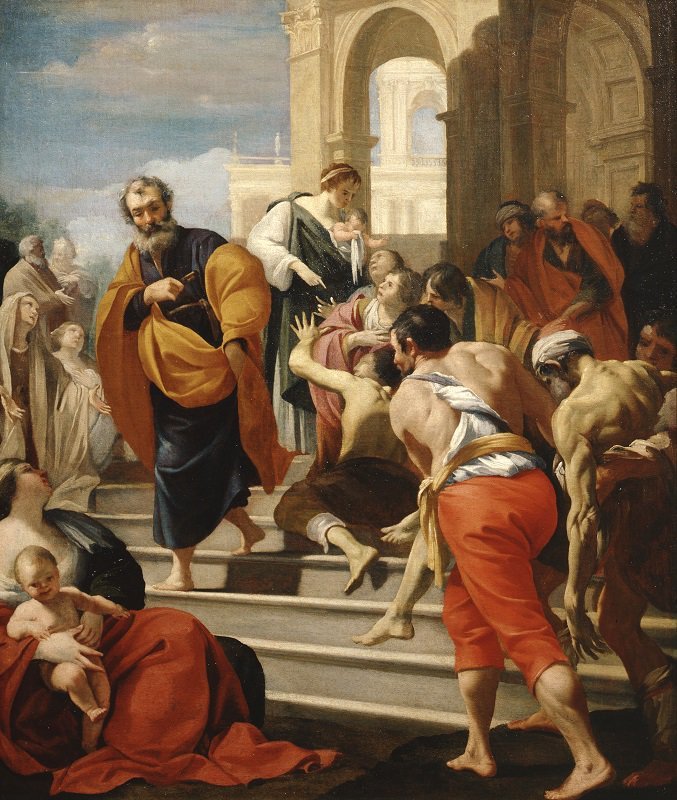
St. Vincent de Paul, Priest

St. Vincent de Paul, Priest
Zechariah 8:1-8  + Luke 9:46-50
September 27, 2021

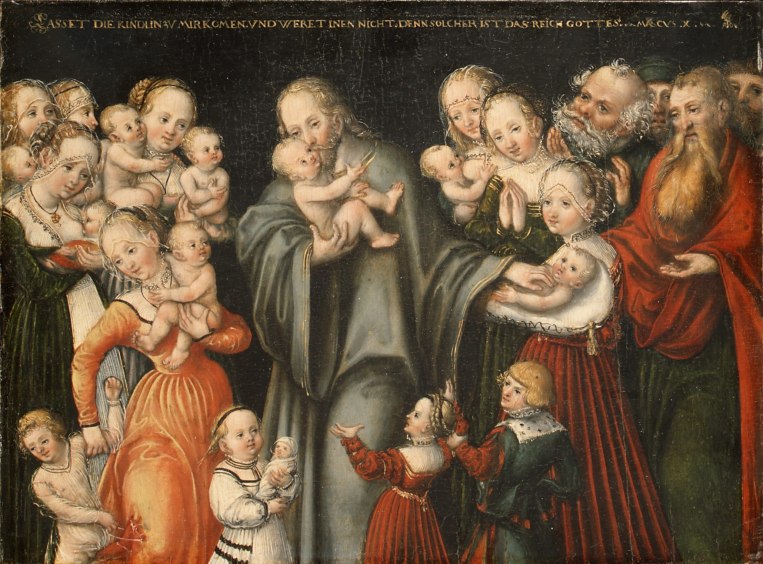
“Whoever receives this child in My Name receives Me ….”

During Christmastide we are used to thinking of Jesus—the divine Word made Flesh—dwelling among us as an infant.  But today, near the start of Autumn, Jesus counsels us to receive Him as a child.  Clearly, then, spiritual childhood isn’t just for Christmas!

To receive Jesus as a child means that the one who receives Jesus becomes a child him- or herself.

Spiritual childhood is a common theme in the literature of the Catholic masters of spirituality.  Of course, pondering this theme first requires a distinction between the childhood of fallen human nature and the childhood of what we might call either the “original human nature” or the “redeemed human nature”.  What does this distinction mean concretely?  We can picture this distinction by comparing two different images:  on the one hand is a two-year-old who refuses to go to sleep; on the other is the child nursing peacefully with his mother.

In addition to what Jesus says in today’s Gospel passage, we can use a Scriptural image to help us picture the spiritual childhood to which the Christian is called.  We consider Calvary, and Jesus entrusting Mary and the Beloved Disciple to each other’s care.  This Beloved Disciple, child of Mary, is our icon for spiritual childhood.

Saturday of the Twenty-fifth Week in Ordinary Time

Saturday of the Twenty-fifth Week in Ordinary Time
Luke 9:43-45

“The Son of Man is to be handed over to men.”

Today’s Gospel passage, from fairly early in Luke’s Gospel account (in chapter 9 of 24 chapters), helps us to focus squarely on Jesus, even if His words here confuse the disciples.  You and I have the advantage of hindsight, of course, in knowing “the rest of the story” of the Gospel.  We know perfectly well what Jesus is referring to when He predicts that the “Son of Man is to be handed over to men.”

Still, we shouldn’t pat ourselves on the back for being unlike the disciples portrayed today.  Consider the setting of today’s Gospel passage.  We need to recognize Jesus’ deliberateness in choosing the moment that He did to speak the words that He did:  it was “[w]hile they were all amazed at His every deed” that Jesus foretold His Passion.

What is the relationship between these two:  Jesus’ amazing deeds and His Passion?  Did Jesus foretell His Passion when He did to bring the disciples back down to earth, similar to the occasion of His Transfiguration?  Was Jesus wanting to minimize the significance of His amazing deeds, or at least to help the disciples realize that they were not the ultimate reason for His presence in their midst?  Reflect on these questions in the light of your own desire for God to work amazing deeds in your life, and your reluctance to share in the “handing over” of Jesus that He foretells today.

OT 25-6

Friday of the Twenty-fifth Week in Ordinary Time

Friday of the Twenty-fifth Week in Ordinary Time
Luke 9:18-22

Jesus was praying in solitude, and the disciples were with him.

The first sentence of today’s Gospel passage shouldn’t be overlooked.  “Jesus was praying in solitude, and the disciples were with him.”  This might seem like an odd statement, perhaps even contradictory.  But from the larger canvas on which all four Gospel accounts are drawn, we see several times a portrait of Jesus as one who prays intensely, at length, in solitude, and often.  That His disciples were with Him doesn’t mean that they were all engaged in prayer together, but that they had the occasion to witness Jesus in this intense, solitary prayer with His Father.

The point of this first sentence within the context of today’s Gospel passage, however, is heard in what Jesus says next.  “Who do the crowds say that I am?”  After they offer the view of the crowds, Jesus asks, “But who do you say that I am?”  After they give their own view, Jesus offers His view of His own identity.  This portrait of Himself as the “Suffering Servant” who will be raised on the third day was most likely the content of His prayer moments earlier.  There is no doubt about Jesus accepting this call from the Father.  But the disciples’ reactions show that most of them could not accept Jesus in His suffering, or in their own suffering as His disciples.  We might make an examination of conscience, asking if we ourselves are like these disciples.

The Twenty-sixth Sunday in Ordinary Time [B]

The Twenty-sixth Sunday in Ordinary Time [B]
Numbers 11:25-29  +  James 5:1-6  +  Mark 9:38-43,45,47-48

“Would that all the people of the Lord were prophets!”

The Scripture passages this Sunday speak to the importance of just and healthy laws.  We also hear of this in the refrain to the Responsorial Psalm:  “the precepts of the Lord give joy to the heart.”  The Psalmist continues to explore this in the verses of the psalm—Psalm 19—declaring that “the law of the Lord is perfect, refreshing the soul”, and that “the ordinances of the Lord are true, all of them just.”

The purpose of law is to bring order to a community.  It allows individuals to get along with other, rather than each man, woman, and child being a law unto himself or herself.

Every law, and every person who passes, executes, or judges laws, is answerable to the Creator of all things.  God the Creator created the universe with an intrinsic order.  Every wise scientist knows that the material universe has its own intrinsic order, and will teach those willing to listen that the law of gravity, the law of entropy, and the law of conservation of matter cannot be repealed by any congress.  Every wise physician knows that the human body has its own intrinsic order, and will teach those willing to listen that one cannot pretend that an unhealthy diet, smoking, or exposure to high levels of radiation will make a human person healthier.  So it is with civil law on matters pertaining to man’s intrinsic nature.

Man can pretend to have authority over moral norms, but he does so at his own risk.  The question is whether Christians are willing to speak boldly on behalf of the intrinsic moral order by which God created man.  Modern man might take a cue from today’s First Reading.

“Would that all the people of the Lord were prophets!”  The First Reading is somewhat mysterious.  It’s mysterious not only because in this passage the “Lord came down in the cloud and spoke to Moses”.  It’s mysterious not only because the Lord took “some of the spirit that was on Moses” and “bestowed it on the seventy elders”.  It’s mysterious in how it reveals the connection between the law and the prophet.

Each and every Christian, through her or his baptism, is called to be a prophet.  It’s easy to imagine Jesus saying during His days on earth, and also today, what Moses proclaims in the First Reading:  “Would that all the people of the Lord were prophets!”

Each culture, sub-culture, and religion has its own prophets.  Prophets may differ from one such body of persons to another.  There may be cultures, sub-cultures and religions where to be a prophet is to be nothing other than a “free spirit”, one who lets the wind blow where it wills without regard for rules and regulations, doctrines and dogmas.  But Christianity is not such a body.

The Christian prophet does not oppose the Law of the Lord.  He is precisely the one who takes risks to stand up for it, is willing to be persecuted for his witness, and knows that his life is about the Lord instead of about himself.

The Christian prophet knows that while he himself is vastly imperfect, “the law of the Lord is perfect, refreshing the soul”.  The Christian prophet knows that while he himself is often untrustworthy and simple, “the decree of the Lord is trustworthy, giving wisdom to the simple.”  The Christian prophet knows that while he himself is often false and unjust, “the ordinances of the Lord are true, all of them just.”

God asks you to serve Him as a prophet:  to defend His saving Law, which is the Law that brings order, refreshment, wisdom, truth and justice to the spirit.  This is the spirit of Jesus and His Father.  This is God the Holy Spirit, the spirit who gives everlasting life.

We live in a world today that is so topsy-turvy that it becomes more and more clear each day just how much spirit it takes to defend God’s law.  But the great English journalist G. K. Chesterton had a very optimistic view of this sort of challenge.  He noted that the “act of defending any of the cardinal virtues has today all the exhilaration of a vice.”  Would that each of us would give ourselves over to this exhilaration.  “Would that all the people of the Lord were prophets!”
St. Pius of Pietrelcina, Priest

St. Pius of Pietrelcina, Priest
Haggai 1:1-8  +  Luke 9:7-9
September 23, 2021

Consider your ways!  You have sown much, but have brought in little ….

Today’s First Reading consists of the first eight verses of the Book of Haggai.  While this book is found many books later in the order of the Old Testament canon than Ezra and Nehemiah, thematically the three of them are joined.  Haggai is one of the minor prophets of the Old Testament, and the book bearing his name is second to last in the Hebrew canon.

Where in Ezra and Nehemiah God had demanded that His Temple be rebuilt, in Haggai God recognizes that His people’s response has been to declare that “The time has not yet come to rebuild the house of the Lord.”  Such bare-faced rejection of God’s Will is what God asks Haggai to confront.

God’s people were using misfortunes as justification for delaying the building of the Temple.  In the face of this, God points out that misfortunes point all the more to the need of the people to trust in His will, and to follow His commands.  We might reflect today on whether we’ve used misfortunes in our own lives as a way to get around—or as we tell ourselves, just to delay—our compliance with what God has asked of us.

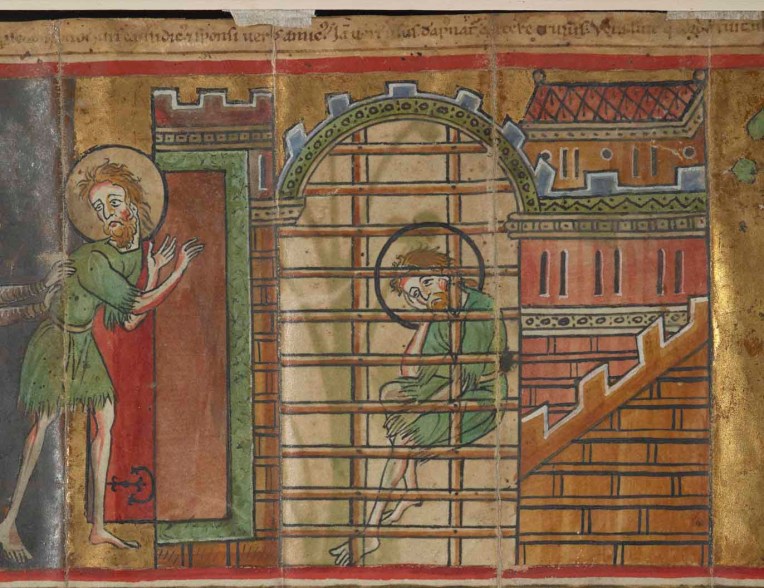
Add. 42497

Wednesday of the Twenty-fifth Week in Ordinary Time

Wednesday of the Twenty-fifth Week in Ordinary Time
Luke 9:1-6

He sent them to proclaim the Kingdom of God and to heal the sick.

The word “apostle” literally means “one who is sent”.  But the reason for Jesus sending an apostle can vary, and this reason therefore qualifies the type of apostolic ministry.  For example, today’s Gospel passage comes from the ninth chapter of Luke (which is 24 chapters long).  Here, the apostles are not being sent to proclaim the Resurrection, because Jesus has not died yet!  At the end of the Gospel, the Apostles will be sent to proclaim the Gospel and thereby build Jesus’ Church.

In today’s Gospel passage, however, the Twelve are being sent for a simpler mission.  Jesus “sent them to proclaim the Kingdom of God and to heal the sick.”  This two-fold mission is interesting.  How does it relate to the mission that the Apostles will begin to carry out on Pentecost?  Is proclaiming “the Kingdom of God” the same thing as proclaiming the Gospel?  Why does Jesus here give the Apostles power to heal the sick, but not to raise the dead?

Although a book could be written trying to answer these questions, reflect today on the way in which you yourself have been sent by God in the past, and may be sent for a new mission today or very soon.  At any point on one’s earthly journey, the Lord can surprise you with a new request.

OT 25-3

St. Matthew, Apostle & Evangelist

St. Matthew, Apostle & Evangelist
Ephesians 4:1-7,11-13  +  Matthew 9:9-13
September 21, 2021

“I did not come to call the righteous but sinners.”

Among the four evangelists, only Matthew and John were members of the Twelve apostles.  Mark and Luke did not, as far as we know, ever meet Jesus during His earthly life.  Nonetheless, Mark and Luke were disciples of Peter and Paul, respectively, and from those two Mark and Luke received the apostolic witness to the Good News.

On this feast of St. Matthew, we also ought to keep in mind that while all four accounts of the Gospel are apostolic in origin, each presents a unique portrait of the Messiah.  If a man has four very close friends during his life, then after his death each of those four would likely write a different biography of their common friend.  The account of his life would reflect the biographer’s interactions with him.

Today’s Gospel passage presents Matthew’s own account of how Jesus called him to serve.  Matthew is strikingly honest about his sinfulness.  In light of his own need for mercy, Matthew presents Jesus through the words that the Lord speaks at the end of today’s Gospel passage:  “I did not come to call the righteous, but sinners.”

The First Reading might seem most fitting today because of St. Paul describing various roles within the Body of Christ, such as Apostle and evangelist, both of which Matthew was.  However, consider the beginning of this passage, where Paul describes the Christian’s need for humility and patience, so as to bear “with one another through love”.  These words echo Matthew’s description of how Jesus called himself.

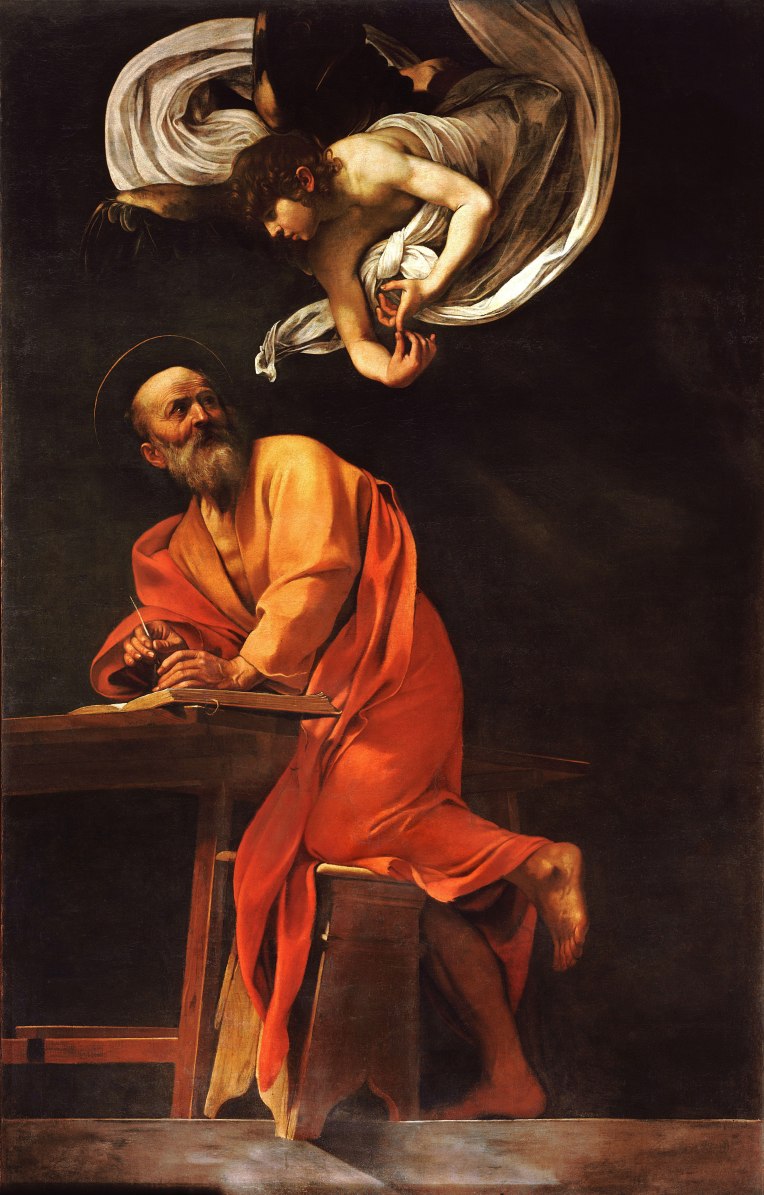
St. Matthew - Caravaggio.jpg

Monday of the Twenty-fifth Week in Ordinary Time

Monday of the Twenty-fifth Week in Ordinary Time
Luke 8:16-18

“… he places it on a lampstand so that those who enter may see the light.”

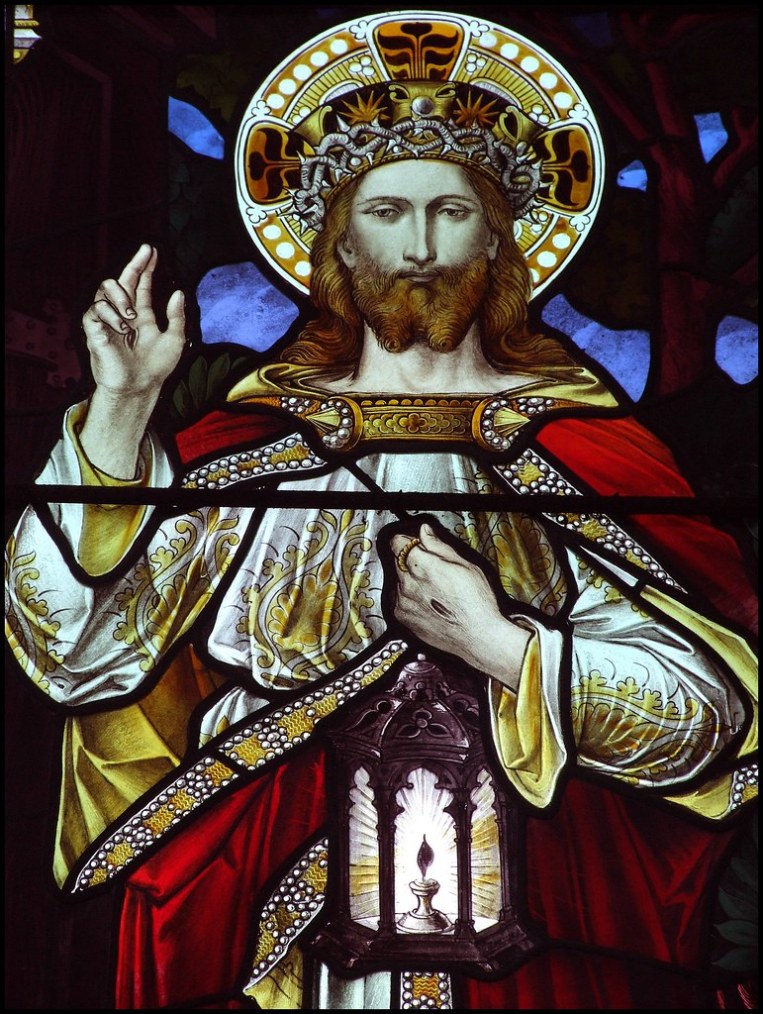
The first two-thirds of today’s Gospel passage from Chapter 8 of Luke evoke another saying of Jesus:  “I am the light of the world; he who follows me will not walk in darkness, but will have the light of life” [John 8:12].  Jesus speaks in that verse both about Himself as “the light of the world” and also about the one who follows Him.

Today’s Gospel passage also speaks about both Christ and the one who follows Him.  Yet it’s focus is upon the action that the follower ought to take:  that is, placing the light on a lampstand “so that those who enter may see the light”.

In other words, this passage is not only about Christ and His follower, but also about those with whom the followers comes into contact.  In a word, this passage focuses upon “mission”.  The follower of Christ is someone who works so that the Light of Christ reaches others, illuminating them and the world around them.

Saturday of the Twenty-fourth Week in Ordinary Time

Saturday of the Twenty-fourth Week in Ordinary Time
Luke 8:4-15

“Whoever has ears to hear ought to hear.”

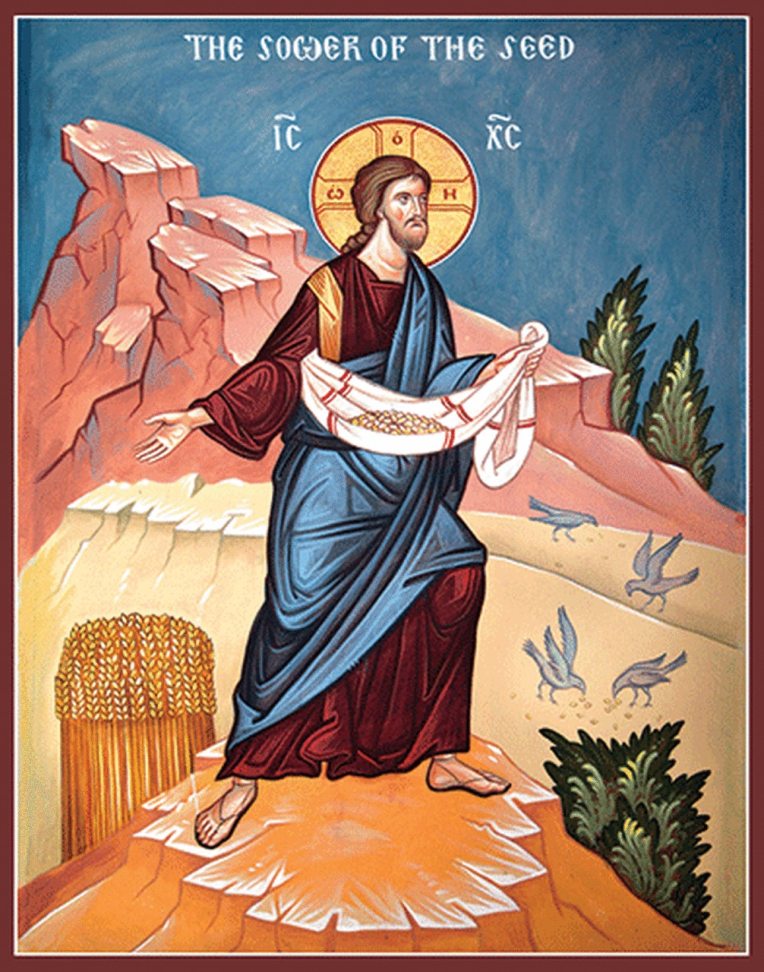
The parable Jesus preaches to us today is well-known.  Its meaning is clear because Jesus Himself explains the parable:  something He rarely does.  Given this explanation, we might apply the parable to ourselves as an examination of conscience.  While Jesus describes the different elements of the parable as relating to different groups of persons, one can reflect on these elements as relating to oneself at different times in one’s life.

“The seed is the Word of God”, that is, God the Son, as St. John tells us in the prologue to his Gospel account.  Our lives as disciples are all about allowing this seed to sink into our souls:  allowing God the Son entrance into our hearts and minds, so that He might live in us.

When are we “on the path”?  When are we so shallow in giving our attention to Jesus that the devil snatches Him from our lives?  When are we “on rocky ground”?  When do we allow temptation to have the upper hand over Christ?  When are we “among thorns”, allowing our worldly concerns to choke off both God the Son and the graces He wills to bring into our lives?  In the Holy Eucharist ask the Word made Flesh to help you till the field of your life so that it might be “rich soil”.