The Twenty-ninth Sunday in Ordinary Time [B]

The Twenty-ninth Sunday in Ordinary Time [B]
Isaiah 53:10-11  +  Hebrews 4:14-16  +  Mark 10:35-45

So let us confidently approach the throne of grace to receive mercy and to find grace for timely help.

The New Testament Letter to the Hebrews, from which Sunday’s Second Reading is taken, reflects upon the meaning that suffering gains through Jesus’ Cross.  Here one of the best-known definitions of “courage” is illustrated:  “not the absence of fear, but fear that has been prayed over.”

In other words, courage means being willing to bring God into a decision about whether to fight or flee from conflict.  Once God shows you whether a conflict demands your involvement, the stakes are raised.  Because to abandon a conflict in which God has staked a claim is to abandon God Himself.

But does God really care about taking sides?  Isn’t it better just to leave people alone?  Maybe all of us, instead of holding fast to what the Church teaches, should just let everyone do what they want.  Are we wrong to insist that non-Catholics, just as much as Catholics, are held by God to certain teachings or beliefs?  Or should we accept the majority opinion of the United States Supreme Court in a 1992 ruling defending abortion?  In that case of Planned Parenthood vs. the pro-life governor of Pennsylvania, the majority opinion of the United States Supreme Court made the following declaration:  “At the heart of liberty is the right to define one’s own concept of existence, of meaning, of the universe, and of the mystery of human life.”

In the face of this sort of claim, you—as a Catholic—have four paths to consider taking.  Two of these are against conflict, while the other two accept conflict.

The first path that leads away from conflict is the path of resignation.  This is the path of least resistance; the path of joining in with the culture that surrounds us.  Countless Catholics walk this path today:  many are politicians; many are members of the media; some are ordinary, middle-class citizens; some are even clergy.  They walk this liberal path away from conflict saying, “Let’s have everyone create his own morality.  It’s not our place to impose our morality on others.”  But this is not our Catholic Faith.

However, there’s another path that also leads away from conflict.  This is the path that leads into a bunker.  This conservative path away from conflict says, “Modern culture today is going to ‘you know where’ in a hand basket.”  So these people, of whom many are Catholic, decide to close in on themselves, and close above them the door to their bunker.  Inside, they carry on, living the Faith as they’ve been given it, but not passing it on to anyone except their own children, ignoring the mandate of Holy Mother Church to be a missionary people.  The path into a bunker is not our Catholic Faith.

Those are the two paths that lead away from conflict.  But in the opposite direction, there are two paths that accept conflict.  Each demands its own type of courage.

The first path that accepts conflict is the path of aggression.  This is the path of greatest resistance.  Only those who enjoy conflict follow this path.  The goal of this path is dominance.  Its operating theory is that life is a “zero-sum game”:  it says, “I can’t win, unless you lose.”  It’s like the card game “War”, and is just as interesting.  The type of courage needed to walk this path is the courage of the child’s game “King of the Hill.”  But this is not our Catholic Faith.

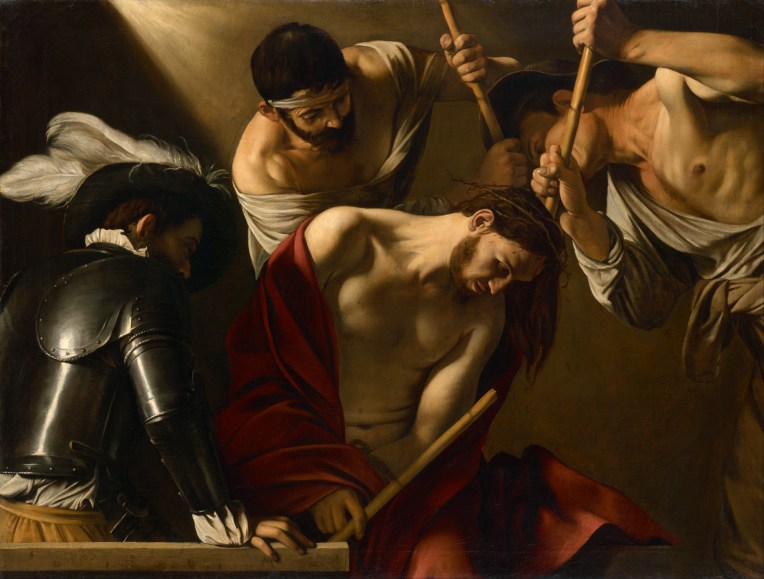
The second path that accepts conflict is the path that demands the Christian virtue of courage.  This form of courage is the courage of Christ the King, who did not dominate as the king of the hill of Calvary, but sacrificed his life there so that others could join Him:  not just us, but all mankind, gathered there with Mary and the Beloved Disciple in worship of the King who died for us.  This is our Catholic Faith.

We fight—by defending the Truth about the dignity of human life—not in order to defeat others, but in order to bring them to see and live the Truth.  We do this because seeing and living the Truth sets people free, enriching the life of every person and our entire culture:  transforming it as a leaven from within, and leading those who love this Truth into the life of God.
Thursday of the Twenty-eighth Week in Ordinary Time [I]

Thursday of the Twenty-eighth Week in Ordinary Time [I]
Romans 3:21-30  +  Luke 11:47-54
October 14, 2021

“Yes, I tell you, this generation will be charged with their blood!”

On the occasions when Jesus refers to persons from the Old Testament, it’s usually Moses or Abraham of whom He speaks.  Today’s Gospel passage, though, is the only time that Jesus refers to Abel (along with the parallel passage in Matthew 23:34).

What’s intriguing about Jesus’ reference to Abel is that He speaks about him in relation to the Old Testament prophets.  Jesus speaks about “the blood of all the prophets shed since the foundation of the world”.  Clearly Jesus doesn’t agree with those modern scholars who consider the first generations of mankind in Genesis to be literary creations.  After all, why would Jesus’ own generation, as He declares, be charged with the blood of a fictional character?

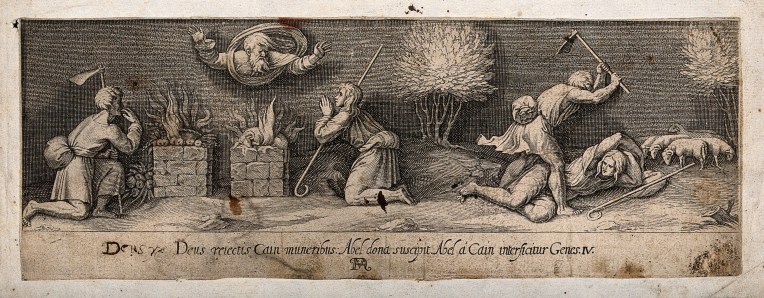
Regardless, we need to reflect on why Jesus included Abel among the prophets.  Certainly, like the prophets, Abel was murdered for professing his belief in God.  But his profession was not made verbally, as prophets usually proclaim their prophecies.  In the fourth chapter of Genesis, we hear that Abel “brought to the Lord an offering… of the firstlings of his flock and of their fat portions.  And the Lord had regard for Abel and his offering, but for Cain and his offering He had no regard” [Gn 4:3,4-5].

It might seem cavalier to say that Cain and Abel were engaged in the first of mankind’s “liturgy wars”.  Nonetheless, Jesus pointing our attention to the prophetic nature of right worship reminds us of the need for “orthodoxy” within the Mystical Body of Christ.

Wednesday of the Twenty-eighth Week in Ordinary Time [I]

Wednesday of the Twenty-eighth Week in Ordinary Time [I]
Romans 2:1-11  +  Luke 11:42-46
October 13, 2021

“You pay tithes … but you pay no attention to judgment and to love for God.”

If the scholar of the Law who interrupted Jesus’ lambasting of the Pharisees thought he would earn an apology from Jesus, he quickly realized otherwise.  Contrary to modern notions of Jesus as a sort of “spiritual teddy bear”, today’s Gospel passage splashes cold water on our souls, forcing us to ask whether Jesus might speak of us in a similar manner.

However, in addition to the sober fact of Jesus’ forthright willingness to condemn those deserving condemnation, we could consider in turn each of the “woes” that Jesus articulates today.  Here consider just the first.

“You pay tithes… but you pay no attention to judgment and to love for God.”  All three of these objects of religion—tithes, judgment, and love—are due to God from human persons.  They “belong” to God, we might say, each in its own manner.  Why might it be that the Pharisees are willing to give the first, but not the latter two?

There certainly is a hierarchy among the three.  “Love for God” is due God because “God is love”.  Judgment is due God in that only He—all-loving and all-knowing—can judge truly.  Tithing of materials goods such as “of mint and of rue and of every garden herb” is due God because He is the Lord of creation.  Nonetheless, the ascent to God in the practice of religion involves the ascent of a staircase with many steps.  The tithing of material goods is one of the lower steps, and the Pharisees are content to rest there.  This step is meant to lead us further upwards: closer to God, towards a higher share in God’s divine nature of eternal love.

OT 28-3


Tuesday of the Twenty-eighth Week in Ordinary Time [I]

Tuesday of the Twenty-eighth Week in Ordinary Time [I]
Romans 1:16-25  +  Luke 11:37-41
October 12, 2021

The wrath of God is indeed being revealed from Heaven against every impiety and wickedness ….

Saint Paul wastes no time.  After a brief introduction to his longest and most important epistle, he dives into his first point of contention.  It becomes obvious quickly that Paul does not fear debate.

While St. Paul’s Epistle to the Romans professes eternal truths, these have very practical consequences.  For example, he professes the Gospel to be “the power of God for the salvation of everyone who believes”.  For in the Gospel “is revealed the righteousness of God from faith to faith”.

This power for salvation implies that there are those who are not saved:  those who do not receive righteousness.  St. Paul explains plainly that God handed “those who suppress the truth by their wickedness” over “to impurity through the lusts of their hearts for the mutual degradation of their bodies.”  He expands on this by noting that they “exchanged the truth of God for a lie and revered and worshiped the creature rather than the creator”.

Idolatry is St. Paul’s first point of contention, against which he opposes the life of faith.  Those against whom he preaches, he notes, “became fools and exchanged the glory of the immortal God for the likeness of an image of mortal man or of birds or of four-legged animals or of snakes.”

Monday of the Twenty-eighth Week in Ordinary Time [I]

Monday of the Twenty-eighth Week in Ordinary Time [I]
Romans 1:1-7  +  Luke 11:29-32
October 11, 2021

Through Him we have received the grace of apostleship ….

Romans is the longest of St. Paul’s letters:  that’s one reason why you find it first among all the apostolic letters, immediately following Acts of the Apostles.  But Romans is also the most profound of St. Paul’s letters.  St. Paul explores for the Romans every important theme of the Gospel.  This week—perhaps in an hour of Adoration, or in your prayer corner at home—take your study bible and read the introduction to this great letter of St. Paul.

Given its importance, our First Reading at weekday Mass comes from Romans for the next four weeks.  Within today’s passage is a brief phrase that sounds innocent enough, but is full of matter for spiritual reflection.  Saint Paul points out to the Romans that they are “called to be holy”.  The same, of course, is true of each of us Christians.  One could say that the whole of Romans is an unpacking of this call.

The word “called” is used three times in today’s First Reading.  Reflect on how these three instances fit together.  The first is in the first sentence of Romans, where Paul describes himself as “called to be an Apostle and set apart for the Gospel of God”.  The second is where Paul, fulfilling his own calling, describes the Roman Christians as “called to belong to Jesus Christ”.  The third is Paul’s concluding phrase in describing those to whom he’s writing:  “called to be holy”.  We can say that the last phrase describes all Christians, who through baptism begin to “belong to Jesus Christ”:  that is, His Mystical Body which is the Church.  Within this Church each member has his or her particular role, so that all the members of the body might work together.  For Paul, this particular vocation was apostleship.  For yourself, pray for an increase of grace today either to discern or to live out this vocation, so that through it you may grow in that holiness which is participation in Jesus Christ.

OT 28-1 Year I

Saturday of the Twenty-seventh Week in Ordinary Time [I]

Saturday of the Twenty-seventh Week in Ordinary Time [I]
Joel 4:12-21  +  Luke 11:27-28
October 9, 2021

The heavens and the earth quake, but the Lord is a refuge to His people ….

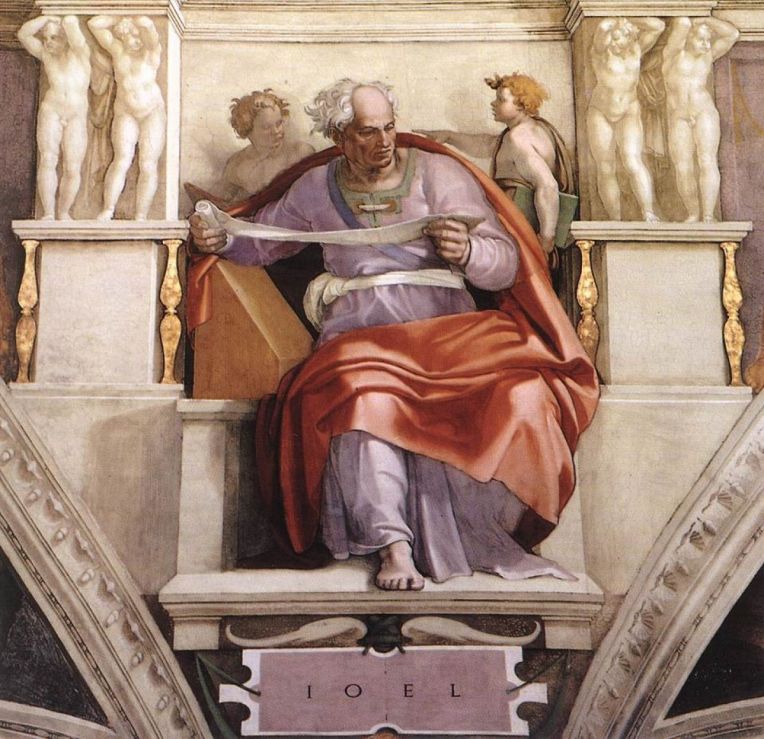
Today’s First Reading from the Book of Joel is taken from its final chapter.  The second half of Joel concerns the judgment of the Lord at some unspecified future time.  This “day of the Lord” is described in apocalyptic terms that are much more sweeping than the prophecies Joel makes in the first half of the book.

Eschatology is the branch of theology that concerns “the last things”.  The Greek word “eschaton” means “end” in the sense of “goal” or “fulfillment”.  In both the Old and New Testaments, the “end times” includes the Lord’s judgment.  But with the coming of the Gospel, this judgment was revealed in a new light.  That light, of course, is “the light of the world” [John 8:12]:  Jesus Christ.

Old Testament eschatology, however, is not without hope even if it is without saving knowledge of the One who will fulfill that hope.  Today’s First Reading uses language that can seem dramatic and frightening, but which is finally reassuring for those who are truly the Lord’s people.  For example, we hear today that the “heavens and the earth quake, but the Lord is a refuge to His people”.  For us Christians, we can reflect on this First Reading in light of the Church being the People of God, and how our sharing in the life of the Church reflects our closeness to the Lord Himself.

OT 27-6 Year I

Friday of the Twenty-seventh Week in Ordinary Time [I]

Friday of the Twenty-seventh Week in Ordinary Time [I]
Joel 1:13-15;2:1-2  +  Luke 11:15-26
October 8, 2021

Gird yourselves and weep, O priests!

For just two weekdays our First Reading at Holy Mass comes from the Old Testament Book of Joel.  Joel is one of the twelve minor prophets.  These twelve can be divided into three historical groups:  those serving before the fall of the Kingdom of Israel, those serving between the fall of Israel and the Babylonian exile, and finally those serving after the return from the Babylonian exile.  Joel falls into the last of these three groups.

The Book of Joel is only four chapters long.  Today’s First Reading is from the first two chapters, and is a warning of the Lord’s judgment.  The setting for this warning was natural:  a lack of rain and a plague of locusts had decimated the crops necessary for survival.  Joel’s warning is that this is only a sign of even worse suffering to come from the Lord.  His people seem unprepared for His judgment, and Joel’s prophecy is meant to rouse them.

We can reflect on today’s First Reading in two ways:  from a natural and then from a supernatural perspective.  From the natural point of view, although few of us live directly off the land, all of us directly suffer to some extent when a local or national economy is weak.  Temporal needs, when pressing, can either distract our attention from God, or turn us closer to Him for His providential care and guidance.  From the supernatural point of view, the judgment that Joel threatened in terms of earthly suffering is only a foreshadowing of the eternal suffering that awaits us if we exclude God from our lives, and live as if this is the only world in which we’re meant to live.

OT 27-5 Year I

The Twenty-eighth Sunday in Ordinary Time [B]

The Twenty-eighth Sunday in Ordinary Time [B]
Wisdom 7:7-11  +  Hebrews 4:12-13  +  Mark 10:17-30

Yet all good things together came to me in her company, and countless riches at her hands.

To fine tune our prayers so that they’re more effective, here’s a question for you.  But be careful, because it’s a trick question:  “When we pray, should we pray for a good thing?”  The answer is “Yes… and No.”  This Sunday’s Scripture passages explain why.

At the beginning of the First Reading, the virtue of prudence is invoked.  The Old Testament scribe proclaims:  “I prayed, and prudence was given me; I pleaded, and the spirit of wisdom came to me.”  This virtue of prudence is actually the explanation for that “No” answer.  If someone were to ask you, “Should you pray for a good thing?”, then you should answer “No”, and prudence is the reason.  The definition of prudence shows us why we should not pray for just a good thing.

According to the Catechism of the Catholic Church, prudence enables a person to do two things.  First, prudence helps one to see one’s “true good” in any given circumstances:  it helps one recognize which good to aim for.  Second, prudence helps one to choose the means to reach this “true good”.

But what is this “true good”?  The true good is the best good out of many good choices.

When we are little, our parents teach us to make moral choices by recognizing right from wrong; good from bad; what is holy from what is evil.  This is the first stage of moral wisdom.  This is the foundation of making moral choices.  It’s essential that we understand that difference.  In fact, to put it bluntly, this difference is the difference between Heaven and hell.  But as a Christian, you have to build upon that foundation.

The foundation of Christian morality is about good versus bad.  We build on that by hearing God call us deeper than only choosing what is good.  God wants us to do far more:  He wants us to choose what is best over and above what is merely good.  It’s in this sense that God does not want you to choose a good thing:  God wants you to choose the best thing.  “Good” is not good enough.  Only “the best” is good enough for God, and for you.

Take the example of spending money.  One hundred years ago, it was easy for the average Christian to make good moral choices about spending money because the choices were largely between good and bad:  survival or destitution.

Contrast that way of life with life today, when a significantly smaller percentage of a family’s income is spent on necessities.  People today face far more difficult choices in regard to spending:  they’re difficult because people have so many choices.  Modern people drown in the number of good choices that they have.

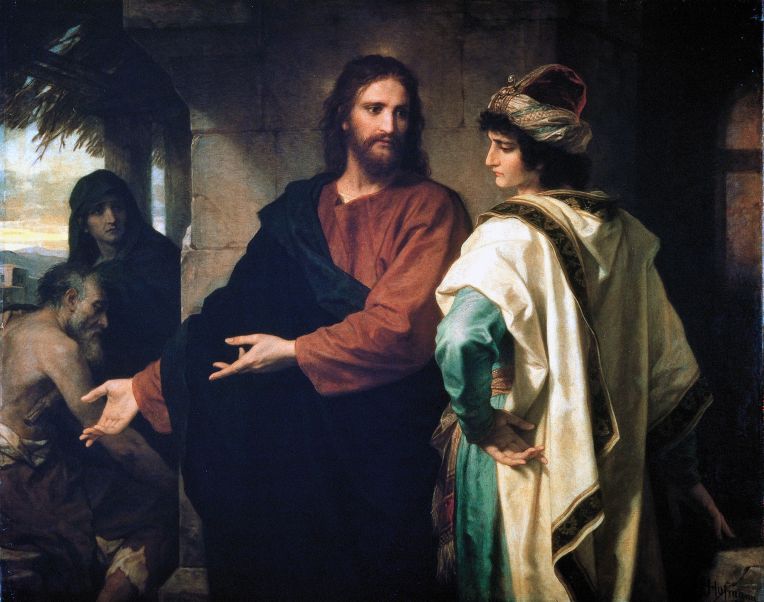
Nonetheless, God calls modern people to choose not just any good thing, but the best good thing in any situation.  Discerning that takes more time, energy, and prayer.  This is why, in general, poor people are happier than rich people.  This is one reason why it’s “harder for a camel to pass through the eye of a needle, than for a rich person to enter the Kingdom of God.”

Of all the struggles that parents face—and they face many, given that their children are surrounded by a culture opposed to Christianity—one of the harder struggles is to instill the virtue of prudence into their children.  Humility, by contrast, is far easier for children to acquire because life itself has a way of teaching one humility.

After humility, prudence is the second-most foundational virtue.  Where humility is the mother of all the other virtues, the Catechism uses a striking image to describe prudence:  it calls prudence the “charioteer” of all the other virtues [CCC 1806].

In other words, you can think of prudence as being the “inner ear” of the Body of Christ.  As your inner ear controls your body’s sense of balance, so prudence controls the balance of your soul.  You could be the strongest football player, the most graceful ballerina, or the most agile sprinter in the world, but if that one little part of your inner ear didn’t work, you would fall flat on your face.  Other virtues may be more powerful, and even more important, but without prudence, they won’t help you reach the greatest good:  each day in this world, or eternally in Heaven.

Thursday of the Twenty-seventh Week in Ordinary Time

Thursday of the Twenty-seventh Week in Ordinary Time
Luke 11:5-13

“… how much more will the Father in Heaven give the Holy Spirit …?”

As Saint Luke the Evangelist continues to set before us Jesus’ teachings about prayer, we hear a lot about the prayer of petition.  Petition is one of the four chief types of prayer that human beings voice to God.  The four types are easily remembered by the acronym “P-A-C-T”:  this word reminds each of us of the pact, or covenant, that each of us entered at the moment of baptism.

The acronym “P-A-C-T” stands for:  petition, adoration, contrition, and thanksgiving.  Far more important than what we say to God, though, is what God says to us.  Still, what we say in prayer is important for many reasons, one of which is that our vocal prayers reveal to us the state of our own selves.

One way in which to reflect on the differences among these four types of vocal prayer is to consider their use in the three states of the Church.  The Church lives on earth as the Church Militant, in Purgatory as the Church Suffering, and in Heaven as the Church Triumphant.  Ask yourself, then:  which of these four types of prayer exist—or have meaning—in each of the three states of the Church?  All four are meaningful on earth, but only two have meaning in Heaven.

There is no need for prayers of petition in Heaven.  Petition is the prayer of a pilgrim, on his way to a better place.  What we ask for in petition reveals our own heart:  where we believe we are, and where we believe we’re headed, or at least where we want to go.  Our petitions are a gauge of our fidelity to the pilgrimage to which God has called us.

OT 27-4