Saturday of the Thirty-fourth Week in Ordinary Time [Years I & II]

Please note:  two reflections are given below, each based on the First Reading or Responsorial Psalm of the day.  The Year I readings apply to years ending in an odd number (for example, 2023), while the Year II readings apply to years ending in an even number, such as 2024.  The Gospel Reading is the same in both years.

+     +     +

Saturday of the Thirty-fourth Week in Ordinary Time [Year I]
Daniel 7:15-27  +  Luke 21:34-36

“Beware that your hearts do not become drowsy ….”

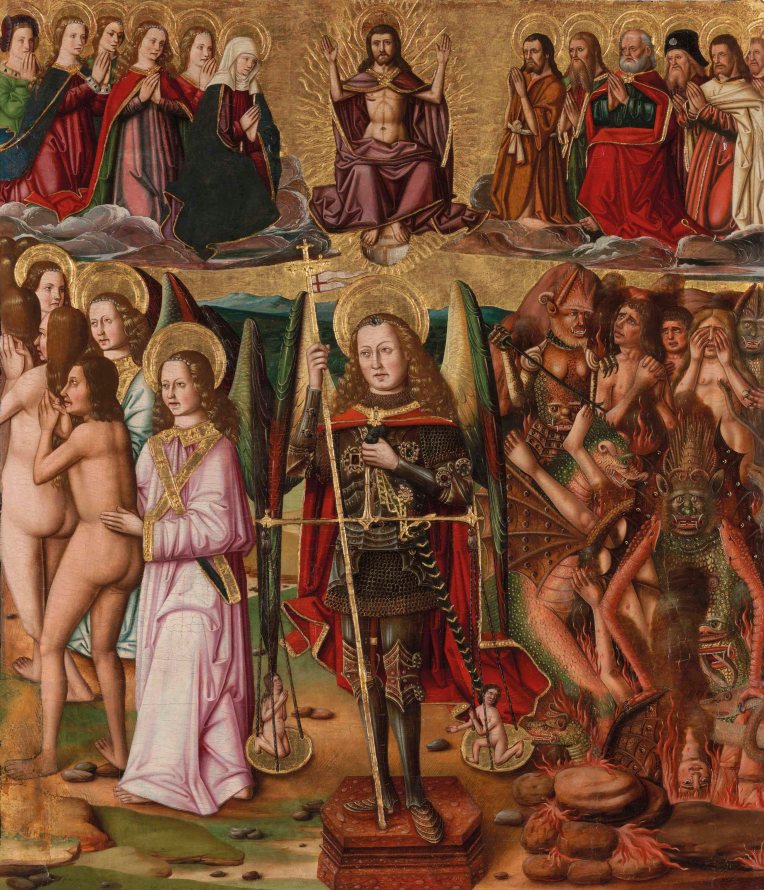
Today is the liturgical equivalent of New Year’s Eve.  With the end of the Church’s liturgical year, there is a note of celebration.  We look back at this concluding year of grace and give thanks to God for the gifts of life and growth in Christ.

Nonetheless, the Church’s liturgical year is never simply about the here and how.  The end of each liturgical year is not simply about looking back at the previous 52 weeks.  Each year looks back far into history; indeed, even back to that time “in the beginning” when God chose to act as a gracious Creator.  Each year also looks forward in hope to the good things that God has promised us.  It’s this looking forward in hope that the year’s end in particular focuses upon.

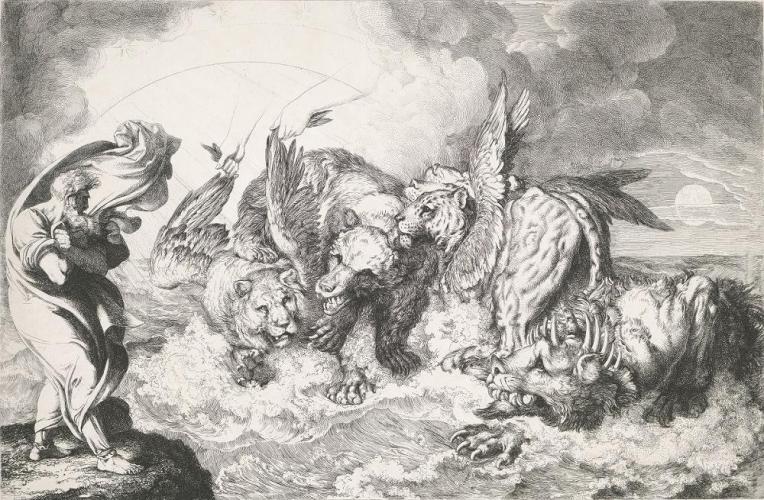
At first glance, the Scriptures of the Sacred Liturgy at the end of the year may not seem very hopeful.  In fact, they may seem to focus on quite ominous matters.  The “fourth beast” in Daniel’s vision in the First Reading illustrates this focus.  Jesus in the Gospel passage seems to issue a warning about “that day”, which “will assault everyone who lives on the face of the earth”.  Jesus also implies, however, that His followers have good reason for hope.  He encourages them to hope for “the strength to escape the tribulations… and to stand before the Son of Man.”  This Son of Man is our hope and our Salvation.
+     +     +

Saturday of the Thirty-fourth Week in Ordinary Time [Year II]
Revelation 22:1-7  +  Luke 21:34-36

“For that day will assault everyone who lives on the face of the earth.”

The Responsorial Psalm on this final day of the liturgical year shows us how the Church’s year is cyclical in nature.  The psalm’s refrain is a link, tying together this final day of the year to the season of Advent with which the new year begins this evening.

“Marana tha!  Come, Lord Jesus!”  We cry for the coming of the Messiah, as it was in the beginning, is now, and ever shall be until the end of time.  In the beginning, mankind fell from his state of grace.  But God in loving solicitude for His fallen creatures promised to send a savior, and so man began his cry for the Messiah to come.

When He did come, His own people received Him not, as St. John the Evangelist proclaims in the prologue to his Gospel account.  His own people in fact put Him to death.  Yet it was for this that the Messiah had come.

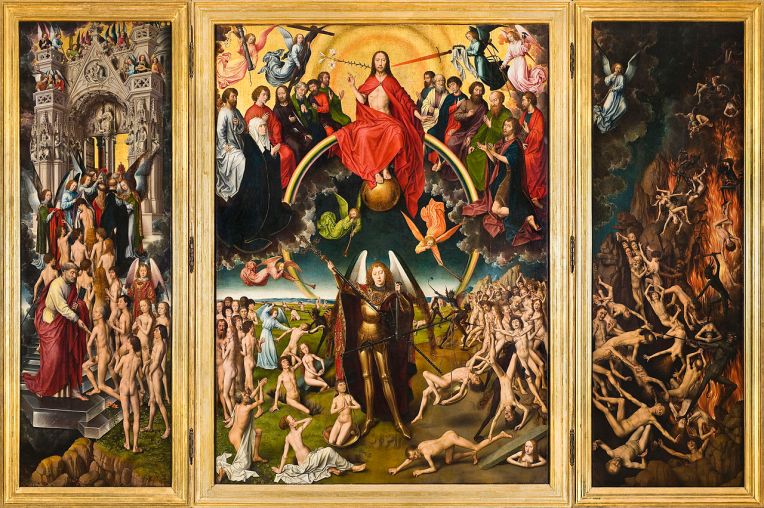
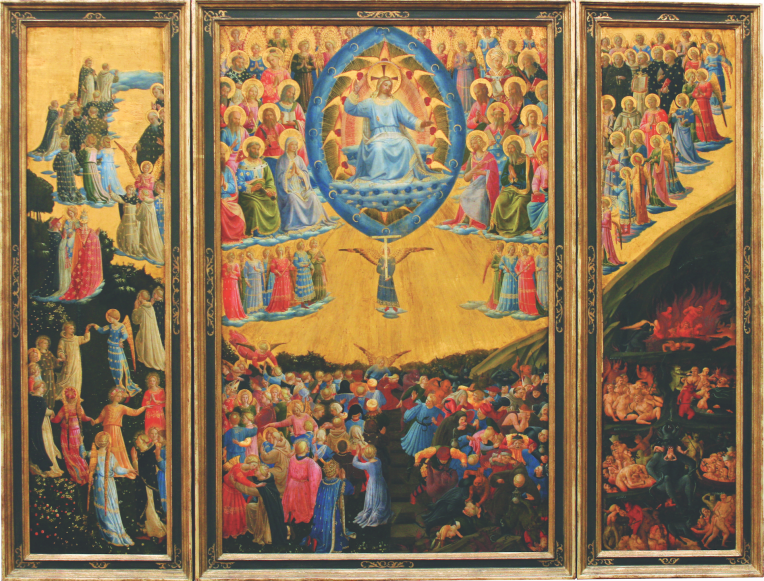
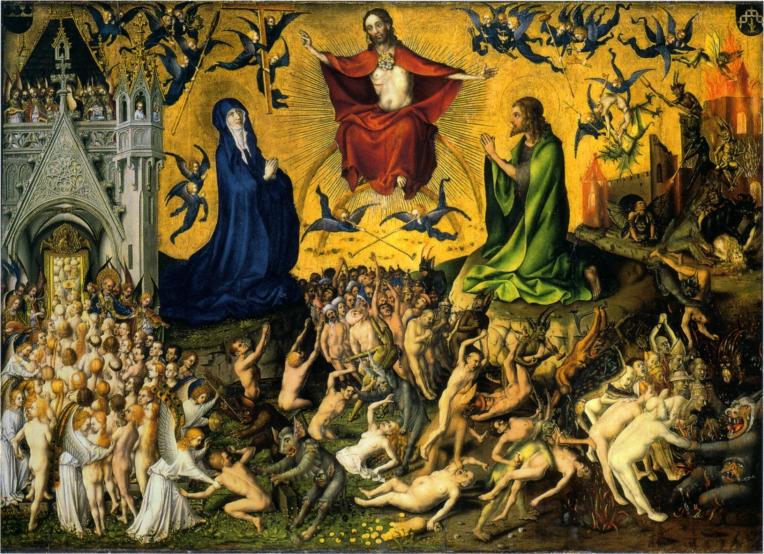
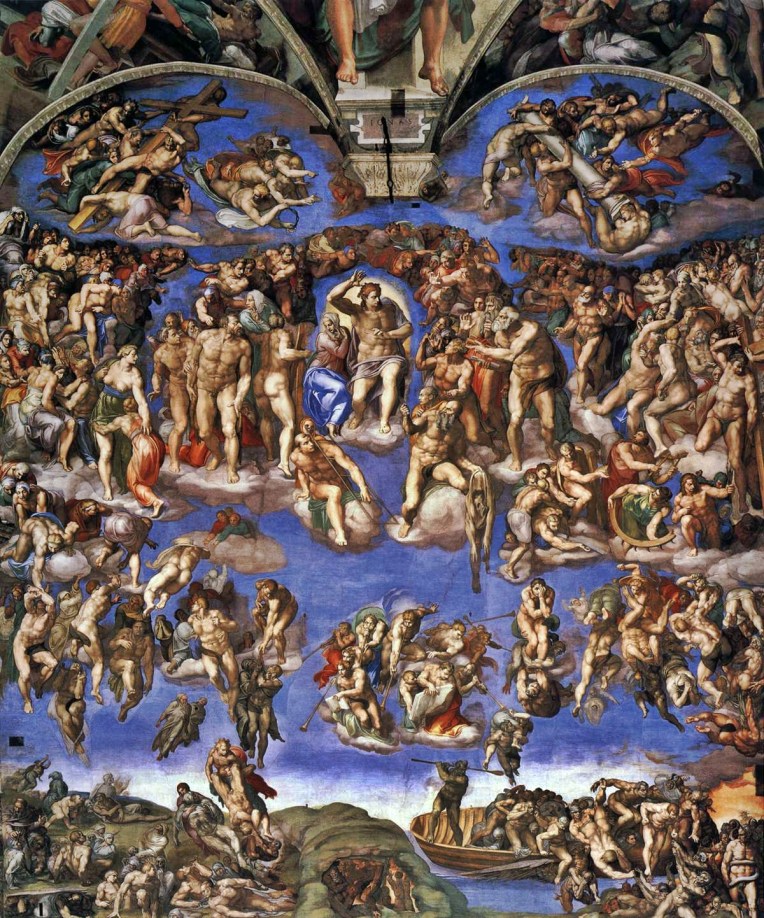
He will come again at the end of time.  When He does, each member of the human family will be judged according to three points.  Do you believe that Jesus first came to destroy your sins?  Do you believe that Jesus will judge you in the end according to your choice to live for or against Him?  Do you believe at this moment that your life is His to live, and that you must cede it to Him?
Friday of the Thirty-fourth Week in Ordinary Time [Years I & II]

Please note:  two reflections are given below, each based on the First Reading or Responsorial Psalm of the day.  The Year I readings apply to years ending in an odd number (for example, 2023), while the Year II readings apply to years ending in an even number, such as 2024.  The Gospel Reading is the same in both years.


+     +     +

Friday of the Thirty-fourth Week in Ordinary Time [Year I]
Daniel 7:2-14  +  Luke 21:29-33

His dominion is an everlasting dominion that shall not be taken away ….

Today’s First Reading from Daniel follows naturally from last Sunday’s celebration of Christ the King.  There are few queens and kings in the world today who truly rule as monarchs, and the peoples of many nations (such as the United States) reject the very idea of having a queen or king.  Indeed, in modern Western thought, government is “by the people”, and all elected officials hold power only through consent of the governed.  While such ideas hold merit when it comes to civil government, problems arise when they are applied to the spiritual life and to the life of the Church.

In Daniel’s vision, the “son of man” “received dominion, glory and kingship; nations and peoples of every language serve him.  His dominion is an everlasting dominion”.  The word “dominion” comes from the Latin word “dominus”, meaning “lord” (either human or divine).  Older Catholics are familiar with the phrase “Dominus vobiscum” (“The Lord be with you”).  The English word “dominate” is a cognate.

Secular Western culture rejects all ideas of domination, even in the spiritual life.  There are many “brands” of religion and spirituality that reject even the notion that God should be seen as a “lord” who has “dominion”.  At the heart of many modern religions and spiritualities is the idea enshrined in a modern U. S. Supreme Court decision that each human being has a right to create her or his own view of reality, including the definition of life itself.  Whatever the origins of such ideas, they cannot be reconciled with the Bible, whose God is, at one and the same time, both a loving Father and a providential Lord.

OT 34-5 Year I

+     +     +

Friday of the Thirty-fourth Week in Ordinary Time [Year II]
Revelation 20:1-4,11—21:2  +  Luke 21:29-33

“Heaven and earth will pass away, but my words will not pass away.”

The last verse of today’s First Reading offers a key to understanding the entire Book of Revelation.  Mysterious as most of its imagery is, the image of “a bride adorned for her husband” is one that we readily understand.

The entire sentence where he describes this wedded couple is:  “I also saw the holy city, a new Jerusalem, coming down out of heaven from God, prepared as a bride….”  This bride is the Church, and her husband is Christ.  This might seem odd, since it’s a city that is the bride.  But a city is a collection of persons joined together by several ties.  Here St. John is insisting that the most important tie is that of its members being wedded to the bridegroom.  St. John is describing the Church as a city, whereas St. Paul uses the metaphor of “the Body of Christ”.  As members of this heavenly Jerusalem, how can we reflect on our own participation in the Church?

We must think of this city as having a divine center, and ask whether our participation in the life of this city is oriented to this center, or whether instead we live in a little back alley of the city, focused on our own interests, apart from the needs of others and the will of the city’s “mayor”, Christ.

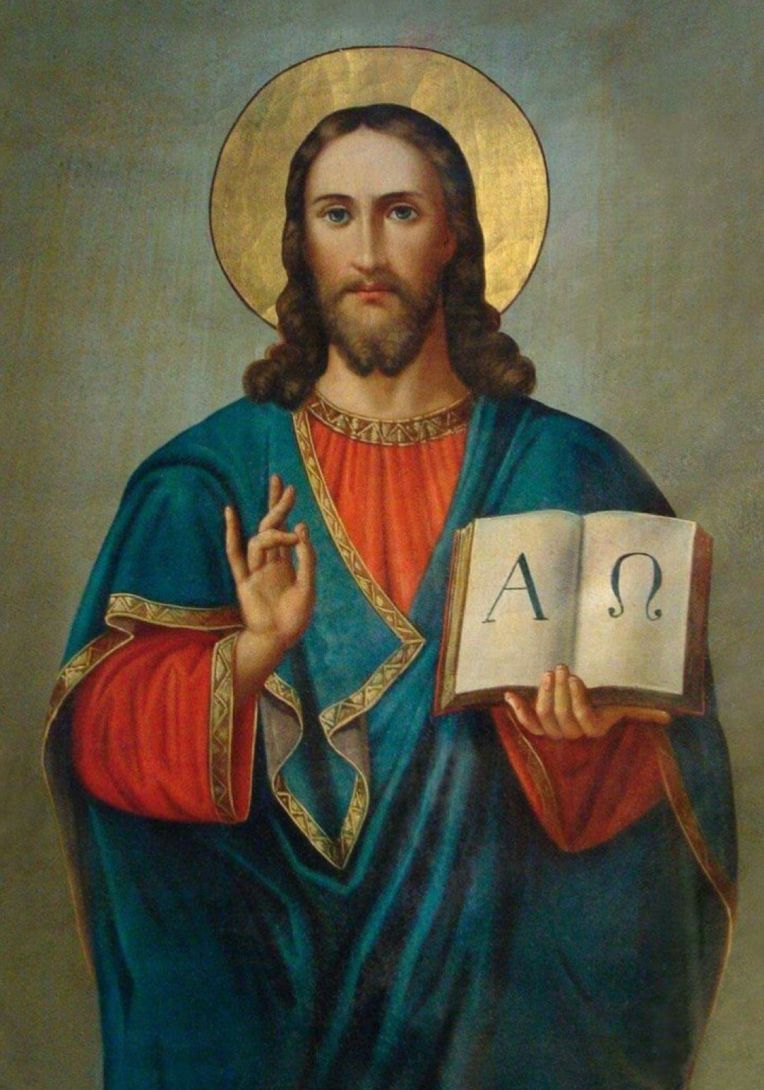
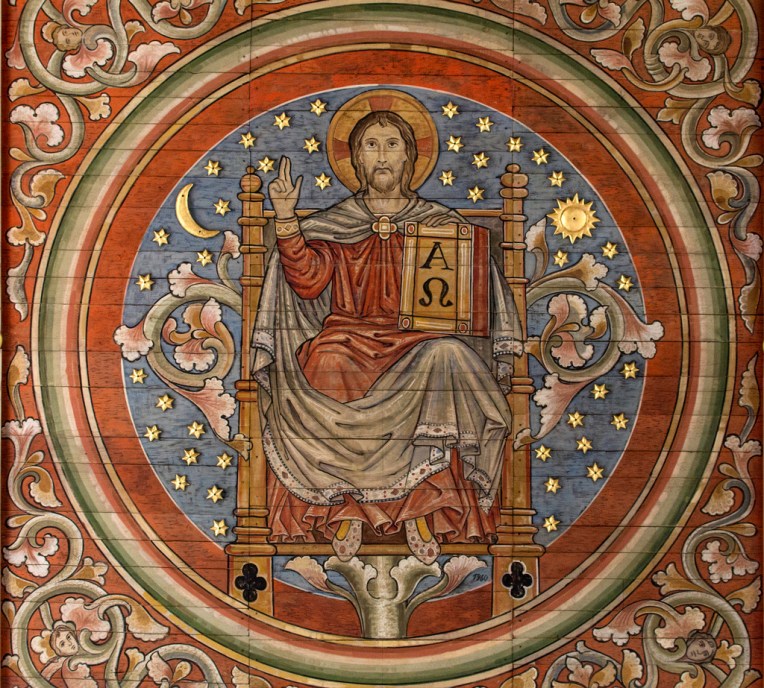
“The holy city” is the Church, the Bride of Christ.  But on this next-to-last day of the Church’s year, as her reflection focuses intently on the Second Coming, two facts about this city of Jerusalem especially stand out.  The first is the historical fact that the city’s savior and bridegroom was crucified outside the city.  The second is the spiritual fact that in the vision of the Beloved Disciple, this “new Jerusalem, [comes] down out of heaven from God, prepared as a bride”.  This city is “prepared as a bride” as it comes “down out of heaven”.  That is to say, it’s God’s grace, and not man’s efforts, that make this bride what she is.  We need to disavow the falsehood of those who exhort:  “Let us build the city of God.”  This is the cry of Babel.  The cries of Heaven are cries of joy, that there, the last thing is the first thing, the Alpha and the Omega, the love which builds the city of God, washes away our sins, and makes us faithful citizens.

The First Sunday of Advent [C]

The First Sunday of Advent [C]
Jeremiah 33:14-16  +  1 Thessalonians 3:12—4:2  +  Luke 21:25-28,34-36

“… pray that you have the strength to escape the tribulations that are immanent and to stand before the Son of Man.”

You might have heard the saying, “Those who cannot remember the past are condemned to repeat it.”  In fact, history is important for many reasons.  History roots our lives in a reality deeper than the passing moment, preventing us from being like the seed in the Parable of the Sower that withers for lack of roots [see Luke 8:4-15].  Or to use a similar metaphor, history is like the long, thick roots of a huge, ancient tree, which not only provide nourishment from the ground, but also ground the tree during violent weather.

This offers one reason why, on today’s start of the Church’s new year, she beckons us to look to the past.  More specifically, the Season of Advent that begins today draws our attention to the right way and the wrong ways to prepare for a visit from God.

God’s plan for visiting His People began at the dawn of human history.  “In the beginning,” when Adam and Eve committed the Original Sin, God could in justice have abandoned His fallen creature.  In love, however, God made them a promise of redemption [see Genesis 3].  The many centuries stretching from Eve to Mary—from Adam to Christ—are one long Advent.  That historical advent consisted of both man preparing himself to receive the Messiah, and God preparing man to receive the Messiah.  We hear of this long plan, with all its fits and starts, in the First Readings at Holy Mass during Advent.

The long arc of Old Testament history, however, is not the only lens through which Advent looks at how to prepare for God’s visit.  The Gospel Readings offer perspectives that complement that of the Old Testament.  The most obvious difference between Advent’s First Readings and Gospel Readings is in the spans of time that they cover.  The Old Testament’s preparation for the Messiah’s arrival ranges over many centuries of history.  The Gospel Readings focus upon three different spans of time.

The most obvious focus of the Gospel Readings during Advent is the nine months preceding Jesus’ birth.  The Blessed Virgin Mary offers us the perfect example of how to prepare for the Messiah’s visit.  Unlike the sinful priests, prophets, and kings of the Old Testament, Mary not only accepts God at His Word:  she accepts God’s Word with such faith that that Word becomes flesh within her.  She not only follows the Word, but bears the Word.  If there’s a single quote of Mary that sums up her preparation for God’s visit, it’s:  “Behold, I am the handmaid of the Lord.  Let it be done unto me according to thy Word.”

A less obvious focus of the Gospel Readings during Advent is the “birth” of Jesus’ public ministry.  St. John the Baptist is the herald of the Messiah’s mission among the People of God.  John prepares them to accept not only God’s visit, but more specifically the mission that’s the reason for His visit.  If there’s a single quote of John that sums up his preparation for God’s visit, it’s:  “Behold, the Lamb of God!  Behold him who takes away the sins of the world!”

The least obvious focus of the Gospel Readings during Advent is the Second Coming of Jesus at the end of time, and its accompanying Final Judgment.  Jesus’ words in today’s Gospel Reading relate to His Second Coming, accompanied as that distant day will be by “signs in the sun, the moon, and the stars,” with earthly nations “in dismay”.

Those events might seem to have little in common with the peaceful scene in our Nativity sets.  Yet conflict and violence accompany each period of preparation for God’s visit to His People:  the long arc of the Old Testament filled with unfaithful earthly pilgrims; Mary’s pregnancy during which King Herod and his retinue lurk in the shadows; John’s heralding the Lamb of God for whose sake he will be martyred; and the preparation of every human person for the Final Judgment.  The last words of Jesus in today’s Gospel Reading apply to each of these periods of preparation:  “pray that you have the strength to escape the tribulations that are immanent and to stand before the Son of Man.”  The King of Kings drops down from Heaven to bring peace and salvation, but no one ought to overlook the costs that these gifts bear.

Thursday of the Thirty-fourth Week in Ordinary Time [I]

The reflection for Thanksgiving Day is found in a separate post.

Thursday of the Thirty-fourth Week in Ordinary Time [I]
Daniel 6:12-28  +  Luke 21:20-28
November 25, 2021

Some men rushed into the upper chamber of Daniel’s home and found him praying ….

Jesus issues a sharp challenge to you today.  His words might even be described as frightening.  Yet Jesus is not preaching fire and brimstone.  He’s not preaching, at least directly, about sin and damnation.  He is preaching, though, about the worldly desolation of Jerusalem, and signs above and upon earth that will cause people to “die in fright in anticipation of what is coming upon the world”.

Today’s First Reading from this last week of the Church year comes from the Book of the Prophet Daniel.  It is the famous story of “Daniel and the lions’ den”.  While the miracle of Daniel’s survival stands out as the dramatic hinge of the passage, less noticeable details deserve our attention, also.  For example, what was it that provoked the king’s anger at Daniel?  It was Daniel’s prayers of petition.  Daniel violated the decree that all were to petition no one—neither god nor man—except the king.  Daniel’s wisdom lay in trusting the Lord alone, or rather, knowing that petitions to anyone but the Lord would be of little meaning.

Many people find the idea of the end of the world very frightening, especially when it’s dramatized in literature or film.  The drama is enhanced by the physical destruction of worldly monuments and temples.  But physical destruction, no matter how vast the scale, pales in comparison to the destruction of a single human soul.

That phrase is not quite accurate, of course, because a soul can never be destroyed.  It would be more accurate to speak of “the destruction of a single human soul’s opportunity for eternal bliss”, or more simply, “the eternal damnation of a single human soul”.  Thanks be to God for His sending the Son of Man to redeem man from his sins.  This final truth is the reason for Jesus to speak hopefully at the end of today’s Gospel passage.  In effect, Jesus preaches that we need not fear the end of the world, or the end of earthly life, because when we place our faith in the Son of Man, we can have full assurance that our redemption is at hand.

OT 34-4

Thanksgiving Day

Thanksgiving Day
There are a variety of possible Scriptures.

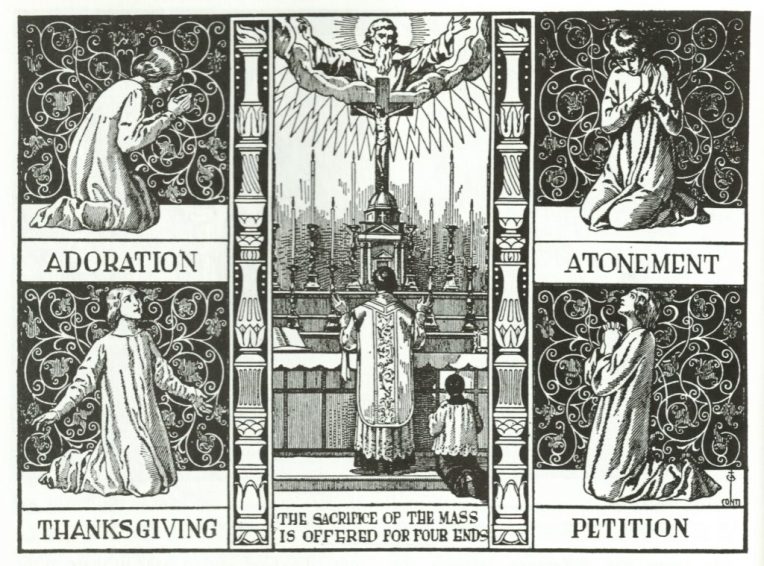
We learn early on in life that thanksgiving is one of the four chief forms of prayer to God, along with adoration, contrition and petition.  Such prayers of thanks might be verbal in nature, or they might be chiefly affective in nature.

Regardless, prayers of thanksgiving can also take another form.  Just as Jesus, during the three years of His public ministry, revealed God’s love through both words and works—that is, words and deeds—so a disciple can choose to give thanks to God through works—that is, through deeds—in addition to his verbal prayers of thanks.

Chief among the “works of God”—those works that Jesus carried out during His earthly life—is the Holy Sacrifice of the Mass, instituted at the Last Supper.  We might forget or underappreciate the fact that thanksgiving lies at the heart of the Mass.  We hear this in the narratives of the Last Supper in Matthew, Mark and Luke.  The priest speaks from these Gospel texts at the Consecration of Holy Mass:  speaking to God the Father, the priest first states that Jesus “took bread, and giving you thanks”, consecrated the bread to be His sacred Body.  “In a similar way, when supper was ended, [Jesus] took the chalice, and giving you thanks”, consecrated the wine to be His sacred Blood.  Giving thanks to God the Father lies at the heart of the consecration of Holy Mass.

This truth of our faith is not something simply to be appreciated.  We are not meant to be spectators at Holy Mass.  Jesus means for us to be active participants in the offering of Holy Mass.  Lay persons are not, of course, called by God to share in the offering of Mass as an ordained priest does.  Nonetheless, lay persons are called by God to share in the offering of Holy Mass by offering up their own selves:  their own body and blood, soul and humanity, for God to do with their lives as He wills, for the growth of His Kingdom and His glory.

What the ordained priest and laypersons share in common, though, in participating in Holy Mass is a certain form of thanksgiving:  a certain way in which we’re obligated to give thanks to God.  Unlike Jesus, you and I are poor sinners.  Jesus offered Himself, at the Last Supper and on Calvary, for us sinners, as the innocent Lamb to be slain.  You and I poor sinners, through our participation at Holy Mass, give thanks to God for this holy sacrifice:  this holy exchange that God the Father made, giving up His only-begotten Son, so that we could become His adopted children.  You and I have many things for which to give thanks to God:  the gift of human life, the gift of liberty, the gift of family, and many others.  But above all, we need to give thanks to God, especially through our sharing in Holy Mass, for the gift of redemption and sanctification that is our through our savior, Jesus Christ.

Wednesday of the Thirty-fourth Week in Ordinary Time [I]

Wednesday of the Thirty-fourth Week in Ordinary Time [I]
Daniel 5:1-6,13-14,16-17,23-28  +  Luke 21:12-19
November 24, 2021

“By your perseverance you will secure your lives.”

So many people grow fearful thinking about a cataclysmic end of the planet, even though the vast majority of mankind will never face it.  Perhaps you’ve seen one of those movies where there’s a dramatic end to life on the planet Earth as we know it.  Movies like that can draw a great deal of attention, and sell a lot of tickets and popcorn.  Nonetheless, it doesn’t matter if you die from an ice age covering the whole continent, or from old age in your own home:  death is death.

We reflect on this sobering truth at the end of each Church year:  in November, we pray to the saints in heaven, and for the faithful in Purgatory, and the Church reminds us of the “last things”:  heaven, hell, death, and judgment.  All this give us perspective.

In today’s Gospel passage, Jesus declares to His disciples, “By perseverance you will secure your lives.”  What does this mean?  Every day, God calls us to offer Him our lives in faith, and to live for others.  That’s how we can reach the hour of our deaths in God’s sight.  When all is said and done, there are two types of persons.  There are those who say in the end, “Heavenly Father, thy will be done.”  Then there are those to whom the Father says in the end, “My child, thy will be done.”

OT 34-3

Tuesday of the Thirty-fourth Week in Ordinary Time [I]

Tuesday of the Thirty-fourth Week in Ordinary Time [I]
Daniel 2:31-45  +  Luke 21:5-11
November 23, 2021

“… there will not be left a stone upon another stone ….”

Everything that’s built by human beings can be destroyed.  That’s why something like the Great Pyramids of Egypt are so awesome:  not simply because they are colossal, but because they have—to an amazing extent—survived the ravages of time.  You can think of one of the large cities on the West Coast of our own country:  from the air, as you fly into the area, you can be filled with awe.  Yet an earthquake could destroy everything in the area in a matter of minutes.

Through the prophet Daniel, God wanted King Nebuchadnezzar to know that his kingdom, so dear to him, could and would undergo destruction.  Other kingdoms would take its place, but they, too, would last only a time.  This prophecy of Daniel foreshadowed the words of Jesus, when he spoke of the Temple of Jerusalem:  it, like everything built by human beings, would be destroyed.  These are not the sorts of things to place our hope in.

But Daniel also prophesied that God would set up a kingdom that would not be destroyed.  There was no way that Daniel could understand this prophecy, but through Daniel, God was speaking about the Church:  not church buildings (even Saint Peter’s Basilica in Rome will some day fall), but the Church herself, made up of “living stones”.  Those who place their faith in Christ the King, and live in Him as members of His Mystical Body, will have eternal life.

OT 34-2

Monday of the Thirty-fourth Week in Ordinary Time

Monday of the Thirty-fourth Week in Ordinary Time
Luke 21:1-4

“… she, from her poverty, has offered her whole livelihood.”

We live in a society in which values contrary to the Gospel are canonized.  A person’s value is measured in economic terms.  The poor are shunned as worthless.

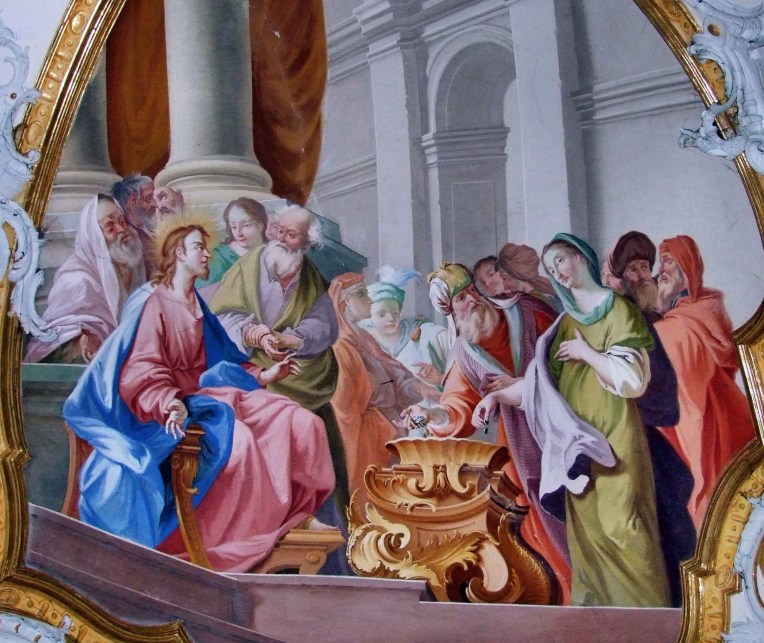
God has a different set of values from those of our society.  When Jesus saw the wealthy putting large amounts of money into the collection box of the Temple, He was not impressed.  It was not as if the wealthy should not have given large sums, but Jesus was looking for something else.  He saw that something else in the poor widow who donated only two small coins.  He explains to us what He saw:  “[The wealthy] have all made offerings from their surplus wealth, but she, from her poverty, has offered her whole livelihood.”

It was the generosity of the widow that mattered, not the money she gave.  We are called to be generous people, unselfish in all our relationships with others.  God does not value us for giving our money; or, for that matter, for giving our time and talent.  God values us for the generosity from which our giving flows.  Generosity flows from the love that we receive in the celebration of the Holy Eucharist.

OT 34-1

Saturday of the Thirty-third Week in Ordinary Time [I]

Saturday of the Thirty-third Week in Ordinary Time [I]
I Maccabees 6:1-13  +  Luke 20:27-40
November 20, 2021

And they no longer dared to ask Him anything.

In today’s Gospel passage, Our Lord tries to make clear to the Sadducees the meaning of the Resurrection.  We too, however, even if we understand and believe in both the Resurrection of Our Lord and the promise of resurrection that God offers to all who die, perhaps may need to realize what type of claim the Resurrection places upon our Christian faith.

To believe in the Resurrection is to believe in the future fulfillment of God’s grace.  It is to understand that the suffering of the present is as nothing compared to the future glory to be revealed in Christ Jesus.  It is to guard in God’s name what has been entrusted to us until that final Day, which for each of us is the day of one’s death.

We never find Our Lord going into great detail about the nature of the afterlife.  There are two practical reasons for this.  First, the glory which will be the reward of God’s elect is too far beyond our comprehension.  Second, our only hope for sharing in that glory is to persevere in running the race which God has set before us, to stir into flame the gift of God each of us first received at our baptism, a flame in which we are purified like gold in the furnace.

OT 33-6