Thursday of the Thirtieth Week in Ordinary Time

Thursday of the Thirtieth Week in Ordinary Time
Luke 13:31-35

“Jerusalem, Jerusalem, you who kill the prophets and stone those sent to you ….”

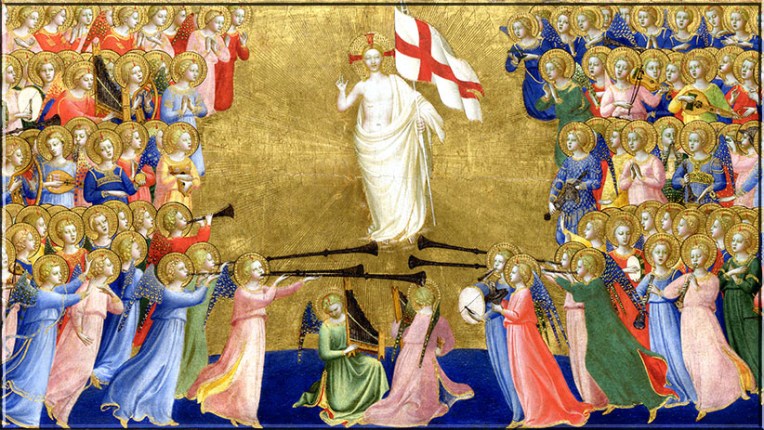
In the Book of Revelation (see Rev 21:2), the city of Jerusalem serves as a symbol for the Church.  The Church is the “new Jerusalem”.  In that passage from the Book of Revelation, it’s specifically the Church in Heaven that is being spoken of.  The Church in Heaven is sometimes called the “Church Triumphant”, in contrast to the Church on earth (the “Church Militant”) and the Church in Purgatory (the “Church suffering”).

It shouldn’t be surprising that a city would serve as a symbol for the Church.  Both are congregations of people united in a certain way.  In any city, its residents are united by a common locale, where the residents’ homes and workplaces are located.  The city has leaders who maintain public order and utilities.  The analogy to the life of the Church is clear.

Yet in today’s Gospel passage, Jesus speaks of Jerusalem in terms of reprobation.  He refers to Jerusalem in personal terms, declaring that it’s the city itself “who kill[s] the prophets and stone[s] those sent to” it.  While exploring a theology of corporate moral responsibility is beyond the scope of a brief daily reflection, it’s worth noting that what Jesus says in this passage is not mere history.  In some sense, there is a parallel between Jesus’ reprobation of Jerusalem and the reprobation due to the Church, the Mystical Body of Christ.  Despite the Church’s divine commission, the Church Militant throughout her history, and the individual lives of almost all of her members, bears sins deserving the Lord’s reprobation.  The Church is always in need of reform, because her members require ongoing conversion.

Wednesday of the Thirtieth Week in Ordinary Time

Wednesday of the Thirtieth Week in Ordinary Time
Luke 13:22-30

“‘Depart from me, all you evildoers!’”

Christ in today’s Gospel touches upon one of the great temptations faced by those who serve Him.  Repeatedly He tells us that our motivations are as important as our words and actions.  Indeed, bad motives can cancel the “good” we think do and say.

There should be only one motive for serving God in Christ, and that is the sincere desire to return the love He pours out on us and to do His will out of that love, not just for our good but also for the good of others.  God is interested in the condition of our hearts, not just an impressive list of our deeds.

Sin enters into the serving of Christ when it is used as a means of self-aggrandizement or to line pockets with “green.”  While such people may perform well their hearts remain focused on themselves.  They dazzle audiences with their cleverness and charisma and say only what pleases the listeners—denying or downplaying sin, rationalizing wrongdoings, emphasizing God’s love while failing to mention God’s irrevocable truths and the justice by which we must live.  Theirs is the “wide door” against which Christ speaks.

The 31st Sunday in Ordinary Time [C]

The 31st Sunday in Ordinary Time [C]
Wisdom 11:22—12:2  +  2 Thessalonians 1:11—2:2  +  Luke 19:1-10
Catechism Link: CCC 2412
October 30, 2022

So he ran ahead and climbed a sycamore tree in order to see Jesus ….

Out of the 52 Sundays of the Church year, more than thirty are Sundays in Ordinary Time.  When we reach these “Thirty-something” weeks, the Church’s liturgical year is drawing to a close.  During these final weeks, the Church focuses on what are called “the Last Things”:  that is, realities commonly associated with the end of the world.  The four Last Things are Heaven, Hell, death, and judgment.

Nonetheless, the Gospel on this 31st Sunday in Ordinary Time is not dramatic or apocalyptic.  It’s a simple story about Jesus and a fellow of short stature named Zacchaeus.  Yet the simplicity of this story helps us relate to it.  We might be impressed or even awed by dramatic stories about the end times that include earthquakes, fire and brimstone.  But it’s challenging—once we finish listening to those stories and return to the ordinary grind of daily life—to convince ourselves that such stories have much to do with us.  The story about Zacchaeus, on the other hand, is easier for us to relate to because it’s such a humble story.

Look at Zacchaeus.  He is a rich collector of taxes.  Each of us, like him, is attached to worldly things.  Zacchaeus (meaning you) wants to see who Jesus is, but Zacchaeus has two strikes against him.

The first strike against Zacchaeus is the crowd, because everyone wants to see Jesus.  It’s easy to get lost and to feel unloved when you’re in the middle of a crowd.  You might ask, “How can Jesus love everyone?”  The second strike against Zacchaeus is his small size, which may represent the size of our souls.  You might feel unworthy of God’s love and ask, “How could Jesus love me, as small as I am?”

That’s why Zacchaeus climbs up into a sycamore tree to see Jesus.  This is all Zacchaeus wants:  simply to see Jesus.  But that’s not enough for Jesus.  This reveals to us an important point about the spiritual life.  God always wants more for us than we want for ourselves.  The question, then, is whether we’re willing to do what’s needed to accept the gifts which God wants to bestow upon us.

This brings us to the turning point in the Gospel passage.  When Jesus reached the place where Zacchaeus had climbed the tree, Jesus looked up and said, “Zacchaeus, come down quickly; for today I must stay at your house.”  Jesus takes the initiative to reach out to this individual.  Likewise, just as he reached out to this little sinner, he is trying to reach into your life.

This passage illustrates the point and purpose of the spiritual life:  that God would dwell within us, and from within, transform us.  This is the point of listening to God in the Liturgy of the Word at Holy Mass:  to come down from our self-regard and allow Jesus to enter our home—to enter our soul—in order to transform us from within through the grace of the Eucharist in Holy Communion.

In the last sentence of today’s Gospel passage, Jesus offers Zacchaeus hope.  Zacchaeus knew that he was coming up short in life, but he didn’t know if Jesus would offer him what he was lacking.  Jesus responds by declaring, “the Son of Man has come to seek and to save what was lost.”

What was lost?  The human soul was lost in Zacchaeus’s life.  Or in other words, the heart of this human person was lost.  Zacchaeus admits that his way of life has been dishonest.  If you and I, also, can have the humility of Zacchaeus, the Lord Jesus will dwell with us.  But it demands a two-part admission.  Number 1:  it demands admitting that apart from God, our souls are lost.  Number 2:  it demands admitting that Jesus has come here for us, “to seek and to save what was lost.”

Hopefully as we grow older, we also grow wiser.  With that wisdom we might see that our mistakes are often God’s opportunities to enter our house, which is to say, our souls.  Saint Teresa of Calcutta once said:  “God writes straight with crooked lines.”  As we reflect on the best way in which to respond to God’s graciousness, we can also reflect upon another saying of Mother Teresa:  “God does not call me to be successful.  He calls me to be faithful.”

Tuesday of the Thirtieth Week in Ordinary Time

Tuesday of the Thirtieth Week in Ordinary Time
Luke 13:18-21

“To what shall I compare the Kingdom of God?”

Today’s Gospel passage presents two brief parables in which Jesus specifically focuses our attention on “the Kingdom of God”.  It might seem a simple question, but what exactly is this Kingdom?

Is the Church the Kingdom of God?  If so, and if the mission of the Church is to proclaim the Kingdom of God, then the mission of the Church would seem to consist in nothing other than the Church proclaiming itself.

Certainly there is an intimate relationship between the Church and the Kingdom of God.  In fact, it is a relationship of service, articulated by the Second Vatican Council in this manner:  “While helping the world and receiving many benefits from it, the church has a single intention:  That God’s Kingdom may come, and that salvation of the whole human race may come to pass.”

The sacrifice that Christ makes of His Body for the sake of the Church is the paradigm for understanding the sacrifice that the Church makes for the sake of the Kingdom.  This mission of the Church is inherently future-oriented, calling from Christians the virtue of hope, as they look forward to the Church’s fulfillment through the Lord’s Second Coming.

Monday of the 30th Week in Ordinary Time [II]

Monday of the 30th Week in Ordinary Time [II]
Ephesians 4:32—5:8  +  Luke 13:10-17
October 24, 2022

Blessed the man who … meditates on His law day and night.

In today’s Responsorial Psalm, we hear the first psalm of the Psalter, and it helps bring focus to our spiritual life.  If you were to ask one hundred Christians whether they knew any of the psalms by heart, you’d probably not garner many “Yes”es.  Among those “Yes”es, most probably have memorized Psalm 23.  But those looking for one of the psalms to memorize ought to consider Psalm 1.

Consider just the first sentence of Psalm 1.  It makes up the first “verse”, or “strophe”, of today’s Responsorial Psalm.  This psalm might at first glance seem merely to describe two type of men:  the just and the wicked.  But it’s not enough not to act like the wicked.  We need to look more closely at the Psalmist’s descriptions of the just.

In the first sentence of Psalm 1, we hear a “Beatitude”:  a description of the man who is blessed.  This single sentence offers five descriptions of the blessed, just man.  Three of them have negative forms, describing what the blessed, just man does not do.  But consider the latter two descriptions, and focus on them as you memorize this psalm.  The blessed, just man “delights in the Law of the Lord, and meditates on His Law day and night.”

Saturday of the Twenty-ninth Week in Ordinary Time

Saturday of the Twenty-ninth Week in Ordinary Time
Luke 13:1-9

“‘Sir, leave it for this year also ….’”

Both in the Old Testament and the New Testament, gardens, plants and trees of all sorts are used as symbols of growth—and decay—in the spiritual life.  The very first story of the Bible takes place in a garden called Eden.  And today in the Gospel, Jesus tells us a parable along the same lines.

Your spiritual life is the fig tree, and you are the gardener.  Your spiritual life is planted in the Lord’s orchard.  What we have to come to grips with is the fact that we are accountable to the Lord, just as in today’s parable the gardener is accountable to the owner of the orchard.  We are accountable for bearing spiritual fruit in our lives on this earth.

That’s why we’re here on this earth.  If we believed, as some of our fellow Christians do, that the entire point of our relationship with Christ is to be “saved”, then we would be better off dying as soon as we’re baptized.  But the whole truth is that salvation comes to us only at the end of our life on this earth, if we have been faithful to tending our spiritual life, and bearing fruit through the many ways that our spiritual life nourishes our daily life.

Friday of the Twenty-ninth Week in Ordinary Time

Friday of the Twenty-ninth Week in Ordinary Time
Luke 12:54-59

“… why do you not know how to interpret the present time?”

Most often a homily will focus upon one or more aspects of the day’s Gospel Reading.  Less often, the homily will focus upon the First Reading (or the Second Reading, if there is one).  Very rarely will the day’s Responsorial Psalm be incorporated into the homily.  Least of all, among the Scripture passages proclaimed during the Liturgy of the Word, is the simple Gospel acclamation.  Have you ever heard a homily that focuses upon the Gospel acclamation, or even cites it?

Today’s Gospel acclamation (as it often does) complements the day’s Gospel Reading.  “Blessed are you, Father, Lord of heaven and earth; / you have revealed to little ones the mysteries of the Kingdom.”  This passage, based upon Matthew 11:25, helps us understand Jesus’ rhetorical question:  “… why do you not know how to interpret the present time?”  The answer is that they do not how because they do not have the humble faith of little children.

Jesus gives a concrete example to help us understand His point.  He describes a scene in which two persons have a dispute that’s on its way to a magistrate.  Jesus warns about the need for humility in the face of conflict, lest the result be that one is thrown into prison.  This is not simply earthly advice, of course.  The final “prison” is the place where those who persist in selfish pride dwell forever.  The humble, by contrast, will dwell forever as children in the presence of their loving Father.

Thursday of the Twenty-ninth Week in Ordinary Time

Thursday of the Twenty-ninth Week in Ordinary Time
Luke 12:49-53

“No, I tell you, but rather division.”

Both the rhetoric and substance of Jesus’ proclamation in today’s Gospel passage are challenging.  It’s challenging to know how rightly to interpret His words.  The fire of His baptism is the source of the division that He has come to establish.  How can we understand these words and images in our own daily lives as disciples?

The most obvious interpretation of the fire that Jesus mentions is in light of God the Holy Spirit.  Through the graces that first were given at Pentecost in the Upper Room, the Holy Spirit inflames and hearts and minds of those called to be members of Jesus’ Mystical Body on earth.  Formed by the Holy Spirit into one Body, these members live out the baptism of Jesus.  Jesus’ baptism in the Jordan was a foreshadowing of His baptism on Calvary.  This latter baptism is the one which the Body of Christ today lives out.  As His members, you and I have to bear our share in this baptism if the Holy Spirit might use us as the Father’s instruments.

If we are faithful to the Father—allowing the baptism of Jesus’ suffering to be the vessel for the outpouring of the Holy Spirit through us—division will result, as Jesus describes in today’s Gospel passage.  This is not division for the sake of division, but for the sake of unity.  We pray in the midst of all division, that every person may recognize and accept his share in the life of the Trinity.

Wednesday of the Twenty-ninth Week in Ordinary Time

Wednesday of the Twenty-ninth Week in Ordinary Time
Luke 12:39-48

Much will be required of the person entrusted with much, and still more will be demanded of the person entrusted with more.”

St. Luke the Evangelist presents many “stewardship parables”.  Today’s Gospel passage offers two, one much longer than the other.  The upshot of both is an explicit moral that lets no Christian off easily:  “Much will be required of the person entrusted with much, and still more will be demanded of the person entrusted with more.”  The layman in the pew might wonder how these words apply to an ordinary Christian.

But no Christian is ordinary.  At the moment of a person’s baptism, God infuses grace into that person’s soul.  The graces given include the divine virtues of faith, hope and charity.  God entrusts this grace to his adopted child.  Consider this truth in light of Jesus’ words at the end of today’s Gospel passage.  God entrusts His own divine life to His adopted children.  And of course, the graces received at Baptism are but—so to speak—the “first installment” of our inheritance.  As we continue to grow as His children, God continues to bestow grace upon us through the sacraments and prayer in the process of divinization.

“Much will be required of the person entrusted with much”.  What will be required of us, then, as sharers in the divine life?  Are you, in this regard, a “faithful and prudent steward” of the grace God has given you as His child?  Each Autumn in our diocese a renewal of Stewardship takes place.  Yet while it’s important to assess one’s stewardship of time, talent, and treasure, even more important is one’s stewardship of grace.

Both of these virtues that Jesus speaks to today—fidelity and prudence—are required to be stewards of God’s grace.  Both help keep our attention on our Master:  the beginning and end of all the graces of our lives.