Tuesday of the Seventh Week in Ordinary Time Mark 9:30-37
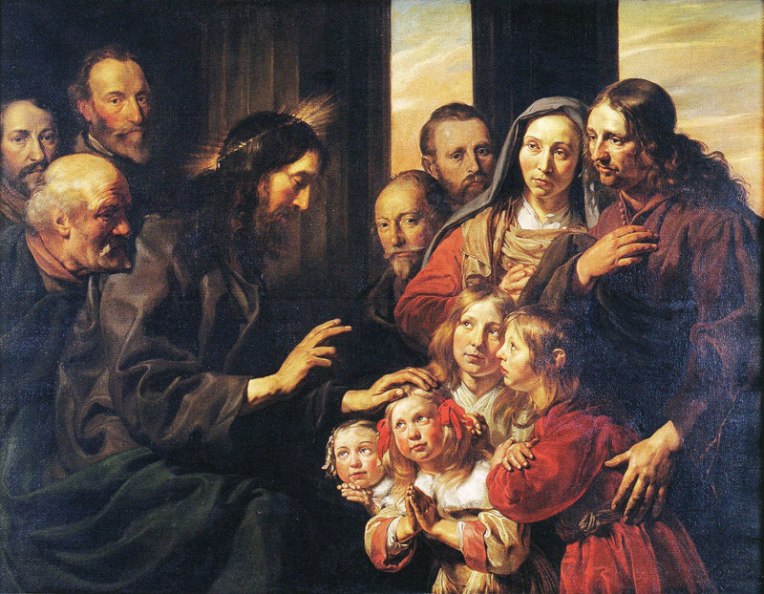
For they had been discussing among themselves on the way who was the greatest.
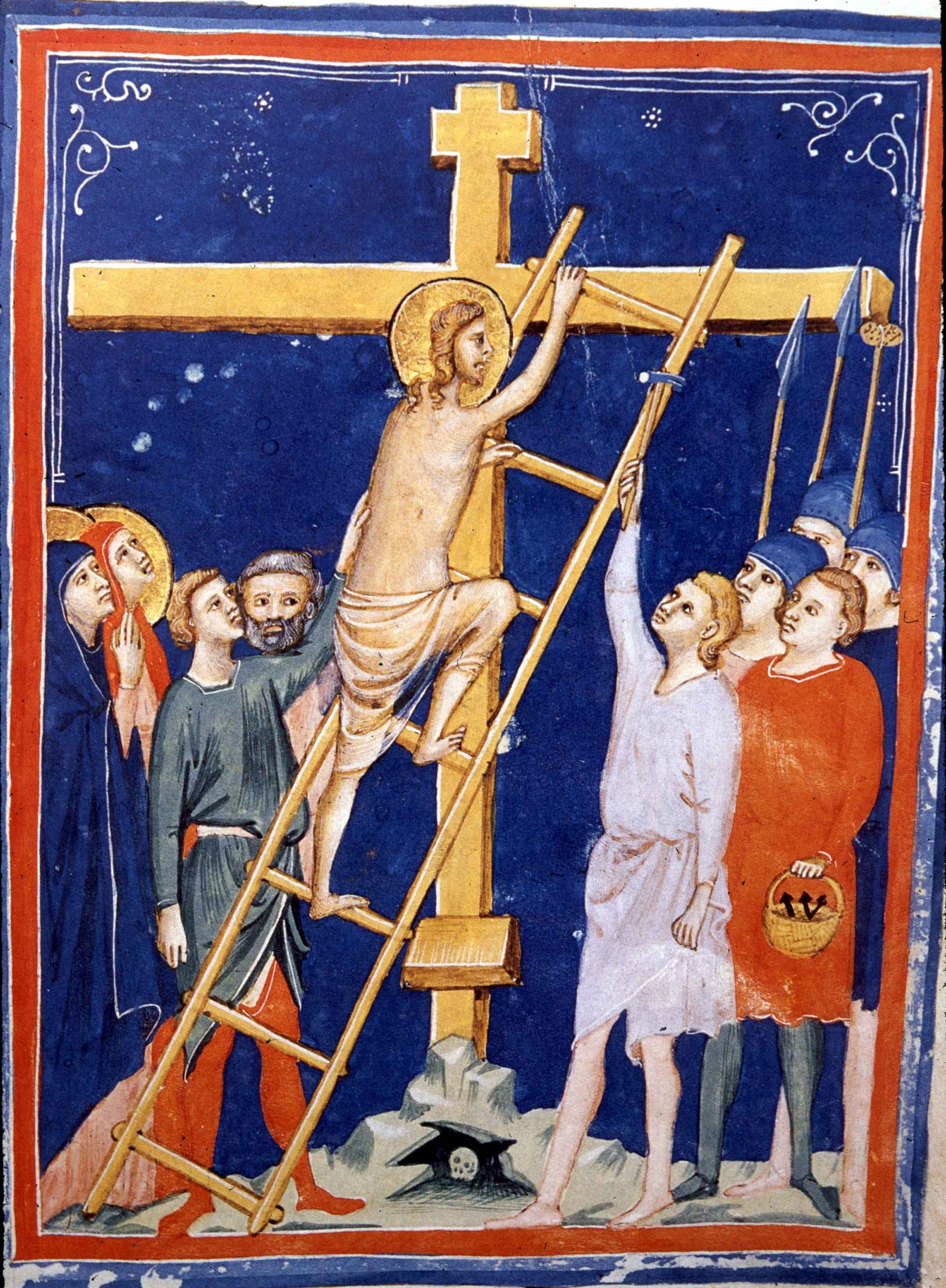
Today’s Gospel passage points our attention back to one of the first lessons of the liturgical year. This lesson is expressed in the saying, “The wood of the crib is the wood of the cross.” Another way of expressing the same truth is to say that “the only reason Jesus was born into this world was to die to this world”, or perhaps rather, “for this world”. We might be tempted at Christmastime to think only of the innocence of the infant Christ, without connecting this innocence to the purity of the Lamb who was slain on Calvary.
It might seem strange for today’s Gospel passage to meander from Jesus’ prediction of His Passion and Death at the passage’s beginning to His holding up a child for emulation at its end. But this beginning and end are connected by Jesus Himself.
It is because Jesus, as a divine person, is completely innocent (indeed more so than any child) that He becomes a fitting sacrifice on Calvary. We may think of innocence as a goal of our spiritual life because it prepares us to be fit for Heaven. Perhaps greater spiritual growth might come from seeing innocence as preparing us for a share in Jesus’ Passion during our earthly life.
Monday of the 7th Week in Ordinary Time Mark 9:14-29
… they saw a large crowd around them and scribes arguing with them.
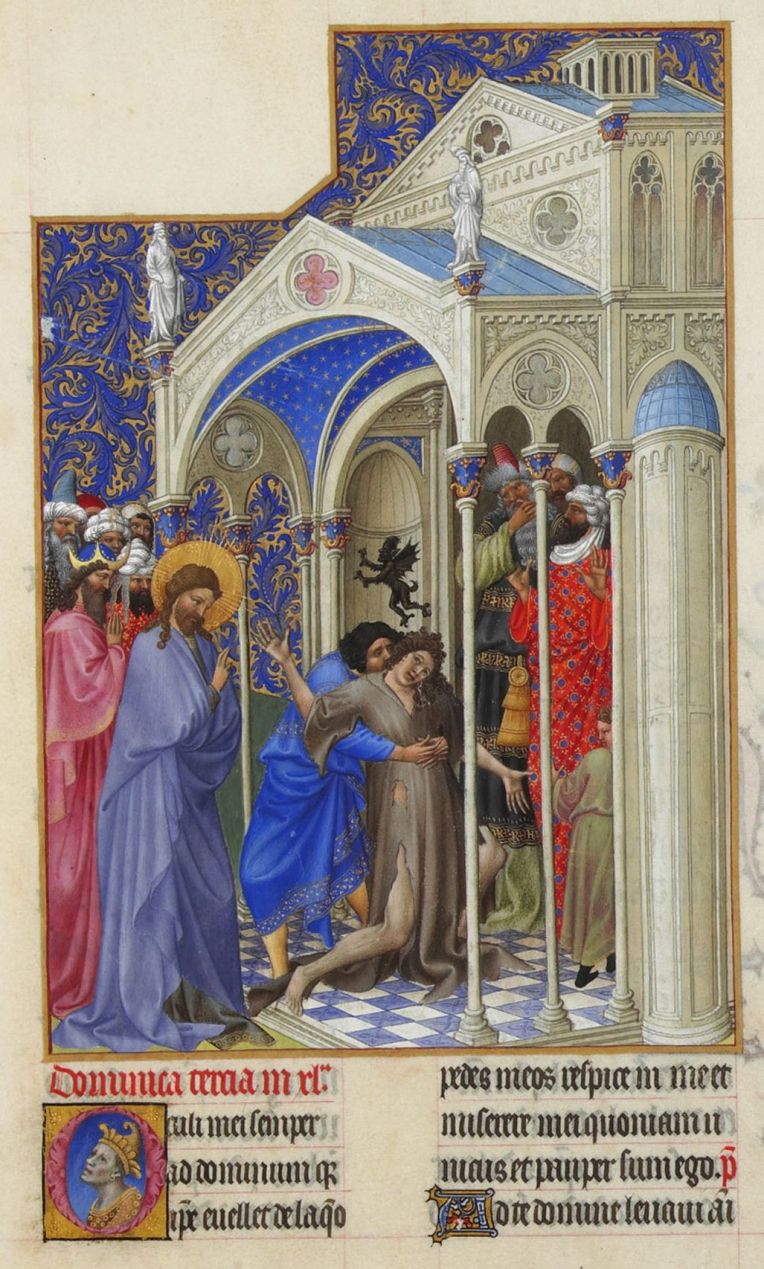
Today’s Gospel scene takes place immediately after the Transfiguration. There on Mount Tabor Peter had wanted to stay, saying, “Master, it is good for us to be here. Let us make three booths….” But Jesus teaches Peter that it was not for transfiguration that He came into this world. In today’s Gospel passage Jesus descends the mountain and enters into conflict between His disciples and the scribes, resuming the ministry for which He became Flesh and dwelt among us.
To His disciples, who were unable to drive out the mute spirit, He expresses disappointment at their lack of faith and rhetorically asks, “How long will I be with you? How long will I endure you?” But Jesus’ criticism on this occasion is not limited to His own disciples. When the father of the possessed son says to Jesus, “If you can do anything… help us.” To this, the Lord cries out, “If you can!”
Then Jesus speaks to the heart of the matter: the lack of faith. He had moments before described His disciples as a “faithless generation”. Now He says to the father, “Everything is possible to one who has faith.” But to this, the father offers an intriguing rejoinder: “I do believe, help my unbelief.” Jesus must have thought him sincere since He did help him. But perhaps today we could pray over this father’s words, make them our own in prayer, and root all of the petitions that we make today in these words. This father recognizes that in this fallen world, faith is always needed. One cannot outgrow the need for faith.
Monday of the Seventh Week in Ordinary Time Mark 9:14-29
… they saw a large crowd around them and scribes arguing with them.
Today’s Gospel scene takes place immediately after the Transfiguration. There on Mount Tabor Peter had wanted to stay, saying, “Master, it is good for us to be here. Let us make three booths….” But Jesus teaches Peter that it was not for transfiguration that He came into this world. In today’s Gospel passage Jesus descends the mountain and enters into conflict between His disciples and the scribes, resuming the ministry for which He became Flesh and dwelt among us.
To His disciples, who were unable to drive out the mute spirit, He expresses disappointment at their lack of faith and rhetorically asks, “How long will I be with you? How long will I endure you?” But Jesus’ criticism on this occasion is not limited to His own disciples. When the father of the possessed son says to Jesus, “If you can do anything… help us.” To this, the Lord cries out, “If you can!”
Then Jesus speaks to the heart of the matter: the lack of faith. He had moments before described His disciples as a “faithless generation”. Now He says to the father, “Everything is possible to one who has faith.” But to this, the father offers an intriguing rejoinder: “I do believe, help my unbelief.” Jesus must have thought him sincere since He did help him. But perhaps today we could pray over this father’s words, make them our own in prayer, and root all of the petitions that we make today in these words. This father recognizes that in this fallen world, faith is always needed. One cannot outgrow the need for faith.
“So be perfect, just as your heavenly Father is perfect.”
Today’s Gospel passage has three parts. The first two consist of examples that Jesus gives us. He started giving these examples last Sunday. Keep in mind, though, that Jesus prefaces all these examples by stating: “unless your righteousness surpasses that of the scribes and Pharisees, you will not enter the Kingdom of Heaven.” So all these examples are illustrations of how to move from acting like the scribes and Pharisees towards acting in a way that will lead you to Heaven.
Each example follows the same pattern. Jesus starts each example by saying, “You have heard that it was said ….” Then He quotes the Old Testament to show how the scribes and Pharisees act. But in the second part, Jesus explains how His disciples will act if they want to get to Heaven. So Jesus continues each example by saying, “But I say to you ….” Then Jesus gives us a new understanding of the Law of God. In doing so, Jesus perfects the Law of God.
As Jesus gives these six examples of righteousness—one after another—they increase in their demands. They grow more and more difficult to follow, and finally culminate in the example that must have shocked half of the people listening to Jesus, and completely confused the other half. Jesus said to the crowd, “You have heard that it was said, ‘You shall love your neighbor and hate your enemy.’ But I say to you, love your enemies, and pray for those who persecute you ….”
Why would this example have shocked and confused Jesus’ crowd? There are several reasons, the most obvious of which is that for many in ancient Israel, hating their enemies was thought to be a survival instinct.
Yet they not only applied this lesson as they looked out from Israel to other nations. They turned in on themselves. They applied this lesson against each other. Kings of Israel spent as much time and energy uniting its twelve tribes as they did fighting outsiders.
By Jesus’ day, Israel was divided into three regions: Galilee in the north, Samaria in the middle, and Judah in the south. The Gospel paints a portrait of animosity between the Samaritans and the Jews in Judah. This animosity is illustrated by the shock of the Samaritan woman at the well when Jesus approaches her in kindness. It’s also illustrated in Jesus’ parable of the Good Samaritan, which turns upon the novel notion of a Samaritan treating someone in Judah as a neighbor.
But the divisions of sin marched further, all the way to Calvary. Even among the Jews in Jerusalem, the various parties of power often pitted themselves against each other. The Acts of the Apostles tells how St. Paul once pitted the Sadducees and Pharisees against each other by means of their differences. By doing so, Paul escaped from the legal trial he unjustly faced.
A far more unjust trial, however, took place on Good Friday, when the innocent Son of God was declared guilty of blasphemy. He was nailed to a cross to die while “Barabbas”, the “Son of man” who had committed insurrection, was freed by the crowd. The irony of Good Friday is the logical outcome of looking for an enemy where God has given you a friend. On Good Friday, man puts God on trial, and declares God to be man’s enemy, while the whole point of the Incarnation was that man might call God his neighbor, his brother, and his Savior.
In this world below, where we are part of the “pilgrim Church”—part of the “Church militant”—we often confuse our neighbors and our enemies. The English convert G. K. Chesterton once quipped, “The Bible tells us to love our neighbours, and also to love our enemies; probably because they are generally the same people.” This is true because we are fallen children of Adam and Eve. We do not think we should be our brother’s keeper. The whole history of fallen man—from Adam versus Eve, to Cain versus Abel, to our own time and place—testifies to our sin of turning neighbors into enemies.
In this world here below, our only real enemies are the devil and his divisions of fallen angels. We need to learn that among our human family, there are no enemies, but only neighbors whom we have not loved as Jesus has.
Saturday of the 6th Week in Ordinary Time Mark 9:2-13
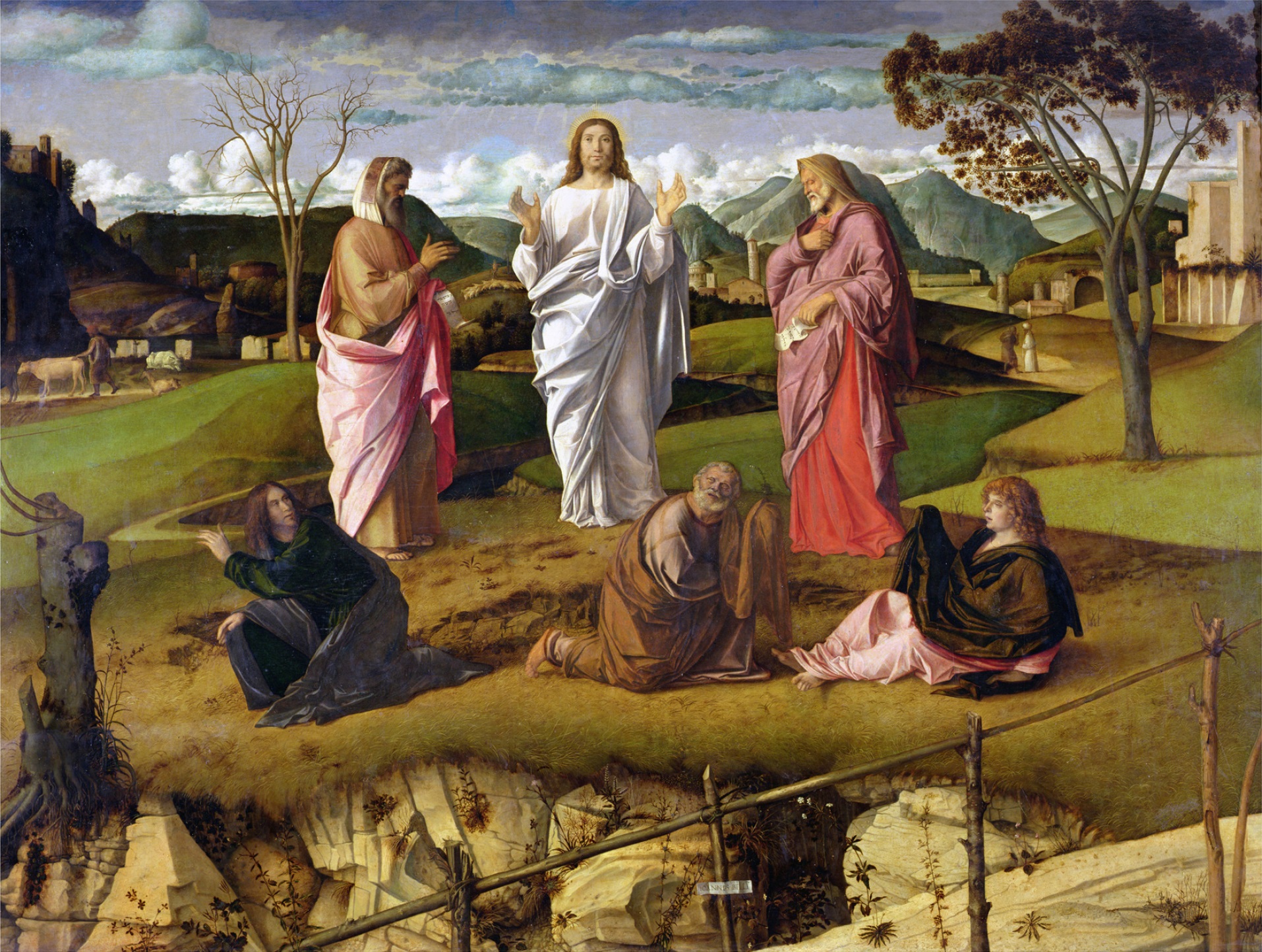
Then Elijah appeared to them along with Moses, and they were conversing with Jesus.
St. Peter’s ignorance is on display when he exclaims to Jesus: “Rabbi, it is good that we are here! Let us make three tents: one for you, one for Moses, and one for Elijah.”
Peter’s suggestion is so simple that we might overlook what he means. Tents means something different to us today than they did to people in the day of Jesus. Tents to us mean camping, recreation, relaxation in the great outdoors. Tents in ancient days—when many persons and extended families were nomadic—meant putting down roots, staking a claim, and not moving on. So tents to Peter meant permanence, and meant having arrived.
The problem for Peter was that Jesus had no plans to rest. Jesus had a journey to make. He didn’t come into this world for rest and comfort. So Peter, likely reluctantly, followed Jesus back down the mountain, knowing that He had to stay with Jesus if he ever wanted to see such brilliance, beauty and glory again.
At this point in their journey, Jesus planted that seed in the apostles’ minds, and it began to germinate during the remainder of Jesus’ public ministry. Whenever in their memories they saw the sight of the Transfigured Jesus, they also must have heard that strange phrase: “rising from the dead”. Jesus helped them always to link these two: “rising”, and “death”. In other words, there is no Resurrection without death. There is no Easter Sunday without Good Friday. There is no empty tomb without the tomb.
Then Elijah appeared to them along with Moses, and they were conversing with Jesus.
St. Peter’s ignorance is on display when he exclaims to Jesus: “Rabbi, it is good that we are here! Let us make three tents: one for you, one for Moses, and one for Elijah.”
Peter’s suggestion is so simple that we might overlook what he means. Tents means something different to us today than they did to people in the day of Jesus. Tents to us mean camping, recreation, relaxation in the great outdoors. Tents in ancient days—when many persons and extended families were nomadic—meant putting down roots, staking a claim, and not moving on. So tents to Peter meant permanence, and meant having arrived.
The problem for Peter was that Jesus had no plans to rest. Jesus had a journey to make. He didn’t come into this world for rest and comfort. So Peter, likely reluctantly, followed Jesus back down the mountain, knowing that He had to stay with Jesus if he ever wanted to see such brilliance, beauty and glory again.
At this point in their journey, Jesus planted that seed in the apostles’ minds, and it began to germinate during the remainder of Jesus’ public ministry. Whenever in their memories they saw the sight of the Transfigured Jesus, they also must have heard that strange phrase: “rising from the dead”. Jesus helped them always to link these two: “rising”, and “death”. In other words, there is no Resurrection without death. There is no Easter Sunday without Good Friday. There is no empty tomb without the tomb.
Friday of the 6th Week in Ordinary Time Mark 8:34—9:1
“Whoever wishes to come after me must deny himself, take up his cross, and follow me.”
In the Gospel today we hear Jesus say, “Whoever wishes to come after me must deny himself, take up his cross, and follow me.” Do you, who call yourselves Christians, hear what the Word made Flesh is saying to you? Or do you want to turn your back on the words spoken by Jesus Christ?
Christ died because death is the only way to destroy death’s power. On the Cross, Christ destroyed the power of death by dying Himself. When God Himself died, death split in two. Christ separated the death of the body from the death of the soul, so that the one would not inevitably follow the other. Christ didn’t die so that you wouldn’t have to. Christ died so that the death that you will inevitably face—the death of the body—will not be an eternal one: the death of the soul.
There are two types of death, the death of the body, and the death of the soul. One is much worse than the other. Many people spend a lot of time avoiding the one, but not the other, which is strange. This is strange because the death of the body is unavoidable, while the death of the soul is completely avoidable. The death they try so hard to avoid is the door that Christ has made the gateway to eternal life, while the death they don’t worry much about is a death that never ends: a death that is eternal.
“Whoever wishes to come after me must deny himself, take up his cross, and follow me.”
In the Gospel today we hear Jesus say, “Whoever wishes to come after me must deny himself, take up his cross, and follow me.” Do you, who call yourselves Christians, hear what the Word made Flesh is saying to you? Or do you want to turn your back on the words spoken by Jesus Christ?
Christ died because death is the only way to destroy death’s power. On the Cross, Christ destroyed the power of death by dying Himself. When God Himself died, death split in two. Christ separated the death of the body from the death of the soul, so that the one would not inevitably follow the other. Christ didn’t die so that you wouldn’t have to. Christ died so that the death that you will inevitably face—the death of the body—will not be an eternal one: the death of the soul.
There are two types of death, the death of the body, and the death of the soul. One is much worse than the other. Many people spend a lot of time avoiding the one, but not the other, which is strange. This is strange because the death of the body is unavoidable, while the death of the soul is completely avoidable. The death they try so hard to avoid is the door that Christ has made the gateway to eternal life, while the death they don’t worry much about is a death that never ends: a death that is eternal.
Thursday of the 6th Week in Ordinary Time Mark 8:27-33
He began to teach them that the Son of Man must suffer greatly and be rejected ….
Asking the right question is extremely important in many situations that we face in life. It’s also important to ask the right type of question. For instance, there are questions that ask “How?”, calling for technological answers. On the other hand, “Why?” questions deal with meaning: they call for deeper answers.
We find Jesus Christ in today’s Gospel account asking his disciples to tell Him who they think He really is.
Jesus had two reasons for asking His question. One was to have His disciples give some serious thought to just who they thought they were following. The other was to take the opportunity to teach them about what was going to happen to Him. In other words, where was He going? By extension, where would they end up if they kept following Him?
Is Jesus an interesting historical figure? Is He, as the Muslims say, a great prophet? Is he one among many in a long line of Jewish rabbis?
Or is He unique? Is Christ Jesus God in the Flesh, in order that we can see Him, know Him, and love Him as one of us: in other words, God so that He can save us, and man so that we can receive His divinity through His humanity? Christ Jesus is God the Son, the Second Person of the Blessed Trinity, made incarnate, made human flesh and blood for us. It is, then, His suffering greatly and being rejected that makes possible this “great exchange”: our sinfulness for God’s own divine life.