The 2nd Sunday in Ordinary Time [A]

The 2nd Sunday in Ordinary Time [A]
Isaiah 49:3,5-6  +  1 Corinthians 1:1-3  +  John 1:29-34
Catechism Link: CCC 604
January 15, 2023

Here am I, Lord; I come to do your will.

Our Scriptures this Sunday help us set our own lives within the grander scheme of things.  That grander scheme is called “Divine Providence”.  One way to describe Divine Providence is to say that it’s what God chooses to do, when He does it, and why He does it.

Divine Providence is at the heart of the Scriptures of Holy Mass during the first several weeks in Ordinary Time.  Following the Season of Christmas, which ended this past week with the Baptism of Jesus, we turn to consider our own baptism.

When you were baptized, the promises that were made started a relationship where God is your Lord, and you are His servant.  Or at least, that’s what the life of the Christian is supposed to be like.  We hear several different examples of this servant-Lord relationship in today’s Scriptures.  Each is a model for us, and the last is also something more.

First, Isaiah was called to serve the Lord as His prophet.  “The Lord said to [Isaiah]:  ‘You are my servant.  …  I will make you a light to the nations, that my salvation may reach to the ends of the earth.’”  Among all the Old Testament prophets who proclaimed the coming of God’s justice, Isaiah had a unique place.  His calling was to prepare for the coming of a Messiah who offers loving mercy that knows no bounds and that would “reach to the ends of the earth.”  Although none of us has been called to be a prophet like Isaiah, there is something in his vocation that ought to be mirrored in our own vocations:  namely, loving mercy that knows no bounds.

Second, Paul was called to serve the Lord as His apostle.  Today’s Second Reading is simply the first three verses of a letter written by Saint Paul.  It’s not the longest of his letters, but it’s one of the more profound.  His self-introduction focuses upon his calling as an “apostle”.  The word “apostle” literally means “one who is sent”.  He describes himself this way:  “Paul, called to be an apostle of Christ Jesus by the will of God”.

Paul was sent “by the will of God” to spread the Messiah’s Gospel to the Gentiles, the very people whom Isaiah had served by preparing them for the Messiah.  Although none of us has been called to be an apostle like Paul, there is something in his vocation that ought to be mirrored in our own vocations:  namely, serving as “one who is sent”.

That Messiah whose coming Isaiah proclaimed, and whom Paul was sent forth to preach about, is of course Jesus.  Jesus, like Isaiah and Paul, was called by God to serve.  Yet Jesus is not only an example for us, as are Isaiah and Paul.

Jesus was called by God the Father to serve as the Savior of mankind.  We hear about this call within today’s Gospel Reading.  This call connects to today’s Responsorial Psalm, and especially its refrain.  The refrain can help you rest in God’s Divine Providence, instead of wrestling against it.  You might want to commit this refrain to memory and call it to mind during prayer in the coming week.

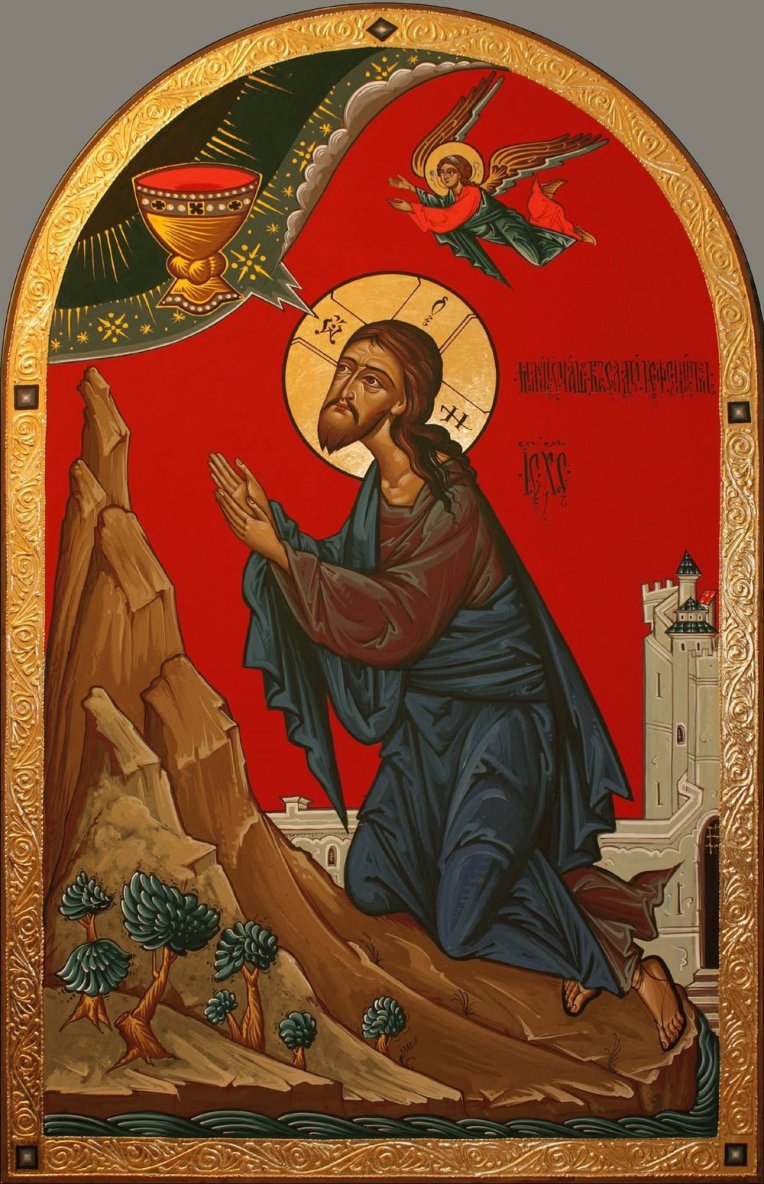
“Here am I, Lord; I come to do your will.”  Although the word “I” appears twice in this verse, it’s not the focus of the verse.  The focus is God’s Providential Will and one’s submission to it:  that is, one’s willingness to be His servant.  Most of us, when we pray, instead speak to God as if He’s our servant.  In effect we say, “Here I am, Lord; now come and do my will.”

Yet here we need to recognize a distinction.  We are not only meant to imitate Jesus.  As Christians, we are meant to live in Christ.

We are not meant to live “in Isaiah” or “in Paul”, as much as we ought to follow their respective examples.  But each of us is meant to live “in Christ”.  This is not something that the Christian can accomplish through one’s own human effort.  Only God can accomplish this.  His chief means for doing so are the Sacraments and grace given through prayer.  For our part, we need to dispose ourselves to receive these gifts.  God’s gifts allow Christ to live in us, and allow Christ to say through us:  “Here am I, Lord; I come to do your will.”
Tuesday of the First Week in Ordinary Time

Tuesday of the First Week in Ordinary Time
Mark 1:21-28

“What is this?  A new teaching with authority.”

Twice in today’s Gospel passage we hear the word “authority”, both times applied to Jesus.  In both cases, astonishment or surprise is evoked by the fact that Jesus teaches with authority.  Why is there this astonishment, and what does it mean for Jesus to teach with authority?

In the culture that surrounds us, every person believes himself to be his own authority.  In effect, this wide-spread belief means that no real authority exists.  In our society there is a great need for clarity about the meaning and purpose of authority.

At its most literal level, the word “authority” comes from the word “author”.  The author of a novel can create worlds of his own design from his imagination.  Laws of physics need not apply.  Strange creatures can exist, and fantastic events are commonplace.  Tolkien, Lewis Carroll and C. S. Lewis are all authors in this sense.  They have the authority to create worlds and races of creatures, and to confer life on and take life from individuals.  However, this is merely a fictional form of authority.  In reality, there is only one Author of creation.

Jesus, as God from God and Light from Light, is this divine Author.  Through His divinity He has authority.  He exercises this authority throughout the three years of His public ministry for various persons, and for all mankind on Calvary.  However, in the face of His exercise of divine authority, astonishment arises for varied reasons.

Most cannot believe that a mere man could exercise divine authority.  Jesus, of course, was not merely a man, even though He was fully so.  In our own lives, we should not be astonished by the authority or power of Jesus.  We should root our daily lives in His desire to grant us His grace.

The Baptism of the Lord [A]

The Baptism of the Lord [A]
Isaiah 42:1-4,6-7  +  Matthew 3:13-17

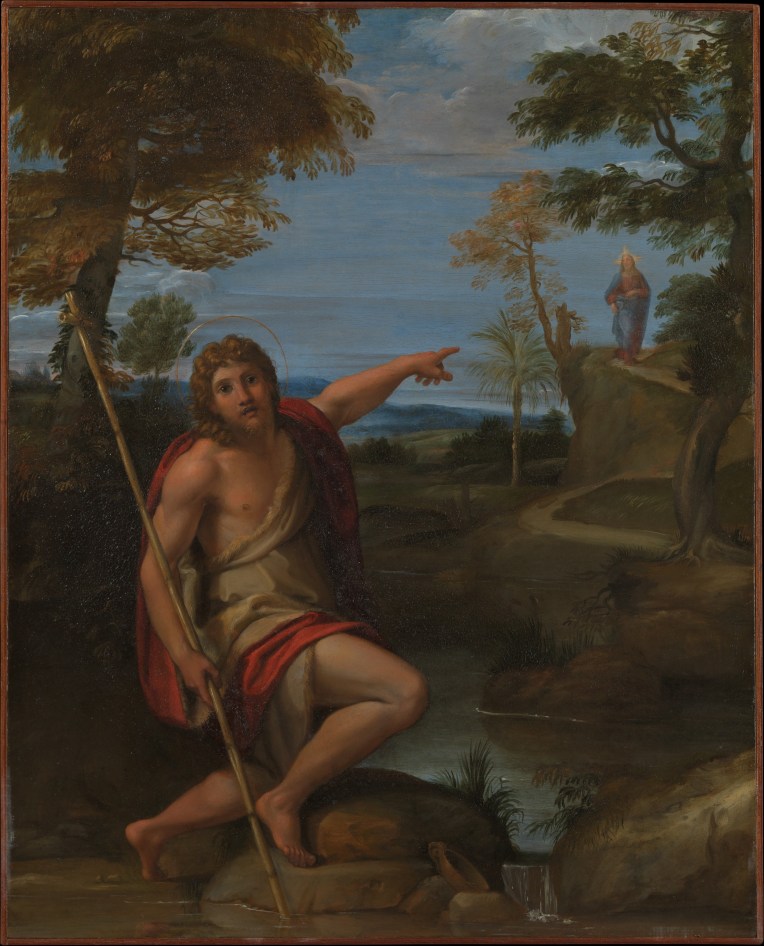
Here is my servant whom I uphold, my chosen one with whom I am pleased ….

+     +     +

reference to the Catechism of the Catholic Church:

CCC 535-537: the Baptism of the Lord

+     +     +

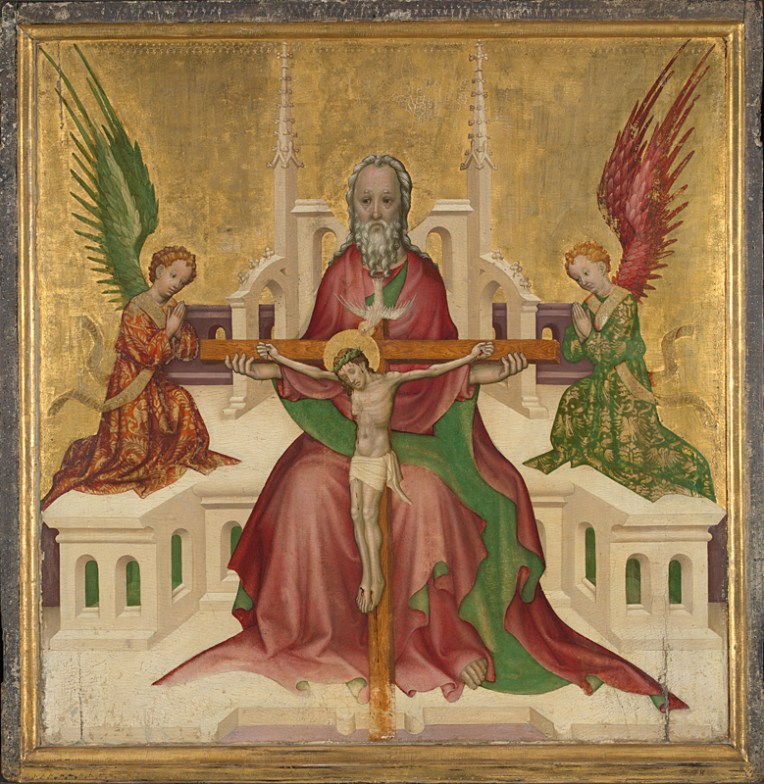
The word “Trinity” does not appear even once in the New Testament.  Of course, that doesn’t mean that the New Testament doesn’t teach us a lot about the Trinity.  Today’s Gospel Reading is a case in point.

In St. Matthew the Evangelist’s description of the Baptism of the Lord Jesus, all three Persons of the Trinity reveal Themselves.  God the Father reveals Himself only by speech.  We know that He’s the Father because He identifies Himself in terms of His relationship with His Son, declaring, “This is my beloved Son, with whom I am well pleased.”

God the Holy Spirit also reveals Himself in terms of His relationship with God the Son.  After Jesus’ baptism, “the heavens were opened for him, and he saw the Spirit of God descending like a dove and coming upon him.”  We might wonder what St. Matthew means by describing the Holy Spirit’s descent as being “like a dove”.  The first quality suggested by this metaphor is gentleness, a quality that through the Holy Spirit’s descent is related to Jesus.

In today’s Gospel Reading, St. John the Baptist alludes to the fact that Jesus does not need to be baptized.  In fact, Jesus no more needed to be baptized than He needed to descend from Heaven to earth.  He did both for the same reason:  “for us men and for our salvation”, as we profess in the Creed.

The whole of today’s feast, reveals to us the gifts that the Christian receives through the Sacrament of Baptism.  Simply put, all of these gifts are shares in the life of the Most Holy Trinity.  Yet some of them could be described as negative; others, positive.  That is to say, the gifts that God gives in Baptism both destroy and build [see CCC 1262].

The former are more simple and, in a sense, less important.  When a human sinner is baptized, all sin within that person is destroyed:  both the Original Sin that is inherited, and any actual sins committed by that individual.

But that washing away of moral and spiritual dirt is only a preparation.  God has something even greater in store for the baptized Christian:  in fact, a new creation [see CCC 1265].

The relationships that we see the Father and the Holy Spirit sharing with the Son in today’s Gospel Reading are also shared with the Christian through baptism.  God the Father adopts the Christian as His own child “in Christ”.  Likewise, the Holy Spirit bestows His fruits and gifts upon the baptized “in Christ”.

More specifically, the Catechism notes three key ways, among others, in which God builds up the Christian through Baptism.  The first is “sanctifying grace, the grace of justification”, which enables the Christian “to believe in God, to hope in him, and to love him through the theological virtues” [CCC 1266].

The second is membership in the Mystical Body of Christ:  the Church.  As one member of Christ’s Body, the Christian shares in Jesus’ priestly, prophetic and kingly missions.  The Catechism specifically notes that “Baptism gives a share in the common priesthood of all believers” [CCC 1268], expanding upon St. Peter’s exhortation:  “like living stones be yourselves built into a spiritual house, to be a holy priesthood, to offer spiritual sacrifices acceptable to God through Jesus Christ” [1 Pt 2:5].

Unfortunately, this “common priesthood”, sometimes called the “baptismal priesthood”, is one of the most misunderstood gifts in the Church today.  Some promote clericalism by encouraging laypersons to act as clerics, instead of giving due honor to the “spiritual sacrifices” proper to the baptismal priesthood:  self-sacrifice in the family’s home, in the business’ boardroom, on the factory’s floor, and in the public square.

The third key gift of Baptism is that the Holy Spirit through Baptism marks the Christian with the “seal of the Lord” [CCC 1274].  This seal marks the Christian as irrevocably being destined for God in Heaven.  Of course, this mark is a mark of the Christian’s destiny, not of her salvation.  The Gospel does not teach that the Christian who is once saved is always saved, or who is once baptized is always saved.  Salvation depends upon perseverance “in Christ”:  both living and dying “in Christ”.  The Catechism attests that no “sin can erase this mark, even if sin prevents Baptism from bearing the fruits of salvation” [CCC 1272].

The Baptism of the Lord in the Jordan River reveals to man the loving relationships that God the Son shared with the Father and the Holy Spirit from all eternity.  At His Baptism, Jesus did not receive but revealed.  He revealed who He is in relation to the other divine Persons of the Trinity.  In this, He revealed the inheritance that’s destined for each baptized Christian who lives and dies “in Christ”.

Baptism of the Lord

January 7

January 7
1 John 5:14-21  +  John 2:1-11

“Do whatever he tells you.”

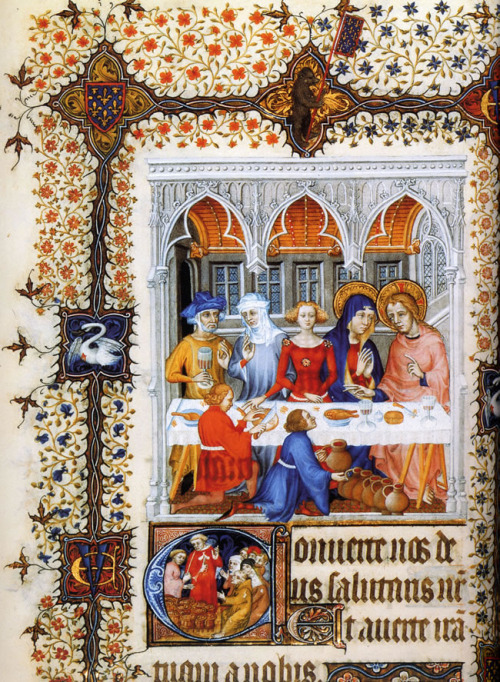
Because of a quirk of the Church’s calendar, only when Christmas Day falls on a Sunday are today’s Scriptures proclaimed at Holy Mass on the Saturday morning (or early afternoon) of January 7.  This rarity is a shame, for today’s Gospel Reading is profoundly symbolic, and one of the Gospel passages most commented upon by the Doctors of the Church.

The event described in today’s Gospel Reading is now reflected upon within the Rosary as the Second Luminous Mystery.  Like the Baptism of the Lord (the first Luminous Mystery), Jesus’ miracle at Cana is a “luminous” mystery because it sheds light upon who Jesus is.  In other words, it is an “epiphany” or manifestation of Jesus’ divine identity.

Also worthy of our note is the fact that Jesus’ first public miracle is worked at the prompting of Our Blessed Mother.  This passage highlights one of the central themes of Christmastide:  that is, that you cannot have the Christ Child without His Mother Mary.  Her motherhood was not limited to the days of Jesus’ earthly life.  She continues today to serve mankind as the Mother of God, a humble and insightful intercessor who loves others by presenting their needs to Jesus.

January 6

January 6
1 John 5:5-13  +  Mark 1:7-11 [or Luke 3:23-38 or Luke 3:23,31-34,36,38]

“So there are three that testify, the Spirit, the water, and the Blood, and the three are of one accord.”

There are three options for today’s Gospel Reading.  The second and third are longer and shorter forms of the same basic passage.  All three are preparing us for the end, which is to say, the goal, of Christmastide.

I don’t often refer in these reflections to the accompanying work of sacred art, but today I will.  The last day of Christmastide in the Ordinary Form of the Roman Rite is the feast of the Baptism of the Lord.  This event is pictured in the sacred art below.  Yet Our Lord and St. John the Baptist are surrounded by angels and saints:  that is, various members of what the Church calls the Communion of Saints.

This work of art visually links the ends of the two most important seasons of the Church’s liturgical year.  The end of Christmastide is the Baptism of the Lord, while the end of Eastertide is Pentecost.  Each Christian is one member of the Mystical Body of Christ through the three sacraments of initiation:  Baptism, Confirmation, and the Holy Eucharist.  These three vehicles of God’s grace are at least indirectly alluded to in today’s First Reading.  The “Spirit, the water, and the Blood” symbolize the Sacraments of Confirmation, Baptism, and the Holy Eucharist.  By means of these Sacraments of Initiation—sacraments of a “second birth”, we might say—Christ becomes our life, and we are called always to live in Him.


January 5

St. John Neumann, Bishop
January 5
1 John 3:11-21  +  John 1:43-51

“Before Philip called you, I saw you under the fig tree.”

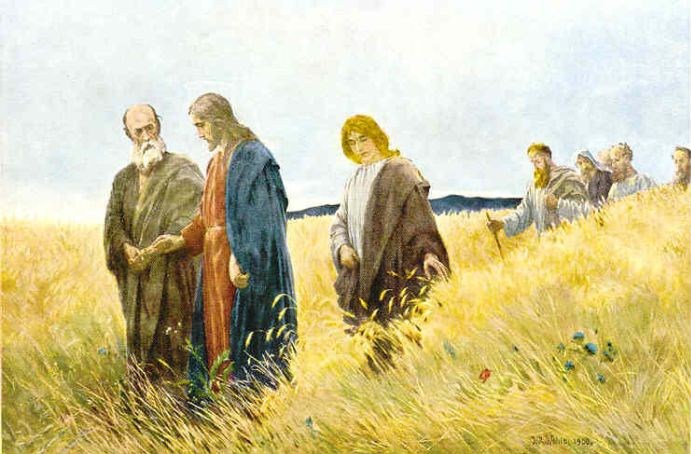
As in yesterday’s Gospel Reading, we hear Jesus in today’s Gospel passage calling men to follow Him.  Today’s Gospel passage is from the first chapter of St. John’s Gospel account.  Jesus is only at the beginning of His three years of public ministry.  But in a way, you might say that what Jesus is doing in this week’s Gospel passages is a preparation for Pentecost.

Pentecost is sometimes thought of as the “birthday of the Church”.  Yet the day of Pentecost as recorded in Acts 2 could not have happened without the “first steps” that Jesus makes in this week’s Gospel passages.  Jesus knew that the simple men He chose would—almost to a man—suffer martyrdom many years later because of serving as the pillars of His Church.  Jesus knew how Philip and Nathanael would eventually die, even if they did not.  But their journey to sacrificing their very lives for Christ began with a few simple words:  “Come and see.”

There is a further point to take note of.  This point concerns the general theme of vocations.  Note that in the Gospel Reading, Philip calls Nathanael first, and then Jesus calls Him.  This sequence of events highlights an important truth of our Catholic Faith:  that God chooses—wills—to work through simple human persons like you and me.  God chooses to work through intermediaries:  “middlemen”, if you prefer.  God can choose to accomplish His will however He wishes, but often, He wishes that you and I be instruments of His will by inviting others to follow after Jesus.


January 4

St. Elizabeth Ann Seton, Religious
January 4
1 John 3:7-10  +  John 1:35-42

“Come, and you will see.”

Christmastide is about new life.  Yet we might be tempted to think of this Christmas Season only in terms of the birth of the Christ Child.  If we were to do so, we would overlook much of the richness of this holy season.

In the Ordinary Form of the Roman Catholic liturgical calendar, the last day of Christmastide is the feast of the Baptism of the Lord.  This gives us a clue to one of the major themes of Christmastide, the expression of which makes up much of the season’s richness.

In a word, much of Christmastide celebrates the new life that comes from one’s “vocation”.  The event of Jesus’ Baptism in the Jordan River is the “inauguration”, if you will, of Jesus’ public ministry:  His vocation to save fallen man.  In the latter days of Christmastide, including in today’s Gospel Reading, we hear of the vocations—the callings—of several of Jesus’ key disciples.  In turn, their vocation stories ought to help each of us stop and reflect upon our own vocations:  our own share in the saving mission of Jesus’ Church.

The Epiphany of the Lord

The Epiphany of the Lord
Isaiah 60:1-6  +  Ephesians 3:2-3,5-6  +  Matthew 2:1-12

“We saw his star at its rising and have come to do him homage.”

+     +     +

references to the Catechism of the Catholic Church cited for this Sunday by the Vatican’s Homiletic Directory:

CCC 528, 724: the Epiphany
CCC 280, 529, 748, 1165, 2466, 2715: Christ the light of the nations
CCC 60, 442, 674, 755, 767, 774-776, 781, 831: the Church, sacrament of human unity

+     +     +

Secular culture takes what is three-dimensional and flattens it.  Christians, then, must be alert to secularism’s encroachment upon Christian culture.  If, for example, Christians adopt secularism’s counterfeits of Christmas and Easter, not only do Santa Claus and the Easter Bunny become the seasons’ patron saints.  The seasons themselves become distorted, so that Christmas begins on the day after Thanksgiving and ends on December 25th.

By contrast, the Church calls Christians to order their lives in a way that recognizes December 25th as the first full day of Christmastide, and the day of celebrating the first of several mysteries that the Church ponders throughout Christmastide.  Among all these mysteries, the Nativity and the Epiphany of the Lord are the two most important.

The Nativity focuses upon the divine Gift given by God the Father to fallen man.  The Epiphany also focuses upon the gifts that men offer to God in return.  We might say that the Epiphany is the Church’s first focus upon the stewardship of grateful disciples.

In this Sunday’s Gospel Reading, we hear three wise men arriving before the manger.  They are willing to sacrifice of themselves in order to find a newborn King.  Here we see a sign of their wisdom:  their willingness to make profoundly personal sacrifices in addition to the material objects they offer in sacrifice.

Few persons don’t want to be rich.  However, there are many people who believe they’re rich, but who have become satisfied with riches that—in the end—aren’t going to do them real good.

Humility is what we see in the three wise kings.  They were willing to leave the splendor and riches of their earthly kingdoms in order to enter a grotto where animals lived, in order to prostrate themselves before a child born of a peasant girl.

Picture this:  these three wise kings fall to the ground in adoration before the newborn Jesus in a stable, where the hay of the animals was mixed with the animals’ waste.  Would you be humble enough to kneel in that hay?

Look at these three wise kings.  Look at their sacrifices.  Consider two aspects of the sacrifices that the kings make.

The first aspect is their journey.  It is long and fraught with peril, much like the journey of discipleship.  These three leave behind the lands where they rule, where they are in control, in order to bow down before the Ruler of Heaven and Earth.  They make this perilous journey in order to follow Him wherever He asks them to go for His sake.

The second aspect of their sacrifices are the objects that the three wise kings take from their treasuries and place before the new-born King.  These splendid objects reflect their human wealth.

Yet these gifts are given as a response to a greater Gift.  These gifts are more a reflection of the One to whom they’re given than of those who give them.  So also in the practice of stewardship, while one’s giving is in proportion to one’s means, it’s also meant to be given in proportion to the goodness of the One to whom we give.

The gifts the three wise men give to Jesus reflect the divine Person to whom they are giving their gifts.  The gold and frankincense reflect Jesus’ kingship and divinity.  These gifts are foretold in the First Reading from the Prophet Isaiah.

But Isaiah does not prophesy about the gift of myrrh.  Myrrh is a resin used to prepare corpses for burial.  What an odd gift for a newborn!  Can you imagine someone today showing up at a baby shower with a gift obtained from a mortuary?  Nonetheless, the gift of myrrh reflects the wisdom of the three wise men.

It’s often said that God is never outdone in generosity.  That truth is reflected in the gift of myrrh.  God the Father had given the Gift of His Son.  In response, the three wise men give three gifts to the Holy Family.  Yet Christmastide is only the start of the Gospel story, and a preparation for the climax reached during Holy Week.  On Mt. Calvary, God the Son will offer in sacrifice the Gift of His Body and Blood, soul and divinity.  The gift of Good Friday is the source and summit of the Christian life, the gift that gives infinite depth to the journey of discipleship.

The Most Holy Name of Jesus

The Most Holy Name of Jesus
January 3
1 John 2:29—3:6  +  John 1:29-34

“Now I have seen and testified that He is the Son of God.”

The feast of the Most Holy Name of Jesus holds, in the Church’s liturgical calendar, the humble rank of an optional memorial.  At most Masses celebrated today, even if the proper prayers—the Collect and so on—for the feast are prayed, the Scripture readings that are proper to the feast will not be.  Nevertheless, the entire season of Christmastide celebrates the mystery found in the Most Holy Name of Jesus.

The name “Jesus” literally means “God saves”.  The Most Holy Name of Jesus reveals to fallen man that God saves.  The divine person of Jesus Christ, in all that He does and says during His days on earth, reveals to fallen man that God saves.

Of course, God the Father did not have to send His Son into our world in order to save fallen man.  God the Father could, in justice, have left fallen man to its fallen state.  Having chosen, however, to save man, God the Father could have chosen any number of ways in which to save man.  He was not limited to the choice of sending His divine Son to offer His Body and Blood, soul and divinity on the Cross.  God the Father could have chosen any number of simple ways in which to forgive fallen man.  Yet the Incarnation, Passion, Death, Resurrection, and Ascension of Jesus Christ reveals the full depth of God the Father’s love for us fallen creatures.

Most Holy Name of Jesus 2