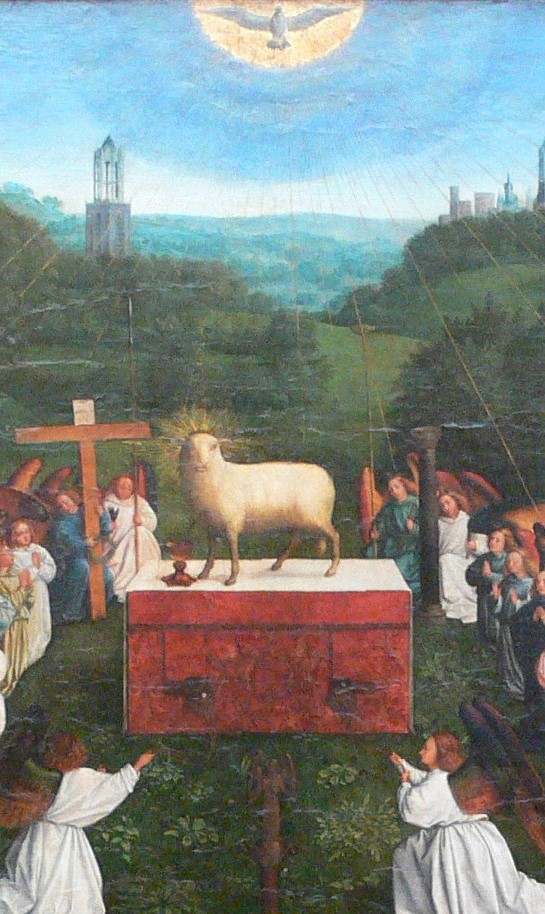


Tuesday of the Fifth Week of Lent

Tuesday of the Fifth Week of Lent
Numbers 21:4-9  +  John 8:21-30

“When you lift up the Son of Man, then you will realize that I AM ….”

“When you lift up the Son of Man, then you will realize that I AM ….”  We might wonder:  when Jesus spoke these words, did the Pharisees realize that Jesus was foretelling His being lifted up on the Cross?  It’s possible that the Pharisees had already at this point plotted the death of Jesus in detail, and had Jesus’ crucifixion arranged.

There’s no doubt, however, that the Pharisees were unable to understand what Jesus was in these words proclaiming about Himself.  Twice in today’s Gospel Reading Jesus uses the divine name of “I AM”—thedivine Name that God revealed to Moses at the burning bush—to identify Himself.  But why does Jesus reveal His divine identity?  He does not do this for His own sake.

At the moment of the Annunciation, Jesus took on human nature.  He did this so that through His human nature, He could redeem fallen man.

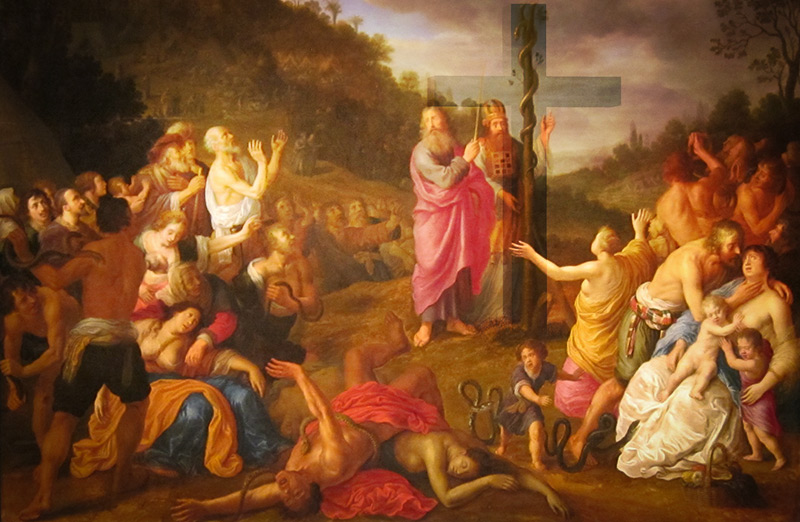
Given this, we can understand better why the Church chose today’s First Reading as a parallel to the Gospel passage.  In that light, we ought to recall how Jesus’ words in today’s Gospel passage echoes what He had earlier proclaimed, recorded five chapters earlier in John 3:  “‘just as Moses lifted up the serpent in the desert, so must the Son of Man be lifted up, so that everyone who believes in him may have eternal life.’”

In these words, Jesus seems to identify Himself with a serpent in the desert.  If this seems an odd comparison, recall St. Paul’s words in the Second Reading on Ash Wednesday:  “For our sake [God the Father] made Him to be sin who did not know sin.”

God the Father making His divine Son to be sin, as incredible as it seems, was done for a divine purpose.  St. John the Evangelist explains this after Jesus makes a connection between His self-sacrifice on the Cross with Moses’ lifting up the serpent:  “For God so loved the world that he gave his only Son, so that everyone who believes in him might not perish but might have eternal life” [John 3:16].
Lent 5-2

Monday of the Fifth Week of Lent

Monday of the Fifth Week of Lent
Daniel 13:41-62  +  John 8:12-20

“Even though I walk in the dark valley I fear no evil; for you are at my side.”

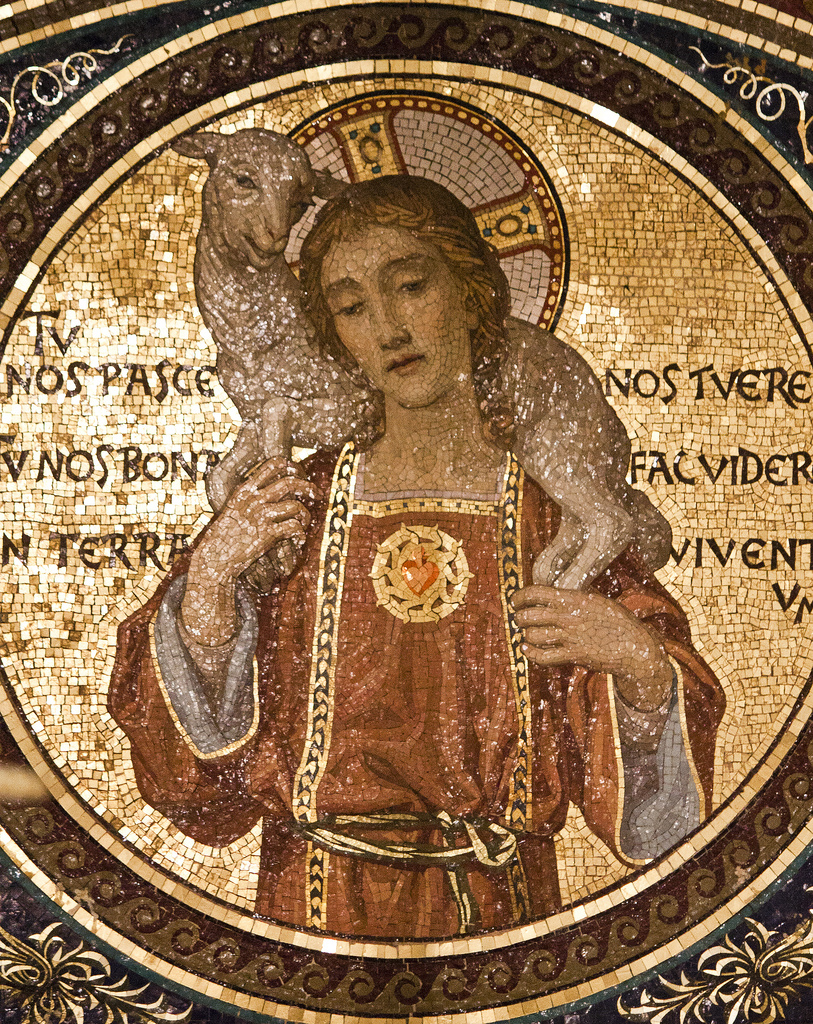
The 23rd Psalm is undoubtedly the most famous of the 150 works found in the Psalter.  But those who comment upon this psalm don’t always give it its due.  Instead, reflections upon the 23rd Psalm often focus upon the first verse, and the beneficence of the Good Shepherd.

As this psalm is proclaimed during the first week of Passiontide, however, the refrain of today’s Responsorial gives us a different focus.  The refrain concentrates our focus upon the middle two of the four stanzas of the psalm (as it’s broken down for proclamation in the Roman Missal).  These verses foreshadow Christ’s Passion, and the care that the Good Shepherd affords to one in danger.

In turn, these verses of the 23rd Psalm also help us appreciate better the danger faced by Susanna in today’s First Reading, and the care shown by Daniel, who shepherds her to legal and moral safety (in fact, to help her avoid death).  In this, the First Reading’s narrative helps us appreciate that each of us is called to be not only a sheep who calls upon the Good Shepherd, but also a good shepherd to those whose safety needs our protection.

Saturday of the Fourth Week of Lent

Saturday of the Fourth Week of Lent
Jeremiah 11:18-20  +  John 7:40-53

Then each went to his own house.

This morning’s Gospel Reading is fairly unusual in that Jesus neither appears nor speaks.  The passages focuses upon the reactions of various persons to Jesus, or rather, to what He had just said.  In fact, the first sentence of today’s Gospel Reading begins, “Some in the crowd who heard these words of Jesus said….”  So to make sense of today’s passage, we need to recall yesterday’s.

In yesterday’s Gospel Reading, Jesus only spoke three sentences:  “You know me and also know where I am from.  Yet I did not come on my own, but the one who sent me, whom you do not know, is true.  I know him, because I am from him, and he sent me.”  It’s these statements that give rise to the varied responses from the persons in today’s passage.  They argue with each other about Jesus’ origin, which in turn bears on His identity.

These persons’ confusion about where Jesus is from and who He is explains the final sentence of today’s Gospel Reading:  “Then each went to his own house.”  That might well seem an anodyne statement, but it’s symbolic of a more important truth:  that only Jesus can unite God’s people in the same “house”.  While the literal meaning of the word “house” in this final sentence is certainly an earthly dwelling place, its spiritual meaning is the House of God, which is another way of speaking about the Mystical Body of Christ.  Only by agreeing upon the true identity of Christ can God’s people find their true home in the Church.

Lent 4-6