
The Transfiguration of the Lord [A]

The Transfiguration of the Lord [A]
Daniel 7:9-10,13-14  +  2 Peter 1:16-19  +  Matthew 17:1-9

“Do not tell the vision to anyone until the Son of Man has been raised from the dead.”

section of the Catechism of the Catholic Church related to the Feast of the Transfiguration:

CCC 554-556:  A Foretaste of the Kingdom: the Transfiguration

August 6th is the date of the Feast of the Transfiguration of the Lord on Mount Tabor.  This event is so important in the life of the Church’s liturgical year that the feast is celebrated at Holy Mass even when August 6th falls on a Sunday.  In that case, the Transfiguration takes the place of the current Sunday in Ordinary Time.

Because the Transfiguration is recorded in the Gospel accounts of Matthew, Mark, and Luke, each year we hear one of these three records of the events that took place at Mount Tabor.  This year, we hear St. Matthew’s account of the Transfiguration.  In this account we have a miniature of the entire Gospel, and a miniature of the manner in which God has always made His Divine Revelation known.

God, like any loving parent, wants us to share in His love, but at the same time He wants us to enter into that love as freely as possible.  In other words, God wants us to come to Him of our own accord, because the more freely we come to Him, the more we grow into His love.

But as a loving and understanding parent, God knows we are often weak and need His help.  It’s true that God gave us an intellect by which we could of our own power reason that God exists, that He loves us, and that He wants us to imitate that love.  It’s also true that God gave us a free will by which to imitate Him, even if only imperfectly.  However, because our human intellect and will are often very weak, God constantly gives us signs of His presence, in order to remind us of Who He is and how much He loves us.

God did not have to inspire the human authors of Sacred Scripture, but He did so in order to give us a record of His love.  God did not have to choose twelve men to be His apostles, in order to share the Sacraments of His love.  But He did so to strengthen us in this earthly life of ours, since we face so many setbacks, failures, and disappointments.

God the Son was transfigured before the eyes of three of these apostles not simply so that they could say, “How good it is for us to be here.”  The Transfiguration occurred so that the apostles would hear God the Father’s voice, saying, “This is my beloved Son.  Listen to Him.”  Yet coming down the mountain, what does Jesus say that the apostles needed to listen to?  He points their attention ahead to His death on the Cross.  The entire scene of the Transfiguration is a prelude to the sorrow of Good Friday in the words that Jesus speaks going down the mountain, yet also a promise of the glory of Easter Sunday in the radiance of Jesus’ appearance on the mountaintop.

When we share in the Eucharist—the offering of Christ’s self-sacrifice on the Cross—God our loving Father nourishes us with the life of His Son.  In the Eucharist we see how Jesus’ Transfiguration on Mount Tabor bears further meaning.  This sacred event from Christ’s earthly life foreshadows the transformation of Jesus’ death on the Cross into the power of His Resurrection.  In turn, Jesus’ death and resurrection bear the power to transform the sacrifices of our daily lives into the opening of our lives to God’s divine life.
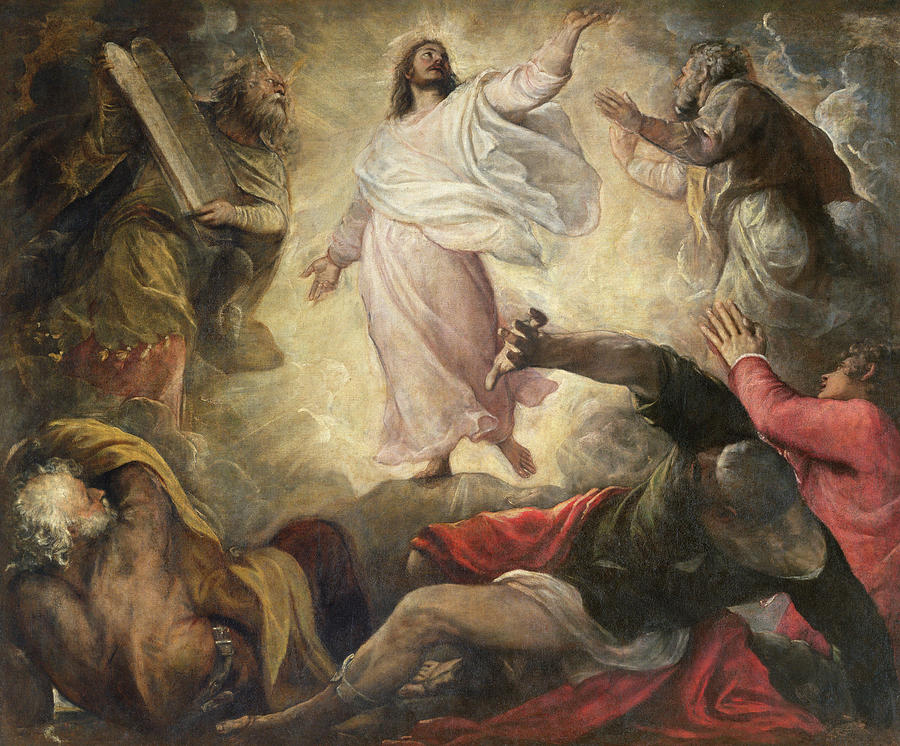
Transfiguration - Titian

Transfiguration by Titian (1490-1576)
Wednesday of the Eighteenth Week in Ordinary Time [II]

Wednesday of the Eighteenth Week in Ordinary Time [II]
Jeremiah 31:1-7  +  Matthew 15:21-28
August 5, 2020

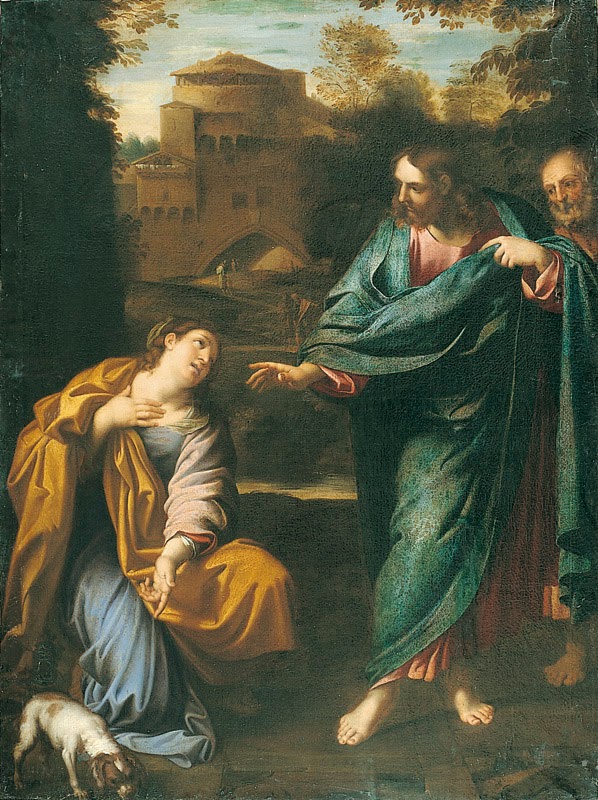
“Please, Lord, for even the dogs eat the scraps that fall from the table of their masters.”

We are not God’s children by right.  There is an infinite distance, naturally speaking, between us and God, between Heaven and Earth.  That is why the woman in the gospel represents each one of us:  she is a Gentile.  Up to Jesus’ day, God had promised salvation only to the Jews.  Gentiles were by definition outsiders.

Everything in our lives is a gift.  This is the opposite side of the coin:  on the one hand, we know that we do not deserve what we have in life.  So then, we are called to give thanks to God constantly, and all of our acts of thankfulness are rooted in faith.

Faith itself is the greatest gift we have in life.  Without faith, these acts of thanksgiving—culminating in the Holy Eucharist—make no sense.  The worst cynic or atheist would be justified in being rude and hard-edged about life, if God did not exist.  But we have to recognize that faith is a gift, which some people do not have during their earthly lives.

The faith that God wants from us is not passive; it’s active.  God does not want from us the sort of faith that just says, “God is going to take care of everything, so I can sit back and coast.”  This is not our Catholic understanding of faith.  Faith is something active on our part.  It demands constant prayer.  It demands the sort of dialogue, the sort of banter, that we hear between Jesus and the Gentile woman.  We might even say, God wants us to challenge Him in our prayer.  In this, we have no better example than Saint Teresa of Jesus.

OT 18-3

St. John Vianney, Priest

St. John Vianney, Priest
Jeremiah 30:1-2,12-15,18-22  +  Matthew 14:22-36 or Matthew 15:1-2,10-14
August 4, 2020

“If a blind man leads a blind man, both will fall into a pit.”

There are two options for this weekday’s Gospel Reading.  This reflection is based upon the latter option.

Jesus plainly criticizes the Pharisees in this Gospel Reading, calling a spade a spade.  Yet His words go beyond the first-century setting in which He lived.  His words offer us in the twenty-first century points for reflection regarding the need of fallen man for a Savior.

Throughout the history of the Church the Faith has been attacked in many different ways.  But every attack upon the Faith is, directly or indirectly, an attack upon the person of Jesus Christ.

One manner of attack upon Christ is the diminishment of what He accomplished for fallen man, and at the same time, an attack upon the uniqueness of His role in salvation history.  Fallen man cannot raise himself up by his own bootstraps, no matter how many good works he accomplishes and no matter how grand any of his accomplishments are.

Good works flow only through the power of God.  Salvation is only possible through the Self-sacrifice of Jesus Christ on Calvary.  Fallen man cannot save himself.  Only Jesus Christ can.  Our good works are the fruit of His Cross.

St. John Marie Vianney LARGE

Monday of the Eighteenth Week in Ordinary Time [II]

Monday of the Eighteenth Week in Ordinary Time [II]
Jeremiah 28:1-17  +  Matthew 14:13-21
August 3, 2020

“… his heart was moved with pity for them ….”

Being compassionate, Jesus was certainly concerned with the physical well-being of the people who had come to hear him preach.  Just how deep Christ’s compassion was is made obvious when we consider again something the first verse of this passage tells us:  Jesus is told about the hunger of the crowds right after he had heard of the death of John the Baptist, and had withdrawn by boat to a deserted place by himself.  If we were to take time to imagine this, we could very clearly see just how human Christ was, responding in grief and perhaps anger at the death of his own cousin.  He withdrew from others to be by himself.  And yet, even at this point in his life, the needs of others pressed upon him.  His response was that of God himself:  he turned to help those in need.

Jesus was certainly concerned with the physical well-being of the people who had come to hear him preach.  But he knew the people in the crowds better than they knew themselves.  Christ had a much deeper concern for their spiritual well-being.  He had reminded them that their ancestors, whom God had fed in the desert by sending bread in the form of manna, had died.  His divine Father, Jesus told them, had sent him to be their spiritual bread which would allow them to live for ever.  If they would eat this bread by accepting him and following his commandments they could enter into God’s eternal kingdom of love.