Monday After Epiphany

Monday After Epiphany
1 John 3:22—4:6  +  Matthew 4:12-17,23-25
January 6, 2020

I will give you all the nations for an inheritance.

In this final week of the Christmas Season, the Epiphany of the Lord continues to reverberate through the Sacred Liturgy.  In fact, while we tend to equate the Epiphany only with the narrative of the “three wise men”, the Church actually holds up two other Gospel narratives along with that of the “three kings” when she reflects on the meaning of Jesus’ Epiphany.

All three of these narratives bring to greater light who Jesus really is.  The word “epiphany” literally means “revelation” or “insight”, similar to how we use the word in common speech, or when we picture a light bulb going off above someone’s head.  Of course, in reference to Jesus, no particular revelation or insight can exhaustively show us who Jesus is, since the object being revealed (that is, the divine Person of Jesus) is an infinite Mystery.  The three Epiphany narratives, then, are like three different facets of a diamond, each of which reveals something of the gem’s brilliance.

Nonetheless, all of the Epiphany narratives reveal that God’s Messiah has come to save “all the nations”.  The universality of the Messiah’s mission shines through the Scriptures, antiphons and prayers of the last days of the Christmas Season.  The Responsorial Psalms that we hear today and the next two days present this with special clarity.  This is a good week, then, to ask whether we ourselves have any tendency to exclude others—whether in thought, word or action—from God’s love.

Epiphany

The Epiphany of the Lord

The Epiphany of the Lord
Isaiah 60:1-6  +  Ephesians 3:2-3,5-6  +  Matthew 2:1-12
January 5, 2020

“We saw his star at its rising and have come to do him homage.”

+     +     +

click HERE to hear Scott Hahn’s reflection for this solemnity (2:59)

click HERE to watch Jeff Cavins’ reflection for this solemnity (4:30)

click HERE to read the homily of Monsignor Charles Pope for this solemnity

click HERE to watch the homily of Archbishop Charles Chaput for this solemnity (15:05)

+     +     +

click HERE to read Pope Francis’ 2017 homily for this solemnity

click HERE to read Pope Emeritus Benedict’s 2011 homily for this solemnity

click HERE to read St. John Paul II’s 2003 homily for this solemnity

+     +     +

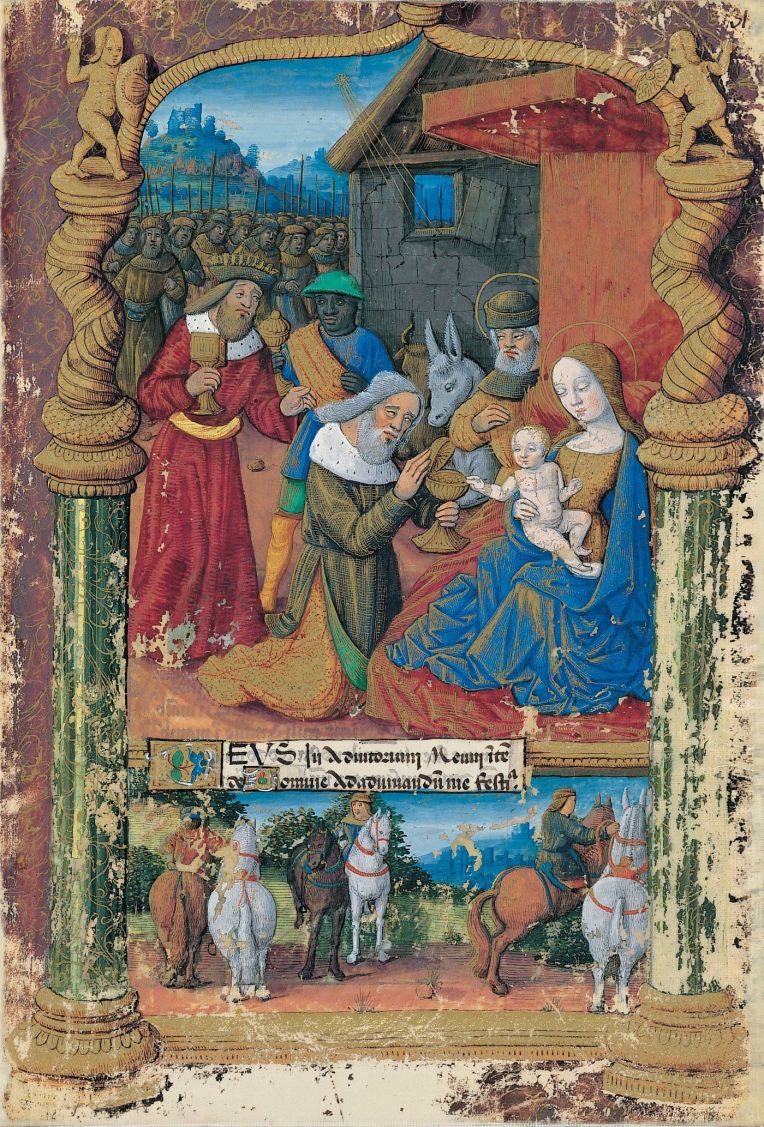
The feast of the Epiphany is a feast of reflecting on the gifts we see at Bethlehem.  In the Gospel Reading today, we hear of the gifts of the “magi” from the east.  But their three gifts of gold, frankincense and myrrh are responses to an infinitely greater gift:  the Gift—with a capital “G”—named Jesus.  God the Father gifted this divine gift to mankind.  It’s the reflection on all four of these gifts—three human and one divine—that leads Eastern Christians to exchange Christmas gifts on January 6, the twelfth day of the Christmas Season.

You know, of course, that the feast of the Epiphany is the basis for the folk carol, “The Twelve Days of Christmas”.  The twelve days referred to in this song—and the corresponding twelve gifts that are described—mark the days that stretch between the Birth of Jesus, and His Epiphany to the Wise Men, the Epiphany traditionally being celebrated on January 6.  These two feasts of the Nativity of Jesus and the Epiphany of Jesus are the poles of the Christmas Season, just as the North Pole and the South Pole are the poles of the planet earth.

That image of the planet earth is actually a good way to reflect upon today’s feast.  In every one of today’s Scripture passages, including our Responsorial Psalm, we hear that God’s grace is given as a gift for all the peoples of the earth.  In the First Reading from Isaiah, we hear the prophet proclaim to Jerusalem that “Nations shall walk by your light” and that “the wealth of nations shall be brought to you”.  Through the refrain of the Responsorial Psalm, we proclaim to the Lord that “every nation on earth will adore you.”  In the Second Reading from his Letter to the Ephesians, we hear Saint Paul preach that “the Gentiles are coheirs, members of the same body, and copartners in the promise in Christ Jesus”.

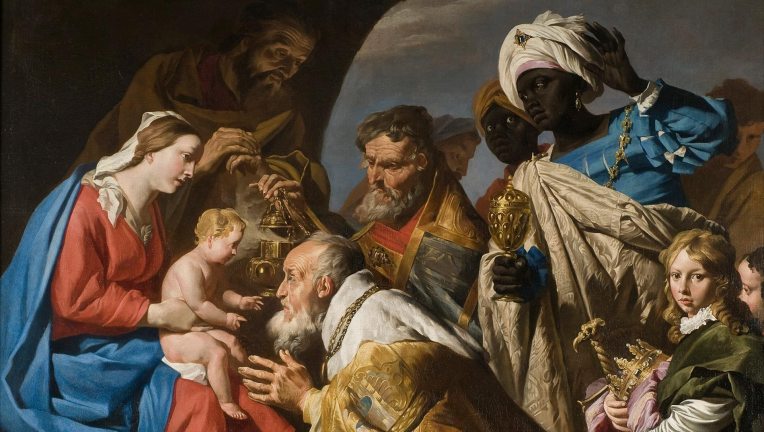
All of these passages from Sacred Scripture point our attention to God’s desire that His grace be spread universally throughout the earth.  These Scripture passages culminate in the Gospel story about the pagan “magi from the east” who “arrived in Jerusalem”, bearing the gifts that Isaiah foretold.  When the wise men “prostrated themselves and did [the child Jesus] homage”, they fulfilled the refrain of today’s Psalm.  These pagan kings were only three, but they represent all the Gentiles of the earth, from north to south and east to west.  These pagan kings represent all those whom God wanted to be co-partners with the Jews, “members of the same [Mystical] body” of Christ.

The Church, in other words, is meant by God to be universal.  “Universal” is simply another word for “catholic”.  Most likely, when you and I are discussing religious matters with others and use the word “Catholic”, we’re using it in contrast to words such as “Methodist” or “Baptist” or “Presbyterian”.  But that’s not the Scriptural meaning of the word “catholic”.  The literal meaning of the word “catholic” is “universal”.  The word “catholic” refers to God’s desire that His grace cover the earth from north to south and east to west.  God’s Church is catholic because His heart is catholic.

Put another way, the universal Faith of God’s Church is where the two great commandments kiss.  Jesus taught us to love God and to love our neighbor.  He expanded on that second great commandment with the Parable of the Good Samaritan, teaching us that every man, woman and child on the face of God’s green earth is our neighbor, without exception.  That’s how Jesus loved on the Cross.  He gave His Body and Blood, soul and divinity for all mankind:  for every last sinner, without exception.  That’s the Love that became Flesh and dwelt among us in the Person of Jesus, who was born for us, and appeared to us in Bethlehem.

The Season of Christmas lasts only one more week.  It ends next Sunday with the feast of the Baptism of the Lord.  So we need to continue celebrating this spiritual season of gift-giving.  It’s in response to God’s Gift of His Son Jesus that you can come before the child Jesus and lay your self with your gifts at His feet.

But notice!  That order is very important.  It’s not that we give our selves to God and, in response, God—being mightily impressed with us—gives us His Son.  That’s not how God’s love works.  In a passage from one of his letters, a passage which the Church proclaims during Christmastide, Saint John the Evangelist reveals the nature of the divine love that became Flesh and dwelt among us.  “In this is love:  not that we have loved God, but that He loved us, and has given us His Son as an offering for our sins” [1 John 4:10].

Epiphany 02

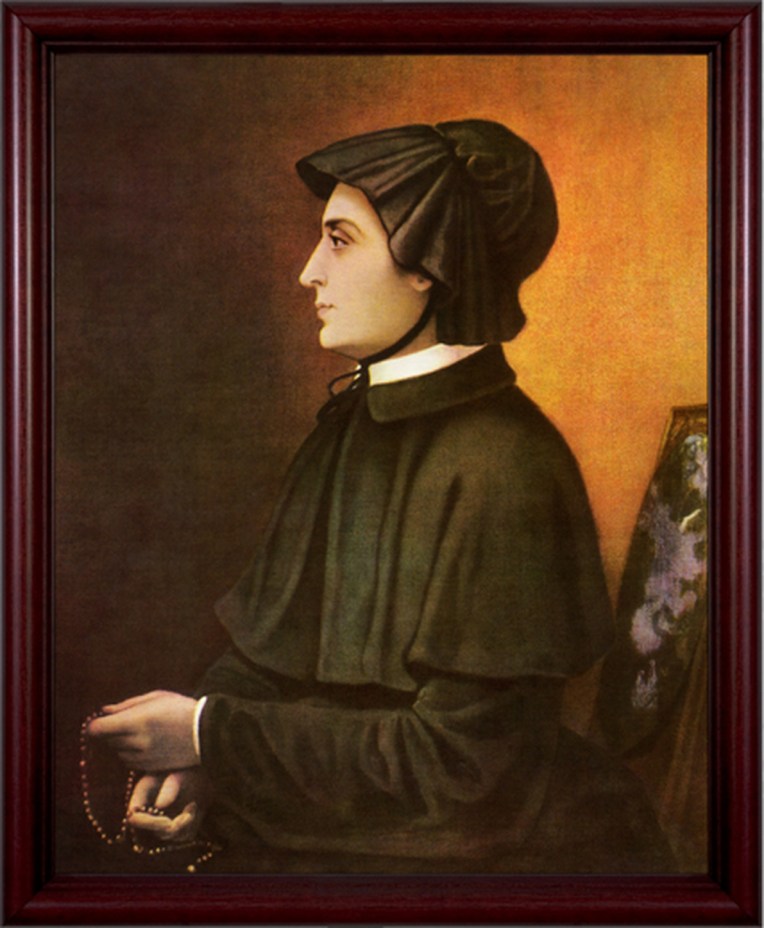
St. Elizabeth Ann Seton, Religious

St. Elizabeth Ann Seton, Religious
1 John 3:7-10  +  John 1:35-42
January 4, 2019

Indeed, the Son of God was revealed to destroy the works of the Devil.

One of the words in today’s First Reading—”revealed”—can help us focus on serving others in order to foster love.  We continue to hear from the First Epistle of John.  The Beloved Disciple is very blunt in his epistles.  He has just as sharp a sense of evil as he does of divine love.  Surely John’s perception of both was whetted on the rock of Calvary.

John declares plainly that “the Son of God was revealed to destroy the works of the Devil.”  You could say that this sentence sums up the way that John’s Gospel account moves from the signs of Jesus’ seven miracles to the Sign of the Cross, the glory of which destroys Satan’s power.  John’s account of the Gospel shows how Jesus “revealed” Himself to mankind in stages.

So also the Holy Spirit has worked in the history of the Church, and in the life of each saint.  Ask God for yet another Christmas gift:  the same patience with your own spiritual growth that God has with you, as He continues unfailingly throughout your life to love you.

St. Elizabeth Ann Seton

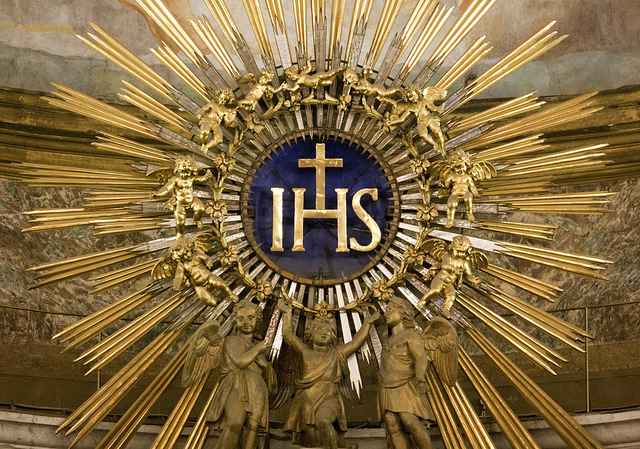
The Most Holy Name of Jesus

The Most Holy Name of Jesus
1 John 2:29—3:6  +  John 1:29-34
January 3, 2020

“Now I have seen and testified that He is the Son of God.”

Today’s passage from the First Epistle of John seems, at least at first hearing, to focus upon the relationship between God the Father and the disciple who is the Father’s adopted child.  St. John speaks of two distinct ways in which the disciple is God the Father’s child.  On the one hand, he states that “everyone who acts in righteousness is begotten by Him.”  On the other hand, he exhorts his listeners to “[s]ee what love the Father has bestowed on us that we may be called the children of God.”

We might reflect for a long time upon these two, which seem to focus upon, on the one hand, good works, and on the other hand, divine love.  The Beloved Disciple, of course, does not says that the disciple’s acts of righteousness are what make her a child of God.  This is no more possible than a child giving birth to herself.  The Beloved Disciple simply states that authentic righteous acts are signs of one who has been begotten by the Father.

On the other hand, the Beloved Disciple does state that the Father’s caritas—that is, His very self—is the source of His begetting.  “See what love the Father has bestowed on us that we may be called the children of God.”

Nonetheless, this distinction is not the heart of today’s passage from 1 John.  The Beloved Disciple makes a further distinction when he states:  “Beloved, we are God’s children now; what we shall be has not yet been revealed.”  So then, as it is in earthly life, it is also in the spiritual life:  childhood prepares for something greater.  St. John elaborates on this point through his next sentence:  “We do know that when it is revealed we shall be like Him, for we shall see Him as He is.”

Each of us, “when it is revealed”, will be like the Father.  We shall be like Him.  We shall share in the life of the Father, “for we shall see Him as He is.”

Yet another way to meditate on the truths of today’s First Reading is to use a basic principle of Scripture study:  namely, to hold up two passages from different parts of the Bible to the same light, in order to see how those two complement each other.  In this case, we can turn to a passage from the fourteenth chapter of the Beloved Disciple’s Gospel account.  The setting is the Last Supper.  The Beloved Disciple records this exchange between St. Philip and Our Lord:

Philip said to [Jesus], “Master, show us the Father, and that will be enough for us.”  Jesus said to him, “Have I been with you for so long a time and you still do not know me, Philip?  Whoever has seen me has seen the Father.  How can you say, ‘Show us the Father’?  Do you not believe that I am in the Father and the Father is in me?  The words that I speak to you I do not speak on my own.  The Father who dwells in me is doing his works” [John 14:8-10].

It is because we see the Incarnate Son of God that we see the Father.  It is by truly living in Jesus that we may live now as children, yet in a day to come as sharers in the life of God the Father Himself, in an even more full manner.

Most Holy Name of Jesus 2

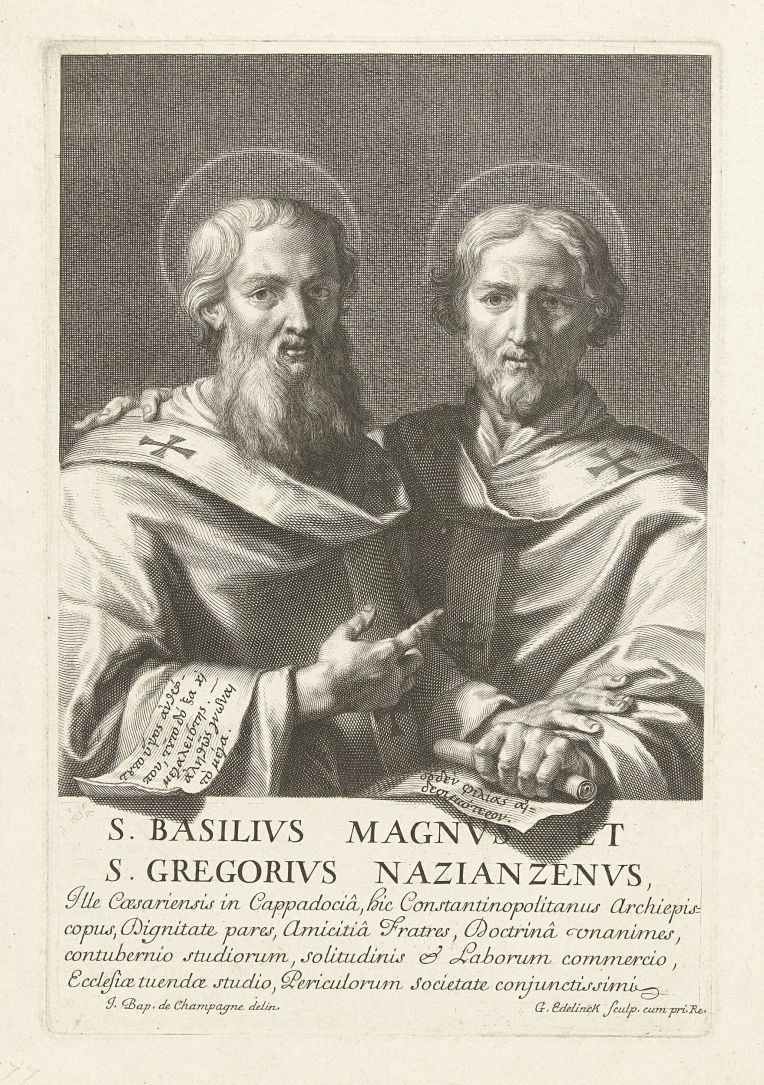
Sts. Basil the Great & Gregory Nazianzen, Bishops & Doctors of the Church

Sts. Basil the Great & Gregory Nazianzen, Bishops & Doctors of the Church
1 John 2:22-28  +  John 1:19-28
January 2, 2020

And now, children, remain in Him….

With all due respect to the Little Flower, an argument could be made that her “Little Way” was first taught by the Beloved Disciple, St. John the Evangelist and Apostle.  At the very least, her Little Way is rooted in the scriptural doctrine of the Beloved Disciple.  It would be interesting to explore the writings of the Little Flower for references to those scripture verses written by the Beloved Disciple which the Church proclaims during Christmastide.

One of the themes of Christmastide that lies at the heart of the Beloved Disciple’s Little Way is the theme of childhood.  This theme has at least two dimensions to it.  The first is that the eternal, divine Word became a tiny, helpless infant.  The second is that each Christian is herself meant during Christmastide to become a child once again.

In today’s First Reading, while it’s true that the word “children” is heard only once, the Johannine doctrine of discipleship as childhood is rooted in the relationship between God the Father and God the Son.  Christ is the exemplar of the disciple’s childhood, and it is within the divine Son made Flesh that each of us may live as the Father’s child.

One of the words in today’s First Reading that speaks specifically to being God the Father’s child in Christ is the verb “remain”.  Six times in this passage of only seven verses, the Beloved Disciple uses the word “remain” or “remains”.  But St. John exhorts those whom he addresses as “Beloved” in two distinct ways.  As we seek during Christmastide to grow as the Father’s children, we need to tend to both forms of “remaining”.

The first concerns that which is meant to remain within the Christian.  In today’s First Reading, the Beloved Disciple speaks twice to this point.  He exhorts the “Beloved”“Let what you heard from the beginning remain in you.”  We can consider this as being the divine Word remaining within the Christian disciple.  Then, St. John also reminds the “Beloved” that “the anointing that you received from Him remains in you”.  We can consider this in terms of the Holy Spirit, who is the source of all divine anointings.

The second form of remaining concerns where we ourselves are meant to remain:  that is, within the life of the Most Holy Trinity.  Three times in today’s First Reading St. John speaks to this point.  Any one of these would make for fruitful meditation throughout this day, but we might choose a single sentence from 1 John 2:24, where the two forms of remaining come together, or we might say, co-inhere:  “If what you heard from the beginning remains in you, then you will remain in the Son and in the Father.”

Sts. Basil and Gregory