St. Agatha, Virgin Martyr

St. Agatha, Virgin Martyr
Hebrews 13:1-8  +  Mark 6:14-29
February 5, 2021

When his disciples heard about it, they came and took his body and laid it in a tomb.

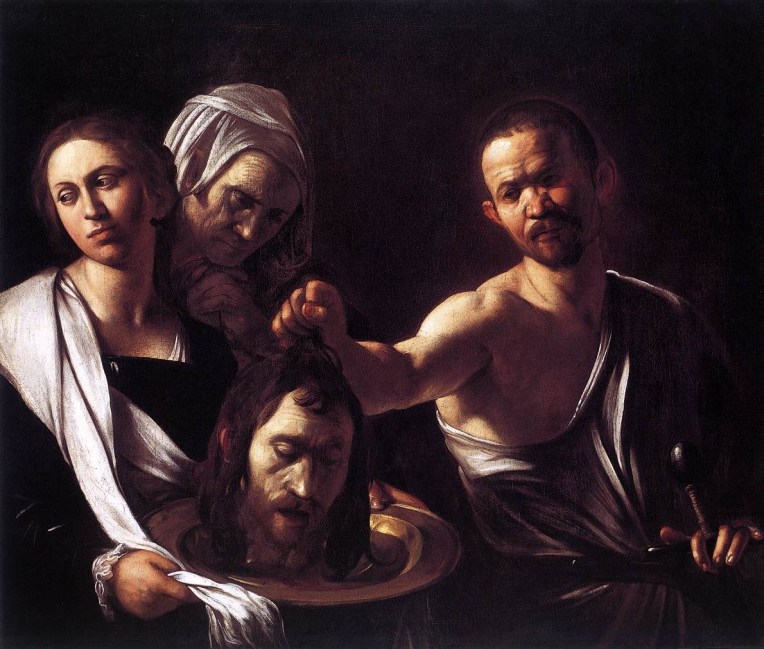
Today’s Gospel passage presents a long flashback to the martyrdom of St. John the Baptist.  It’s notable that St. Mark the Evangelist, so concerned with brevity in his Gospel account, gives so much attention to this narrative.  St. John was obviously a figure of importance in relating the Good News to early Christians, even in regard to his death.

What distinguishes St. John the Baptist as a saint?  We might say that it’s his particular combination of humility and courage.  Sometimes humility (and also meekness) are seen in opposition to courage.  In this false light, humility is a form of weakness and submission, involving an inability to stand up for oneself.

In one sense, humility truly is a form of submission.  Humility truly means not seeing oneself as the center of the universe, or the king of the hill.  In turn, humility truly means recognizing one’s true place in life.  This truth tenders a capacity for strength that doesn’t consider earthly life as one’s purpose in life.  This truth leads to a courage willing to forfeit one’s earthly life for eternal life.  St. John the Baptist witnessed to Christ in his penitence, in his preaching, in his knowing that Jesus must increase and he must decrease, and in his acceptance of the gift of martyrdom.

The Fifth Sunday in Ordinary Time [B]

The Fifth Sunday in Ordinary Time [B]
Job 7:1-4,6-7  +  1 Corinthians 9:16-19,22-23  +  Mark 1:29-39

“For this purpose have I come.”

+     +     +

references to the Catechism of the Catholic Church cited for this Sunday by the Vatican’s Homiletic Directory:

CCC 547-550: healing as a sign of messianic times
CCC 1502-1505: Christ the Healer
CCC 875, 1122: the urgency of preaching

+     +     +

In Sunday’s Gospel Reading, the people around Jesus seem to believe that the cures He’s working are the “good news” of the Gospel.  We have to remember that the word “gospel” literally means “good news”, and that Jesus had gone around Palestine for some time preaching that he had a message of “good news” for them.

But here we see a common misunderstanding among those who heard Jesus.  They didn’t exactly understand what Jesus’ “good news” concerned.  Was it good financial news?  News of good weather for the crops for the next hundred years?  Was it news of Israel’s freedom from its slavery to the Roman Empire?  The people in today’s Gospel Reading focus their attention upon the “good news” that Jesus has for them about their physical suffering.

Now we as Catholics living in modern times know that the meaning of the Gospel is that we are freed from slavery to sin, not simply that we are freed from the slavery of our bodies to disease.  The people in Palestine, however, were so caught up in the wonder of Jesus’ physical cures that they couldn’t understand that Jesus was simply using these cures as signs.  These miracles were healings of the body that foreshadowed the more radical healing of the soul.

We shouldn’t fault these people in the Gospel.  After all, who among us, when faced with disease, doesn’t find it easy to get caught up in the misery and suffering it brings about?  All you want is for the suffering to be over.  “Life on earth is a drudgery,” as Job says in the First Reading.  Suffering seems to consume your life.

So it’s easy to see why a person in the first century, suddenly and dramatically freed from serious sickness, would look upon Jesus as his Messiah for that very reason.  Nonetheless, Jesus’ purpose in working these cures is to point our attention beyond them to something infinitely greater.

By putting our faith in Jesus—that is, by believing that through His holy Cross He has redeemed the world—we are freed from the slavery of our souls to sin.  But the larger question that Jesus points to in this Gospel passage is not, “What are you a slave to?” (the correct answer being, “Sin”).  The larger question that Jesus points to is, “Who is it who has enslaved you to sin?”  This isn’t a question that the people in the Gospel were ready to hear, but we as Catholics ought to consider this question seriously.  “Who has enslaved you to sin?”

The answer is:  “you have.”  Practically speaking, this is one of the hardest teachings of the Church.  It’s a teaching that often derails a Christian’s efforts at spiritual direction.  We might take it for granted that we are responsible for our actions.  But if we look closely at our actions, we might be surprised how often we deceive ourselves.

Like our first parents, Adam and Eve, there is a constant tendency within us to shift the blame.  “Who ate the apple?  Well, I did, but she made me do it.”  We may not even shift the blame to another person, but rather to the circumstances in which we find ourselves in life.  “If only I didn’t have to be around that person so much, I wouldn’t be so bothered by him,” or “if only if I didn’t have to finish that work by next week, I would do a better job on it.”

There is no denying that we are influenced by others, even at times perhaps by the Devil himself.  Nonetheless, each person must accept responsibility for his or her sinful actions.  A good Examination of Conscience each night can be a great help in this regard.

When we recognize how powerless we are to do good on our own, and when we accept the fact that it is through God’s grace that we can both be saved and do good works, then we are moving in the direction that Jesus points in today’s Gospel Reading.  He is pointing us, through His Cross, towards the very source of all good:  namely, Jesus’ own eternal Father, who, as the priest names Him in the confessional when giving absolution, is “God, the Father of mercies.”

Thursday of the Fourth Week in Ordinary Time [I]

Thursday of the Fourth Week in Ordinary Time [I]
Hebrews 12:18-19,21-24  +  Mark 6:7-13
February 4, 2021

[Jesus] summoned the Twelve and began to send them out two by two.

The meaning of Jesus’ two-fold action of summoning and sending in today’s Gospel passage is based on the literal meaning of the word “apostle”, which is “one who is sent”.  But today’s summoning and sending, in chapter 6 of St. Mark’s Gospel account, is different from a second apostolic mission on which these men will be sent.  That latter mission occurs in the final chapter, where in fact only eleven apostles remain.

The key distinction is what the Twelve here are sent to do.  This is a preparatory mission:  to preach repentance, drive out demons, and anoint and cure the sick.  Here the Twelve turn people around from the negative, to prepare them to receive the positive.  Their mission here is something akin to the vocation of St. John the Baptist:  to prepare for something—Someone—greater.

In Mark’s final chapter, the apostles are sent to accomplish something radically different.  They are sent not just to the sick, but to “the whole world”.  They are sent not just within the Holy Land, but “to the whole world”.  They are sent not to preach repentance, but to “proclaim the Gospel” [16:15].  For each of us, in the on-going conversion of our lives to Christ, we need to listen and be receptive to the works of both of these missions:  turning away from our sins, so that we within our own vocations can proclaim the Gospel by living the Gospel.

Wednesday of the Fourth Week in Ordinary Time [I]

Wednesday of the Fourth Week in Ordinary Time [I]
Hebrews 12:4-7,11-15  +  Mark 6:1-6
February 3, 2021

He was amazed at their lack of faith.

Today’s Gospel passage, from the sixth chapter of Mark, doesn’t really end on a high note.   In His native place, Jesus was not able to perform any mighty deed, apart from curing a few sick people.  He was amazed at their lack of faith.

Why did they lack faith?  Why do we lack faith?  Why do we focus on the less important things in life:  the less important types of freedom?  St. Mark begins his Gospel account by answering this question.  The first recorded words of Jesus are proclaimed immediately after He spends forty days in the desert, tempted by Satan.  He emerges from the desert, and the first words He speaks frame the entire Gospel.  Jesus proclaims, “This is the time of fulfillment.  The kingdom of God is at hand.  Repent, and believe in the Gospel.” 

Repent, and believe in the Gospel.  We might say that these two demands of Jesus sum up the entire Christian faith.  They lead us to faith.  They lead to true freedom.  And they require us to exercise our freedom in its deepest sense:  that is, in our relationship with God.

True repentance means to turn oneself around 180°:  to turn oneself away from sin, and towards God, not simply towards ourselves, and what we think we want.  This is the highest type of freedom:  to be able to do things for others, or in other words, to give our very self to another (another human person, or God).

The Presentation of the Lord

The Presentation of the Lord
Malachi 3:1-4  +  Hebrews 2:14-18  +  Luke 2:22-40 [or Lk 2:22-32]
February 2, 2021

“… for my eyes have seen your salvation, which you prepared in the sight of all the peoples ….”

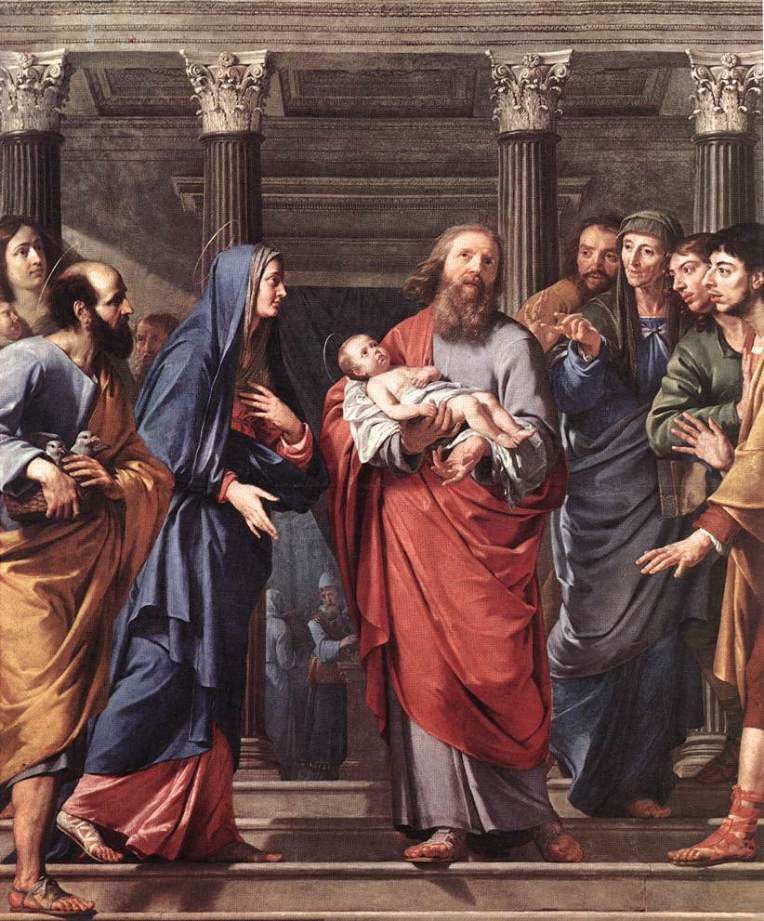
Today’s feast of the Presentation of the Lord in the Temple draws us back into thoughts of Christmastide and Epiphanytide, even though those seasons ended some weeks ago.  Yet today we celebrate another mystery of Jesus’ early life:  the Fourth Joyful Mystery of the Rosary of the Blessed Virgin Mary.  February 2nd falls forty days after Christmas Day, creating an obvious parallel to the Resurrection and Ascension.  Nonetheless, no matter how long Christmas lasts, today’s feast points our attention towards the giving of presents.     Just as the name of today’s feast is the “presentation” of the Lord, the meaning of the feast shows that the Lord is a present to be given to others.  On the one hand, God the Father gave His only Son as a present to the human family.  But on this feast of the Presentation, we see humans giving this present of Jesus to others, both back to God and to other humans.

For Joseph and Mary this presentation was what we in our day might call a supreme act of stewardship:  they recognized that not only were their time, talent, and treasure from God, but their first-born son as well.  The gift of human life, like a marriage between a man and a woman, only exists through the grace of God.  As an act of stewardship, then, Mary and Joseph present their new-born son back to God, recognizing that God is the ultimate Father of Jesus.

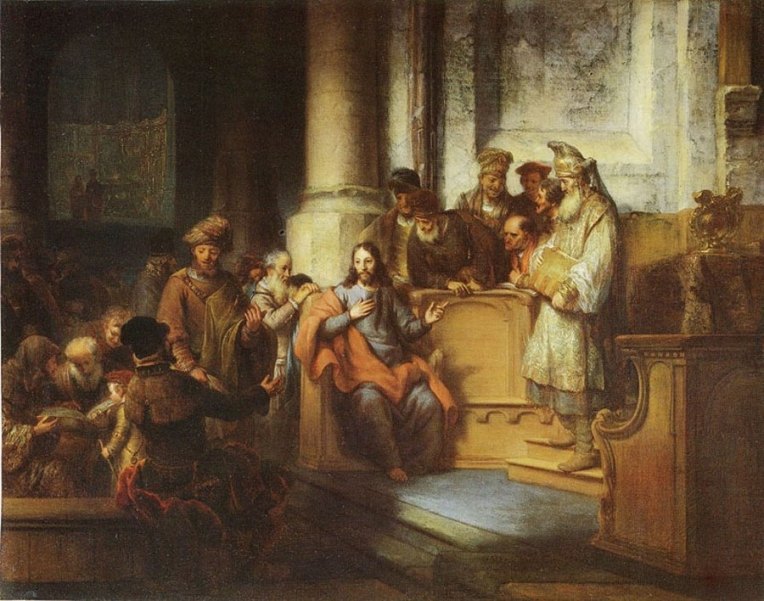
Joseph and Mary’s presentation of Jesus to God the Father was a sacrifice not offered only once.  Joseph and Mary continually offered this sacrifice as Jesus continued to grow.  When Jesus was twelve and Joseph and Mary lost and then found Jesus in the Temple teaching the scribes, Jesus expressed little concern about their worry.  He asked them, “Did you not know that I had to be in my Father’s house?”  This was not callousness on the part of Jesus, but a call for Mary and Joseph to recognize that as parents, they were not the ultimate meaning of their child’s life.

But even that event of the Finding of Jesus in the Temple, as much as it may have initially shaken Mary and Joseph, was almost nothing in comparison to the event that would take place on the Cross on Calvary some twenty years later.  It is there, on Calvary, that the greatest presentation took place.

Monday of the Fourth Week in Ordinary Time [I]

Monday of the Fourth Week in Ordinary Time [I]
Hebrews 11:32-40  +  Mark 5:1-20
February 1, 2021

… they began to beg [Jesus] to leave their district.

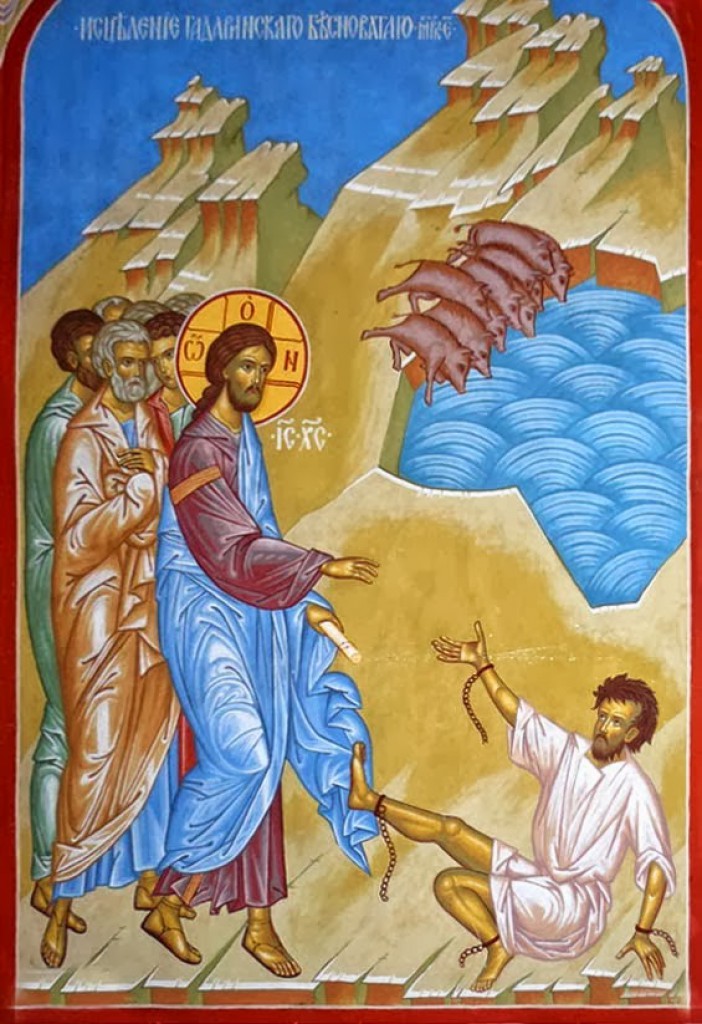
Demonic possession is an extremely serious matter.  While some today dismiss it, suggesting that all reported cases of possession are in fact psychological disorders, the Church takes today’s Gospel passage at its word.

One striking point in this narrative is the reaction of people to the swineherds’ report:  “they began to beg [Jesus] to leave their district.”  Why do the people react this way?  One might expect the people to express gratitude to Jesus, and invite Him to stay as their protector.

Perhaps the people were in shock, never before imagining that demons might dwell among them.  However, demonic possession in the Holy Land was not uncommon in Jesus’ day.  Perhaps the reaction of the people reflected what today is described by the acronym “NIMBY”:  “Not In My Back Yard”.  When terrible violence erupts in a metropolis, many people on hearing the news shake their heads, say a prayer for those affected, and then turn the channel to SportsCenter.

But if such violence erupts in their own hamlet, they express disbelief at how such violence could happen “here”.  Sin, violence and death are here, there and everywhere.  While each of us needs to practice prudence to deter them, we should have no illusions of escaping them.  In the midst of such illusions, Christ has no place.

Saturday of the Third Week in Ordinary Time [I]

Saturday of the Third Week in Ordinary Time [I]
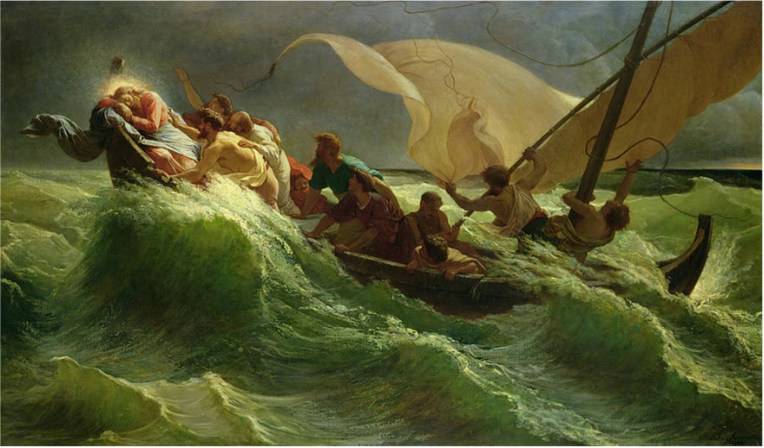
Hebrews 11:1-2,8-19  +  Mark 4:35-41
January 30, 2021

“‘Who then is this whom even wind and sea obey?’”

Is today’s lesson not to wake Jesus?  The miracle in today’s Gospel passage seems to be Jesus rebuking the wind and sea, resulting in “great calm”.  However, it’s not only the wind and sea that Jesus rebukes.  Perhaps more important is Jesus’ rebuke of His disciples.

Jesus chooses not to calm the disturbance in His disciples’ souls in the same manner that He calms the sea and wind.  But He does challenge them:  “Do you not yet have faith?”  His rebuke of the elements and of His disciples seems to have a meritorious effect on them.  “They were filled with awe” at His power over the elements.  But is this the faith He demanded of them?

It’s only natural to be impressed at the power of nature, and of God’s power over nature.  It’s something supernatural, however, to allow God to have power over oneself.  This is the sort of faith Jesus is asking for from His disciples.  Faith is a gift freely given, but it’s also a gift that must be freely accepted.  Jesus will not calm our souls without our consent, or rather, our faith in His power to do so.  The disciples marvel at Jesus as one “whom even wind and sea obey”.  Even more marvelous, however, is a disciple who obeys Jesus as His Lord.

Friday of the Third Week in Ordinary Time [I]

Friday of the Third Week in Ordinary Time [I]
Hebrews 10:32-39  +  Mark 4:26-34
January 29, 2021

With many such parables He spoke the word to them as they were able to understand it.

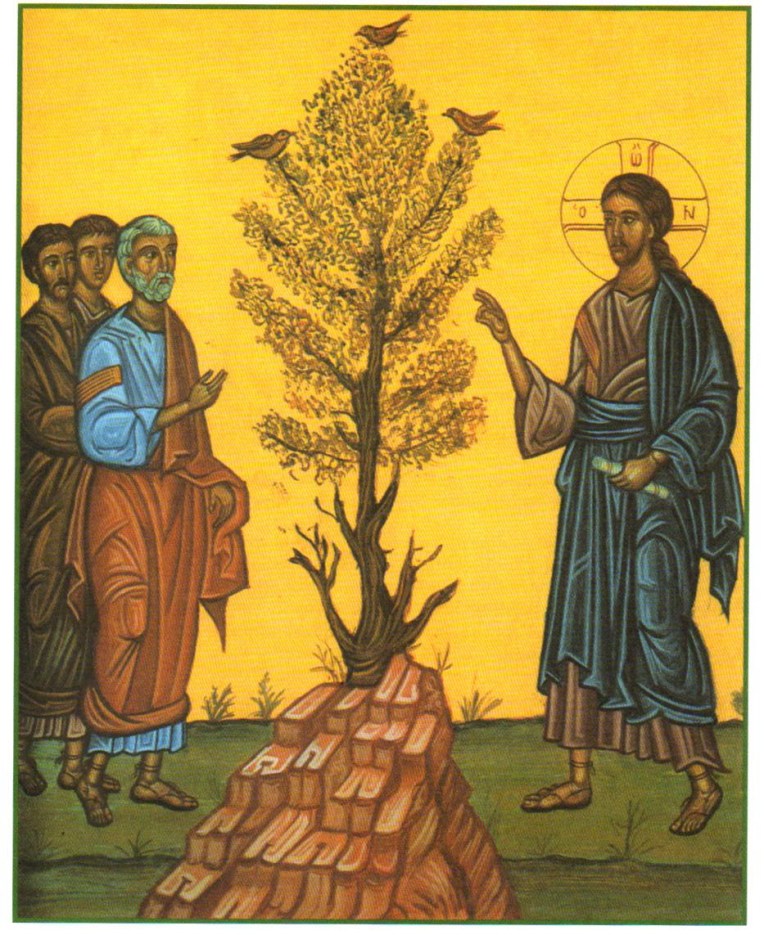
Jesus today proclaims two parables about the Kingdom of God.  With St. John Paul adding the Mysteries of Light to the Rosary, we meditate in the Third Luminous Mystery upon Jesus proclaiming the Kingdom of God.  St. John Paul did not go into great detail about the meaning of each of the new Luminous Mysteries, but—to me at least—that third mystery is the most mysterious of the Luminous Mysteries.  After all, it’s very clear how, for example, the Institution of the Holy Eucharist or the Transfiguration shed light upon—illuminate—who Jesus is.  But how does Jesus proclaiming the Kingdom of God do so?  We’re forced to meditate upon what exactly the connection is between Jesus and the Kingdom of God.

Jesus never directly addresses this question.  His parables are meant to be suggestive, not exhaustive.  But even without defining “the Kingdom of God”, we can say that the kernel of each “Kingdom parable” describes in some way the reality of Heaven, and/or the Church, and/or the Christian’s soul.  Each of these three have a clear relation to Jesus:  the reality of Heaven, the life of the Church, and the nature of the Christian soul.

Take Jesus’ second parable in today’s Gospel passage.  The change from the “smallest of all the seeds” to “the largest of plants” seems more easily applied to the Church and the Christian soul than to Heaven.  Tertullian wrote that “the blood of the martyrs is the seed of the Church”, a phrase through which we can see how this parable applies to the Church.  With God, all things are possible:  from a natural death, springs supernatural life.

The Fourth Sunday in Ordinary Time [B]

The Fourth Sunday in Ordinary Time [B]
Deuteronomy 18:15-20  +  1 Corinthians 7:32-35  +  Mark 1:21-28

… He taught them as one having authority and not as the scribes.

+     +     +

references to the Catechism of the Catholic Church cited for this Sunday by the Vatican’s Homiletic Directory:

CCC 547-550: Jesus accompanies words with miracles
CCC 447, 438, 550: Jesus’ power over demons
CCC 64, 762, 2595: the role of the prophet
CCC 922, 1618-1620: virginity for the sake of the Kingdom

+     +     +

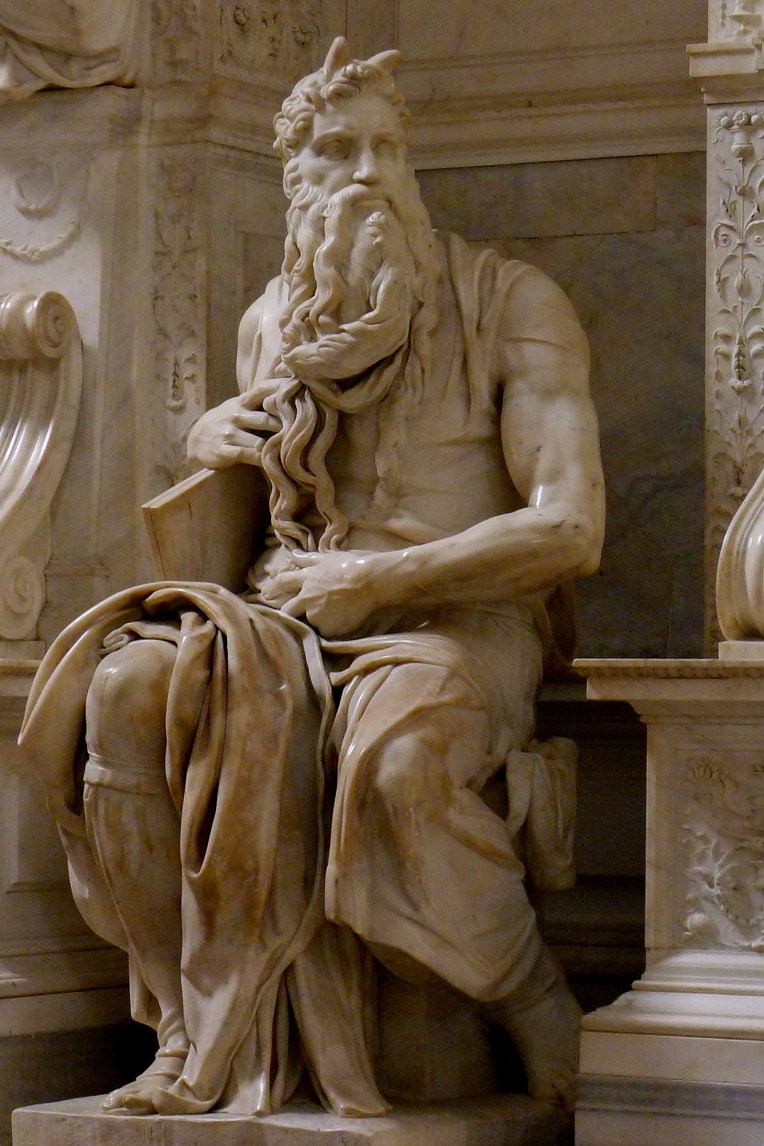
Every baptized Christian, by virtue of his or her baptism, is called to be a prophet.  Prophecy is not just for large, dramatic figures such as Moses.  Nor is it limited to the mystic past, as in ancient Israel.  Each one of you is called to be a prophet in the midst of your ordinary life.  But what is a prophet?

Biblical prophecy usually concerns the past.  The job of the prophet is to remind God’s People of what He had told them in the past about how to live their lives.  He is not a fortune teller.

When the prophet does speak about the future, he usually relates the future to the past, as in this Sunday’s First Reading.  The prophet says to God’s People something like:  “What you are now doing does not reflect what God asked you in the past to do, and therefore here are the consequences that will happen if you do not change course.”

In a single word, the prophet calls God’s People to integrity.  The prophet sets before God’s People the truth that their lives today must reflect the promises they made to God in the past so that they can enjoy God’s Presence in the future.

Unfortunately, there are many currents in popular culture today that suggest that we don’t need to worry about that.  They tell us that everyone goes to Heaven.  This is why Christians hear very few sermons about sin today, much less about mortal sin.  Such sermons are irrelevant if everyone is going to Heaven.  If everyone is going to Heaven, then the role of prophecy is meaningless.  But of course, that’s not true, and God reveals in today’s Scriptures why not.

As you likely know from experience, people don’t like to be told that they’re making a mistake.  It’s a lot easier just to leave people alone than to risk alienating them.  Conversely, it’s easy to be popular by always telling people what they want to hear.

Anyone who’s a parent knows about this.  Often, a parent has a choice between on the one hand being popular, and on the other hand being faithful to the responsibility of pointing out not only current problems, but also problems that are coming down the pike.

In addition to this responsibility, parents also know of a second important fact about leading their children:  that actions can be just as powerful, if not more powerful, than words.

Parents know instinctively how much their children watch them.  One of the reasons why children watch their parents is to learn how to accomplish things:  how to fish, how to ride a bike, how to sew.  But the other side of this coin is that children learn to understand their parents very well, including their mistakes.  How often, when parents tell their children how to act, do the children reply with, “But you don’t do that!”?  Teaching by example, rather than by words, prevents this.

So when it comes to teaching their children, many parents fear their children calling them hypocrites.  The fear of this single word—hypocrite—does more than anything else to tie the tongues of parents:  to prevent them from carrying out the prophetic office that God calls them to as parents.

This fear is related to another fear:  that children will rebel by saying, “How can you tell me not to do this, when I know that this is what you did when you were my age?”

However, it is not hypocrisy for parents to tell their children not to do something, even when the parents themselves did that very thing when they were young, provided that parents are not doing so now.  It would only be hypocrisy if parents were to tell their children not to do something that the parents were currently doing.  To tell your children not to do something that you once did, but no longer do, is simply teaching based on what you’ve learned from your mistakes, and that’s one form of wisdom, not hypocrisy.  Just as parents want their children to be better off materially than they were growing up, so parents are right to want their children to be better off morally than they were.