Thursday of the Ninth Week in Ordinary Time

Thursday of the Ninth Week in Ordinary Time
Mark 12:28-34

“‘There is no other commandment greater than these.’”

In in the Mystery of the Word made Flesh, God makes clear to us—in the flesh—not only His divine nature.  In his human life, God the Son makes clear to us the meaning of the Law of ancient Israel.  In the person of Christ Jesus, we learn how to fulfill the great teaching given our fathers in faith.

In particular, if we listen carefully to Our Lord’s summary of the Torah in today’s Gospel passage, we notice that along the same lines that there are two natures in the one person of Jesus Christ, so these two commands make but one single commandment.

Love, quite obviously, is the common denominator between these two commands:  “Love the Lord completely,” and “Love your neighbor as yourself.”  Understanding these two as one means having Christ at the center of our entire spiritual focus:  seeing in Christ our neighbor, and seeing in Christ our Lord and God.  And so we are to love others as Christ has loved us.  But we must even go one step further.  We are to love others so that others will love as Christ has loved us.  Not merely are we to give our lives for others.  We are to so have an effect on others that they in turn will do the same.  But how is this possible?  We cannot control the decisions of others.  Even if we love them they may hate us in turn.

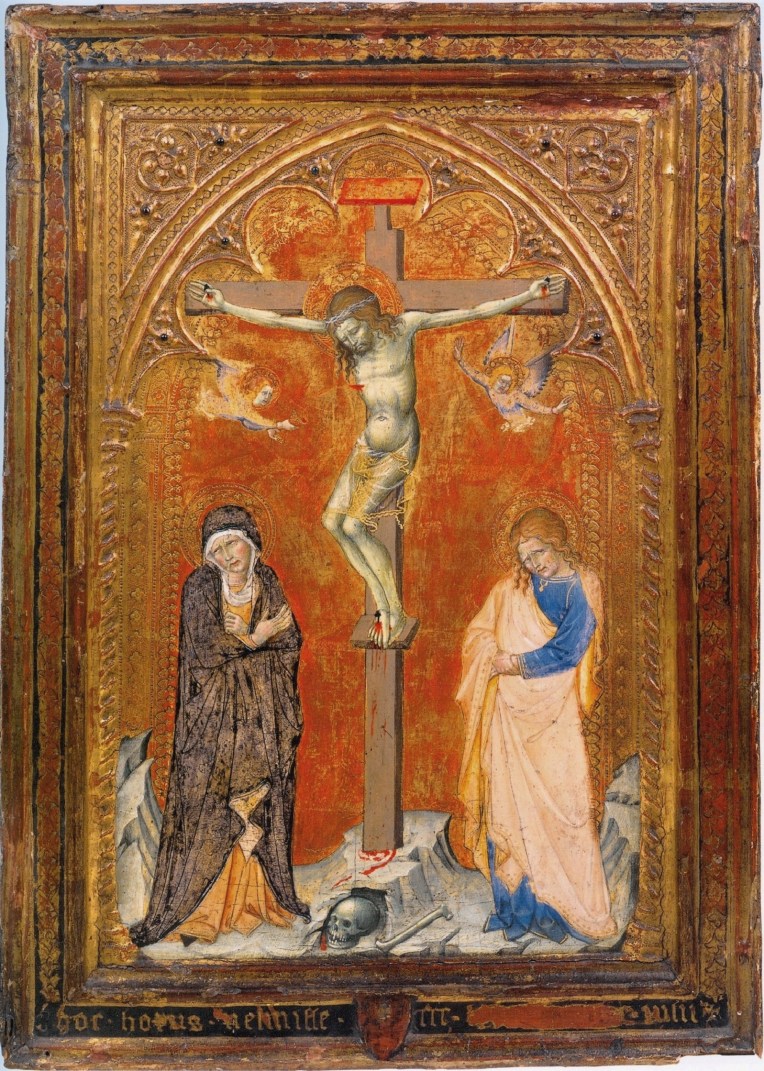
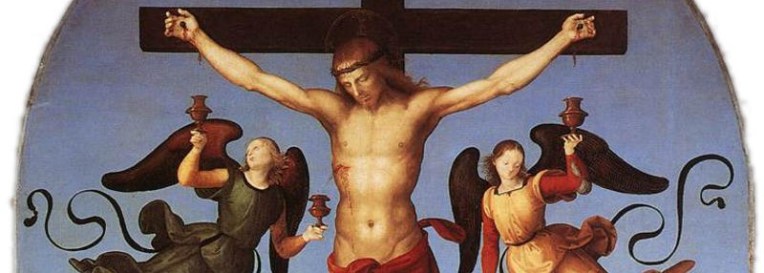
In artistic images of the Crucifixion, we see symbolically what Jesus is teaching in today’s Gospel passage.  In many such images, there are five persons:  two above, two below, and Jesus in the center of them all.  The two below are invariably Mary and John, who represent the human race for whom Jesus died:  Jesus’ human “neighbors”.  The above are only indirectly portrayed usually:  in such images, two angels stand for the other two Divine Persons, God the Father and God the Holy Spirit.  Among them all is Jesus Christ, true God and true man, who on the Cross shows us perfectly how to love God and neighbor at one and the same time.

Wednesday of the Ninth Week in Ordinary Time

Wednesday of the Ninth Week in Ordinary Time
Mark 12:18-27

“‘He is not God of the dead but of the living.’”

In today’s Gospel passage, Our Lord tries to make clear to the Sadducees the meaning of the Resurrection.  We too, however, even if we understand and believe in both the Resurrection of Our Lord and the promise of resurrection that God offers to all who die, perhaps may need to realize what type of claim the Resurrection places upon our Christian faith.

To believe in the Resurrection is to believe in the future fulfillment of God’s grace.  It is to understand that the suffering of the present is as nothing compared to the future glory to be revealed in Christ Jesus.  It is to guard in God’s name what has been entrusted to me until that final Day, which for each of us is the day of our death.

We never find Our Lord going into great detail about the nature of the afterlife.  There are two practical reasons for this.  First, the glory which will be the reward of God’s elect is too far beyond our comprehension.  Second, our only hope for sharing in that glory is to persevere in running the race which God has set before us, to stir into flame the gift of God each of us first received at our baptism, a flame in which we are purified like gold in the furnace.

Tuesday of the Ninth Week in Ordinary Time

Tuesday of the Ninth Week in Ordinary Time
Mark 12:13-17

“‘Repay to Caesar what belongs to Caesar and to God what belongs to God.’”

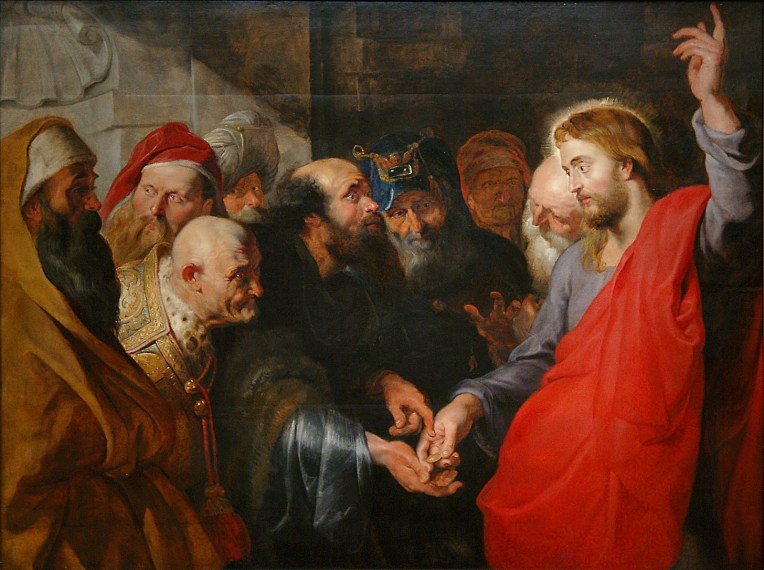
Jesus trips up the Pharisees and Herodians in today’s Gospel passage because of a dichotomy in their thinking.  They easily recognize the image of Caesar, but fail to see two even more clear images.  Focus on the first.

They fail to see Jesus as the divine Image of God the Father:  in other words, they don’t recognize Jesus’ divinity.  In addressing Jesus they say, “Teacher, we know that you are a truthful man”.  Then they assert of him, “You do not regard a person’s status but teach the way of God in accordance with the truth.”  In both statements they speak of Jesus in regard to truth (he is a truthful man and he teaches the way of God in accord with the truth) without recognizing that Jesus, as the divine Image of the Father, is the Truth made flesh.

We might be willing to pardon this, as no one else in the Gospel (excepting perhaps Mary, Joseph and the Baptizer) seems to recognize Jesus’ divinity, either.  This failure is at the heart of the drama in the Gospel, and reaches a climax on Calvary with Jesus’ cry:  “Father, forgive them, for they know not what they do”  [Luke 23:34].

The Visitation of the Blessed Virgin Mary

The Visitation of the Blessed Virgin Mary
Zephaniah 3:14-18  +  Luke 1:39-56
May 31, 2021

… Elizabeth, filled with the Holy Spirit, cried out in a loud voice ….

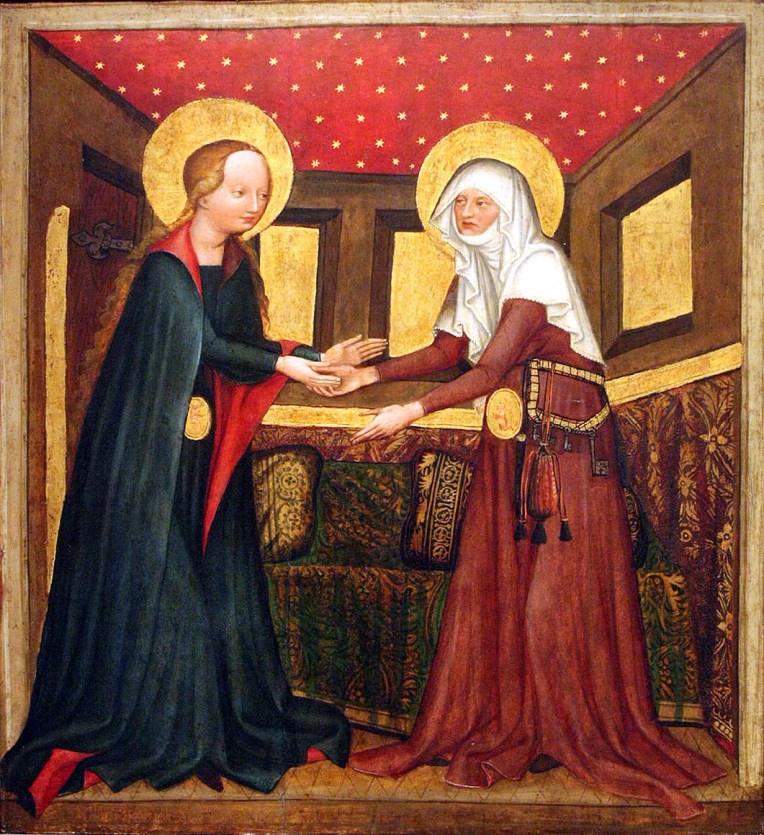
Catholic art is beautiful because it focuses on persons:  the three Divine Persons, and human persons as well.  In Catholic art that portrays today’s feast—the Visitation of Our Blessed Mother—there are four persons shown to the eye of the viewer.  Of course, two of them have to be shown indirectly because they are unborn children:  St. John the Baptist in the womb of Elizabeth, and Our Lord in the womb of the Blessed Virgin.  Sometimes these two unborn children are portrayed by something akin to halos shining, indicating the grace that dwells within these women through their openness to human and divine life [see the sacred image below].

If we were to order these four persons in order of holiness, we would first place the Lord Jesus, who is not merely a holy human being, but the source of all holiness:  the eternal Son of God.  We would certainly place second the Blessed Virgin Mary, the Mother of God:  she who merited to bear our Redeemer.  We would likely place third St. John the Baptist, whom some theologians have taught was without Original Sin.

But reflect today on Saint Elizabeth:  fourth in this line, yet like you and me.  She is a human creature, not a divine Person.  She receives assistance from the Blessed Virgin, as you and I do each day.  She was chosen not for drama, as was her son, but for simplicity of life.  In light of St. Elizabeth’s vocation, what do you and I take today from her example?  “…Elizabeth, filled with the Holy Spirit, cried out in a loud voice….”  Ask Jesus in your prayers to open your heart to the Holy Spirit, that you might each day speak of His power, His glory, and His love for all people.

Saturday of the Eighth Week in Ordinary Time [I]

Saturday of the Eighth Week in Ordinary Time
Mark 11:27-33

“By what authority are you doing these things?”

In today’s Gospel passage we hear a face-off between Jesus and the religious leaders of His day.  They challenge Jesus to explain the origin of His authority.

In response, Jesus cleverly poses what seems like a simple question.  It would hardly seem related to the topic raised by the religious leaders:  “Was John’s baptism of heavenly or of human origin?”

However, this question trips up the religious leaders precisely because they lack authority.  Instead, they pander to the crowds, worrying about what those whom they’re supposed to be leading will think of them.

Jesus’ question to these leaders is a challenge to those today who claim to lead in the Name of Jesus.  He challenges them to hold fast to the teachings of Jesus, even when this might cause them to be unpopular with those whom they lead.

Friday of the Eighth Week in Ordinary Time

Friday of the Eighth Week in Ordinary Time
Mark 11:11-26

“May no one ever eat of your fruit again!”

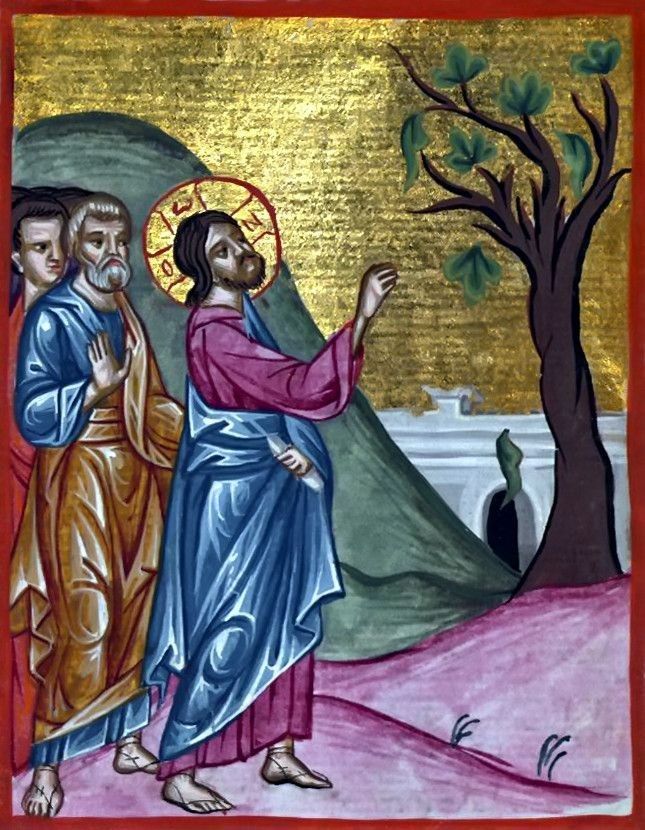
Saint Mark, in composing the Gospel passage that we hear today, uses a literary technique that demonstrates the meaning of faith.  He takes what would seem like two different scenes—Jesus cursing the fig tree, and Jesus confronting those who profane the Temple—and combines them in order to form a single passage, in which one illuminates the other.

The purpose of the Gospel in general is to proclaim the Good News of Jesus Christ.  In this particular passage, the good news is that placing faith in Christ produces miraculous fruit in our lives.

The Good News of Jesus stands in sharp contrast to the messages of self-fulfillment that the world tries to preach in so many different forms.  So therefore, the four evangelists use images of contrast in order to convey the Gospel.  The withered fig tree is an image of those who have no faith, such as those who profane the Temple.  Such are those who live by the standards of the world.

We are called, however, to make an act of faith in Christ Jesus.  On this Friday, we recognize especially the first step involved in such an act, declared by Our Lord in the last sentence of today’s gospel passage:  “When you stand to pray, forgive anyone against whom you have a grievance so that your heavenly Father may in turn forgive you your faults.”

The Most Holy Trinity [B]

The Most Holy Trinity [B]
Deuteronomy 4:32-34,39-40  +  Romans 8:14-17  +  Matthew 28:16-20

The Spirit Himself bears witness with our spirit that we are children of God ….

A well-written biography fascinates.  The narrative of a subject’s life—the events surrounding the person, as well as the choices which the person makes amidst those events—captures the imagination.  The individual person’s choices are windows into the person’s inner life:  the person’s mind, heart and soul.

Something similar is true regarding the Most Blessed Trinity.  Theologians describe the Trinity by means of two different terms.  One is called the “economic Trinity”.  The word “economic” refers in this case not to money, but to works performed, as in the phrase “home economics”.  So the “economic Trinity” is the Blessed Trinity described in terms of works performed “outside” the Trinity.

In other words, the “economy” of the Trinity is those works that the Trinity never had to carry out, but nevertheless freely chose to carry out.  The Trinity carried out these works simply out of love.  These works chiefly fall into two groups:  creation and salvation.  The work of creation concerns every created thing in the universe, visible and invisible.  The work of salvation solely concerns mankind, and includes man’s redemption and sanctification.

The Trinity’s works of creation and salvation serve as windows into the inner life of the Trinity.  This inner life is called the “immanent Trinity”.  This inner life of God is the very essence of the Trinity.  While the works of the “economic Trinity” are “exterior” to God, and therefore never had to be carried out, the “immanent Trinity” is God’s essential Being throughout eternity:  as He was in the beginning, is now, and ever shall be.

On this Sunday’s Solemnity of the Most Holy Trinity, we can reflect on God’s works of creation and salvation as a way of peering into His inner life.  It’s fitting that the Church celebrates the Solemnity of the Most Holy Trinity on the Sunday after Pentecost.  The two solemnities stand in a certain contrast to each other.  Pentecost celebrates the culmination of the Trinity’s “economy of salvation”, while the Solemnity of the Most Holy Trinity peers into the inner life of the “immanent Trinity”.  Consider further the connection between the “economic Trinity” and the “immanent Trinity”, and how the former illuminates the latter.

The beauty of creation inspires poets and mountain climbers, biologists and physicists to see the works of creation in a transcendent way.  In other words, the beauty of the works of creation points our attention to “where” they came from.  For believers, this reflective act of transcendence leads beyond those particular works, and also beyond the “how” of creation, all the way back to God Himself.

Chief among the visible works of God’s creation is the human being.  It’s little wonder that first-time parents draw closer to God as they stand in awe of the innocence, beauty, and dignity of a single, tiny human life.  Throughout the Church’s history, the greatest teachers of the Catholic Faith have reflected on how man—male and female—is created in the image of God.  This image is seen especially in how man’s intellect and will operate.  Although every animal has an intellect and a will, allowing it to reason and make choices, the human intellect and will are different because they are capable of self-transcendence.  The human intellect can map the cosmos and the human will can construct an edifice to last a millennium.

Yet while the works of creation reveal God’s inner life in a myriad of ways, the Trinity’s work of salvation does so even more powerfully.  In the order of salvation history, this work includes both redemption and sanctification.

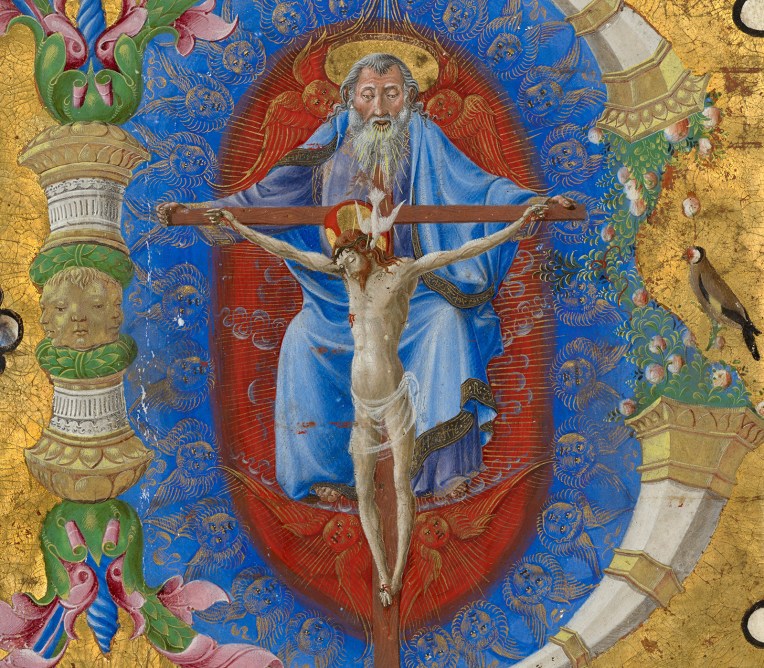
In the fullness of time God revealed Himself as a Trinity of Persons when He established His new and everlasting Covenant through the Sacrifice of Jesus on the Cross.  In this singular act of self-sacrifice—which Jesus offered fully through His human intellect and will, which is to say, knowingly and freely—Jesus gave up His divine and human life for the sake of His Bride, the Church.  Nonetheless, the Sacrifice of the Cross is not only the work of God the Son.  It is is a Trinitarian sacrifice, made at the initiative of God the Father and through the Power of God the Holy Spirit, who is the love of the Father and the Son for each other.
Thursday of the Eighth Week in Ordinary Time

Thursday of the Eighth Week in Ordinary Time
Mark 10:46-52

“What do you want me to do for you?”

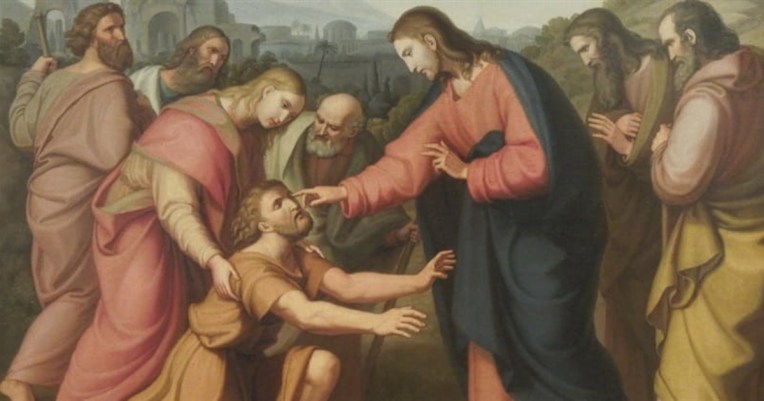
In the midst of your prayers to Him, or before Him in the Most Blessed Sacrament or during Holy Mass, have you ever heard Jesus ask this question to you?  “What do you want me to do for you?”  If He were to ask this question, most of us wouldn’t know how to respond.

Is this question that Jesus asks to the blind man simply a rhetorical question?  After all, in His divine nature, Jesus knows both what the blind man wants, as well as what the blind man needs.  The deeper question, however, is whether the blind man knows what he needs.

The same is true of each of us.  Most of us spend a majority of our prayer time petitioning God for what we want, or what we believe we need.  However, sometimes what we believe we need is different than what we truly need.

Was the recovery of his sight the blind man’s most important need?  Of course it was not.  But the blind man knows this, as does the evangelist, who ends this passage not by describing the man’s recovery of his sight, but by pointing out that he “followed [Jesus] on the way.”  The blind man subjected the recovery of his sight to a greater need:  the need to follow Jesus on the way.

Wednesday of the Eighth Week in Ordinary Time

Mark 10:32-45

“The chalice that I drink, you will drink ….”

Throughout the course of the four accounts of the Gospel, most of the apostles take turns appearing quite clueless.  Today the cluelessness of James and John (the Beloved Disciple!) is on display.

Today’s Gospel passage begins with Jesus foretelling His passion, death, and resurrection.  This momentous proclamation is met with complete self-interest on the part of the sons of Zebedee.  When they express to Jesus their request, He replies with words that you and I need to commit to memory:  “‘You do not know what you are asking.’”

Although there are commonly four types of prayer through which a Christian speaks to God—petition, adoration, contrition, and thanksgiving—the early stages of our spiritual life tend to be dominated by our speaking to God, rather than listening to God.  In our speaking to Him, we tend to focus more on petition than the other three.  To most of our petitions, the words of Jesus to James and John are the only fitting reply:  “‘You do not know what you are asking.’”

Here’s a very good petition to offer to God in your prayers today:  “Help me, Lord, to focus on Your providential Will rather than my own self-focused will, and help me to listen for your Word rather than to voice my own.”