St. Aloysius Gonzaga, Religious

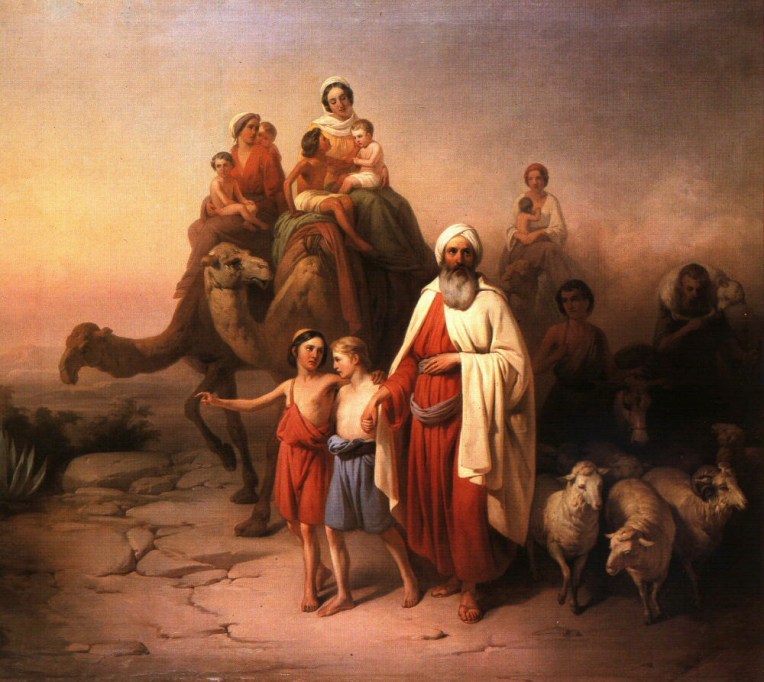
St. Aloysius Gonzaga, Religious
Genesis 12:1-9  +  Matthew 7:1-5
June 21, 2021

“The measure with which you measure will be used to measure you.”

Pondering the mystery of Christ, we find that God calls us to imitate Christ in our moral lives along the same line that we accept Christ:  first, in humble faith; then, with a burning desire to extend God’s love to those beyond our immediate reach.  Thus in the Ten Commandments we are called to serve both God and neighbor.

The first three command us to love God completely, above all others; the last seven command us to serve our neighbor as we love God.  Yet growth in the spiritual life is measured by the extent that we see the first three as intertwined with the latter seven.  We are called to love our neighbor as we love God.  Better yet, we are called to love our neighbor as God loves us.

In today’s Gospel passage we hear Jesus commanding us to forgive our neighbor.  “The measure with which you measure will be used to measure you.”  We should be mindful that our sins, as infinite offenses against Almighty God, will not permit us finally to enter into His Presence unless we are shown infinite mercy by Almighty God.  So we ourselves must forgive others if we ourselves hope to live in God’s sight.

Saturday of the Eleventh Week in Ordinary Time [I]

Saturday of the Eleventh Week in Ordinary Time [I]
2 Corinthians 12:1-10  +  Matthew 6:24-34
June 19, 2021

“You cannot serve God and mammon.”

These famous words from Jesus mark a clear divide between Heaven and earth, and between the spiritual and the material.  But to consider these words of Jesus seriously, we need first to address an underlying assumption.

The culture that surrounds modern persons in the West presumes that each person is his or her own boss.  Modern Western culture teaches children from an early age that they are not meant to serve anyone or anything.  In fact, both God and mammon serve me and my needs!

However, while the modern person may believe such ideas, so strongly reinforced as they are by modern culture, Jesus is offering a caution.  In fact, most of today’s Gospel passage is about the dangers of believing that mammon can serve oneself.

What begins in one’s mind as the idea of mammon serving oneself eventually ends in the servitude of the self to mammon.  The slave that mammon is thought to be becomes the master of the self.  This is the crippling servitude that Jesus is diagnosing, so to speak, through the examples He offers in this passage.

That we might live authentically, Jesus invites us to enter into a relationship with God as our Lord and Master.  This relationship of serving God is radically different than that in which one ends up serving mammon.  In the relationship that Jesus invites us to, through serving God, we become His “friends” [see John 15:15] and His “beloved children” [Ephesians 5:1].

Friday of the Eleventh Week in Ordinary Time [I]

Friday of the Eleventh Week in Ordinary Time [I]
2 Corinthians 11:18,21-30  +  Matthew 6:19-23
June 18, 2021

   “… where your treasure is, there also will your heart be.”   

Today’s Gospel passage from the Sermon on the Mount seems to have two distinct sections.  Nevertheless, a connection suggests itself.  The first section concerns wealth of different types.  The second concerns the human eye and light.  So what does human vision have to do with human wealth?

In the first part of today’s Gospel passage we hear one of the more famous of Jesus’ sayings:  “where your treasure is, there also will your heart be.”  The truth of this saying is so plain that it would surely be recognized by persons of all types of religious faith (or even by those with little or no faith).  It’s not strictly a religious saying, even though it’s spoken by the Son of God.  It’s a saying about human nature.  The medieval principle puts it somewhat differently:  “grace builds upon nature.”  God wishes for our sake that He be our treasure, but we are free to choose something merely human to serve as our treasure (or rather, as it turns out, for us to serve).

Whatever we choose as the treasure of our life, there will our heart gravitate.  There will we spend the energies of our heart, mind and soul.  But how does one go about choosing one’s treasure?  This is where the second half of today’s Gospel passage comes into play.

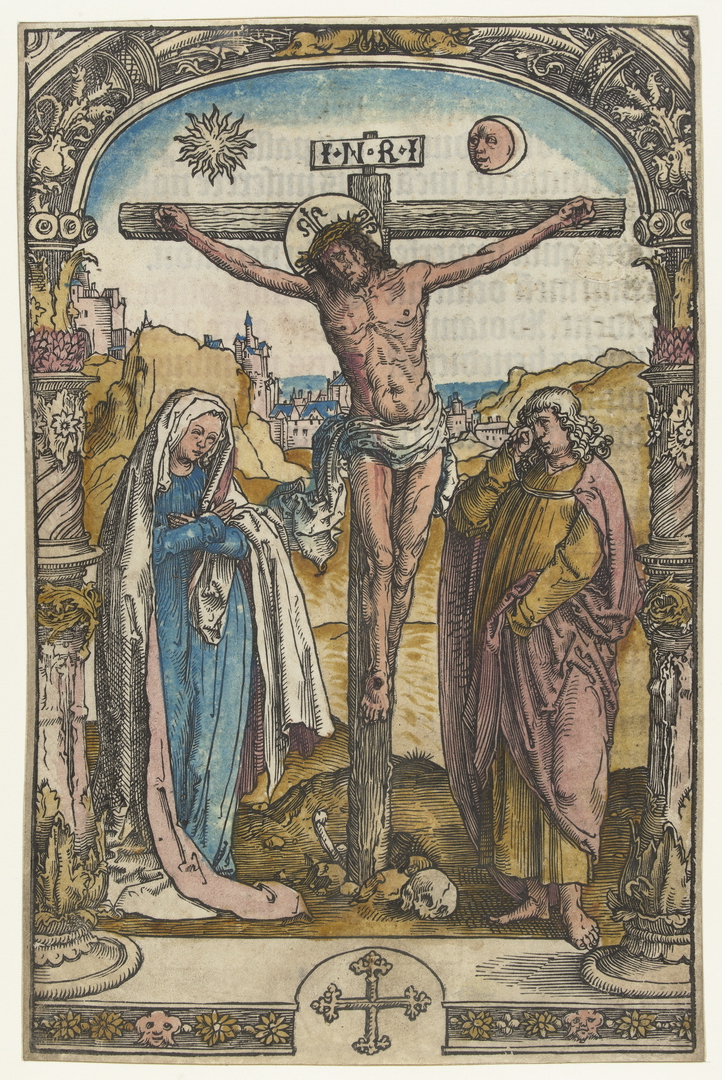
How does someone choose his treasure?  Is this process of choosing purely random and spontaneous?  Or does it come about by virtue of where we train the gaze of our soul?  Part of Christian realism is believing that knowledge comes through the human senses.  What we choose to look at has a profound influence on whether we choose something earthly as the treasure we will serve, or whether we choose God’s self-sacrifice of Jesus in the Eucharist as our treasure.  Spend at least five minutes today, then, looking at a crucifix and reflecting upon Jesus’ self-gift as given specifically for you.

The Twelfth Sunday in Ordinary Time [B]

The Twelfth Sunday in Ordinary Time [B]
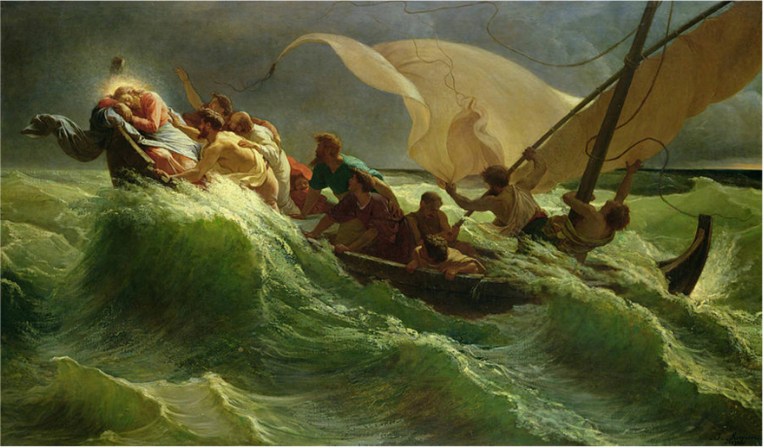
Job 38:1,8-11   +   2 Corinthians 5:14-17   +   Mark 4:35-41

“Who then is this whom even wind and sea obey?”

In this Sunday’s Gospel Reading, it’s asked about Jesus, “Who then is this whom even wind and sea obey?”  Yet those who ask this are not strangers.  They were disciples:  people who were close to Jesus, and to whom Jesus had dedicated a lot of His time.  It’s because of Jesus’ dedication that their question seems strange.  Shouldn’t they know better?  Shouldn’t they have some idea that Jesus is more than just a teacher?

In this, these disciples are you and me.  In their ignorance of who Jesus really is, we can see a likeness of ourselves.  This is one of the sources of so much trouble, agitation and discord in our own lives.  The problem isn’t with Jesus.  The problem is with us.  These disciples ask, “Teacher, do you not care that we are perishing?”

Strike one, and strike two.  These disciples make two mistakes here.  Not only are they mistaken in thinking that Jesus is nothing more than a teacher.  In fact, that’s the lesser of their two mistakes.  The worse mistake is what they accuse Jesus of when they ask, “Don’t you care that we are perishing?”

Do you ever say something like this when you pray to God?  Do you ever say to Him, “Don’t You care?”  “Why aren’t You doing something?”  “Don’t You see what’s happening in my life?”

Of course, all of these questions really boil down to the same question:  “Don’t You love me, God?”

What naturally follows is our saying to God, “If You did love me, You never would have allowed things to get this bad in my life.”  Or in other words, we might pray:  “I can’t do anything about this mess, but You surely can.  Since You’re choosing not to help me, You must not love me.”

For the disciples in the boat as they are tossed and pitched about, the same dynamic is at work.  They need to answer these two questions:  “Who am I?” and “Who is God?”  Yet the first question has to be answered first before seeking an answer to the second.

The same dynamic is at work as you are pitched and tossed about in the storm that we call “life”.  In our prayers, we wonder and we ask whether God cares for us.  As we ask this question about God’s love, we in turn wonder who we are, and whether our own lives have meaning.  After all, if God does not love me, what hope—what future—does my life have?

There is only hope—there is only a future for us—if our lives are rooted in Christ.  The answer to the question of the storm-tossed disciples is given by Saint Paul in the Second Reading.  The answer to the questions of our daily lives is given to us by Saint Paul.

As he reflects, looking back in time many decades after Jesus’ Resurrection and Ascension, Saint Paul could see what the storm-tossed disciples could not.  Saint Paul proclaims in the Second Reading:  “… even if we once knew Christ according to the flesh, yet now we know him so no longer.  So whoever is in Christ is a new creation:  the old things have passed away; behold, new things have come.”

The storm-tossed disciples saw only a Teacher.  They could not see a Savior.  They only knew Christ according to the flesh:  that is, with earthly eyes.  They did not see Christ with eyes of faith.

Nor did they look at their own lives with eyes of faith.  If they had, they would have seen more than just storm-tossed, weary, frightened people.  They would have seen themselves as people loved by God:  people loved by a God who protects His beloved from anything that can truly harm them.

In fact, there is a third strike made by the storm-tossed disciples when they cry out, “Teacher, do you not care that we are perishing?”  The third strike is thinking that they are perishing.

If the Lord is with you, you will not perish, for the Lord is life.  If you live your life in Christ, there is nothing you cannot endure.  Christ has not made us for this world.  He’s made us for a life that journeys through this world, drawing others into the peace of God’s presence even in the middle of storms.

Thursday of the Eleventh Week in Ordinary Time [I]

Thursday of the Eleventh Week in Ordinary Time [I]
2 Corinthians 11:1-11  +  Matthew 6:7-15
June 17, 2021

   “Our Father who art in Heaven, hallowed be Thy name.”   

Putting the Gospel passages from recent weekday Masses in context, we see the theme of God the Father emerge.  These passages come from the Sermon on the Mount.  Two days ago the Church proclaimed the last section of Matthew 5, the last phrase of which is Jesus’ command to “be perfect, just as your heavenly Father is perfect.”  Yesterday’s Gospel passage concerned the performance of “righteous deeds”, for which God the “Father who sees in secret will repay you.”

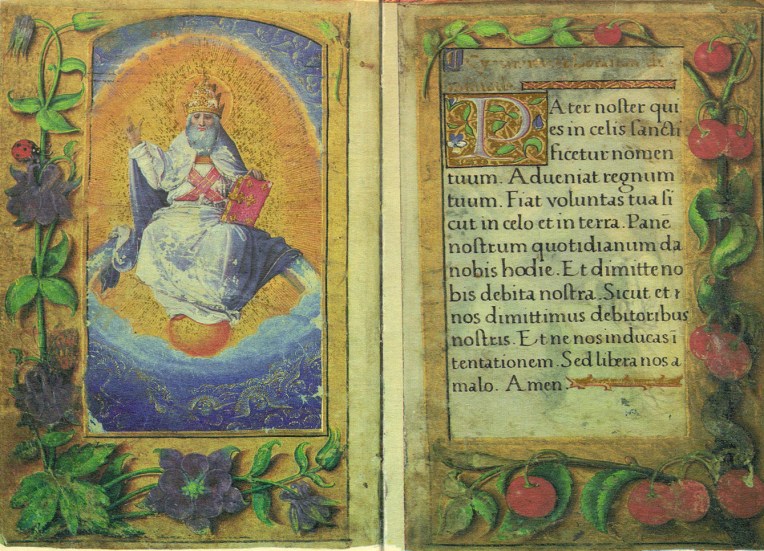
In today’s Gospel passage this theme comes to a head with Jesus teaching His Church to pray the “Our Father”.  This is the only “recited prayer” (or as this type is sometimes called, “vocal prayer”) that Jesus gave to the Church.

Many saints have commented on the “Our Father” by pointing out that Jesus had no need to teach any other prayer, because this prayer contains all that one might need or want to say to the Father.  Of course, other prayers are commended to us by the Church because they expand upon the phrases of the “Our Father”.  We who are slow and weak to believe use other vocal prayers, but those that are authentic lead us to the embrace of God the Father.

Wednesday of the Eleventh Week in Ordinary Time [I]

Wednesday of the Eleventh Week in Ordinary Time [I]
2 Corinthians 9:6-11  +  Matthew 6:1-6,16-18
June 16, 2021

   “And your Father who sees what is hidden will repay you.”   

Today’s Gospel passage is—to the verse—the same passage that we hear every year on Ash Wednesday.  The Church proclaims it today, in the middle of a week in Ordinary Time, because the cycle of Gospel passages for weekday Mass tends to go sequentially through a Gospel account.  This is different than the cycle for Sunday Mass, in which the Gospel passage more often jumps throughout the course of the Gospel account.

We are currently hearing from St. Matthew’s Gospel account at weekday Mass.  A week ago Monday we began hearing from the fifth chapter of Matthew, where the evangelist begins recording the Sermon on the Mount.  Today we begin hearing from Chapter 6.  The Sermon on the Mount continues through the end of Chapter 7, which we will hear at weekday Mass through a week from tomorrow.

Because today’s Gospel passage contains a wealth of spiritual teaching, you might benefit from reflecting on just one third.  In each of these three sections Jesus teaches us the right way of carrying out spiritual works.  But notice that each third ends the same way, with Jesus noting that when the act is performed from the heart—that is, with divine charity—“your Father who sees what is hidden will repay you”.  These acts are ultimately about our relationship with God our Father.

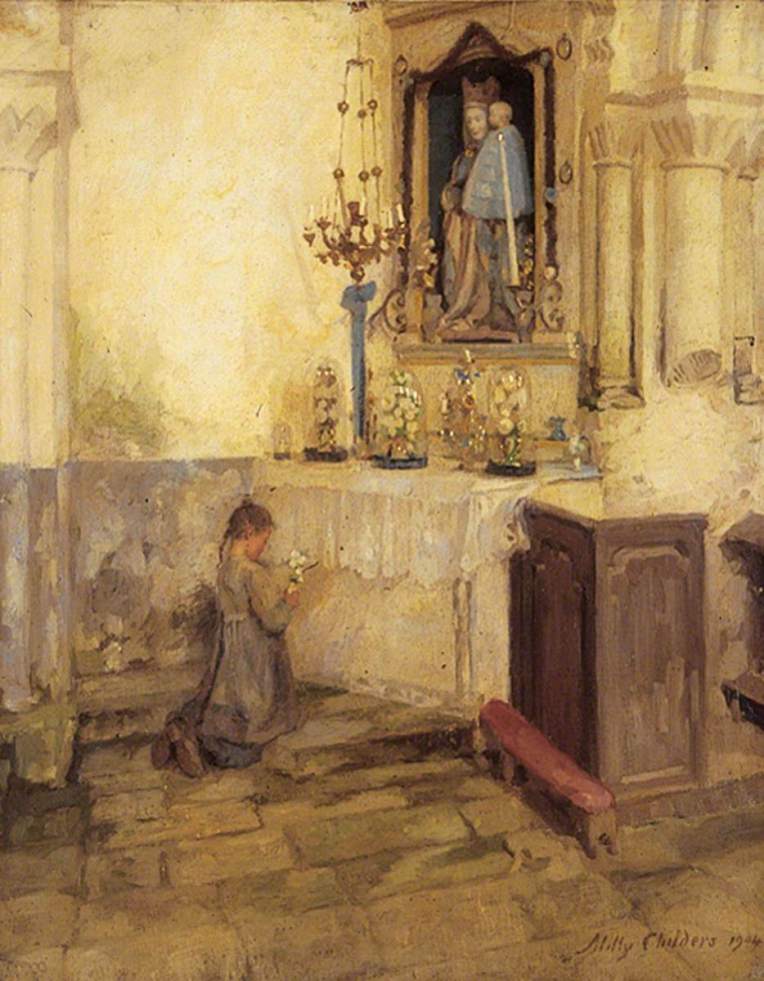
Childers, Milly; Girl Praying in Church; Leeds Museums and Galleries; http://www.artuk.org/artworks/girl-praying-in-church-38914

Tuesday of the Eleventh Week in Ordinary Time [I]

Tuesday of the Eleventh Week in Ordinary Time [I]
2 Corinthians 8:1-9  +  Matthew 5:43-48 
June 15, 2021

   “… pray for those who persecute you, that you may be children of your heavenly Father ….”   

Today’s Gospel passage is from the first third of the “Sermon on the Mount”.  This “inaugural address” is recorded in full only in Matthew, in Chapters 5-7.  Today’s Gospel passage forms part of a series in Chapter 5 of five contrasts between the commands of the Law and Jesus’ commands to love.  Each contrast uses a variation of the form, “You have heard it said… but I say to you.”

The contrast presented in today’s Gospel passage is the last of these five.  You could argue that Jesus saved the hardest for last!  How are we to love our enemies?  The simple answer is:  “As Jesus did on Calvary.”

We might begin by asking how our enemies got to be our enemies in the first place.  In our case, we ought to be mindful that we sinners often gain enemies because of our own sins.  So one way to shorten the list of our enemies is to sin less.

Jesus, of course, was sinless, but still had plenty of enemies.  In fact, Jesus had enemies for just the opposite reason that sinners do:  because of His unwillingness to compromise with evil.  To whatever extent we may, through God’s grace, bear holiness in our own lives, we too will win enemies for this reason also.  We must love all our enemies unto the Cross.

Monday of the Eleventh Week in Ordinary Time [I]

Monday of the Eleventh Week in Ordinary Time [I]
2 Corinthians 6:1-10  +  Matthew 5:38-42
June 14, 2021

   “Give to the one who asks of you, and do not turn your back….”   

As we continue to hear Our Lord preach the Sermon on the Mount, it is striking how down to earth His words are.  He does not speak fluff:  the sort of words that we hear from so many spiritual gurus.  He gives very practical advice about how to treat others.  In doing so, Our Lord is drawing us into a deeper relationship with the Father.

Our Lord slowly tries to teach us how intimately related are the commands to love both God and neighbor.  It is in Christ Jesus that the divine Word of God is made flesh.  It is in Christ’s Sacrifice on the Cross—the sacrifice of the altar—that we share sacramentally in Christ’s life, in order that we might share morally in His life by loving both God and neighbor fully.

However, we must be honest with ourselves, and be mindful that we are hardly advancing in the spiritual life if repentance is the largest part of our prayer.  Our penance merely disposes us to be God’s servants rather than His rivals.  When we consider the words of Christ in today’s Gospel passage, we see how completely we are to give of ourselves to others.

If our own spiritual houses are in order, how devoted are we to helping others build theirs?  How willing are we to be patient with others, with those who cannot be patient in their own prayer?  How will others learn the need for patience if not by seeing our example?  How willing are we to accept insults in silence and pray for the one who insults?  How will others learn the need for forbearance if not by seeing our example?

As we share in the sacrifice of the altar, may Almighty God help us see in our daily lives who it is in most need of a Christian witness.  May Almighty God strengthen us through the Body and Blood of Christ to be the ones to offer that witness.

The Immaculate Heart of the Blessed Virgin Mary

The Immaculate Heart of the Blessed Virgin Mary
Isaiah 61:9-11  +  Luke 2:41-51
June 12, 2021

… and His mother kept all these things in her heart.

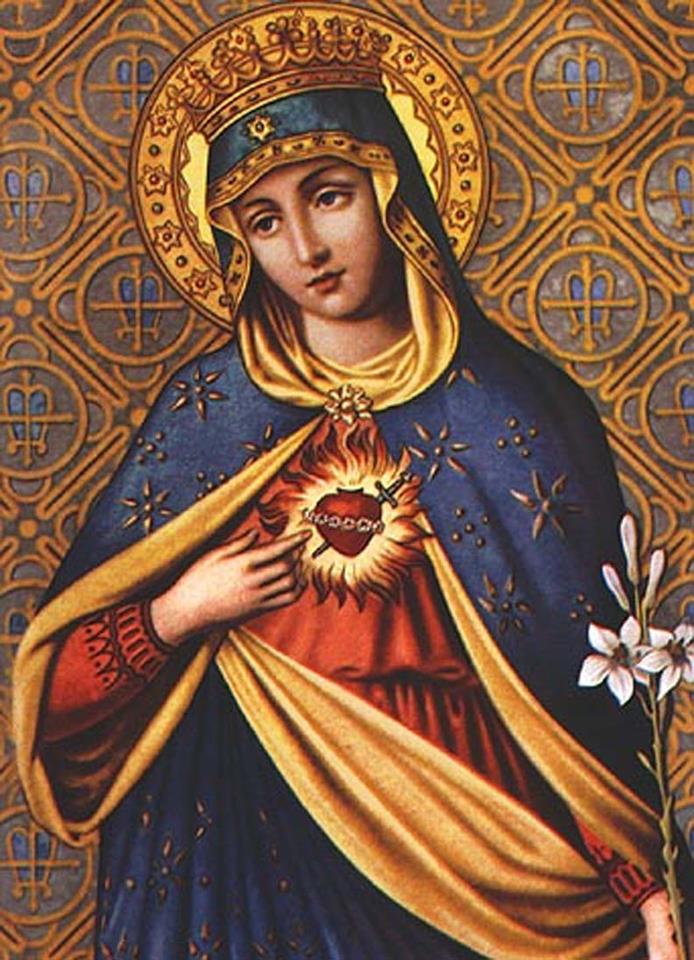
Today’s Gospel passage is proper to today’s feast of the Immaculate Heart of Mary.  The setting is unique within the four Gospel accounts:  Jesus is twelve years old, on the verge of entering into Jewish manhood (an entrance celebrated today with the ceremony of bar mitzvah).  If those scholars are correct who suggest that Jesus was conceived at the time of Passover, than today’s Gospel occurs right on the threshold of His thirteenth year of human life.  So this narrative, like that of Jesus’ Baptism, foreshadows His vocation as the one who by His death leads the sheepfold to the Father.

The specific link between this Gospel passage and today’s feast is the final phrase, in which St. Luke notes that Mary “kept all these things in her heart.”  Yet the culmination of “all these things” that are related in the passage are Jesus’ two questions:  “Why were you looking for me?  Did you not know that I must be in my Father’s house?”

The setting makes Mary’s pondering all these things in her heart very poignant.  As Jesus enters into manhood, He makes clear not just “Who” His Father is (which Mary and Joseph obviously knew), but also that His Father’s Will (symbolized by the Temple) is His reason for being in this world.  With each new insight into her Son’s life, and with each of the seven swords that pierces her immaculate heart, Mary repeats time and again:  “Fiat.”

IHM Immaculate Heart of Mary