The Fifteenth Sunday in Ordinary Time [B]

The Fifteenth Sunday in Ordinary Time [B]
Amos 7:12-15  +  Ephesians 1:3-14  +  Mark 6:7-13

“In Him we also were chosen ….”

If you had to pick two words to summarize today’s Scripture passages, the words “foundation” and “rejection” would be good choices.  Both are meant to be part of the Christian’s life.

The foundation upon which every Christian builds his or her life is, of course, Jesus Christ.  Christ is the subject of Sunday’s Second Reading.

All that you are as a Christian is in Christ.  Saint Paul proclaims this in the very first sentence:  “Blessed be the God and Father of our Lord Jesus Christ, who has blessed us in Christ …”.  Later in the same first sentence Paul explains that the Father “chose us in Him”—that is, in Christ—“to be holy and without blemish before Him.”  Paul begins the second sentence by declaring that “In love [the Father] destined us for adoption to Himself through Jesus Christ ….”  So it goes throughout this passage:  Paul stresses over and over how all that you are and are called to be as a Christian is found in Christ.

That includes the call to be a prophet.  This is a call that is part and parcel of your reception of baptism.  No matter whether He later called you to Holy Orders or Holy Matrimony or consecrated life (or to none of these three), if you were baptized, then on the day of your baptism you were made a prophet by the Father in Christ.

Many people in our day and age, unfortunately, don’t think that the lay faithful within the Church are called to exercise the role of prophet.  So consider what the role of the Christian prophet entails.  Some think of a prophet as being like a fortune-teller with a crystal ball.  But that’s a mistaken idea.  The Christian prophet is not so much concerned about the future as about the past.

If there’s one word that sums up the message that a prophet delivers, it’s the word “fidelity”.  The prophet calls God’s people to fidelity:  or more precisely, the prophet calls God’s people back to fidelity.  The prophet reminds God’s people of the promises that they made with God, and then calls them back to fidelity to their word.  The prophet calls God’s people to integrity between their past promises and their actions in the present day.  To the extent that the prophet speaks about the future, it’s in order to explain to God’s people the consequences of infidelity.

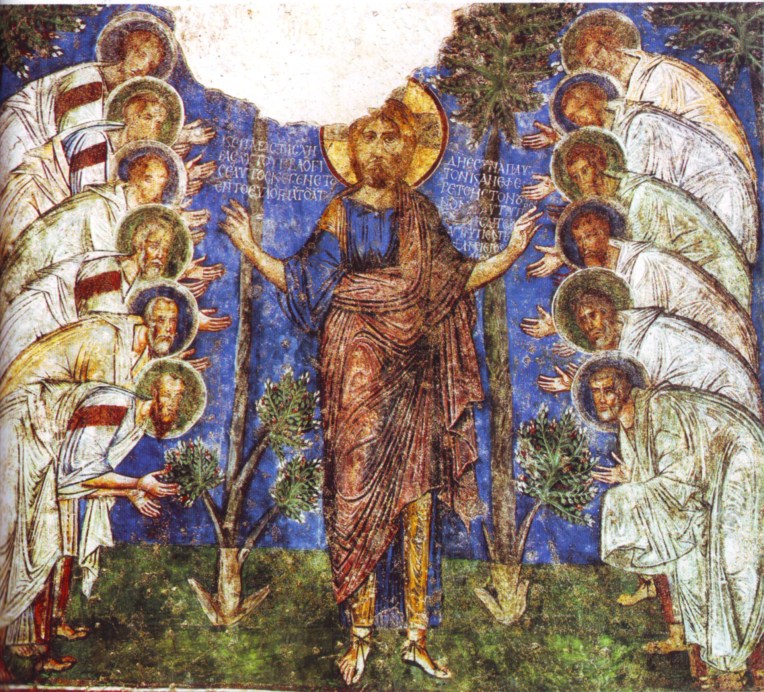
In today’s Gospel Reading, Jesus sends the Twelve on their first mission.  Jesus is not sending the Twelve out to preach about the saving death and Resurrection of Jesus because those events haven’t happened yet.  Instead, this mission is preparatory.

This early mission is about preaching repentance.  Jesus is very clear in explaining to the Twelve that this won’t be easy.  He offers only two sentences of explanation about how the Twelve ought to go about this mission.  As Jesus says these words, you and I ought to think of Jesus as saying these words to us who see and hear falsehood being promoted as truth within civil society.  Jesus says plainly:  “Wherever you enter a house, stay there until you leave.  Whatever place does not welcome you or listen to you, leave there and shake the dust off your feet in testimony against them.”

In our own day, these words of Jesus apply not only to those who preach at pulpits.  After all, a preacher is called by God to preach from the sanctuary:  as a consequence, he can only preach to as many people as there are in the church building.  This is the way that God designed His holy Catholic Church.  Within the Body of Christ, the message of the Gospel that is preached from the pulpit is meant to be carried out from the church building and into the world by those lay persons participating in the Sacred Liturgy.

You have been called to be a prophet, even if in a different manner than the one who is ordained to preach.  Your call as a baptized Christian is to proclaim the Truth to those out in the world, and this obviously involves a risk of rejection.  That’s the rejection that Amos and the other Old Testament prophets faced, and that’s the rejection that Jesus has spoken about in today’s Gospel Reading and accepted as the price of His Self-offering on Calvary.

Thursday of the Fourteenth Week in Ordinary Time [I]

Thursday of the Fourteenth Week in Ordinary Time [I]
Genesis 44:18-21,23b-29;45:1-5  +  Matthew 10:7-15
July 8, 2021

“Whoever will not receive you or listen to your words—go outside that house or town and shake the dust from your feet.”

One of the items on my “bucket list” is to spend a considerable amount of time writing about The City of God by St. Augustine of Hippo.  He lived in a cultural setting similar to ours.  The book is a contrast between the City of God and the city of man.  His comparison of the two leads to many reflections on the nature of divine Providence.  Many of these reflections consider how God chooses to bring moral good out of moral evil.

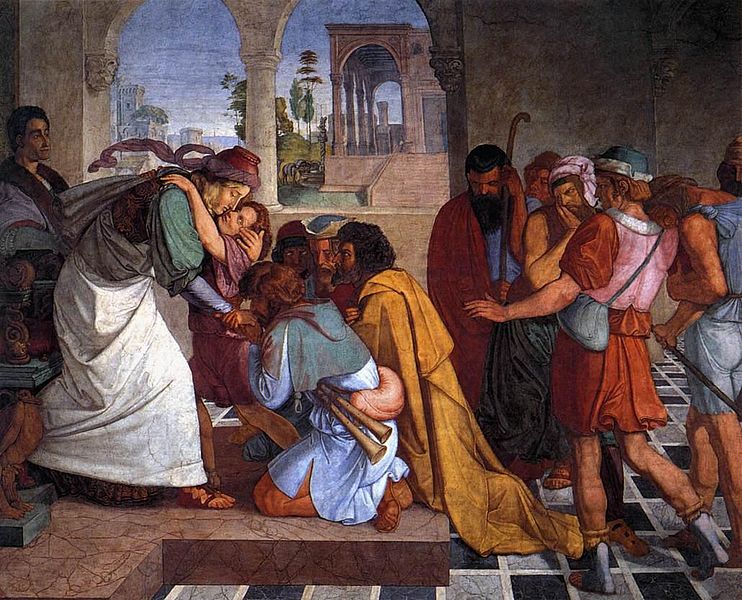
In today’s First Reading we hear one of the Old Testament’s chief examples of God’s providential will to bring goodness out of evil.  The Old Testament patriarch Joseph recognizes God’s Providence.  Joseph exhorts his brothers:  “do not be distressed, and do not reproach yourselves for having sold me here.  It was really for the sake of saving lives that God sent me here ahead of you.”  The wisdom with which Joseph says this is striking, and worthy of long reflection.  But consider just Joseph’s phrase, “for the sake of saving lives”.

This phrase lays bare for Christians that Joseph is a “type” of Jesus Christ.  “Type” is a technical theological term for someone (or even some thing) whose role in the Old Testament foreshadows Jesus.  So reflect back on the story of the patriarch Joseph that we’ve been hearing at weekday Mass, and consider how the story of his rejection and redemption foreshadows the Gospel of Jesus Christ.

Wednesday of the Fourteenth Week in Ordinary Time [I]

Wednesday of the Fourteenth Week in Ordinary Time [I]
Genesis 41:55-57;42:5-7,17-24 +  Matthew 10:1-7
July 7, 2021

   Jesus summoned his Twelve disciples and gave them authority….   

Today’s Gospel passage speaks about reaching out to those who are hurt and sick.  We hear Jesus sending his twelve apostles to go out and heal “every disease and every illness.”  More than just a prophet, Jesus has authority not only to call back the repentant to Himself, but also to heal them.

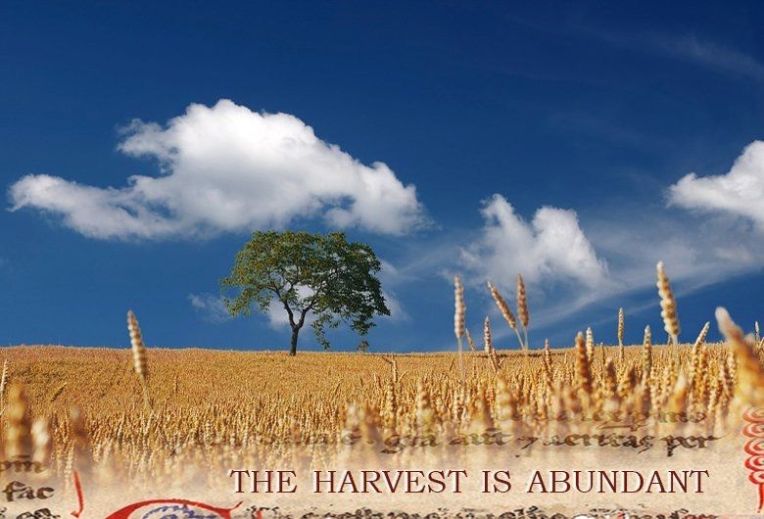
When Jesus sends the apostles, his instructions are for them to go to “the lost sheep of the House of Israel”.  In our own day, there are many fallen-away Catholics, and of course we pray for them.  But we can do more for them than just pray.  With the sort of love that Jesus held in His Sacred Heart when he looked at the crowds and said, “the harvest is abundant, but the laborers are few”, we can listen with compassion to those who are wounded.

We can offer gentle instructions to those who don’t know how to begin living their faith again:  to begin again to receive the sacraments as gifts of grace from the apostles’ ministry.  It’s the bishops’ responsibility—and the responsibility of those priests who work under their bishops—to bring those lost sheep back into the fold through the sacraments.  But often, it will be ordinary Christians who point those lost sheep in the right direction.

Tuesday of the Fourteenth Week in Ordinary Time [I]

Tuesday of the Fourteenth Week in Ordinary Time [I]
Genesis 32:23-33  +  Matthew 9:32-38
July 6, 2021

“… the harvest is abundant, but the laborers are few ….”

We usually associate the cry that Jesus utters in today’s Gospel passage with the need for vocations in the Church.  But Jesus also speaks through these words about the harvest of one’s own heart, and the fruits of one’s soul.  In each person is a soul created by God, and each soul is capable of being completely filled, as much as it is able:  to be “perfected” by God’s grace.

Unfortunately, this “harvest of the soul” is neglected by so many of us by our actions and our inaction.  We are not willing to believe what the Church teaches about every single human person being called by God to be a saint.  The Church at the Second Vatican Council spoke strongly about the “universal call to holiness”.

God gives each one of us many gifts, but only when we talk with God—and are strengthened by God—do we learn how to use them correctly, in accord with His plan.  Through our prayer, and God’s grace, our minds and wills can be shaped in His image, so that each of us can be more perfectly the saint God wants us to be.

Monday of the Fourteenth Week in Ordinary Time [I]

Monday of the Fourteenth Week in Ordinary Time [I]
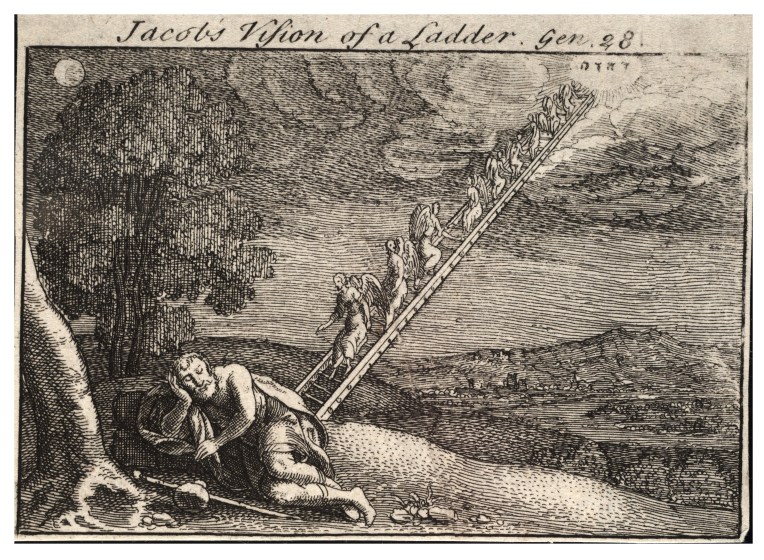
Genesis 28:10-22  +  Matthew 9:18-26
July 5, 2021

   “Courage, daughter!  Your faith has saved you.”   

In today’s Gospel passage are two people who see how God wants to be in their lives in time of need.  So many people turn to Christ in need.  When we are honest with ourselves, we know that we would like to ask Christ’s help for so many things in our lives.  It’s true that petitionary prayer—in which we ask for something from God—is not as selfless a form of prayer as adoration.  But God wants us to present our petitions to Him.

Consider the woman in the Gospel, who had suffered for so many years.  She interrupts Christ right in the middle of His trying to help someone else.  We should make that woman’s faith our own:  not simply her faith in Christ’s power, but also her faith in His patience and compassion.  There is no true need in our lives that we should not offer to God.

Is every petition answered as we wish, as are the petitions of this woman and the official?  Some Christians stop offering their petitions to God—or even stop believing in God—when He doesn’t provide the responses they want.  Growth in prayer includes the experience of accepting God’s “No”’s, and learning in them to trust more deeply His providential Will.

St. Thomas, Apostle

St. Thomas, Apostle
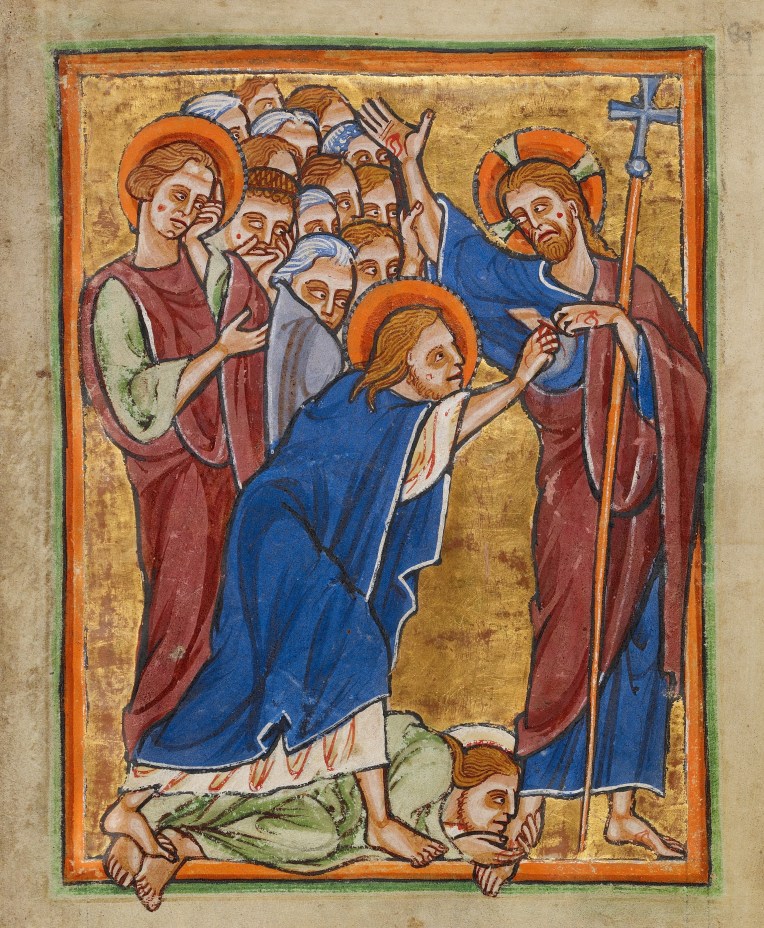
Ephesians 2:19-22  +  John 20:24-29

“… bring your hand and put it into my side, and do not be unbelieving, but believe.”

The First Reading for the Mass of St. Thomas’ feast actually focuses on him very little.  It’s not uncommon for the First Reading on the feast of an apostle to be either written by him or at least refer to him in passing.  However, today’s First Reading from St. Paul’s epistle to the Ephesians does not mention Thomas.  Its focus is the Church.

What is the Church, and what is her relation to Christ?  One might argue that today’s First Reading was chosen for this feast because it refers to the Church’s “foundation of the Apostles and prophets”.  But St. Paul links these apostles and prophets directly to Christ.  This foundation is related to Christ who is the Church’s “capstone”.

This capstone—Christ—is the Church’s source of unity.  The last sentence of today’s First Reading uses the word “together” twice.  It’s through Christ that the Church’s members are “held together” and grow “into a temple”.  In Him the Church’s members are “built together” as “a dwelling place of God in the Spirit.”  You yourself are a member of this great work of God!  Give thanks today for God’s gift of the Church, and for the spiritual growth that God offers you through this “dwelling place”.

Friday of the Thirteenth Week in Ordinary Time [I]

Friday of the Thirteenth Week in Ordinary Time [I]
Genesis 23:1-4,19;24:1-8,62-67  +  Matthew 9:9-13
July 2, 2021

“I did not come to call the righteous but sinners.”

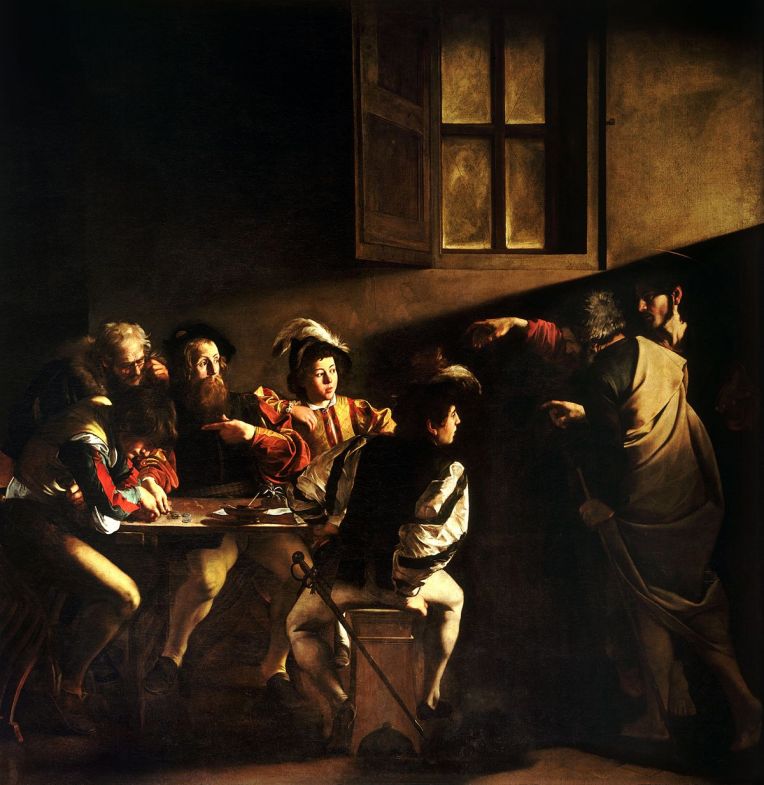
Today’s Gospel passage presents to us the vocation of Saint Matthew.  The word “vocation” literally means a “calling”.  A vocation is something “vocal”, which comes from the Voice of God (or perhaps better, the Word of God).  That might not seem earth-shattering news.  But what we sometimes forget is that a Christian vocation is not announced by Christ to a Christian at a single initial moment.

Rather, a Christian vocation is “declared” to the Christian in an on-going, unfolding manner.  Of course it’s true that in the beginning, a specific form of vocation is articulated (whether marriage or life as a vowed religious, for example).  But that is only the beginning of Christ’s announcement of one’s vocation.  That is only the beginning of Christ’s guidance.

Throughout the course of living out one’s Christian vocation, the Christian must expect, listen for, and heed God’s Word.  Each of these is a different skill in the skill-set required to grow in one’s vocation.

The Fourteenth Sunday in Ordinary Time [B]

The Fourteenth Sunday in Ordinary Time [B]
Ezekiel 2:2-5  +  2 Corinthians 12:7-10  +  Mark 6:1-6

Hard of face and obstinate of heart are they to whom I am sending you.

Jesus’ rejection in today’s Gospel Reading was not a one-time occurrence.  Saint John the Evangelist states this same unfortunate truth, but in a different way.  About Jesus, St. John writes:  “He was in the world, and the world was made through Him, yet the world knew Him not.  He came to His own home, and His own people received Him not” [ John 1:10-11].

Throughout the three years of Jesus’ public ministry, He was frequently rejected as a prophet.  Each of those rejections foreshadows the ultimate rejection of Jesus on Mount Calvary:  the rejection of Jesus as the Messiah, the one who came to save us from our sins.

After Jesus is rejected “in His native place and among His own kin”, the evangelist concludes with these observations:  “He was not able to perform any mighty deed there, apart from curing a few sick people by laying His hands on them.  He was amazed at their lack of faith.”

There are some people who use these last two sentences to deny that Jesus is God.  They argue that if Jesus were truly God, He would have been able to perform miracles in today’s Gospel passage.  Or to put it another way:  if the crowd’s lack of faith is greater than Jesus’ power to work miracles, then Jesus cannot possibly be the omnipotent God of the Bible.

We need to reflect upon this tension between the crowd’s lack of faith and Jesus’ lack of miracles.  We need to reflect upon this tension not just for the sake of understanding this particular Scripture passage, but also for the sake of our own spiritual lives.  Many Christians struggle because in the course of their earthly lives, they don’t see God responding to their most dire needs.  Some of these Christians give up their search for an answer.  Either they give up on God and leave the Church, or they give up on themselves, leading to despair or even death.

We know by instinct that the crowd’s lack of faith is not greater than Jesus’ power to work miracles.  But God chooses not to work miracles where there is a lack of faith.  We might say that God the Father made a “gentleman’s agreement” with Himself when He decided to send His Son to earth to become human.  He made a rule that He committed Himself always to abide by:  that is, never to over-ride human free will.

In the face of what can seem like God’s silence or lack of care about the many shades of darkness within life on earth, there are three plain facts that each of us needs to accept.

First, each of us needs to trust more deeply in God’s Providential will.  To say that God’s divine will is providential means that while God never directly causes evil, He does permit it.  He allows the world we live in to be as dark as it is because that darkness is the price to be paid for human free will.  It might be simpler if God were to remove that freedom and make all things right in the world.  But without that freedom, no one would have the chance to become like God and enter Heaven.

Second, each of us needs to grow in faith in God’s love for oneself personally.  Each of us needs to have the faith that the crowds in today’s Gospel passage lacked.  Each of us needs to believe that God sends His love to us in humble forms, especially in humble opportunities to love Him.  Nevertheless, as much as He chooses to love you, He also chooses not to force you to love Him.

Third, God demands that your faith be purified.  This is not the same as growing in faith.  Growing in faith is what you do by choosing to believe.  But this third plain fact is what God does.  God wants actively to purify your faith:  to sift it so as to remove the chaff.  Part of this sifting is helping us separate our wants from our needs.  Another part removes consolations in prayer so that our faith grows deeper.  This sifting calls us to adore God more than we petition Him, and to love Him for Who He truly is, instead of who we want Him to be.

Thursday of the Thirteenth Week in Ordinary Time [I]

Thursday of the Thirteenth Week in Ordinary Time [I]
Genesis 22:1-19  +  Matthew 9:1-8 
July 1, 2021

   “… but where is the sheep for the burnt offering?”   

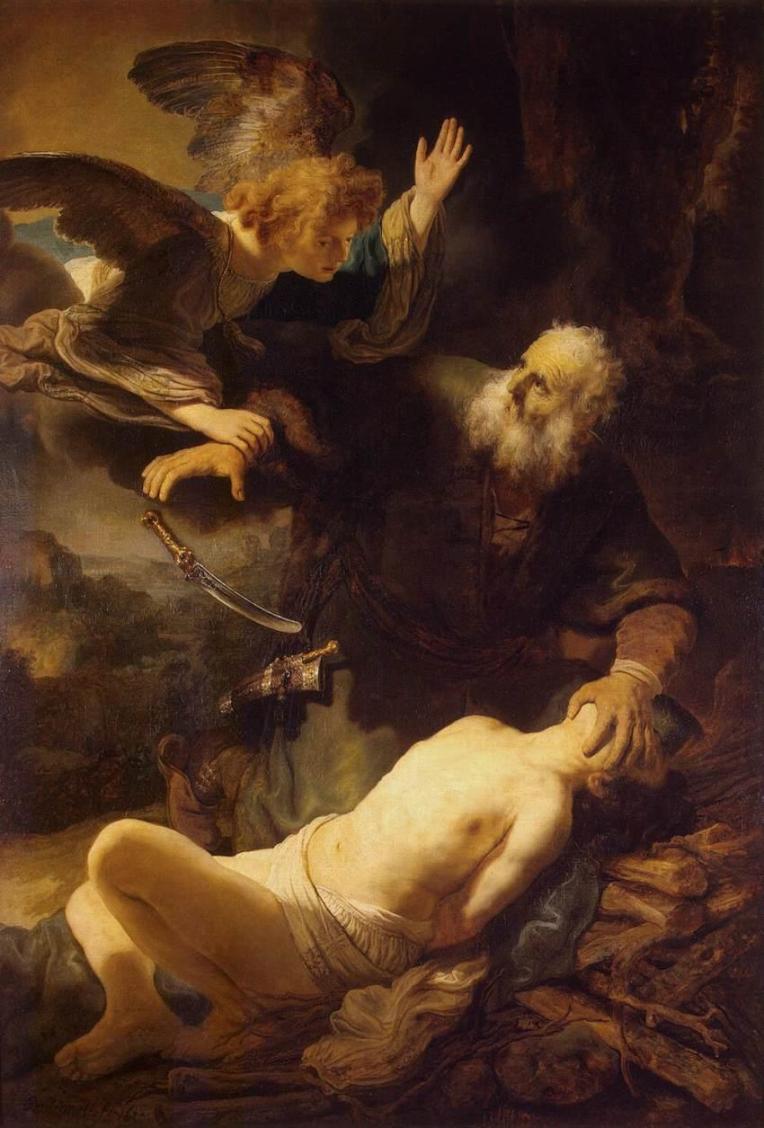
Today’s First Reading is one of the more famous and more moving passages of the Old Testament.  The Church Fathers comment upon this passage at length and to great depth.  Consider just one idea from among the many that this passage holds.

Reflect on the notion of liberty.  What does it mean to be free?  Usually in our western culture we think of freedom in external terms:  that is, as being “free from” persons or forces outside us.  Adolescence and early adulthood are largely—for good or ill—defined in terms of gaining freedom from one’s parents, and this is natural enough:  child have to leave the nest at some point.  Sometimes, unfortunately, children often exercise their liberty by also “freeing” themselves from the moral and religious norms according to which they were reared.  Unfortunately, many older adults live their lives in a state of perpetual adolescence, never maturing to full adulthood because they cling to a falsely absolutized form of freedom:  one which is a “freedom from” all other persons and all norms.

A deeper form of freedom can be termed the “freedom to”.  This form of freedom is internal:  an inner ability or capacity to achieve some goal that requires inner strength.  This freedom is, to use another word, potential.  We want our children to be free:  that is, able to tap into all the potential that our human nature, and our Faith, offers us.  Often a person knows that this strength is within oneself, but the strength is inaccessible because of inner conflicts, including moral vices.  These conflicts prevent one from tapping into one’s inner strength, and being “free to” do what one is capable of.

Each of us can make a nightly examination of conscience in light of both forms of freedom.  Use the patriarch Abraham as your guide.  On the one hand, are you in any way pursuing “freedom from” God, which can only lead to alienation?  Then, meditate on your inner need to pursue the “freedom to” of the spiritual life:  the “freedom to” give yourself—sacrifice yourself—for the good of others, and the glory of God.