Monday of the First Week of Lent

Monday of the First Week of Lent
Leviticus 19:1-2,11-18  +  Matthew 25:31-46

“Amen, I say to you, whatever you did for one of these least brothers of mine, you did for me.”

At the beginning of this first full week of Lent, Jesus preaches to us about the Final Judgment.  The parable that Jesus preaches in today’s Gospel passage reminds us of the old adage:  “Always begin with your end in mind.”  This saying is good for reflection first thing in the morning, as an entire day upon God’s green earth stretches out before us.  At the beginning of the day we pray the Morning Offering, which reminds us that each day on earth is about God:  living in His love, and for His glory.

This saying—“Always begin with the end in mind.”—is good for reflection at the beginning of Lent, as we recognize our need for conversion, our need for forgiveness, and our need for redemption.  Thanks be to God that all of these are possible in Christ!

Some would argue that God’s Judgment at the Second Coming inspires fear, and so therefore we ought not reflect upon either the Second Coming, or upon the three of the four Last Things that seem “negative”:  Hell, death and judgment.  But Hell, death and judgment do not come directly from God.  God permits each, but only when man chooses them.  God’s direct choice is always love.  Love is the end for which God has created each person.  Reflecting upon the consequences of the Last Things help us more firmly choose God in all things, even in suffering.

Lent 1-1

Saturday after Ash Wednesday

Saturday after Ash Wednesday
Isaiah 58:9-14  +  Luke 5:27-32

Teach me your way, O Lord, that I may walk in your truth.

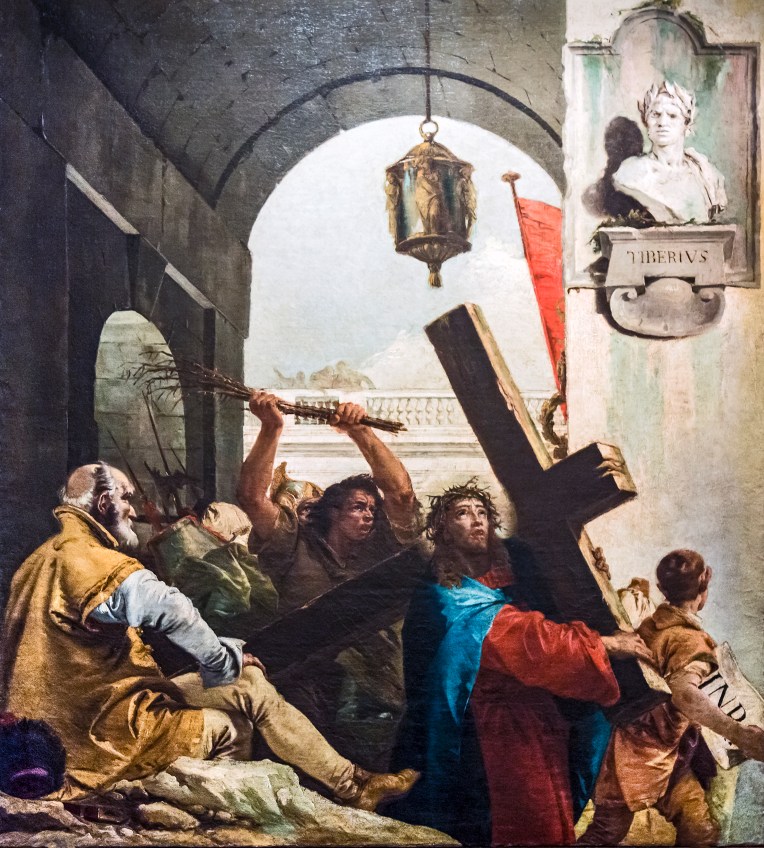
During Lent, any time that you hear the word “way” you ought to think of the Via Dolorosa:  the “Way of Sorrows”.  This is the way from the city of Jerusalem to the top of the hill of Calvary, where Jesus’ feet and wrists were nailed to a cross.  For the Jews in ancient days, Jerusalem was the greatest city on the face of the earth.  It was as close to Heaven as you could find on earth.  Little wonder, then, that the city of Jerusalem was often used in the Scriptures as a “type” or symbol for Heaven.  This is where the phrase “the heavenly Jerusalem” comes from.

Jerusalem was so great a place that anyone who resided there would rarely leave it.  If they did, it would only be for a serious reason.  But to go outside the walls of the city of Jerusalem, and travel up to the hill of Calvary in order to be crucified:  there was a particular shame in this.  Going outside of Jerusalem to be killed by the state was symbolic of being an outcast in death.

So you can see how this way—the Via Dolorosa—was not only a way of sorrow, but of shame as well.  No wonder that most of the apostles weren’t willing to walk the Way of the Cross behind their Master.

But this is the “way” that the Psalmist foreshadowed:  “Teach me your way, O Lord, that I may walk in your truth.”  It is a way of contradiction, because it leads from a city of life, power and strength, to a barren hilltop of death, weakness and impotence.  It is not a way that any right-thinking person would want to go, if he learned about what’s important from the teachers of this world.

But Our Lord has a unique way to teach us:  a way that we learn only in the process of following Him.  This way leads to mercy, forgiveness and—through mercy and forgiveness—divine love.  For all the times that we are tempted by our culture to cultivate bitterness, anger and resentment against those who have hurt and harmed us, Our Lord invites us to follow Him along a different way.

Friday after Ash Wednesday

Friday after Ash Wednesday
Isaiah 58:1-9  +  Matthew 9:14-15

My sacrifice, O God, is a contrite spirit ….

Both John the Baptist’s disciples in the Gospel Reading and the house of Jacob in the First Reading are thoroughly focused upon themselves.  The people of the house of Jacob seem to be fasting as a way of gaining leverage in their negotiations with God.  John’s disciples want to know why Jesus’ disciples don’t have to fast in the same way they do.

In both readings God is trying to make clear what the purpose of fasting (or, in fact, any type of penance) is.  On the surface, when we fast we are imitating Christ, who fasted for forty days in the desert.  Whenever we carry out works of penance by denying something we want, we are imitating Christ who denied his own life for our sake.

But on a deeper level, through our penance we are clearing out our souls.  We are clearing out of our soul those desires which serve only ourselves.  The more and more we remove these desires, the more room there is in our soul for the desires of God, the fruit of which are the works that He wants to accomplish within us and through us.

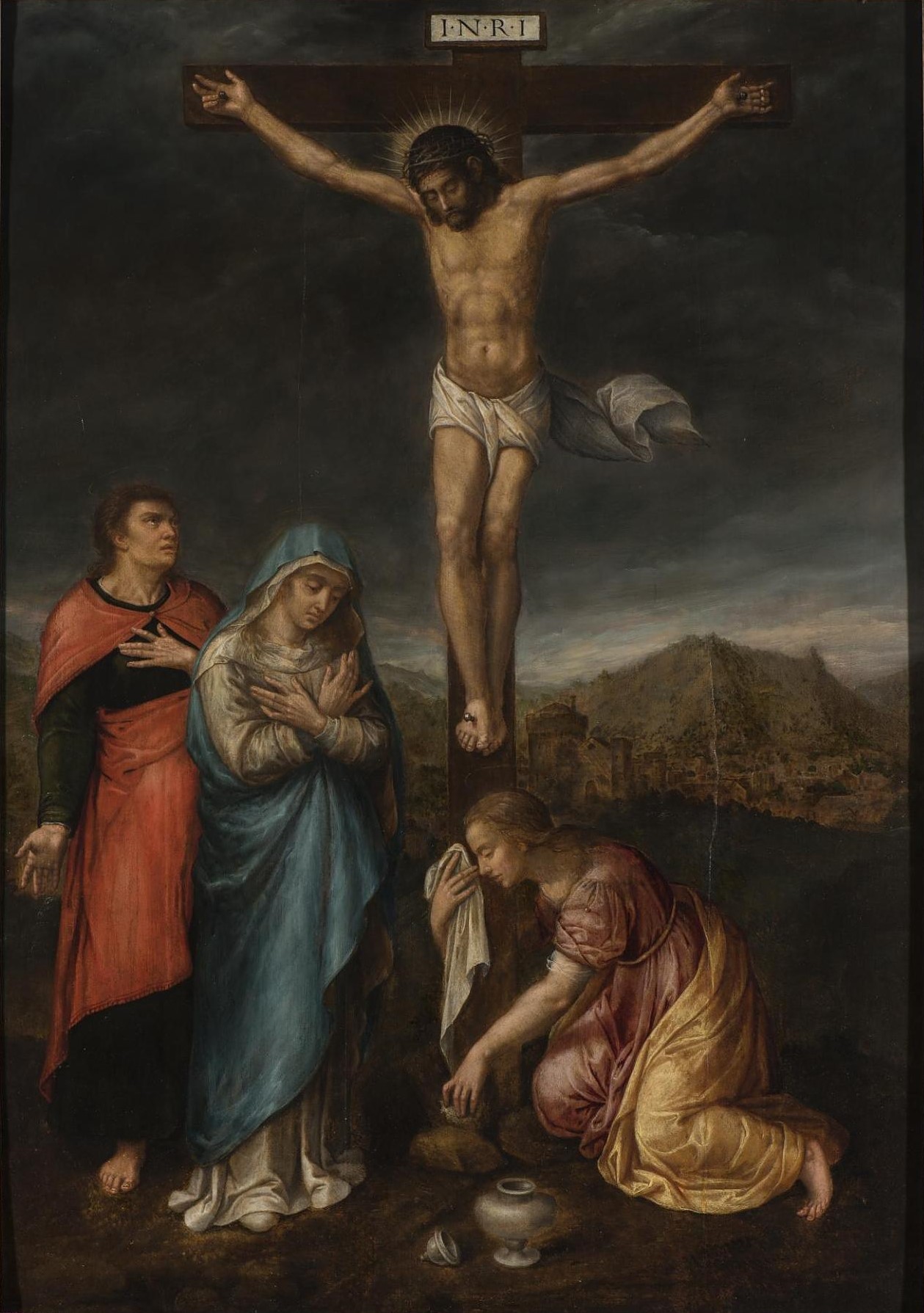
Lent is about preparing our souls to accept the Cross of Christ in our own lives.  When we seek to follow in the footsteps of Christ, we ourselves are led to Calvary, where with Mary and the apostle John we gaze upon our God who died for us.  At the foot of the cross we learn humility and gratitude for the sacrifice Christ made on the Cross for us.

The First Sunday of Lent [C]

The First Sunday of Lent [C]
Deuteronomy 26:4-10  +  Romans 10:8-13  +  Luke 4:1-13

He brought us out of Egypt with his strong hand and outstretched arm ….

There are many different types of freedom.  For example, sometimes we want to be free from the influence that another person holds over us.  Sometimes we want to be free from a job, or from an agreement we’ve made with someone, or from an assignment that we’ve been handed.  But none of those is the type of freedom that Jesus gave up his life to offer us.

Jesus died on the Cross to free us from our own sinfulness.  During Lent, we look inside ourselves, and look at how we have enslaved ourselves to sin, thereby destroying the greatest type of human freedom:  the power to choose what is best in life, which is to say, what is of God.

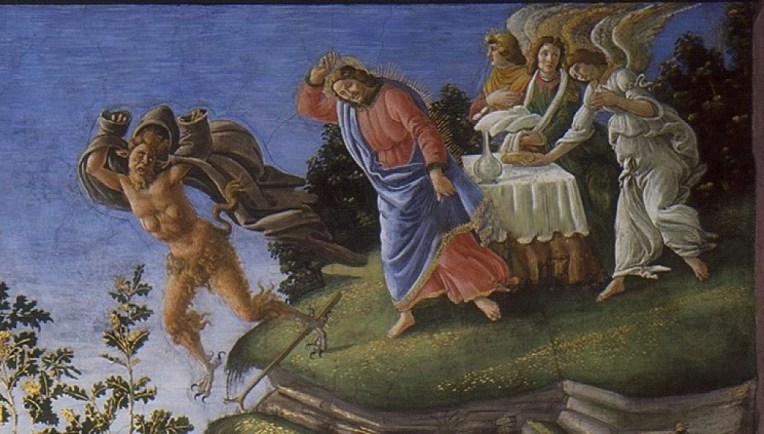
There is, of course, no human being who does not experience the temptation to sin.  Even Jesus experienced temptation, as we hear in today’s Gospel passage.

There are many situations in life that present temptations.  God uses some temptations, in fact, in order to “school us” in self-discipline.

Some situations, though, we must stay away from if they are occasions of sin.  But how does a person know whether something—for her or him personally—is a near occasion of sin?  Some situations are occasions of sin for practically everyone.  But other situations are occasions of sin for only some individuals.

Everyone who wants to take God’s call to holiness seriously is invited to follow Christ.  But since each of us leads a different life—through a particular vocation with unique circumstances—each walks a different path through this spiritual desert.  Nonetheless, each path leads through the same desert, and it is Christ who leads each of us.

There are three stages by which Jesus leads His disciple through the desert.  The first stage is the simplest and perhaps easiest:  the sacrifice of material things, which we practice in our fasting.  Each of us must learn how to resist the temptation to live our lives by “bread alone”.  This doesn’t necessarily mean owning nothing—like monks or nuns—but it does mean not being attached to our belongings.  By detaching ourselves from things, fasting increases our self-control and freedom.

The second stage through the desert is the sacrifice of power and control over others, which is what we practice through almsgiving.  There are many ways in which we, like Christ, are called to exercise power authentically (for example, with money and positions of authority), and we face temptations to abuse that power.  At this second level of sacrifice, it can take us longer to be honest with ourselves and face up to our sins.  But by detaching ourselves from control over others, almsgiving increases our self-control and freedom.

The third stage through the desert is the final stage:  the end stage.  This stage, which we sometimes simply call “prayer”, is underestimated.  Authentic prayer means sacrificing our life to a God who doesn’t always give us the answers we feel we need.

We human beings want to understand the path that we are on.  Likewise, we want to understand the meaning of each cross that appears in our lives.  Like the other two stages through the desert, this is a matter of control.  Unfortun­ately, when we don’t get answers, it’s easy instead to choose sin, because sin seems at least to offer an answer as well as some sort of control.  Such an answer will of course be false, and the sort of control that sin offers ends up making life more difficult.  But as human beings, we become comfortable with sin and the falsehoods it offers.

Sin sinks roots into our lives.  We begin to accept sin as so ordinary a part of our lives that we don’t see it as sin anymore.  Once sins take deep root in our lives, it’s easy to believe that those sins are part of us, and that we can’t live without them:  that there’s no use in trying to root them out of our lives.

It’s much harder to face the truth that Jesus is calling each of us into this driest and hottest part of the desert.  He is calling each of us to radical holiness.  He is calling each of us to conform our lives to His Cross:  the Cross that we will reverence—bow before, kneel before, and kiss—on Good Friday.
Thursday after Ash Wednesday

Thursday after Ash Wednesday
Deuteronomy 30:15-20  +  Luke 9:22-25

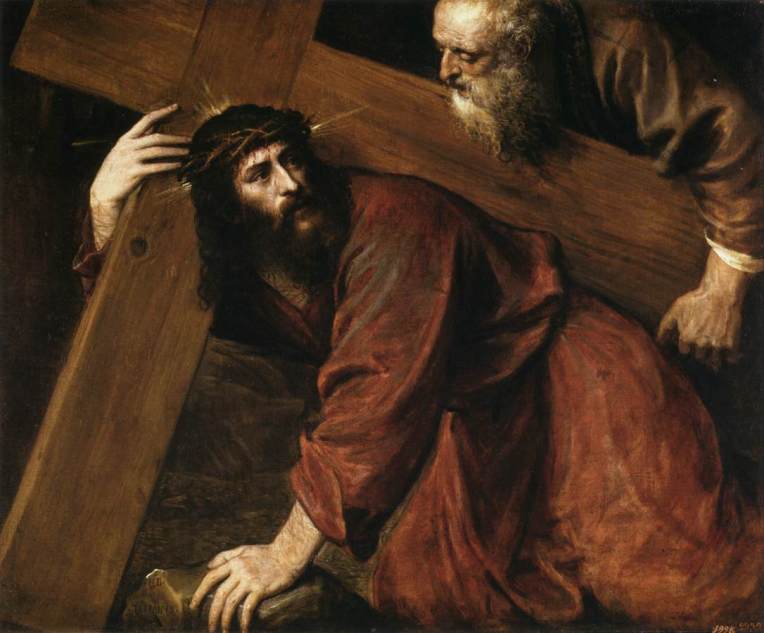
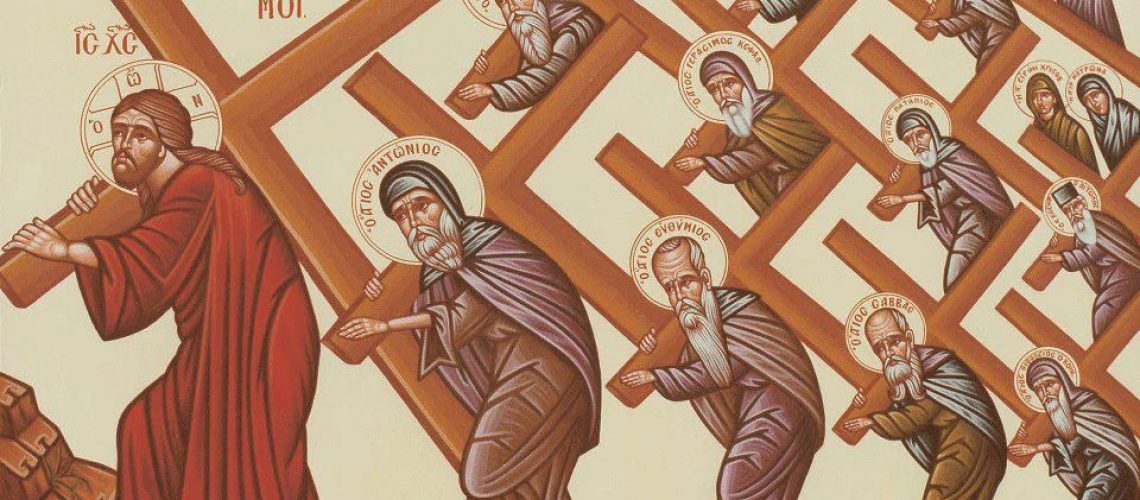
“If anyone wishes to come after me, he must deny himself and take up his cross daily and follow me.”

There are three steps to Jesus’ counsel in today’s Gospel passage.  Jesus explains to us:  “If anyone wishes to come after me, he must deny himself and take up his cross daily and follow me.”  Each of the three steps within this counsel is necessary to entering into the mysteries of Lent.  They are like three legs of a stool:  if you remove one leg, the stool will not stand.

Many Christians are willing to make sacrifices during Lent:  they are willing to deny themselves chocolate, or television, or even Facebook!  But Jesus says that to follow Him, we have to deny ourselves much more:  each of us has to deny his very self.  But what does this mean?

We can’t answer that question until we understand how we define the human self.  For many of us, our self is self-defined, because we believe in what the culture around us tells us about being a “self-made man”.  To experience deeper conversion in our lives, we have to allow God to define the terms of our lives.

But denying one’s very self is only the first step.  The second step is for the Christian to take up his cross “daily”:  not just during Lent; not just once you’ve got life figured out; but “daily”.  Crosses can come into our lives from many different places:  from our own foolish mistakes, from the evil choices of others, or from the loving and merciful will of a Father who knows what is best for us.  There are many situations in our lives as Christians that allow us to bring about goodness into this world, if only we are willing to bear our crosses daily.

The third step of the Lord’s command is to follow Him.  That is to say, we should recognize where the first two steps are leading us.  If we deny our very self, and take up our cross each day, then we are headed with Jesus to Calvary.  That’s where Jesus will lead us, if we follow Him.  We do not need to be frightened by this, because if—like Our Blessed Mother and the Beloved Disciple—we walk with Jesus to Calvary, He has promised that we will experience the joy of His Risen Life, a life which is deeper than any suffering, and everlasting.

Ash Wednesday

Ash Wednesday
Joel 2:12-18  +  2 Corinthians 5:20–6:2  +  Matthew 6:1-6,16-18

“For our sake He made Him to be sin who did not know sin ….”

One way to meditate upon the whole of Lent is to allow our Lenten journey—including our prayer, fasting, and almsgiving—to be a means to enter into the priesthood of Jesus Christ.  Every baptized Christian shares in this priesthood, and the baptismal priesthood shapes every other call that God gives.

One phrase in particular from today’s Second Reading forces us to reckon with the depth of Jesus’ priesthood.  What does Saint Paul mean when, speaking about God the Father and the Son, he states that “For our sake He made Him to be sin who did not know sin”?  This saving truth reminds us about three distinct forms of humility that Jesus accepted for our salvation, through which He stands between sinful man and the divine Father.

First, we need to reflect upon God the Son humbling Himself to become human at the Annunciation.  Jesus stands between God and man as True God and true man.  For scriptural meditation on this saving mystery during Lent, we might use the prologue of St. John’s Gospel account, or the canticle of Christ’s humility found in the second chapter of Philippians.

Then, more than thirty years after His conception, this divine Word made Flesh offered up His life on the Cross.  We need to reflect upon Jesus’ humility on Calvary.  Upon the Cross, Jesus is not an Old Testament priest, crying and weeping and offering a dumb animal in sacrifice.  In humility, the Word made Flesh sacrifices His own Body and Blood, soul and divinity.  To reflect on this saving mystery, we might use the Passion narrative from any of the four Gospel accounts.

But within this second form of Jesus’ humility dwells a third:  a mystery that we must not underestimate.  Again, in speaking about the Father sending His divine Son to save us, the Apostle declares:  “For our sake He made Him to be sin who did not know sin”.

Often when we meditate upon the Passion of the Christ—say, for example, during the Stations of the Cross—we are impressed by how awfully man’s sins affect Jesus.  We might imagine the Cross as “containing” our sins, so that the physical weight of Jesus’ heavy cross symbolizes the spiritual weight of all mankind’s sins.  Or we might imagine each lash from the Scourging at the Pillar as representing an individual sin.  But while those images may help us meditate upon the meaning of the Passion, St. Paul is saying something even more profound.

God the Father made His divine Son “to be sin”:  not only to carry sin, or be wounded by sin, but to be made sin.  Jesus, who from before time began was true God, stands not only in the place of sinners, but in the place of sin.  This is where He offers sacrifice as a new and everlasting priest.  His stance between merciful grace and man’s sins brings both together in Himself, where the former destroys the latter, for us men and for our salvation.

Tuesday of the Eighth Week in Ordinary Time [II]

Tuesday of the Eighth Week in Ordinary Time [II]
1 Peter 1:10-16  +  Mark 10:28-31
March 1, 2022

“Many that are first will be last, and the last will be first.”

St. Mark the Evangelist doesn’t offer details about Peter stating that Jesus’ disciples have given up everything to follow Him.  But Jesus surely reads Peter’s heart before replying.  Jesus is speaking to us disciples in the 21st century, as well.  He offers a direct explanation of the logic of discipleship, and then sums up His teaching with a brief saying that we can meditate upon at length.

Is there some regret in Peter’s heart as he lays bare the sacrifice he’s made to follow Jesus?  Jesus explains that both in this world and the next, a disciple’s sacrifice bears fruit.  In “this present age”, material sacrifices are compensated by the superabundance shared in by the church.  All the more, “in the age to come”, eternal life with Jesus is the consequence of following Him.  Jesus’ logic lays bare what St. Francis of Assisi expressed in his canticle:  “It is in giving that we receive, and in dying that we are born to eternal life.”

Jesus gives us a brief saying to sum up the logic of discipleship.  “Many that are first will be last, and the last will be first.”  This seems to respond to Peter by saying:  love your God and neighbor first, and your neighbors will care for your earthly needs, and God will care for you eternally in His love in Heaven.

Monday of the Eighth Week in Ordinary Time [II]

Monday of the Eighth Week in Ordinary Time [II]
1 Peter 1:3-9  +  Mark 10:17-27
February 28, 2022

“How hard it is for those who have wealth to enter the Kingdom of God!”

Why is it hard “for those who have wealth to enter the Kingdom of God”?  The Church does not teach that human wealth is evil in and of itself.  While some mistakenly think that Scripture says that money is the root of all evil, the correct quote from Saint Paul is that “the love of money is the root of all evils” [1 Timothy 6:10].

Nonetheless, that begs the question:  what is it about the love of money that turns the wealthy away from the Kingdom of God?  The Church teaches that pride is chief among the seven “capital sins”.

The “love of money”, then, must directly relate to pride.  Human wealth tempts the wealthy person to sin against both God and neighbor:  against the former because the wealthy person is tempted to feel no need for God; against the latter because the wealthy person is tempted to feel superior to the neighbor with less human wealth.  Money is enticing because so many different things can be possessed and accomplished by it.  But as with every material thing, money is meant to offer the Christian opportunities to serve both God and man.

Saturday of the Seventh Week in Ordinary Time [II]

Saturday of the Seventh Week in Ordinary Time [II]
James 5:13-20  +  Mark 10:13-16
February 26, 2022

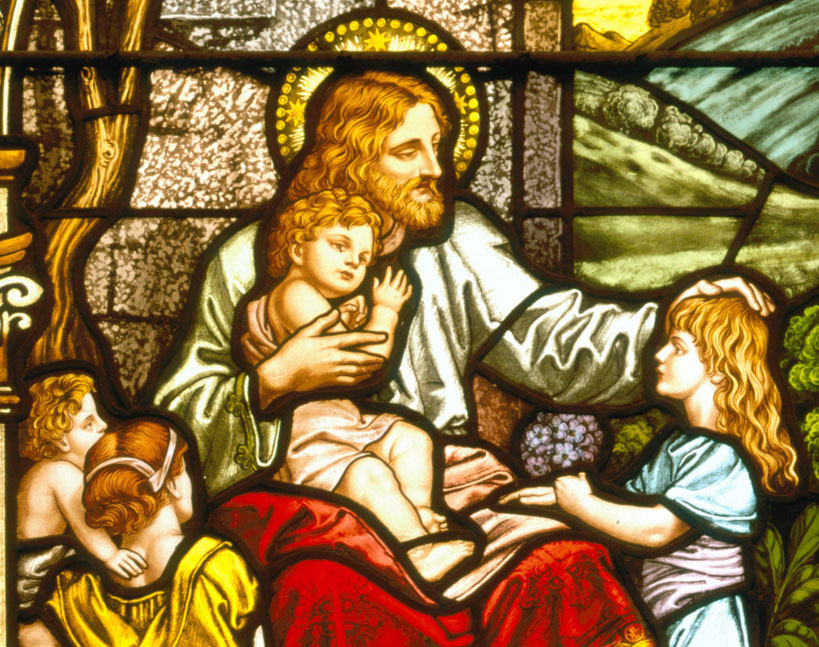
“Let the children come to Me; do not prevent them ….”

Today’s Gospel passage immediately follows yesterday’s in Mark.  In yesterday’s passage Jesus spoke the truth that marriage cannot be dissolved by any human power, because through God’s power, husband and wife “are no longer two but one flesh” [Mk 10:8].  In today’s passage Jesus becomes indignant and declares:  “Let the children come to me; do not prevent them, for the Kingdom of God belongs to such as these.”

Is it a coincidence that this passage immediately follows Jesus’ teaching about the sacred integrity of Marriage?  The Church has taught for some two thousand years that openness to the begetting and rearing of children is integral to the growth of every marriage:  the intentional exclusion of this goal dissolves the integrity of the particular marriage.

Some might say that these two Scripture passages should not be linked.  Some might say that the point of today’s passage is that each Christian is called to be “child-like”.  In any case, marriage between two persons truly in love with each other and with God will bear the innocence and love for life seen in the child-like.