Friday of the Fourteenth Week in Ordinary Time

Friday of the Fourteenth Week in Ordinary Time
Matthew 10:16-23

O Lord, open my lips, and my mouth shall proclaim your praise.

Today’s psalm especially draws out the spiritual themes of today’s Mass.  Psalm 51 is unique among the 150 psalms:  every Friday, it is the first psalm the Church prays at Morning Prayer in the Liturgy of the Hours.

The psalm’s importance is understood better when we realize that the very first words the Church utters each morning in the Liturgy of the Hours come from this psalm:  “O Lord, open my lips, and my mouth shall proclaim your praise.”  These words, the last sentence of today’s responsorial psalm, draw out a verse from today’s First Reading.  All week long we have heard the prophet Hosea bringing the wayward Israelites back to their covenant with the Lord God.  Today Hosea encourages them to make his words their own:  “We shall say no more, ‘Our God,’ to the work of our hands; for in you the orphan finds compassion.”

The temptation to make idols out of the work of our hands is always before us.  Yet the Church calls us to humility.  When we pray the Liturgy of the Hours, our first prayer each day comes from God even before it comes from our lips:  “O Lord, open my lips, and my mouth shall declare thy praise.”  Everything comes from the Lord, and everything is meant to return to the Lord.

Jesus Himself, only Son of the Father, is the embodiment of the wisdom expressed by the Psalmist and Hosea.  He is the embodiment of self-sacrifice.  His is the life that every disciple asks the Father for the grace to enter into.  Even in the midst of the wolves and snakes of the world, when we lay our sins at the foot of the Cross, Christ can act within us.

OT 14-5

The Fifteenth Sunday in Ordinary Time [C]

The Fifteenth Sunday in Ordinary Time [C]
Deuteronomy 30:10-14  +  Colossians 1:15-20  +  Luke 10:25-37

“And who is my neighbor?”

In the year A.D. 529, Saint Benedict laid the foundation for one of the great monasteries in the history of the Church.  Monte Cassino, southeast of Rome, is both very accessible and very easy to spot as you journey towards it.  It sits on the crest of a small mountain, surrounded on three sides by valleys.

One of Father Benedict’s most famous rules for his monks is that “in the person of the stranger, Christ is served”.  Every person who knocks on the doors of a monastery is to be treated as if it were Jesus himself knocking on the door.  Every year on July 11th, the Church celebrates one of the feast days of Saint Benedict, the father of monastic life in the West.  St. Benedict exemplified in his life the invitation that Christ is making to the lawyer in today’s Gospel passage.  Christ makes this same invitation to you and me.

Members of the Benedictine religious order, like all members of religious orders, live lives that are marked by poverty, chastity, and obedience to their superior (that is, the Abbot of their community).  The Benedictines, however, take a vow which distinguishes them:  the vow of stability.  This vow makes Benedictine life different than the lives of religious such as Dominicans and Franciscans, who by the design of their founders were meant to be mendicants, begging for their daily bread as they travelled to and fro through Christian lands, and sometimes beyond.

Benedictines are “tied” both to each other and to the stranger who finds them.  Throughout the Middle Ages, Benedictine abbeys were beacons amidst the confusion and chaos caused by rulers and noblemen fighting each other and pagan tribes invading Christian lands in Europe and northern Africa.  These abbeys were not only centers of learning, but also served the poor of the area, including those who were travelling.

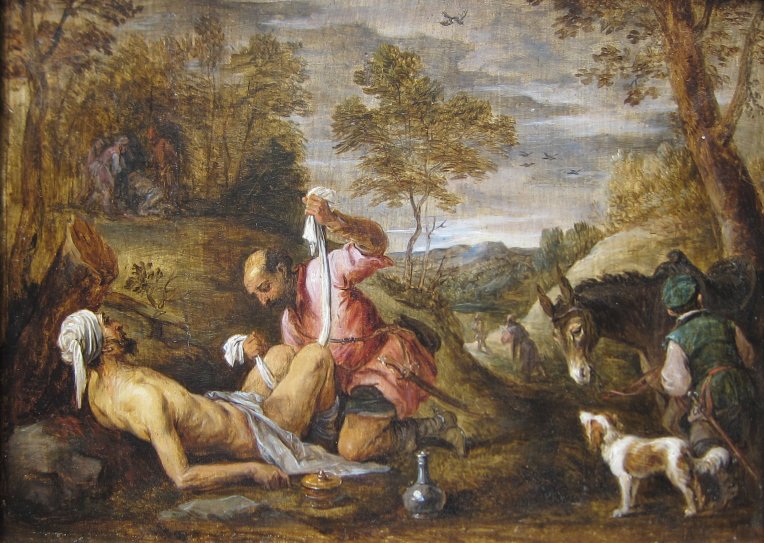
The parable of the Good Samaritan is about the same themes that Benedictine life illustrates:  being tied, being bound, and being wedded to others, no matter who that “other” may be.

As we reflect upon the Gospel Reading, we might imagine what was in this lawyer’s mind as he asked Jesus what he must “do to inherit eternal life”.  Likewise, it’s easy to guess what sort of answer he was hoping to hear when he asked Jesus, “And who is my neighbor?”  Most likely he wanted Jesus to say something like:  “Anyone within a one-mile radius is your neighbor.”  In that case, the lawyer would have moved into a deserted area where he could buy four square miles, so that he could plant his house in the middle and have no one any closer than a mile to him.  In other words, the passage implies that the lawyer asked his question in order to isolate himself from others.  But Jesus’ parable only forces him—and us—into even closer contact with others.  Jesus does this by telling His parable about the Good Samaritan.

To us today, the phrase “good Samaritan” is a common part of Western culture.  A “good Samaritan” is someone who helps another in need.  This phrase, however, didn’t have that sort of meaning within the culture in which Jesus and the lawyer lived.  To them, the phrase “good Samaritan” was an oxymoron, like talking about a “square circle” or a “good devil”.  The idea of a “good Samaritan” was inconceivable to Jewish people of Jesus’ day, because the Samaritans lived at a distance from anyone like Jesus who worshipped in the Temple in Jerusalem.  The idea that a Samaritan would help someone going down to Jerusalem was beyond belief.

So the brief moral of this parable is that the person who’s looking to limit his love doesn’t know what love is really about.  How, then, would you put the parable’s moral into practice?  While you may rarely have a stranger knocking on your door as a wanderer knocked on the door of a medieval abbey, you can expand your definition of “neighbor” by praying for someone you are not inclined to pray for.

God loves everyone, even if you and I do not always love everyone.  We need to realize, then:  if God loves someone, we should also, since we’re supposed to live in the Image and likeness of God.  If there’s someone whom we do not love, that says that we’re not living our lives in the same way that God does.

Thursday of the Fourteenth Week in Ordinary Time

Thursday of the Fourteenth Week in Ordinary Time
Matthew 10:7-15

“Whoever will not receive you or listen to your words—go outside that house or town and shake the dust from your feet.”

The Scriptures and Tradition of the Church use many images to describe God.  The reason for this wealth of images, of course, is the fact that God is infinite:  no one image does justice to the depth and richness of God who is love.  Likewise, there are many images used to describe the peoples whom, throughout salvation history, God has desired to draw to Himself.  The tribes of Israel and the Mystical Body of Christ are described by varied metaphors.

However, we also have to confess that it takes many images to describe God’s People for a another, very different reason.  There are so many ways in which God’s People sin, and fail to live up to the relationship to which He constantly calls us.  It takes many different images and metaphors to describe the infidelity of the People of God.  So it is in Hosea, as the prophet describes Israel with the image of a spouse, as well as the image of a child, capturing the ingratitude of one who fails to give thanks for the sacrifices that the father has made.

One of the metaphors that Hosea uses speaks to us especially as followers of Jesus.  Offering the Lord’s prophecy to Israel, Hosea says, “Yet, though I stooped to feed my child, they did not know that I was their healer.”  The “child”—in the singular—is the nation gathered together and nourished through the Law and the Prophets, yet the Lord recognizes that “they”—all of them—were unfaithful to Him.

Even more so did our Heavenly Father offer His own divine Son for the sake of His people, only to be met with rejection.  The sacrifice of Christ Jesus is both healing and nourishment for the People of God.  This is an important reason to prepare for Holy Mass with great devotion:  spending time in private prayer and devotion, considering how many joys and sorrows we have to offer to God, that we might be both strengthened and healed.

OT 14-4

Wednesday of the Fourteenth Week in Ordinary Time

Wednesday of the Fourteenth Week in Ordinary Time
Matthew 10:1-7

“Go rather to the lost sheep of the house of Israel.”

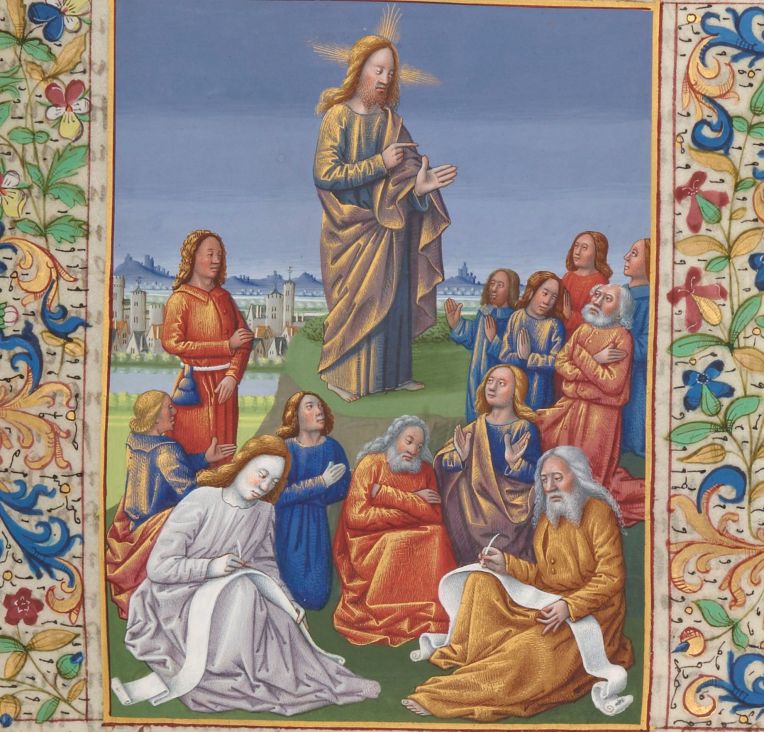
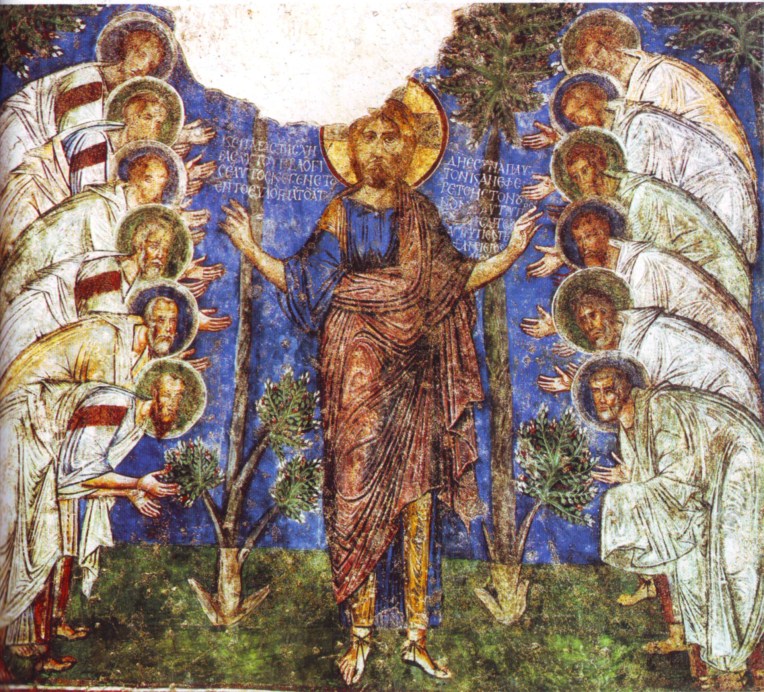
Today’s Gospel passage speaks about reaching out to those who are hurt and sick.  We hear Jesus sending his twelve apostles to go out and heal “every disease and every illness.”  More than just a prophet, Jesus has authority not only to call back the repentant to Himself, but also to heal them.

When Jesus sends the apostles, His instructions are for them to go to “the lost sheep of the House of Israel”.  In our own day, there are many fallen-away Catholics, and of course we pray for them.  But we can do more for them than just pray.  With the sort of love that Jesus held in His Sacred Heart when He looked at the crowds and said, “the harvest is abundant, but the laborers are few”, we can reach out to those who have fallen away from the Church.

We can offer gentle instructions to those who don’t know how to start again to live the Faith:  to begin again to receive the sacraments, the gifts of grace which come to us through the apostles and their successors.  It’s the bishops’ responsibility—and the responsibility of those priests who work under their bishops—to bring lost sheep back into the fold through the sacraments.  But often, it will be ordinary Christians who point those lost sheep in the right direction.

OT 14-3

Tuesday of the Fourteenth Week in Ordinary Time

Tuesday of the Fourteenth Week in Ordinary Time
Matthew 9:32-38

“The harvest is abundant but the laborers are few ….”

The cry that we hear Jesus utter in today’s Gospel passage—“the harvest is abundant, but the laborers are few”—is one that we usually associate with the need for vocations in the Church.  But Jesus also speaks through these words about the harvest of one’s heart and the fruits of one’s soul.  In each person is a soul created by God, and each soul is capable of being completely filled, as much as it is able:  that is, to be “perfected” by God’s grace.

Unfortunately, this “harvest of the soul” is neglected by so many of us by our actions and our inaction.  We are not willing to believe what the Church teaches about God calling every human person to be a saint.  The Church at the Second Vatican Council spoke strongly about the “universal call to holiness”.

God gives each one of us many gifts, but only when we talk with God and are strengthened by Him do we learn how to use those gifts correctly, in accord with His plan.  Through our prayer, and God’s grace, our minds and wills can be formed, so that we can be more perfectly the saints God wants us to be.

Monday of the Fourteenth Week in Ordinary Time

Monday of the Fourteenth Week in Ordinary Time
Matthew 9:18-26

“Courage, daughter!  Your faith has saved you.”

In today’s Gospel passage are two people who see how God wants to be in their lives in time of need.  In our day and age, most prayers that are offered to God are prayers of petition.  Perhaps that’s always been the case.  In fact, our knowledge of that fact doesn’t mean that we ourselves don’t have lengthy lists of petitions that we’d like to offer to God.

It’s true that petitionary prayer—in which we ask for something from God—is not as selfless a form of prayer as adoration, or even as selfless as thanksgiving or contrition.  But God does desire that we present our petitions to Him.

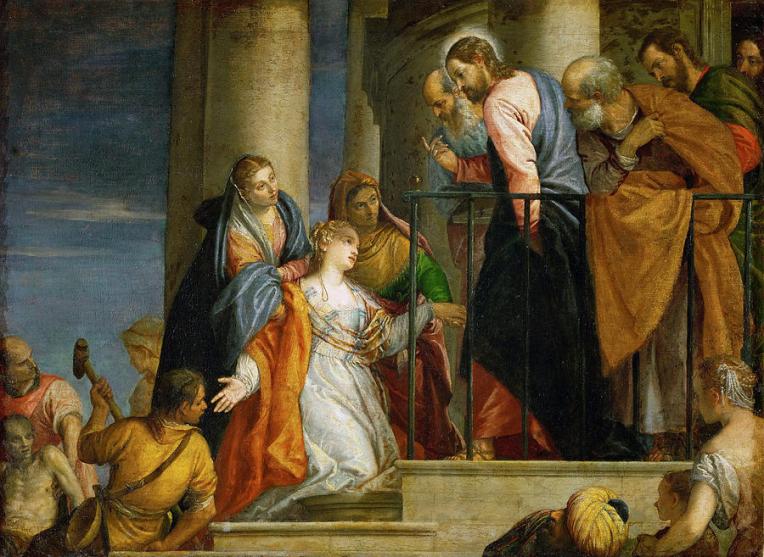
Consider the woman in today’s Gospel passage.  She had suffered for many years.  She interrupts Christ right in the middle of His trying to help someone else.  We should make that woman’s faith our own:  not simply her faith in Christ’s power, but also her faith in His patience and compassion.  There is no true need in our lives that we should not offer to God.

Of course, not every petition is answered as we wish, as are the petitions of this woman and the official.  Sadly, some Christians stop offering their petitions to God—or even stop believing in God—when He doesn’t provide the responses they want.  But growth in prayer requires the acceptance of God’s “No”’s, and learning through them to trust more deeply His providential Will.

Saturday of the Thirteenth Week in Ordinary Time

Saturday of the Thirteenth Week in Ordinary Time
Matthew 9:14-17

“Can the wedding guests mourn as long as the bridegroom is with them?”

It’s the disciples of St. John the Baptist—and not the saint himself—who appear and speak in today’s Gospel passage.  Nonetheless, today’s passage offers us similarities and contrasts between these two cousins:  one of them the voice of the Word, and the other the Word made Flesh.

One of the more obvious contrasts concerns fasting, and the fact that John’s disciples fast while Jesus’ do not.  But John’s disciples misunderstand the reason for this difference.  They misunderstand the relationship between John and Jesus.  Perhaps they thought of them as two equally inspiring religious figures.  Perhaps they thought of them as two equally valid paths leading to God’s righteousness.

In fact, John leads to Jesus.  John himself preached this clearly, but his disciples did not hear John clearly.

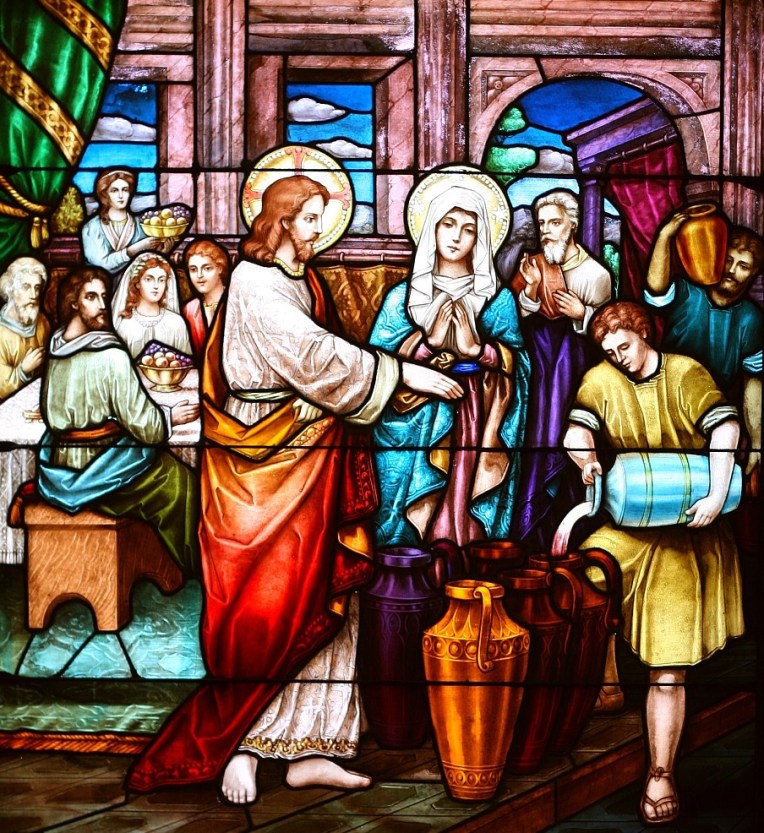
The last four sentences of today’s Gospel passage offer two mini-parables as a way to see these differences between John and Jesus.  Jesus is the new wine that must be poured into new wineskins.  This parable echoes His first public miracle at Cana [John 2:1-12].  To follow Jesus, a new approach to God must be accepted.  To be a disciple means to follow John in the constant need for penance and repentance.

OT 13-6 Wedding at Cana Mary

Friday of the Thirteenth Week in Ordinary Time

Friday of the Thirteenth Week in Ordinary Time
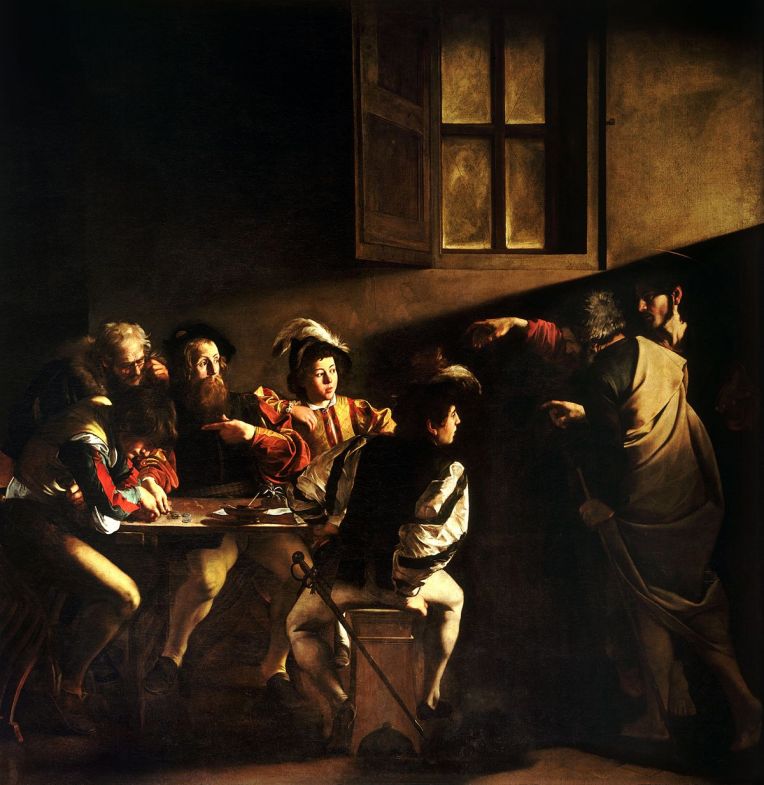
Matthew 9:9-13

“I did not come to call the righteous but sinners.”

Today’s Gospel passage presents to us the vocation of Saint Matthew.  The word “vocation” literally means a “calling”.  A vocation is something “vocal”, which comes from the Voice of God (or perhaps better, the Word of God).  That might not seem earth-shattering news.  But what we sometimes forget is that a Christian vocation is not announced by Christ to a Christian at a single initial moment, as the old TV series began each week with the explanation of the spy’s mission, should he choose to accept it.

Rather, a Christian vocation is “declared” to the Christian in an on-going, unfolding manner.  Of course, it’s true that in the beginning a specific form of vocation is made known:  marriage or life as a vowed religious, for example.  But that is only the beginning of Christ’s announcement of one’s vocation.  That is only the beginning of Christ’s guidance.

Throughout the course of living out one’s Christian vocation, the Christian must expect, listen for, and heed God’s Word.  Each of these is a different skill in the skill-set required to flourish in one’s vocation.

The Fourteenth Sunday in Ordinary Time [C]

The Fourteenth Sunday in Ordinary Time [C]
Isaiah 66:10-14  +  Galatians 6:14-18  +  Luke 10:1-12,17-20

I bear the marks of Jesus on my body.

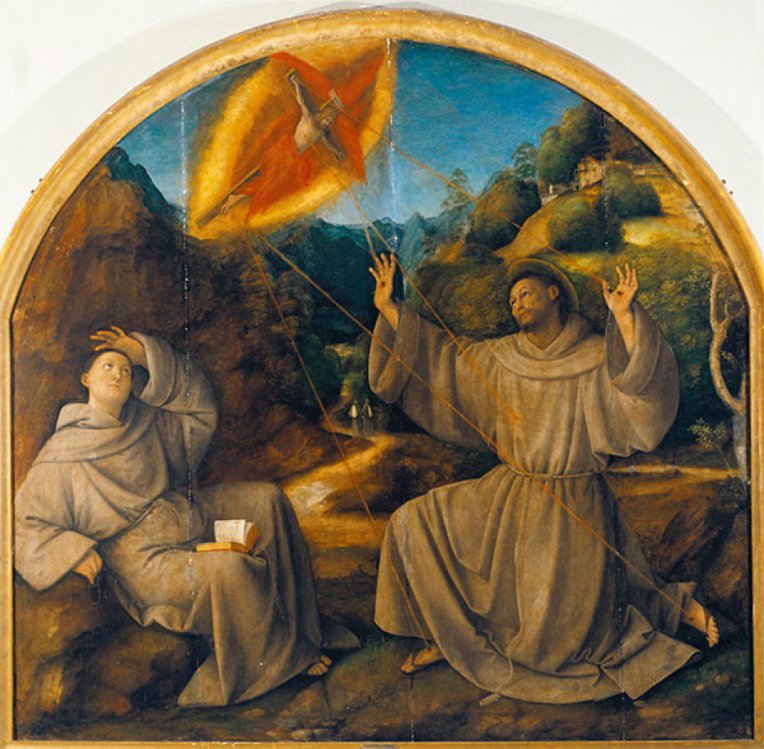
Saint Paul tells us today about a spiritual gift that he received from God.  This gift is called the “stigmata”, which refers to Jesus’ wounds from the Crucifixion.  Very few saints have received this gift:  among those who have are St. Francis of Assisi and St. Padre Pio.

But in case we’re tempted to think of the stigmata as mere scars, we ought to realize that St. Paul bore, in addition to the open wounds of Jesus’ crucifixion, the physical pain of those wounds.

To understand what it means for a person to bear the stigmata, it’s helpful to hear St. Paul declare, “May I never boast except in the cross of our Lord Jesus Christ, through which the world has been crucified to me, and I to the world.”  The stigmata, including its pain and disfigurement, sharply distinguish the world from the person who bears these marks.

A few weeks ago the Church celebrated Pentecost.  From the Upper Room in Jerusalem, the Church has grown to the ends of the earth and through the course of twenty centuries.  The life of the Church stands in contrast to “the world” of which St. Paul speaks.

The Christian believer is caught between the Church and the world.  The “catch” stems from the fact that fallen human nature is powerful in its “fallen-ness”.  Try to imagine, if you can, someone who has the five marks of the stigmata on his own body, but doesn’t even notice them.  That’s pretty hard to imagine.  We might be able to imagine someone who is absent-minded not noticing someone next to him bearing the stigmata, but it’s nearly impossible to imagine that someone who bears those wounds does not notice them.

Since you and I are not likely to be given the marks of the stigmata, we might think it a waste of time to speculate about such matters.  But bring the subject closer to home:  if you do not have to deal with the stigmata, what about the wounds caused by your sins?

Personal sins may not often cause physical wounds, but they do often cause wounds of other types.  These wounds often go either unnoticed by us, or are ignored.  Perhaps this is because the pain of these wounds seems greater if we acknowledge it.  Perhaps it’s because acknowledging the pain would imply the need for some sort of action on our part.  We easily look past our sins and their effects on our selves and others.

All this is to say that in dealing with the wounds that mark our souls, we have a radical choice to make.  Each of us has to decide by what means to deal with these wounds, if at all.  St. Paul suggests that we deal with these wounds through the power of Christ’s Cross.

What does St. Paul mean when he claims that through “the cross of our Lord Jesus Christ… the world has been crucified to me, and I to the world”?  Consider the explanation of “The Way of the Cross” offered by the 20th century Carmelite friar, Father Gabriel of St. Mary Magdalen, OCD in his work titled Divine Intimacy:

“We must be thoroughly convinced that if the Holy Spirit works in our souls to [conform] us to Christ, He can do so only by opening to us the way of the Cross.  Jesus is Jesus crucified; therefore, there can be no conformity to Him except by the Cross, and we shall never enter into the depths of the spiritual life except by entering into the mystery of the Cross.  St. Teresa of [Avila] teaches that even the highest… graces are given to souls only in order to enable them to carry the Cross.  ‘His Majesty,’ says [Teresa], ‘can do nothing greater for us than to grant us a life which is an imitation of that lived by His beloved Son.  I feel certain, therefore, that… favors are given to us to strengthen our weakness, so that we may be able to imitate Him in His great sufferings’ [Interior Castle VII, 4].”

This coming week, say your daily prayers kneeling in front of a crucifix.  If because of health you’re unable to kneel, place a picture of the Crucifixion before you, and look at this image of Jesus dying for you on the Cross as you offer all your prayers through the power of the Cross.