The Eighteenth Sunday in Ordinary Time [C]

The Eighteenth Sunday in Ordinary Time [C]
Ecclesiastes 1:2; 2:21-23  +  Colossians 3:1-5,9-11  +  Luke 12:13-21

“… rest, eat, drink, be merry!”

I loved to read mystery stories as a boy.  The older I get, the less I think about mysteries that have solutions.  A different type of mystery is more compelling:  mysteries of our Faith.  They’re not absolutely mysterious:  that is, there are things we can know and say about them.  But they have no solutions as stories do.

As an example, consider one of the mysteries that Saint Paul describes in today’s Second Reading.  What is Saint Paul claiming when he tells the Colossians that they “have died”?  He says:  “Think of what is above, not of what is on earth.  For you have died, and your life is hidden with Christ in God.  When Christ your life appears, then you too will appear with Him in glory.”

Of course, St. Paul is not talking about a physical death.  He’s talking, rather, about the spiritual death that marks the life of every person who follows Jesus.  What does this sort of death look like?

Imagine a large stone being thrown mightily into a deep lake.  The stone starts to sink upon hitting the water, and the impact causes a large splash.  Then, while the stone continues to sink, smaller splashes rise and fall as the impact of stone against water ripples in wider and wider circles.  This image symbolizes your Christian life.

The moment of impact is the moment of your baptism:  an experience of dying into Christ.  The Sacrament of Baptism is the beginning of the Christian life, and of course we should never underestimate the magnitude of the gift of Baptism.  Nor should we forget that it remains a source of blessings throughout our earthly days.  Nonetheless, baptism is not the end of the Christian life.  Baptism makes waves by means of many smaller deaths in daily life.

One that’s neglected by many Christians in our day and age is asceticism.  Asceticism is a habit of the Christian life.  It’s a good habit, and so we call it a virtue of the Christian life.  Asceticism is the good habit of self-denial.

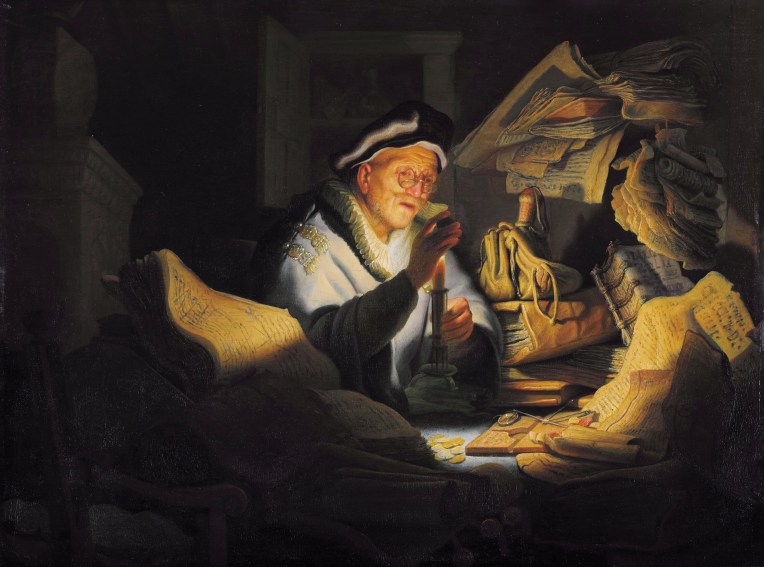
To the world, this sounds like foolishness:  how can denying one’s own self be good?  To the world, the supreme good is to promote oneself, to inflate oneself, to indulge oneself.  But the Christian looks at life differently:  through the lens of baptism into Christ’s Passion, Death and Resurrection.  Baptism is the pattern for the asceticism of our daily life as Christians.  Jesus’ parable in today’s Gospel Reading illustrates the contrast between someone who lives for the world and someone who lives in the world but for God.  In order to heed Jesus’ admonition “against all greed”, asceticism is necessary.

Every act of Christian asceticism is the freely chosen sacrifice of something good.  By contrast, not doing something that’s evil is a moral imperative.  We must not do what is evil.  But we may do what is good… or, we may not do what is good.  We are free to choose either course of action.  It’s from this freedom that asceticism derives its value.  To sacrifice what is good, when we have the moral freedom to enjoy it, turns something good into something better!

To repeat this in a different way:  not doing something that’s intrinsically evil is commanded by God, and must not be done by every Christian, in every circumstance.  But asceticism is different.  Asceticism is not doing something that’s good, something that we are in fact free to do, because we want to sacrifice to God our freedom to enjoy that good.

Here’s an example:  a person is always free to eat what his body expects in order to function in a healthy manner.  But a person may freely choose to sacrifice this same good—that is, a healthy meal that his body expects—as an act of asceticism.  Will his body perish because of his asceticism?  No:  Christian asceticism should never cause irreparable harm to the human person.  But even an athlete, when he wants to strengthen his muscles, has to break them down first.

An authentic act of Christian asceticism has two ends.  The first end regards oneself.  This end or goal is to discipline one’s body and soul.  One purpose is so that one becomes less attached to earthly goods.

The second and more important end, to which the first is oriented, regards God.  Authentic Christian asceticism makes one more free to seek and embrace spiritual goods, even and especially when those spiritual goods come at a demanding cost.
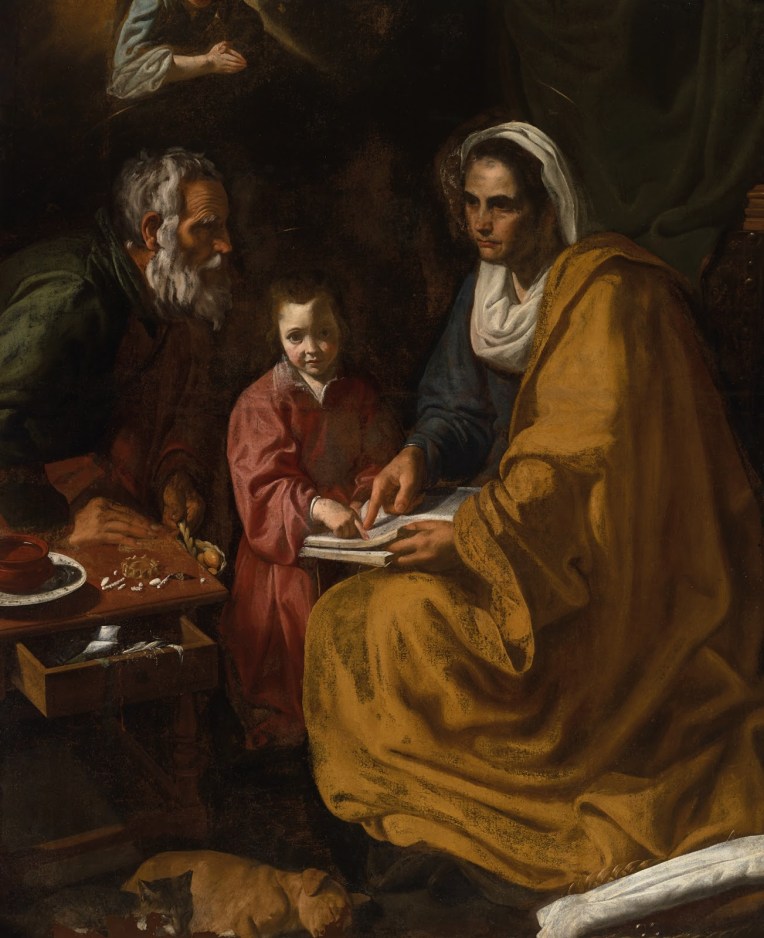
Sts. Joachim & Anne, Parents of the Blessed Virgin Mary

Sts. Joachim & Anne, Parents of the Blessed Virgin Mary
Jeremiah 14:17-22  +  Matthew 13:36-43
July 26, 2022

“Whoever has ears ought to hear.”

In today’s Gospel passage Jesus offers a point-by-point explanation of the parable that He had preached about the weeds in the field, proclaimed at Holy Mass on Saturday of this past week.  The evangelists rarely offer us examples of Jesus explaining one of His parables.  So today’s passage is insightful both in terms of the parable’s content, and also in terms of understanding how Jesus uses parables.

We might wonder, to start with, what the significance is of the evangelist telling us that it’s after “Jesus dismissed the crowds” that “His disciples approached Him” to ask for an explanation of the parable.  This is an important distinction that the evangelist didn’t have to note for Jesus’ explanation of the parable to make sense.  Perhaps the evangelist is highlighting the importance of petitioning God for deeper insight into His revealed Word.

Jesus then explains the meanings of seven persons or things within the parable.  This allegorical explanation of the parable is important because it’s in accord with the method of interpreting Jesus’ parables commonly found in the writings of patristic and medieval saints.  The allegorical method of understanding Sacred Scripture is often rejected today by scholars who prefer to use only rationalistic forms of the historical-critical method.  Nonetheless, central to all the elements of Jesus’ allegorical interpretation is His call for each of us to be among the “good seed”, sown by the Son of Man in His preaching, Passion, Death and Resurrection.

Sts. Joachim and Anne

La Educación de la Virgen by Diego Velázquez [1599-1660]

St. James, Apostle

St. James, Apostle
2 Corinthians 4:7-15  +  Matthew 20:20-28

… so that the life of Jesus may be manifested in our mortal flesh.

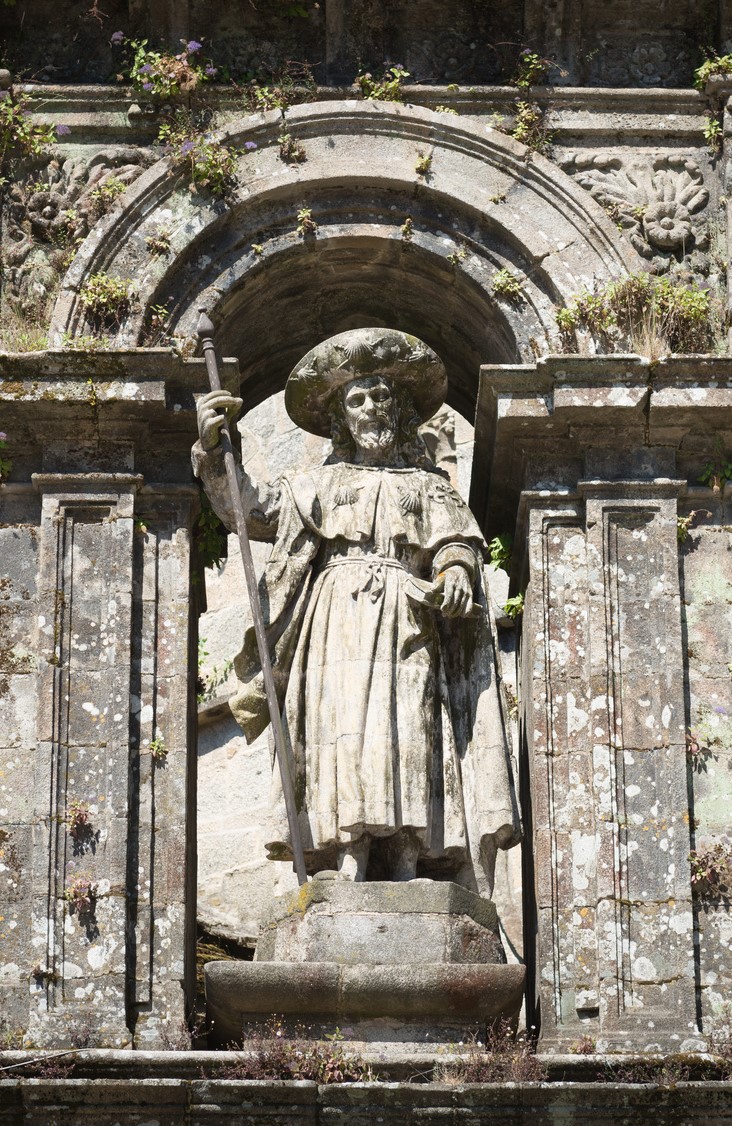
Today the Church celebrates the feast of the apostle James.  But two of the apostles were named James.  The apostle whose feast we celebrate today is usually called “James the Greater”.  This James was the brother of St. John the Apostle.

Saint James the Greater was “greater” than the other James because he followed Jesus for a longer time.  But even though this “Great James” followed Jesus for so long a time, he still didn’t exactly understand who Jesus was.  We can tell that from today’s Gospel passage.

James and John, the apostle-brothers, have a mom who wants what’s best for them.  She knows that Jesus is a great person, very important, and even believes that Jesus is some sort of king.  That’s why she asks Jesus if her sons can sit right next to Jesus’ throne.  She wants her sons to be important.

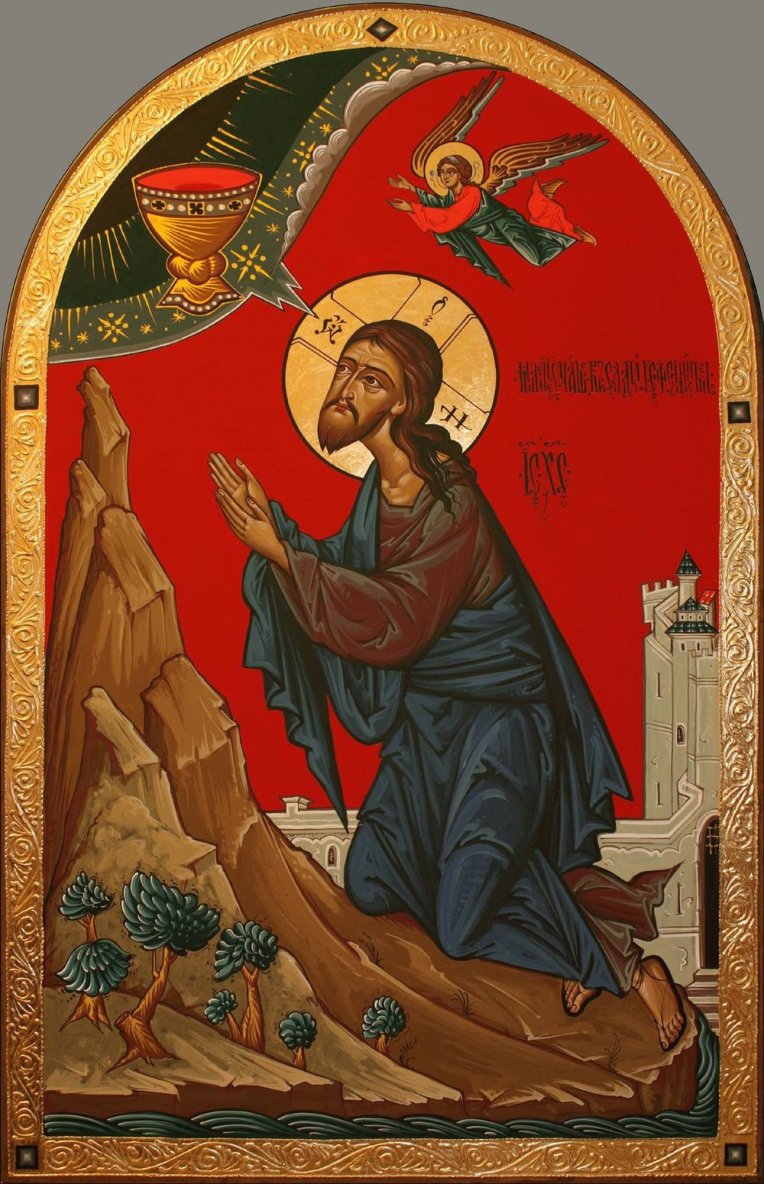
But Jesus says something that none of them expects.  Jesus says that if you want to be with Him in Heaven, you have to drink from the chalice that Jesus was going to drink from during Holy Week.  When Jesus says this, He’s not only talking about the chalice that He’s going to use at the Last Supper.  Jesus is also talking about the cup of suffering:  He’s talking about the Cross.  Remember that after the Last Supper, Jesus went to the Garden of Gethsemane, and prayed to God the Father about the cup of suffering that He knew was coming very soon.

You will actually grow stronger in your life whenever you suffer for Jesus’ sake.  Jesus taught us this in the Beatitudes:  “Blessed are you when people revile you and persecute you and utter all kinds of evil against you falsely on my account” [Matthew 5:11].  Always remember that this is one of the ways that God will give you grace throughout your life:  by sticking with Jesus, even when it’s very difficult.

St. James - Cathedral of Compostela CROPPED

Saturday of the Sixteenth Week in Ordinary Time

Saturday of the Sixteenth Week in Ordinary Time 
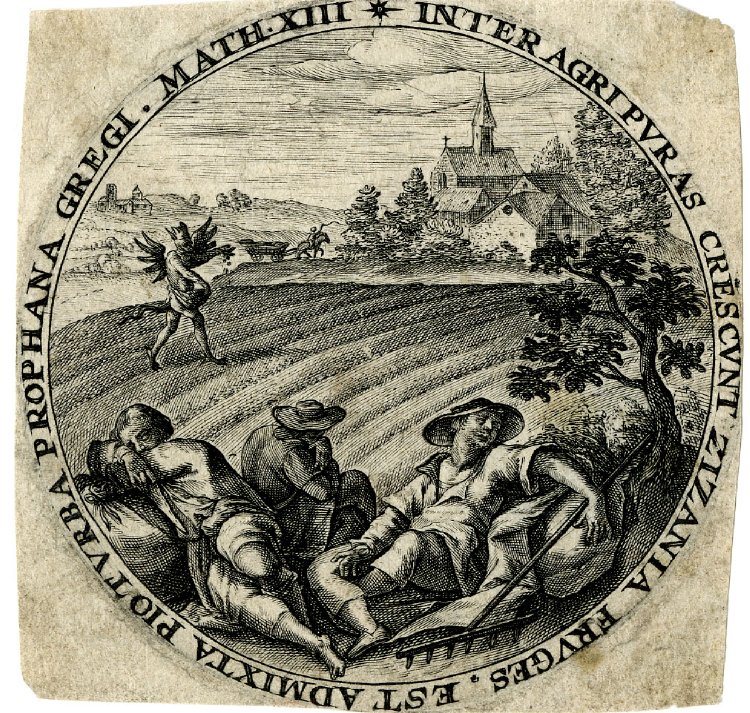
Matthew 13:24-30

“‘Where have the weeds come from?’”

“Let them grow together until harvest,” the sower in Jesus’ parable says, referring to the weeds and the wheat.  Modern farmers may not follow the sower’s advice, but the parable is clearly meant to teach a lesson in spirituality, not agriculture.

Jesus begins the parable by clarifying that He is describing the “Kingdom of heaven”.  Some speculate whether the “Kingdom of heaven” and the “Kingdom of God” that Jesus often describes in parables are synonymous with Heaven itself, or with the Church on earth, or with both.  The history of the Church on earth makes it clear—to anyone whose hopes for Heaven are at all lofty—that there’s a significant difference between Heaven and the Church on earth.  Perhaps, then, the kingdoms that Jesus describes through His parables are ideals to be striven for?

Whether we answer any of those questions or not, we can derive spiritual principles from the parables that any sincere Christian will want to make her own.  Regarding today’s parable, the sincere Christian will naturally ask whether he is one of the weeds or one of the tares of wheat.  At different times we may be one or the other.  If we’re constantly complaining about “others” in our lives—”those weeds”—then we likely need to make a good examination of conscience.

One purpose of the parables is to give our daily life focus:  as the old maxim puts it, “to begin each day with the end in mind”.  In other words, we ought not live each day for the sake of each day.  We ought to live each day for the sake of the eternal Day that lies just beyond the hour of our death, when our Lord will, with divine circumspection and justice, separate the weeds from the wheat.

St. Mary Magdalene

St. Mary Magdalene
Songs 3:1-4 [or 2 Corinthians 5:14-17]  +  John 20:1-2,11-18

… while it was still dark ….

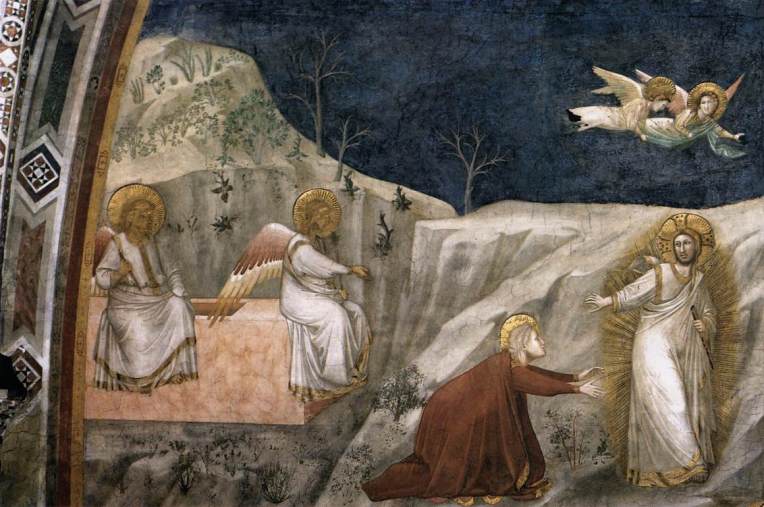
Early in the morning on the first day of the week… that is to say, in the beginning… we see Mary Magdalene huddled at the tomb weeping.  We must give her credit for this, since the apostles themselves were not faithful to the Crucified Lord in this way.  For ourselves, we pray for the grace to persevere in the midst of suffering, to allow our souls to thirst for Our Lord and God without despair in the midst of suffering.  We pray for the ability to hope during those times when we cannot see the Lord present before us.

Only in the midst of such suffering, of such weeping, of such self-emptying, can the Lord be seen clearly, as He calls us by name.  We recognize Christ, and we accept the commission He offers us.  He has news for Mary Magdalene to report:  namely, that He is ascending to His Father and our Father.  Perhaps, though, this is even more difficult:  to rejoice at someone’s return when he tells you he’s getting ready to leave you forever.

After all, on that Easter morning, who wants to hear about the Ascension?  We want to glory in the Resurrection of Our Lord Jesus Christ from the dead!  And yet that is not where Jesus points us.  Throughout His life, and in His death, he always points away from Himself toward the Father, even on the very morning of His Resurrection.

Noli Me Tangere Giotto

Thursday of the Sixteenth Week in Ordinary Time

Thursday of the Sixteenth Week in Ordinary Time
Matthew 13:10-17

“‘Gross is the heart of this people ….’”

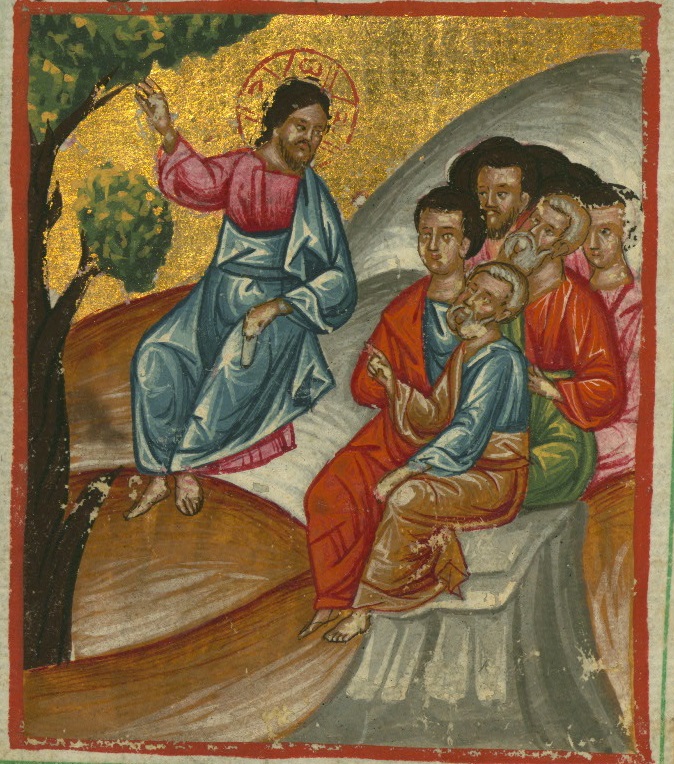
When the disciples in today’s Gospel passage ask Jesus why He speaks to “the crowd” in parables, He responds with what we might call a “theology of parables”.  Jesus contrasts the disciples with the crowd.  The disciples, He explains, have been granted “knowledge of the mysteries of the Kingdom of heaven”.  But the crowd has not.  Jesus also points out that the crowd “look but do not see” and “hear but do not listen or understand”.  So given this two-fold deficit on the part of the crowd, why is it fitting for Jesus to speak to them in parables?

Since Jesus then reveals that Isaiah 6:9-10 has been fulfilled in the midst of the crowd, parables seem to be a sort of pabulum.  By way of analogy, we might consider Saint Paul’s explanation of his own preaching to the Corinthians, who had been torn by jealousy and strife:  “I, brethren, could not address you as spiritual men, but as men of the flesh, as infants in Christ.  I fed you with milk, not solid food; for you were not ready for it; and even yet you are not ready” [1 Corinthians 3:1-2].

In other words, parables are for the weak of spirit, for those not yet ready for the full strength of the Gospel message, nor for living this message through their own lives.  Aren’t we ourselves often among their number?

OT 16-4

Wednesday of the Sixteenth Week in Ordinary Time

Wednesday of the Sixteenth Week in Ordinary Time
Matthew 13:1-9

“And He spoke to them at length in parables ….”

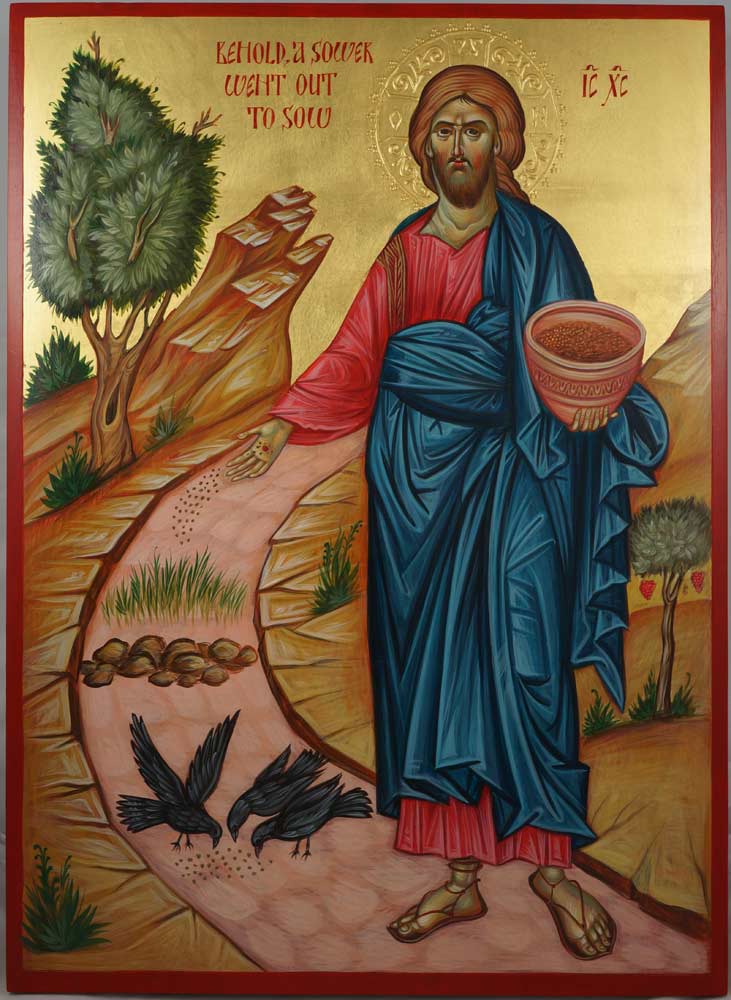
There are four illustrations that Jesus paints in today’s parable.  The first three are pictures of the sower laboring in vain, because of the path, rocky ground, and thorns.  Only the fourth illustration describes seed falling on rich soil, producing fruit, a hundred or sixty or thirtyfold.

The first illustrates ignorance; or in other words, not understanding what the Word of God tells us.  To grow in humility, we cannot be ignorant.  To grow in humility requires knowledge of God, and self-knowledge.  Knowledge of God is simple, because God is simple.  God is Love.

But self-knowledge is more complicated.  Self-knowledge has two parts:  knowledge of myself as a fallen person, who has stumbled and fallen into the filth of sin; and knowledge of myself as someone loved by God, who has picked me up, washed me in the Blood of the Lamb, and raised me to the dignity of His own child.

These three forms of knowledge, then – knowledge of God, knowledge of myself as fallen, and knowledge of myself as raised by God – are like three legs of a stool on which I sit.  Without any one of these three, I will fall to the ground.  Without all three, I cannot grow in the virtue of humility.

Humility is the foundation of the spiritual life.  Humility will grow inside of you as you rest more in the knowledge of who you are, and who God is.

Tuesday of the Sixteenth Week in Ordinary Time

Tuesday of the Sixteenth Week in Ordinary Time
Matthew 12:46-50

“Here are my mother and my brothers.”

For at least two reasons, today’s Gospel Reading may be used (erroneously) to criticize Catholic beliefs.  The first is that Jesus seems to downplay the significance of His birth mother, Mary.  The second is that Jesus refers to His “brothers”, which seems to contradict the Church’s teaching about Mary’s perpetual virginity.  In replying to both concerns, we can not only help those with misunderstandings, but we can ourselves move closer to the heart of Jesus’ words.

First, is Jesus downplaying the significance of Mary in saying that “whoever does the will of my heavenly Father is my brother, and sister, and mother”?  On the contrary, Mary is the perfect example of what Jesus is talking about here.  It’s true that Jesus doesn’t go out of His way on this occasion (at least, as recorded by the St. Matthew the Evangelist) to point to Mary as the perfect embodiment of doing the will of God the Father.  There are several possible reasons why Jesus did not think it prudent on this occasion to highlight Mary’s human perfection, but none of these suggest that Mary is not the perfect human creature that all the Church’s Marian dogmas describe her as being.

Second, the word in today’s Gospel passage that is translated into English as “brothers” is the Greek word “adelphoi”.  Apologists have noted that other New Testament uses of this word show that the word can have meanings other than the strict sense of “siblings”.  Others have noted the logical fact that Jesus having brothers doesn’t mean that Mary had other children besides Jesus, since Jesus’ “brothers” may have been step-brothers from an earlier marriage of Joseph, who may have been a widower.  Ultimately, however, such arguments can turn Jesus’ very intention in this Gospel passage on its head:  Jesus is trying to get us to move away from worrying about His blood relations, so that you and I might be His brethren through the Church.

The Virgin Mary with the Apostles and Other Saints

The Seventeenth Sunday in Ordinary Time [C]

The Seventeenth Sunday in Ordinary Time [C]
Genesis 18:20-32  +  Colossians 2:12-14  +  Luke 11:1-13

“… how much more will the Father in heaven give the Holy Spirit to those who ask him”.

Four Sundays ago we heard Jesus begin his long journey to Jerusalem.  He was “resolutely determined” to journey there, even though He knew full well what He would find at the end of the road.  During these Sundays in Ordinary Time, we are listening to Jesus so that we might follow Him no matter where He leads.

Any guide worth his salt covers the basics at the start of a journey.  Jesus is the best of guides.  He prepares us for the journey to Heaven by way of the Cross.  Today in the Gospel Reading, He’s covering some basic skills regarding prayer that we need for our journey.

When our holy Mother the Church teaches us about prayer, she often uses a mnemonic device to help us remember the four basic types of vocal prayer.  We can remember the letters of the word “ACTS”—A, C, T and S—by thinking about the New Testament Acts of the Apostles, where the disciples after Pentecost lived their Faith through the power of prayer.  These four letters—A, C, T and S—stand for “Adoration”, “Contrition”, “Thanksgiving” and “Supplication”.  It’s the last of these (often called “petition”) on which Jesus focuses our attention today.

Using the word “ACTS” to remember the four types of vocal prayer also helps us keep first things first, because adoration is the most important of these types of prayer.  Supplication is the least important, so it belongs last.  Unfortunately, if we don’t understand the prayer of supplication correctly, we might never move beyond it to the more important forms of prayer.  The potential for this is very real, because petition is the form of prayer most easily corruptible:  that is, it’s the form of prayer that most easily can become self-centered.

So regarding supplication, and beginning with the most simple of questions, why should we ask God for things?  Why is the prayer of supplication even important in the Christian life?  When we reflect on today’s Gospel Reading, and how Jesus teaches us here about petitionary prayer, we see His teaching rooted in two things, or rather, in two Persons:  God the Father, and God the Holy Spirit.  Consider here how prayer leads us to the Father.

Jesus, as the divine Son of God, roots His prayer in His own relationship with God the Father.  Jesus teaches us that the answer to all our questions about prayer, and the answer to all our prayers, is in seeing exactly who God the Father is.  For this purpose, Jesus begins in today’s Gospel Reading by giving us the only verbal prayer He ever taught:  the “Our Father”.  He follows this prayer by unpacking it through two parables.  Then he concludes by asking us a rhetorical question about His Father, which will lead us to the Holy Spirit.

In regard to petitioning God the Father for what we want, a devil’s advocate might ask, “If God is all-knowing, and knows what we want, why do we need to ask?” The devil’s advocate might also ask, “Doesn’t God know better than we do what we need?”  Obviously, these are questions about who the God the Father is.

So we can ask:  when a loving father gives what his child needs, does he always do so immediately?  The loving father does not, because he knows that his child in certain cases needs to desire what he has to give her.  Otherwise, as soon as the father gives the gift, the child might cast it aside.  Even the most knowledgeable and most powerful father does not seek to control his child.  The loving father knows that a child has to experience life for herself.  The desire within the child for what she needs is essential.  The father cannot impose everything.  All this is to say that the manner in which God the Father does, or does not, answer our petitions has a lot to do with His shaping our desires, both by His silence and by His responses to our petitions.