Late Advent Weekday — December 24 [Morning Mass] II Samuel 7:1-5,8-12,14,16 + Luke 1:67-79
“He promised to show mercy to our fathers ….”
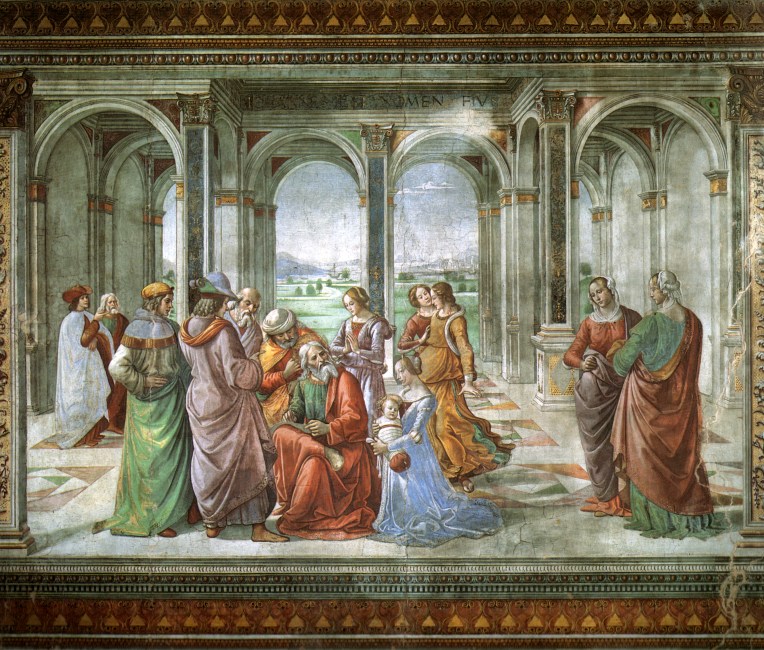
This morning’s Mass is the last Mass of Advent, and as such, you might say that it presents to us the close of the Old Testament. At the center of today’s Gospel Reading is the figure of Zechariah, the father of John the Baptist. John having been born, the punishment of muteness is lifted from Zechariah. This morning’s Gospel Reading, then, presents his first words.
St. Luke the Evangelist notes in two separate scenes that Zechariah—in today’s Gospel Reading—and his wife Elizabeth in a previous passage—Luke 1:41—were “filled with the Holy Spirit” when they spoke. St. Luke also notes that Zechariah, “filled with the Holy Spirit, prophesied”. In these two scenes, the words of Elizabeth and Zechariah—both “filled with theHoly Spirit”—are akin to the words of the Old Testament prophets. In the Creed’s section about the Holy Spirit, we profess that He “has spoken through the prophets.”
There are two parts to Zechariah’s prophecy, which the Church refers to by the first word of the text in Latin: “Benedictus”. The second part is addressed to his infant son John. We can imagine that Zechariah was cradling John in his arms as he uttered this prophecy. The words he spoke to John can also be applied to us Christians inasmuch as each of us is called to prepare a way in the world for the power of the Most High. By our words, works, and prayers we allow others to know about the mercy promised to our fathers: the Divine Mercy who is Jesus Christ, born for us at Bethlehem.
Late Advent Weekday — December 23 Malachi 3:1-4,23-24 + Luke 1:57-66
But who will endure the day of his coming?
Today’s First Reading is taken from the last book of the Old Testament, the Book of the Prophet Malachi. There is a certain harshness or strictness to this passage that might seem out of place with the humble birth of the gentle Jesus. Yet Malachi’s message is needed if we are to celebrate Christmas fittingly.
Many passages in the Old Testament’s eighteen prophetic books are apocalyptic in nature. That is to say, they are prophecies not just about the distant future, but about the “end times” and what the Church calls the “Last Things”: Heaven and hell, death and judgment. Today’s First Reading is such a passage.
The Lord God speaks of the coming “day of the Lord” as “the great and terrible day”. He speaks also about a purgation that will take place akin to “the refiner’s fire” and “the fuller’s lye”. Yet what is the goal of this purification? The answer to that question helps us understand the meaning of Advent and Christmastide.
Malachi prophecies that the Lord’s coming is about more pure sacrifice being offered to God. He foretells that “the Lord whom you seek” “will purify the sons of Levi, refining them like gold or like silver that they may offer due sacrifice to the Lord.” This helps us as Christians to focus what we’re about during these holy seasons. The Lord comes in the person of the infant Jesus so that He might grow up and offer His very Self on Calvary, thereby becoming the source of all our worship as Christians. When we enter into this, Malachi’s prophecy can come to pass: “Then the sacrifice of Judah and Jerusalem will please the Lord, as in the days of old, as in years gone by.”
Late Advent Weekday — December 22 I Samuel 1:24-28 + Luke 1:46-56
“From this day all generations will call me blessed ….”
Yesterday’s Gospel Reading introduced the narrative of the Visitation of the Blessed Virgin Mary to her cousin Elizabeth. In that passage the evangelist records only the words of Elizabeth speaking. But today’s Gospel Reading consists almost entirely of Mary proclaiming a hymn of praise to God. Every evening in the Divine Office the Church prays this hymn. This hymn’s title is “Magnificat”, which is simply the first word of the hymn in Latin.
One way to reflect upon this hymn is to compare it to today’s Responsorial Psalm. This comparison could be made verse-by-verse. Another means of comparison would be to consider the narrative setting of each. Consider the latter means.
Today’s Responsorial Psalm does not come from the Book of Psalms but from the second chapter of the First Book of Samuel. The childless Hannah had prayed to the Lord for a son, promising: “I will give him to the Lord all the days of his life” [I Samuel 1:11]. After Samuel is born, Hannah fulfills her promise by leaving the child at the house of the Lord in Shiloh. There Hannah offers a hymn of praise to God, from which today’s Responsorial Psalm is taken.
The narrative setting of today’s Responsorial Psalm gives us an example from the Old Testament of what the Blessed Virgin Mary lives out throughout Jesus’ life. In turn, God calls each Christian to imitate this example of Mary: not only praising God for His blessings, but more importantly, returning to the Lord His blessings, and in so doing, becoming instruments of His will so that His blessings might be multiplied for the glory of God and the good of others.
Late Advent Weekday — December 21 Song of Songs 2:8-14 [or Zephaniah 3:14-18] + Luke 1:39-45
“Most blessed are you among women, and blessed is the fruit of your womb.”
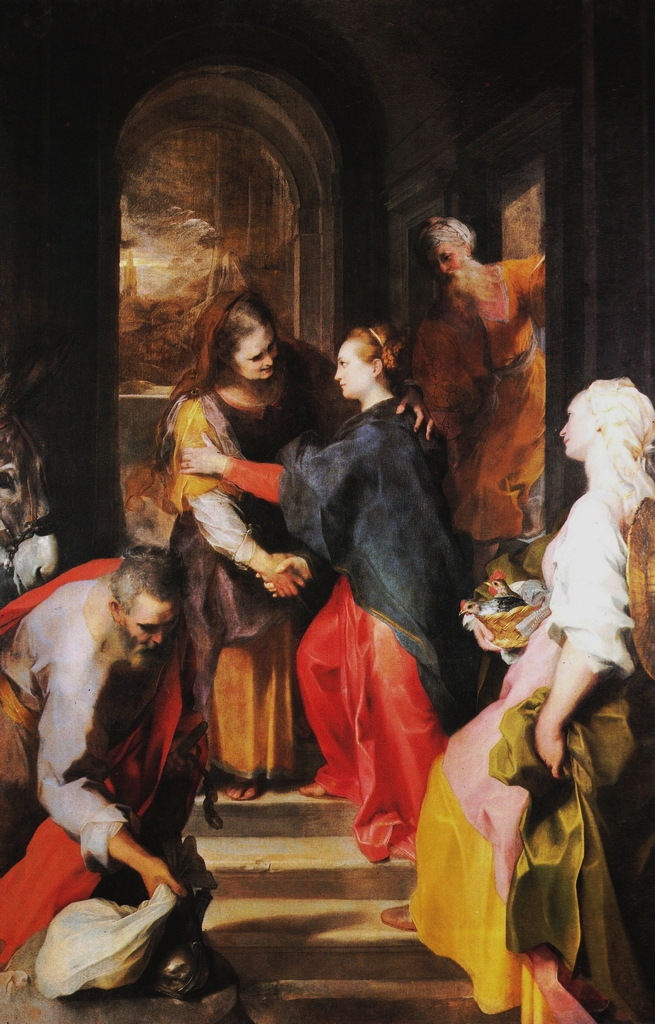
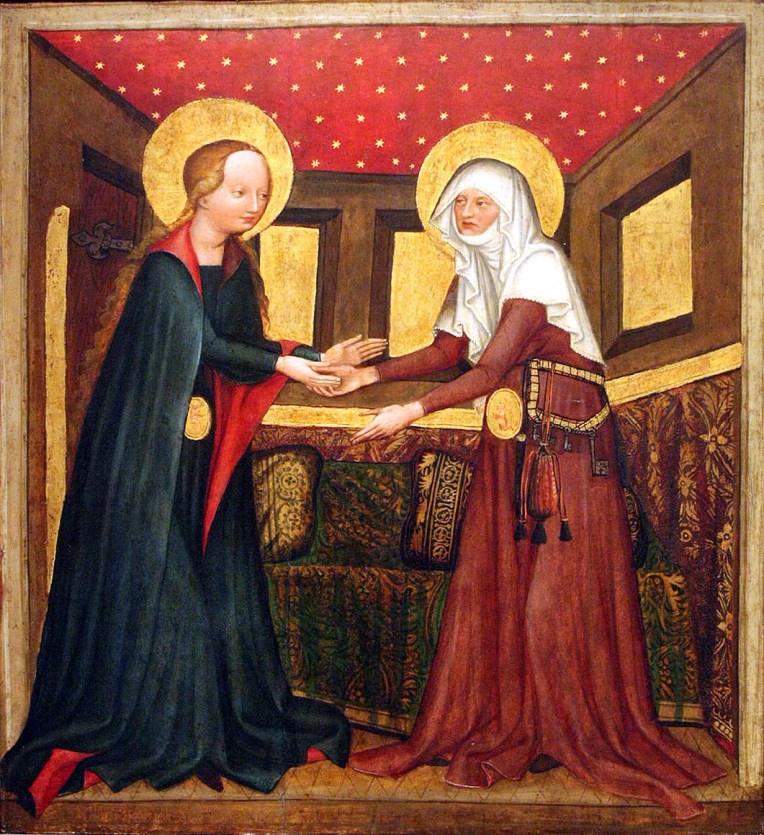
Today and tomorrow’s Gospel Readings together form the narrative of the Visitation. Whenever we pray the Joyful Mysteries of the Rosary, this event is the object of meditation for the second decade. Today’s Gospel Reading is the more narrative of the two passages, focusing upon the interaction between Mary and Elizabeth.
Almost half of today’s Gospel Reading consists of Elizabeth’s words to Mary. About these words, the evangelist tells us that Elizabeth, “filled with the Holy Spirit, cried out in a loud voice.” This fact makes the scene more dramatic, drawing more attention not only to Elizabeth’s words, but also to what provoked her words.
In Elizabeth’s cry, we hear the word “blessed” three times. These three instances focus for us the entire scene of the Visitation. The first two occur in the same sentence, where Elizabeth cries to Mary: “Most blessed are you among women, and blessed is the fruit of your womb.” Mary and Jesus are united in being “blessed”, yet Mary receives this blessing from Jesus when He descends from Heaven. On the other hand, Mary and Jesus are united by their shared humanity, which Jesus receives from Mary in her womb.
The third instance of “blessed” in this passage describes Mary in a way that offers hope to each Christian. Each member of the Body of Christ receives from Him a unique place among the Body’s members. Not every Christian is “blessed” to be the Mother of God. Yet God calls every Christian to be “blessed” by imitating that fidelity of Mary of which Elizabeth cries: “Blessed are you who believed that what was spoken to you by the Lord would be fulfilled.”
The Nativity of the Lord Scriptures for the Four Masses: Vigil Mass: Isaiah 62:1-5 + Acts 13:16-17,22-25 + Matthew 1:1-25 Mass during the Night: Isaiah 9:1-6 + Titus 2:11-14 + Luke 2:1-14 Mass at Dawn: Isaiah 62:11-12 + Titus 3:4-7 + Luke 2:15-20 Mass during the Day: Isaiah 52:7-10 + Hebrews 1:1-6 + John 1:1-18
And the Word became flesh / and made his dwelling among us, / and we saw his glory ….
CCC 456-460, 466: “Why did the Word become flesh?” CCC 461-463, 470-478: the Incarnation CCC 437, 525-526: the Christmas mystery CCC 439, 496, 559, 2616: Jesus is the Son of David CCC 65, 102: God has said everything in his Word CCC 333: the incarnate Christ worshipped by the angels CCC 1159-1162, 2131, 2502: the Incarnation and images of Christ
+ + +
Who doesn’t like receiving a gift? It’s only human nature to light up at the chance to receive a gift. However, there are times when receiving a gift can make us unsure about just how to respond.
For example, you are in a large supermarket, and an employee holding a tray of little cheese and weenie sandwiches offers you one. How do you respond? Remembering what your doctor has told you about the shape you’re in, you may say, “No, thank you.” Or maybe in spite of your condition—because you really like those cheese and weenie sandwiches—you may say, “Thank you,” and take three of them.
Or, for example, your spouse on Christmas morning, hands you the keys to a brand new Yukon Denali, or F-150 pickup, or Mustang GT500. One response might be joy: this is just what you’d been dreaming of. Another response might be fear: “What about our finances? How was this paid for?” Yet another response might be suspicion: “Hmmm… He wouldn’t be getting me a gift like this unless he were in need of major absolution. What in the world did he do this time?”
We hesitate when receiving some gifts from some persons. We hesitate because we know that this two-way street of receiving and responding to the gift reflects the relationship between the giver and the receiver. Whether we respond, and how we respond, reflects the relationship that we want to have going forward with the giver.
It can be intimidating, if we look beyond the cuteness of Christmas and instead look intently on the “reason for the season”, to recognize what kind of gift God has given us. God the Father has given us His only-begotten Son for a specific reason.
We have the entire Christmas season to reflect on this gift. Christmas does not end at 11:59 pm on December 25th. Christmas begins with the celebration of Jesus’ birth, but that’s only the first of five mysteries celebrated throughout Christmastide. Christmas Day is followed by the feasts of the Holy Family of Jesus, Mary and Joseph; Mary, the Mother of God; the Epiphany of Jesus to the whole world; and finally the Baptism of Jesus in the Jordan River.
The best way to respond to God the Father’s Gift starts with remembering why God gave us His only Son. God has gifted us with His Son in order to meet our greatest need in this world. What is this need?
We might first consider what it’s not.
Our greatest need is not knowledge: if it were, Jesus would have preached from the Cross, instead of opening not His mouth as the Lamb who was slain.
Our greatest need is not power: if it were, Jesus would have come down from the Cross to show us His strength over the forces of evil.
Our greatest need is not wealth: if it were, Jesus would not have died penniless and wearing a single piece of cloth.
Our greatest need is not the removal of pain from our lives: if it were, Jesus would never allowed nails to pierce His hands and feet; and a sword, His side.
Our greatest need is salvation: the forgiveness of our sins. Jesus accepted the agony of His Passion and Death to open the gates of Heaven for us by offering up His Body and Blood, soul and divinity. In humility, Jesus was born into this world, so that some thirty years later he could die to open the Gates of Heaven. As the saying goes, “the wood of the crib is the Wood of the Cross.”
God the Father sent His divine Son down to earth so that the Father might adopt each of us. The Nativity is the dawning of our life as God’s very dear children. But this new life of ours takes place within Christ. Through grace, each us becomes one member of Christ’s Body, so that we might live on earth, die, and live in Heaven, in Christ. When God adopts us, Christ becomes our life. Saint Paul stated it this way: “it is no longer I who live, but Christ who lives in me; and the life I now live in the flesh I live by faith in the Son of God, who loved me and gave himself for me” [Galatians 2:20].
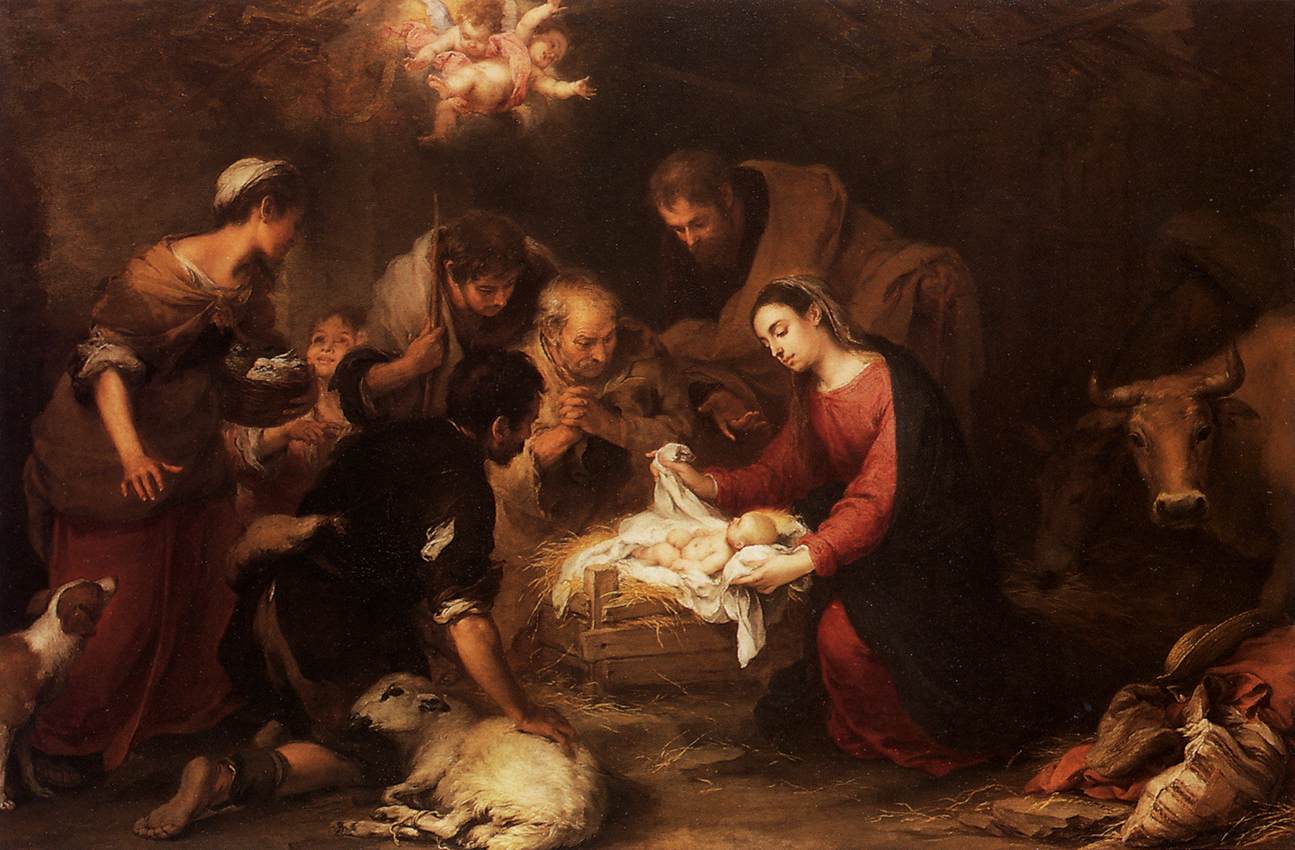
Adoration of the Shepherds by Bartolomé Esteban Murillo (1617–1682)
Late Advent Weekday — December 20 Isaiah 7:10-14 + Luke 1:26-38
“May it be done to me according to your word.”
Today’s Gospel Reading focuses our attention upon the First Joyful Mystery of the traditional Dominican Rosary (as opposed to the six-decade Carmelite Rosary, whose first Joyful Mystery is the Immaculate Conception of the Blessed Virgin Mary). The mystery of the Annunciation focuses upon the moment of the Divine Word becoming Flesh within the womb of Our Lady. This moment, among other ways in which we might reflect upon it, symbolizes the way that each Christian disciple needs to accept Jesus into his or her own life.
Jesus is the divine Gift that God the Father gifts fallen mankind with. We can prepare for Christmastide by pondering both the graciousness of this divine Father, and the bountiful goodness of this Gift who is the divine Son. Yet another way to ponder the Mystery of the Annunciation is to reflect upon the manner in which Mary receives the divine Gift of Jesus.
Mary is the first and best disciple of Jesus. She not only intercedes for each of us. She is also a model for us, which means that each time we find her mentioned in the New Testament, we ought to consider how we can imitate her virtues as the first and best disciple.
At the scene of the Annunciation, Mary exemplifies many virtues, but perhaps no virtue more than that of humility. It’s not a coincidence that the words “humble” and “humility” derive from the Latin word “humus”, meaning “ground” or “earth”. Mary is grounded, or down-to-earth, because of her humility. She knows what she is about, and never tries to be someone she is not. This humility does not prevent her, however, from being surprised by God’s message that she is destined to be the Mother of the Messiah. Nonetheless, without any assurances about what this vocation will demand of her, she assents to God’s will: “May it be done unto me according to your [divine] word.”
Late Advent Weekday — December 19 Judges 13:2-7,24-25 + Luke 1:5-25
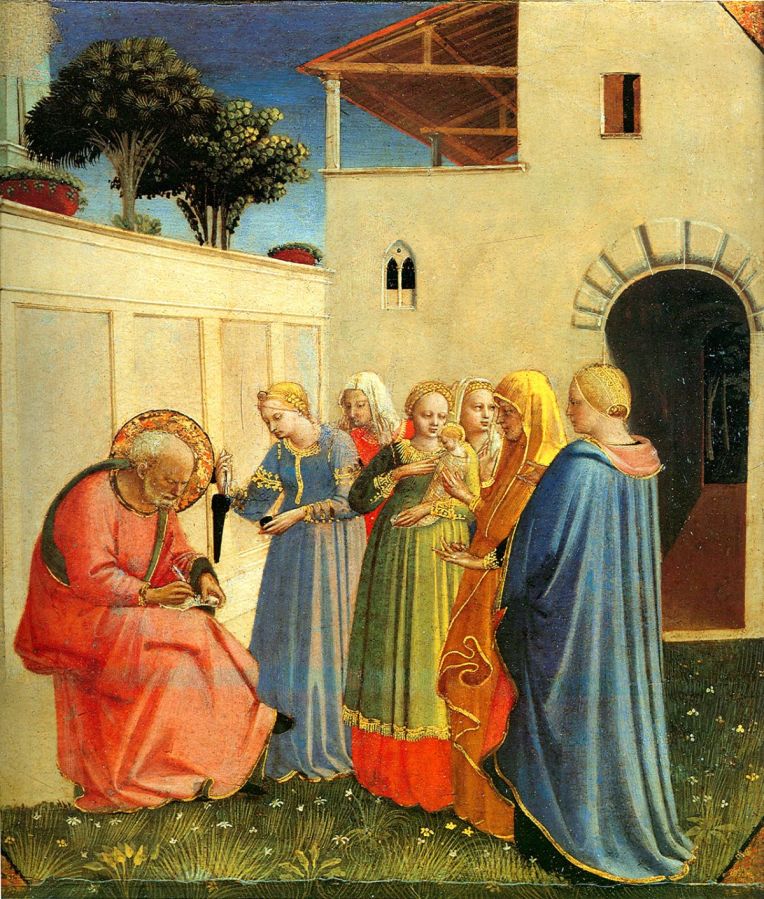
“Your wife Elizabeth will bear you a son, and you shall name him John.”
St. Matthew and St. Luke are the only two evangelists to record any narratives about the events surrounding the birth of Jesus Christ. But St. Luke spends far more time than St. Matthew doing this. While it’s true that the first two chapters of both Matthew and Luke are dedicated to these narratives, it’s important to recall that the chapters of the Bible do not have an equal number of verses. The first two chapters of Matthew consist of forty-eight verses, while the first two chapter of Luke consist of one hundred thirty-two verses.
Each day from today—December 19th—through the morning of Christmas Eve, the Church proclaims Gospel passages from Luke. Many of these passages are actually about the conception and birth of St. John the Baptist. Yet St. Luke very artistically parallels these narratives with those about the advent and birth of Jesus Christ.
When people think of the word “annunciation” in relation to the Gospel, they likely think first—and perhaps solely—of the Annunciation made to the Blessed Virgin Mary. But in the first two chapters of Matthew and Luke, three annunciations are narrated: of the birth of Jesus to Joseph in Matthew 1, of the birth of John to his father Zechariah in Luke 1, and of the birth of Jesus to Mary in Luke 1.
Today’s Gospel Reading focuses upon the annunciation to Zechariah about John the Baptist. We should be alert here to comparisons and contrasts both between Zechariah and Mary and between John and Jesus. An obvious contrast is between the advanced age of Zechariah and the youth of Mary.
More significant, however, and more important for the Christian who hears these passages proclaimed during Advent, are the contrasting responses of Zechariah and Mary to their respective annunciations. While both of them respond by questioning how what was announced could come true, Mary goes a step further by accepting God’s will faithfully with a reply of “Fiat.”
Toward the end of today’s Gospel Reading, the angel explains how Zechariah will be punished for not accepting God’s will faithfully. Nonetheless, God’s will in not deterred by Zechariah. God’s will may be detoured, but never deterred. God’s providential will always is accomplished.
Late Advent Weekday — December 17 Genesis 49:2,8-10 + Matthew 1:1-17
The book of the genealogy of Jesus Christ, the son of David, the son of Abraham.
It’s obvious that today’s date—December 17th—begins the final week of Advent. One week from today the Church will stand at the threshold of Christmastide. What’s not so obvious is that the Church approaches this final week of Advent differently than the season’s first few weeks. Beginning on December 17th, the Gospel Readings at weekday Mass shift from scenes set during Jesus’ adulthood to scenes set before His birth.
Today’s Gospel Reading is the first seventeen verses of St. Matthew’s Gospel account. The very first verse tells us what this passage is all about: “The book of the genealogy of Jesus Christ, the son of David, the son of Abraham.” This genealogy of Jesus is different than the one recorded by St. Luke the Evangelist in Luke 3:23-38. St. Matthew’s account of Jesus’ genealogy goes back in history only to Abraham, while St. Luke’s traces Jesus’ lineage back to Adam himself.
Nonetheless, the figures of David and Abraham help us understand the structure of the genealogy that St. Matthew records. Today consider just the latter of these two persons. The genealogy has three parts. Abraham and Jesus stand at either end, revealing the most important truth of this genealogical record: that Jesus fulfills what Abraham, “our father in faith”, could only foreshadow. The shadows of the Old Testament are now giving way to the light of Him who soon will be born.
Friday of the Third Week of Advent Isaiah 56:1-3,6-8 + John 5:33-36
Come, Lord, bring us your peace / that we may rejoice before you with a perfect heart.
The verse for today’s Gospel Acclamation asks the Lord to come and bring us His peace. Peace, of course, is a basic theme of our wishes and prayers during this time of year. But the Gospel Acclamation continues in a way that specifies why we want the Lord to bring us His peace: “that we may rejoice before you with a perfect heart.” This petition is not a basic theme of this time of year, but perhaps it ought to be.
By contrast, we might ask what keeps our hearts from being perfect to begin with? God gives a human person a heart so that she or he might love. A “perfect heart”, then, is a heart that loves as God loves. To be more specific, a “perfect heart” is a heart that loves God and loves one’s neighbor in the manner in which God loves. These two forms of love—loving God and loving one’s neighbor—are challenging for contrasting reasons.
It’s a challenge to love God because God is love, and His love for us in infinite. The immensity of God’s love challenges us, and tempts us to despair of loving as God loves. While finite human persons cannot love with the infinite love that God loves, we can love Him perfectly: with all our heart, mind, soul, and strength.
By contrast, it’s often a challenge to love our neighbor because our neighbor can be lacking in love. The smallness of our neighbor’s love challenges us, and tempts us not to bother with him. Why should we love our neighbor in a loving way when he has been unloving to us?
In both cases, it’s important to recognize that Jesus became flesh and dwelt among us so that we could love with a perfect heart. Jesus, in His preaching, miracles, and self-sacrifice on Calvary, reveals what God’s love looks like. Through prayer and the sacraments, God pours His love into our hearts so that we can imitate Jesus’ loving ways more perfectly.


 Reflections on the Sacred Liturgy