Tuesday of the 5th Week in Ordinary Time [I]


Tuesday of the 5th Week in Ordinary Time [I]
Genesis 1:20—2:4  +  Mark 7:1-13
February 7, 2023

“Be fertile and multiply; fill the earth and subdue it.”

If you were to ask a Catholic third grader, “What’s the first of God’s Commandments?”, the child might dutifully reply, “I am the Lord your God:  you shall not have strange gods before me.”  While we might congratulate Johnny for his studiousness, we’d assume he meant we were asking about the Ten Commandments.

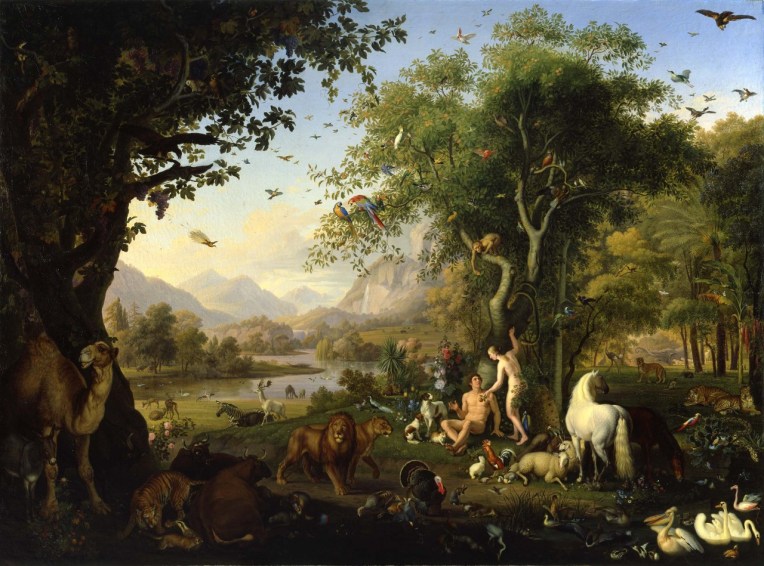
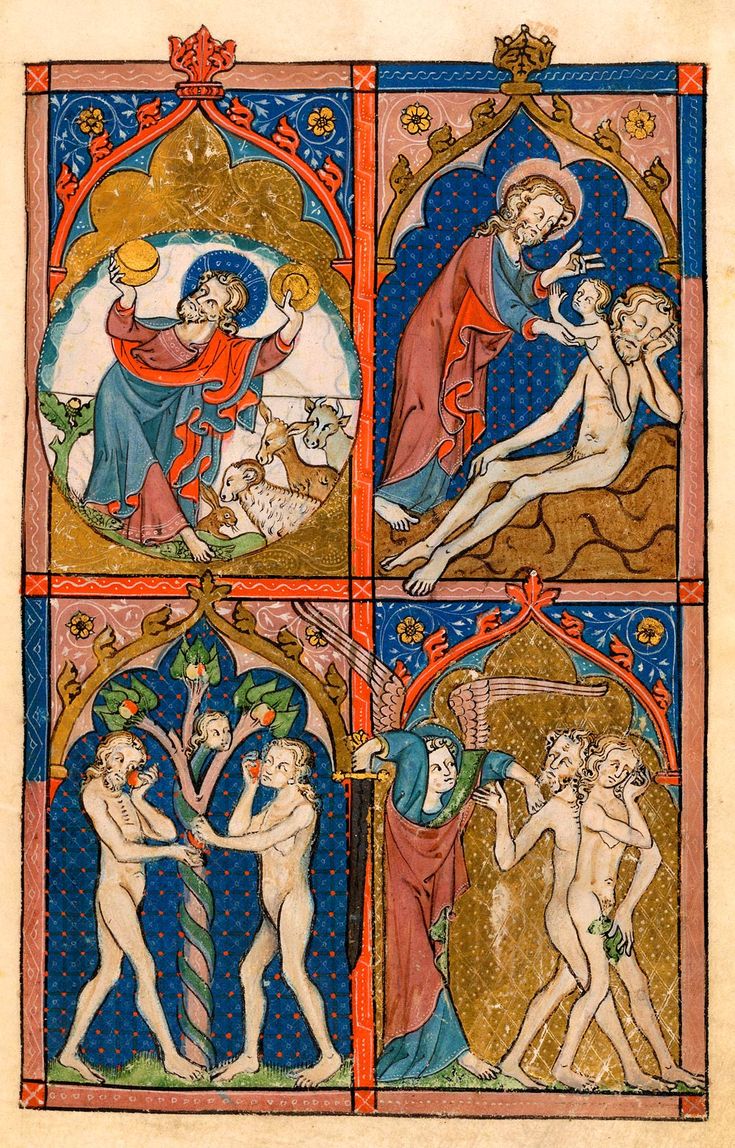
Of course, the Ten Commandments first appear in the Book of Exodus.  But God gives many commands before that point in the Bible.  In today’s First Reading—from the first two chapters of the Bible—we hear the “original first commandment” to His human children, who were created in His Image and likeness.  “Be fertile and multiply; fill the earth and subdue it.”  Note that there are two elements to this command, each shedding light on the other.

The first is God’s command to be fertile.  In honoring this command, man—male and female—reflect the abundance of God’s own love.  That’s why the Church teaches that deliberately thwarting the gift of fertility is a grave offense against God’s loving creation of man in His own Image.

The second is man’s subduing of the earth.  The following sentence clarifies the meaning of “subdue” through God’s command to man to “have dominion”.  “Dominion” is related to the Latin word for “Lord” (“Dominus”).  Mankind’s dominion over the earth is an on-going act of stewardship, caring for God’s creation with respect for God—not man—as the Creator.

Monday of the Fifth Week in Ordinary Time [Years I & II]


Please note:  two reflections are given below, each based on the First Reading and/or Responsorial Psalm of the day.  The Year I readings apply to years ending in an odd number (for example, 2023), while the Year II readings apply to years ending in an even number, such as 2024.  The Gospel Reading is the same in both years.

Monday of the Fifth Week in Ordinary Time [I]
Genesis 1:1-19  +  Mark 6:53-56

God saw how good it was.

In today’s First Reading the Church proclaims the first nineteen verses of the Bible.  The Church proclaims the First Reading at weekday Mass from Genesis for almost two weeks during Ordinary Time:  this week and next.  Today and tomorrow the First Readings present the narrative of God’s six days of creation, and His rest on the seventh.

Today’s Responsorial is a commentary on the First Reading.  To some degree, this psalm repeats what we hear in Genesis 1:1-19.  But the psalm also does more.  The Responsorial’s refrain points to this something “more”.

“May the Lord be glad in His works.”  Regarding each of the created works of the first, third and fourth days, “God saw how good it was.”  Within the narrative of God’s work of Creation, this sentence serves as a refrain, repeated over and over.

But today’s Responsorial refrain adds something more.  To God’s “seeing” the goodness of creation, the psalm refrain points to the Lord being glad in His works.  This “being glad” (the Latin Vulgate uses the verb ‘laetare’, meaning ‘to rejoice’) tells us something about God Himself, and likewise about us who are created in His Image and likeness.  Indeed, we can imagine that God’s “rest” on the seventh day was not some sort of “Sunday afternoon nap”, but a “day long” rejoicing in the works He worked by His divine Word.

Monday of the Fifth Week in Ordinary Time [II]
I Kings 8:1-7,9-13  +  Mark 6:53-56

Lord, go up to the place of your rest!

Today’s Responsorial Psalm comes from the first half of Psalm 132.  The refrain—“Lord, go up to the place of your rest!”—sounds like a strange thing to say to the Almighty.  Why does the Lord need us to tell Him where to go?  For that matter, why does the Lord need to go to a place of rest?  We need to reflect, then, on a broader point:  that is, what is the broader context for this refrain?

Within the setting of the Old Testament, we could imagine this refrain verse being spoken during the Exodus or one of the exiles from the Holy Land.  In these settings, the place of the Lord’s rest would refer to His final “resting place” on earth:  the Temple in Jerusalem.  It’s there that the priests enter to offer right worship to the Lord, according to the dictates of His Law.  Within this setting we can certainly interpret Psalm 132 according to the original meaning of the human author.

In a further sense, however, we listen to Psalm 132 in terms of its fulfillment in Christ.  The Lord is Jesus, who entered our fallen world for us men and our salvation.  This psalm, then, speaks to the Ascension of the Lord as the completion of the Incarnate Word’s earthly mission.  Our own share in this rest is what we await beyond death, although even now in the sanctuary of the Living God, in the right worship of the Eucharist we may share in the rest of His Real Presence.

OT 05-1

Saturday of the Fourth Week in Ordinary Time


Saturday of the Fourth Week in Ordinary Time
Mark 6:30-34

“Come away by yourselves to a deserted place and rest a while.”

In listening to the words of the Gospel passage and applying them to our lives, perhaps we have not listened as carefully—or as fully—as we should have.  In this passage Jesus says to us what Jesus says to His apostles:  “Come away by yourselves to a deserted place and rest a while.”  He invites them by His words to imitate Him:  He calls them to follow Him to a deserted place.

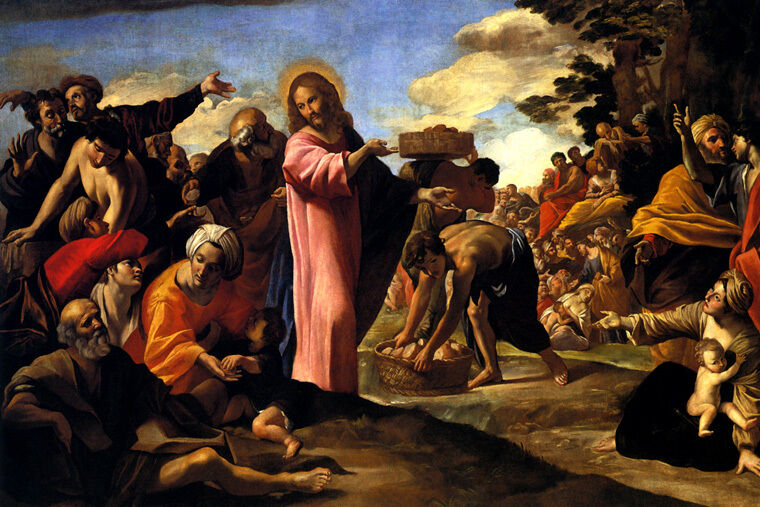
Jesus leads the apostles there, but when they arrive at the place, Jesus sees a vast crowd.  What does he do?  Jesus, the Good Shepherd, begins feeding the flock with his teaching.  Again Jesus is speaking to His apostles, but this time He invites them by His actions to imitate Him:  He calls them to follow Him into the midst of the crowd.

Jesus’ life in this passage teaches us the meaning of the words sometimes attributed to Saint Francis of Assisi:  “O Divine Master / grant that I may not so much seek to be consoled as to console / to be understood as to understand / to be loved as to love.  / For it is in giving that we receive….”

These words lead us back again to the scene of the Gospel.  Can we see that Jesus is teaching us that to be a faithful shepherd is to be a faithful steward, to offer everything to God, both our work and our rest?  Nothing, not a thing, is ours, not even the rest that we enjoy in the midst of a busy day, for even the rest we are granted prepares us only to serve both God and others more fully.

Friday of the Fourth Week in Ordinary Time


Friday of the Fourth Week in Ordinary Time
Mark 6:14-29

When his disciples heard about it, they came and took his body and laid it in a tomb.

Today’s Gospel passage presents a long flashback to the martyrdom of St. John the Baptist.  It’s notable that St. Mark the Evangelist, so concerned with brevity in his Gospel account, gives so much attention to this narrative.  St. John was obviously a figure of importance in relating the Good News to early Christians, even in regard to his death.

What distinguishes St. John the Baptist as a saint?  We might say that it’s his particular combination of humility and courage.  Sometimes humility (and also meekness) are seen in opposition to courage.  In this false light, humility is a form of weakness and submission, involving an inability to stand up for oneself.

In one sense, humility truly is a form of submission.  Humility truly means not seeing oneself as the center of the universe, or the king of the hill.  In turn, humility truly means recognizing one’s true place in life.  This truth tenders a capacity for strength that doesn’t consider earthly life as one’s purpose in life.  This truth leads to a courage willing to forfeit one’s earthly life for eternal life.  St. John the Baptist witnessed to Christ in his penitence, in his preaching, in his knowing that Jesus must increase and he must decrease, and in his acceptance of the gift of martyrdom.

The Presentation of the Lord


The Presentation of the Lord
Malachi 3:1-4  +  Hebrews 2:14-18  +  Luke 2:22-40 [or Lk 2:22-32]

“… for my eyes have seen your salvation, which you prepared in the sight of all the peoples ….”

The Jewish meaning of presenting one’s first-born son in the Temple is hinted at in today’s Gospel Reading.  Listen to St. Luke the Evangelist’s explanation in today’s Gospel:  “When the days were completed for their purification according to the law of Moses, Mary and Joseph took Jesus up to Jerusalem to present Him to the Lord, just as it is written in the law of the Lord… and to offer the sacrifice… in accordance with the dictate in the law of the Lord.” 

Three times in this single sentence, St. Luke refers to “the law” of the Jewish people.  There are three actions taking place:  first, the purification of mother and child before the Lord; second, the presentation of the first-born son to the Lord; and third, the sacrifice of animals to the Lord.

What are Joseph and Mary about as they take place in these Jewish rituals?  They know that this child is not the fruit of their marriage.  They know that this child was conceived through the Power of the Holy Spirit.  This child—they know—has not entered this world in order to overthrow legions of men, armed with sword and spear.  Joseph and Mary know that this child was sent by God the Father to overthrow the legions of the devil, armed with pride, envy, lies and malice.

The Law is fulfilled through Jesus Christ.  The Law that brought some measure of earthly peace to Jews who followed its prescriptions is fulfilled in Jesus Christ for you and all mankind.  Jesus Christ was conceived by the Virgin Mary through the Power of the Holy Spirit, was presented by Joseph and Mary in the Temple, was crucified under Pontius Pilate, suffered, died and was buried, and on the third day rose again from the dead:  not to offer you earthly peace, but to offer you life for eternity with the Father in Heaven.

+     +     +

Joseph and Mary presenting Jesus in the Temple seems like a simple act of worship, but it foreshadows the end of Jesus’ earthly life.  Joseph and Mary are handing over the child in their care to God the Father.  Their presentation is an act of honesty and humility:  they’re admitting that this child is God the Father’s from the beginning, and they’re admitting that for them to be entrusted with this child is an honor they don’t deserve.

That’s where we can see a link between what Joseph and Mary were doing on the day they presented Jesus, and what human parents do on the day they bring their child to the baptismal font.  Each and every child is not only a gift from God, but also belongs to God, from the day of his or her conception, all the way to the day of his or her death, unto the eternal life that God wills for each of His children.

So it was with Jesus.  Jesus did not belong to Joseph and Mary.  Jesus was not entrusted to Joseph and Mary in order for Joseph and Mary to be fulfilled.  Jesus was entrusted to Joseph and Mary that they might prepare Him to fulfill the Law some thirty-three years later on Good Friday.  Joseph’s and Mary’s vocations were to prepare Jesus’ earthly path to Calvary.  We can think here of the Old Testament story of Abraham presenting Isaac, his first-born, for sacrifice on Mount Moriah.

St. Luke the Evangelist in today’s Gospel passage foreshadows for us the share that Mary will have in the Passion of the Christ.  Once Mary and Joseph have presented Jesus in the Temple, Simeon explains to Mary that “this child is destined… to be a sign of contradiction—and you yourself a sword will pierce—so that the thoughts of many hearts may be revealed.”

+     +     +

If you truly believe in the consolation that Jesus offers you, it’s not morbid to imagine yourself at the end of your life, lying on your deathbed.  You know, there’s an old saying that counsels:  “Always begin with your end in mind.”  For us as Christians, our ultimate end is life with the Father in Heaven.  But how we prepare for our earthly end—or as we say in the “Hail Mary”, “the hour of our death”—directs each of our earthly days, either towards or away from our ultimate end.  So we benefit greatly if we always begin each morning with our end in mind.

During this coming week, consider all the opportunities you have to let go of pre-conceived ideas about what earthly life is meant to be about.  Jesus is not the completion of our lives on earth:  He completes our life only in Heaven.  Jesus is not the answer to all our questions.  It’s not our questions that Jesus came into this world to answer.  Jesus came into this world to answer for our sins.  Jesus didn’t come into this world to fulfill our dreams.  He came into this world to teach us how to dream about something worthy of dreams.  Jesus teaches you what life is meant for in helping you prepare to say in your old age, and on the day of your death:  “Now, Master, you may let your servant go in peace, according to your Word”.

Presentation - Philippe de Champaigne

Wednesday of the Fourth Week in Ordinary Time

Wednesday of the Fourth Week in Ordinary Time
Mark 6:1-6

He was amazed at their lack of faith.

Today’s Gospel passage, from the sixth chapter of Mark, doesn’t really end on a high note.   In His native place, Jesus was not able to perform any mighty deed, apart from curing a few sick people.  He was amazed at their lack of faith.

Why did they lack faith?  Why do we lack faith?  Why do we focus on the less important things in life:  the less important types of freedom?  St. Mark begins his Gospel account by answering this question.  The first recorded words of Jesus are proclaimed immediately after He spends forty days in the desert, tempted by Satan.  He emerges from the desert, and the first words He speaks frame the entire Gospel.  Jesus proclaims, “This is the time of fulfillment.  The kingdom of God is at hand.  Repent, and believe in the Gospel.” 

Repent, and believe in the Gospel.  We might say that these two demands of Jesus sum up the entire Christian faith.  They lead us to faith.  They lead to true freedom.  And they require us to exercise our freedom in its deepest sense:  that is, in our relationship with God.

True repentance means to turn oneself around 180°:  to turn oneself away from sin, and towards God, not simply towards ourselves, and what we think we want.  This is the highest type of freedom:  to be able to do things for others, or in other words, to give our very self to another (another human person, or God).

The 5th Sunday in Ordinary Time [A]


The 5th Sunday in Ordinary Time [A]
Isaiah 58:7-10  +  1 Corinthians 2:1-5  +  Matthew 5:13-16
Catechism Link: CCC 782
February 5, 2023

… your light shall break forth like the dawn ….

“God is light”, we hear in Sacred Scripture [1 John 1:5].  But in today’s Gospel Reading, Jesus declares to His disciples:  “You are the light of the world.”  To help you live out this calling faithfully, and to carry out the “good deeds” that are the heart of this calling, today’s First and Second Readings prepare you for the Gospel Reading.

The First Reading, from the Old Testament prophet Isaiah, is very practical.  It’s down to earth.  The prophet Isaiah is calling God’s People to carry out the sort of actions that in the Catholic Faith are called “the corporal works of mercy”:  to feed the hungry, give drink to the thirsty, clothe the naked, shelter the homeless, visit the sick, visit the imprisoned, and bury the dead.

All seven of these corporal works of mercy—as well as the seven spiritual works of mercy—are very practical ways to live out your Catholic Faith.  Each of us carries out these works of mercy because God commands us to do so.  But of course, God only ever commands what is best for us.  When we follow the Lord’s commands, we grow in the likeness of God.

It follows that each of us carries out these works of mercy in order to love our God and our neighbor.  So God’s command and the desire to love—which are really two sides of the same coin—make for two sound motives for carrying out these works of mercy.

Yet the prophet Isaiah gives a third motive.  He prophesies to those who would carry them out:  “if you bestow your bread on the hungry… then light shall rise for you in the darkness, and the gloom shall become for you like midday.”  The Old Testament promise was that God, who is light, would shine on those who carry out good deeds.

But the Gospel of Jesus promises something even greater.  In effect, the Gospel provides a fourth motive.  The Gospel promises that those who live the Gospel become light, and that God shines through them.

Today’s Gospel Reading, along with the following Gospel Readings that we’ll hear on the upcoming Sundays before Ash Wednesday, are taken from the Sermon on the Mount.  In St. Matthew’s account of the Gospel, this lengthy sermon (taking up chapters 5-7 of Matthew) might be considered Jesus’ “inaugural address”.

Immediately after the Beatitudes (which we heard Jesus proclaim last Sunday) comes today’s Gospel Reading, in which Jesus calls His followers “salt” and “light”.  Jesus is calling you to be “the light of the world.”  But what does that mean in practical terms?

Jesus’ last sentence sheds light on what He means.  It’s basically a command, but it has three parts.  Jesus commands you when He declares:  “your light must shine before others, / [so] that they may see your good deeds / and [so that they may] glorify your heavenly Father.”  But why would others glorify your Father if it’s your good deeds that they see?

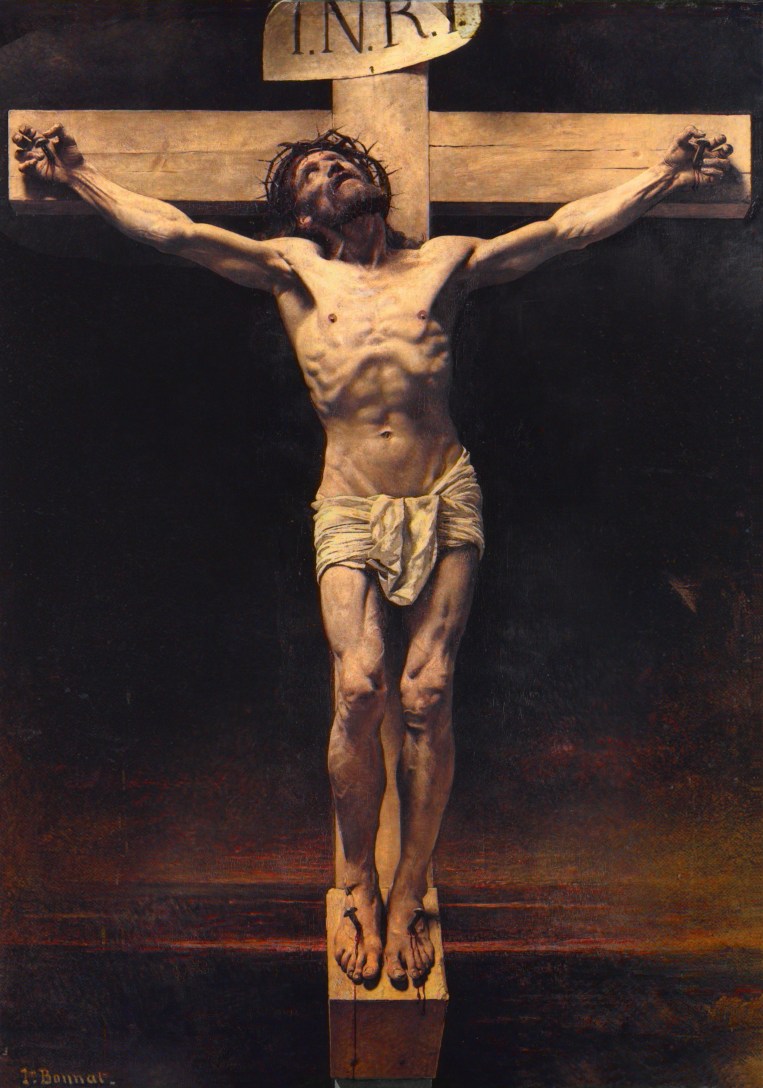
St. Paul in the Second Reading, in preaching to the Corinthians, offers us the skeleton key that unlocks the meaning of Jesus’ words.  St. Paul says, “I came to you in weakness and fear and much trembling … so that your faith might rest not on human wisdom, but on the power of God.”  What is this “power of God”?  St. Paul answers this question for us, also.  This power is “Jesus Christ, and Him crucified”.  Jesus Christ, the Son of God Himself, destroyed the power of death by His own suffering and death.

When God asks us to do something for Him, our reflex often is to spell out for God all the reasons why we cannot help Him with His request.  Generally at the top of the list is our explanation to God that we “just can’t do that”.  Pastors often hear this when they ask parishioners to take up certain works of stewardship.  Christians believe that certain good works are simply not within their power.

But maybe that’s God’s point.  Maybe God wants to use a weak instrument such as yourself so that His power shines more clearly.  Maybe when you imitate Jesus Christ crucified by allowing your weakness to be the vessel of God’s power, people will see your good deeds and glorify the Father who loves you enough to ask you to serve Him through your weakness.

Tuesday of the Fourth Week in Ordinary Time


Tuesday of the Fourth Week in Ordinary Time
Mark 5:21-43

“Do not be afraid; just have faith.”

In today’s Gospel passage are two people who see how God wants to be in their lives in time of need.  You yourself, no doubt, field petitions from those whom you serve in your vocation.  So many people turn to Christ in need.  If it weren’t for petitionary prayer, the prayer lives of many Christians would never get off the ground!  But it’s a start.  God is content to listen to all the prayers of petition that His children wish to make.

Consider the woman in the Gospel, who had suffered for so many years.  She interrupts Christ in the midst of His trying to help someone else.  We should make that woman’s faith our own:  not simply her faith in Christ’s power, but also her faith in His patience and compassion.  There is no true need in our lives that we should not offer to God.

Is every petition answered as we wish, as are the petitions of this woman and the official?  Some Christians stop offering their petitions to God—or even stop believing in God—when He doesn’t provide the response they want.  Growth in prayer includes the experience of accepting God each time He says “No” to us, and learning through those experiences of “No” to trust His providential Will more deeply.

OT 04-2

Monday of the Fourth Week in Ordinary Time


Monday of the Fourth Week in Ordinary Time
Mark 5:1-20

… they began to beg [Jesus] to leave their district.

Demonic possession is an extremely serious matter.  While some today dismiss it, suggesting that all reported cases of possession are in fact psychological disorders, the Church takes today’s Gospel passage at its word.

One striking point in this narrative is the reaction of people to the swineherds’ report:  “they began to beg [Jesus] to leave their district.”  Why do the people react this way?  One might expect the people to express gratitude to Jesus, and invite Him to stay as their protector.

Perhaps the people were in shock, never before imagining that demons might dwell among them.  However, demonic possession in the Holy Land was not uncommon in Jesus’ day.  Perhaps the reaction of the people reflected what today is described by the acronym “NIMBY”:  “Not In My Back Yard”.  When terrible violence erupts in a metropolis, many people on hearing the news shake their heads, say a prayer for those affected, and then turn the channel to SportsCenter.

But if such violence erupts in their own hamlet, they express disbelief at how such violence could happen “here”.  Sin, violence and death are here, there and everywhere.  While each of us needs to practice prudence to deter them, we should have no illusions of escaping them.  In the midst of such illusions, Christ has no place.