
The Fifth Sunday of Lent [A]
Ezekiel 37:12-14 + Romans 8:8-11 + John 11:1-45
St. Anthony’s Catholic Church, Garden Plain, KS
March 22, 2026
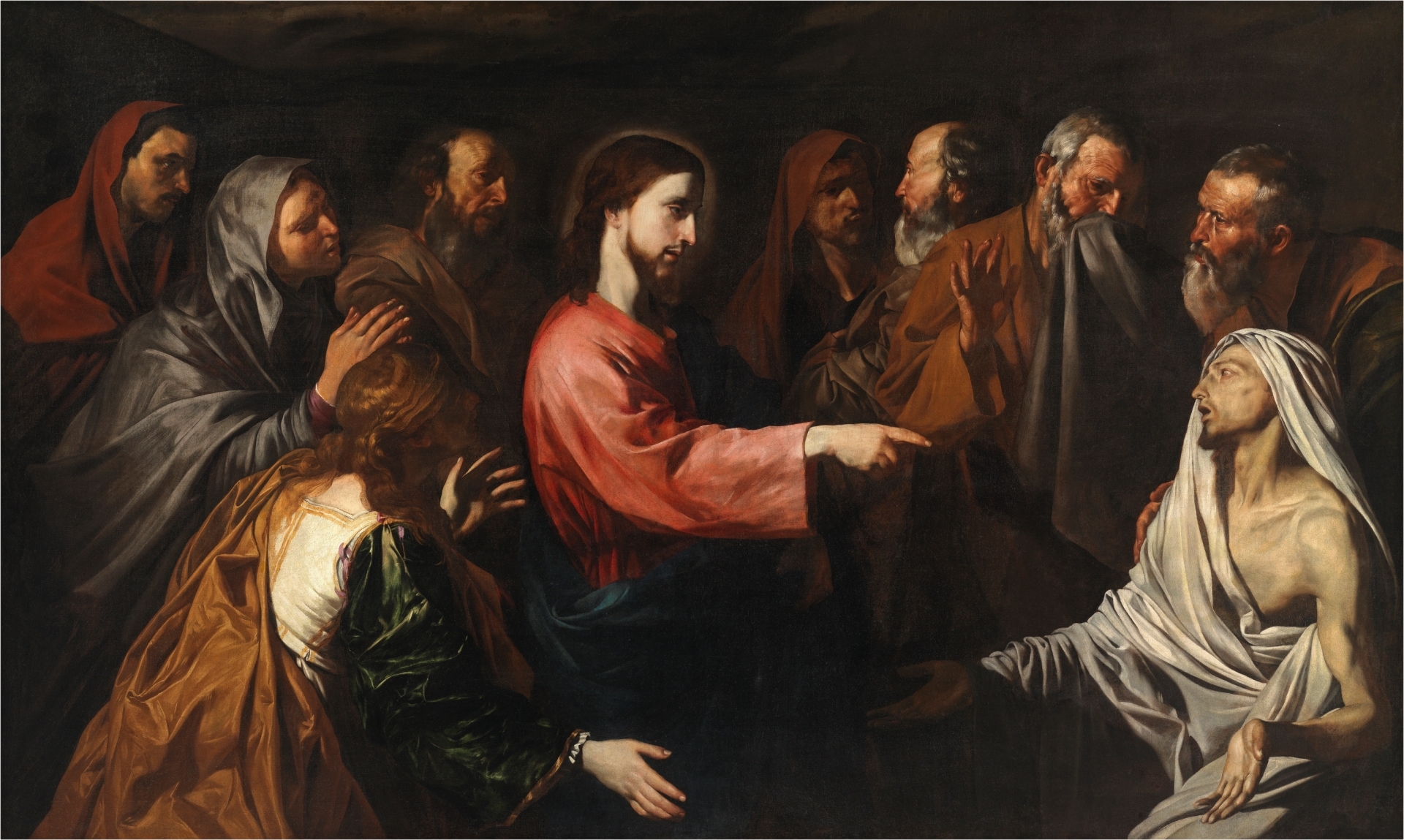
There’s an interesting word in the last sentence of today’s Gospel passage. Listen to this sentence again: “Now many of the Jews who had come to Mary and seen what he had done began to believe in him.” The word in this sentence that’s especially interesting is “began”: they “began to believe in him.”
There are many different English translations of this verse. The translation used at Holy Mass is the only translation I could find that uses the word “began” in this sentence. Most of the other translations simply say that they “believed in him.”
You might not think that that’s a significant difference. But in God’s Word, small things can point to large truths. In this case, the translation we heard a few moments ago highlights the truth that believing in Jesus is a journey.
Having faith in Jesus is a journey with a beginning, middle, and end. Along the way there are many potholes, speedbumps, detours, and forks in the road, with no Google Maps to guide you. Faith grows and diminishes. At times it’s weak and at others, it’s strong. Some on the journey don’t make it to the end.
Consider some of the people Jesus interacts with in today’s Gospel passage. In terms of faith, they range across a spectrum: each represents yourself at a different point in your spiritual life. In each case in this Gospel passage, there’s confusion in what people say about Jesus and Lazarus, even people who might be expected to have a lot of faith. There’s even some confusion because of what Jesus does and says. All of these show us that even people with faith who are following Jesus face challenges along the way, including both from their own lack of faith at times, as well as from the challenges that Jesus throws at them.
+ + +
Consider first some people at the short end of the spectrum. These were people who did not know much about Jesus. Towards the end of the passage, after Jesus weeps over the death of Lazarus, some of the Jews ask, “Could not the one who opened the eyes of the blind man have done something so that this man would not have died?” They’re questioning what Jesus did; or to be more exact, what Jesus did not do. Their question is reasonable, and reflects your own life as a disciple. It’s important that you ask questions about your faith—about what God is or is not doing in your life—even if it seems like you’re challenging God and His ways (after all, God has big shoulders: He can handle your questions and your doubts).
So now shift a bit down the spectrum of faith-bearing, and consider some people who certainly did know something about Jesus. Toward the start of the Gospel passage, Jesus’ own disciples are confused. Jesus speaks about Lazarus’ death, yet the disciples think that Jesus is speaking about ordinary sleep.
This sort of confusion is common in St. John’s account of the Gospel. There’s often in John confusion—on the one hand—about the spiritual realities that Jesus speaks about, and—on the other hand—the earthly understanding that others ascribe to Jesus’ words. The most famous example is likely the conversation that Jesus has with Nicodemus in John 3. Jesus is wanting to teach Nicodemus about being “born again”, but Nicodemus understands Jesus in earthly terms.
The confusion that’s illustrated by Nicodemus and—in today’s Gospel passage—by Jesus’ own disciples, reflects something in your own life as a disciple. At times you confuse the spiritual with the earthly. At times you confuse the importance of the spiritual with the importance of what’s earthly. Granted, if you have a family, there’s a true need to be concerned with earthly affairs: if you didn’t, you would fail to honor the sacred vows you made at the altar when you were married. Nonetheless, each of us, when we’re honest with ourselves, have to admit that sometimes we give earthly matters more attention than they’re due. Sometimes this is because we confuse earthly “wants” with “needs”. Sometimes this is because it’s easy to rest on our laurels, and enjoy the comforts of earthly life, setting aside the difficult work of following Jesus in faith.
+ + +
Then again, to be fair—both to yourself as a disciple, and to those in today’s Gospel passage—it is true that Jesus sometimes says and does things that don’t at first seem to make sense. For example, in today’s Gospel passage, when Jesus hears that Lazarus is ill, instead of rushing to be with Mary, Martha, and Lazarus, Jesus remains for two days in the place where He was: in other words, at a distance from the suffering of those He loved. Later, Jesus declares to His disciples, “Lazarus has died. And I am glad for you that I was not there.” It would be hard to blame the disciples if they scratched their heads in confusion. Sometimes we ourselves wonder why God does—or does not—act in our lives as we want, or as we think He ought.
Still, we might argue that these disciples were not among His closest friends, like Martha and Mary. Here we shift further on the spectrum of those who bear faith. In this passage, Jesus speaks at greater length with Martha and Mary, the sisters of Lazarus. The evangelist tells us that Jesus loved Mary, Martha, and Lazarus. After the death of Lazarus, Martha and Mary were heartbroken. However, they had faith in Jesus, just as they trusted in Jesus’ love for them and their brother.
Martha and Mary in their interactions with Jesus in this passage reveal something to us about our own spiritual lives at deeper levels of both greater closeness to Jesus, and greater suffering because of loving Him, and having greater expectations of Him.
It’s understandable that Martha and Mary, at separate points in today’s Gospel passage, say exactly the same words to Jesus: “Lord, if you had been here, my brother would not have died.” Still, their words express a lack of faith and understanding. Of course it is in fact true that if the Lord Jesus had been there, their brother would not have died. Yet Martha and Mary, like yourself at times in your own spiritual life, do not see the Lord’s larger purpose. They do not understand what Jesus meant when He said: Lazarus’ “illness is not to end in death, but is for the glory of God, that the Son of God may be glorified through it.”
We might wonder about Jesus saying that Lazarus’ illness was not to end in death, because Lazarus’ illness did result in death. It just didn’t end there. It ended with something more powerful than death. Jesus brought Lazarus from death to life on earth again, not just for Lazarus’ sake, but also for the sake of those around Lazarus, so that they might grow in faith. Jesus worked this miracle to help them, and yourself, to believe that the Lord’s power is more powerful than any suffering in your life. If you remain steadfast to following the Lord in faith, He will lead you to an end that is eternal and without suffering of any kind.
 Reflections on the Sacred Liturgy