
The Sixth Sunday in Ordinary Time [A]
Sirach 15:15-20 + 1 Corinthians 2:6-10 + Matthew 5:17-37 [or Matthew 5:20-22a,27-28,33-34a,37]
St. Anthony’s Catholic Church, Garden Plain, KS
February 15, 2026
Three years ago, I made a pilgrimage to Portugal, Spain, and France. Both bookends of the pilgrimage were in honor of Our Blessed Mother, starting at Fatima in Portugal, and ending two weeks later at Lourdes in France. In between, the bulk of the pilgrimage was spent in Spain.
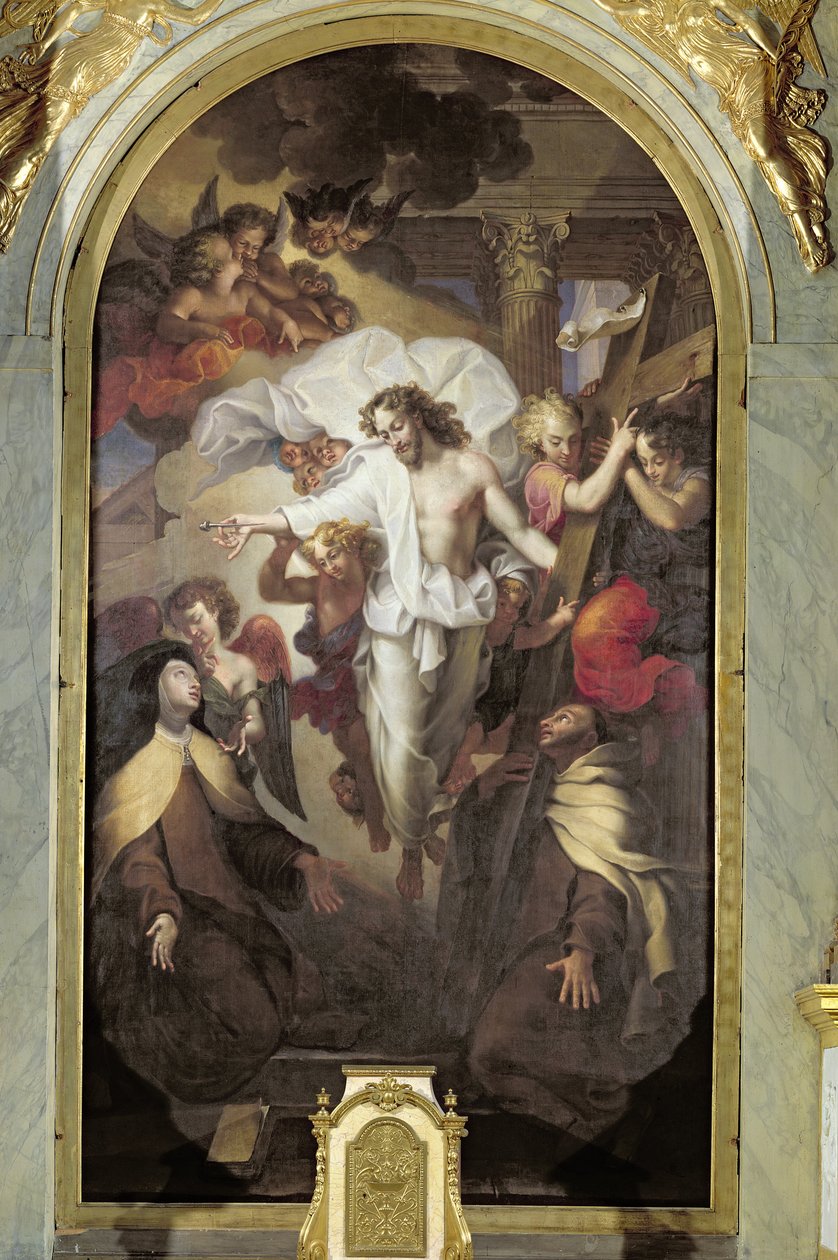
I visited many different places in Spain connected to the lives of two 16th century saints. St. Teresa of Jesus and St. John of the Cross lived at a time of great chaos. Part of this chaos was caused by corruption within the Catholic Church.
St. Teresa of Jesus decided to confront the corruption within the Church differently than the Protestant leaders whose efforts started during the 16th century. Instead of leading Christians out of the Church, she decided to remain within the Church, and to change the Church from within. St. Teresa belonged to the Carmelite religious order, which had grown lax since their foundation in the 12th century. So she started a new branch of the Carmelites called the Discalced Carmelites. (The word “discalced” means “barefoot”, because the Discalced Carmelites, as part of their vow of poverty, went without shoes.)
+ + +
Now, why do some religious orders like the Carmelites grow lax and weak over time, or even corrupt? It’s much the same reason that a relationship grows weak. You cannot take relationships for granted. You have to dedicate time and effort to relationships. Husbands need to take their wives out on “date nights”. Parents and grandparents “make memories” with their children and grandchildren.
Something similar is also true of the spiritual life. This is part of the battle that St. Teresa of Jesus faced in her reform of the Carmelite order. You cannot take your soul’s health for granted. Unless you tend to it, like a gardener or a farmer, weeds will grow, disease will set in, and death will follow. If not tended to in this world, that death will last forever in the next. What’s true of an individual soul is just as true for a religious community of monks or nuns: if growth is not fostered, the spiritual life becomes lax, and decay sets in.
That brings us to the conflict in today’s Gospel passage. This conflict reflects the conflict that St. Teresa of Jesus and St. John of the Cross faced in 16th century Spain. This conflict reflects the struggle that’s present in every Christian’s spiritual life, including your own.
+ + +
Today’s Gospel passage is from the middle of Matthew 5. Jesus’ Sermon on the Mount is found in Chapters 5-7 of Matthew. Today is the third Sunday in a row on which the Gospel Reading comes from Jesus’ Sermon on the Mount. Since Lent starts this week, we won’t hear the rest of the Sermon on the Mount over the next few Sundays. However, at home you can place a bookmark in your bible at the start of Matthew 5. Slowly read and meditate upon Matthew Chapters 5, 6 & 7 over the weeks from now until Easter Sunday.
Now if tackling the entire Sermon on the Mount seems daunting, just take Matthew 5. Even though Matthew 5 is just one-third of the Sermon on the Mount, the chapter is rather self-contained. Matthew 5 starts with the Beatitudes, and ends with Jesus saying, “So be perfect, as your heavenly Father is perfect” [Mt 5:48]. So at the start of Matthew 5, when He starts the Sermon on the Mount, the Beatitudes are the roadmap that Jesus hands to us, so that we can follow Him on a spiritual journey. At the end of Matthew 5, Jesus reveals the goal of our spiritual journey: to “be perfect, as your heavenly Father is perfect”.
In between, Jesus describes several conflicts that we’re likely to face on this spiritual journey: road bumps, you might say, on the path to becoming perfect as our heavenly Father is perfect. The spiritual conflicts that Jesus describes in Matthew 5 are similar to the conflicts that St. Teresa of Jesus and St. John of the Cross faced in their efforts to reform the Carmelite order. Consider what happened to St. John of the Cross in the year 1577.
John was kidnapped by members of the older Carmlite order. They imprisoned him for eight months in a cell that measured ten feet by six feet, and they lashed him once a week. In the midst of this, he was also bribed. The bribes were unsuccessful, John eventually escaped, and the reform efforts of St. John and St. Teresa continued successfully.
+ + +
So consider the conflict in today’s Gospel passage.
Jesus does not describe a conflict between the Jewish Law and His Gospel. In fact, He declares, “Do not think that I have come to abolish the law or the prophets. I have come not to abolish but to fulfill.”
The conflict is between—on the one hand—the righteousness of the scribes and the Pharisees, and—on the other hand—the righteousness that Jesus offers.
The righteousness of the scribes and the Pharisees was limited to the literal meaning of the 613 laws of the Jewish Torah. Jesus demanded more. Jesus demands that if you’re going to follow Him, you have to go to the heart of God’s laws. Ask where evil starts in the human heart. Don’t just consider where it ends. Every man who murders a man commits the murder twice: first in his heart, by way of desire, and then a second time in fact. The Scribes and Pharisees thought they could be righteous if they only murdered a man once, as long as it was only in their heart, because in their reading of God’s Law, God did not make demands of their hearts.
Jesus is making a demand of you: “unless your righteousness surpasses that of the scribes and Pharisees, you will not enter the kingdom of heaven.” As you start the Season of Lent this week, allow God’s demands to reach into your heart, and touch every desire that you hold there. Offer to Christ every desire in your heart that’s contrary to His love, and ask Him in exchange to give you the Love that can re-shape and re-form your heart to be like the Sacred Heart of Jesus.
 Reflections on the Sacred Liturgy