The Third Sunday in Ordinary Time [A]
Isaiah 8:23-9:3 + 1 Corinthians 1:10-13,17 + Matthew 4:12-23
St. Anthony’s Catholic Church, Garden Plain, KS
January 25, 2026
This Sunday’s Gospel Reading is a good reminder to pray often for one member of our parish who—God willing—will be ordained to the priesthood at the end of May. Deacon Peter Bergkamp is nearing the finish line of the long marathon called “seminary”. Of course, in the spiritual life, where one spiritual marathon ends, another begins.
It’s not an easy road to enter the seminary. Before being admitted, the young man has to take intelligence tests, a psychological examination, and a physical. But the most grueling requirement is saved for last: the candidate has to play a round of golf with the Bishop, and shoot under 80.
There are many things about a young man entering the seminary that are misunderstood. One important point that many people are not clear on is why exactly a young man enters the seminary. He does not enter the seminary because he’s decided to be a priest. A young man enters the seminary to find out if he’s being called to the priesthood.
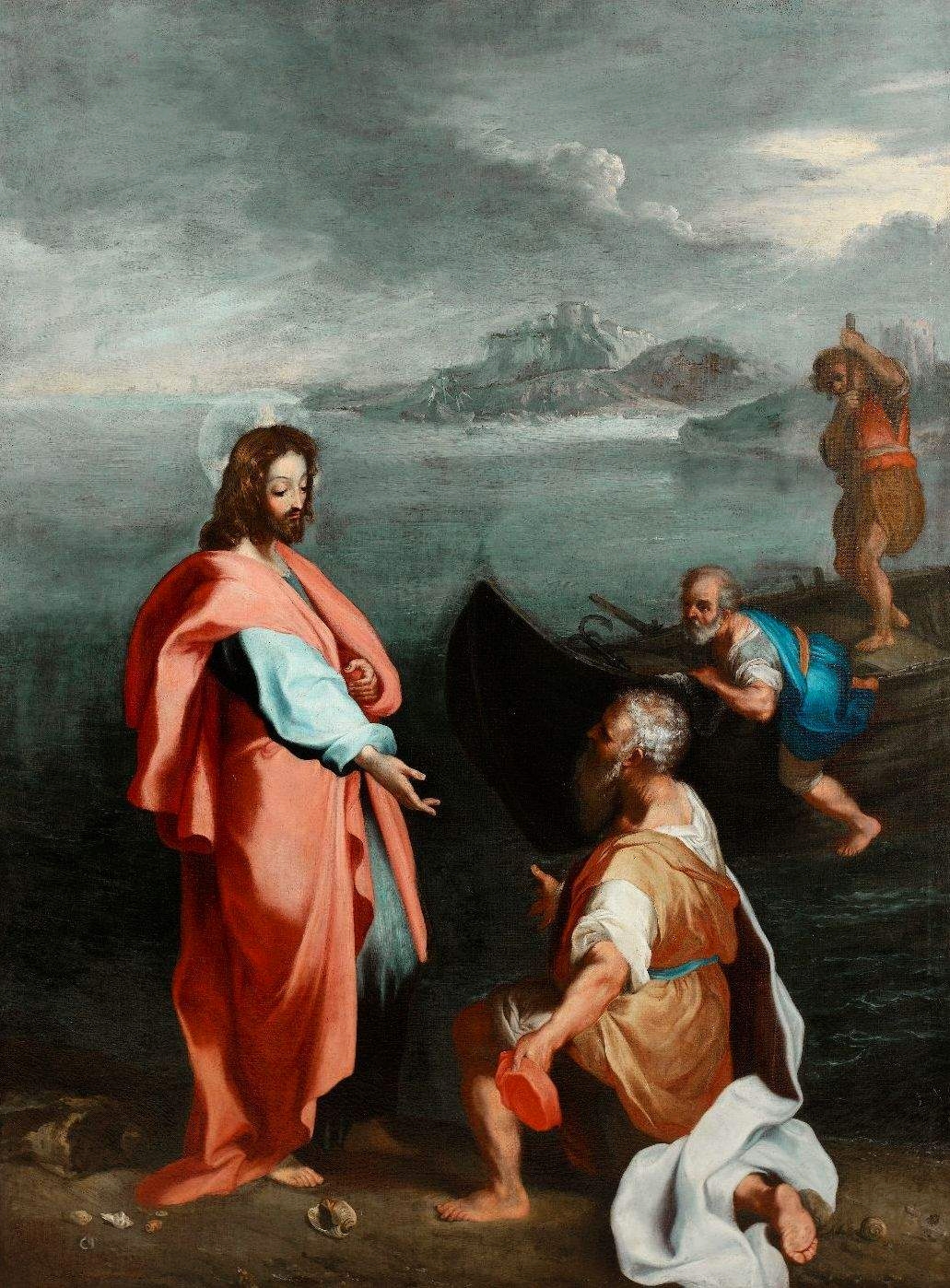
To put this differently: the Lord calls out to every young man, “Come after me….” What differs from one young man to another is the phrase that follows “Come after me….” To some young men, the Lord says, “Come after me, and I will give you the grace needed to be a strong and virtuous husband and father.” To other young men, Jesus says those words by which we hear him calling Simon and Andrew: “Come after me, and I will make you fishers of men.” Through a seminarian’s prayers while in the seminary, the Lord clarifies just which call the Lord has made to him.
“Fishers of men”. This is a metaphor, of course: one that Simon and Andrew readily understood, since their livelihood was being fishermen. Regardless of the kind of life which they had chosen for themselves, Jesus called them to a very different way of life. They had no idea what to expect, and if Jesus had tried to explain what following Him would mean, they still would have been largely in the dark. That’s why following Jesus demands the virtue of faith. Following Jesus is not for those who insist on controlling everything, or knowing exactly what’s coming down the pike.
The fact is that Jesus can call men from any sort of livelihood, at any age in their lives, to serve His Church as priests. For the last four years of my formation in the seminary, Bishop Gerber sent me and another young man named Sam Pinkerton to Mundelein Seminary in Chicago, which at the time was the largest seminary in the United States. It served forty-five dioceses throughout the world, educating men from the countries of Uganda, Zaire, Colombia, Poland, China, Vietnam in addition to U.S. dioceses from Paterson, New Jersey to El Paso, Texas, and of course a large contingent of native Chicagoans, who are a breed all their own.
Among the 150+ men with whom I studied at Mundelein, I can guarantee you that no two of us had traveled along the same path to get to the seminary. I can also guarantee that the Lord did not use exactly the same words to call any of us, to help us understand the need we had to enter the seminary.
Before entering the seminary, I had spent only one year at Kansas State. Many young men enter the seminary the summer after graduating from high school. But some men enter the seminary after graduating from college and starting careers. At the seminary I attended in Chicago, one seminarian had graduated from law school and practiced law before entering the seminary. Another seminarian had finished medical school and practiced medicine before entering the seminary. No two young men have the same path to the priesthood.
It’s also important to realize that God calls young men of many different temperaments and with many different outlooks on life to enter the seminary. Some years ago there was a book published that illustrated this truth. It offers portraits of about a dozen different priests, one of whom—Father Ned Blick—is a priest of our diocese.
Father Ned’s words in this book ring very true. He states:
“Since I have been ordained, I have been surprised, no, astonished, by the effect on people of things that require such a small effort on my part. … I had no idea such small things would be so much appreciated. Why that happens to priests is interesting. It may be because we confront the spiritual dimensions of people, while most other professions do not. People have deep spiritual needs. When they see them met, however inadequately, they respond.”
To me the key of this quote is Father Ned speaking about the spiritual nature of man: a dimension of human nature that’s often ignored. Again, Father Ned states: “we confront the spiritual dimensions of people, while most other professions do not. People have deep spiritual needs. When they see them met, however inadequately, they respond.”
This spiritual side to human nature is where the great gift of the priesthood rests. We need to pray for vocations to the priesthood. But we also need to encourage young men to offer themselves to the spiritual nature of man that gives our lives their final and ultimate meaning.
 Reflections on the Sacred Liturgy