The Second Sunday in Ordinary Time [A]
Isaiah 49:3,5-6 + 1 Corinthians 1:1-3 + John 1:29-34
St. Anthony’s Catholic Church, Garden Plain, KS
January 18, 2026
In Abilene, Kansas, across the street from the Eisenhower presidential library, and the resting places of Dwight and Mamie Eisenhower, is a Catholic church by the name of St. Andrew’s. In that church, on December 17, 1967, I received the Sacrament of Baptism. Hopefully you, also, know the date of your baptism, and honor that day each year with prayers of thanksgiving to God.
That’s important to do because on the day you were baptized, God made promises to you, and you made promises to God (or your parents did on your behalf). These two-way promises founded a relationship where God is your Lord, and you are His servant. Of course, whenever someone serves the Lord, he does something specific for him. So we hear several examples of this servant—Lord relationship in today’s Scriptures. Each is a model for us, and the last is also something more.
+ + +
First is the Old Testament prophet Isaiah. What specific job did God call Isaiah to do for Him? God called Isaiah to serve Him as His prophet. We hear this in the First Reading. “The Lord said to [Isaiah]: ‘You are my servant. … I will make you a light to the nations, that my salvation may reach to the ends of the earth.’” Among all the Old Testament prophets, Isaiah had a unique place. His call was to proclaim the coming of a Messiah who offers a loving mercy that knows no bounds and that would “reach to the ends of the earth”, meaning even to the Gentiles. Although none of us has been called to be a prophet like Isaiah, his vocation mirrors our own vocation as a baptized Christian: namely, to love others with a mercy that knows no bounds.
+ + +
Second is the New Testament apostle Paul. What specific job did God call Paul to do for Him? God called Saul (renaming him Paul) to serve Him as His apostle. Today’s Second Reading is simply the first three verses of a letter written by Saint Paul: it’s not the longest of his letters, but it’s one of the more profound. Paul’s self-introduction focuses upon his calling as an “apostle”, which literally means “one who is sent”. He describes himself this way: “Paul, called to be an apostle of Christ Jesus by the will of God”.
Paul was sent “by the will of God” to spread the Messiah’s Gospel to the Gentiles, the very people that Isaiah had served by preparing them for the Messiah. Although none of us has been called to be an apostle like Paul, his vocation mirrors our own vocation as a baptized Christian: namely, serving as “one who is sent”, or in other words, serving as one who takes his cues from God.
+ + +
Now that Messiah whose coming Isaiah foretold, and whom Paul was sent forth to preach about, is of course Jesus. In fact, Jesus—like Isaiah and Paul—was called by God to serve. Yet Jesus is not only an example for us, as are Isaiah and Paul. Jesus’ call is unique. He’s an example, and something more.
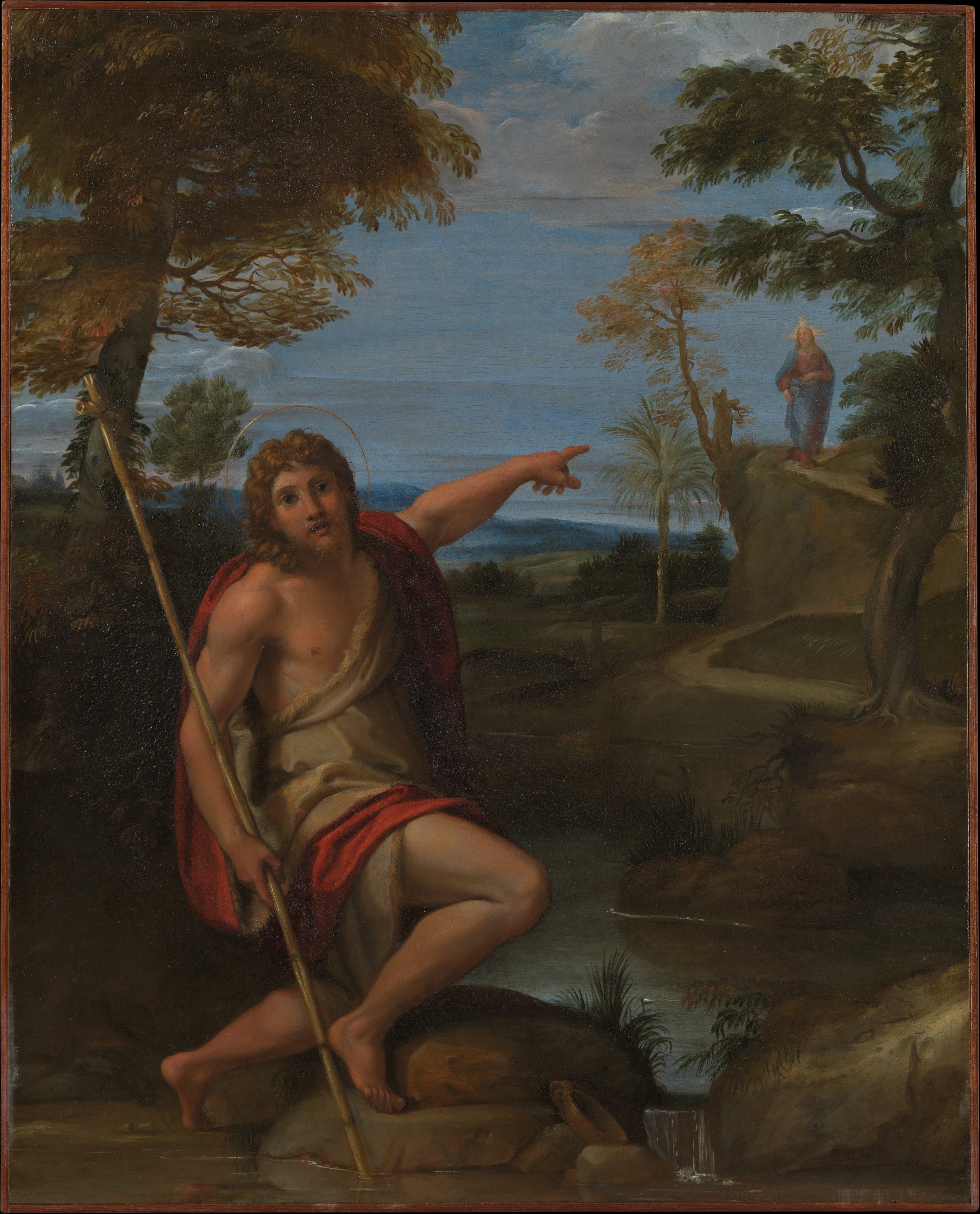
Jesus was called by God the Father to serve as the Savior of mankind. We hear about this call within today’s Gospel Reading. This call connects to today’s Responsorial Psalm, and especially its refrain. That refrain can help you rest in God’s will for your daily life, instead of wrestling against it.
“Here am I, Lord; I come to do your will.” That’s a good verse to memorize, and to pray often. You can recite it slowly as your make a Holy Hour before the Blessed Sacrament. You can recite it slowly as you drive to work. You can recite it (very) slowly at 2:00 am on Saturday morning as you wait for your teenager to get home.
“Here am I, Lord; I come to do your will.” Although the word “I” appears twice in this single verse, it’s not the focus of the verse. The focus is God’s Providential Will and an individual’s submission to it: that is, an individual’s willingness to be God’s servant. Unfortunately, many of us when we pray actually speak to God as if He is our servant: in effect saying, “Here I am, Lord; now come and do my will.”
+ + +
Throughout the first several weeks of Ordinary Time, our Scriptures at Holy Mass help us set our own lives within the grander scheme of things. That grander scheme is called “Divine Providence”. One way to describe Divine Providence is to say that it’s what God chooses to do, when He does it, and why He does it.
Although it might sound odd, one of the chief ways that Christians experience God’s Providential Will is unanswered prayers. In fact, these are often God’s gifts to us, whether we acknowledge them as such or not. Unfortunately, some Christians stop following Jesus because their prayers aren’t answered as they want. But silence on God’s part can be His way of demanding patience and perseverance. This silence clarifies what’s important to God for the unfolding of His Providential Will.
Nonetheless, whether in accepting God’s silence for the gift that it is, or in moving forward to carry out His Will, it’s important to recognize a distinction. We are not only to imitate Jesus in His example of doing His Father’s Will. As Christians, we are meant for something even greater: we are meant to live in Christ.
We are not meant to live “in Isaiah” or “in Paul”, as much as we ought to follow their respective examples. But each of us is meant to live “in Christ”. This is not something that the Christian can accomplish through human effort or good works. Only God can accomplish this. His chief means for doing so are the Sacraments and grace given through personal prayer. For our part, we work at disposing ourselves to God’s graces and charisms. These gifts from God allow Christ to live within us, and allow Christ to say through us: “Here am I, Lord; I come to do your will.”
 Reflections on the Sacred Liturgy