The Baptism of the Lord [A]
Isaiah 42:1-4,6-7 + Acts 10:34-38 + Matthew 3:13-17
St. Anthony’s Catholic Church, Garden Plain, KS
January 11, 2026
“Childhood” is a key theme of Christmas. First, we focus on the Christ Child. But like everything in Jesus’ earthly life: Christ’s childhood is for us. Christmas also focuses upon you and me being called to adoption as God’s very own children. In St. John’s first New Testament letter, he writes about this divine adoption, proclaiming: “See what love the Father has bestowed on us that we may be called the children of God. And so we are. … Beloved, we are God’s children now” [1 John 3:1-2].
That’s not just a mystery. It’s also a profound paradox. It’s hard enough to imagine how a tiny baby could be the All-Powerful Creator of the universe. But it’s even harder to imagine how a sinner such as you or me could become, not just a saint, but a very child of God the Father! But “so we are”, St. John proclaims: “we are God’s children now”.
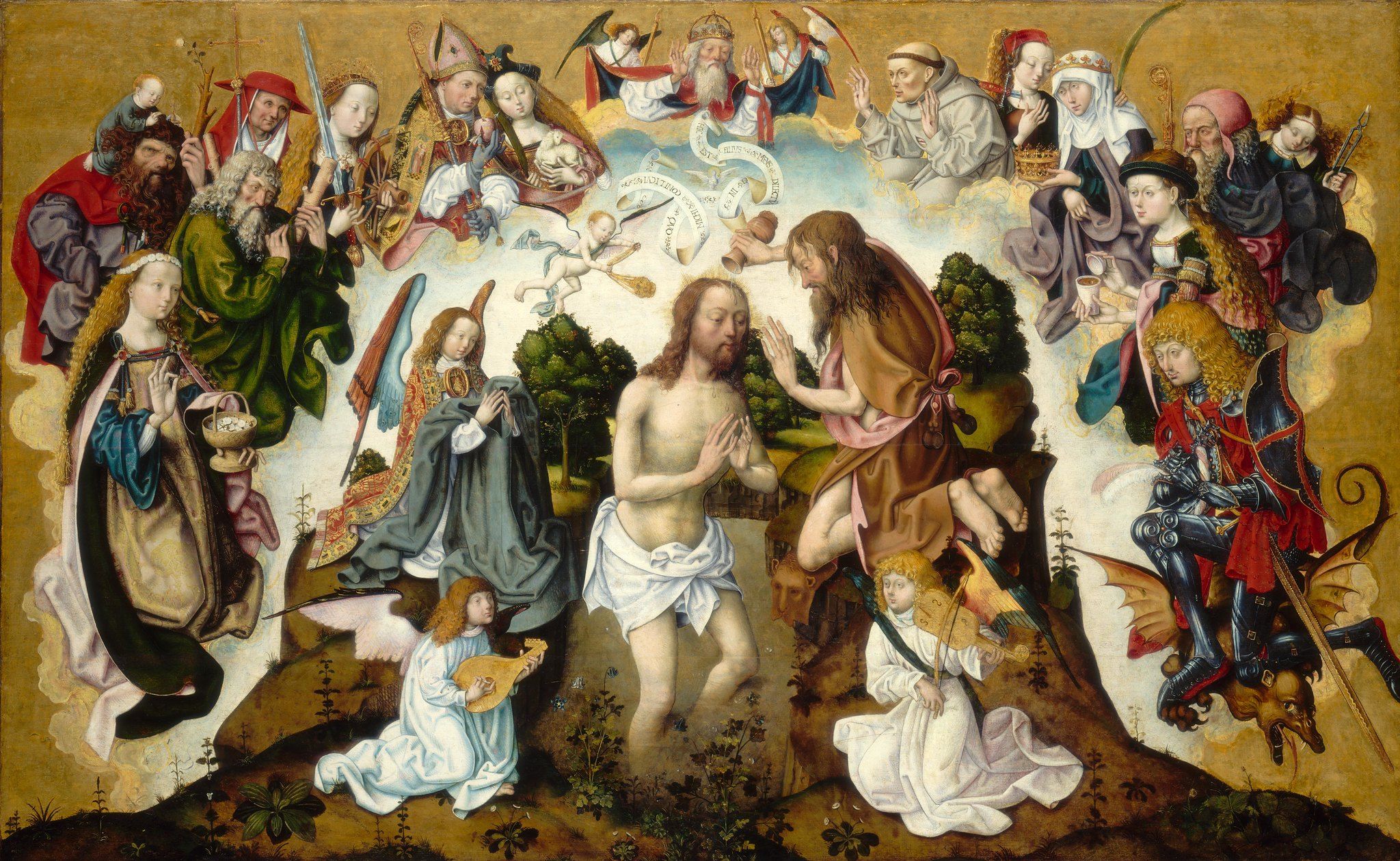
The Sacrament of Baptism is how we become God’s children. But our own baptism was made possible by the Baptism of the Lord Jesus in the Jordan River. This is the sacred mystery that the Church celebrates on last day of Christmas. Today we reflect on the mystery of Jesus’ baptism in order to understand your and my baptism.
So what difference does being baptized make to the life of a Christian in this world? St. Paul gives an answer in his New Testament Letter to the Romans. He explains to the first Christians in Rome that “we were buried… with [Jesus] by baptism into death, so that… we too might walk in newness of life” [Romans 6:4].
What is St. Paul saying here about your daily life as a Christian? What does it mean to “walk in newness of life”, and how does that connect to being “buried… with [Jesus] by baptism into death”?
Imagine someone baptized as an adult. What is different about the way that that adult walked through life before baptism, over and against the way that he walks through life after baptism? The answer is that after baptism, the Christian walks through life by means of death. But what exactly does that mean, that by virtue of your baptism, you are meant to walk through life by means of death?
One way of explaining it is that your life is not about your self. Your life as a Christian is about God first, your neighbor second, and your self third. The living of the Christian life means loving God and loving your neighbor, and living for God and living for your neighbor. This is instead of rooting your life in your love of your self, and living for the good of your self and your comfort: in a word, the Christian life is the process of becoming “self-less”.
To live a “self-less” life means to live your daily life through the strength of your baptism, by means of death. If this seems abstract, the saints of our own day and time give us clear examples. Take St. Teresa of Calcutta. If you’ve never watched a documentary of her life in Calcutta, watch one on YouTube. Watch Mother Teresa in the slums of Calcutta, loving God at the Holy Sacrifice of the Mass and in Adoration of the Blessed Sacrament early each morning. Then, during the rest of the day, through the strength she received in Adoration and Holy Mass, she loved the “poorest of the poor”, as she called her neighbors. She tended to their needs by carrying out the corporal and spiritual works of mercy.
Saints like Mother Teresa are easy to admire, but how does the average Christian go about opening her or his life to God’s grace more fully? One simple question that helps is to ask yourself whether you can name from memory the seven corporal works of mercy and the seven spiritual works of mercy. If not, find them listed in the Catechism, write them down on a sheet of paper, and pray over this list of fourteen simple actions: two columns of seven works of mercy.
So here are three action items for this coming week. Choose just one of these, unless you feel really enthusiastic about doing all three. (1) Find out, if you don’t already know, the date of your baptism, and put a note in your 2026 calendar to observe your baptismal anniversary with prayer and maybe even going to Mass. (2) Watch a documentary about St. Teresa of Calcutta. (3) Write out longhand the seven corporal works of mercy and the seven spiritual works of mercy, and choose one out of those fourteen to focus on during the rest of this month. Pick a different work of mercy for each month.
Albert Einstein is supposed to have stated that genius equals 1% inspiration and 99% perspiration. Something similar is true of holiness. In the case of holiness, God the Holy Spirit offers us the inspiration. Your work after accepting that grace is the 99% of perspiration through acts of love for God, and acts of love for your neighbor, dying to your self, so as to live completely within the Mystical Body of Christ.
 Reflections on the Sacred Liturgy