The Third Sunday in Ordinary Time [A]

The Third Sunday in Ordinary Time [A]
Isaiah 8:23-9:3  +  1 Corinthians 1:10-13,17  +  Matthew 4:12-23
St. Anthony’s Catholic Church, Garden Plain, KS
January 25, 2026

This Sunday’s Gospel Reading is a good reminder to pray often for one member of our parish who—God willing—will be ordained to the priesthood at the end of May.  Deacon Peter Bergkamp is nearing the finish line of the long marathon called “seminary”.  Of course, in the spiritual life, where one spiritual marathon ends, another begins.

It’s not an easy road to enter the seminary.  Before being admitted, the young man has to take intelligence tests, a  psychological examination, and a physical.  But the most grueling requirement is saved for last:  the candidate has to play a round of golf with the Bishop, and shoot under 80.

There are many things about a young man entering the seminary that are misunderstood.  One important point that many people are not clear on is why exactly a young man enters the seminary.  He does not enter the seminary because he’s decided to be a priest.  A young man enters the seminary to find out if he’s being called to the priesthood.

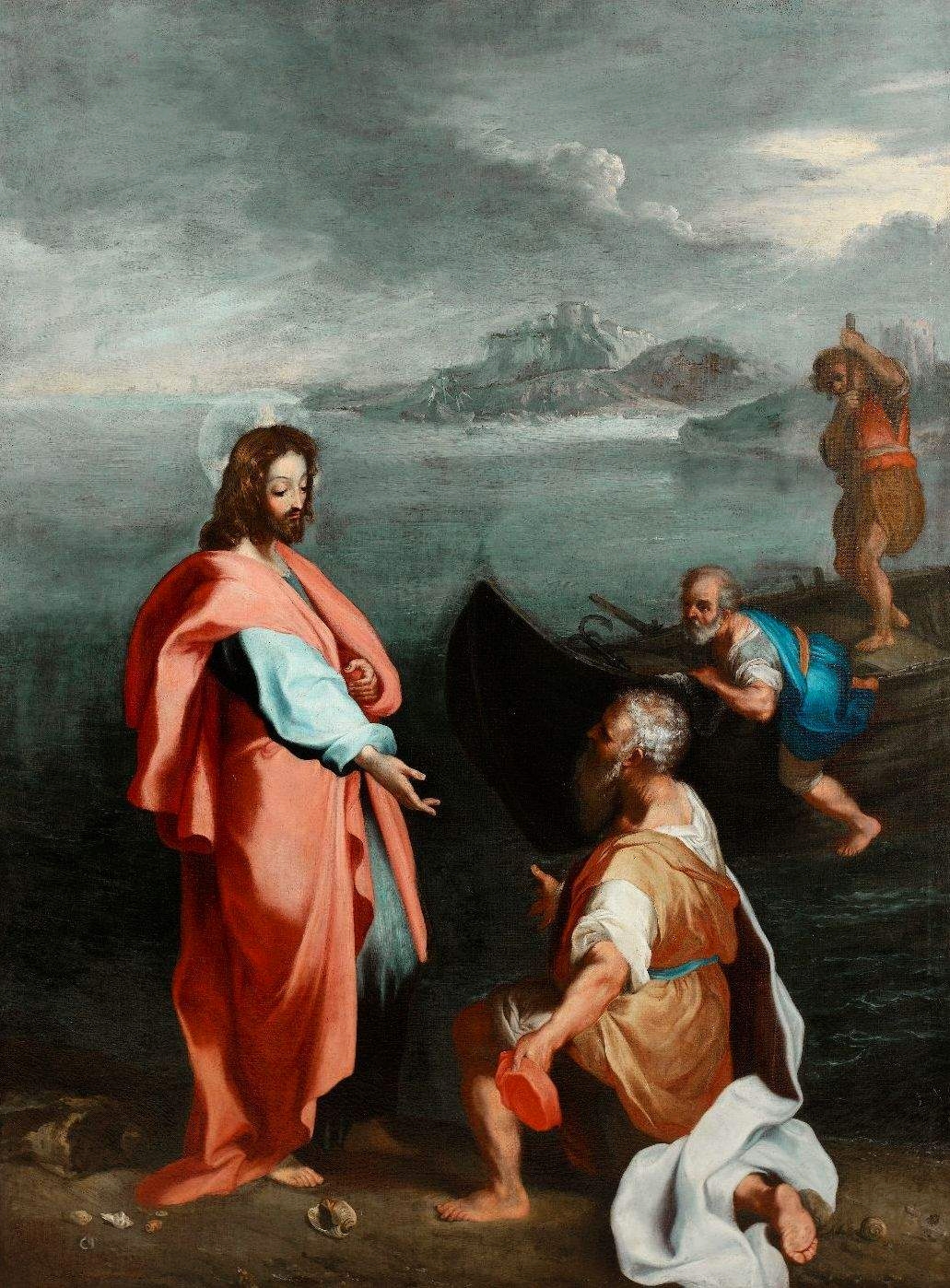
To put this differently:  the Lord calls out to every young man, “Come after me….”  What differs from one young man to another is the phrase that follows “Come after me….”  To some young men, the Lord says, “Come after me, and I will give you the grace needed to be a strong and virtuous husband and father.”  To other young men, Jesus says those words by which we hear him calling Simon and Andrew:  “Come after me, and I will make you fishers of men.”  Through a seminarian’s prayers while in the seminary, the Lord clarifies just which call the Lord has made to him.

“Fishers of men”.  This is a metaphor, of course:  one that Simon and Andrew readily understood, since their livelihood was being fishermen.  Regardless of the kind of life which they had chosen for themselves, Jesus called them to a very different way of life.  They had no idea what to expect, and if Jesus had tried to explain what following Him would mean, they still would have been largely in the dark.  That’s why following Jesus demands the virtue of faith.  Following Jesus is not for those who insist on controlling everything, or knowing exactly what’s coming down the pike.

The fact is that Jesus can call men from any sort of livelihood, at any age in their lives, to serve His Church as priests.  For the last four years of my formation in the seminary, Bishop Gerber sent me and another young man named Sam Pinkerton to Mundelein Seminary in Chicago, which at the time was the largest seminary in the United States.  It served forty-five dioceses throughout the world, educating men from the countries of Uganda, Zaire, Colombia, Poland, China, Vietnam in addition to U.S. dioceses from Paterson, New Jersey to El Paso, Texas, and of course a large contingent of native Chicagoans, who are a breed all their own.

Among the 150+ men with whom I studied at Mundelein, I can guarantee you that no two of us had traveled along the same path to get to the seminary.  I can also guarantee that the Lord did not use exactly the same words to call any of us, to help us understand the need we had to enter the seminary.

Before entering the seminary, I had spent only one year at Kansas State.  Many young men enter the seminary the summer after graduating from high school.  But some men enter the seminary after graduating from college and starting careers.  At the seminary I attended in Chicago, one seminarian had graduated from law school and practiced law before entering the seminary.  Another seminarian had finished medical school and practiced medicine before entering the seminary.  No two young men have the same path to the priesthood.

It’s also important to realize that God calls young men of many different temperaments and with many different outlooks on life to enter the seminary.  Some years ago there was a book published that illustrated this truth.  It offers portraits of about a dozen different priests, one of whom—Father Ned Blick—is a priest of our diocese.

Father Ned’s words in this book ring very true.  He states:

“Since I have been ordained, I have been surprised, no, astonished, by the effect on people of things that require such a small effort on my part.  …  I had no idea such small things would be so much appreciated.  Why that happens to priests is interesting.  It may be because we confront the spiritual dimensions of people, while most other professions do not.  People have deep spiritual needs.  When they see them met, however inadequately, they respond.”

To me the key of this quote is Father Ned speaking about the spiritual nature of man:  a dimension of human nature that’s often ignored.  Again, Father Ned states:  “we confront the spiritual dimensions of people, while most other professions do not.  People have deep spiritual needs.  When they see them met, however inadequately, they respond.”

This spiritual side to human nature is where the great gift of the priesthood rests.  We need to pray for vocations to the priesthood.  But we also need to encourage young men to offer themselves to the spiritual nature of man that gives our lives their final and ultimate meaning.
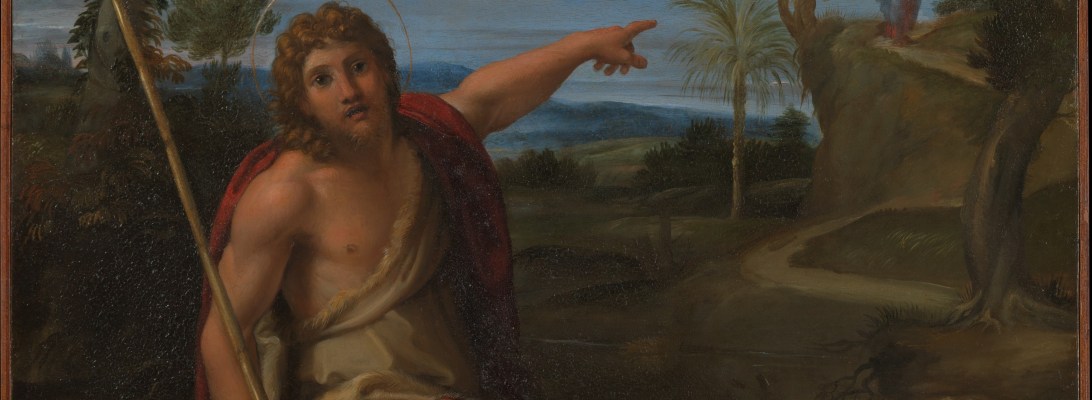
The Second Sunday in Ordinary Time [A]

The Second Sunday in Ordinary Time [A]
Isaiah 49:3,5-6 + 1 Corinthians 1:1-3 + John 1:29-34
St. Anthony’s Catholic Church, Garden Plain, KS
January 18, 2026

In Abilene, Kansas, across the street from the Eisenhower presidential library, and the resting places of Dwight and Mamie Eisenhower, is a Catholic church by the name of St. Andrew’s.  In that church, on December 17, 1967, I received the Sacrament of Baptism.  Hopefully you, also, know the date of your baptism, and honor that day each year with prayers of thanksgiving to God.

That’s important to do because on the day you were baptized, God made promises to you, and you made promises to God (or your parents did on your behalf).  These two-way promises founded a relationship where God is your Lord, and you are His servant.  Of course, whenever someone serves the Lord, he does something specific for him.  So we hear several examples of this servant—Lord relationship in today’s Scriptures.  Each is a model for us, and the last is also something more.

+     +     +

First is the Old Testament prophet Isaiah.  What specific job did God call Isaiah to do for Him?  God called Isaiah to serve Him as His prophet.  We hear this in the First Reading.  “The Lord said to [Isaiah]:  ‘You are my servant.  …  I will make you a light to the nations, that my salvation may reach to the ends of the earth.’”  Among all the Old Testament prophets, Isaiah had a unique place.  His call was to proclaim the coming of a Messiah who offers a loving mercy that knows no bounds and that would “reach to the ends of the earth”, meaning even to the Gentiles.  Although none of us has been called to be a prophet like Isaiah, his vocation mirrors our own vocation as a baptized Christian:  namely, to love others with a mercy that knows no bounds.

+     +     +

Second is the New Testament apostle Paul.  What specific job did God call Paul to do for Him?  God called Saul (renaming him Paul) to serve Him as His apostle.  Today’s Second Reading is simply the first three verses of a letter written by Saint Paul:  it’s not the longest of his letters, but it’s one of the more profound.  Paul’s self-introduction focuses upon his calling as an “apostle”, which literally means “one who is sent”.  He describes himself this way:  “Paul, called to be an apostle of Christ Jesus by the will of God”.

Paul was sent “by the will of God” to spread the Messiah’s Gospel to the Gentiles, the very people that Isaiah had served by preparing them for the Messiah.  Although none of us has been called to be an apostle like Paul, his vocation mirrors our own vocation as a baptized Christian:  namely, serving as “one who is sent”, or in other words, serving as one who takes his cues from God.

+     +     +

Now that Messiah whose coming Isaiah foretold, and whom Paul was sent forth to preach about, is of course Jesus.  In fact, Jesus—like Isaiah and Paul—was called by God to serve.  Yet Jesus is not only an example for us, as are Isaiah and Paul.  Jesus’ call is unique.  He’s an example, and something more.

Jesus was called by God the Father to serve as the Savior of mankind.  We hear about this call within today’s Gospel Reading.  This call connects to today’s Responsorial Psalm, and especially its refrain.  That refrain can help you rest in God’s will for your daily life, instead of wrestling against it.

“Here am I, Lord; I come to do your will.”  That’s a good verse to memorize, and to pray often.  You can recite it slowly as your make a Holy Hour before the Blessed Sacrament.  You can recite it slowly as you drive to work.  You can recite it (very) slowly at 2:00 am on Saturday morning as you wait for your teenager to get home.

“Here am I, Lord; I come to do your will.”  Although the word “I” appears twice in this single verse, it’s not the focus of the verse.  The focus is God’s Providential Will and an individual’s submission to it:  that is, an individual’s willingness to be God’s servant.  Unfortunately, many of us when we pray actually speak to God as if He is our servant:  in effect saying, “Here I am, Lord; now come and do my will.”

+     +     +

Throughout the first several weeks of Ordinary Time, our Scriptures at Holy Mass help us set our own lives within the grander scheme of things.  That grander scheme is called “Divine Providence”.  One way to describe Divine Providence is to say that it’s what God chooses to do, when He does it, and why He does it.

Although it might sound odd, one of the chief ways that Christians experience God’s Providential Will is unanswered prayers.  In fact, these are often God’s gifts to us, whether we acknowledge them as such or not.  Unfortunately, some Christians stop following Jesus because their prayers aren’t answered as they want.  But silence on God’s part can be His way of demanding patience and perseverance.  This silence clarifies what’s important to God for the unfolding of His Providential Will.

Nonetheless, whether in accepting God’s silence for the gift that it is, or in moving forward to carry out His Will, it’s important to recognize a distinction.  We are not only to imitate Jesus in His example of doing His Father’s Will.  As Christians, we are meant for something even greater:  we are meant to live in Christ.

We are not meant to live “in Isaiah” or “in Paul”, as much as we ought to follow their respective examples.  But each of us is meant to live “in Christ”.  This is not something that the Christian can accomplish through human effort or good works.  Only God can accomplish this.  His chief means for doing so are the Sacraments and grace given through personal prayer.  For our part, we work at disposing ourselves to God’s graces and charisms.  These gifts from God allow Christ to live within us, and allow Christ to say through us:  “Here am I, Lord; I come to do your will.”

The Baptism of the Lord [A]

The Baptism of the Lord [A]
Isaiah 42:1-4,6-7  +  Acts 10:34-38  +  Matthew 3:13-17
St. Anthony’s Catholic Church, Garden Plain, KS
January 11, 2026

“Childhood” is a key theme of Christmas.  First, we focus on the Christ Child.  But like everything in Jesus’ earthly life:  Christ’s childhood is for us.  Christmas also focuses upon you and me being called to adoption as God’s very own children.  In St. John’s first New Testament letter, he writes about this divine adoption, proclaiming:  “See what love the Father has bestowed on us that we may be called the children of God.  And so we are. … Beloved, we are God’s children now” [1 John 3:1-2].

That’s not just a mystery.  It’s also a profound paradox.  It’s hard enough to imagine how a tiny baby could be the All-Powerful Creator of the universe.  But it’s even harder to imagine how a sinner such as you or me could become, not just a saint, but a very child of God the Father!  But “so we are”, St. John proclaims:  “we are God’s children now”.

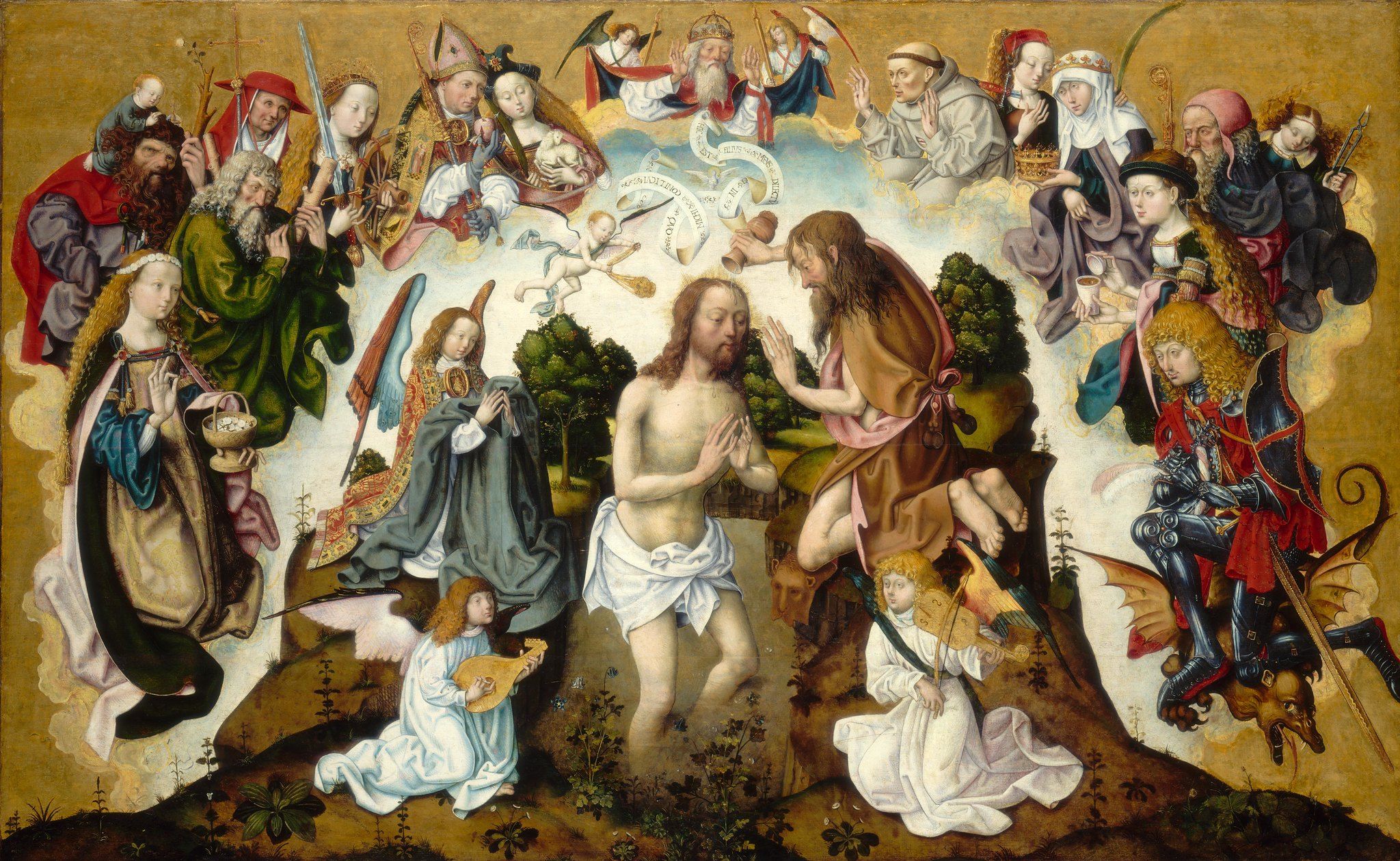
The Sacrament of Baptism is how we become God’s children.  But our own baptism was made possible by the Baptism of the Lord Jesus in the Jordan River.  This is the sacred mystery that the Church celebrates on last day of Christmas.  Today we reflect on the mystery of Jesus’ baptism in order to understand your and my baptism.

So what difference does being baptized make to the life of a Christian in this world?  St. Paul gives an answer in his New Testament Letter to the Romans.  He explains to the first Christians in Rome that “we were buried… with [Jesus] by baptism into death, so that… we too might walk in newness of life” [Romans 6:4].

What is St. Paul saying here about your daily life as a Christian?  What does it mean to “walk in newness of life”, and how does that connect to being “buried… with [Jesus] by baptism into death”?

Imagine someone baptized as an adult.  What is different about the way that that adult walked through life before baptism, over and against the way that he walks through life after baptism?  The answer is that after baptism, the Christian walks through life by means of death.  But what exactly does that mean, that by virtue of your baptism, you are meant to walk through life by means of death?

One way of explaining it is that your life is not about your self.  Your life as a Christian is about God first, your neighbor second, and your self third.  The living of the Christian life means loving God and loving your neighbor, and living for God and living for your neighbor.  This is instead of rooting your life in your love of your self, and living for the good of your self and your comfort:  in a word, the Christian life is the process of becoming “self-less”.

To live a “self-less” life means to live your daily life through the strength of your baptism, by means of death.  If this seems abstract, the saints of our own day and time give us clear examples.  Take St. Teresa of Calcutta.  If you’ve never watched a documentary of her life in Calcutta, watch one on YouTube.  Watch Mother Teresa in the slums of Calcutta, loving God at the Holy Sacrifice of the Mass and in Adoration of the Blessed Sacrament early each morning.  Then, during the rest of the day, through the strength she received in Adoration and Holy Mass, she loved the “poorest of the poor”, as she called her neighbors.  She tended to their needs by carrying out the corporal and spiritual works of mercy.

Saints like Mother Teresa are easy to admire, but how does the average Christian go about opening her or his life to God’s grace more fully?  One simple question that helps is to ask yourself whether you can name from memory the seven corporal works of mercy and the seven spiritual works of mercy.  If not, find them listed in the Catechism, write them down on a sheet of paper, and pray over this list of fourteen simple actions:  two columns of seven works of mercy.

So here are three action items for this coming week.  Choose just one of these, unless you feel really enthusiastic about doing all three.  (1)  Find out, if you don’t already know, the date of your baptism, and put a note in your 2026 calendar to observe your baptismal anniversary with prayer and maybe even going to Mass.  (2)  Watch a documentary about St. Teresa of Calcutta.  (3)  Write out longhand the seven corporal works of mercy and the seven spiritual works of mercy, and choose one out of those fourteen to focus on during the rest of this month.  Pick a different work of mercy for each month.

Albert Einstein is supposed to have stated that genius equals 1% inspiration and 99% perspiration.  Something similar is true of holiness.  In the case of holiness, God the Holy Spirit offers us the inspiration.  Your work after accepting that grace is the 99% of perspiration through acts of love for God, and acts of love for your neighbor, dying to your self, so as to live completely within the Mystical Body of Christ.